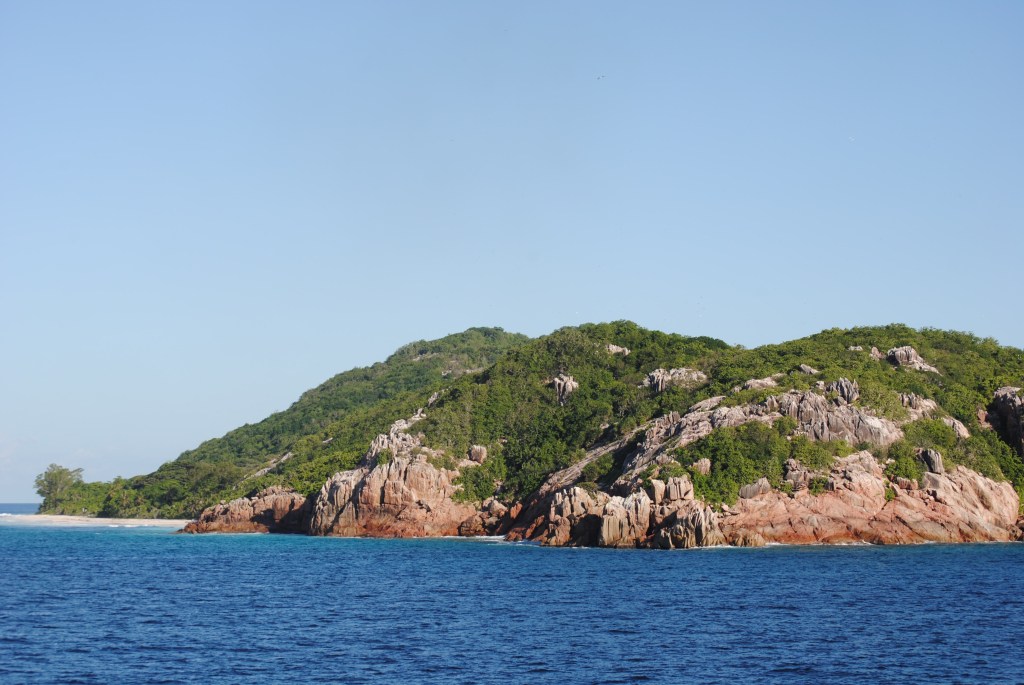
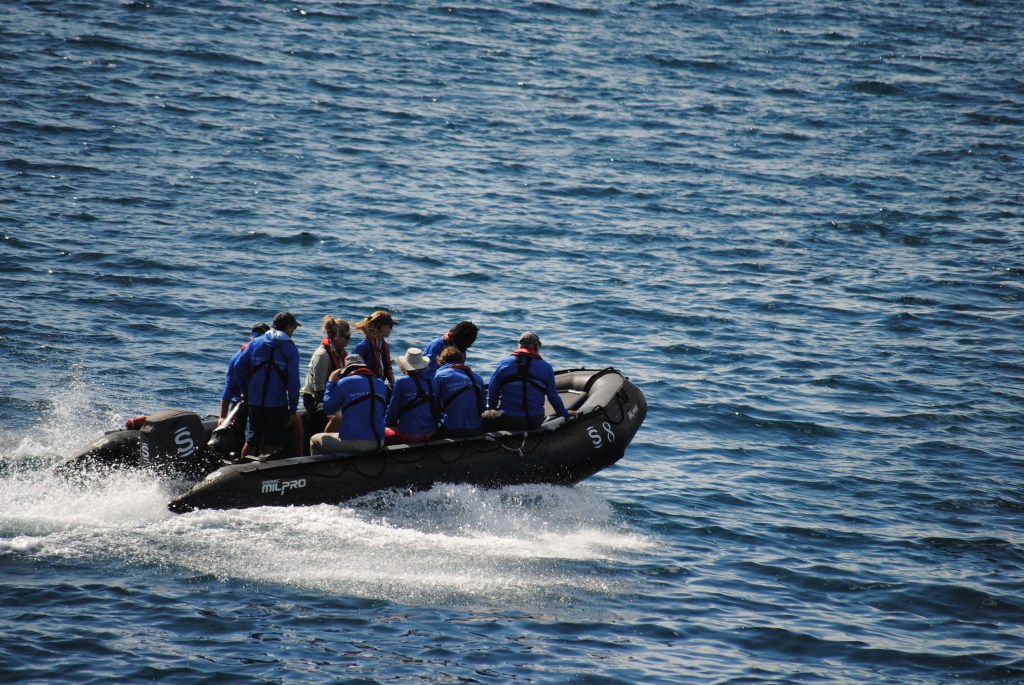
We travelled a further 253 nautical miles through the night, to arrive just off the island of Aride, one of the northernmost islands of the Seychelles. This 68 hectare, uninhabited granitic islands, has been protected as a special reserve since the 1970s and is famous for its huge seabird colonies. Sadly the tides were not in our favour this time and it was too rough to land on the island, so as we circumnavigated the spectacular pink granite cliffs, Tom told us about all the birds who choose to live in this remote little island.
Over a million seabirds regularly breed on Aride, including the world’s largest colonies of lesser noddy and tropical shearwater. Frigatebirds also roost on the island in vast numbers. Five birds endemic to the Seychelles can also be seen here: the Seychelles warbler, fody, magpie-robin, blue pigeon and sunbird. Aside from birds, a number of skinks, geckos and snakes also call Aride home.
We then headed to our backup plan – the small island of Curieuse – where we landed on an idyllic beach of soft white sand, at Anse St Jose, and had another opportunity to snorkel, so I was more than happy. Perhaps not quite as good as Astove, but still pretty amazing and just heavenly, in the warm water.
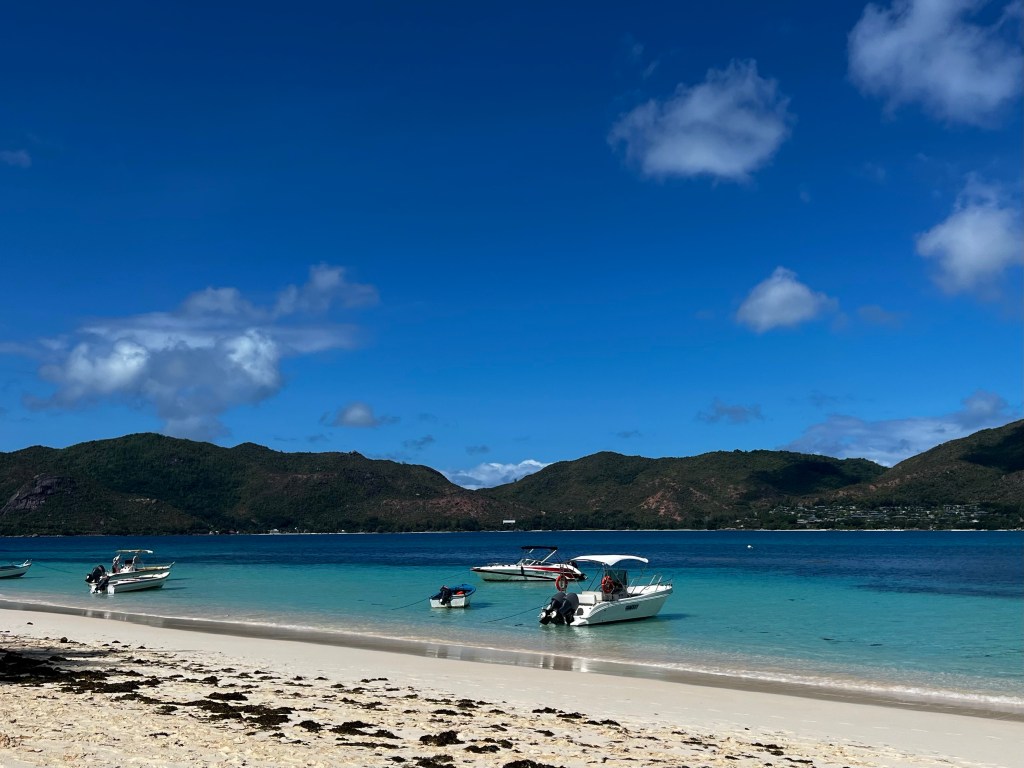
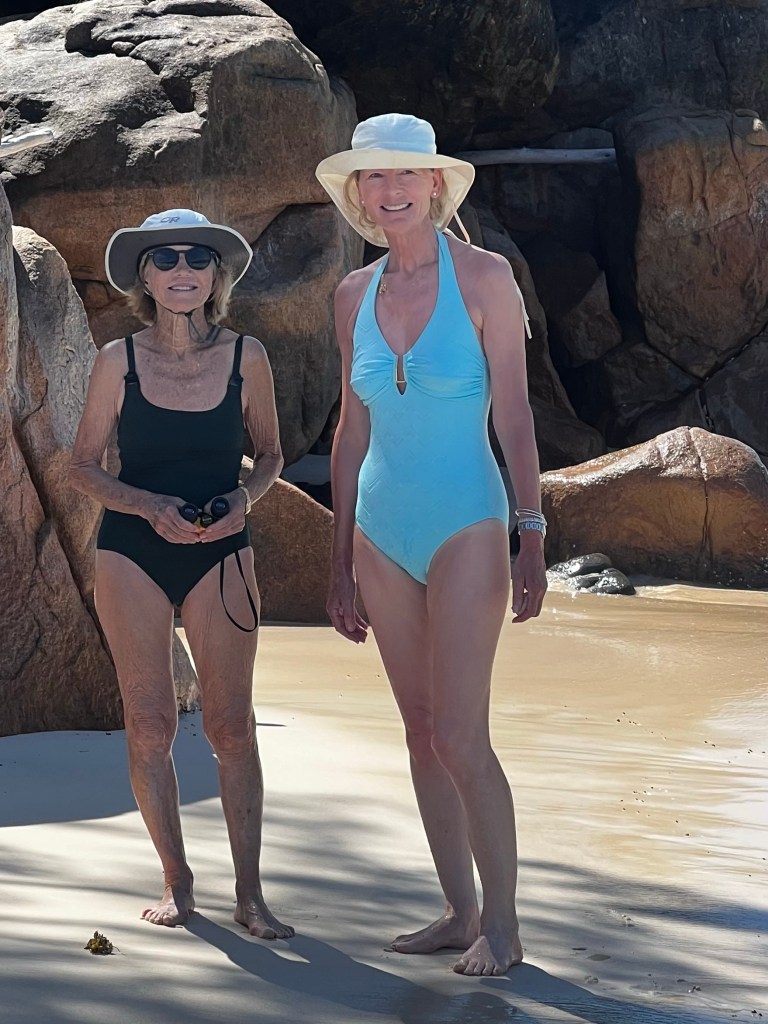
From 1829-1965, Curieuse was a leper colony, which helped preserve the ecosystem from human influence and in 1979 it was declared a marine national park to protect the native wildlife. This includes 300 giant tortoises, which had been relocated here from Aldabra, as a precaution should anything happen to their vulnerable home.
We returned to the boat and as we made the short journey to the nearby island of Praslin, a gorgeous pod of dolphins joined us along side the boat. Praslin is the second-largest of the Seychelles islands (12km by 5km) and home to a population of 8,000. We drove up the main mountain pass to the Vallée de Mai Nature Reserve. This is a designated UNESCO World Heritage Site of spectacular palm forests with many endemic flora species. Most famously, coco de mer, which is only found on Praslin and Curieuse.
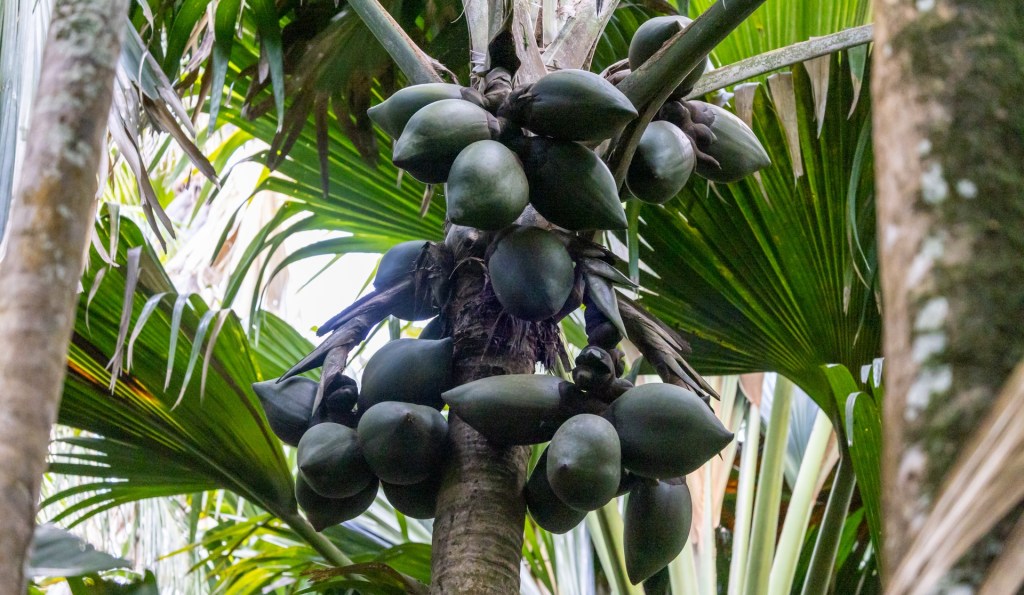
Growing to 25-35m (tallest on record 57m), these magnificent trees have the largest seeds of any plant on the planet – apparently one recorded at 42kg! There are distinct male and female trees, with the male producing giant catkin-like flowers up to 2m long with pollen, for up to ten years. Pollination is largely done by green geckos. The female fruits require 6-7years to mature and a further two years to germinate. Both grow slowly, only about 33mm per year, for over 140 years. The leaves take nine years to develop and then last nine more years as a functioning leaf.
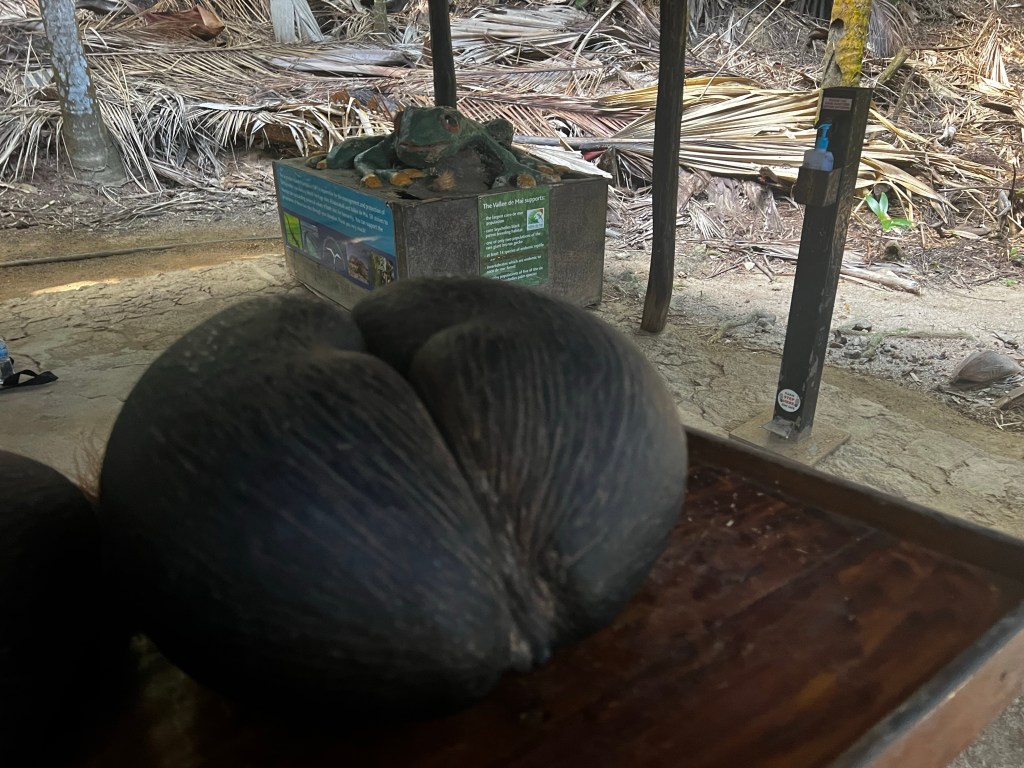
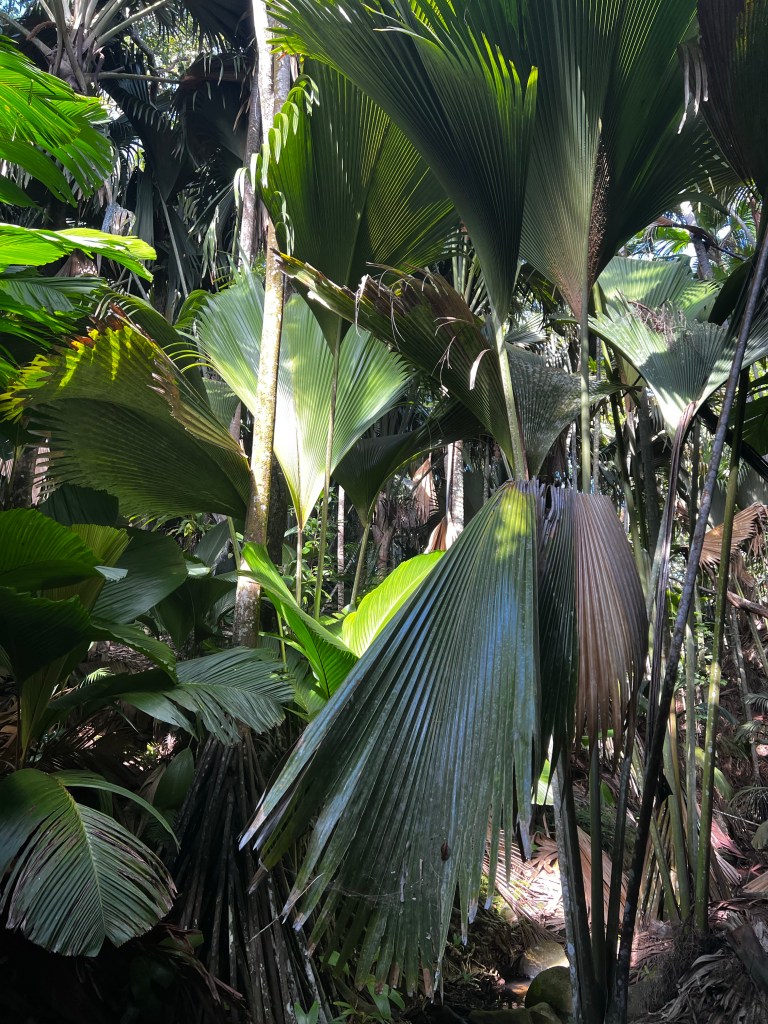
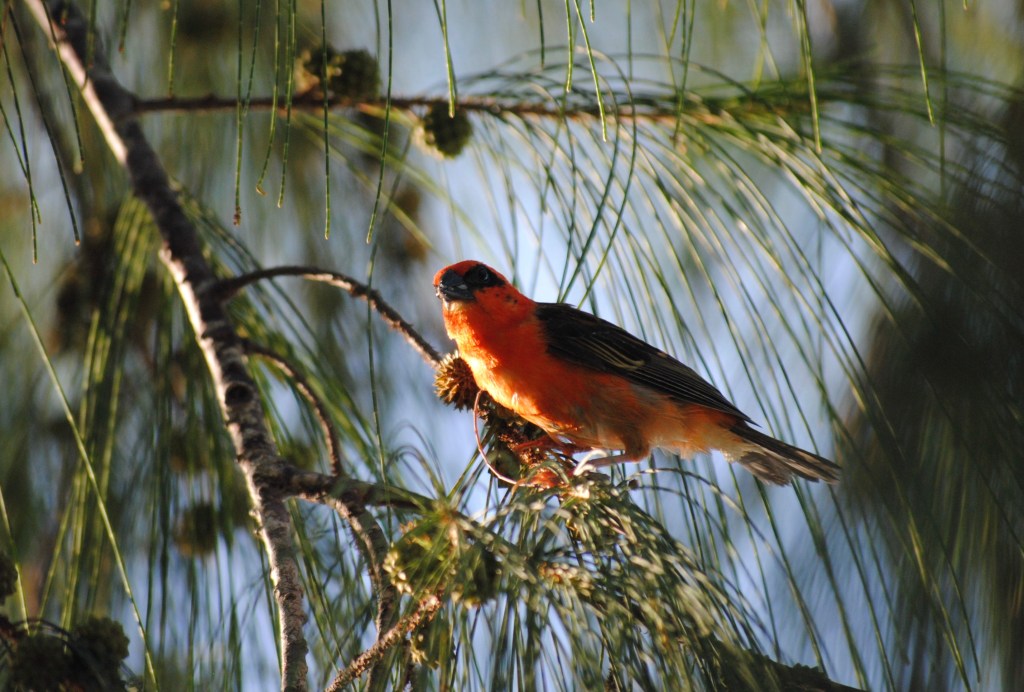
We were pointed out a number of other endemic palms, including Deckenia Nobilis or millionaire’s palm so named as it has to be killed to harvest the sought after Heart of Palm. We also saw a number of the endemic birds: the Seychelles bulbul, red fody and blue pigeon, but sadly not the black parrot which the birders were all very keen to see. However, we did see a number of geckos and a rather sweet tenrec, similar to the one I had seen in Tasmania.
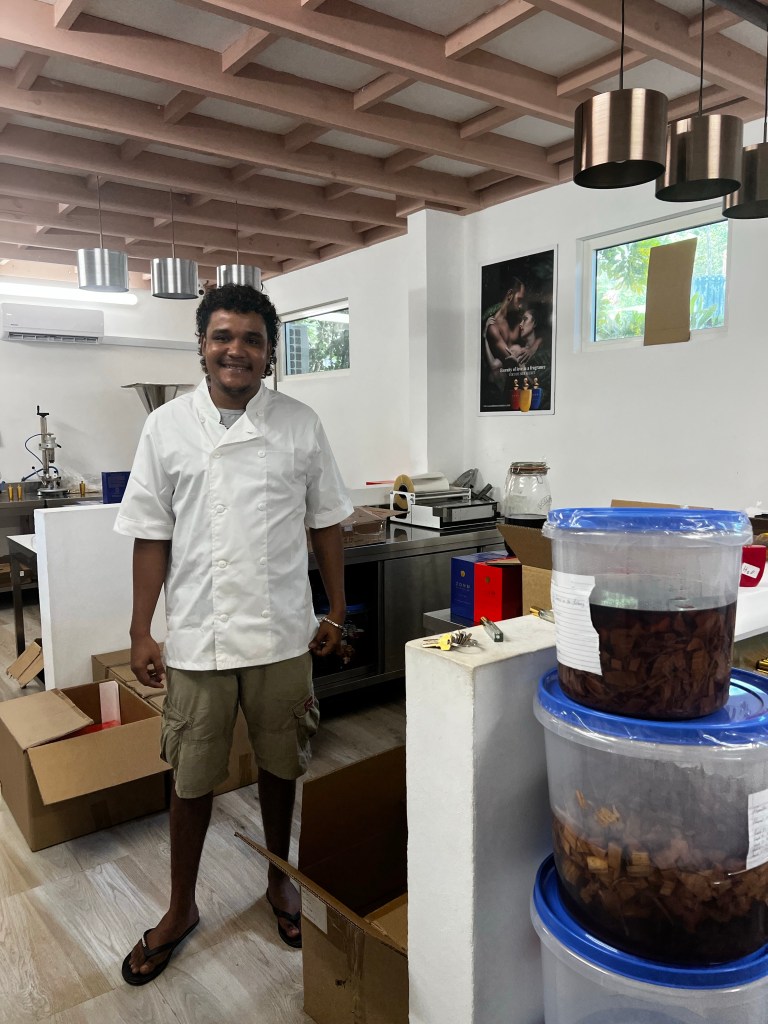
We then visited a rather amazing new venture, using Coco de Mer to make perfume, some of which were very nice and I succumbed to buying a bottle.
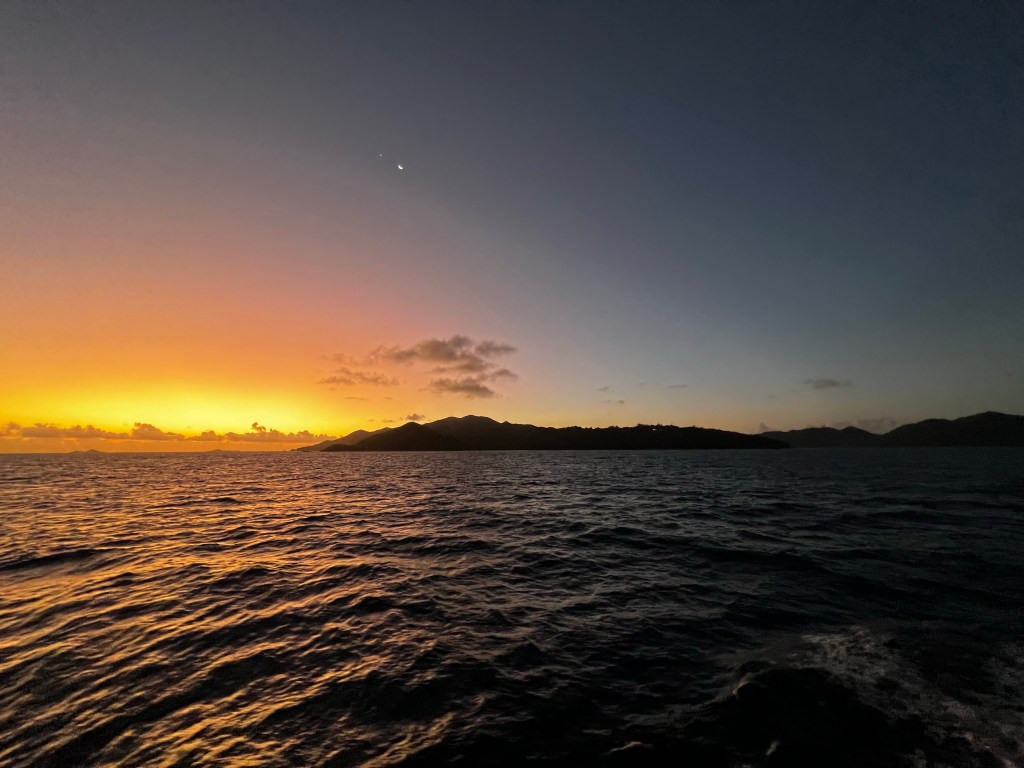
Back to the Island Sky and another short 23 nautical miles journey to the main island of Mahé, where we remained in port overnight. A bit of a culture shock to see all the lights and activity! After our last delicious dinner on deck 5 with Johnny and his wonderful team, Sue presented a slideshow and the video she had made for us all, of our extraordinary trip. Incredible to relive what we had witnessed over the last couple of weeks. What a truly amazing adventure it has been.
 EC-Rider Travels
Leave a comment