
Bit of a lie in this morning as we are still at sea on our way to Diego Suarez, so we had a leisurely breakfast with Johnny, who saves us our special table every day and provides Flavia and me with the most delicious, dried fruit ‘chutney’, which is supposed to go with the cheese at lunch, but is just the most delicious thing on the yogurt for breakfast!
Back in the schoolroom at 9.30 to have another talk from Daniel, who gave us a potted history of this extraordinary island from 8,000 BC to the present day. Isolated for 88million years it is only in the past two thousand years the island has received waves of settlers. These have been of diverse origins, including Austronesian, Bantu, Arab, South Asian, Chinese and European. Centuries of intermarriages created the Malagasy people, who primarily speak Malagasy, a blend of the above’s languages, using a Latin alphabet of only 21 letters – no C, Q, U, W or X!
The Portuguese were the first Europeans to arrive in Madagascar in about 1500, and then the French almost 400 years later who colonised Madagascar and, under their Vichy rule, the island prospered. The Brits invaded in 1942 to prevent its ports falling to the Japanese and it then went back to the French after WWII, finally becoming independent in 1960. Since then, there seems to have been one corrupt president after another who have done the odd, good thing but invariably ended up selling out to nations (mainly the Chinese) the island’s many natural resources: in particular rosewood and fish but also titanium, cobalt, gold and graphite.
With so many natural resources it seems so wrong that Madagascar suffers such poverty. The current President is known as the DJ and there is a complex power struggle between him and ‘the Milkman’ (who was President but became unpopular after he bought his second 747 and struck a palm oil deal with South Korea) and the Accountant who is apparently just a puppet …. Don’t ask!
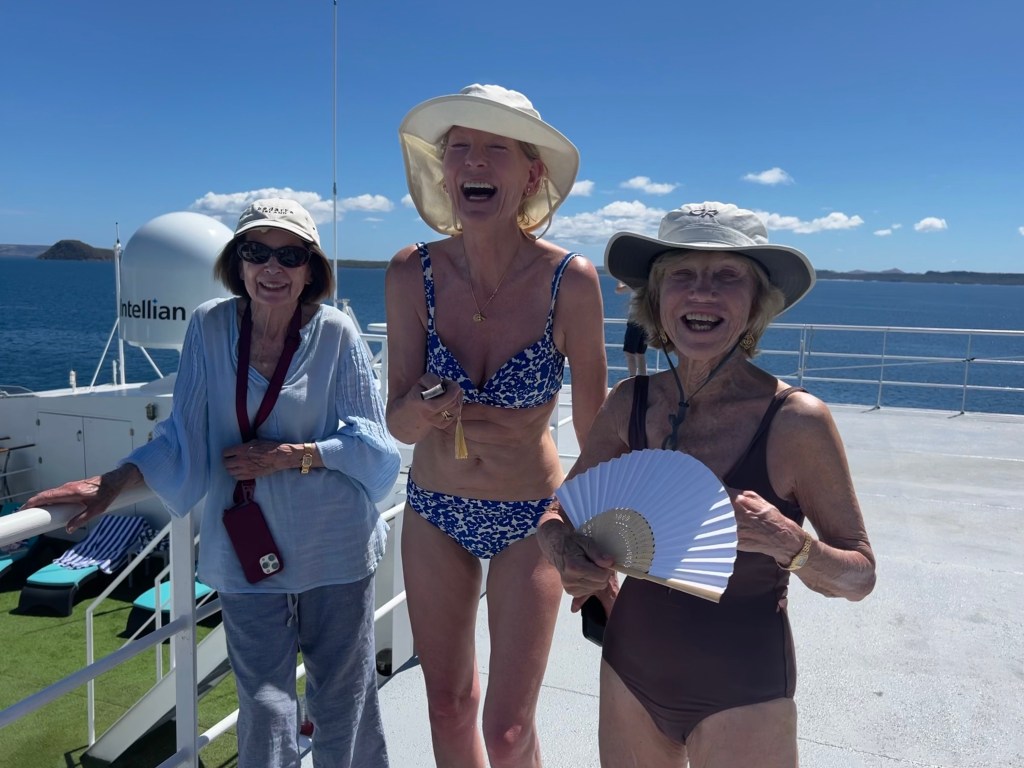
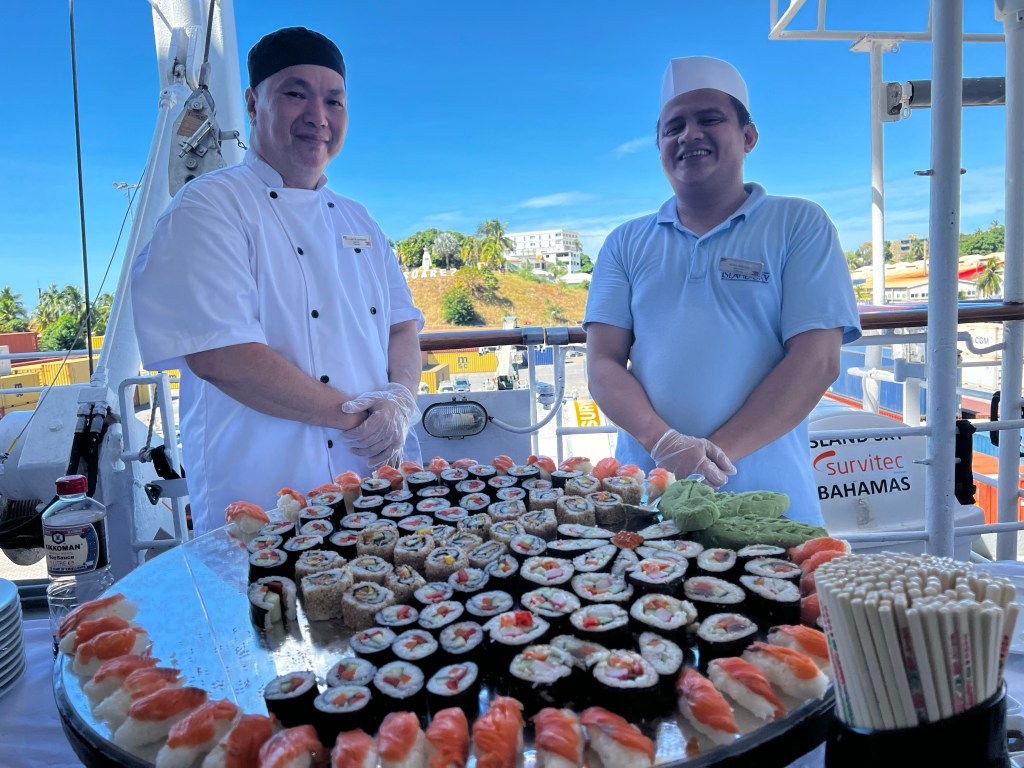
A little time on Deck 6 before the most delicious sushi lunch.
Diego Suarez (or Antsiranana)
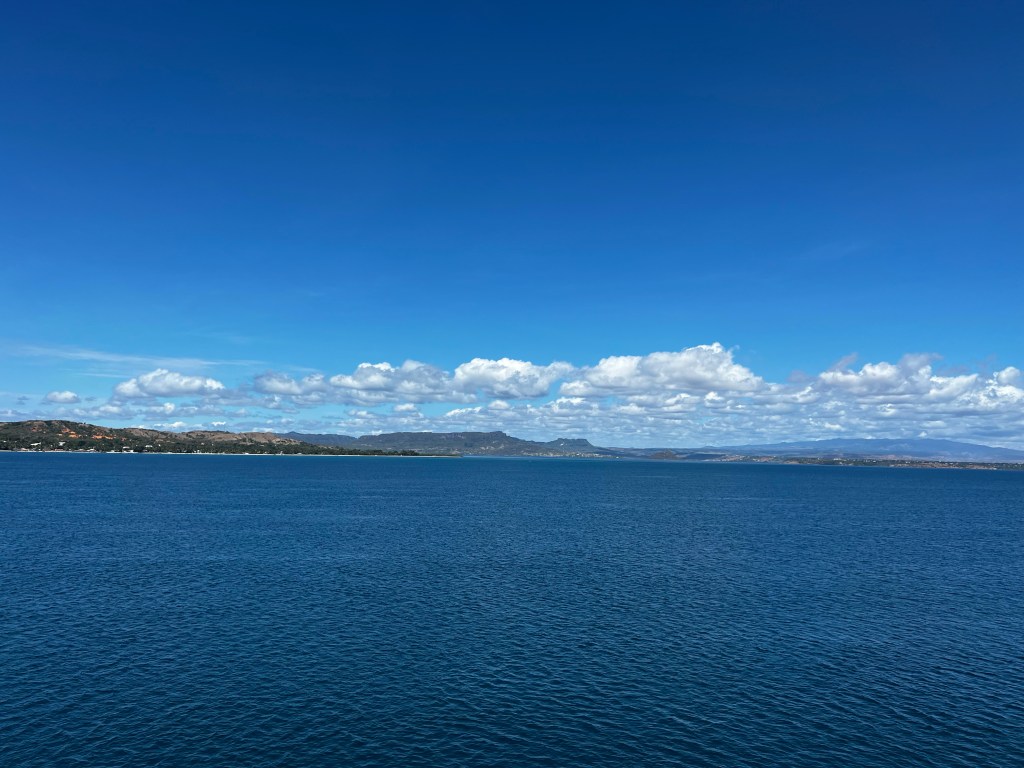
We arrived in Diego Suarez, at the very top of Madagascar, within the Antsiranana Bay on schedule at 12.30pm. As we rounded the Orangea Peninsula and came into the bay, we saw the ruined WWII fortifications from Operation Ironclad, when British military forces stormed Diego Suarez to seize control of Madagascar from the Vichy French.
After an early lunch Lucinda, Flavia and I headed off to the Amber National Park, while Mum and Flee left a little later to go on the city tour. The three of us got into our assigned four wheel drive car and had the added bonus of having Antonio, our guide, joining our car which meant our tour started as we left the port.
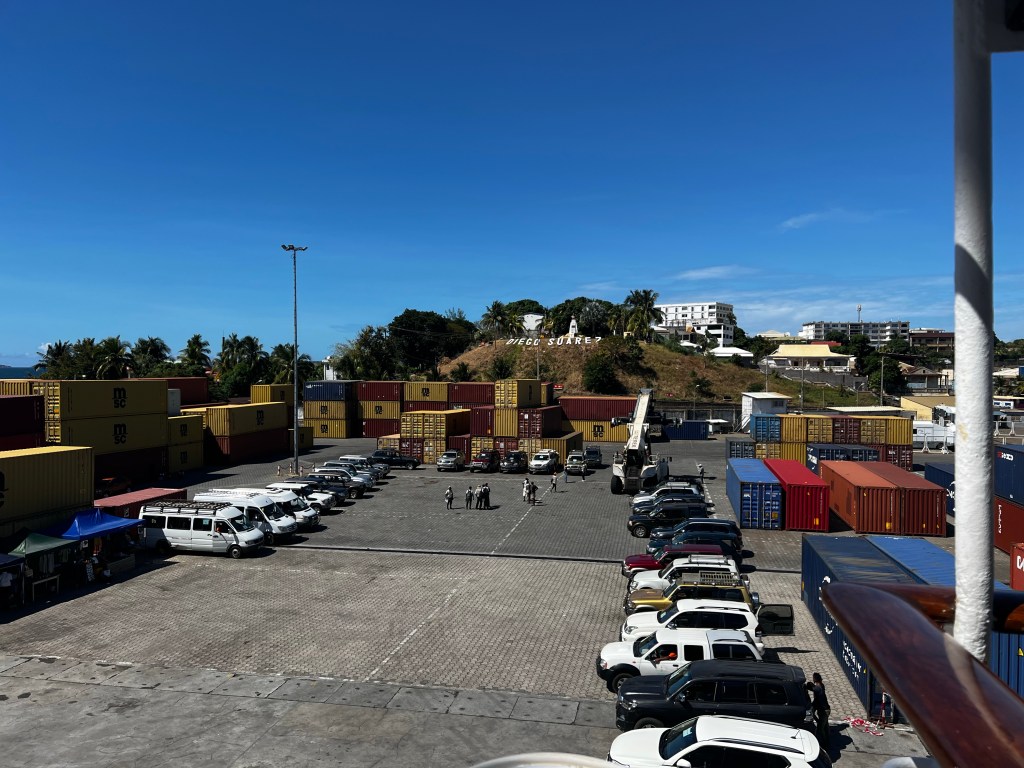
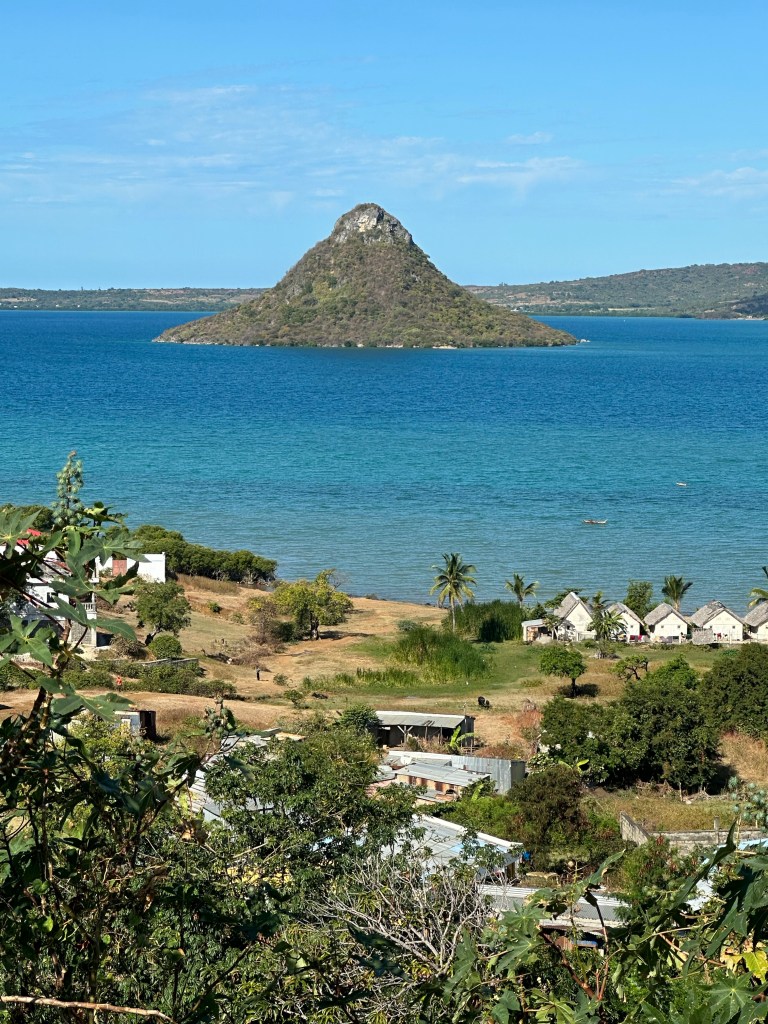
It is 156km around Antsiranana Bay, making it the second largest bay in the world after Rio de Janeiro. It even has its own Sugarloaf Mountain (more, a rock) in the bay. It is also one of the largest deep-water harbours in the Indian Ocean, but its remote location and poor roads has deterred the freight traffic. Antsiranana, meaning “the place where salt is produced”, inherited the name of two Portuguese explorers Diego Diaz, who arrived in 1500, and Fernando Suarez in 1506. In 1885, the French installed a military base there and 57 years later, hundreds of British soldiers died during Operation Ironclad in 1942. Many of them are buried in the downtown cemetery, which Mum and Flee visited.
Today Diego Suarez has a population of 200,000 of many different nationalities and religions all living happily together. Approximately 70% are Christian, 20% Muslim and 10% Animist. There are very few cars, except for a number of wonderful old Renault 4s which are taxis, otherwise it is one of the 2,000 tuk tuks .
Despite the poverty of the houses, increasingly so, as we came to the outskirts of the town, there was a state-of-the-art sports stadium. Both football and rugby have a large following, as do athletics, basketball and tennis. State schooling is from 6-15, but still has to be paid for, teaching is poor unless you can afford to pay for private lessons. Public healthcare is the same and if you cannot pay, you are not treated. Families used to be very large, as it was expected some would die and contraception was also a taboo subject until about ten years ago. Girls still get married very young or when their family can afford the dowry of one Zebu (Indian humped cow). The average life for men is 55 years and for women 65 years.
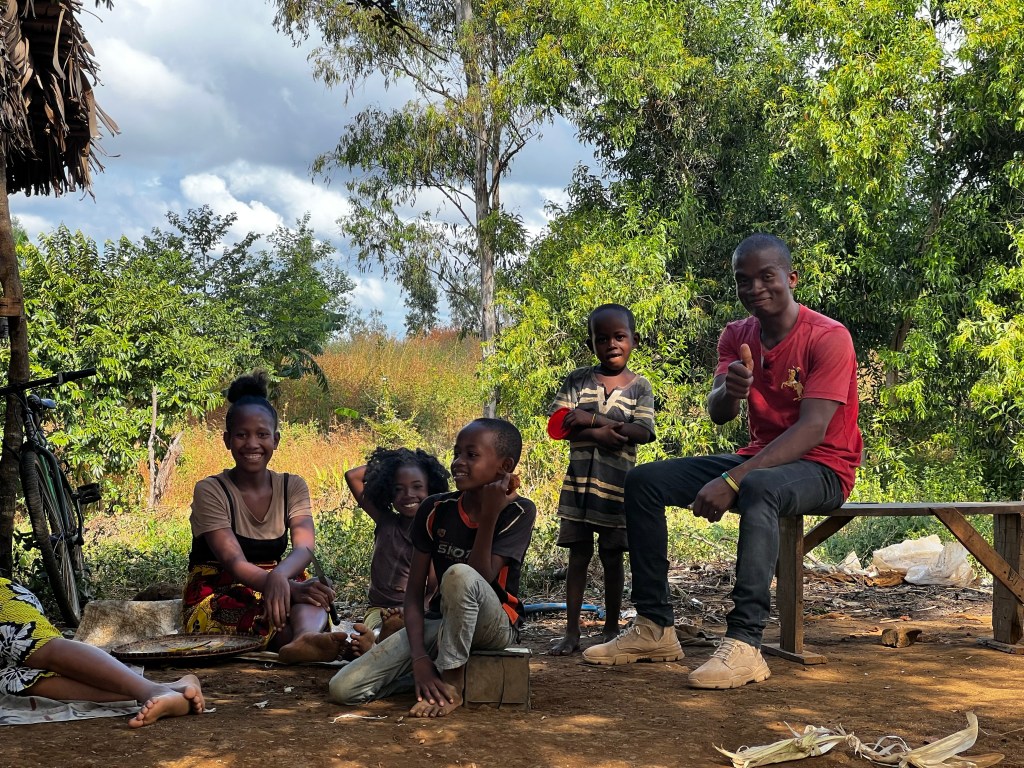
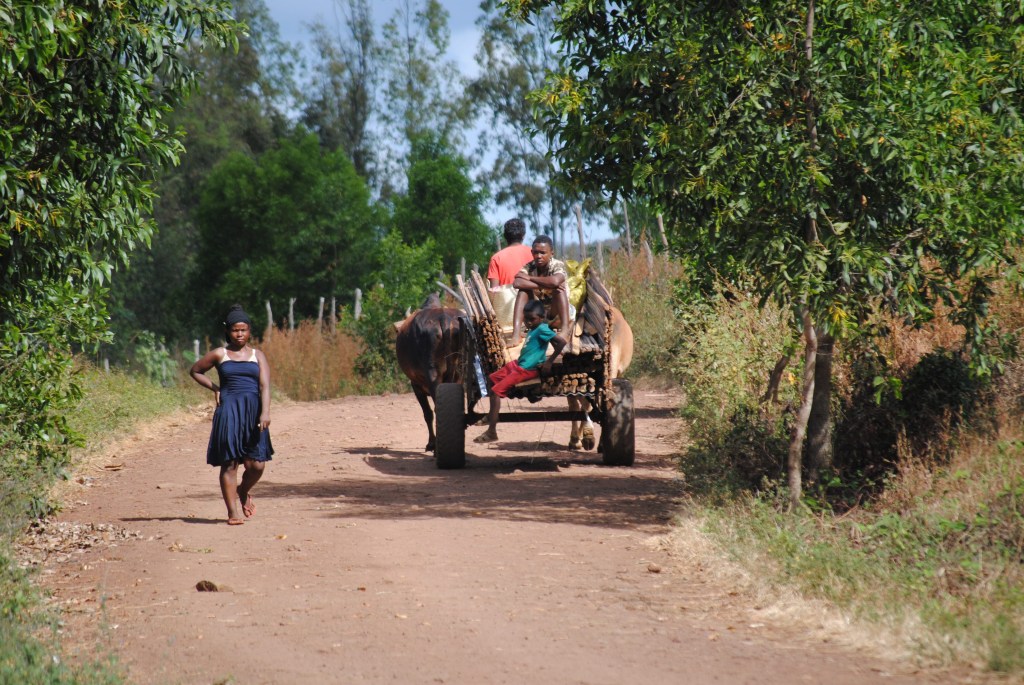
Antonio’s English was immaculate, he had learnt from working for a British botanist when he was a young boy. Along our ninety-minute journey we saw rice, peanut, corn and cassava growing. The climate is wet in this part of Madagascar allowing for three crops of rice a year. Eucalyptus is growing everywhere and used to make charcoal by burning in a hole, covered by dry leaves, for three days. Antonio told us of the most ambitious tree-planting programme which is taking place in the area, with every person being requested to plant 50 saplings a year.
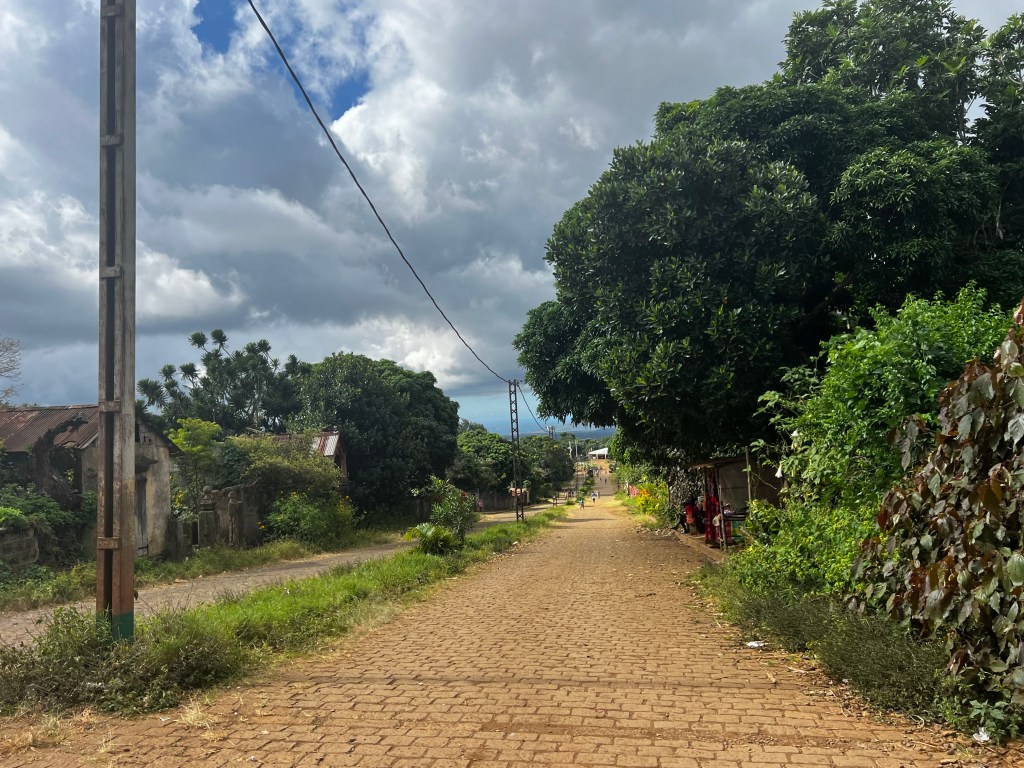
We went through a town which had two parallel roads with grass up the middle, apparently called the ‘Champs Elysees’ and you seemed to be able to choose which side you drove and could even change your mind at any point.
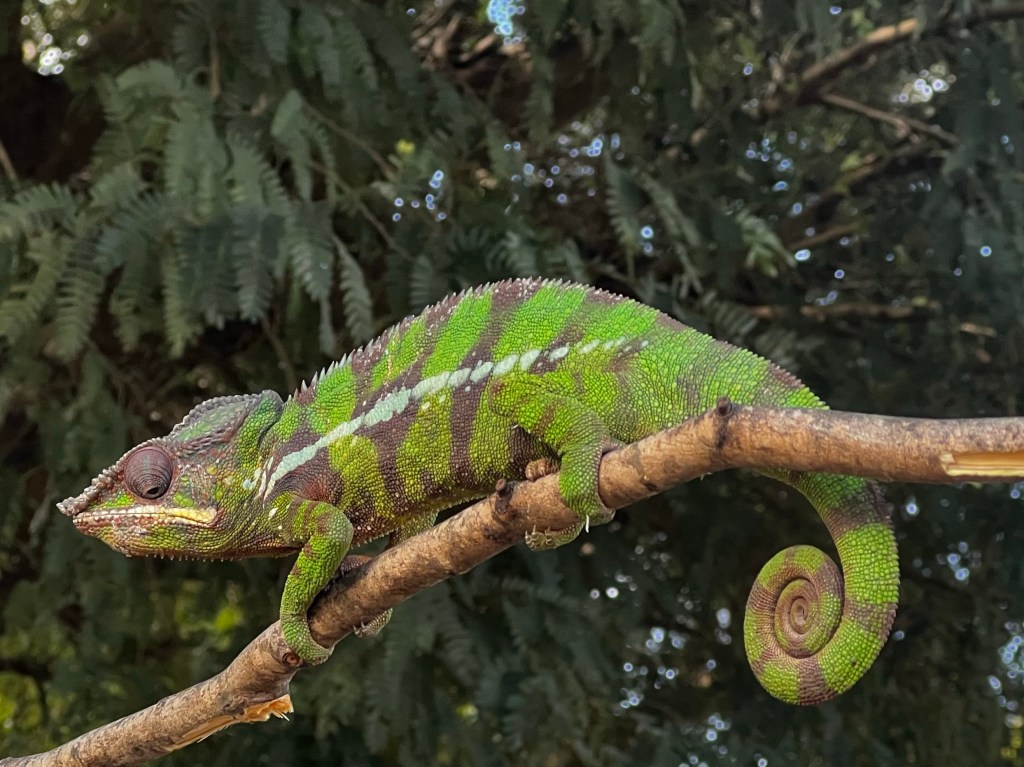
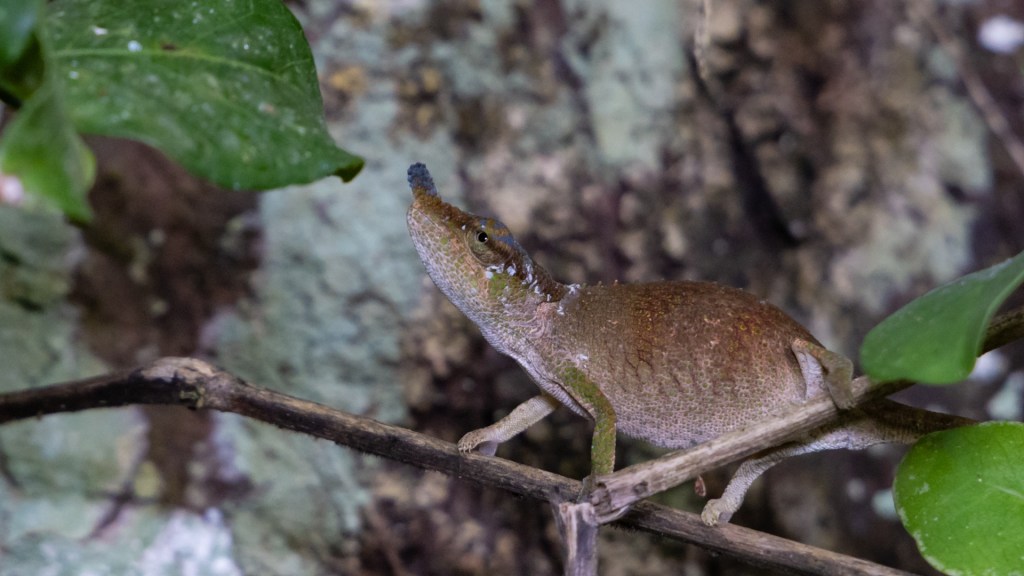
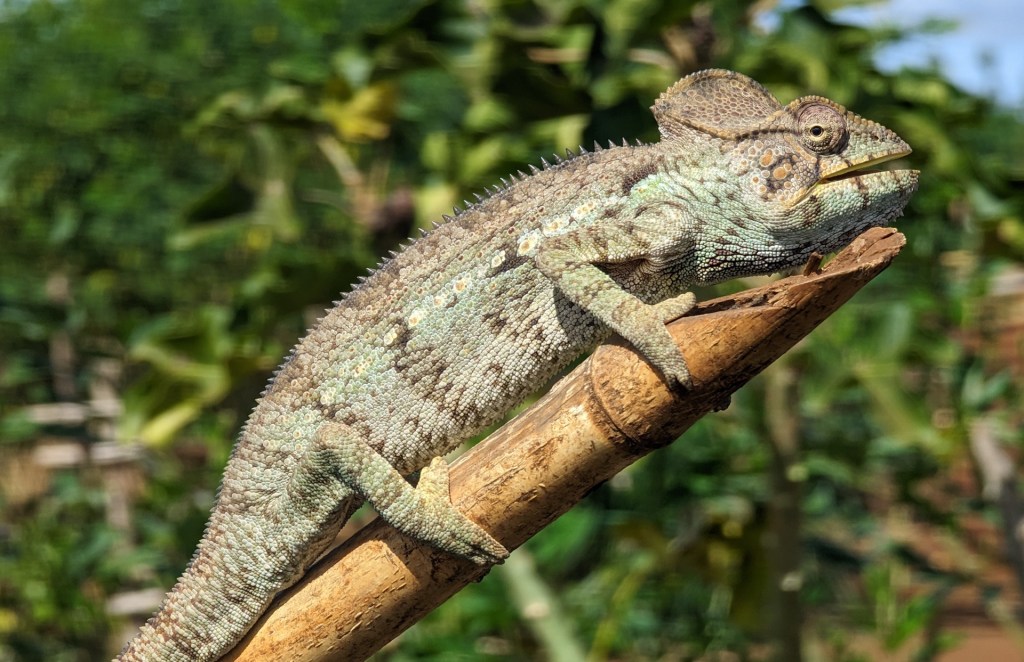
Twice en route, we came to a grinding halt as Antonio had spotted a chameleon in a tree – goodness knows how, but they were magnificent.
After about an hour and a half, most of which was along a very, very rough dirt road (again to their main tourist attraction!), we arrived in the Amber Mountain National Park. A national Park since 1958, with 18,000 hectares of primary rainforest, 77 species of birds, 25 species of mammals, (including eight species of lemur) and 59 species of reptiles.
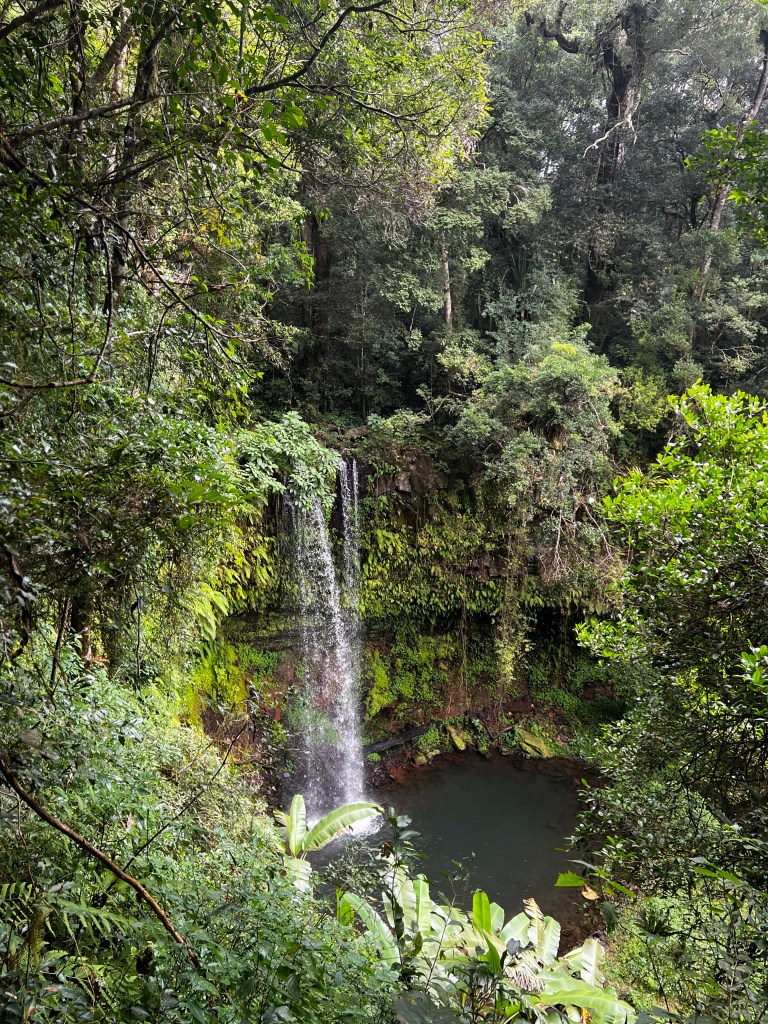
We joined with about ten others and Antonio took us on a wonderful walk through the forrest, visiting two beautiful waterfalls. Along the way we saw the most amazing monkey puzzle trees, with their seven year rings, quinine trees, rami tree which is medicinal relieving coughs etc and also used to make turpentine; non-spiky holly which is very toxic but berries used for glue and the leer tree with its red and black berries – not to be confused as its black cure diarrhoea but red are laxatives!
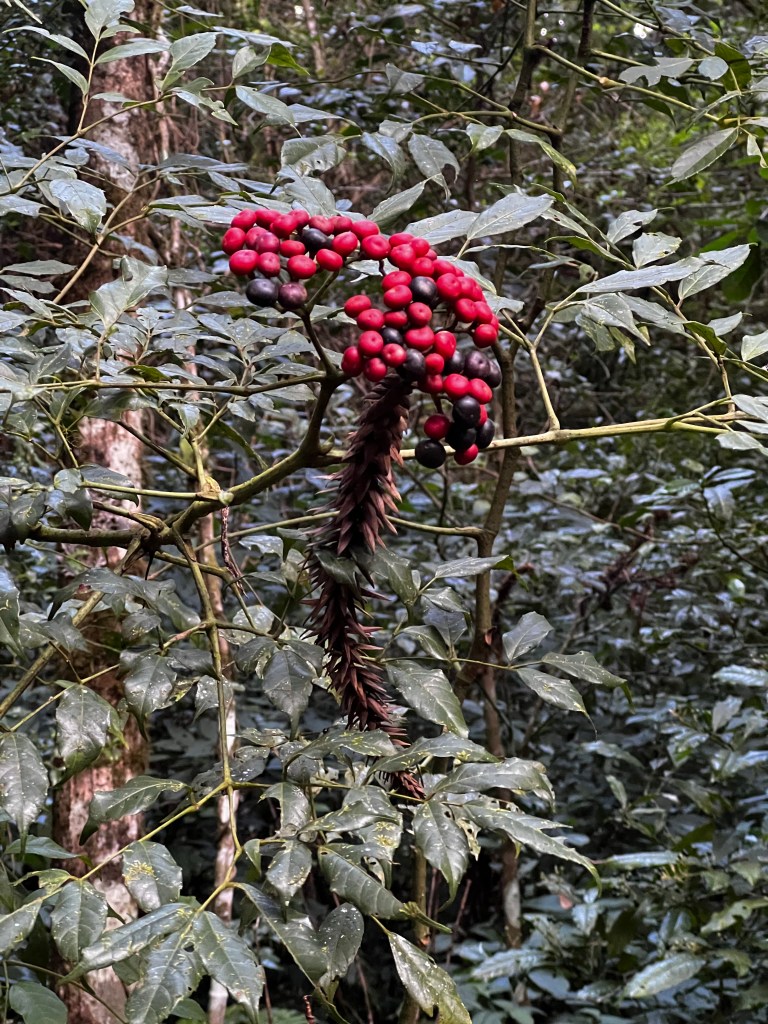
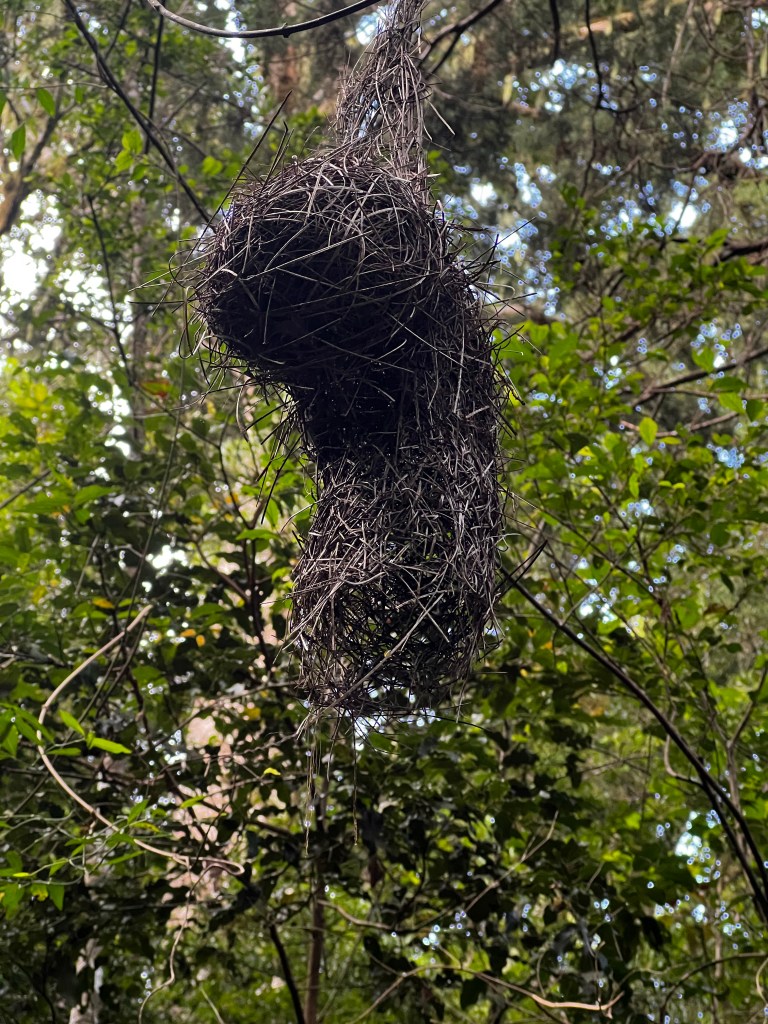
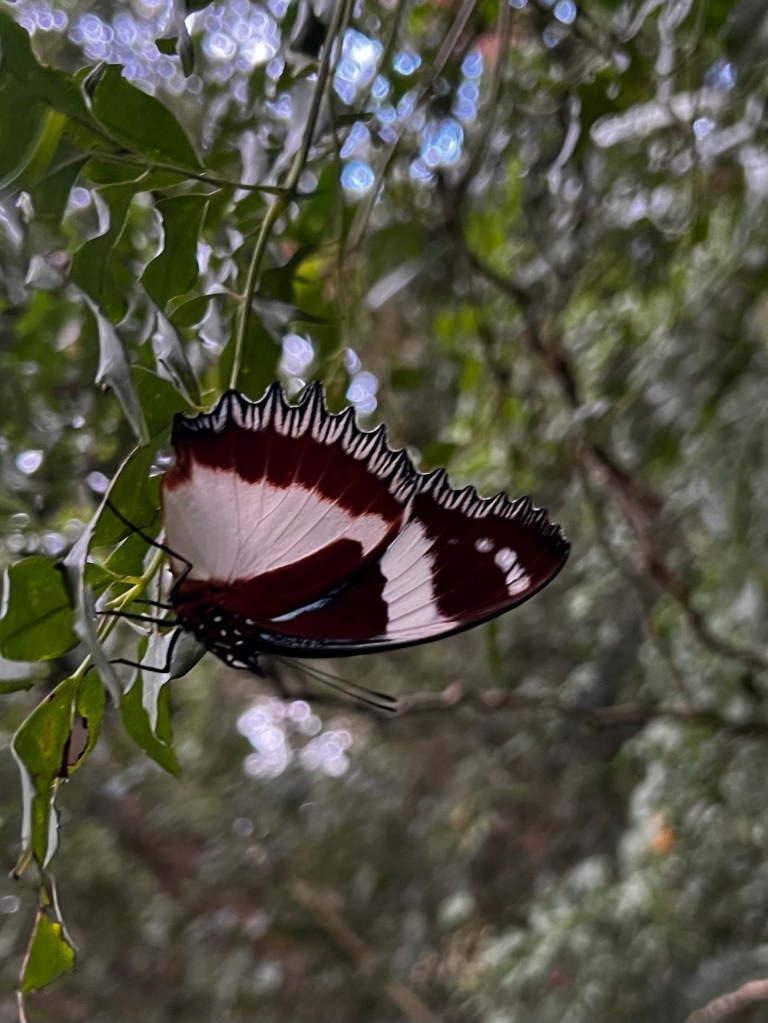
We also saw:
- Pied crow
- Golden orb web spider
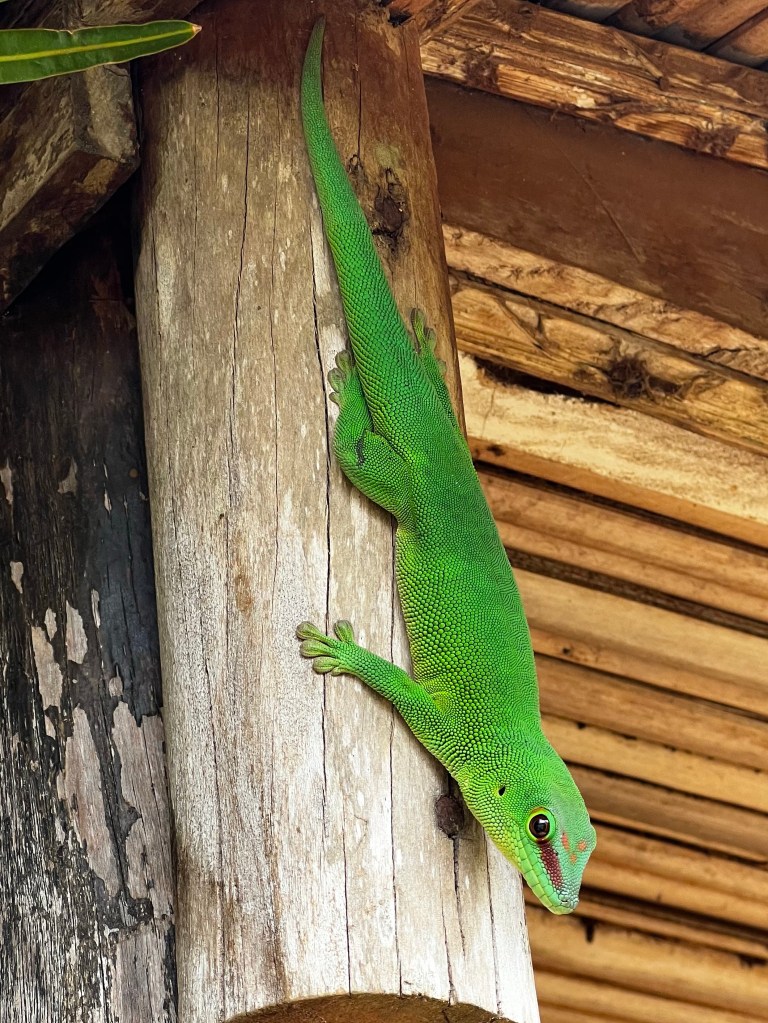
- Madagascar day gecko
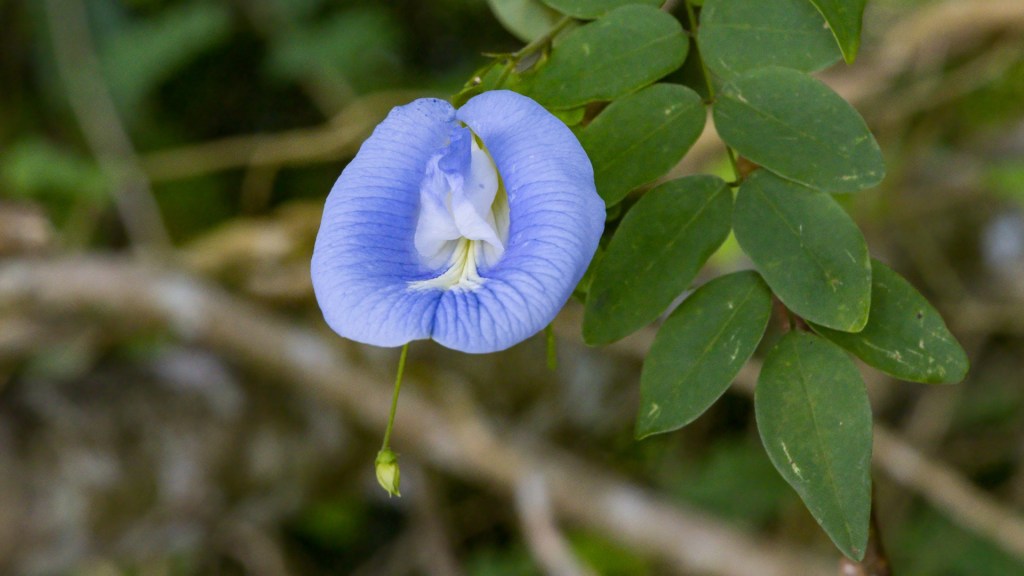
- Blue pea called a clitoria (shame!)
- Madagascar diadem butterfly
- Madagascar paradise fly catcher
- Sanford brown lemur
- Weaver bird
- Hooked bill vanga
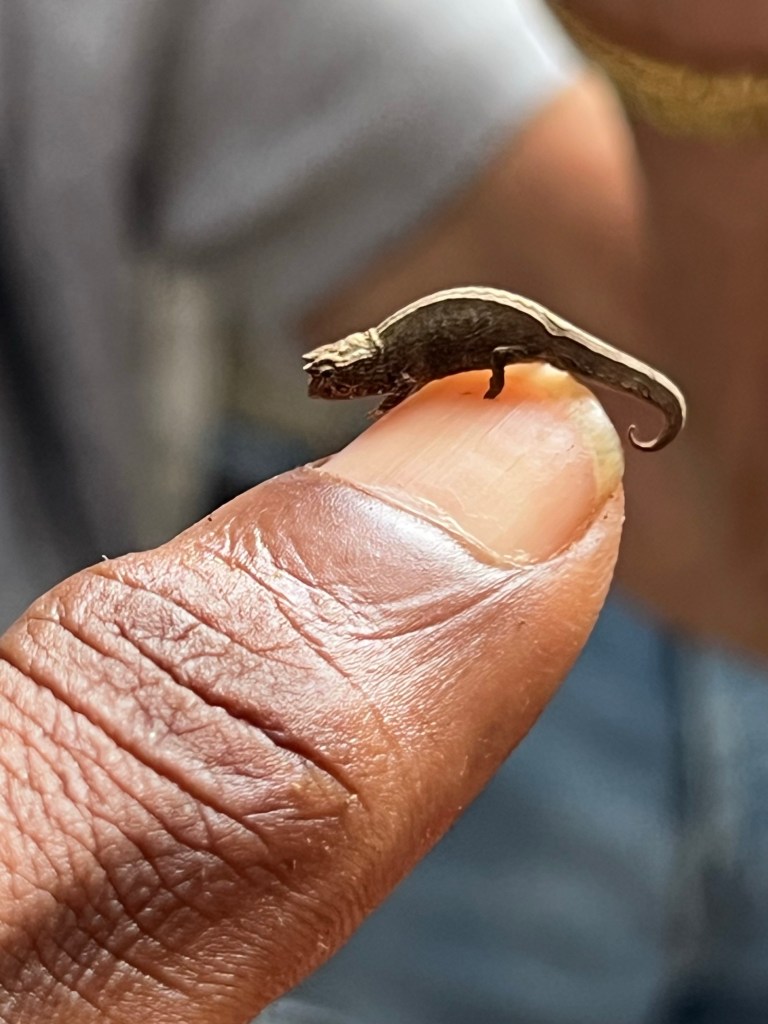
- Stump tail chameleon
- Arthur chameleon
- Blue nosed chameleon
There are 100 species of chameleon found in Madagascar, the only reptiles which have legs underneath them rather than at the side. They can turn their eyes 180 degrees, have five toes which are fused differently at front and back and can project their tongue – 1.5 x the length of their body with sucker on end. Who knew?!
Another little know fact …. the Dodo came from Madagascar!
We were slightly under pressure for time as Island Sky had a big journey ahead of her, so after a quick break of delicious local fruit and banana bread, we headed back to our cars and returned to Diego Suarez where there were some rather wonderful musicians playing on the quay.
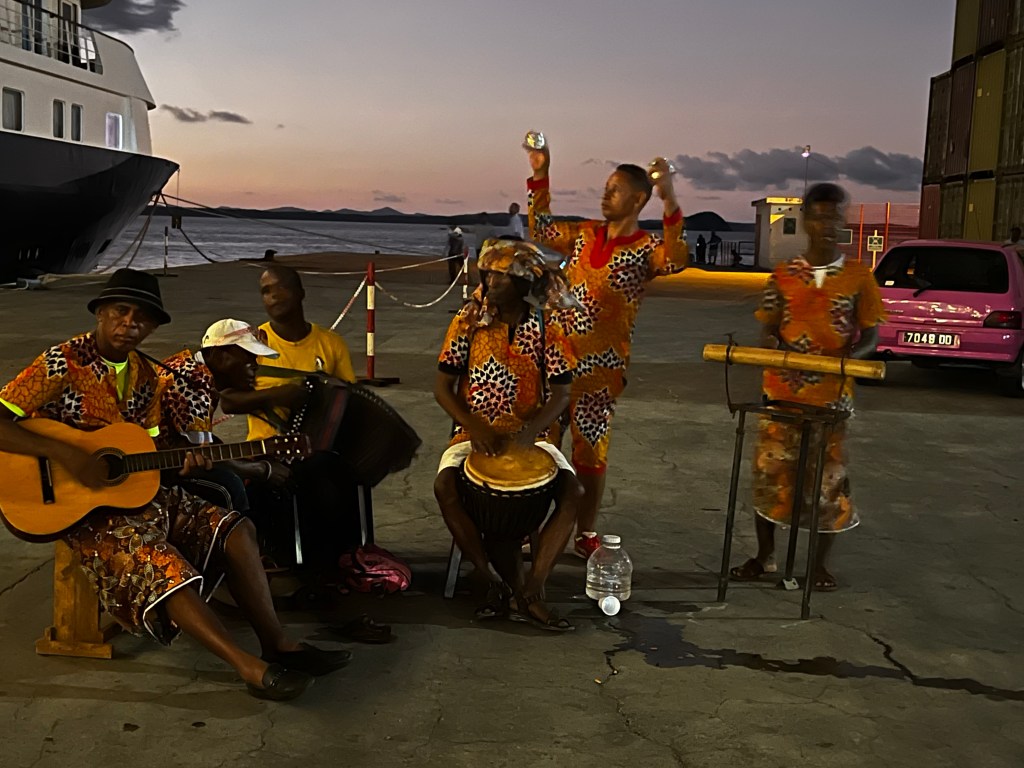
Island Sky was guided out of the bay by the local pilot, as we said a sad farewell to Madagascar and headed 241 nautical miles northeast towards the Seychelles.
 EC-Rider Travels
Leave a comment