
Another lie in this morning, though we had in fact, moved time zones and lost an hour! During breakfast, a pod of spinner dolphins joined us on the bow of he boat and accompanied us for a while, before we headed back to school, this time with Tom telling us all about the wonderful seabirds we are seeing as we travel across the Indian Ocean and the vital part they play in the health of the marine ecosystem.
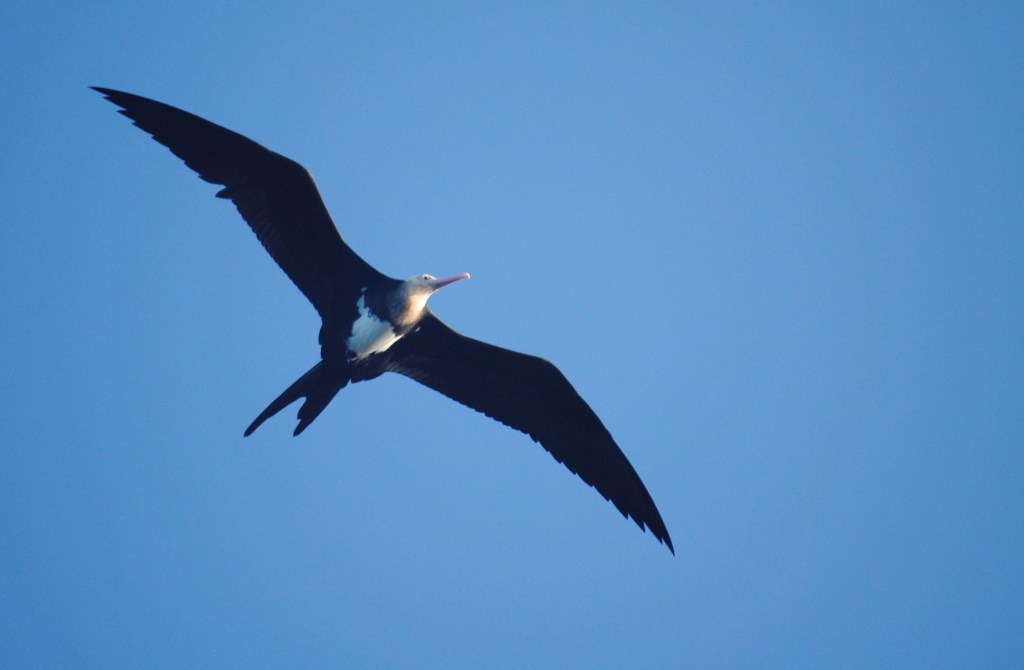
We were now seeing so many more birds in particular red-footed and masked boobies, frigate birds, tropical sheerwaters and terns about which Tom taught us some interesting facts:
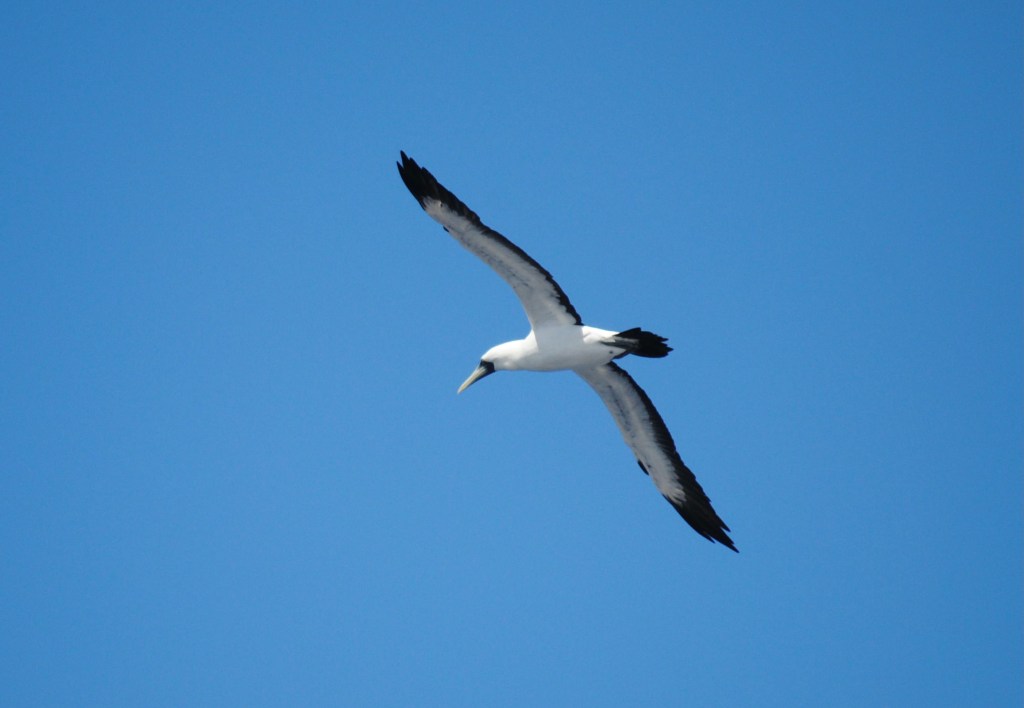
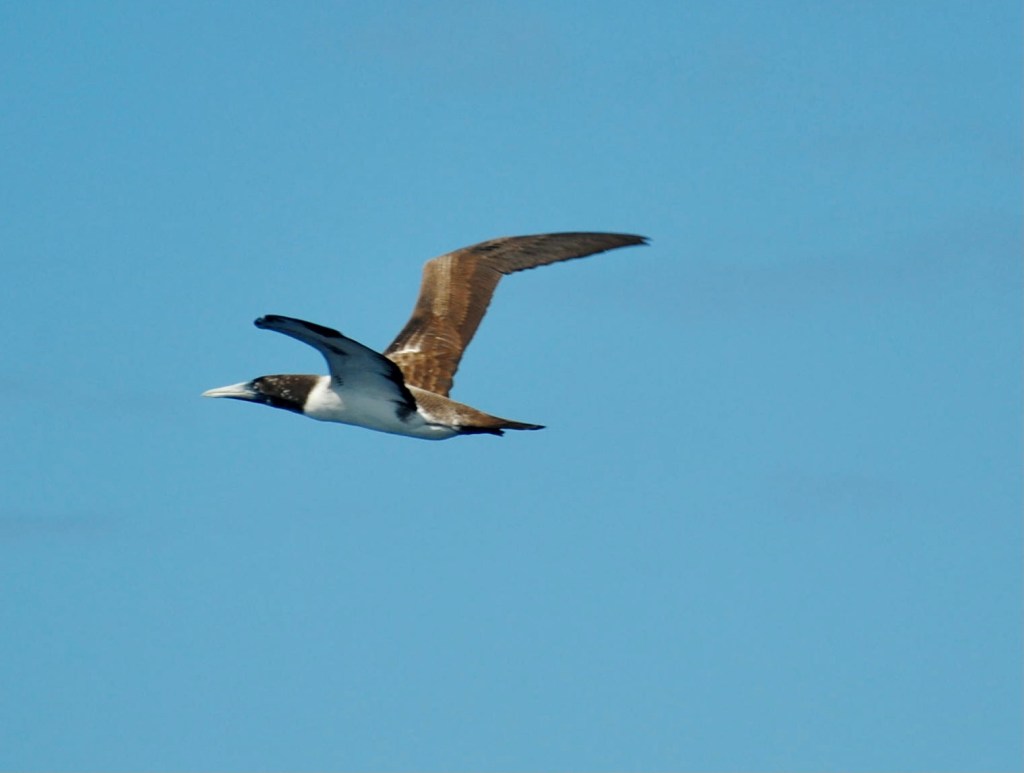
- Boobies – dislocate their wings when they dive at 50mph. Their eyes are specially adapted so they can keep them open and see immediately under water.
- Frigate birds – have hollow bones and weigh less than a kilo; they are not very waterproof and don’t have webbed feet, so are poor swimmers/divers. They prey on the poor unfortunate boobies, chasing them until they drop their catch.
- Shearwaters – can dive to 60m and make the ghostly noise we heard on Heron Island
- Petrels – have an amazing sense of smell with a special tube on their bill. They can smell plankton or their home from miles
- Sooty terns – spit on land en mass to kill grass below so they can breed there. They will not stop flying for their first four years.
- Most birds (and some animals) can turn off half of their brain at a time, so they can sleep on wing.
Later that morning we had a briefing about the Seychelles in preparation for our visit to our first Seychelles atoll, Aldabra, tomorrow.
The Seychelles, comprises 115 islands made up of two main groups: the more central Mahé group of 40+ mountainous, granitic islands and a further 70 or so outer, much less visited, flatter, coralline islands. There is about 1000km between them and the latter, rising only a few feet above sea level, are essentially elevated coral reefs at different stages of formation. They are largely waterless and only a few are inhabited. The climate remains tropical, hot and humid throughout the year.
The wildlife is diverse and includes 900 species of fish, green sea turtles and giant tortoises. There are a number of endemic birds including the Seychelles bulbuls and swiftlets; several species of tree frogs, snails, snakes and chameleons. There are few endemic mammals although they do have their own species of fruit and sheath-tailed bats. Indian mynah birds, barn owls and tenrecs have been introduced from Madagascar.
Considerable efforts have been made to preserve the islands’ biodiversity and the Seychelles’ government has established several nature reserves and marine parks, including the Aldabra Islands, as a UNESCO World Heritage sites. Much research is taking place on these outer atolls, and there are very strict regulations as to who can visit the islands. Protection from any foreign/invasive organism is key and we were asked to bring down our shoes, rucksacks etc to be thoroughly cleaned ensuring no trace of Madagascar was taken on to the atoll.
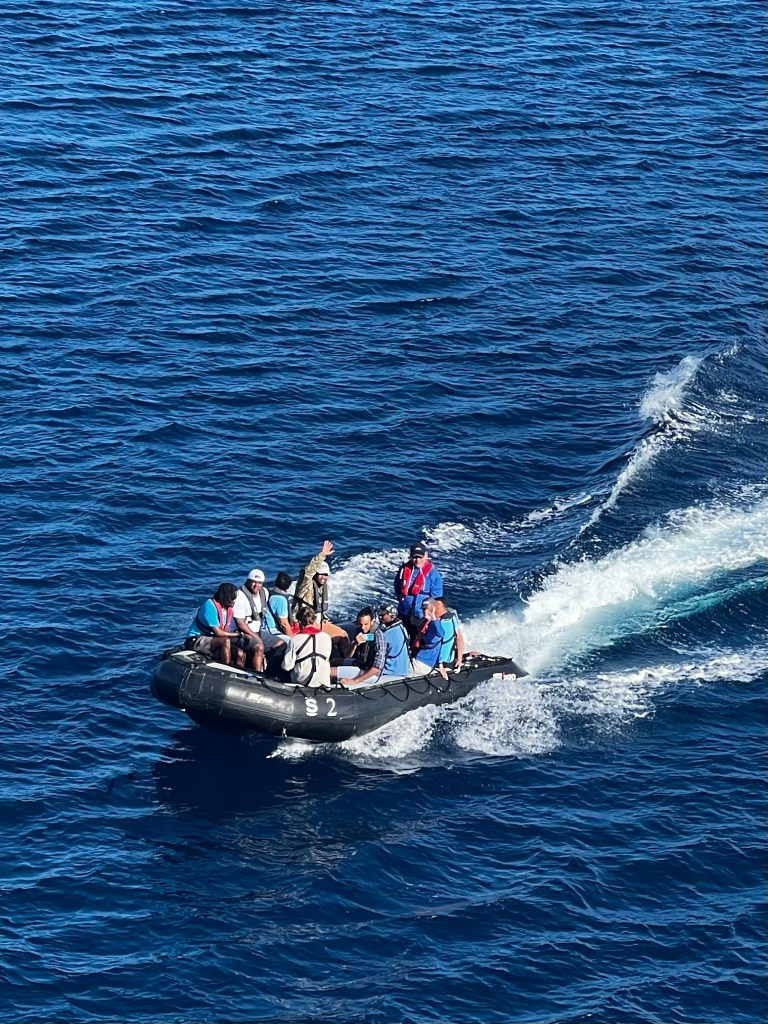
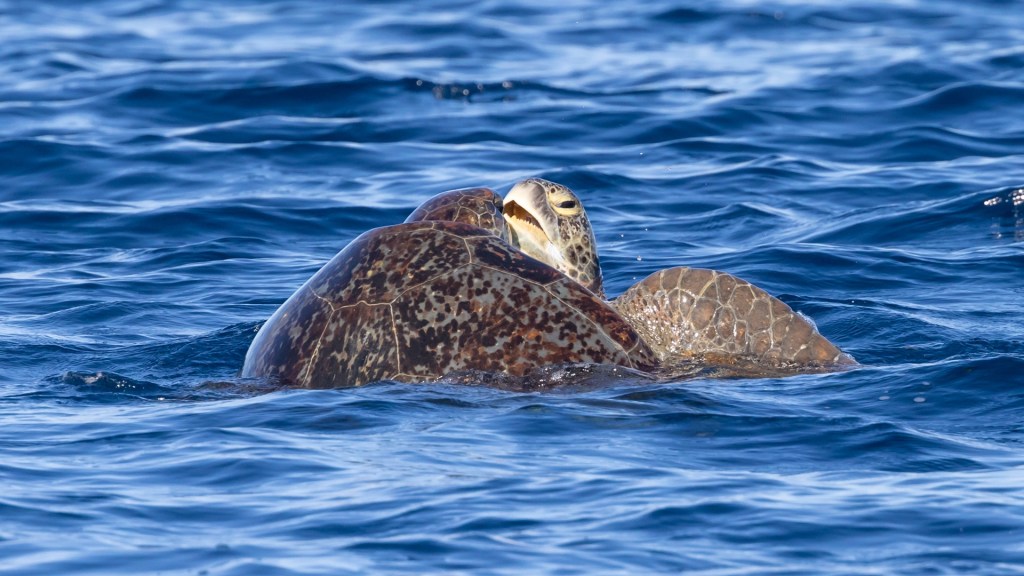
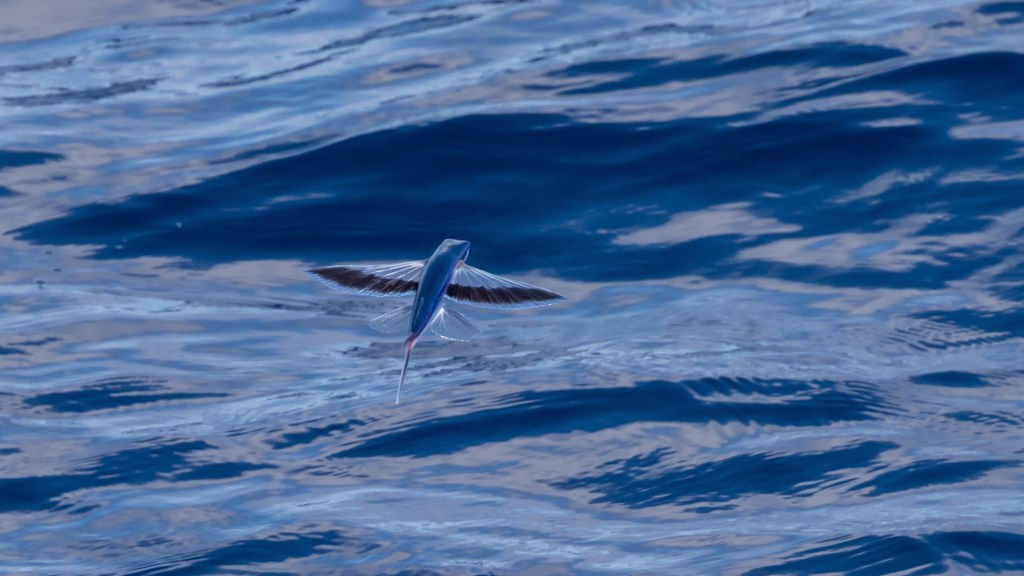
It was a hot, hot afternoon on deck 6 as we continued on our journey, arriving just off Assumption Island (30 miles south of Aldabra atoll) on schedule, just before 4. At 4pm, on the dot, a plane carrying the Seychellois officials, flew in from Mahé, and were collected by the zodiacs to come on board and complete all the immigration and clearance papers. We were then on our way to the legendary Aldabra atoll. Just as we sailed off a pair of green turtles were spotted mating on the surface of the water, together with a number of sizeable flying fish and, as the sun was setting, we also had a glimpse of a whale – amazing!
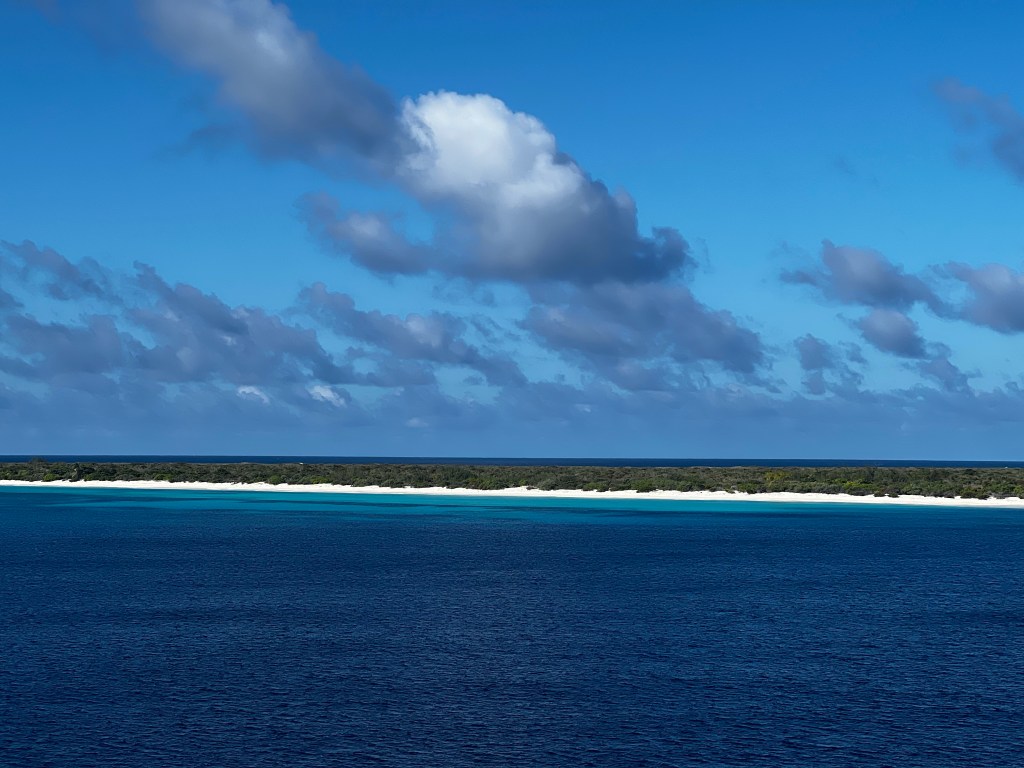
Although we were not to land there, it was lovely to see long, skinny Assumption Island with its white, white beaches and azure blue bays, and to learn a little about it in our briefing that evening. It was discovered by Nicolas Morphey on 14 August 1756 and named after the holy feast of Assumption celebrated the following day. In 1908 it was leased to Mr Svay of Mahé, who built a coconut plantation, however he soon realised the collection of guano was more lucrative and this continued until 1983. The villagers were then employed as fishermen, fishing for bêche-de-mer (sea cucumber), until it became regulated and no longer profitable. There were talks of converting the island into an American military base, but strong protests from environmental groups prevented this, however in 1990, the airfield was built and there are currently discussions with India who wish to lease the island for their military.
After another delicious supper, some of us went to deck six for a bit of star-gazing, with several of the team talking us through their favourite constellation – I am not sure it was their specialist subject, but they did a great job and the clear, unpolluted sky was magnificent.
 EC-Rider Travels
Leave a comment