
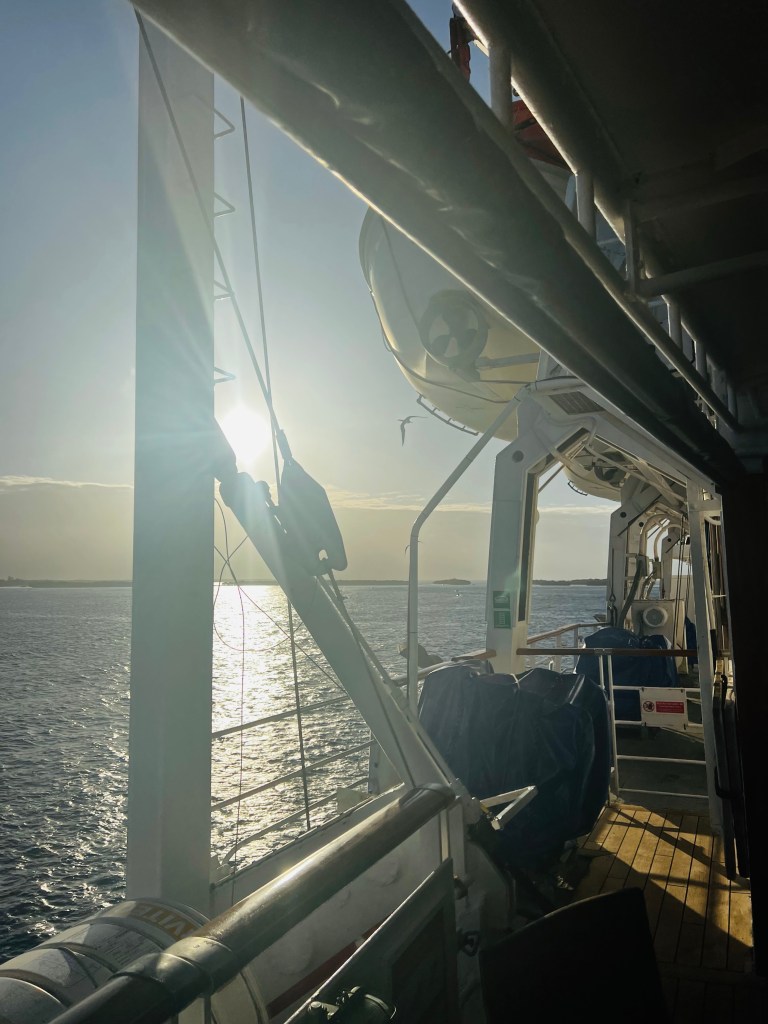
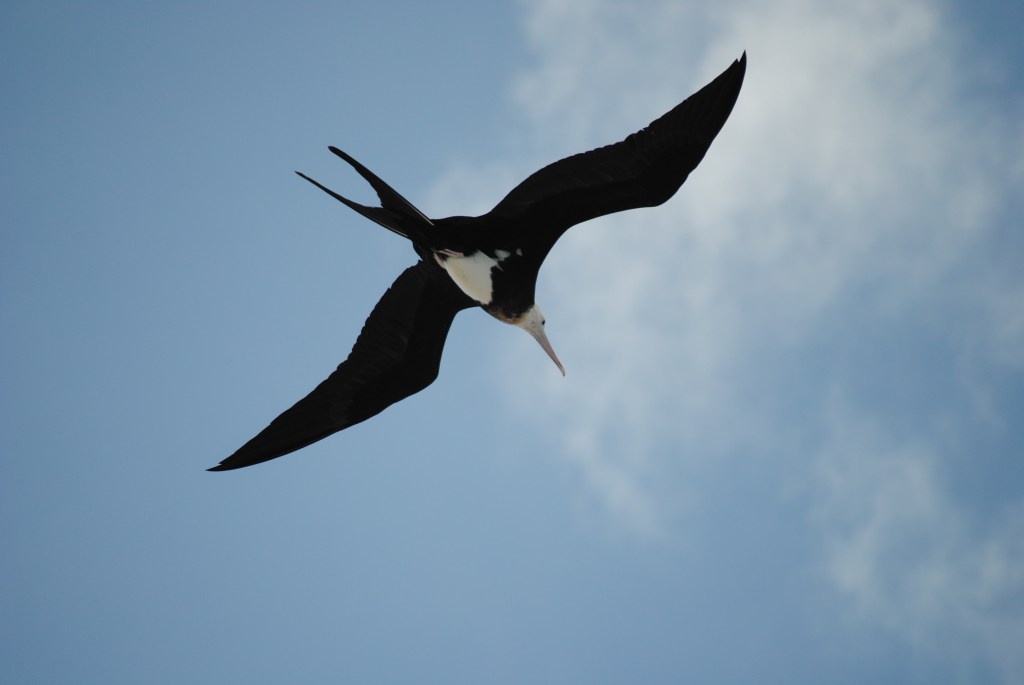
Lucinda and I rose early to see the sun rise over Picard Island and the frigate birds flying above us. This is where the research station is located and the only part of the atoll permitted to visit. Six of the resident researchers had been brought aboard to join and brief the expedition team over breakfast. We were divided into groups and headed off together on our zodiac cruise of the atoll.
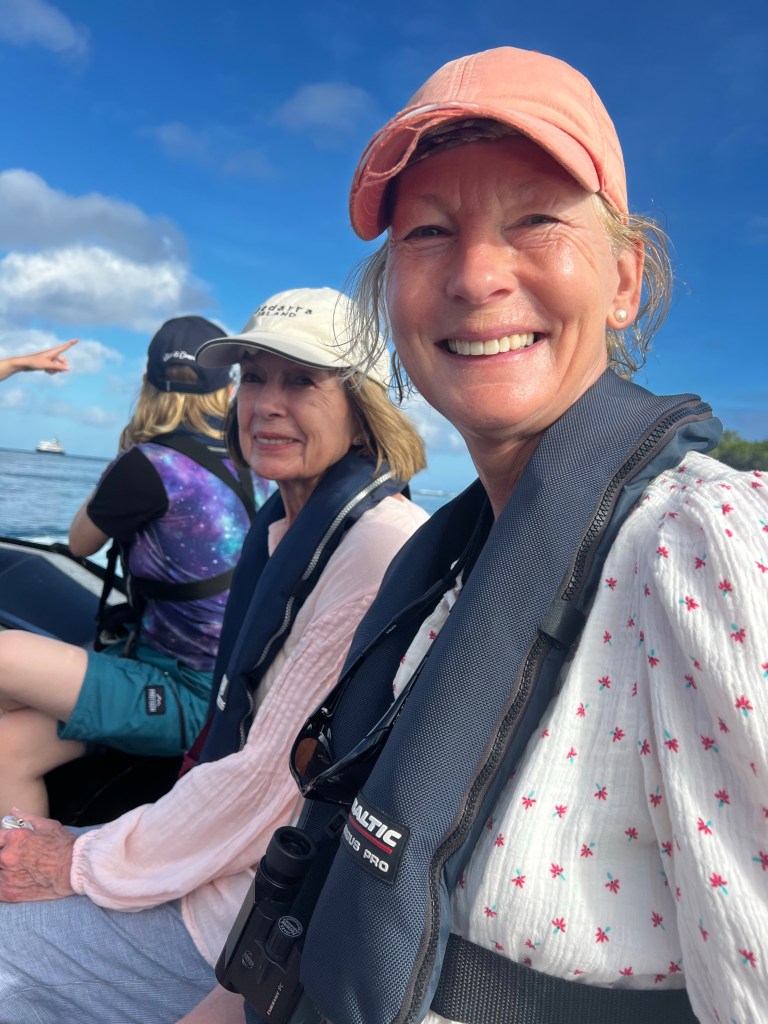
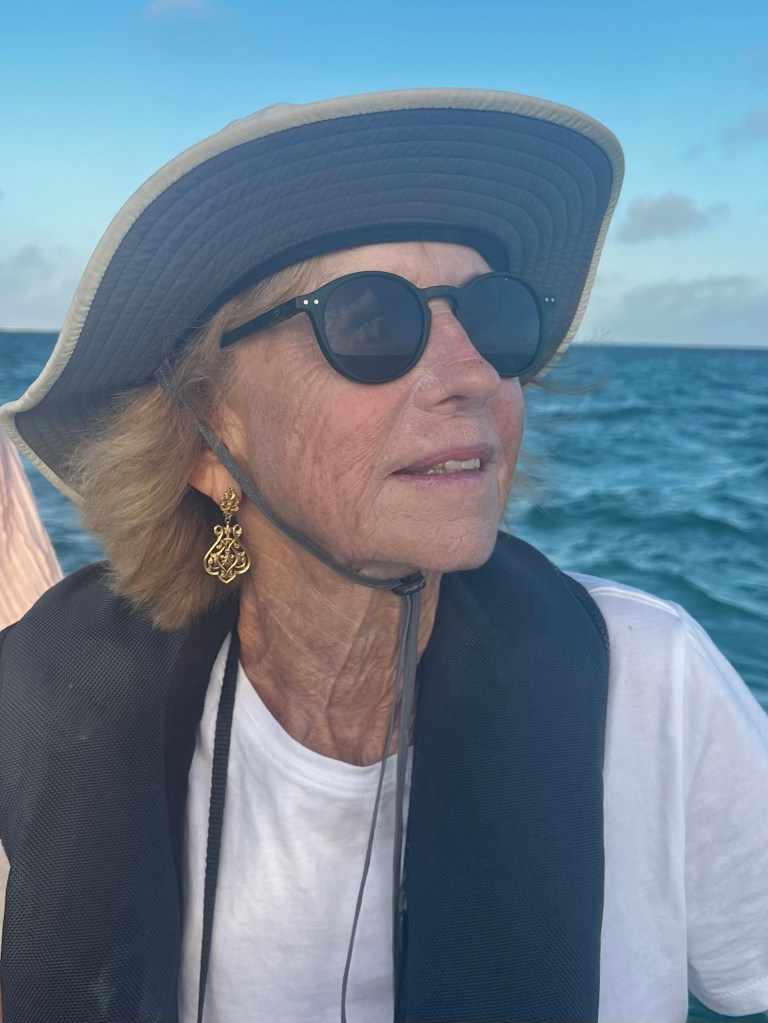
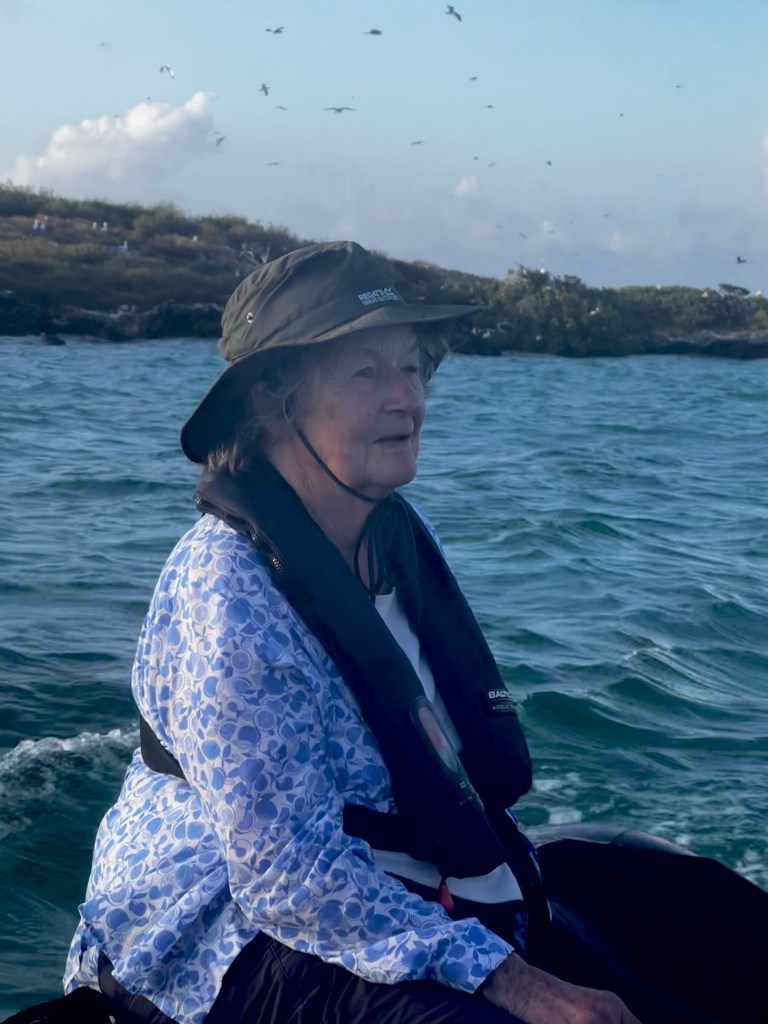
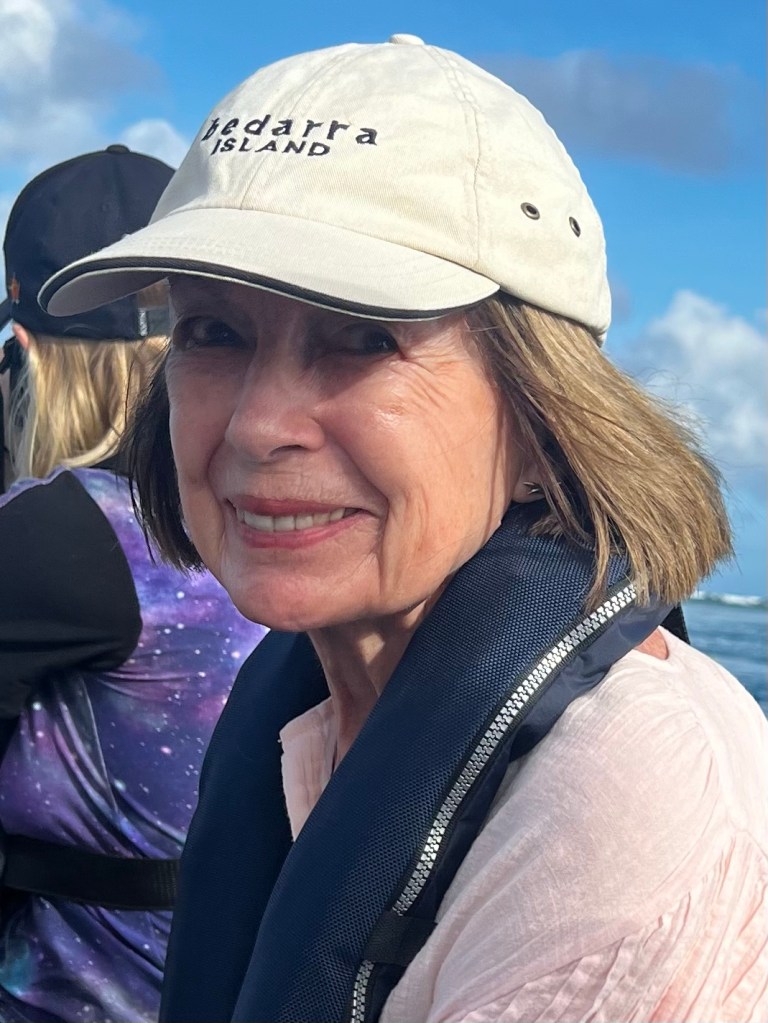
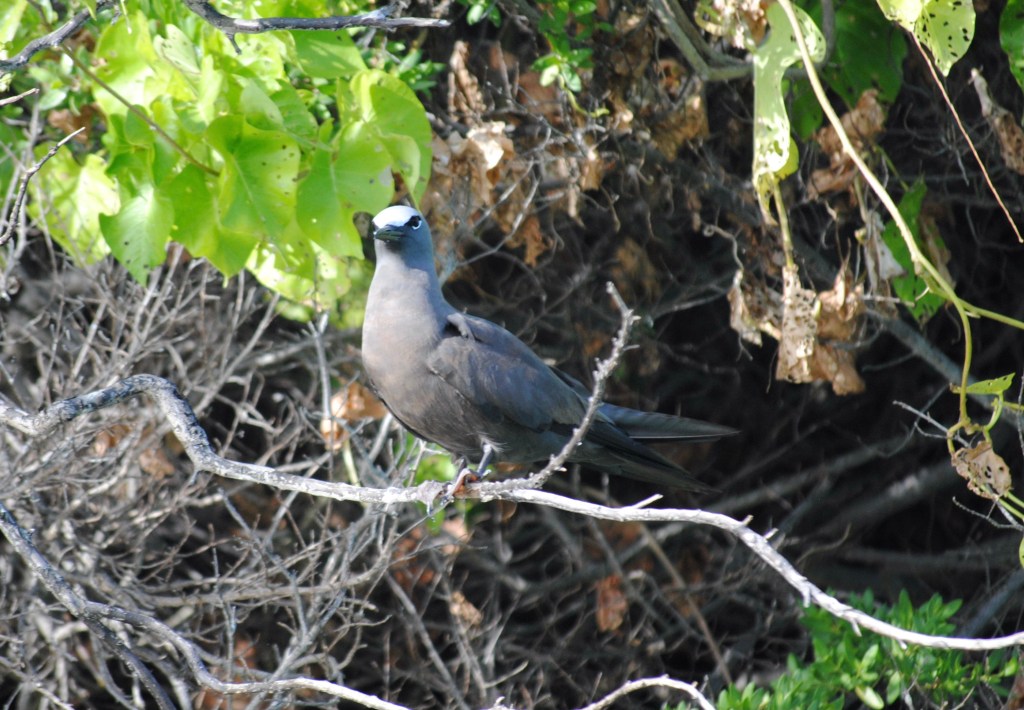
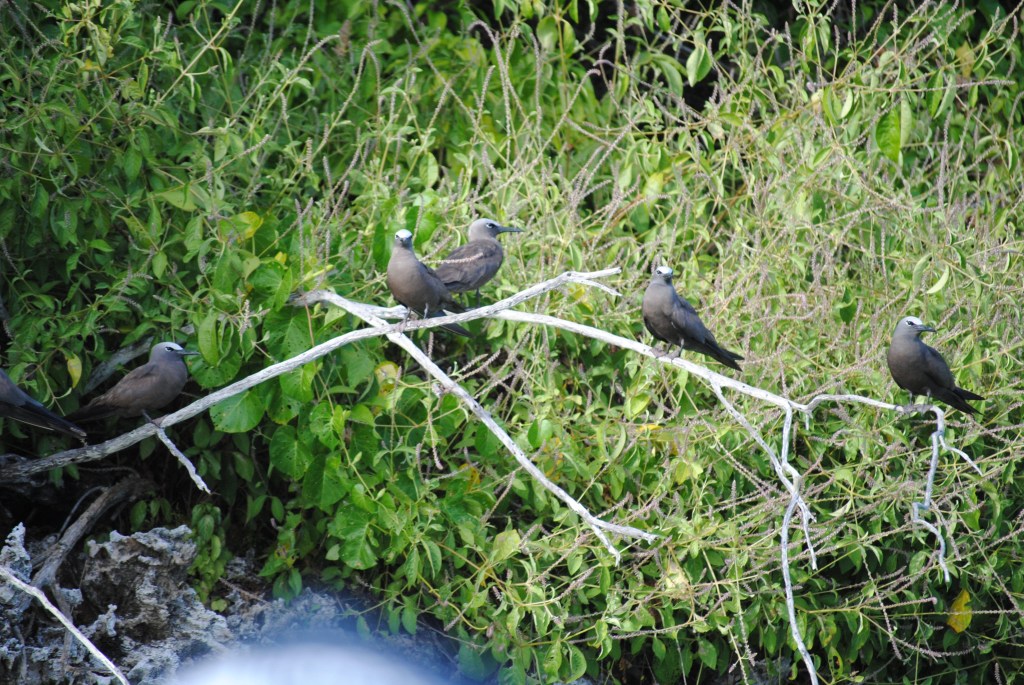
As we entered Aldabra, via the Passe du Bois, into the lagoon surrounded by champignon formations, we saw brown noddy’s (as we saw on Heron Island) nesting in the mangroves. They share the island with 16,000 frigate birds, 36,000 red footed boobies, also beautiful red and white long-tailed tropic birds, fairy terns, ruddy turnstones, black-naped terns and herons not to mention, about 100,000 giant tortoises. There are also an increasing number of both green and hawksbill turtles around the atoll – apparently a 500% increase since 1970.
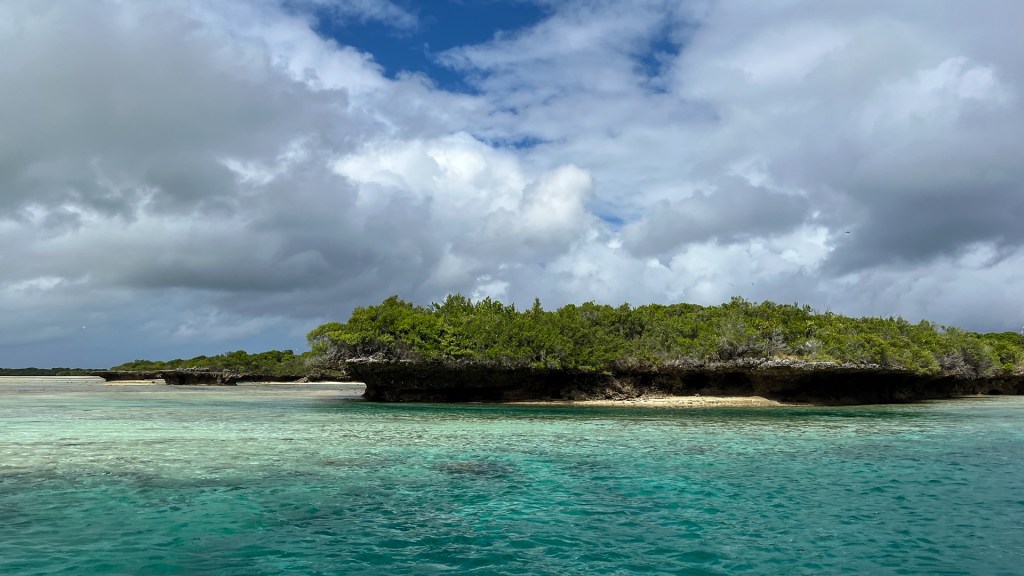
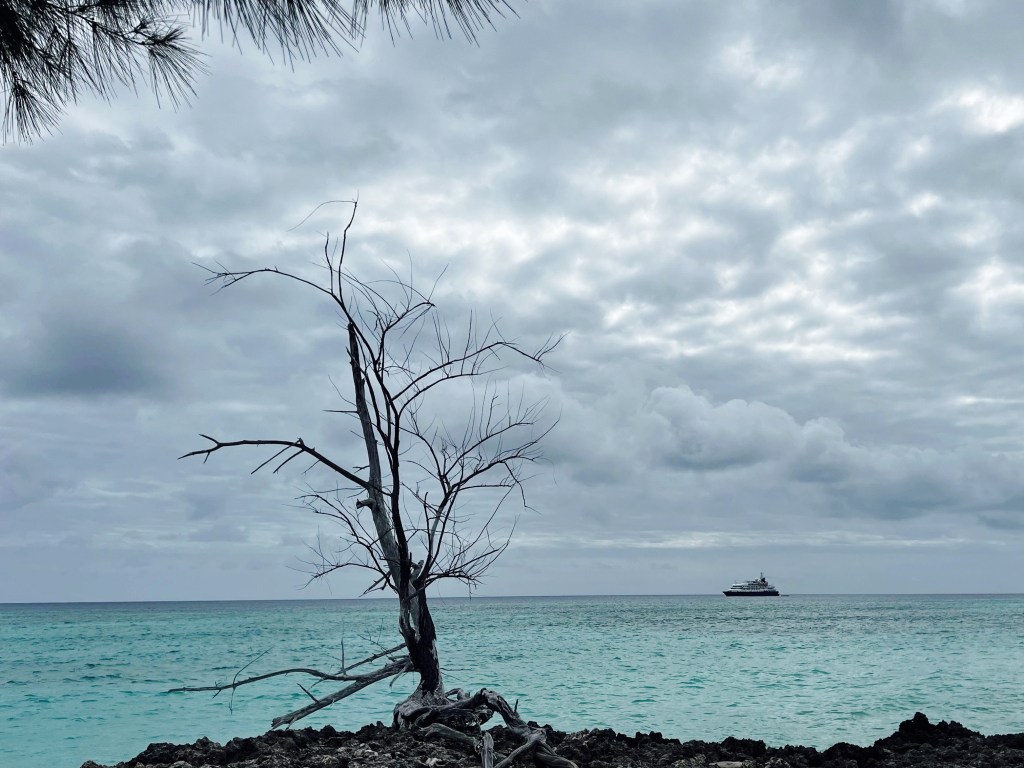
Being a spring tide, the sea was rushing out from the atoll at an alarming rate so our Zodiac cruise was cut a bit short as we raced back to MS Island Sky in the last of the water and she moved a little way further round the atoll to the Ranger’s Station. The pride of the researchers in their work and nervousness of invasive plants and creatures coming on to these fragile islands, is evident and on our return we had further Bio-security training by Annabelle the leader of the research team. Despite our kit being scrubbed within an inch of its life by the expedition team yesterday, it was done again, much more stringently, by the research team and once passed, we had to leave everything we wished to take on to the island with them, until we left.
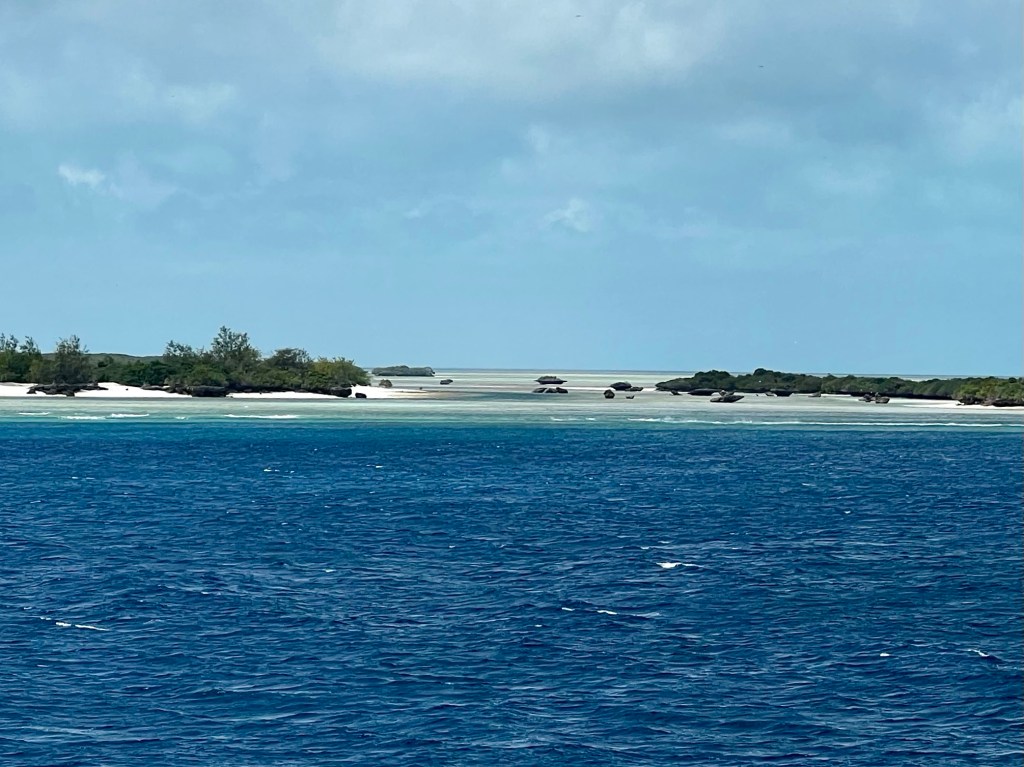
Aldabra, a UNESCO site and only accessible by boat, is the world’s second-largest coral atoll, made up of four main islands and about 42 islets stretching approximately 34 x 13 km. It is closer to Madagascar than the inner Seychelles. It has a volcanic crater, now a lagoon, which is the size of the whole of Mahé and a unique set of tides with 60% of the water leaving during low tide. It has been submerged twice.
The atoll was discovered in 1509 by the Portuguese and in the middle of the 18th century the islands were dependencies of Reunion Island from where expeditions were launched to capture their giant tortoises. By 1900 the tortoises were almost extinct. Small settlements were established to exploit and export the islands natural resources, but with no fresh water, life was hard. And indeed, still is for the seven researches and their support team of five who work together on this little island for 11 months of the year. They are monitoring the wild-life and counting the many birds and creatures endemic to this extraordinary corner of the Indian Ocean .
After lunch, we again headed off in groups, Fleebags and I joining the bird-tour with Tom and Annabelle who explained how the research is carried out and about life on a remote desert island. Inevitably a lot of focus is on collecting rain water and with only solar energy, they live as greenly as they possibly can. They try and grow some fruit and vegetables but once again the limited rain water makes this hard. There is no shortage of fish but they only receive fresh delivers every four months!
Attempts to grow plantation crops of coconut, cotton and sisal in the past, all failed due to the lack of fresh water, and it has taken over 30 years to rid the island of these invasive plants. Goats were also introduced in the late 19th century as a food source, and have taken over 20 years to eradicate, however rats and cats remain a major issue. They hope to launch a rat and cat eradication programme…. at a cost of €21.5m! They lost 30% of their coral due to bleaching, but it is beginning to re-establish itself.
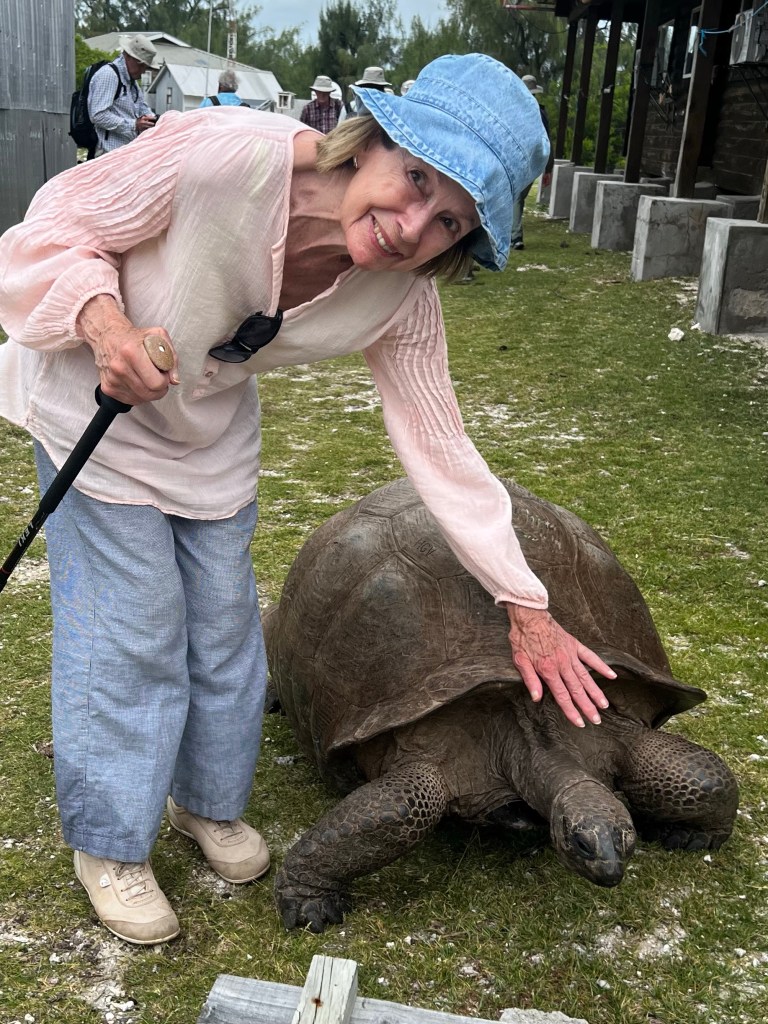
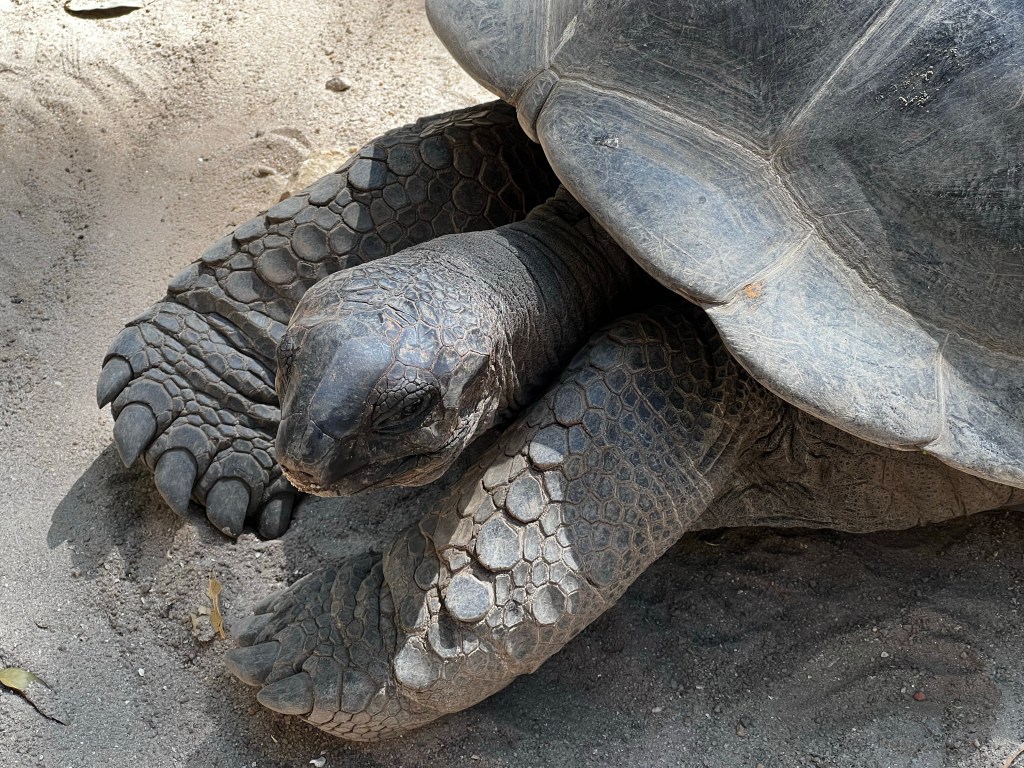
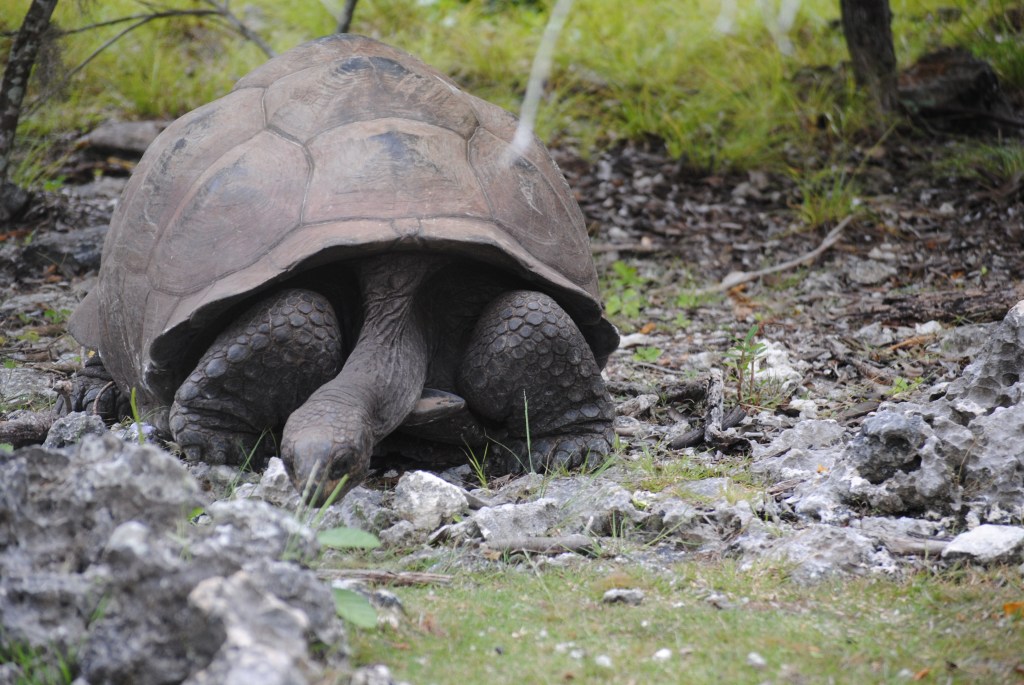
The first thing you see when you reach the atoll, are the giant tortoises which are meandering around almost everywhere you look. There are now about 100,000 of these, all different sizes according to their age. They usually live to about 150 but can go on to 200.
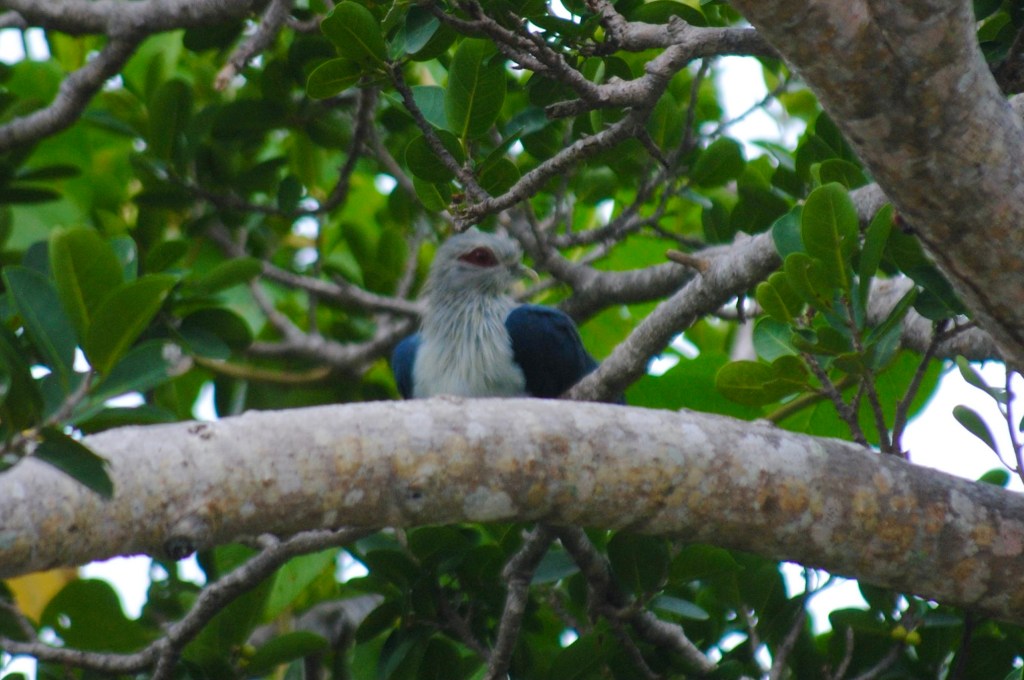
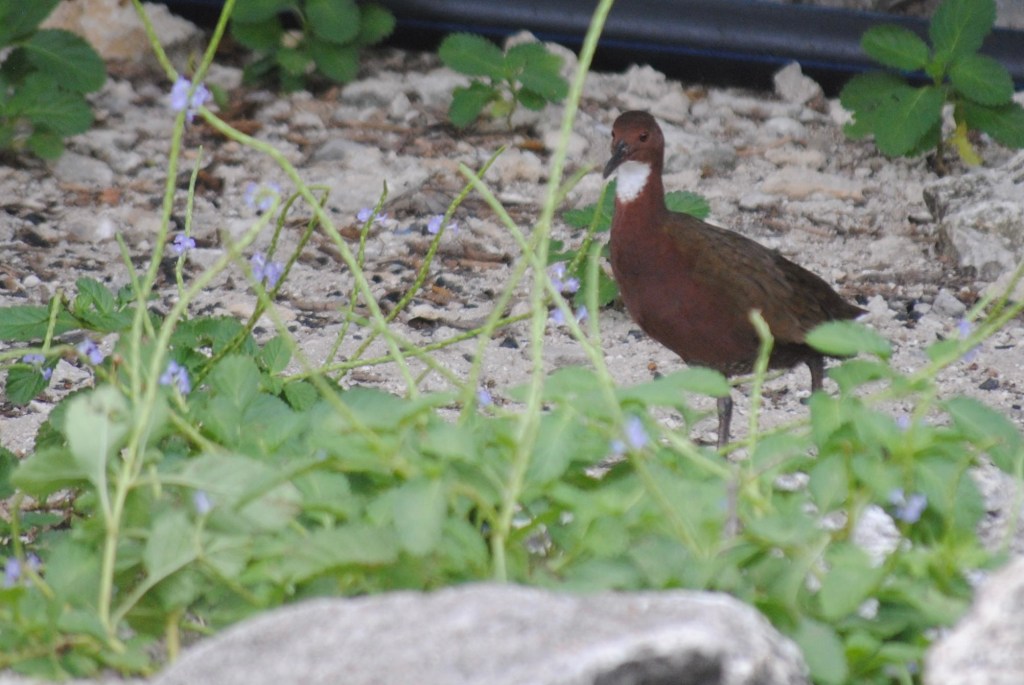
As we left the researchers little settlement we also saw a number of birds:
- Blue pigeon
- Flightless white throated rail
- Madagascan bulbul
- Malagasy Kestrel
- Sun bird
- Red-billed tropicbird
- Seychelles fody
- Madagascar white eye
- Grey heron
- African turtle dove
- Aldabra drongo, which Tom was very excited about.
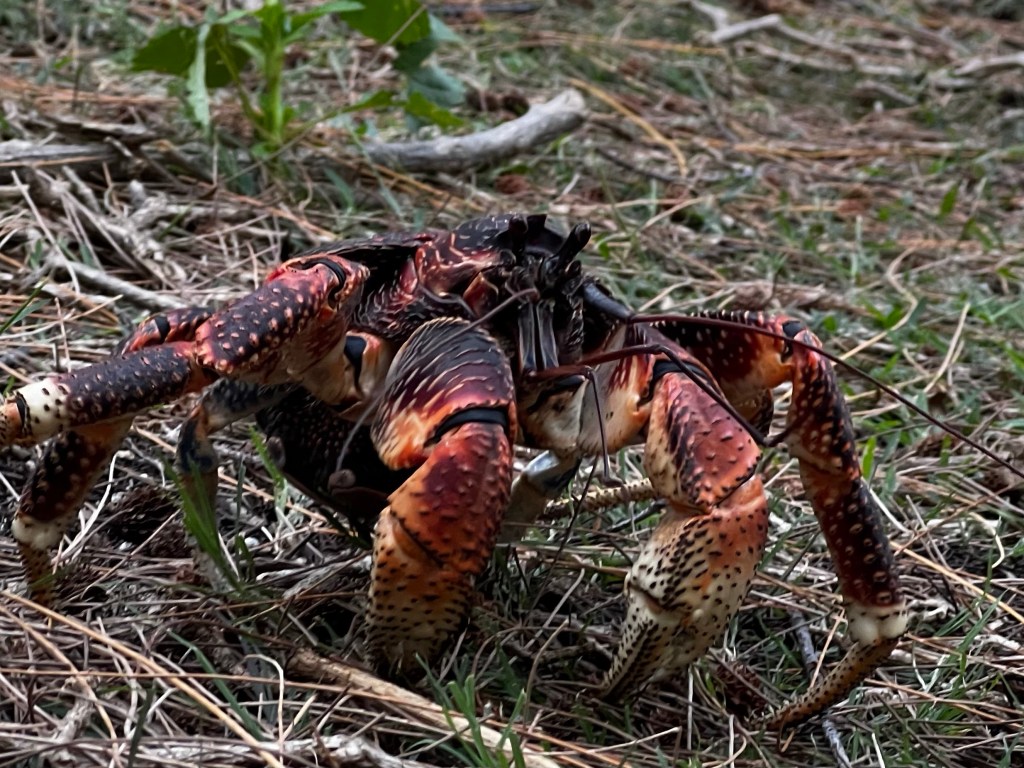
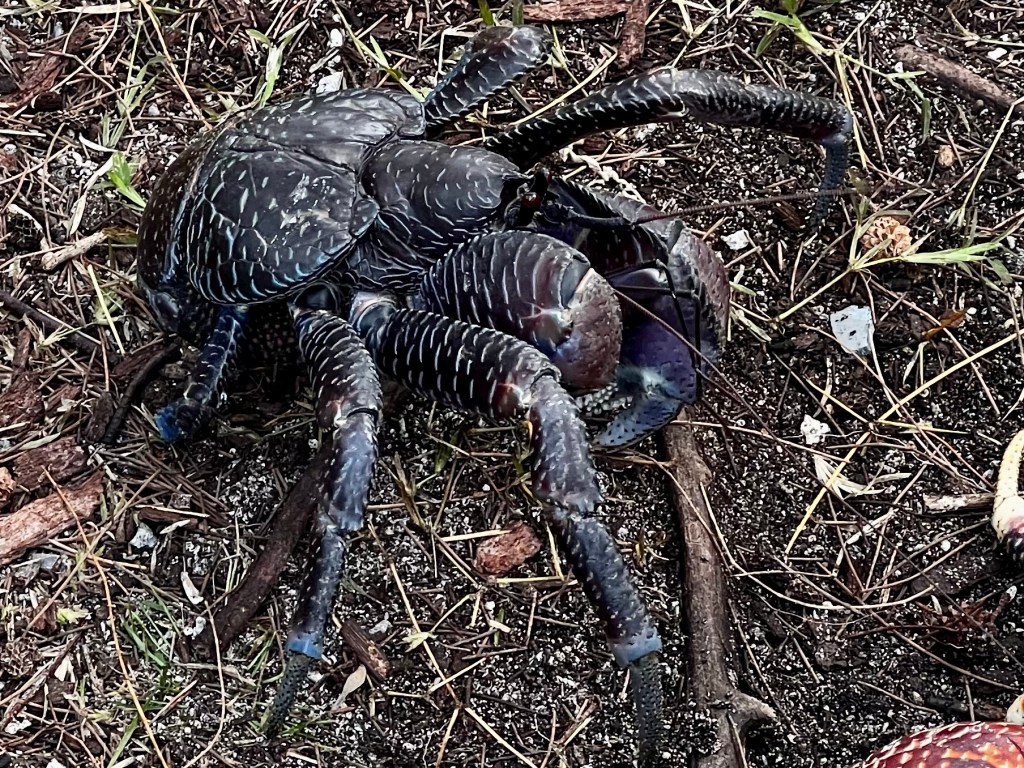
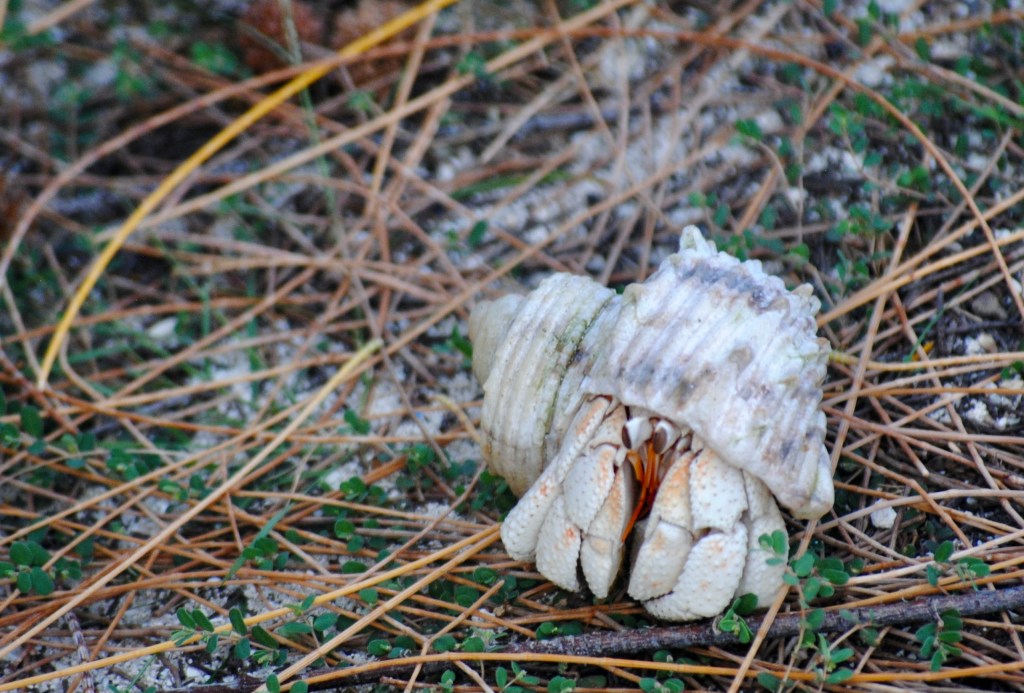
As we came back into the settlement there was a group of the most amazing coconut crabs, some orange and some purple. They are a kind of hermit crab and when young will live in a shell they find, but as they mature, so does their own shell and they no longer need to rely on the protection of someone else’s!
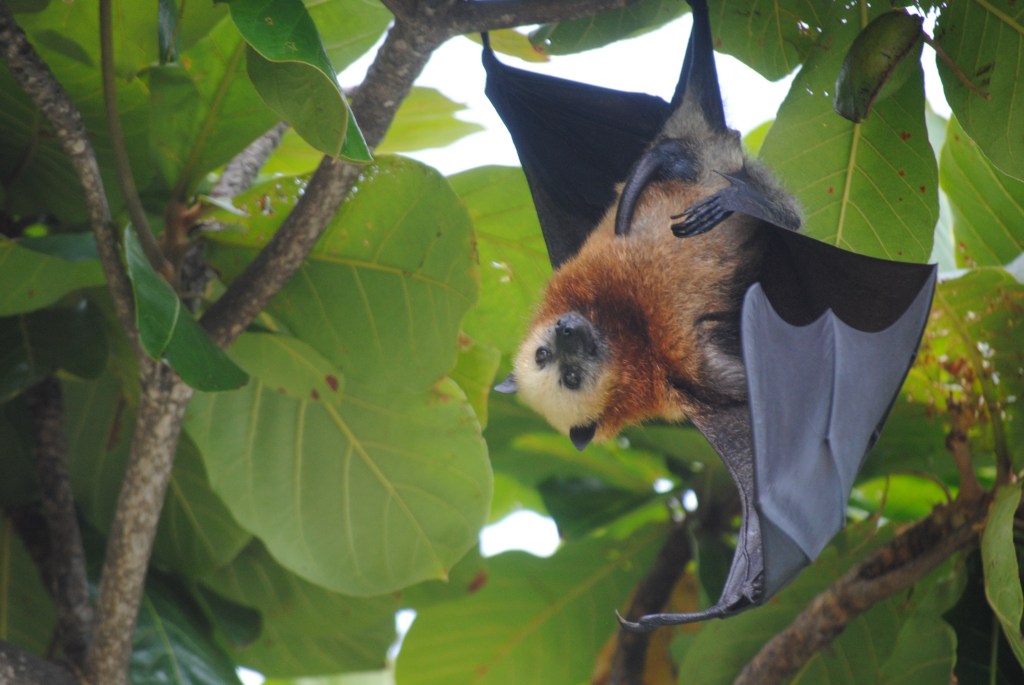
We also saw a very rare Pteropus, a (rather well endowed) bat, endemic to Aldabra, of which there are only about 3-400 in world. It was rather sweet and fox-like, hanging from the trees, similar to the ones I saw with Lucy Farmer in Melbourne.
Another delicious dinner and early bed …. It has been a great day.
 EC-Rider Travels
Leave a comment