
Horribly early start this morning to catch the 07.50 flight to Hanoi, but all ran very smoothly and we were in the capital city by 9am. Hanoi was the first capital of Vietnam under the Ly dynasty and remained so until 1802, when our friends the Nguyen dynasty moved the capital to Hue. In 1902 the French reinstated Hanoi as the capital of Indochina and in 1945, following the Japanese defeat under Ho Chi Minh, the city became the capital of the Democratic Republic of Vietnam. It was heavily bombed during the Indochina wars, so few of the original buildings remain. It is incredibly busy and the military presence is very apparent. The centre has sophisticated government buildings but beyond, is pretty chaotic with a thick layer of dust over everything.
It was very overcast when we arrived and as we reached our first stop, the Temple of Literature, the heavens opened.. 😒. Ha explained that this was typical at the start of the summer and it soon stopped.
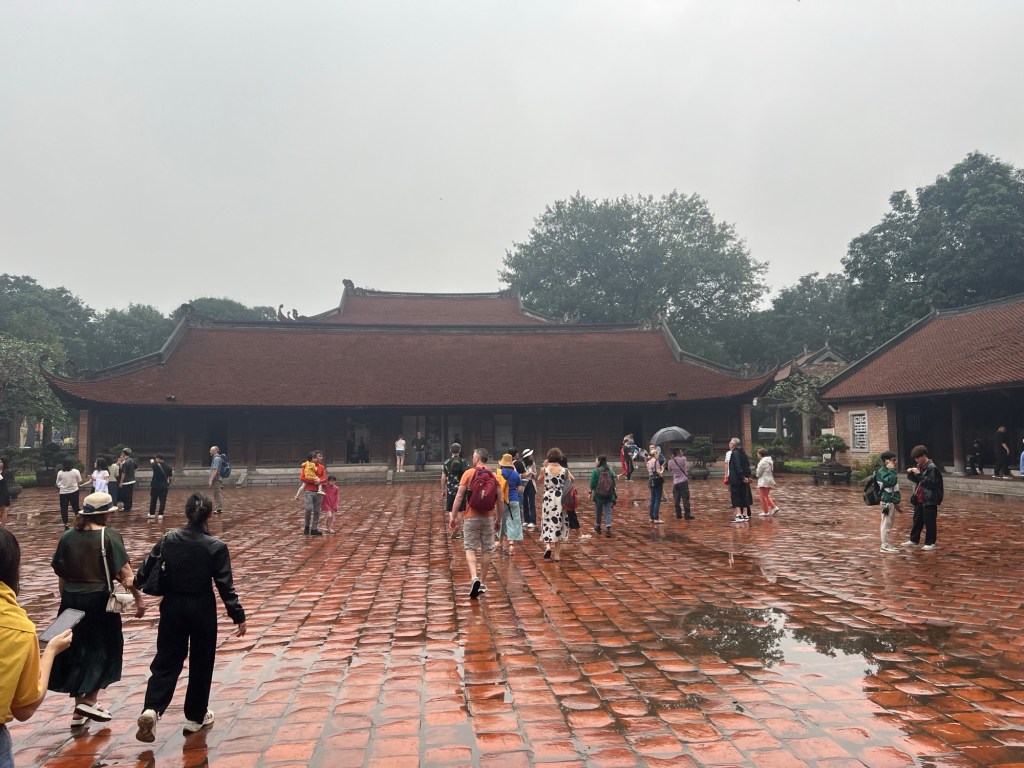
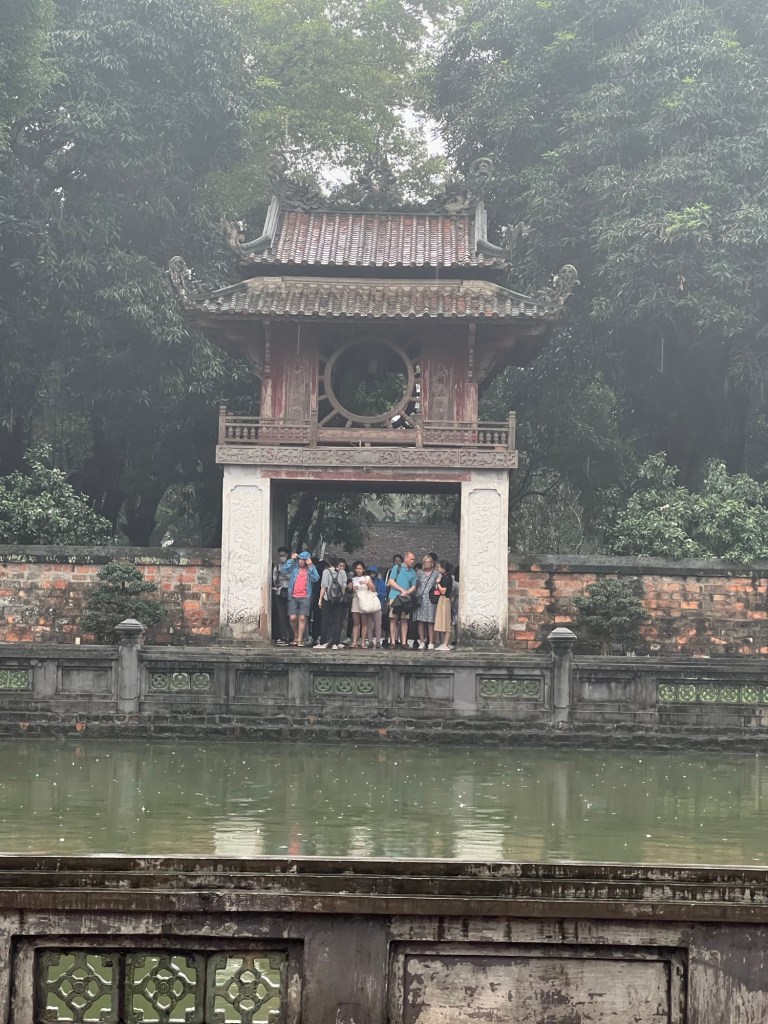
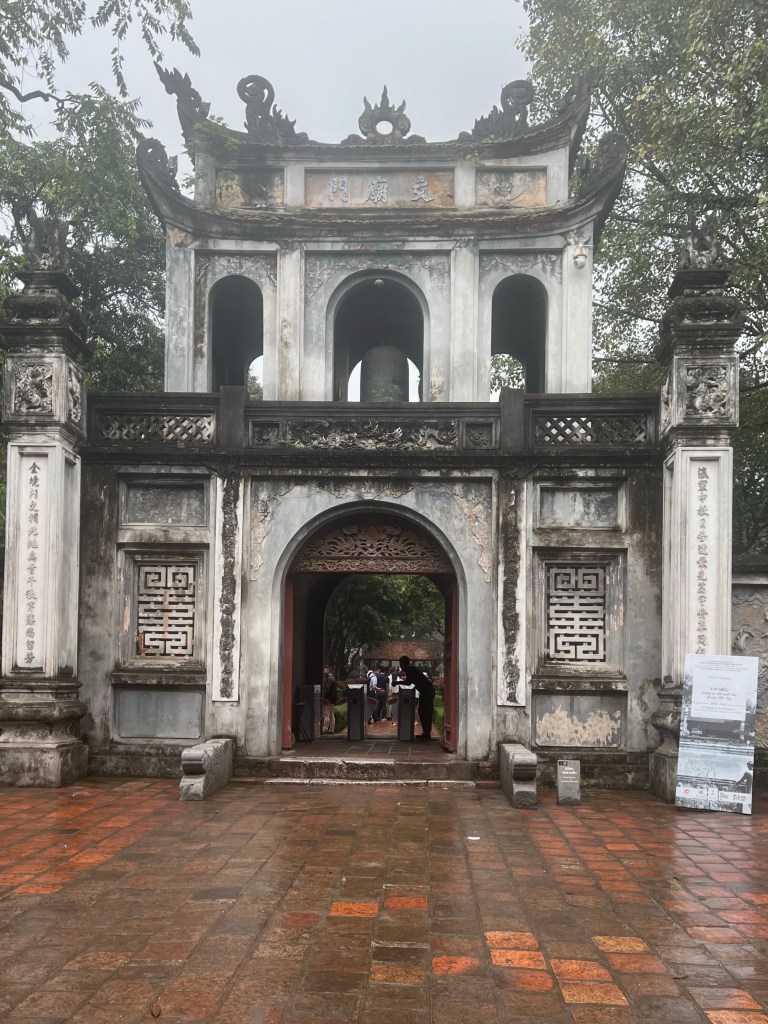
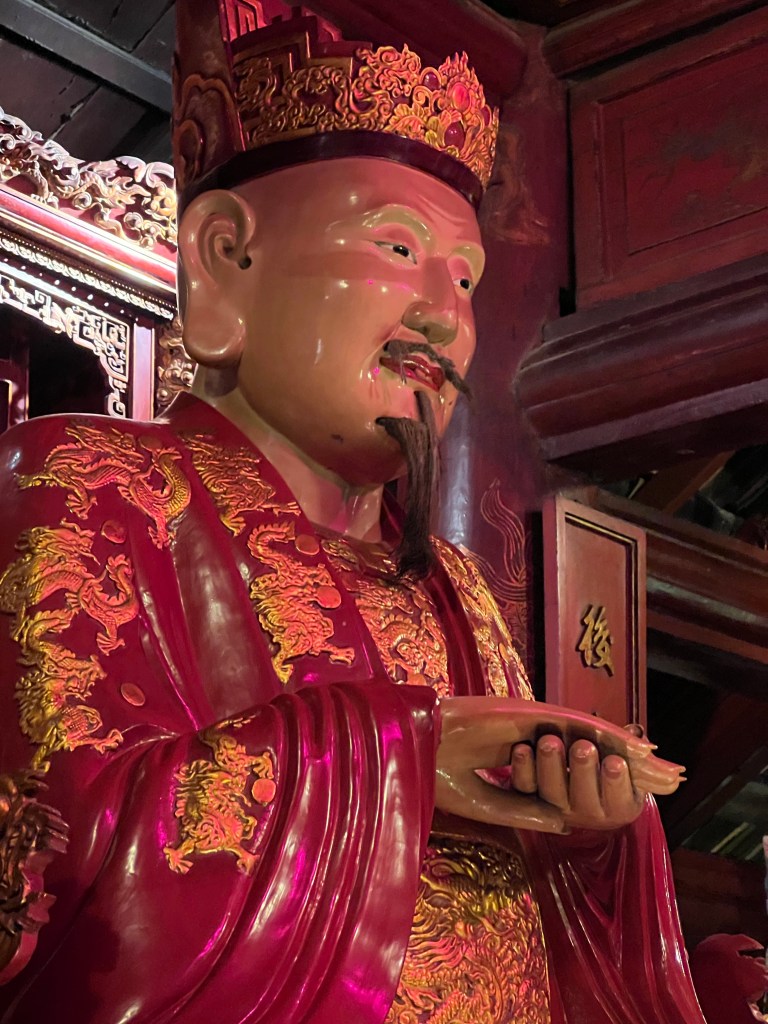
We continued our visit of this great centre of learning which was founded by Emperor Le Thanh Tong in 1070 and is dedicated to the philosopher Confucius. Confucius’ (541-479 BC), golden rule was ‘what you do not wish for yourself, do not do to others’. There are a series of five courtyards with halls, alters and shrines where students come to pray to Confucius for good grades, or to take their graduation photos.
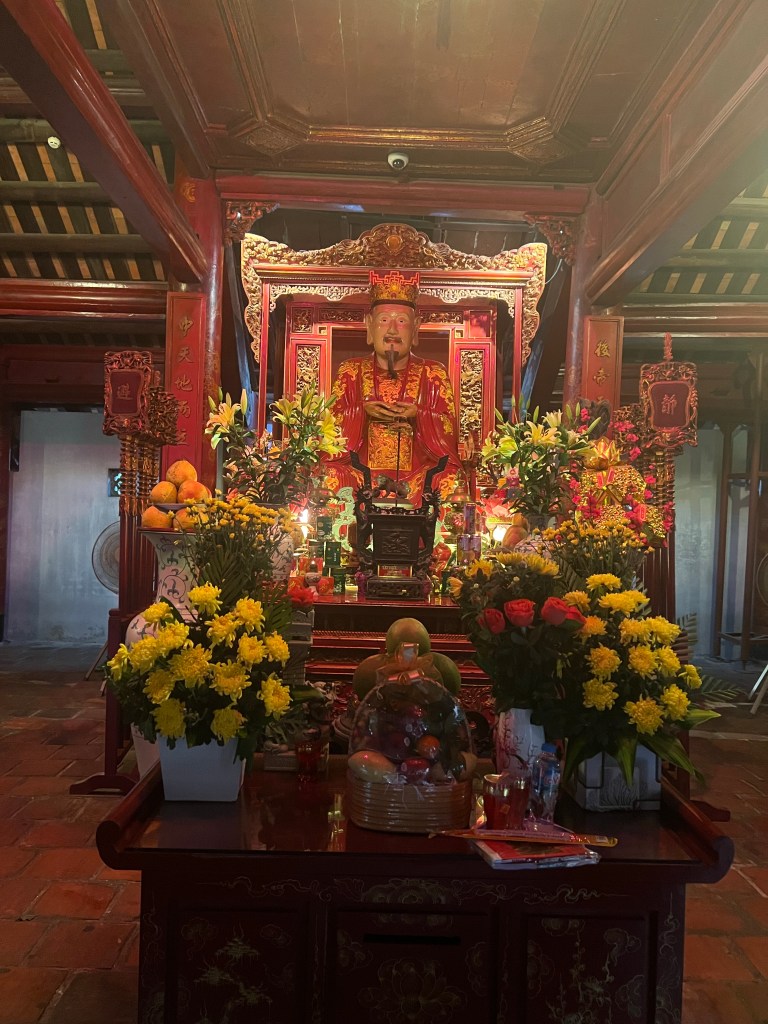
The statue of Confucius stands in the Great Hall of Ceremonies, in the fourth courtyard where there is a horizontal lacquered board honouring Confucius with the words “Van thē su biêu” (The Everlasting Exemplary Educator). As their first university, the Temple of Literature, is shown on the Vietnamese 100,000 dong note (£3.50!).
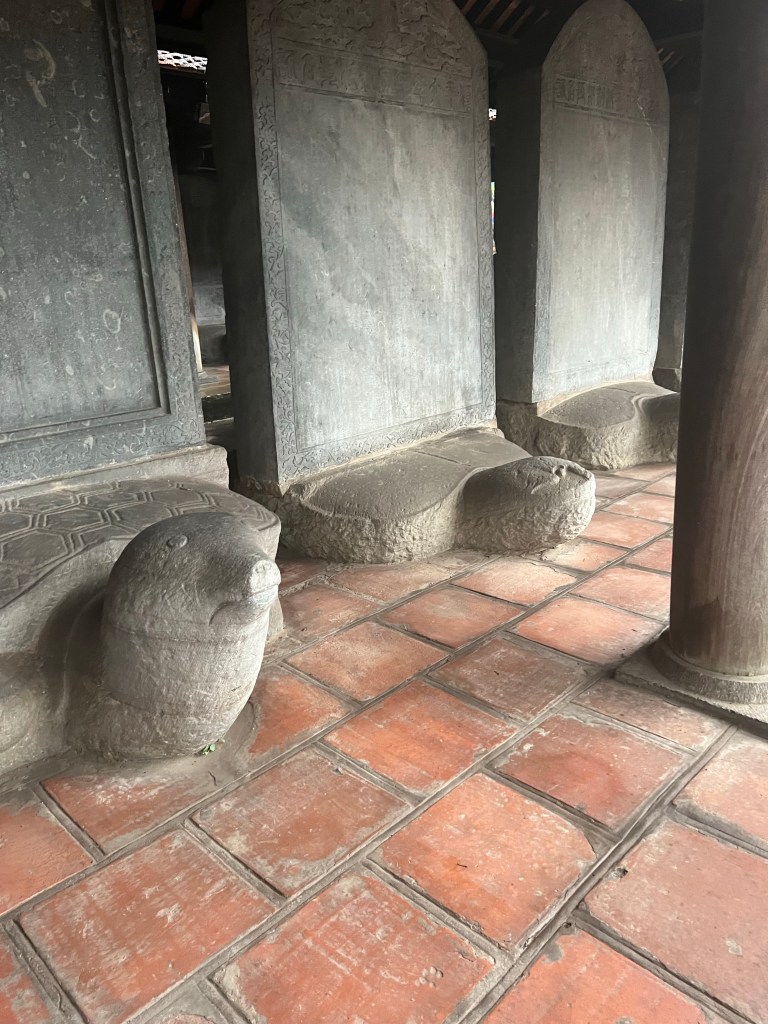
Admission to the university was originally for the wealthy but after the mid 15th century, scholarships were offered and gifted students from all over the country competed to study the principles of Confucianism, literature and poetry. They had to pass a series of exams to enter the university and then several more when they got there. It was a tough regime and students who misbehaved in any way or disrespected their tutors, were flogged or expelled. Those who passed the fourth and final exam, set and marked by the king, became doctors and their names, places of birth and achievements were engraved on a series of steles mostly on top of a turtle. The first Principal, Chi Van An, was a revered man of learning and worked closely with the King and taught his sons, the princes. He got wind of some dishonesty in the court and warned the king of seven corrupt Mandarins. The king refused to take notice so Chi Van An resigned and returned to his village and taught the local children. The king honoured him after his death in 1317 and he is buried at the temple.
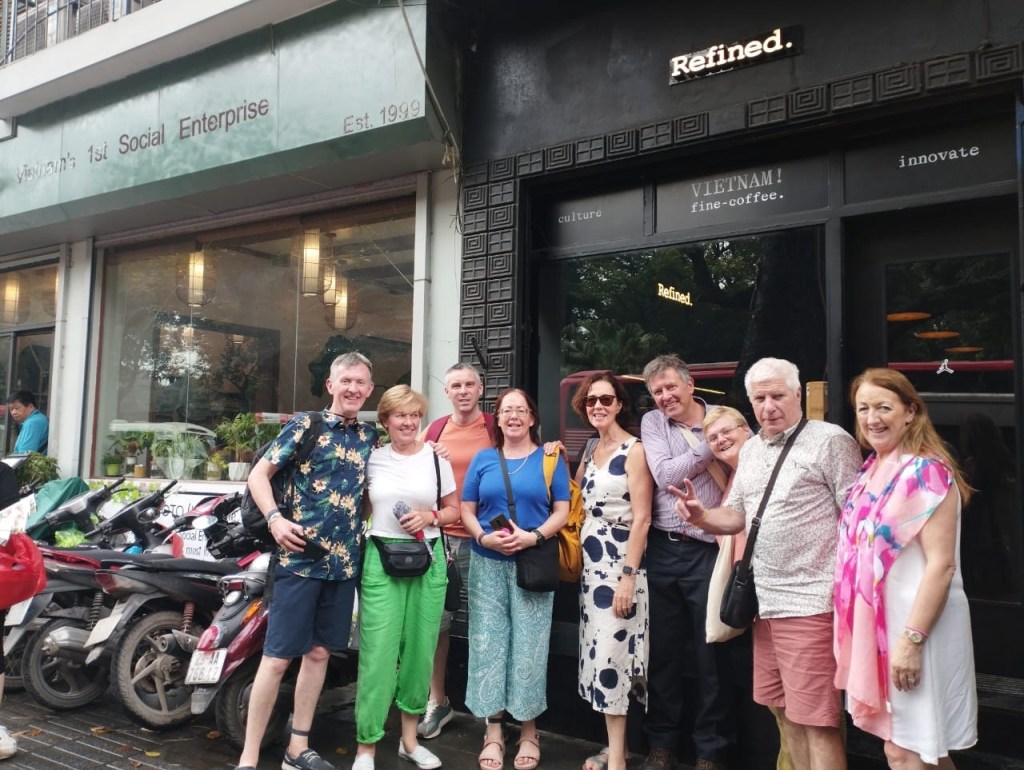
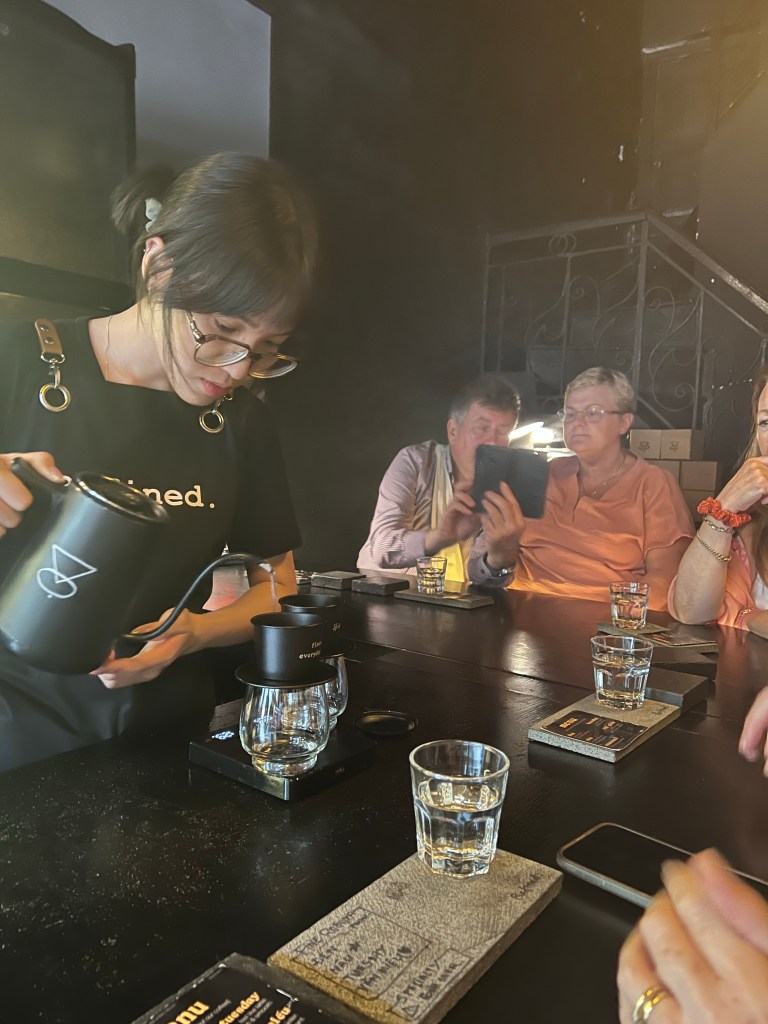
After our 5am start, an early lunch was welcome and Ha took us to a restaurant called KOTO. This is part of a foundation, supported by Intrepid, which teaches disadvantaged young people hospitality skills. They are doing a great job, the staff were enchanting and we learnt that some of their graduates have gone on to great things managing hotels, cheffing or going on to university. Such a great initiative and also a great lunch. We then went next door to have some very special coffee brewed for us. Coffee is a huge thing here and there are a ridiculous number of coffee shops. They produce Robusta coffee in Vietnam, which as we learned in Costa Rica, is the lower grade coffee, high in caffeine which is usually used to make instant. Here they drink it as filter coffee but with lots of additions: Salt, peanut, coconut, egg etc.
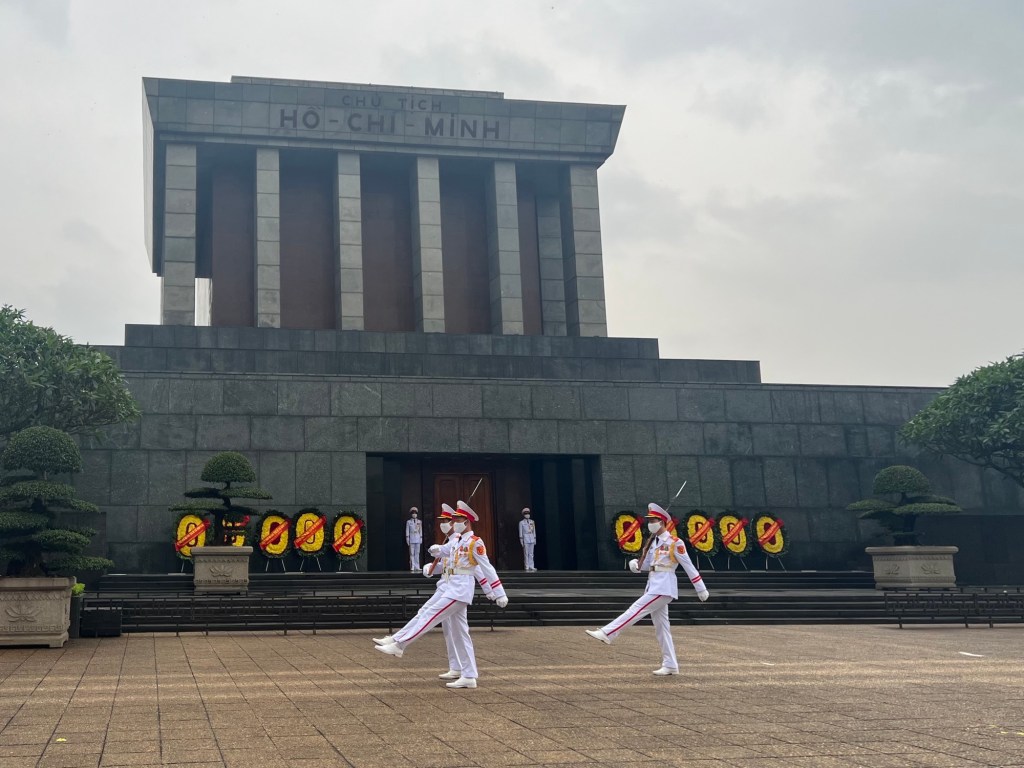
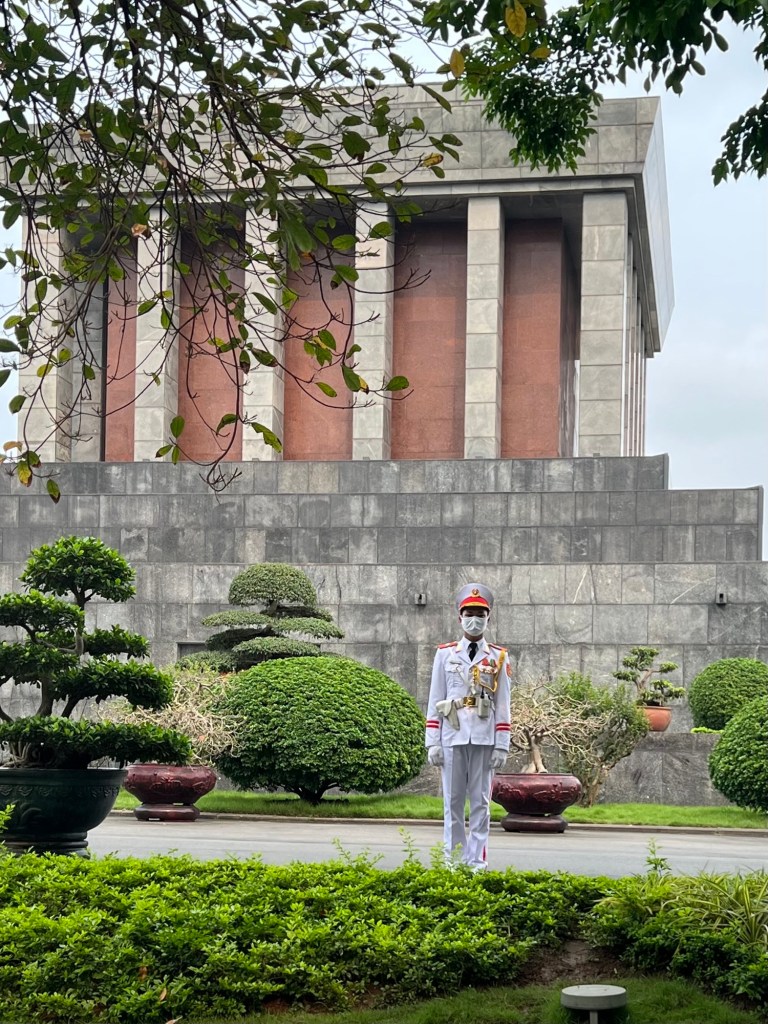
Next it was Ho Chi Minh’s Mausoleum. There is a very different feeling here, with soldiers everywhere and strict rules enforced, including no chewing gum and, masks all of a sudden. As we approached the huge granite and marble mausoleum, the guard was changing, which was fun to see. The soldiers, wearing smart white uniforms, marched in an almost goose-step to meet one another, not quite like Buckingham Palace! Contrary to Ho Chi Minh’s desire for a simple cremation, his tomb is as ostentatious as it gets, the design inspired by Lenin’s Mausoleum in Moscow. Materials were gathered from all over Vietnam between 1973-1975 to build it and the glass sarcophagus which houses the embalmed body of Ho Chi Minh. It is protected around the clock by a guard of honour, and can still be viewed in the morning …. except in September and October when the body has to undergo ‘maintenance’.
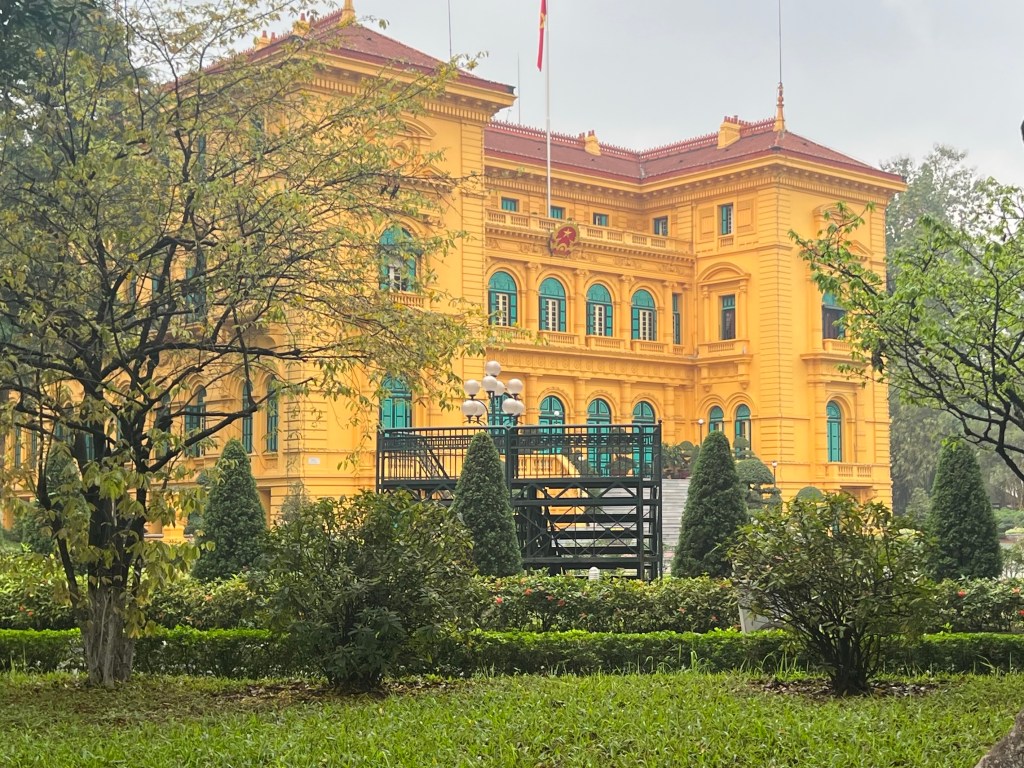
Within the complex, is an impressive chateaux like Presidential Palace, built by the French, however Ho Chi Minh, a modest man, refused to live there and insisted on moving into the nearby electrician’s house known as K54 where he lived from 1954-1956.
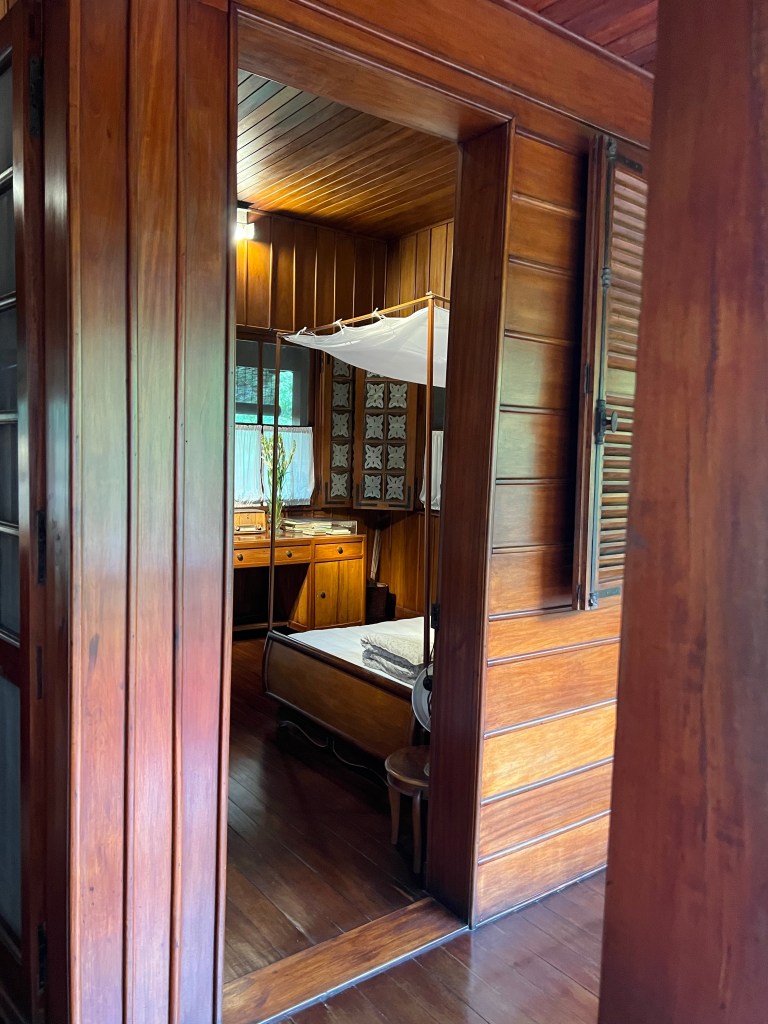
After a couple of years he down-sized, further and built himself a modest two up, one down house on stilts, known as the Stilt-House, where he lived until he died in 1969. Rather than making staff walk back and forth to his house to serve his meals, he insisted on continuing to eat in K54. Three of his cars are also housed here including a bullet-proof Rolls Royce, which was a gift from the Russians. A long road of mango trees runs from the Stilt-House which is where Ho Chi Minh would exercise and be reminded of South Vietnam where they grow.
Ha gave us some interesting back ground on Ho Chi Minh who was their president from 1945 until he died in 1969. He was born in 1890 in a rural village where, as the son of a poor teacher, he lived a humble life. When he was 21 he found work as a cook on a French steamer and travelled the world. He lived in London for a couple of years and then spent several years in France, where he became a socialist. In 1923 he went to Russia and then to China where he started organising the exiled Vietnamese forming the Indochina Communist Party. When the Japanese surrendered to the Allies in 1945, Ho Chi Minh marched into Hanoi and claimed Vietnamese Independence. The First Indochina War then broke out in 1946 and Ho Chi Minh’s forces eventually defeated the French in 1954. The country was then separated into North and South Vietnam, with Ho Chi Minh’s communist party ruling the North. The Vietnam War, between North and South Vietnam, broke a year later and continued six years after Ho Chi Minh’s death.
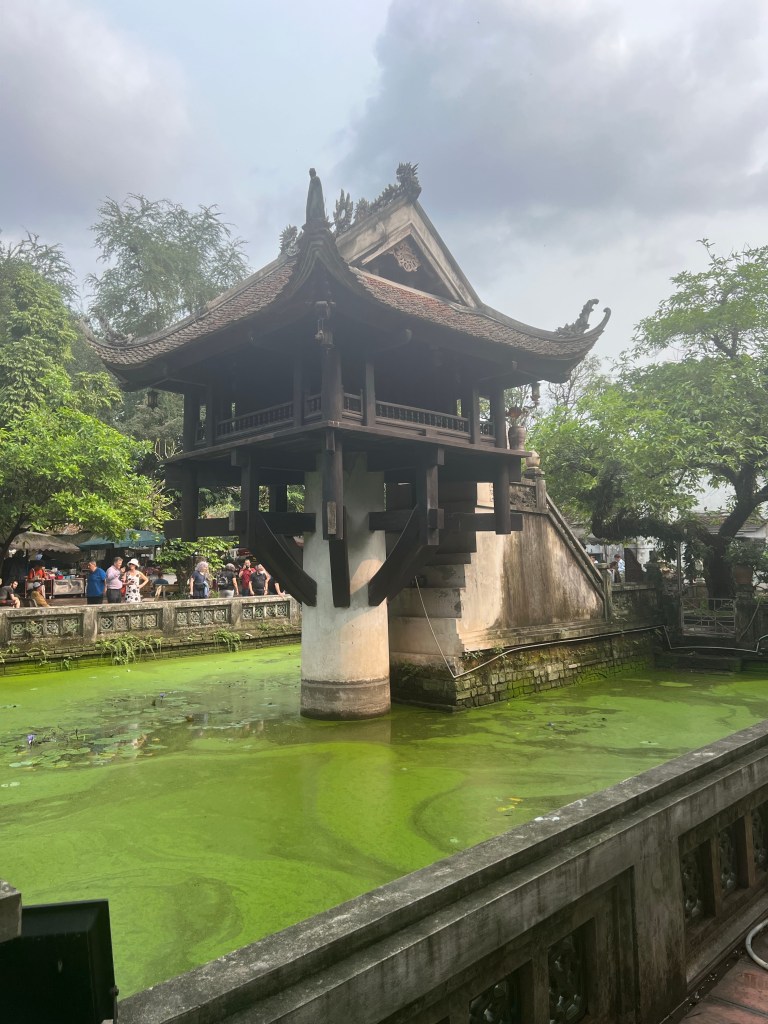
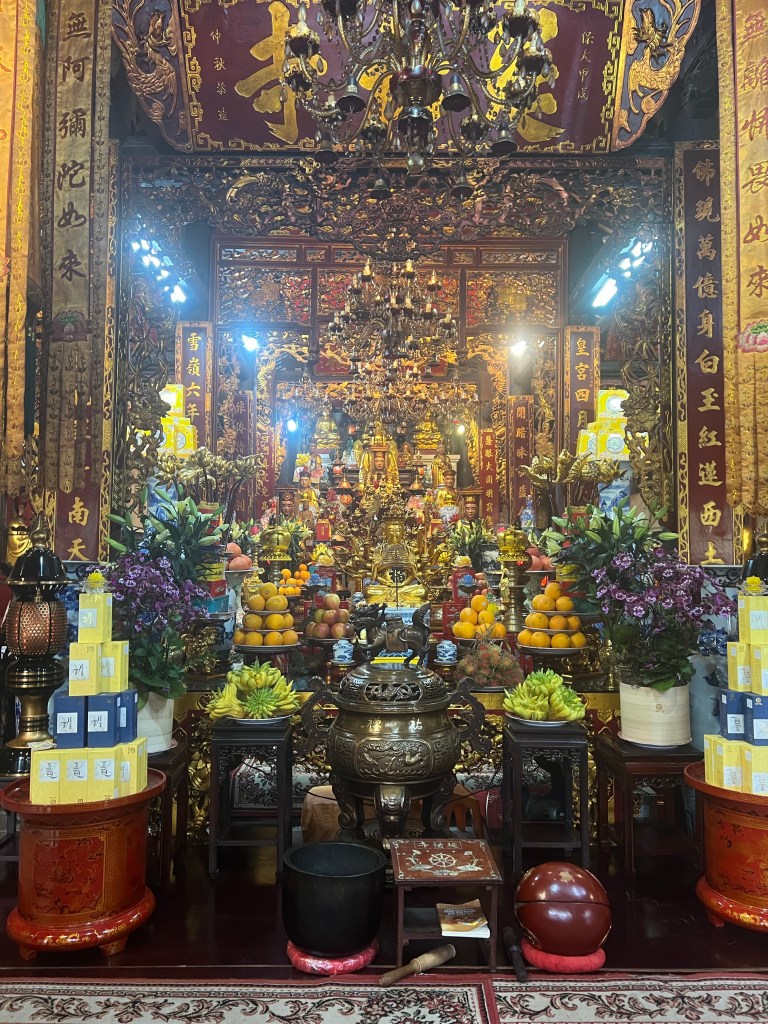
Near Ho Chi Minh’s humble home is the One Pillar Pagoda, constructed on one pillar to symbolise a lotus flower (symbol of purity) rising out of the sea. It was originally built in 1049 by the Emperor Ly Thai Tong (1028-1054), an heirless, emperor who dreamed he met the Goddess of Mercy, who handed him a male child. He married a peasant girl and promptly had an heir by her. To express his gratitude he constructed a pagoda where he had the dream. Before leaving Hanoi, the French destroyed the original pagoda and the structure was rebuilt by the new government.
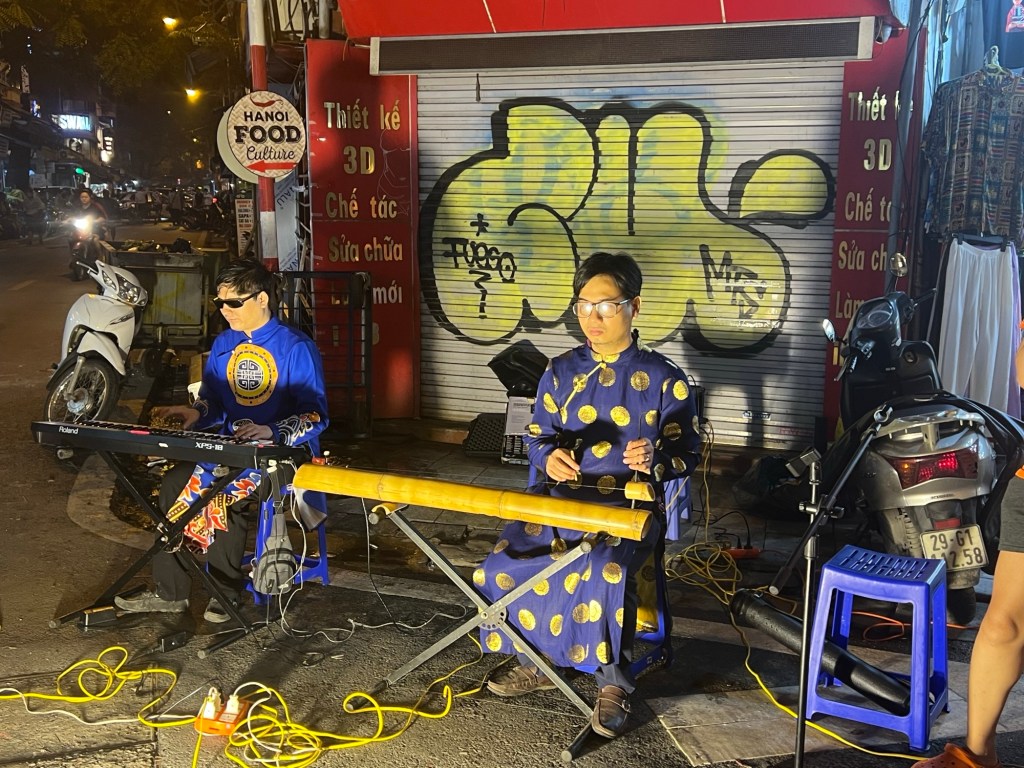
We then went to our hotel May de Ville – not to be recommended but ok… if you did not look at the electrics! In the evening we headed down town and had a good dinner, in fact I think the restaurant was called ‘Downtown’ and then went to the night market. On the way we passed an amazing blind group of musicians who were doing karaoke. Ha had demonstrated her vocal skills once or twice on the bus and did not take too much persuasion to take up the microphone. She has a great voice and was very impressive as indeed she is in so many respects.
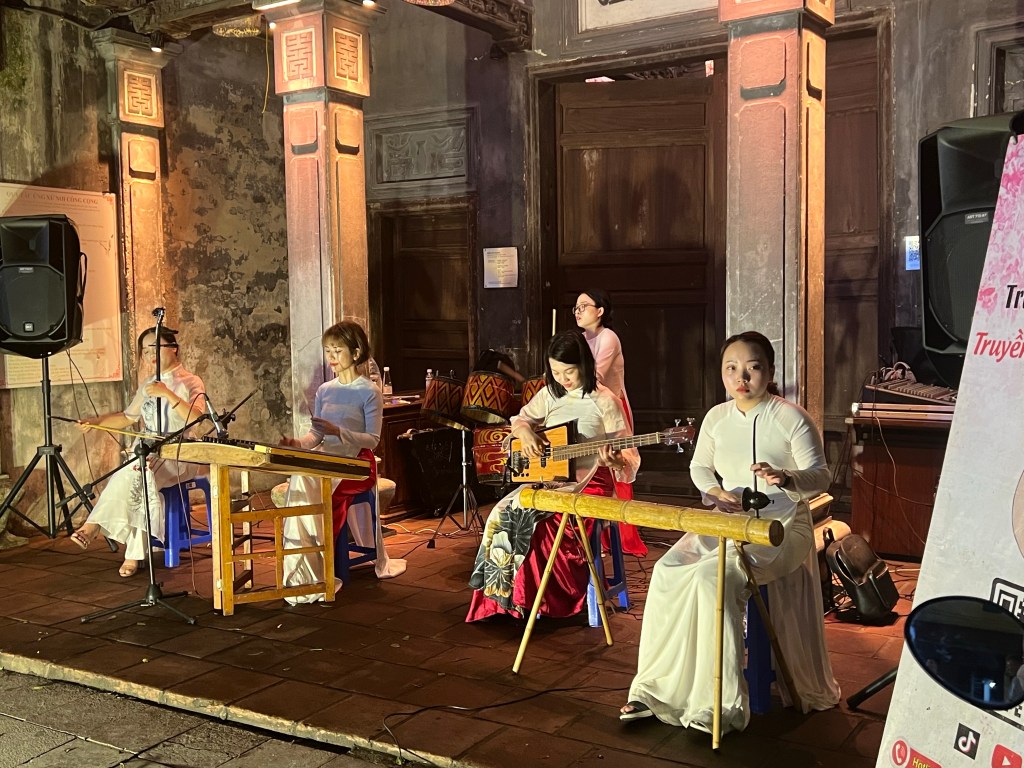
We also passed a talented group of young female musicians playing on traditional Vietnamese instruments.
 EC-Rider Travels
Leave a comment