
Into a yellow bus this morning and across town, following the Houng or Perfume river so called as the water is said to be sweet smelling as it comes from the hills where there are many herbs. It is all nice and green along the river with a few pretty houses, reminiscent of the French colonial times and a huge amount of building going on everywhere. We came to the railway line where suddenly two women came running across the very fast road, with the barriers as the train was due…. bit of a surprise! We were apparently originally to have spent a night on the train, having seen it go by, we were all quite relieved this had been taken out of our itinerary! There are motorbikes parked all the way along the pavements interspersed with women doing their washing-up in a bowl on the pavement – I can’t imagine how you get by if you are disabled.
Our first stop this morning was the Thien Mu Pagoda (Temple of the Heavenly Lady). The name derives from a legend of an old woman who would appear on the Ha Khe hill telling locals that a King would one day build a Buddhist pagoda on this spot for the good of the country. In 1601, Lord Nguyen Hoang, deciding he would be that king, ordered the temple to be built and named it in her honour. The initial temple was a simple construction, but as time went by, it was expanded and in 1665, major construction was undertaken by Lord Nguyen Phuket Tan.
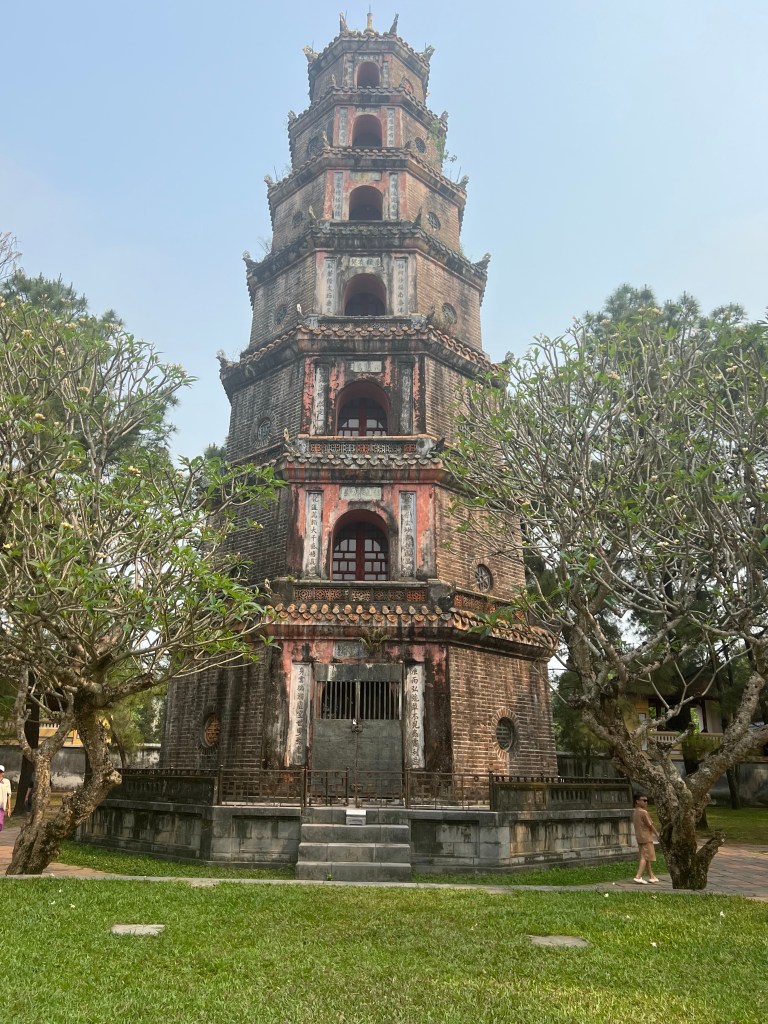
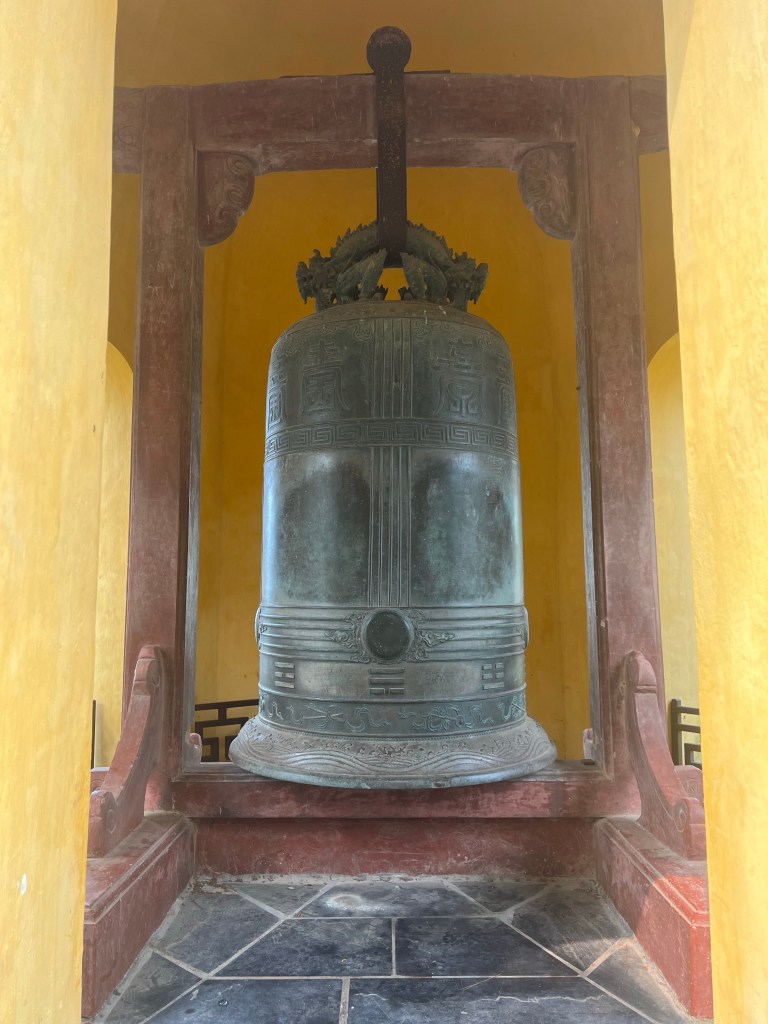
The current octagonal brick Pagoda was built in 1844, and stands 21m high with seven storeys, each dedicated to a different Buddha. It is the highest stupa in Vietnam and regarded as the unofficial symbol of the former imperial capital. There are several pavilions surrounding the tower one sheltering an enormous bell called Dai Hong Chung. This 2.5m bell, weighing 3,285kg was cast in 1710 and donated by Lord Nguyen Phuc Chu whose religious name was Hung Long – unfortunate really!
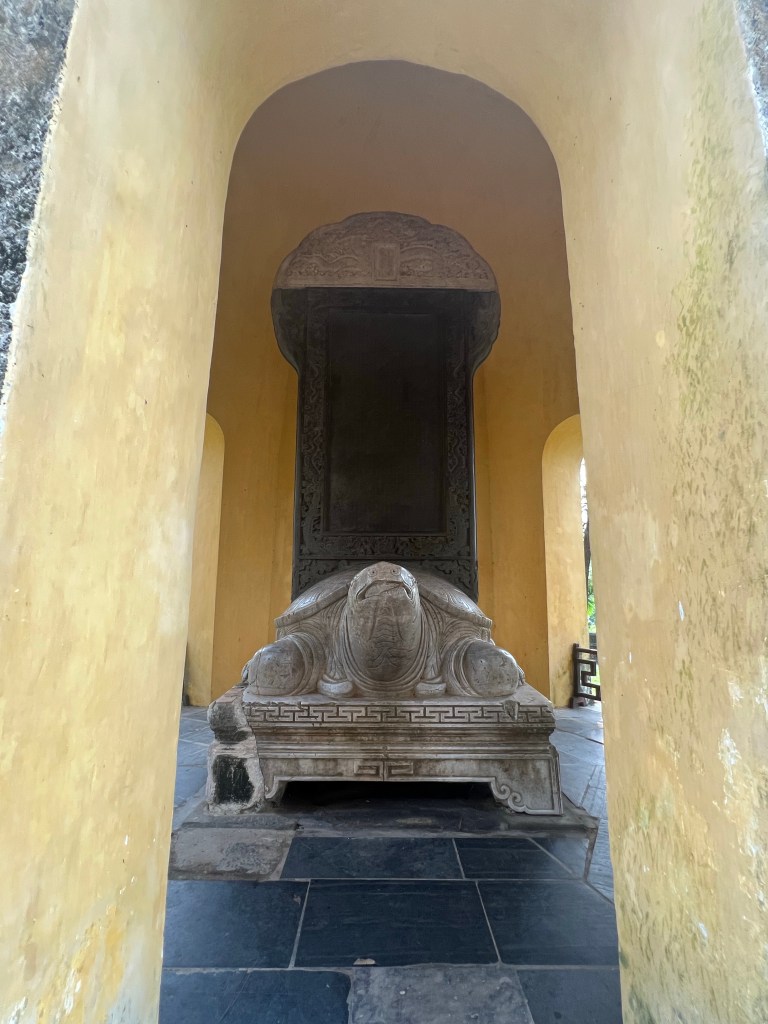
A second pavilion has a huge 2.58m high stela (stone slab) engraved with Lord Nguyen Phuc Chu’s text about the restoration of the pagoda in 1715. It is set on the back of a massive marble turtle as a symbol of longevity.
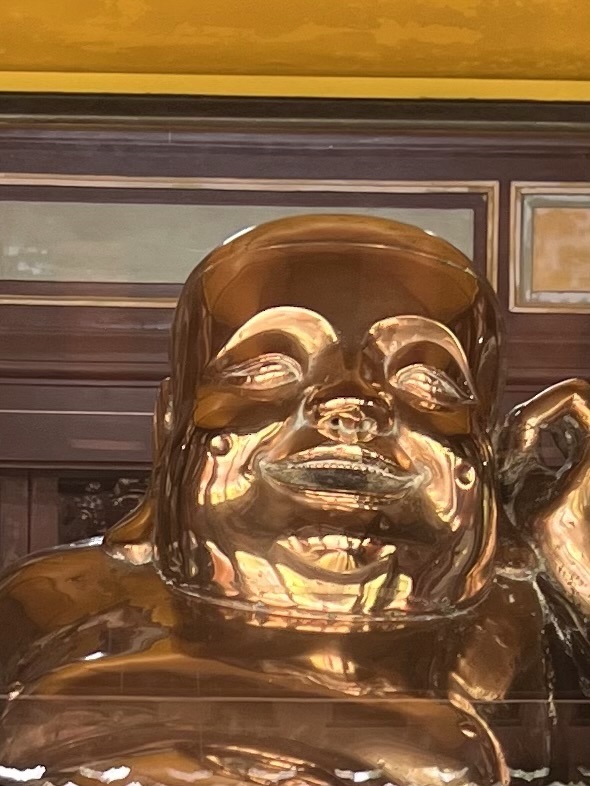
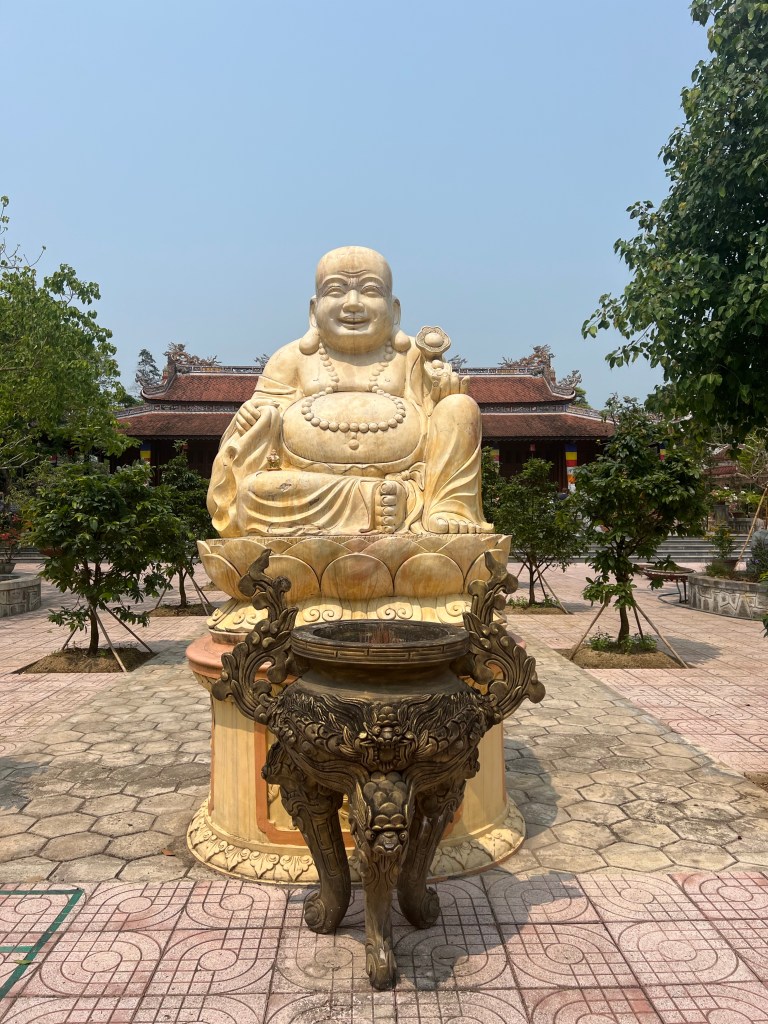
Beyond, is the rather beautiful Dai Hung shrine and main-hall with the happiest of Buddhas outside. Ha explained that Buddha is always happy and cheers everyone up by taking away their worries, which is why Vietnamese are always smiling.
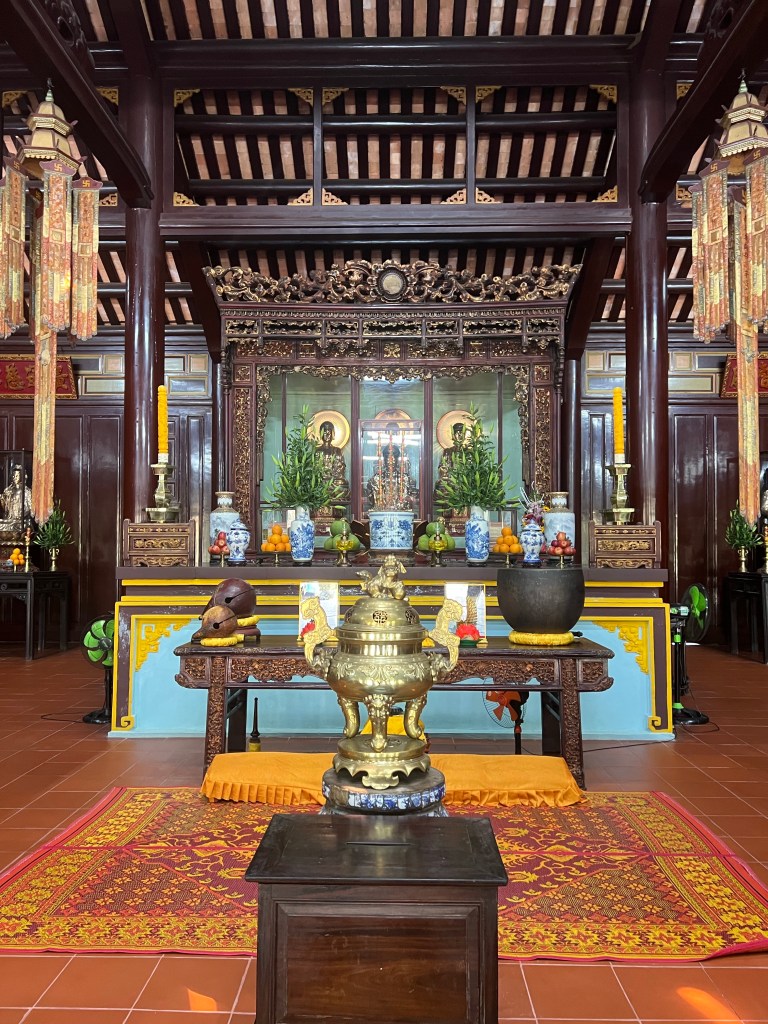
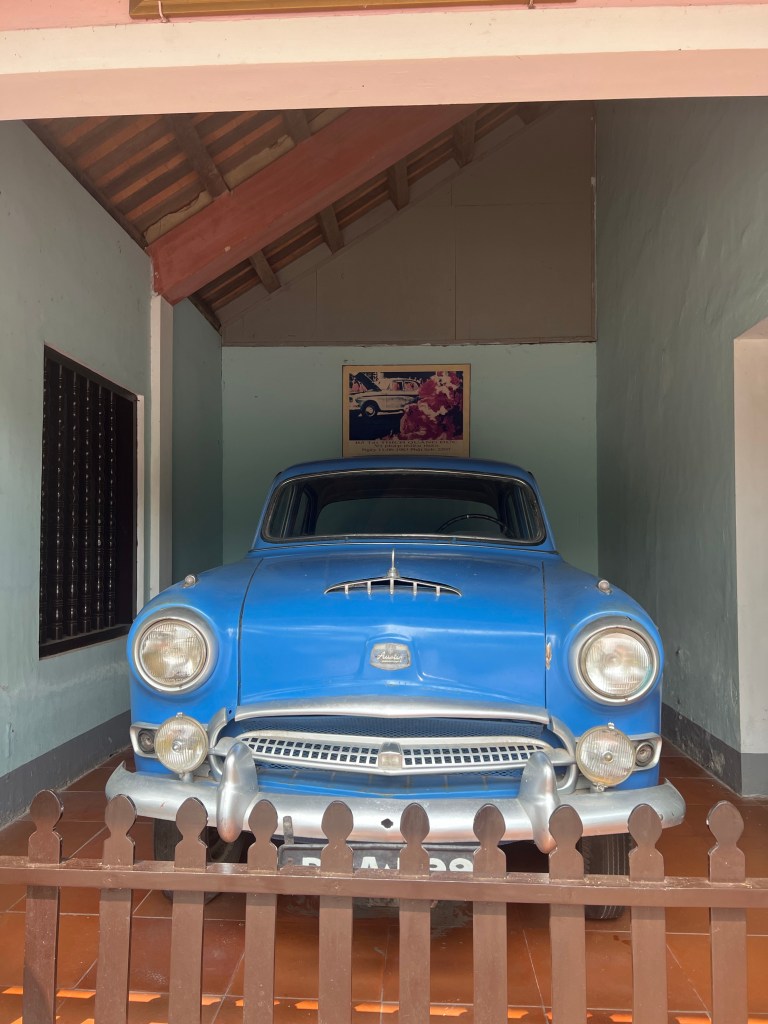
During 1963, Thien Mu Pagoda, became a hotbed of anti-government protest, as the Buddhist majority was being discriminated against by the then president Ngo Dinh Diem in favour of the Catholics. Discontent with Diem exploded into mass protest in Hue during the summer of 1963 when nine Buddhists died at the hand of Diem’s army. On 11 June 1963, Thich Quang Duc, the Abbott of Thien Mu, drove to Saigon where he got out of his car, sat on the ground in the lotus position and burnt himself to death in protest again Diem’s regime. The blue Austin he drove in has been carefully preserved at the temple. It is said his heart did not burn and was considered to be sacred and was placed in a glass chalice in the Xa Loi Pagoda in Ho Chi Minh City.
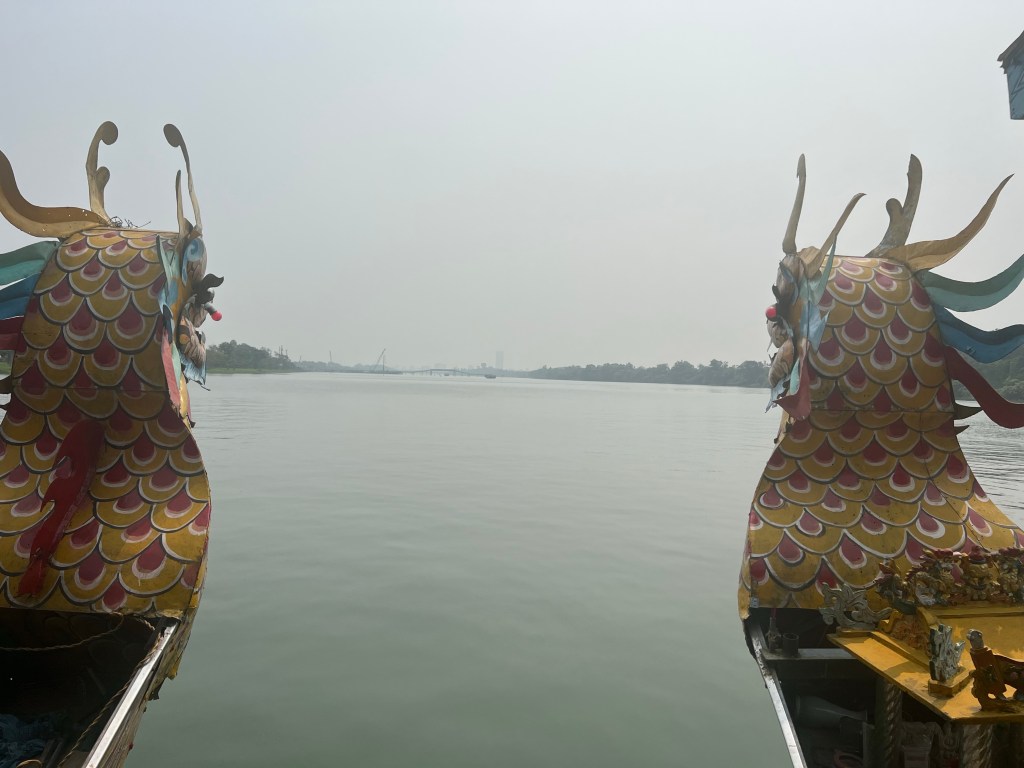
We then got on to one of the many tourist river boats, apparently replicating the royal boat, our driver proudly telling us that he had made his boat during lockdown. His wife was selling the souvenirs and son the drinks. We sailed peacefully up the river Houng enjoying the gentle breeze. Our bus met us there and drove us to the tomb of Tu Duc, the fourth Emperor of Vietnam.
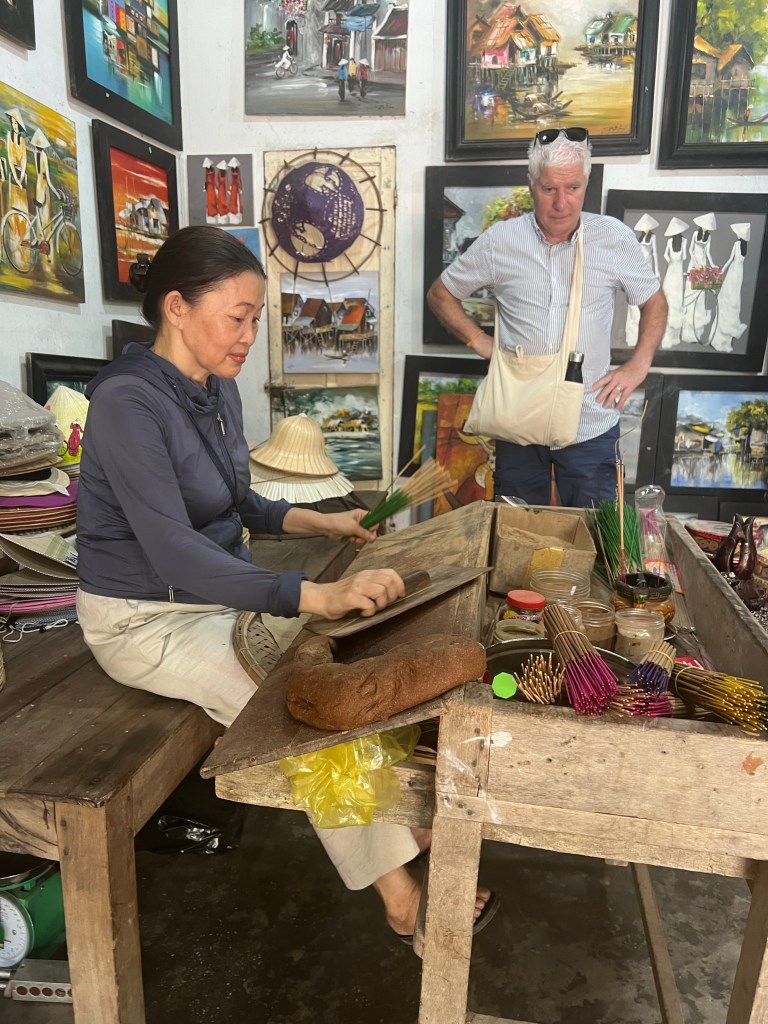
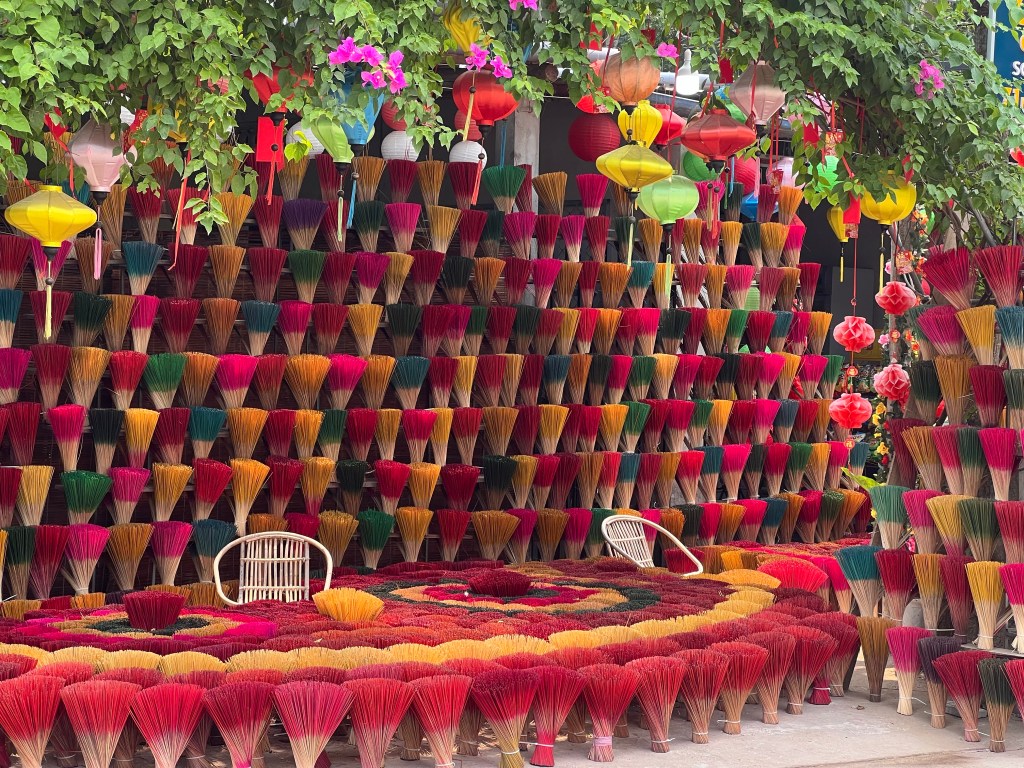
On the way, we stopped at an incense making factory, and were shown how to make them, one by one. I tried my hand at adding the incense to the little bamboo sticks, not too challenging, but so labour intensive. Again there were about twenty shops, one after the other, all selling brightly coloured incense sticks which are beautifully displayed in different patterns outside their shops with seating so you can have your photo taken!
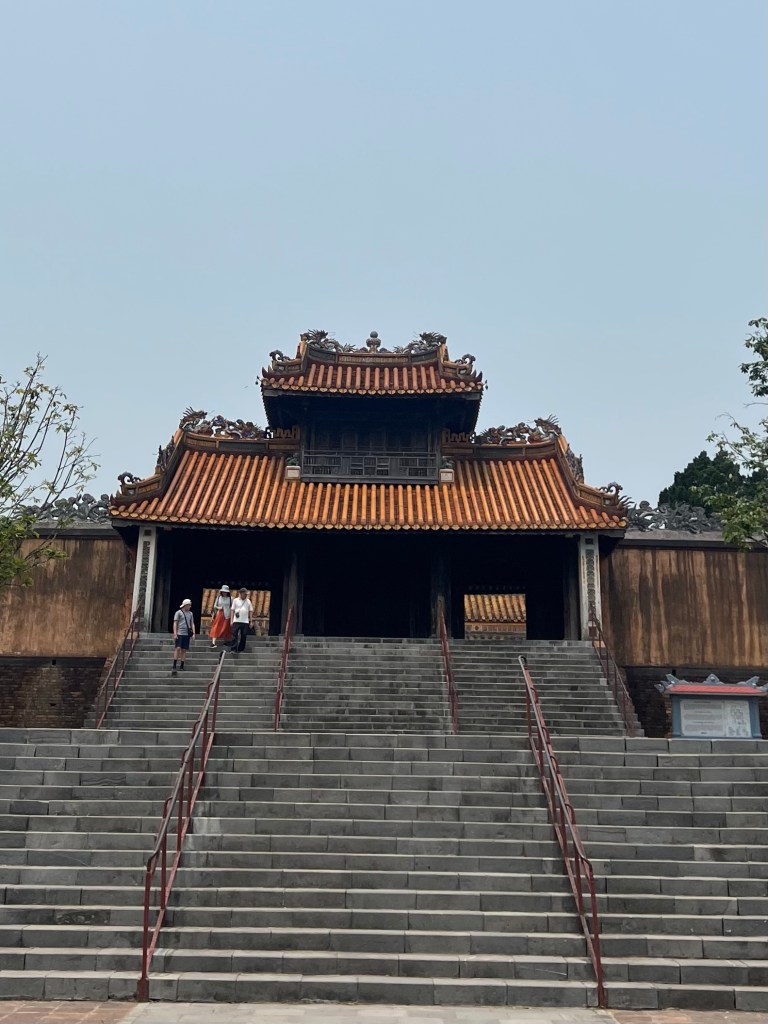
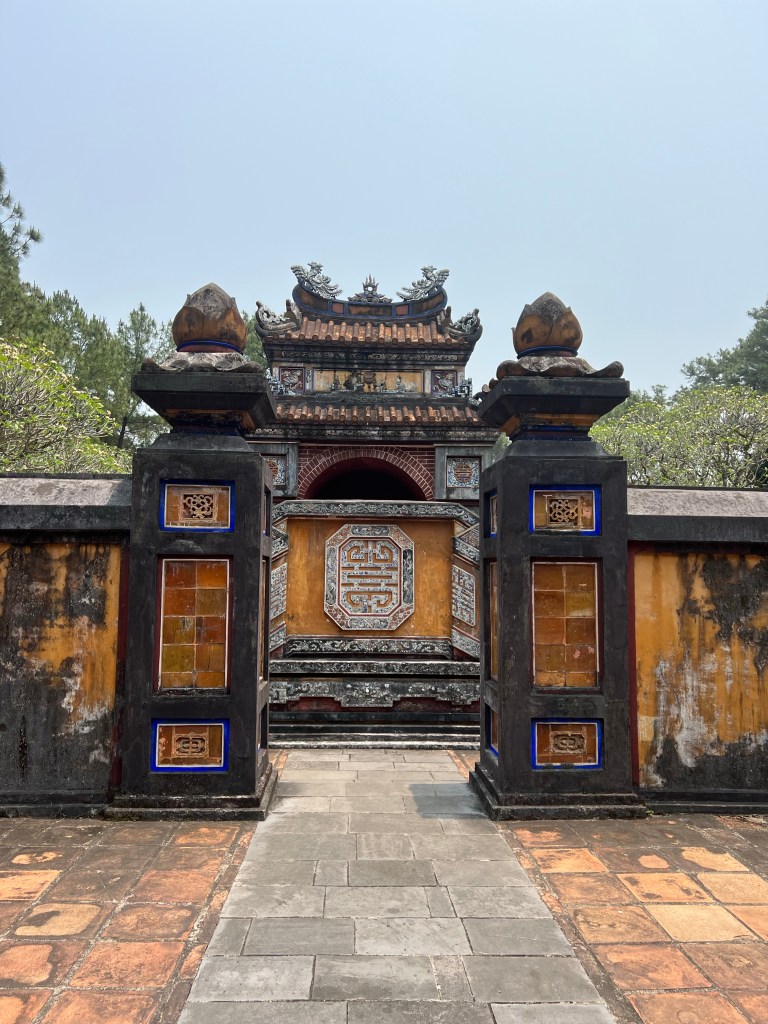
As we learnt yesterday, Tu Duc (reigned 1848-1883) had 104 wives, but sadly no children. He started planning his elaborate tomb long before his death and construction started in 1864. It demanded over 3,000 labourers, much of it forced and much additional taxation, there was a coup against Tu Duc in 1886. This was fortunately suppressed and the majority of the temple was completed a year later, leaving him 15 years to enjoy it as a palatial retreat with his wives and concubines.
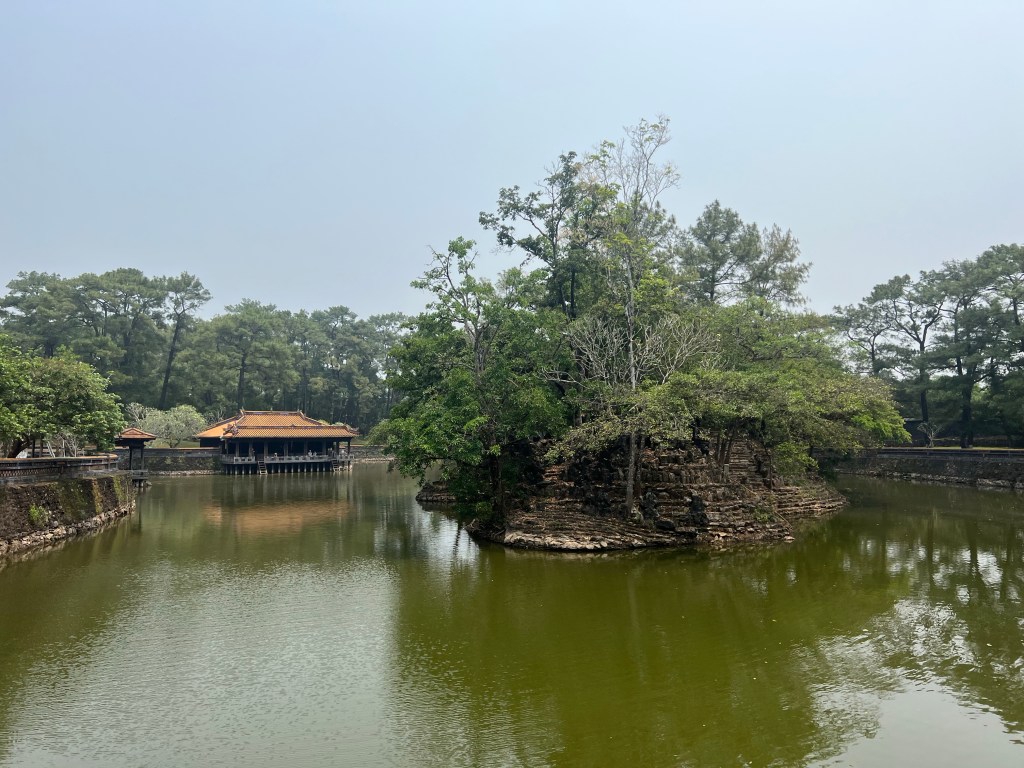
As you enter the complex there is the man-made Luu Kheim Lake, the soil from which was made into a tiny island called Tinh Kheim where Te Duc used to hunt small game, which had been put there. The lake was once covered in lotus flowers and one of the eunuchs’ roles was to collect dew from the lotus flowers every day, for the emperor. Across the water is a pavilion, where he would sit with his concubines, composing and reciting poetry.
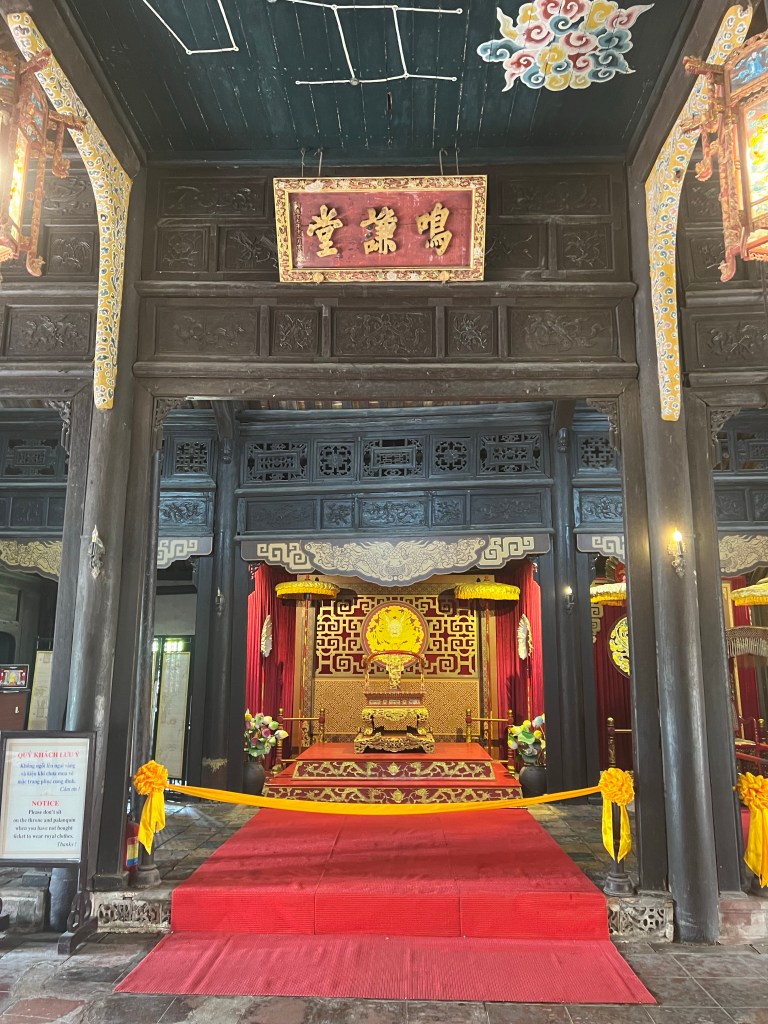
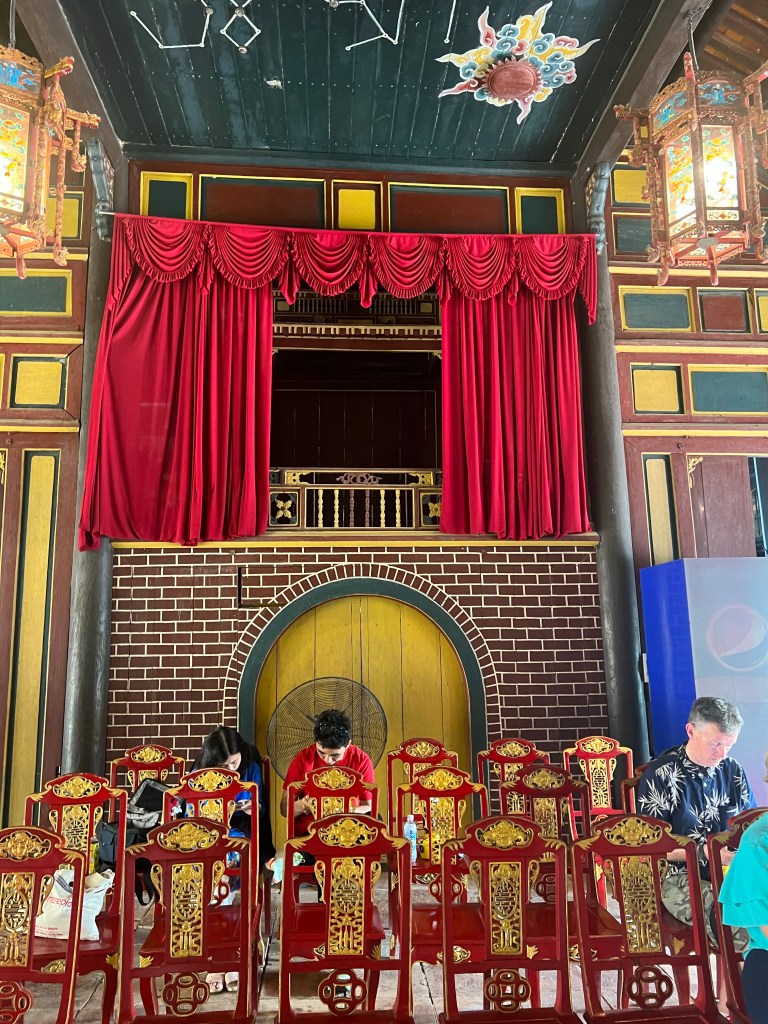
You walk up some steps to the Hoa Khiem Temple, where Tu Duc and his primary wife were worshipped. Here you can see their thrones, the larger one for the Empress, her Emperor was only 153cms tall. Behind here was a small theatre where Te Duc would watch his concubines dancing from behind a curtain…. or not!; This leads into a rather peaceful Luong Khiem Temple, dedicated to Tu Duc’s mother, Tu Du.
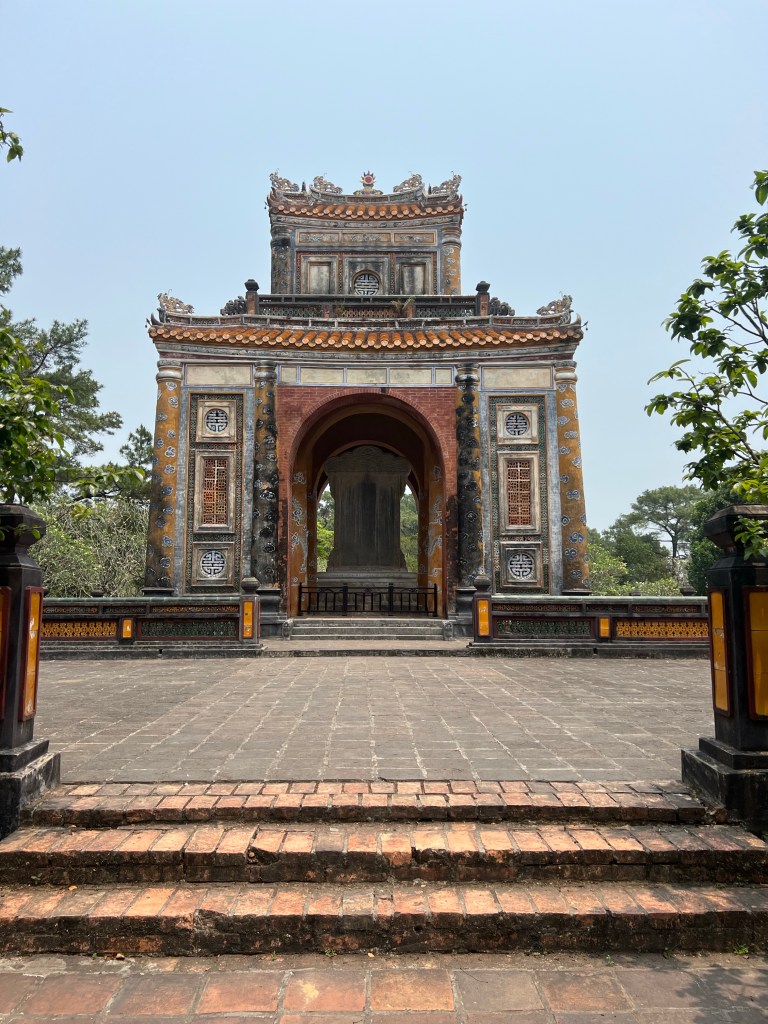
Further around the lake, is the Honour Courtyard leading up to Te Duc’s tomb. It is guarded by two elephants and diminutive mandarins, shorter than the Emperor. You first come to the Stele Pavilion which houses a 20-tonne stele, the largest in Vietnam, coming from a quarry 500km away and taking four years to get there. With no son, Te Duc drafted his own inscription, apologising for the mistakes he had made: not being a better son to his mother, not having children, the suicide of his elder brother who was not made emperor and his extravagance causing the coup after his death, in 1886.
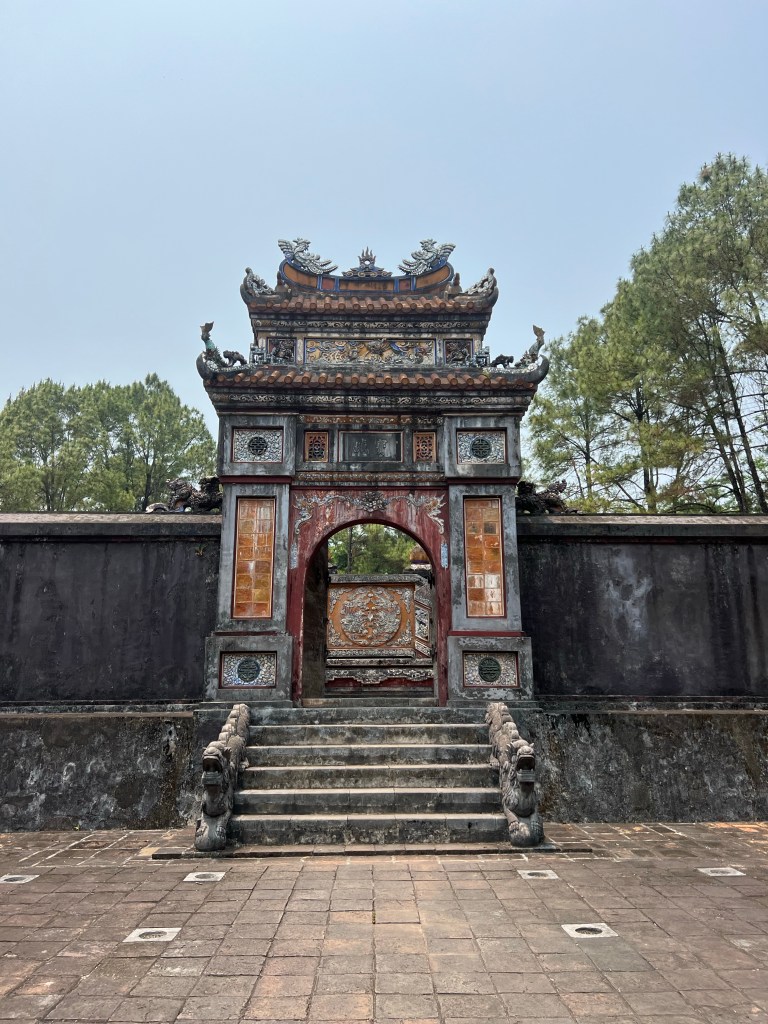
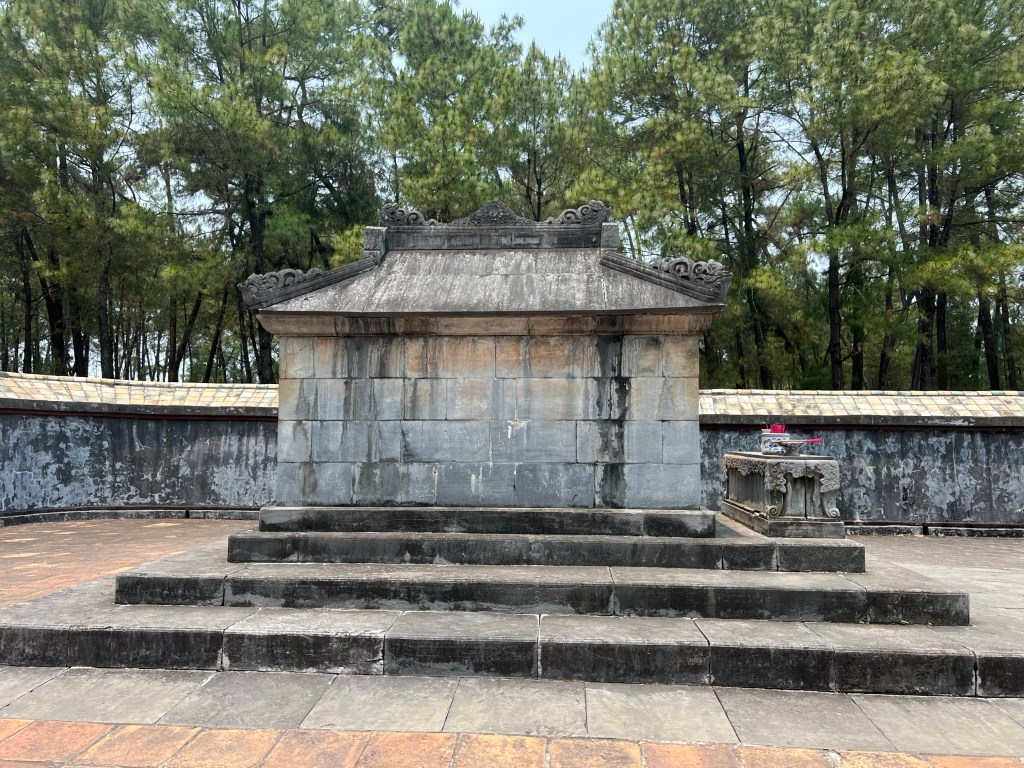
He named his tomb, Khiem, meaning modest. It is indeed modest, enclosed in a walled area, with a simple sleeping dragon on the top. Te Duc however was never interred in his tomb and the location of his remains are unknown, as the 200 servants who buried him, were all beheaded on their return.
After his death, his 104 wives moved to the complex where they remained until they died. Near to Tu Duc’s tomb is the tomb of his primary wife, Empress Le Thien Anh.
Goodness it was hot, and we were relieved to get back on the bus and go to another pagoda where we were presented with an amazing vegetarian lunch. This was not a restaurant but set up for the masses as twice a month they offer free vegetarian food to worshipers at the temple – their kitchen was not necessarily of restaurant standard but what came out of it was delicious. The quantities of food is a little overwhelming, everything all being served at once and just so much of it – how they all remain so tiny I don’t know.
We returned to the hotel for a quiet afternoon and in the evening some of us chose to go to a family home for supper. We travelled about fifteen minutes out of the centre of Hue to one of the village like suburbs, where we were welcomed into the home of Diep and An who cooked us the most wonderful dinner of about seven courses. One or two were a bit of a challenge, but others truly delicious. It was a simple, airy house, set high up a ramp and some steps to prevent flooding. We met their son, who was learning English and his two adorable children.
 EC-Rider Travels
Leave a comment