
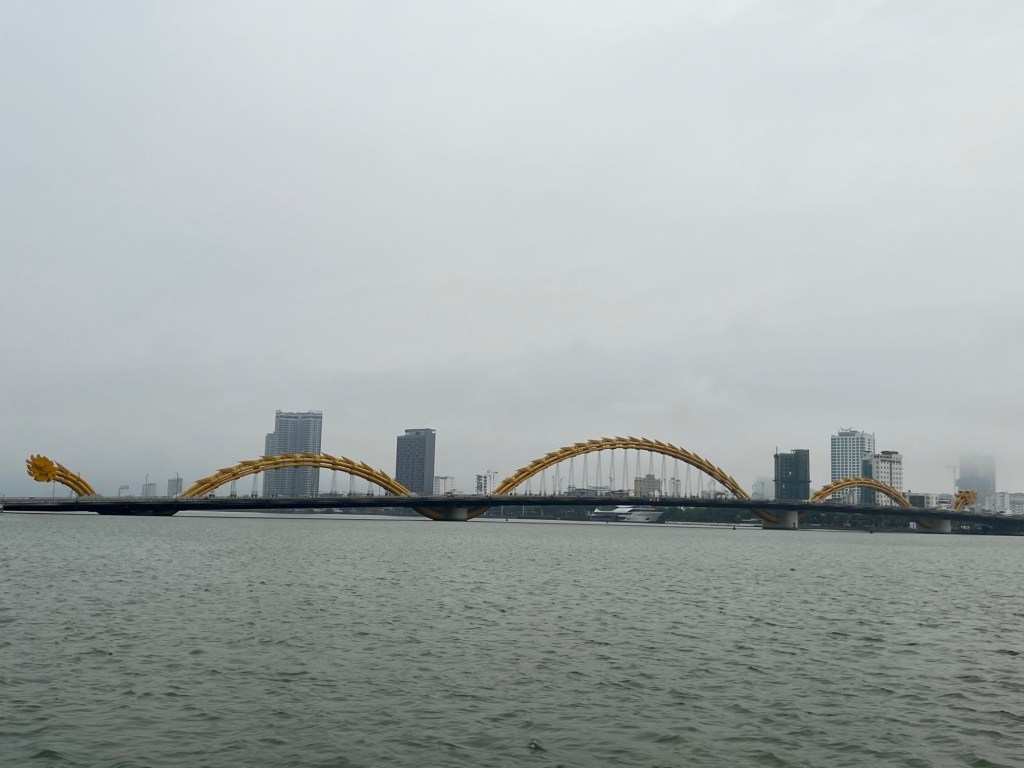
We left Hoi An this morning and headed back up north to Da Nang which is where we flew into a few days ago. De Nang is on the coast and has apparently grown beyond recognition over the last few years. It is now a huge tourist town, with hotels being built everywhere and many of the big chains already there. I am not sure why, as it was not an attractive place, but did have quite a nice beach. As we drove in, we passed retailer after retailer of enormous marble sculptures …. but not a lot of buyers! We stopped to look at Da Nang’s famous dragon bridge, which opened in 2013 carrying people over the river Han, this apparently breathes fire at 9pm every Friday, Saturday and Sunday night!
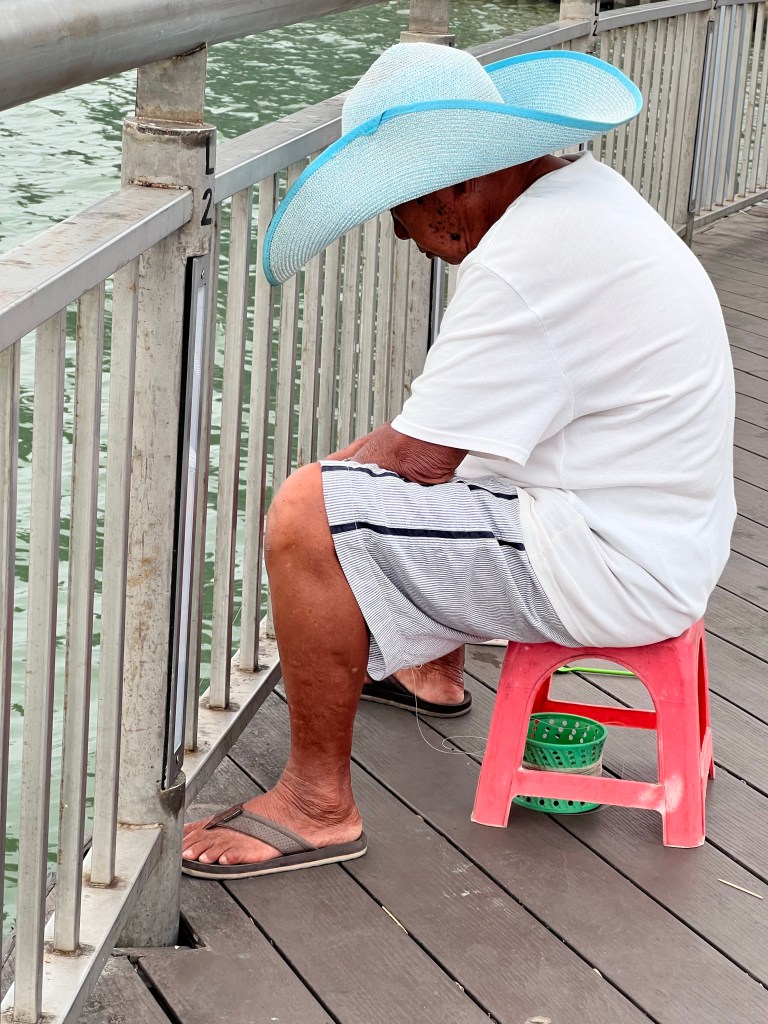
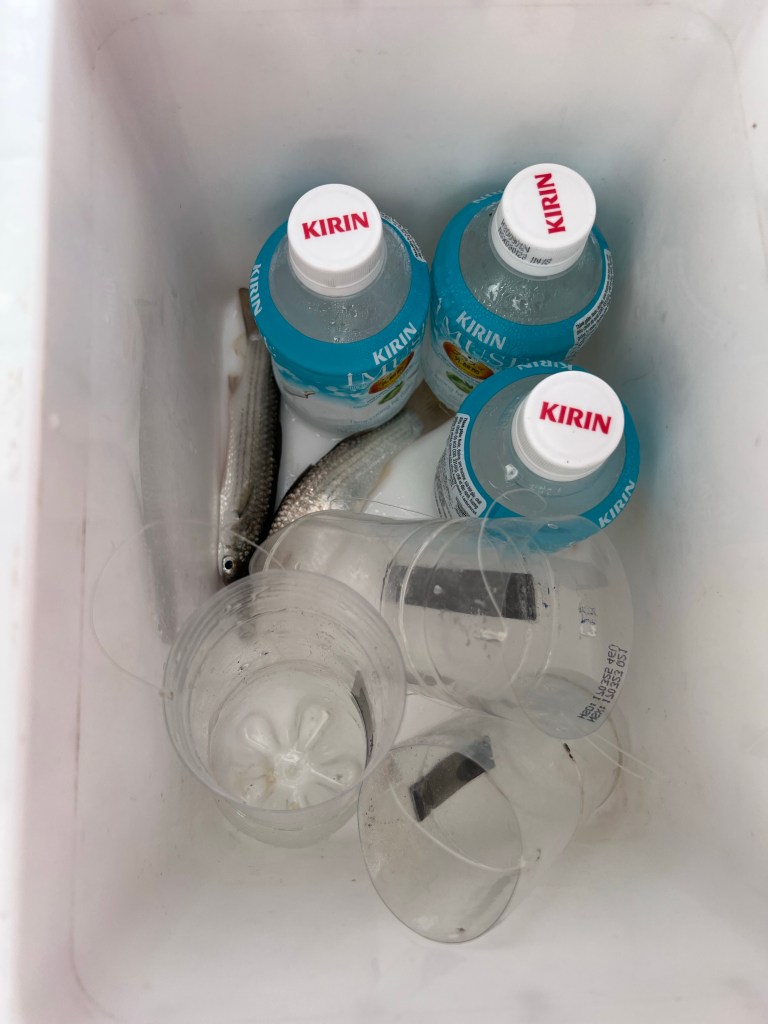
Rather more intriguing, were a group of fishermen who were using cut off plastic bottles, full of flour and water. They dropped these into the river, releasing some of the four into the water, which attracted the fish to the more concentrated solution in the bottle, where they got stuck. Success was not guaranteed but one of them had caught a couple of unlucky tiddlers.
We left Da Nang and were suddenly in rather lovely, more mountainous countryside. We were supposed to drive over these, but there was a heavy mist today which meant we had to take the Hải Vân Tunnel through the hills instead. Ha proudly told us that this opened in 2005 and at 6.28km, is the longest tunnel in South East Asia. Motorbikes and bicycles are not allowed to travel through the tunnel, and have to be shuttled on a truck … for a fee. The toll for cars is also high, but it can save about 40 minutes off a journey.
We stopped for coffee at a rather a pretty lagoon called Lap A Lagoon where there were thousands of sticks poking up from the brackish water. These apparently have tyres attached to them to attract oysters which are extensively farmed there.
Lunch was in Hue where Ha was keen we should try another noodle soup! This one was called Bun Bo containing beef and a rather delicious shrimp paste. After our lesson last night, we knew to add lots of herbs, which made such a different. We were then driven to the ‘Cherish Hotel’, where we are to spend the next two nights.
Hue was the capital city of Vietnam during the Nguyen Dynasty from 1802 to 1945. This afternoon we visited the Citadel or Imperial City, with many, many other people a lot of them having hired costumes for their photos!
The Citadel was built by the first emperor, Gia Long after he had successfully defeated rulers of several different regions to create a single empire and the Vietnam we know today. After studying Confucianism and Chinese models of authority, Gia Long ordered the construction of his city based on Beijing’s Forbidden City. Construction began in 1803 and took 29 years, completing in 1832 during the reign of his son, the second Emperor, Minh Mang.
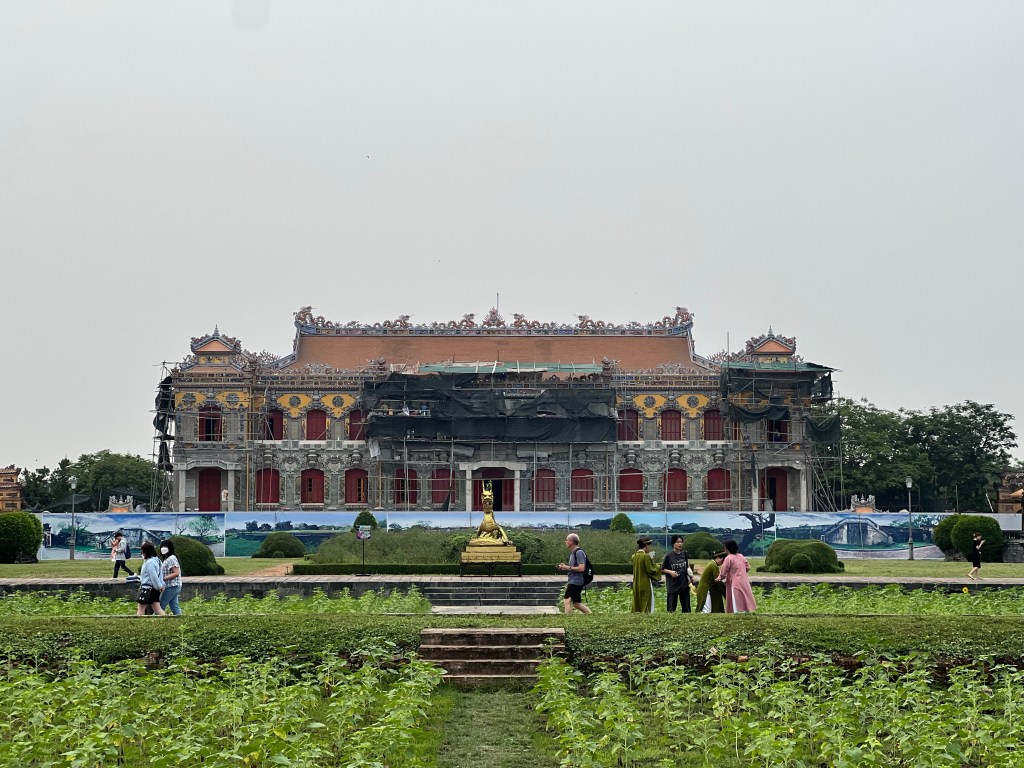
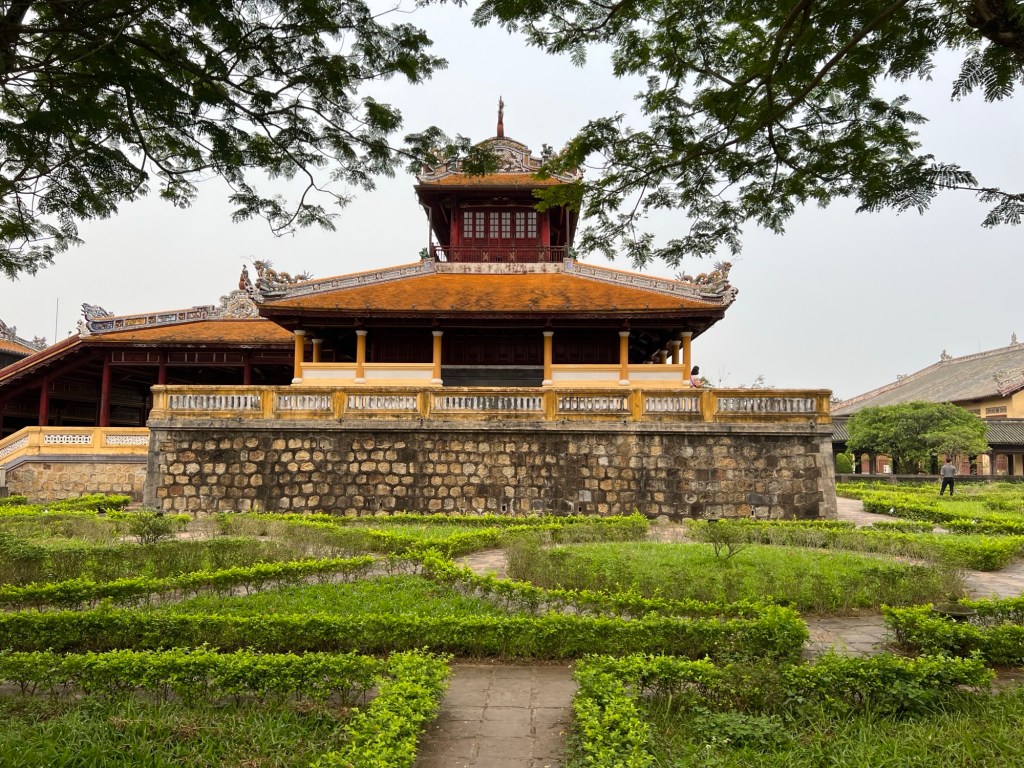
The Imperial City is enclosed within a square fortress with a circumference of almost 10km surrounded by a wide moat. It covers 160ha and would originally have had about 160 buildings including palaces to house the imperial family, shrines, gardens, a library, an opera house and residences for mandarins (bureaucrats). The central part was called the Purple Forbidden City and was where the emperor and his closest confidants lived and worked until the monarchy ended in 1945.
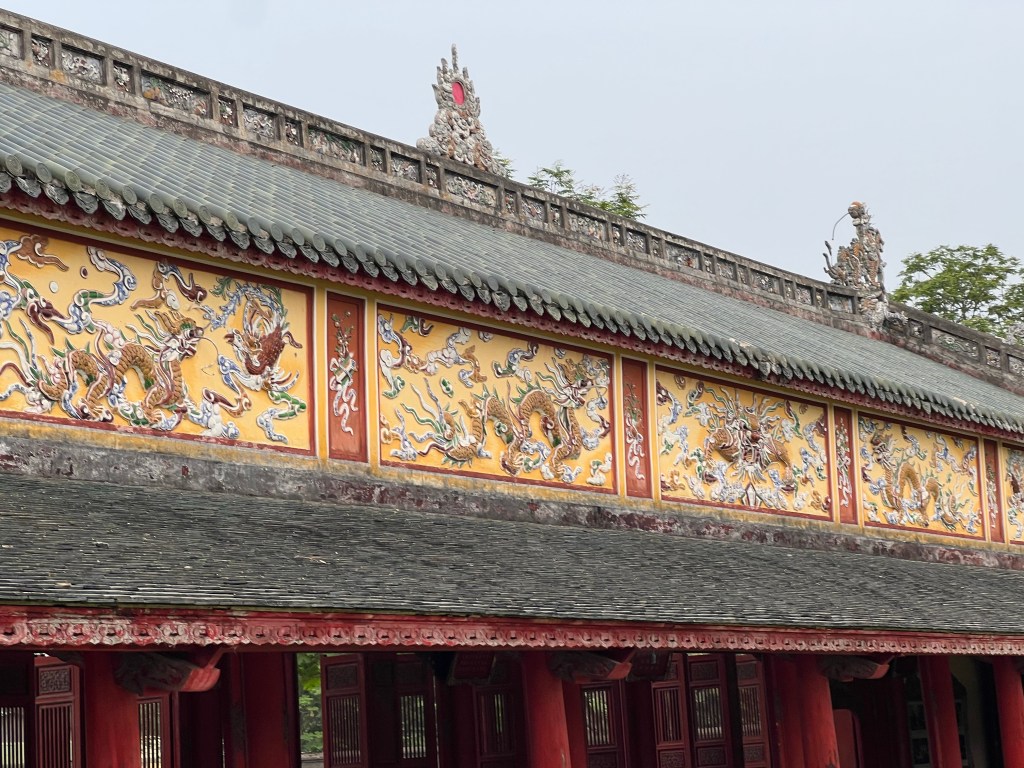
After the end of the monarchy, the Imperial City suffered neglect and heavy bombing during the Indochina wars. Many of the buildings were destroyed and now only ten of the original 160 remain. Designated a UNESCO World Heritage Site in 1993, these building have since been undergoing restoration.
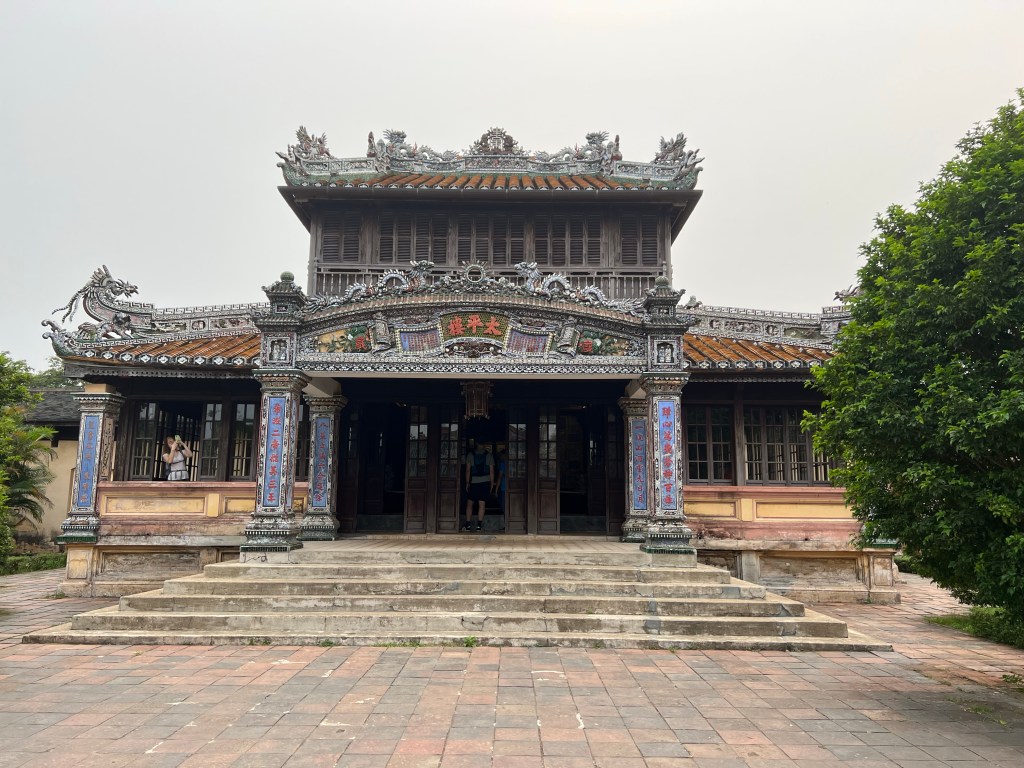
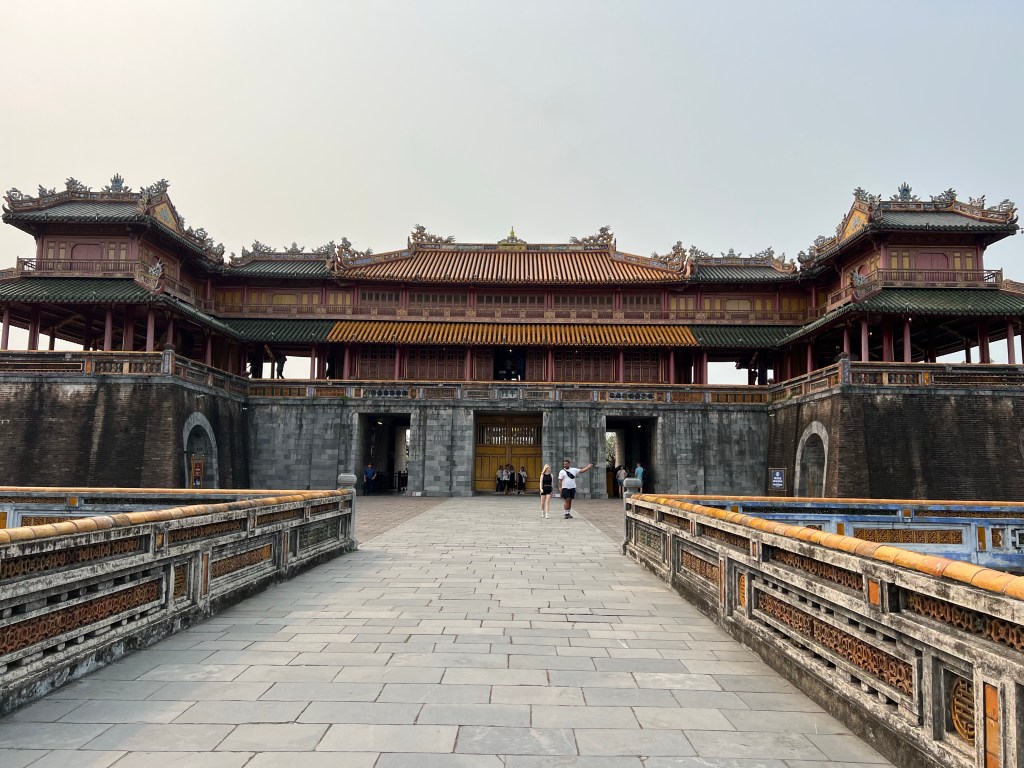
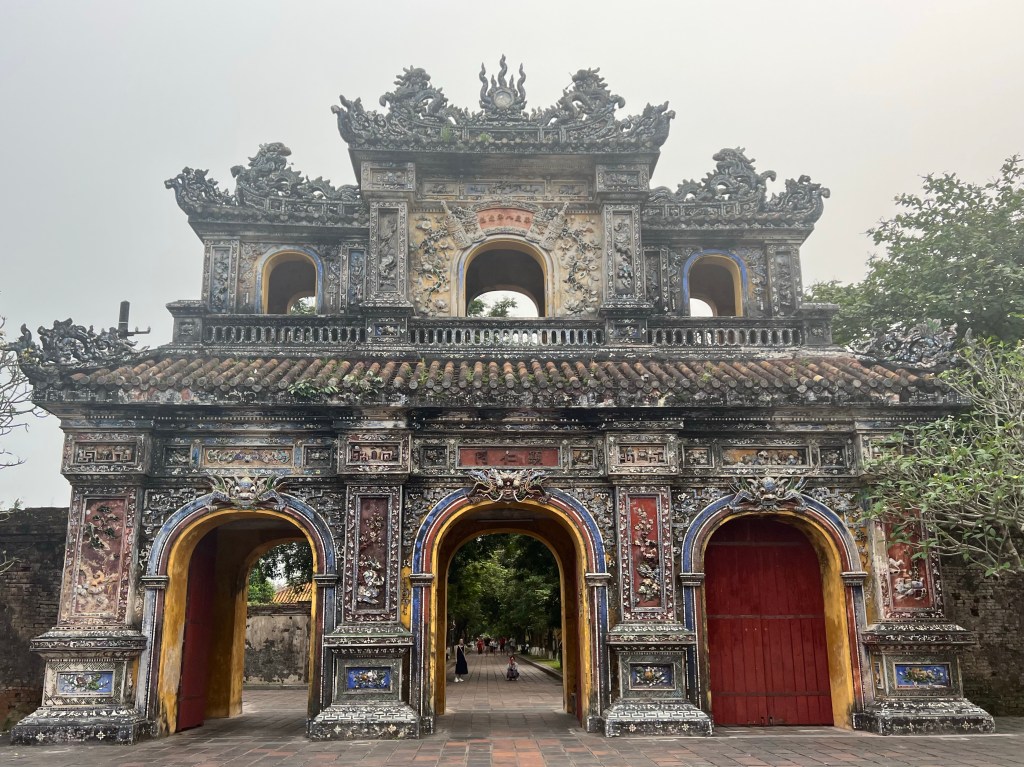
We entered via the impressive Noon Gate, but sadly the Thai Hoa Palace (Supreme Harmony Palace), near the main entrance is one of the areas closed for restoration. Ha explained this is where the emperor would have received foreign dignitaries and conducted much of his official business. No one was allowed to see the Emperor’s face so messengers would carry requests from the mandarin to the Emperor and his answer back to mandarin. Weeks of planning went into having an audience with the Emperor with the correct protocol being mandatory. Mandarins would often wait hours, in a deep bow, before seeing the Emperor. In front of the palace is a huge courtyard with stone tablets on the right and left to indicate the position of mandarins of different ranks, with the military mandarins on the right and the civil mandarins on the left. The palace was used to celebrate significant court events right up to the reign of the 13th and last emperor, Bao Dai, who was forced to relinquish the throne by the French.
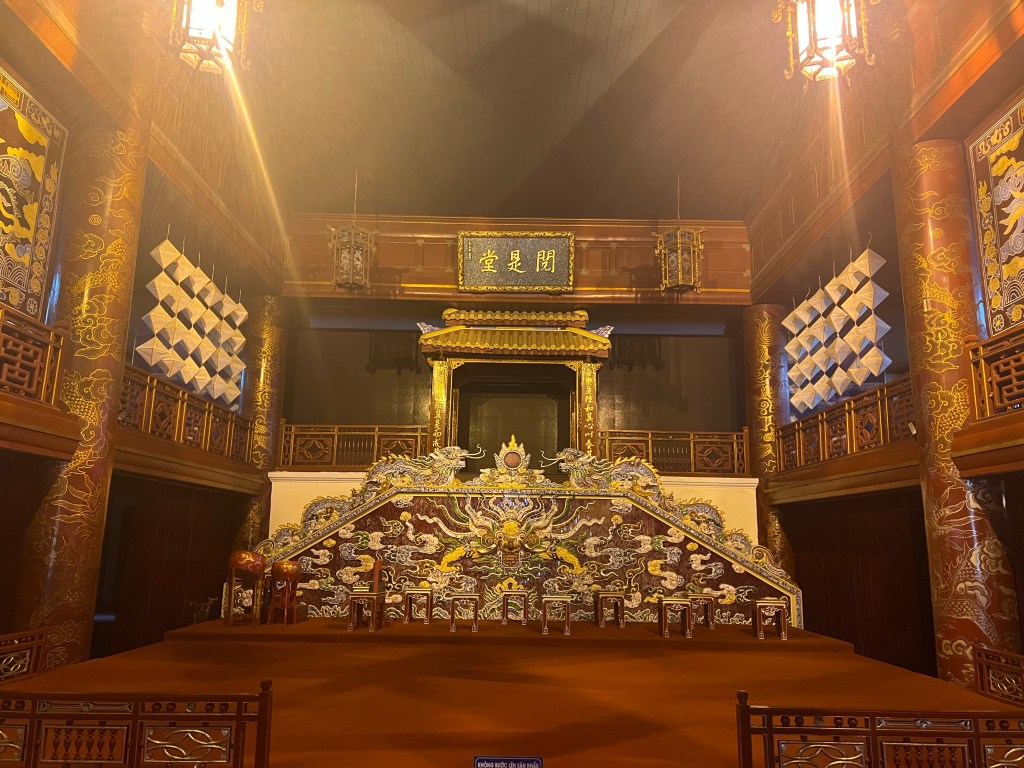
We wandered around a number of other buildings, restored to a greater or lesser extent, including the emperors library and a rather splendid Royal Opera House. This was originally built in wood in 1826, and displayed some of the instruments used at the time. The translation of the signage was wonderful, my favourite being: …. The seats for ancient guests were restored ….
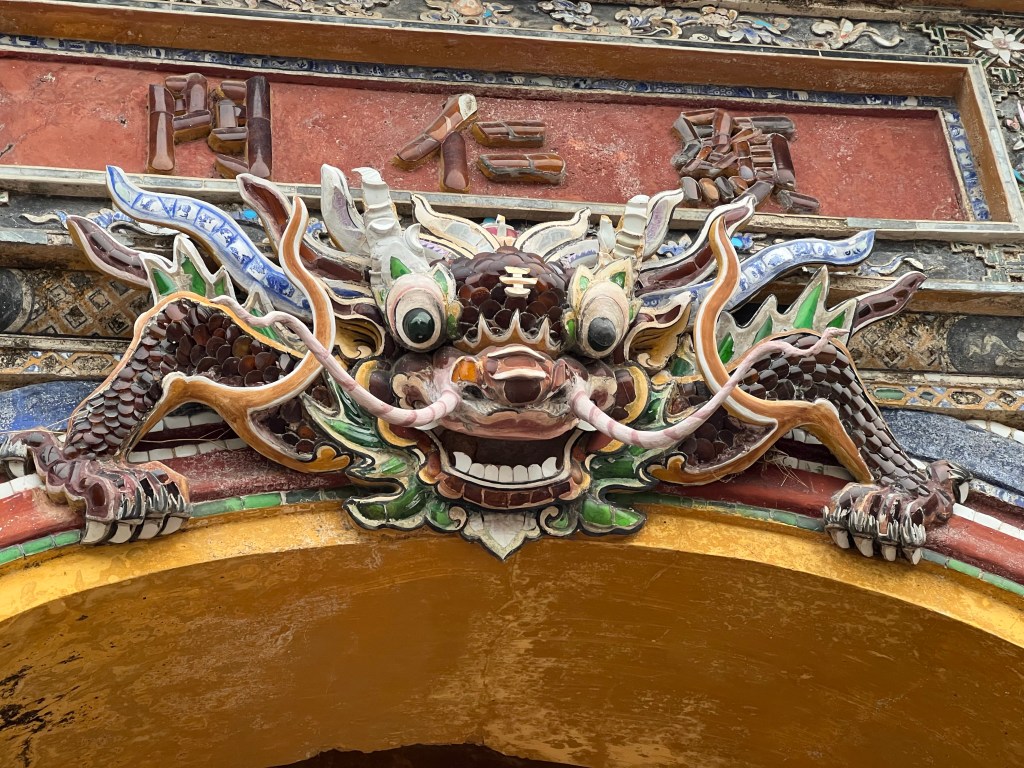
Many of the walls in passageways were covered in wonderful photographs of some of the more recent emperors. They led a pretty debauched life, most with many wives and children, not to mention harems of concubines, protected by eunuchs. Apparently to win favour with the emperor, a village would offer their sons to be castrated and become a eunuch in the palace! The fourth emperor, Tu Duc, reigned the longest (1848-83) with 104 wives but no sons, likely due to impotence from smallpox. The crown passed to his nephew.
With a threat of karaoke this evening, I decided to take some time out to catch up on writing this, so here I am, the only one eating in the ‘Cherish’ Restaurant!
 EC-Rider Travels
Leave a comment