
It is not surprising it is so hard for the Vietnamese to speak English, as they have five tones for each of their vowels, so despite many of their words and names being short you can say them in five different ways which all mean something different. I think I have been calling Ha ‘open your mouth’!
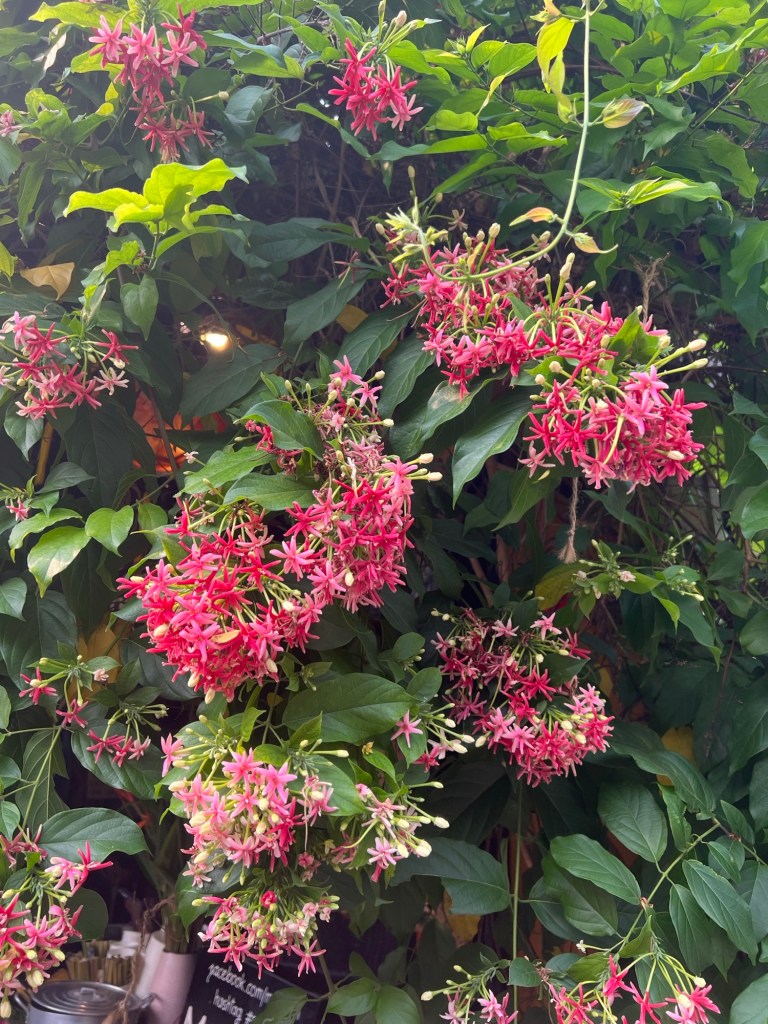
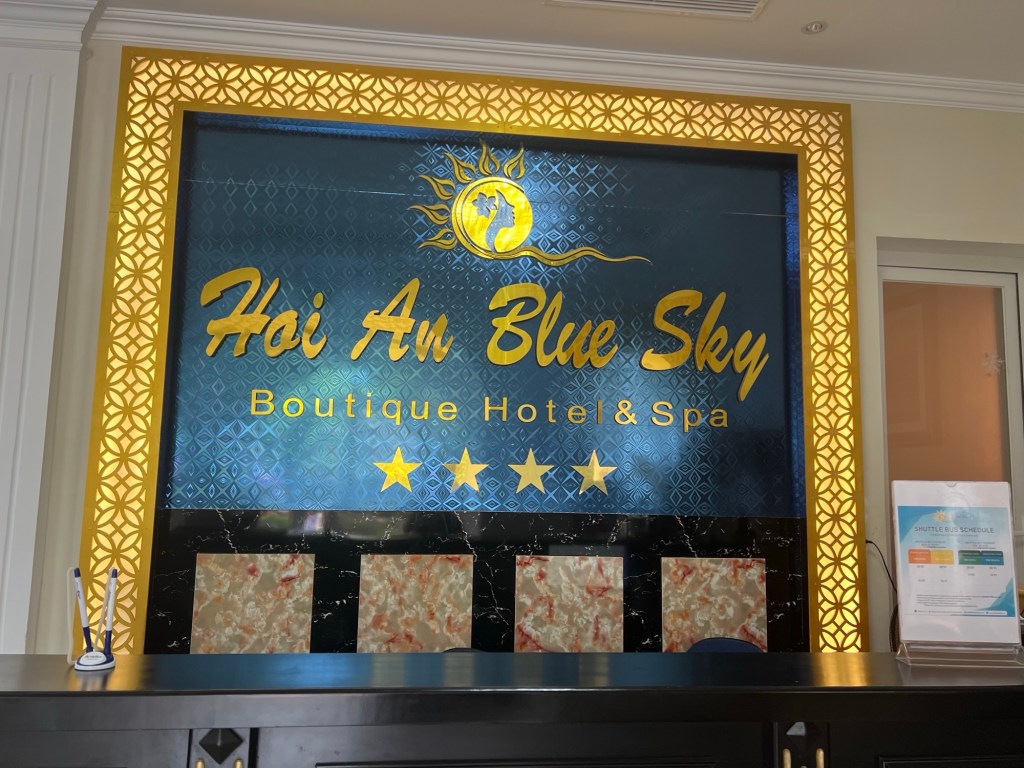
We were on the bus at 8am and out into the madness of Monday morning rush hour. Ha herded us efficiently through Ho Chi Minh airport and got us all on to the plane for our 90 minute flight to Da Nang. Again with Ha’s efficiency we collected our suitcases and were out of the airport in no time and on to a new mini-bus, with not quite such fetching adornments. We stopped for another noodle lunch on the way (Ha loves a noodle!), and arrived at the Hoi A Blue Sky Boutique Hotel about twenty minutes later. A hilarious hotel, with a lot of gold and the best sign yet, advertising their Happy Hour …. ‘Buy 2, Get 1’! Inflation is very bad in Vietnam!
Ha then kindly took us on an orientation tour. We jumped into a giant golf buggy and headed to the centre of town, about 15 minutes away. Hoi An is very different to Ho Chi Minh and much less frenetic.
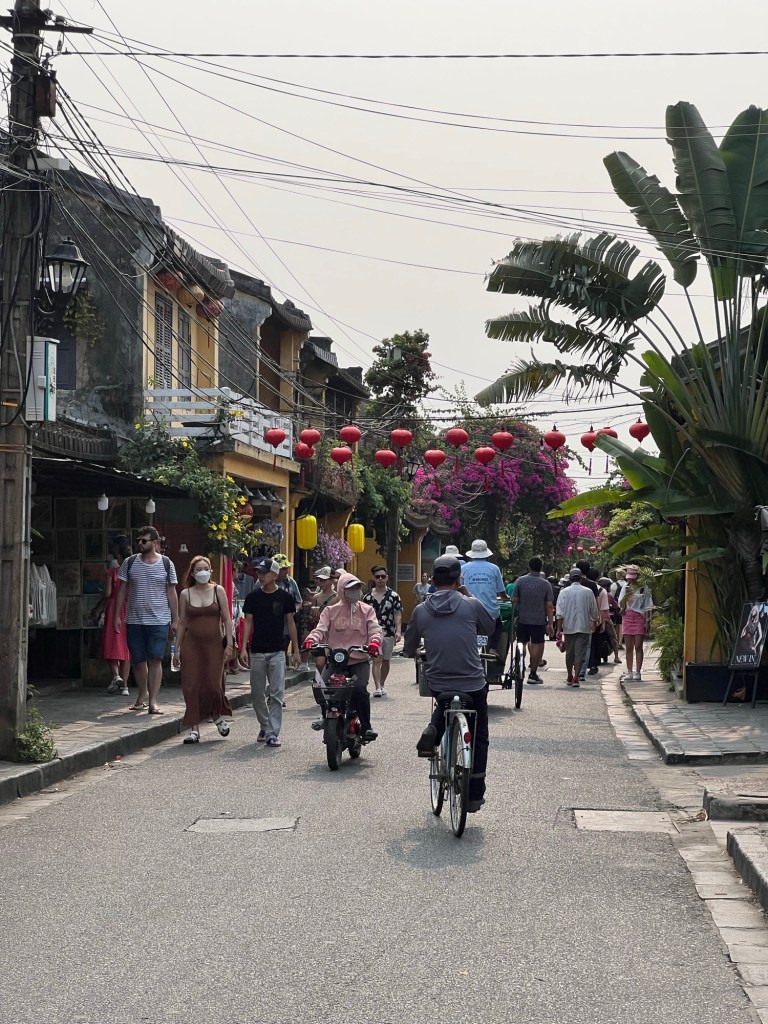
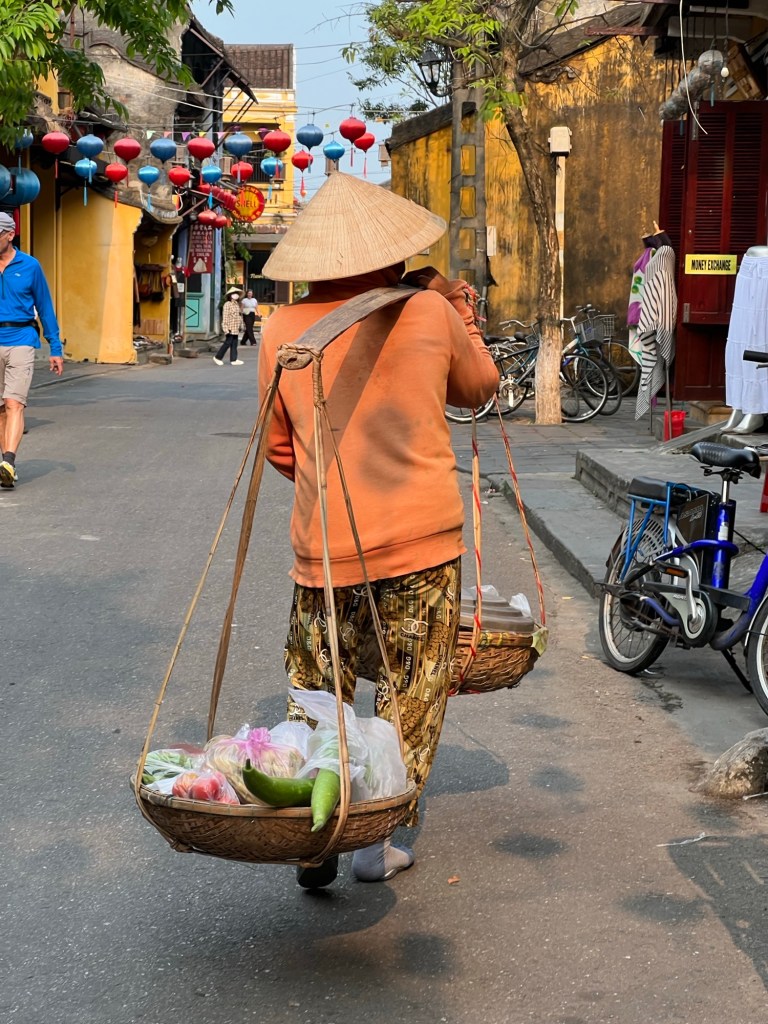
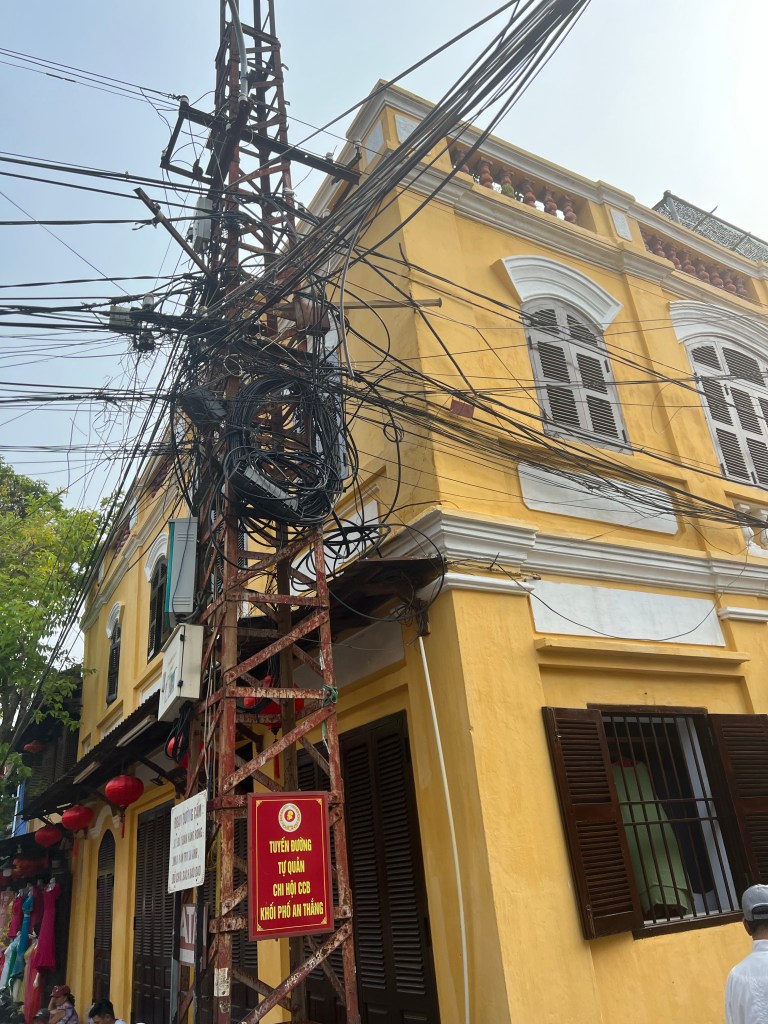
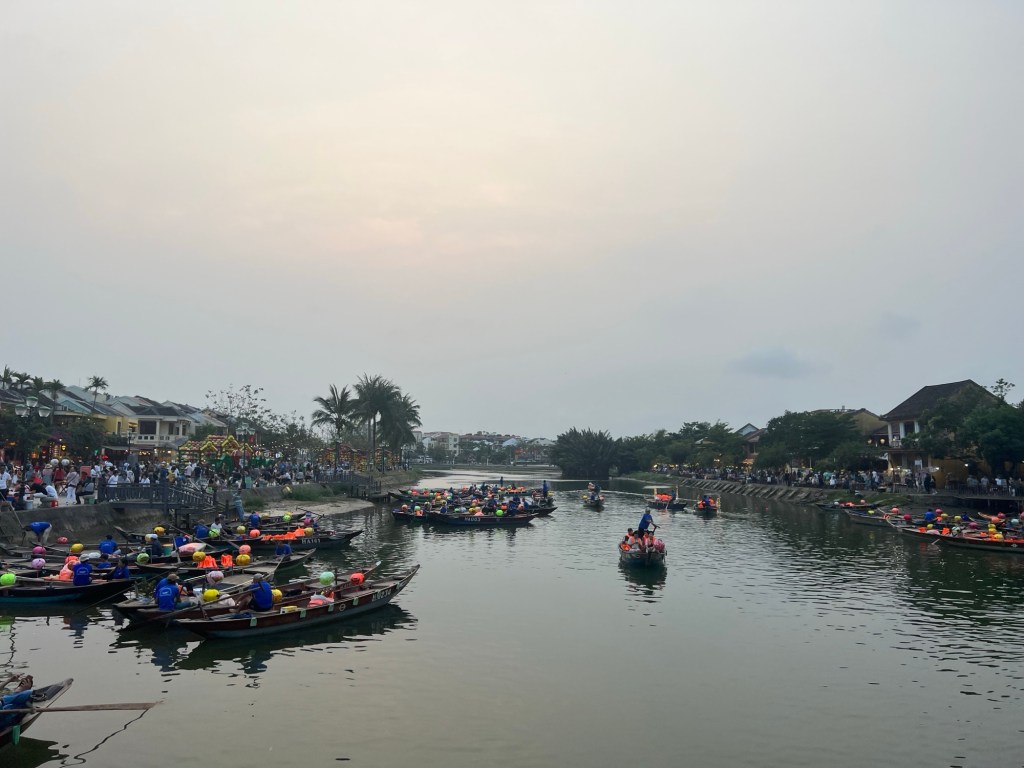
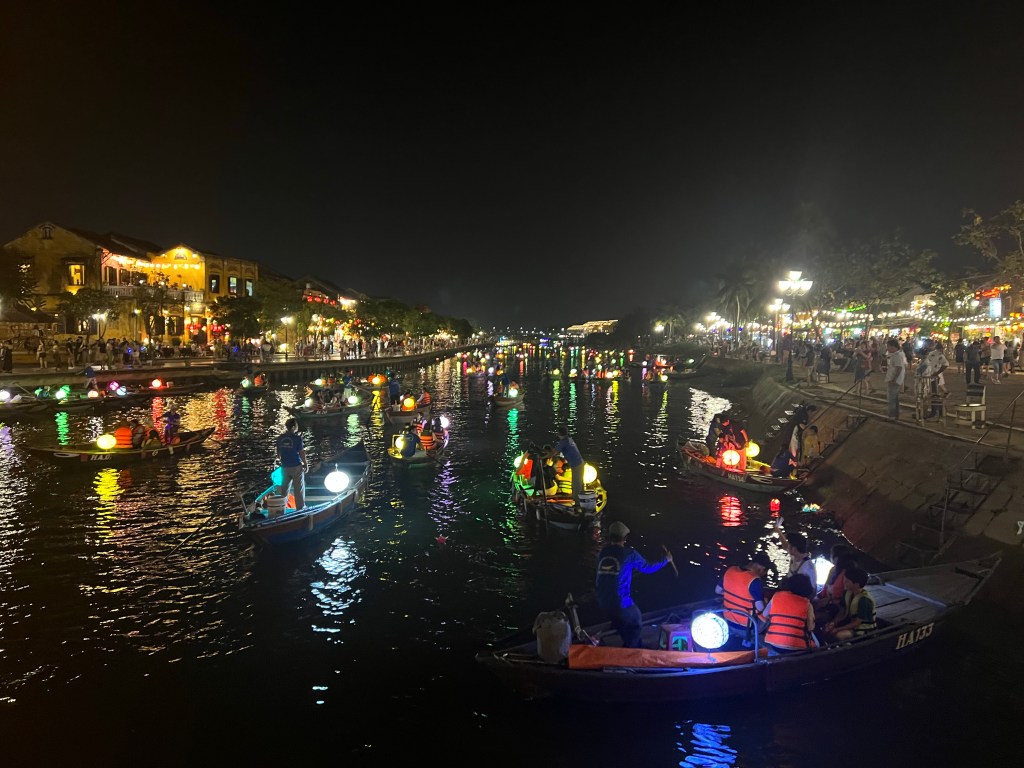
It is an ancient town, full of pretty saffron yellow pained houses and cobbled streets with coloured lanterns hanging across them and lots and lots of tourists. It is in the central province of Quang Nam and sits on the north bank of the Thu Bon river. From the 15th to 19th centuries it was an active trading port with the countries of Southeast/East Asia and also Europe. The town is thus a fusion of many influences, principally Chinese and Japanese but you can also see elements of European architecture.
First we went to the Fujian Assembly Hall. this was constructed by a community of Fujian families who fled their coastal province in Southern China to escape the Qing dynasty who had defeated the Ming Dynasty. They established the Minh Huong Village in Hoi An and the Fujian Assembly Hall as their meeting place and place of worship. The building was originally a thatched Buddhist temple built in 1692, which had fallen into disrepair so the Fujians bought it and reopened it as their assembly hall in 1759. You are welcomed by an ornate three-arched gate, built rather more recently in 1975 and is said to embody “heaven-earth-human”. It is roofed with special green Yin/Yang tiles with the left and right entrances open for men and women respectively and the main door closed, to ward off misfortune.
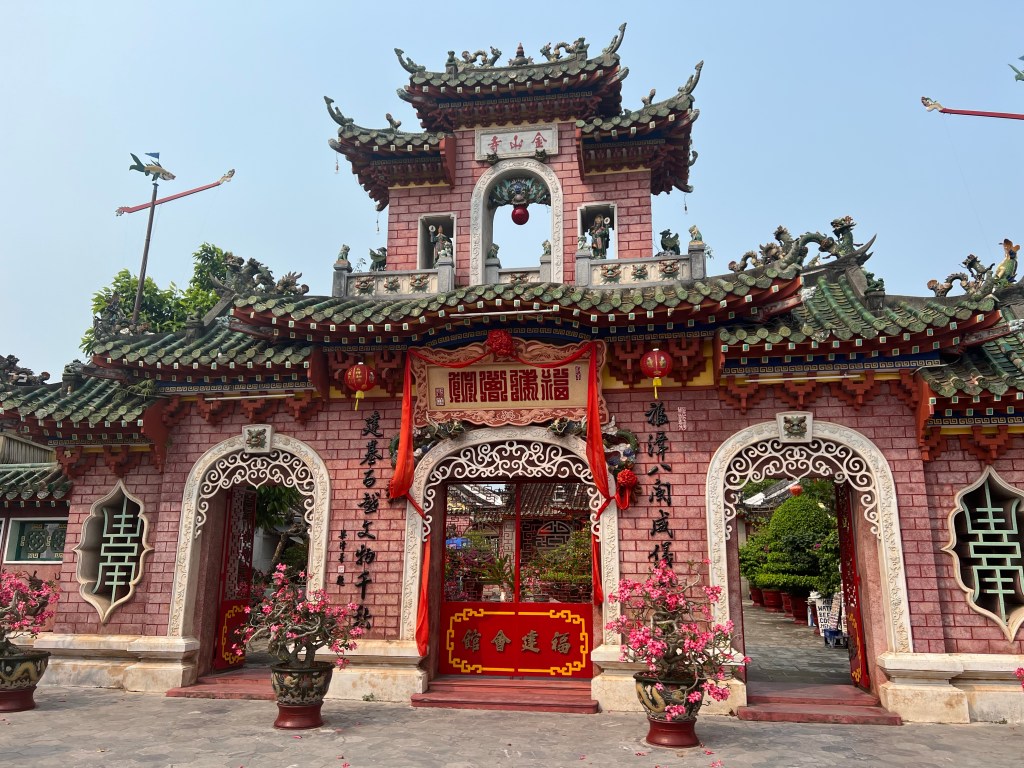
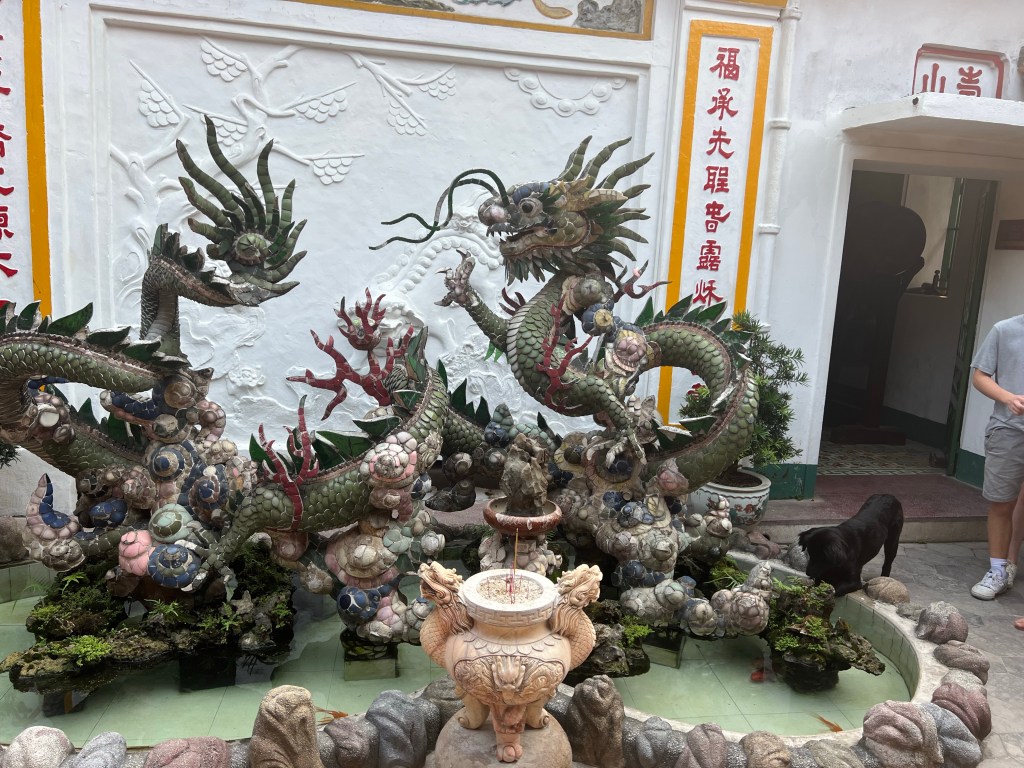
As well as a meeting place on the 1st and 15th day of every lunar month, the hall is devoted to the worship of ancestors …. for people of any faith. There are hundreds of spirals of incense hanging from the ceiling which burn for about 20 days. These had messages in all different languages, left by families in honour of someone who had died.
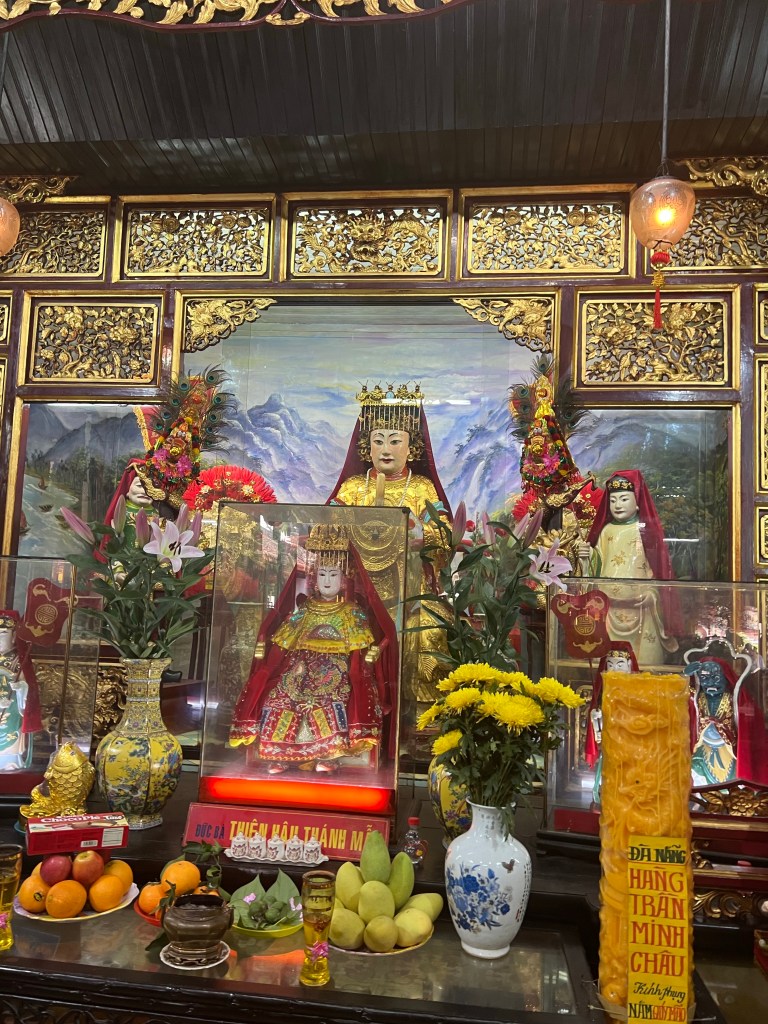
They also come to worship a god called Thien Hau (Mother of the Ocean) who blesses fishermen and sailors whilst at sea. She has two, rather scary looking, assistants, one with bulging eyes who can see for a 1,000 miles and the other, also with pretty bulgy eyes and huge ears, who can hear for 1,000 miles and keep them safe. Or there was a spirit you could pray to if you needed help with your business, though the success of this very much depended on your karma and how good and honest you had been. Also a spirit to pray to if you were struggling to get pregnant. She had twelve assistants who would each watch over your baby for a month. On the baby’s first birthday, there would be a celebration and it would be presented with a number of ‘tools of different trades’ and whichever one the baby went to would be their chosen profession and the parents would guide them in that direction.
We then visited a traditional old house called Duc An, which was built in 1830 and has been lived in by the same family for six generations. It again has Yin and Yang tiles and is made of special ornamental wood, called Kieng, unique to the Quang Nam province, which can withstand the hot and humid weather. The floor was on a slant towards the river so when it floods, which apparently it does regularly, the water will run away. The wooden pillars were cleverly raised off the floor by smooth stone bases to prevent water damage and also stop termites munching on the pillars. The front of the house was for the men only and the back for the women, with a nice courtyard in the middle. The owners still live in the back of the house but generously share their photographs and memorabilia!
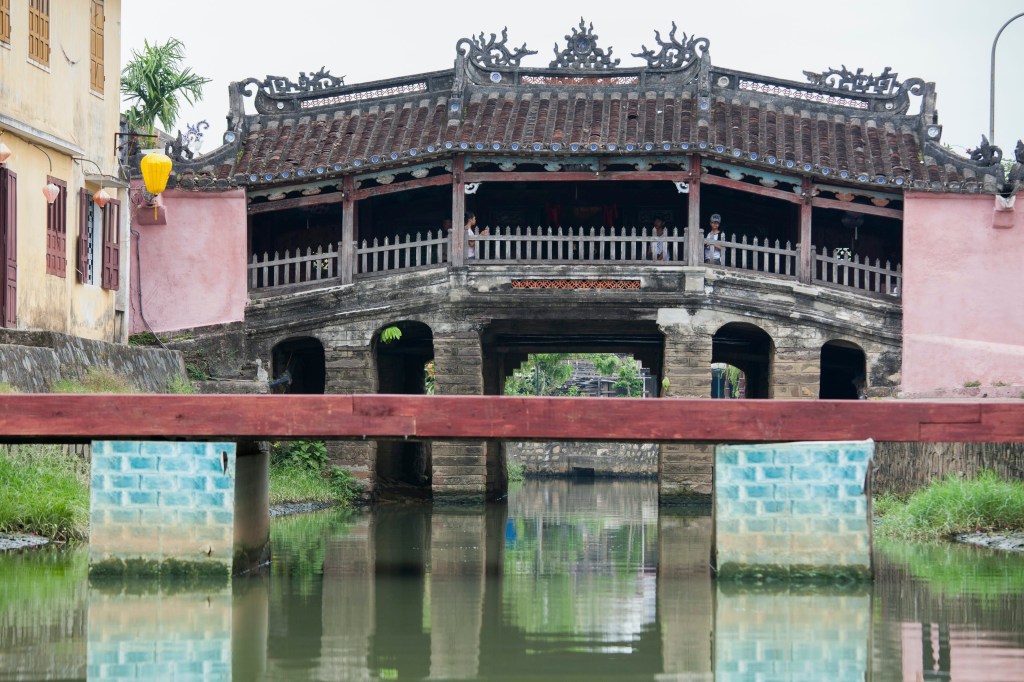
We walked passed the rather magnificent Japanese Bridge, however this was sadly under renovation. It was built in the 17th Century to ‘pin down the body of Namazu, a mythical monster whose head is in India, tail in Japan and body in Vietnam. Namazu thrashes around and causes earthquakes unless his body, is pinned down. Let’s hope the renovation does not take too long! It was sad not to see it in its glory, as it looks rather magnificent from the images displayed beside it. It is also on Vietnam’s 20,000 VND note (worth about 70p). Working out the money here has been quite a thing, though I have rather enjoyed walking around as a millionaire several times over!
Hoi An is known for its tailoring so Ha took us to one of the many, many shops which will run up a suit or dress for you over night. They employ hundreds of tailors who all specialise in one area of a garment, and there are shifts working 24/7 – amazing! Some of the boys put their orders in, they have a fitting tomorrow afternoon and their suits will be delivered tomorrow evening – costing about $150 or $250 for 100% cashmere. Unbelievable.
Carol’s son had suggested somewhere for dinner, which was almost next door and it was an excellent recommendation and we had a really delicious dinner.
 EC-Rider Travels
Leave a comment