
This morning we packed our wee knapsacks and jumped on our bus to head for the Mekong Delta. Despite being only 8am on a Saturday morning, the roads were crazier than ever. We headed South West, passing slums on the bank of the canal, and also Chinatown which had been part of Ho Chi Minh since the 16th century when the Chinese fled the Qing Dynasty. We were soon out of the city and on to the new Express Highway which runs East/West and opened in 2013. It is the only highway in South Vietnam, all 60km of it. Motorbikes are not permitted on the highway, which made things very much quieter.
The countryside is very flat with patchworks of rice fields, most having been recently harvested and somewhat surprisingly, many with large, above ground graves/mausoleums placed to one side of them. The custom in the countryside is to buried on your farm, for at least three years so your children can come and pay their respects. The remains are then usually taken to a cemetery. However with the fear of subsequent generations selling off the land, farmers are requesting to remain in their field graves, in hope their children will find it difficult to sell and thus retain the land.
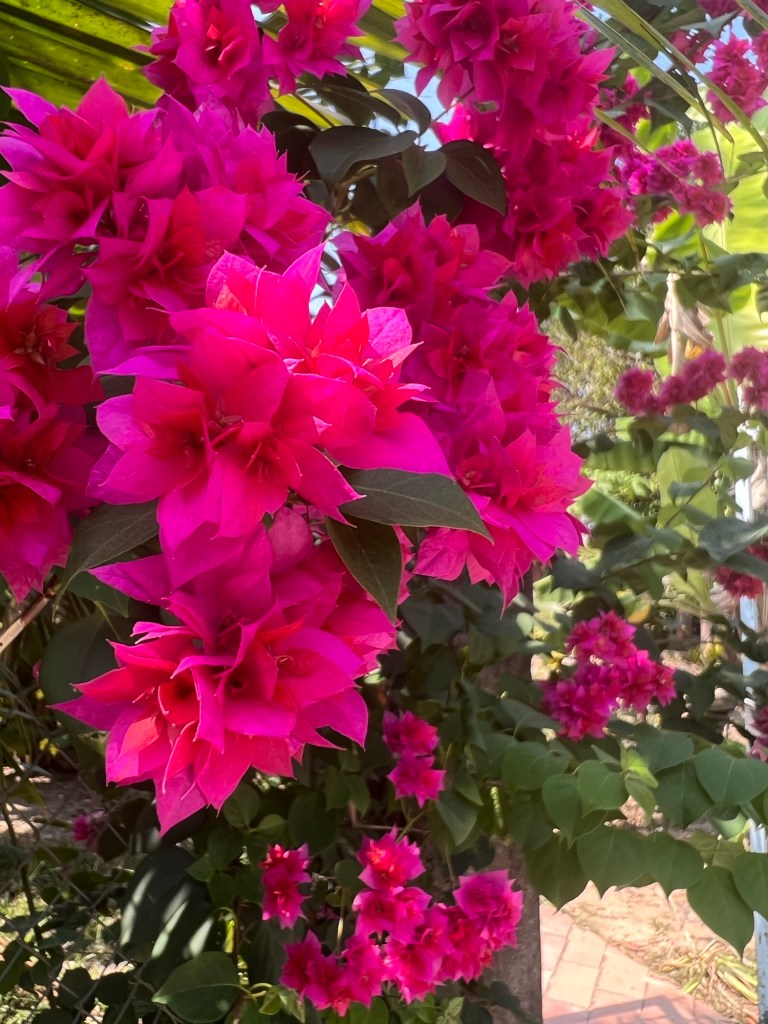
Everywhere you looked you could see traditional Vietnamese conical hats, made of palm or banana leaves, under which might be men or women, working their small holding. This would sometimes be less than an acre but essential to their livelihood. The rural wage in Vietnam is still very low and huge numbers are still living below the poverty line. Known as the rice bowl of Vietnam, the tropical climate allows up to three rice harvests a year, and they produce about 50% of the country’s rice. It is also an area of fruit growing – pineapples, mangos, guava, bananas, jack fruit and my new favourites the longan. Farmers are struggling however as the previous freshwater of the
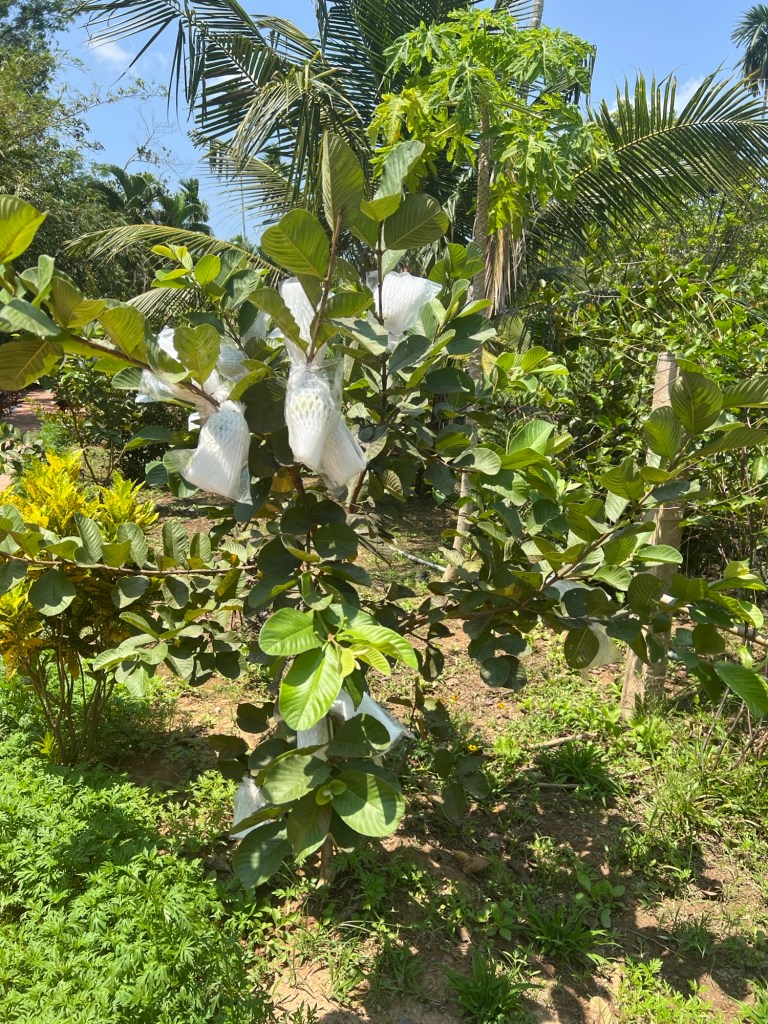
Mekong is becoming brackish due to all the hydroelectric dams further up river in Laos, Cambodia and Thailand. As we saw in Cambodia, this has a marked effect on fish levels and also impacts the farmers’ food production.
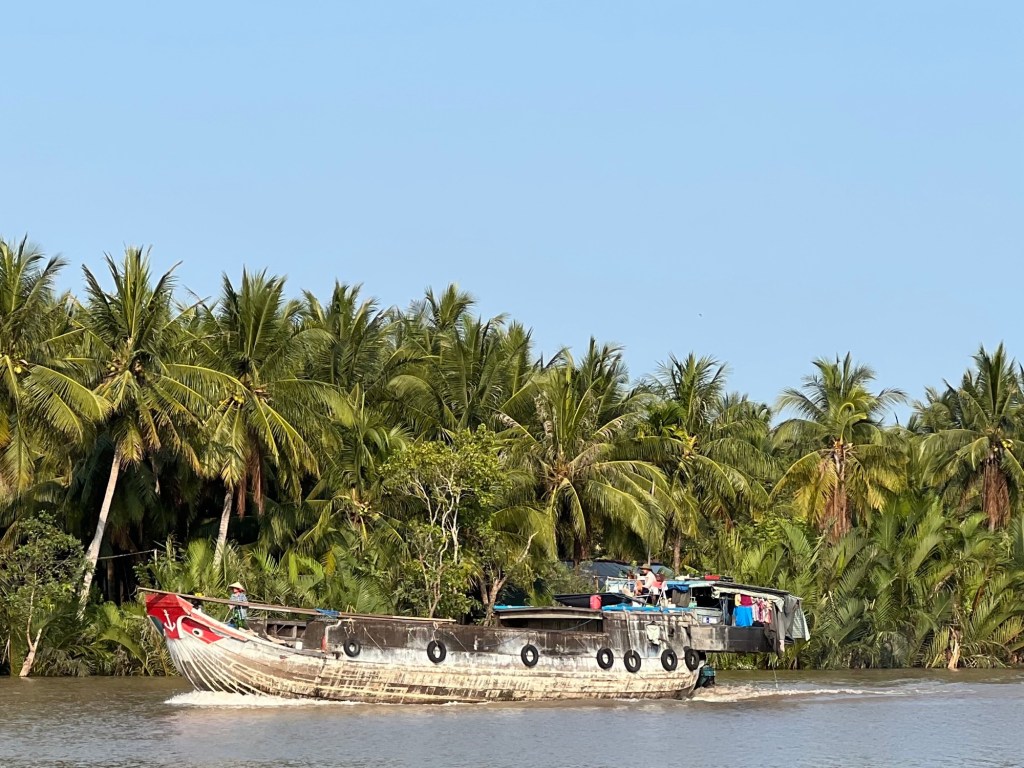
We arrived a couple of hours later in the province of Ben Tre also known as the coconut kingdom. Here we met our local guide Mr Vu and headed off in a small boat across the Mekong river to one of the four islands, all named after mythical animals – unicorn, phoenix, dragon and a turtle thrown in for good measure. Mr Vu explained that all the boats on the Mekong have eyes painted on their bow to look out for crocodiles, however these have now all been eaten!
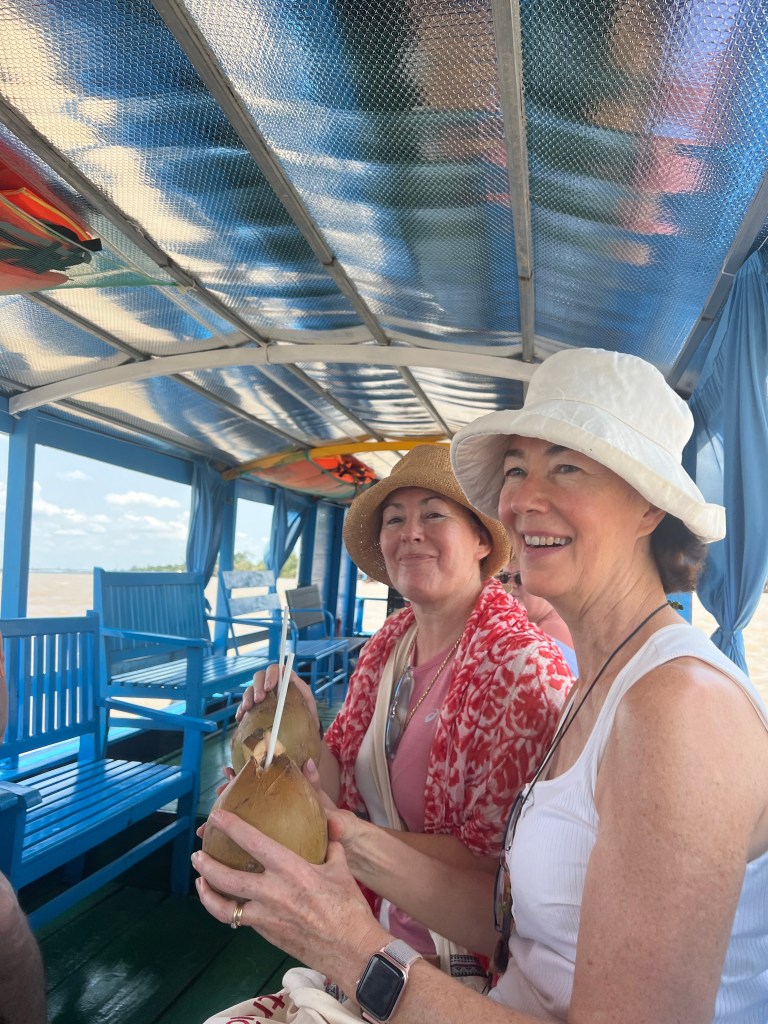
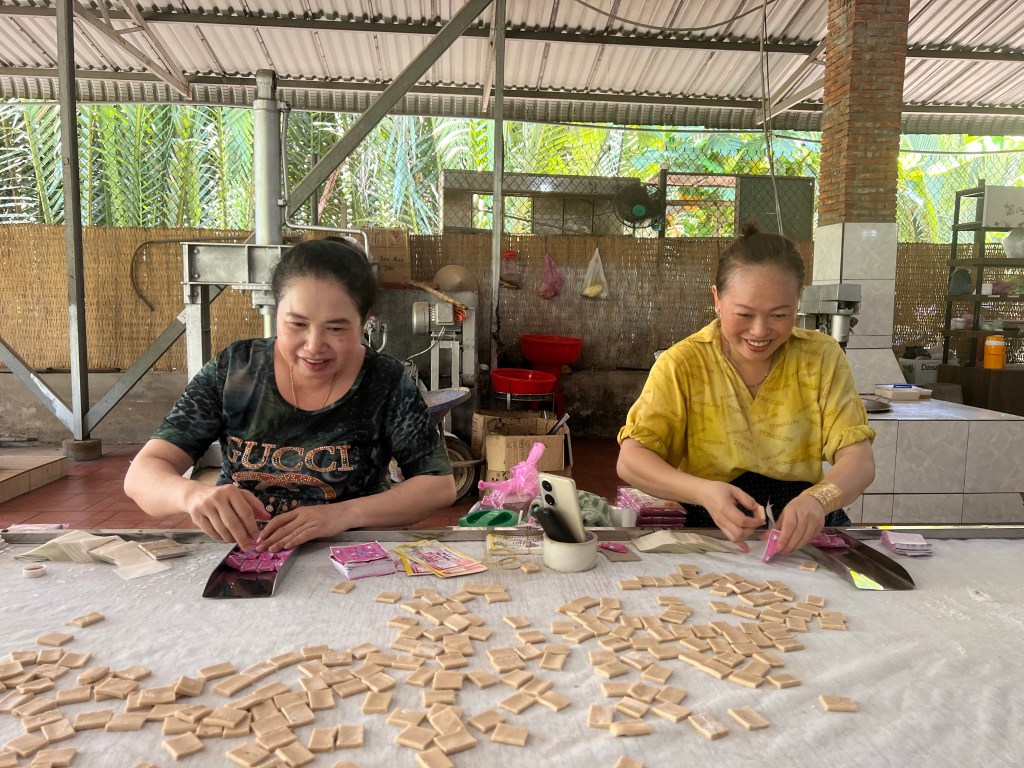
We landed on Unicorn Island and were taken to see the coconut sweet factory, joining many others doing the same thing, waiting our turn, to be shown how the coconut is processed and made into different flavour sweets. The majority of this process is still done by hand. The most impressive being the wrapping of the sweets, in a sheet of rice paper, at great speed.
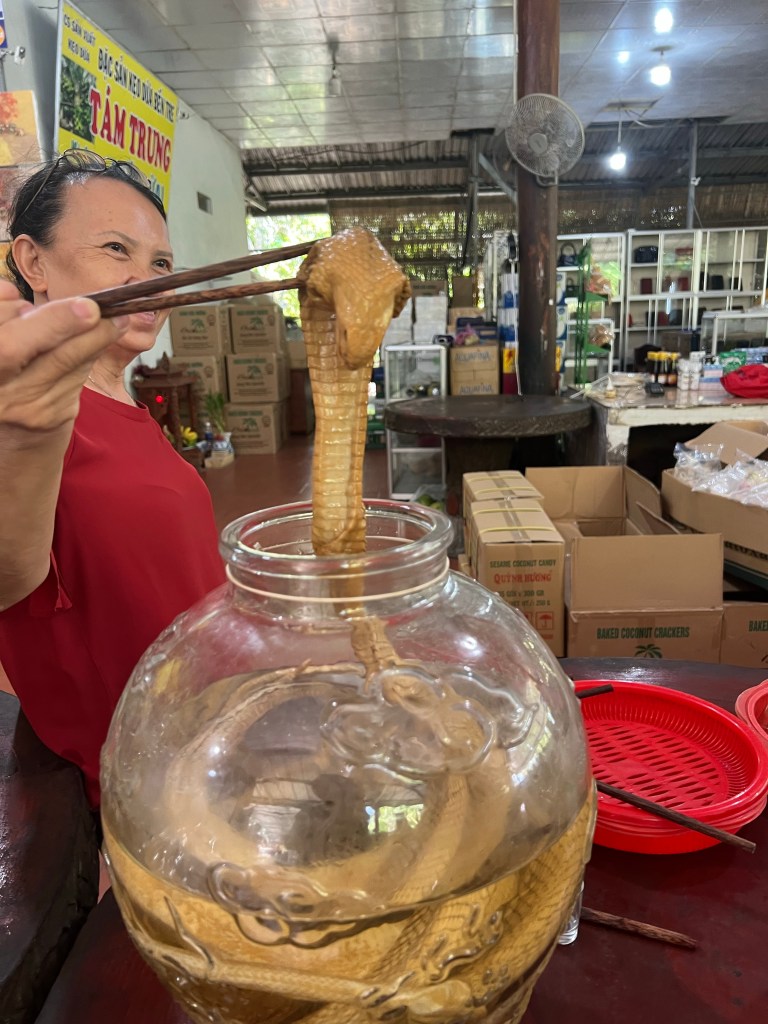
As we left, there was a lovely lady selling snake wine (with a cobra soaked in it for extra taste and medicinal purposes) and slightly less alarming banana flower wine both at 40% – Josephine and I had a taste of the latter – it practically blew our heads off. Sadly there is no room in the suitcase to bring any home.
We were then taken to a little bee-farm – we thought Mr Vu had said beef-farm so had got Bill (farmer in Ireland) very excited. This was a charming set-up, producing honey and royal jelly, which we were assured would take ten years of our lives within a week, so you may not recognise me!
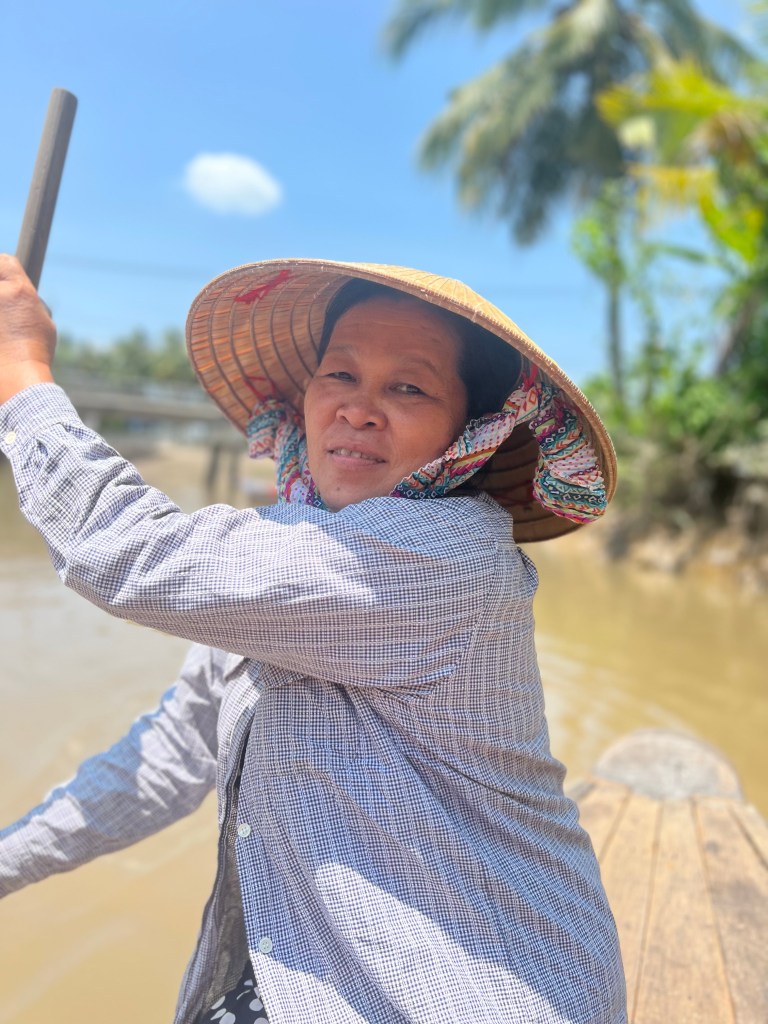
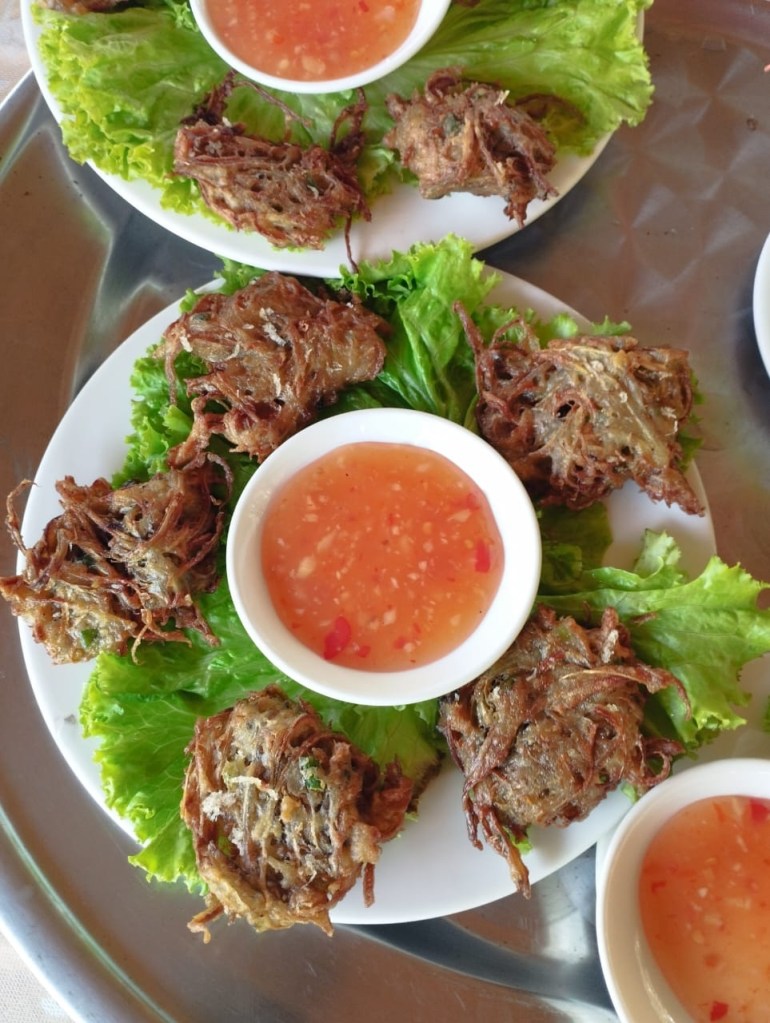
Next it was into a tuk tuk and back on to the hairy roads, though this time it was motorbikes, of course and horse drawn carts full of tourists! Finally into a little, rather precarious, rowing boat, expertly rowed with one paddle, by a lovely local lady, to our lunch stop. Here we were presented with the most amazing lunch of pumpkin soup, elephant ear fish wrapped up with vegetables and herbs in a rice paper parcel, giant prawns, deep-fried banana flowers and that was just for staters!
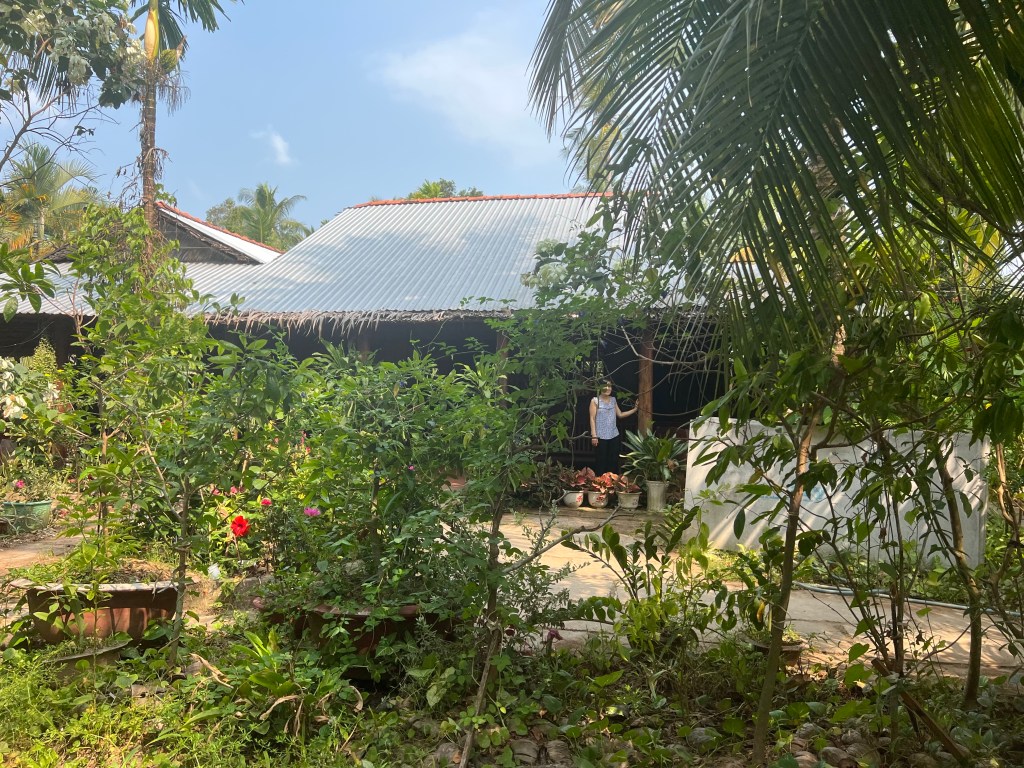
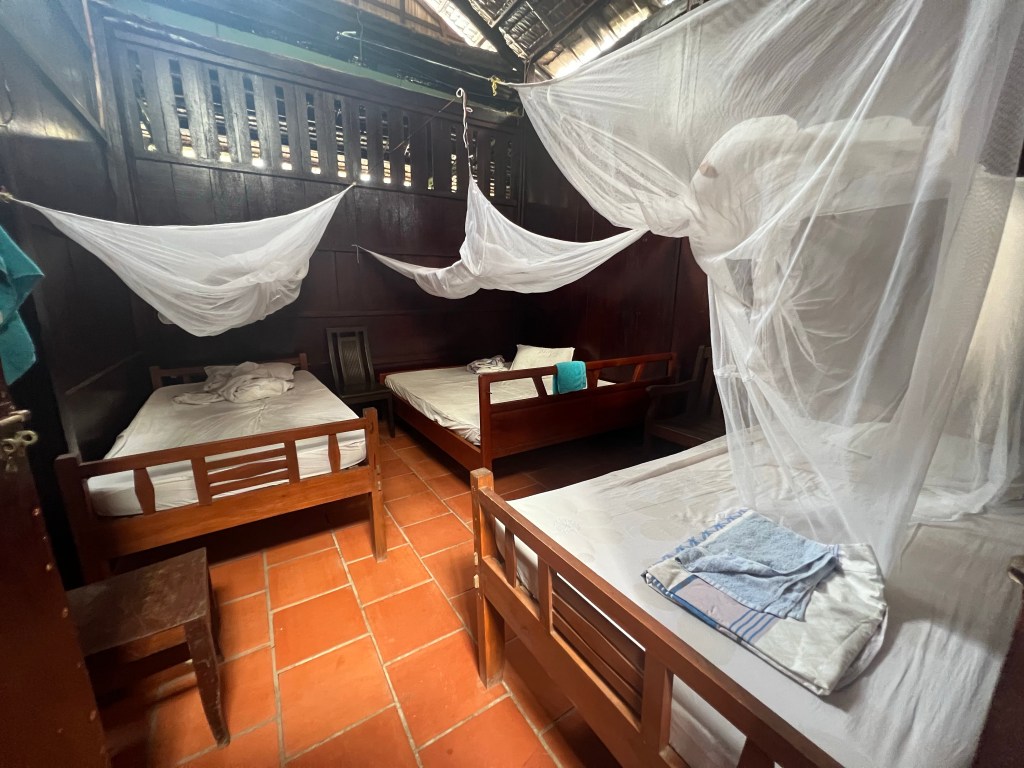
After lunch we were met by our trusty minibus and taken to our ‘home stay’. We arrived in a small village where the bus left us at the end of a road and we all picked up our bags and somewhat apprehensively headed down the track. We passed a number of houses (praying they were not the one), a group of guys playing cards in a couple of barns full of beautiful caged cockerels – no doubt for fighting (hate that), until we came to the end of the track and the home of Mai and her husband Mr Nghiep. It is a beautiful spot overlooking the river Mekong, built by them a few years back as a small business. It is, as promised, simple with rooms of two, three and four …. so I set up camp with John, Susan and Josephine. There are a number of outside bathrooms with flushing loos and even loo-paper which is a bit of a bonus. There is a huge deck with a lovely breeze where we all collapsed and I am writing this.
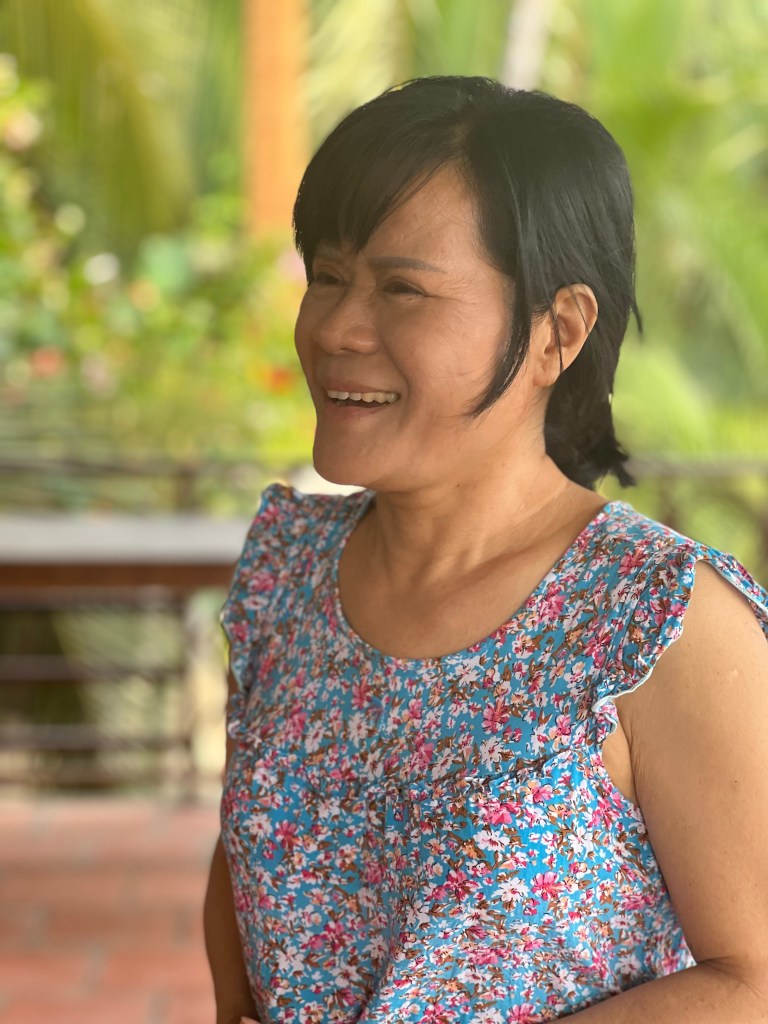
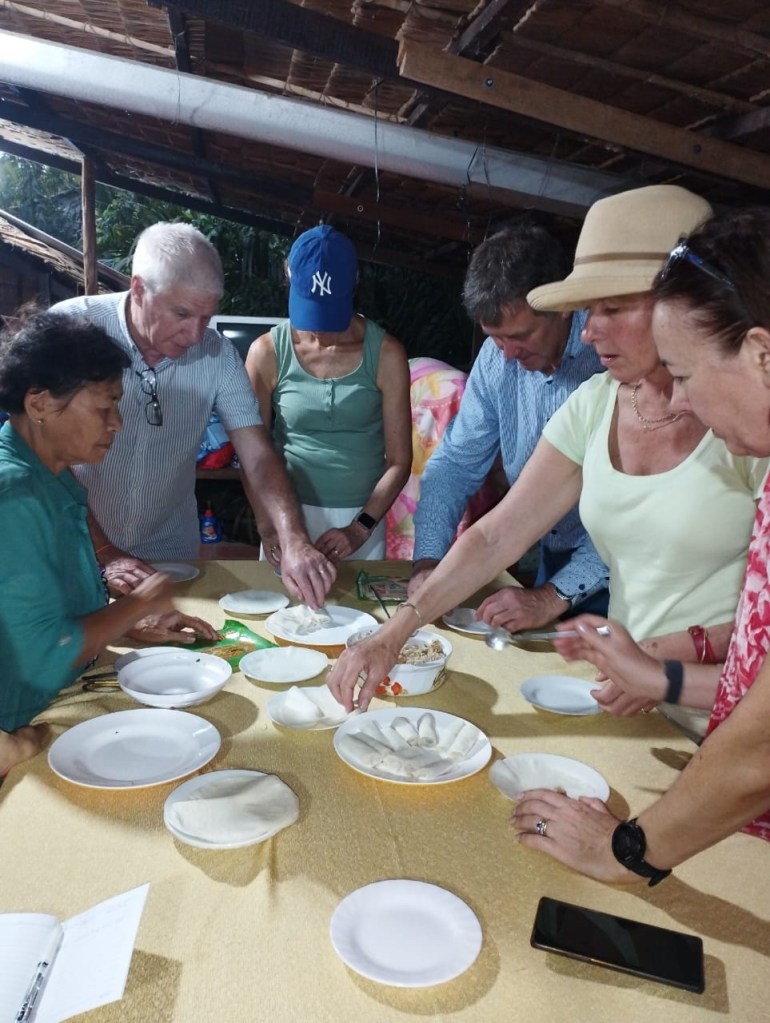
At 6pm we were given a lesson in making spring rolls. Frankly if no one employs me when I get back, it could be my new line. And then at 7pm, Mai gave us the most amazing feast of about six different courses, including our spring rolls which were delicious, as was it all.
After dinner, Mr Nghiep joined us. Unlike Mai who does not speak any English, Mr Nghiep’s is pretty good and he told us of his war experience as a young boy, living in a village nearby, with the constant sound of gunshot and having to head down into tunnels several times a day. He then went on to tell us that he was one of the boat-people who, without telling his parents, escaped Vietnam’s new communist regime in a small boat with 45 others. They were aiming for a refugee camp in Thailand but got blown off course and ended up in Indonesia, here they entered a refugee camp, where he stayed for six years before being sent back to Vietnam. We admitted we had all rather forgotten about the boat-people – the war here, certainly did not end when the Americans left.
After many, many cans of beer and the most disgusting Vietnamese wine, we attempted to brush teeth in the dark, and go to bed. It was still very warm, and sadly the small static fan in our room was not aimed at my corner. It was a relatively peaceful night, on very hard beds and firm pillows, and though my companions seemed to be sleeping soundly, it was not the best night for me.
 EC-Rider Travels
Leave a comment