
It was an early start today to get to the Cu Chi tunnels as early as possible. The restaurant (rows and rows of tables for the groups – like school) was full and there was a huge choice of the most disgusting looking things for breakfast, and thank goodness a banana. Norman, however thought it was the most wonderful breakfast and was planning on moving in to the hotel! Everyone to their own.
We were in our hilarious little minibus by 7am complete with scalloped edged slimy green/yellow seat covers complemented by pretty cream lace curtains … but blissful air conditioning. We headed to the Cu Chi tunnels and were indeed almost the first to arrive. Ha guided us around and explained the extraordinary resilience and tenacity of the Vietnamese soldiers during both the war with France and America.
From 1948, during the war with France, they started to build a labyrinth of underground tunnels to move safely from village to village evading the French soldiers. These were all dug by hand and in secret and during the Vietnam war, were extended to cover over 250km, stretching to the Saigon river and Cambodian border.
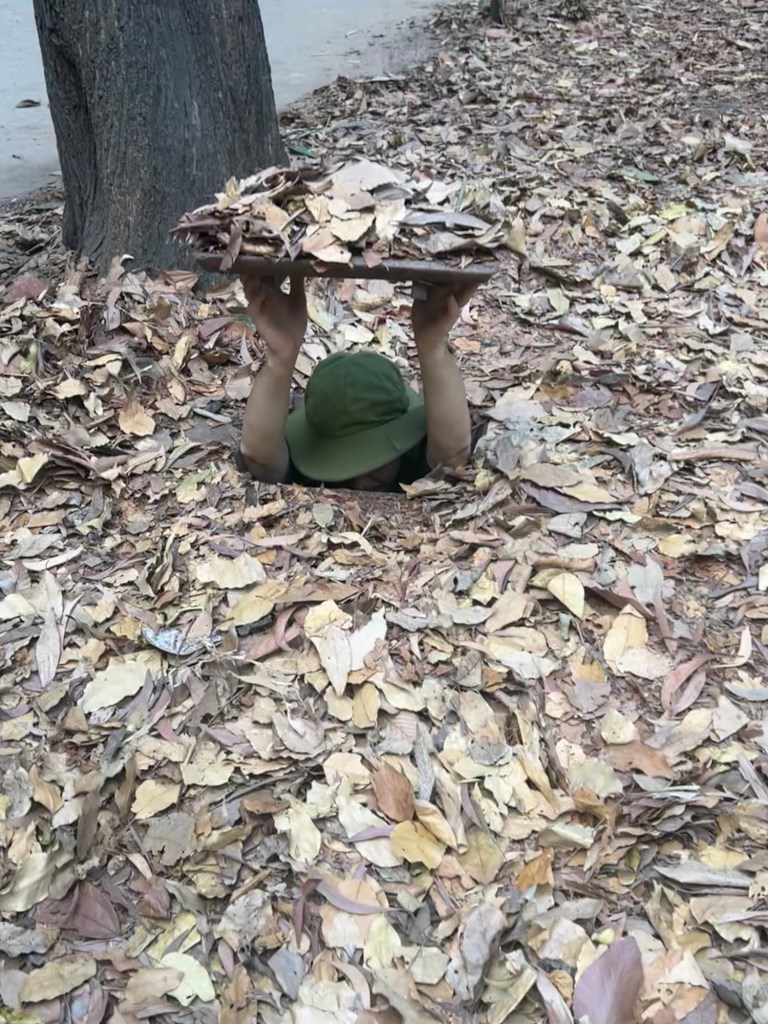
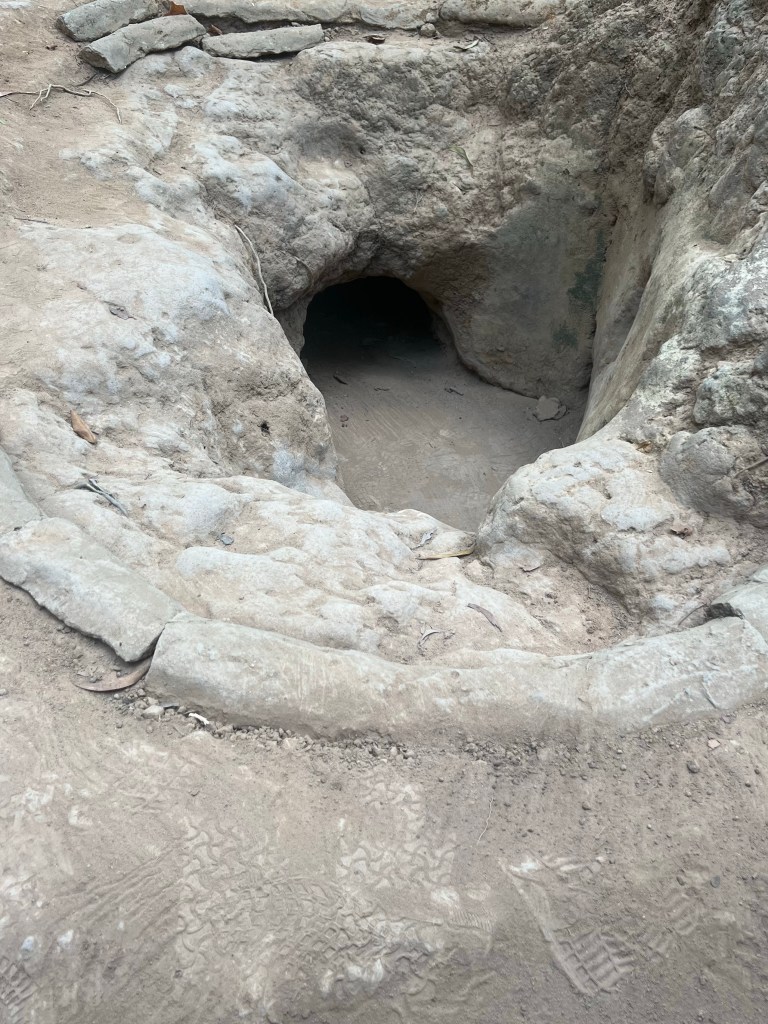
The tunnels had tiny entrances, covered with a secret wooden door which they would camouflage with leaves. They were made so small (35cm x 74cms), the Americans usually could not fit down. The tunnels were on three levels at about 3m, 6m, and 12m with hospitals, operating theatres, kitchens and workshops.
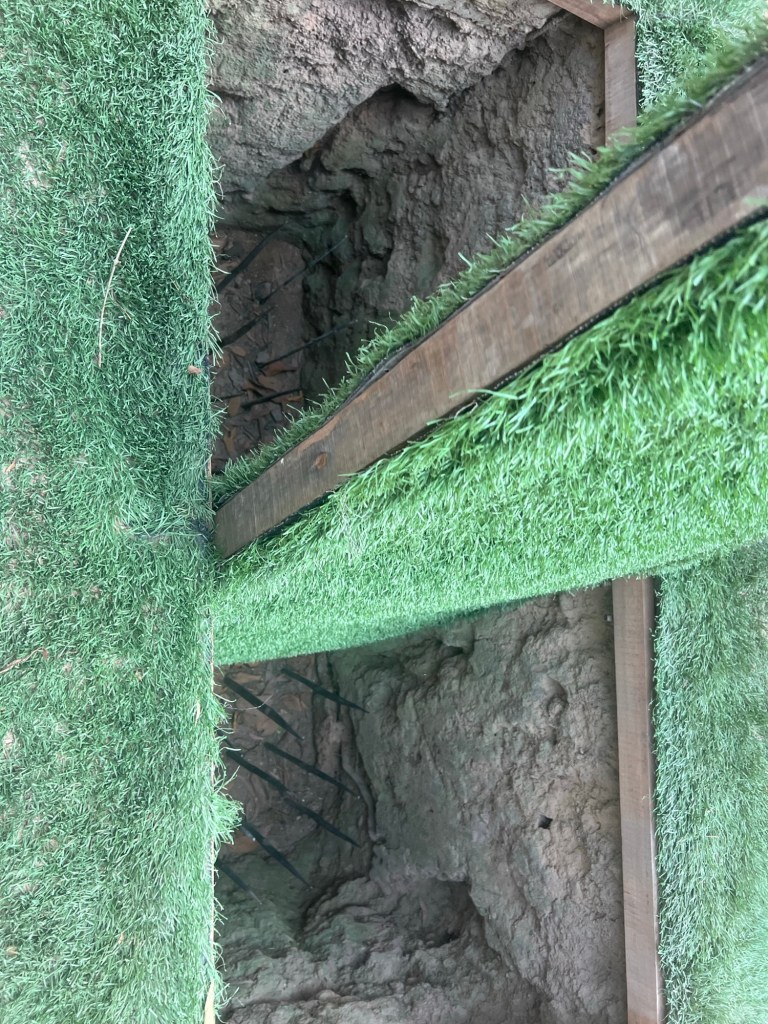
We saw the ingenious different booby traps they would lay with trap doors, opening on to spinning sharp spikes of recycled bomb metal. They used bamboo sticks to create air-holes disguised in termite hills and confused the American sniffer dogs by putting pepper and chilli around the tunnel entrances and US uniforms. The Vietnamese men wore green and the women black uniforms and were all issued with a checked scarf which could be used to disguise themselves, tie up prisoners, carry weapons etc.
They were extraordinarily resourceful, recycling American bombs to create their own weapons, and using old tyres to make their sandals – which they wore back to front so it looked as thought they were going in the other direction. Their mantra was to: Walk without tracks, Cook without smoke (disguising it as mist) and Talk without noise (sign language). Local villages supplied the soldiers with food of rice and cassava root.
We then went to the War Remnants museum …. if we thought the Genocide museum was harrowing, I think this was even worse. OMG what humans do to one another in war, begs belief and no sensitivities are spared at this museum. Graphic images of mutilated bodies on and off the battle field and the tortures they carried out were horrifying and perhaps worst of all, the damage of the chemical weapons the Americans used. It is the most complicated series of events between North and South Vietnam with the Americans first supporting the south and then fighting to prevent communism taking a hold. This ended with the US withdrawal in 1973 but having involved 3.1m and lost over 58,000 soldiers. However the cost to Vietnam was far, far greater with over 3,000,000 killed, 2,000,000 of which were civilians. The Americans also left behind 800,000 tons of bombs contaminating 6.1m hectares and 9,284 communities. As in Cambodia and Laos, people continue to be killed and maimed by these unexploded bombs and the effect of chemical weapons continues to be felt with children still being born with deformities, three generations later. There is an exhibition of the treatment of prisoners in the famous ‘tiger cages’, but I could not quite bring myself to see this.
We returned to the hotel all rather shell-shocked for a brief break and then went down town for a Thai dinner – it was not quite the same as going with Tippy and Ali!
 EC-Rider Travels
Leave a comment