Up at 4.30 this morning, we headed off for Angkor Wat, the world’s largest religious structure. It was built by Suryavarman II as his mausoleum and took thirty-seven years to build (1113 to 1150), originally as a Hindu temple to Vishnu. 300,000 people were involved in its construction together with 6,000 elephants bringing sandstone from a quarry over thirty miles away.
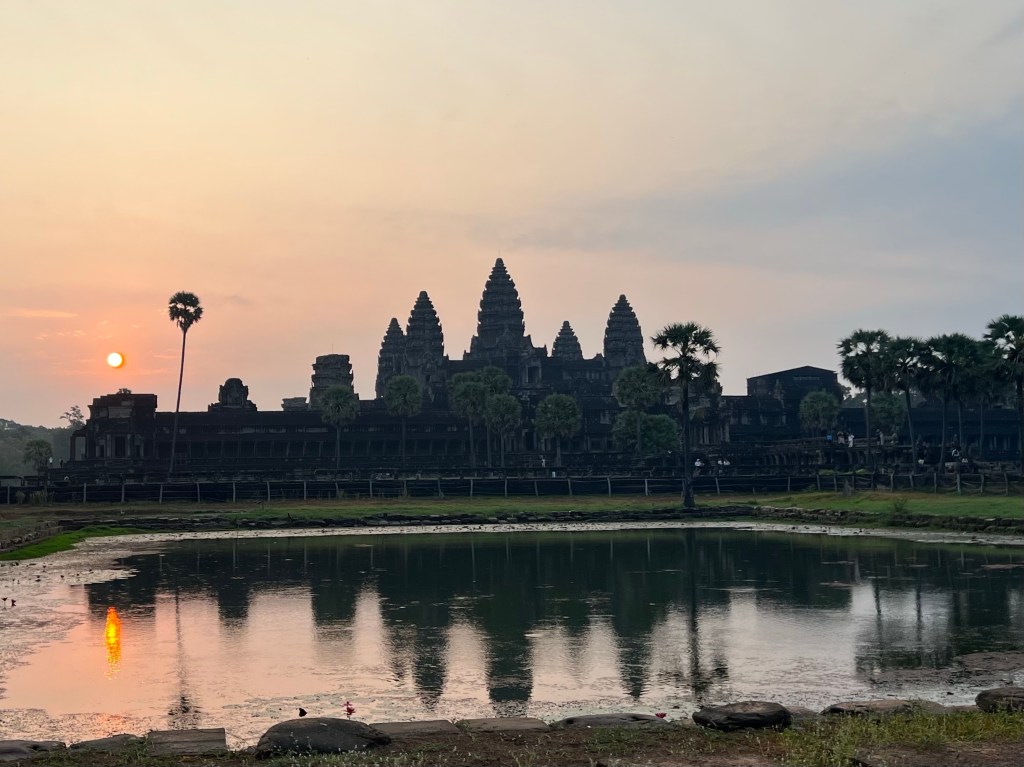
We arrived at about 5.30am, and managed to find a good spot to watch the sun rise over the five magnificent towers. We were not alone…but it was truly spectacular. The five towers symbolise the peaks of the mythical Mount Meru, the home of the Hindu gods. This is said to be surrounded by an ocean which is represented by an enormous 190m wide moat encircling its 5km perimeter. The temple had to be built on ‘holy ground’ which had not been walked upon. So it is raised up on a mound of sand and soil from the bottom of the moat. The temple consists of three rectangular galleries, each on a higher level than the last, with the four large towers at their corners, and the highest in the centre.
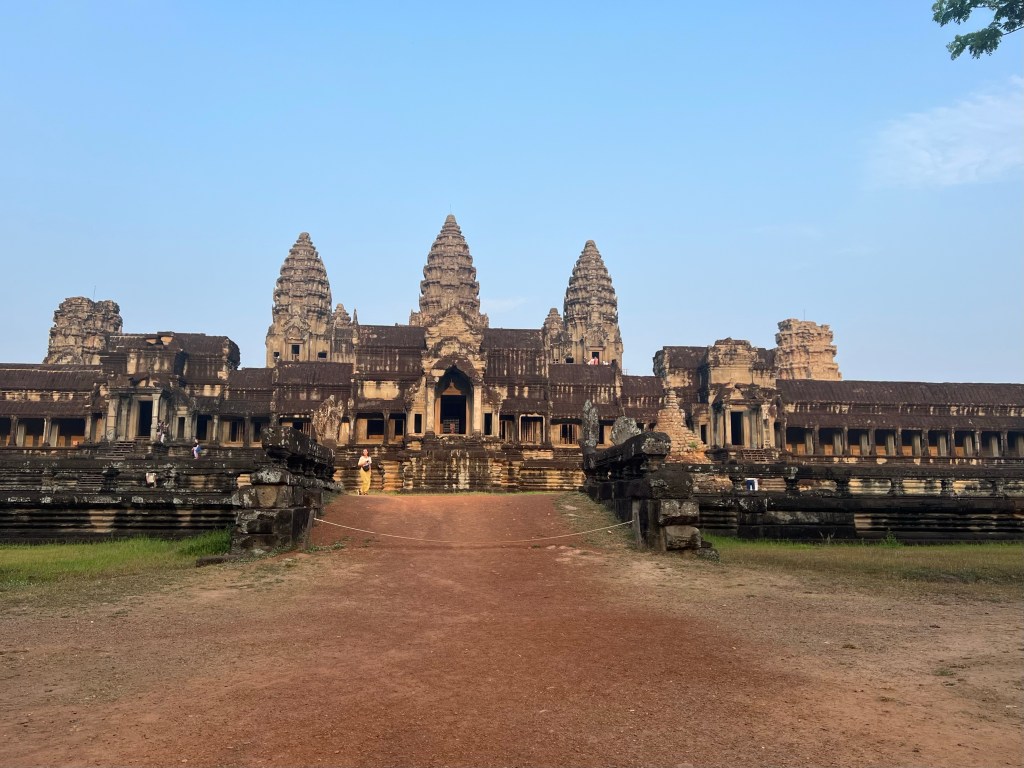
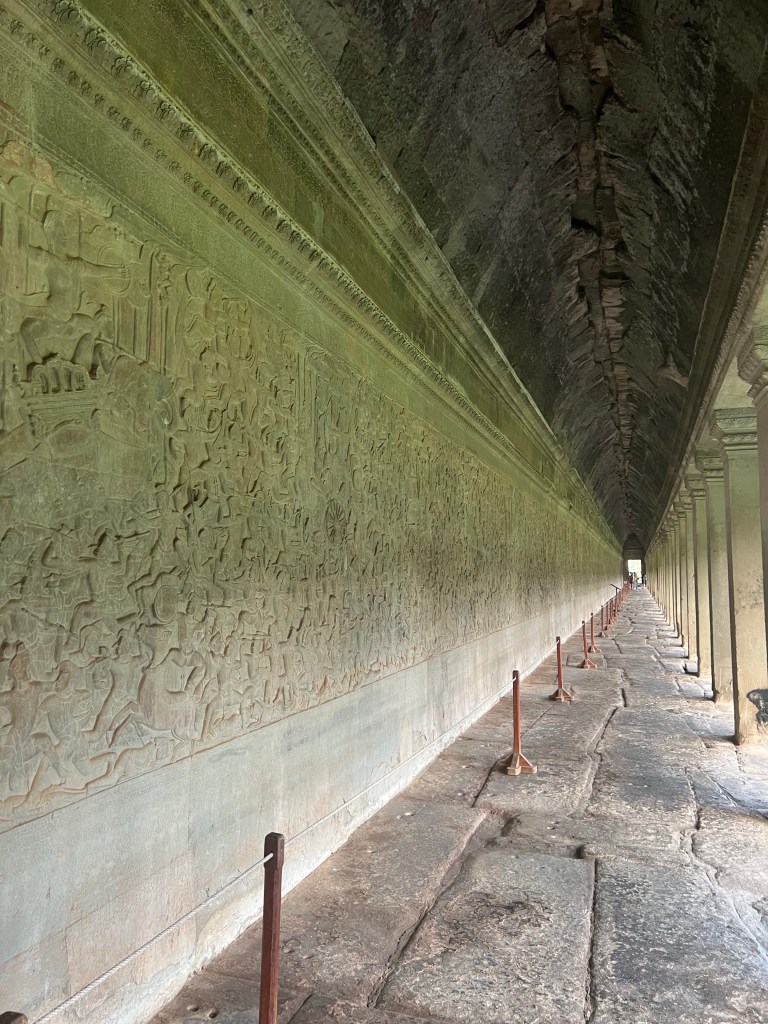
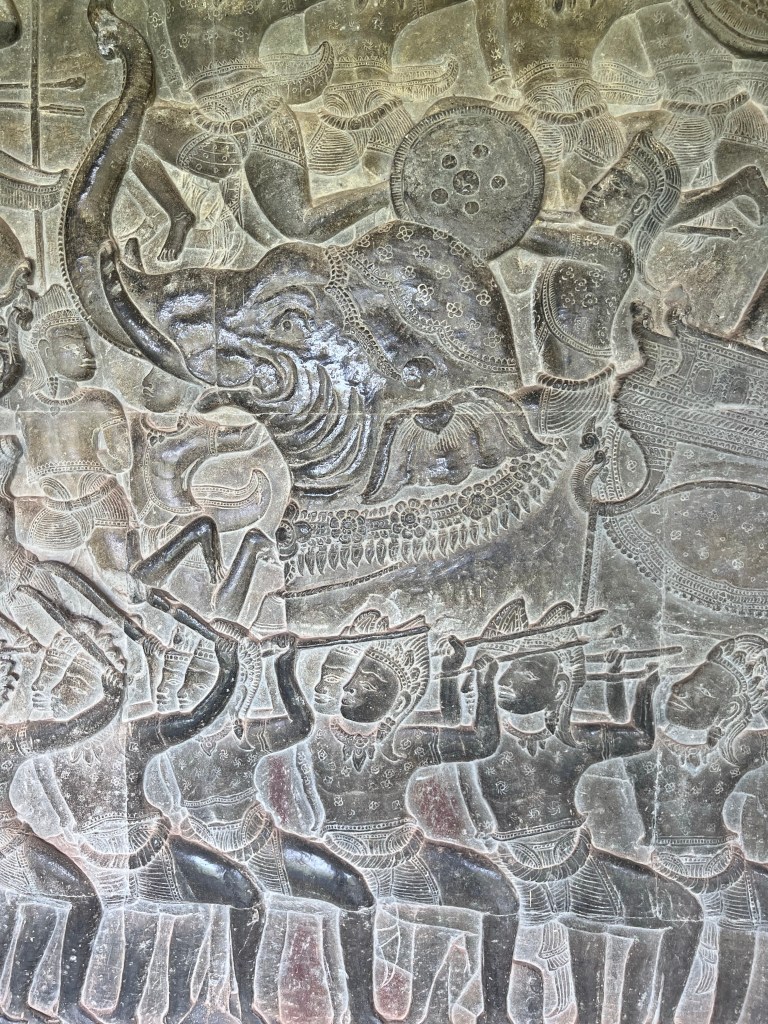
We entered the temple, passing through the first of the three galleries. Every part of the temple is carved, from the steps, to the walls to the door and window frames and in remarkable condition. It involved over 6,000 skilled stonemasons who carved everything in situ. The walls of the first gallery are covered with an extraordinarily detailed bas-relief, the longest in the world. Three sides depict the on going battle between the Hindu gods (devas) and the demons (asuras) in the ‘the churning of the ocean of milk’ – too complicated to explain! The fourth side details the king’s life and ancient Khmer scenes. Work ended shortly after the king died in 1150 leaving some of the bas relief and other decorative carvings unfinished.
Following a turbulent few years when the Cham people (of what is now Vietnam) invaded Angkor, King Jayavarman VII came to power in 1181 and deciding the Hindu gods had failed him and his country, built a new capital Angkor Thom (which we saw yesterday) and dedicated it to Buddhism. Angkor Wat was also converted to a Buddhist shrine at this time, and many of its Hindu carvings and statues were replaced with Buddhist icons.
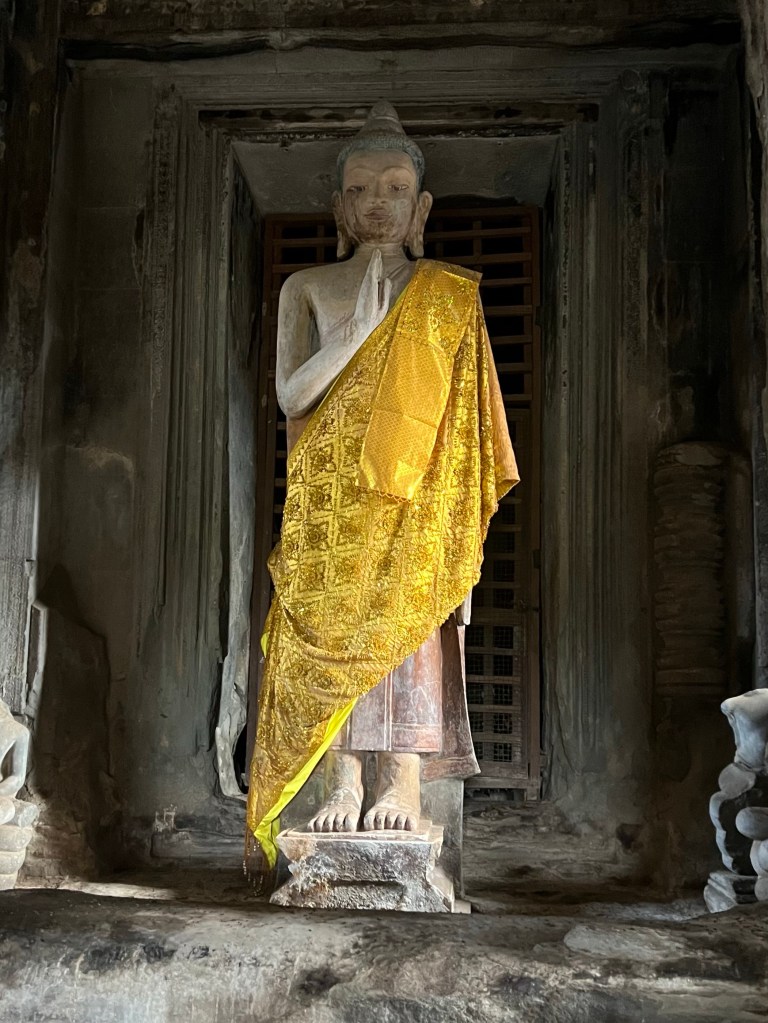
We climbed a steep set of steps up to the gallery on the second level, where there are many statues of Buddha, though few of them are still complete, having been damaged or looted. There are also two sculptures of Vishnu, holding his conch shell (sea), ball (earth), disc (fire) and club (air) – sadly also incomplete.
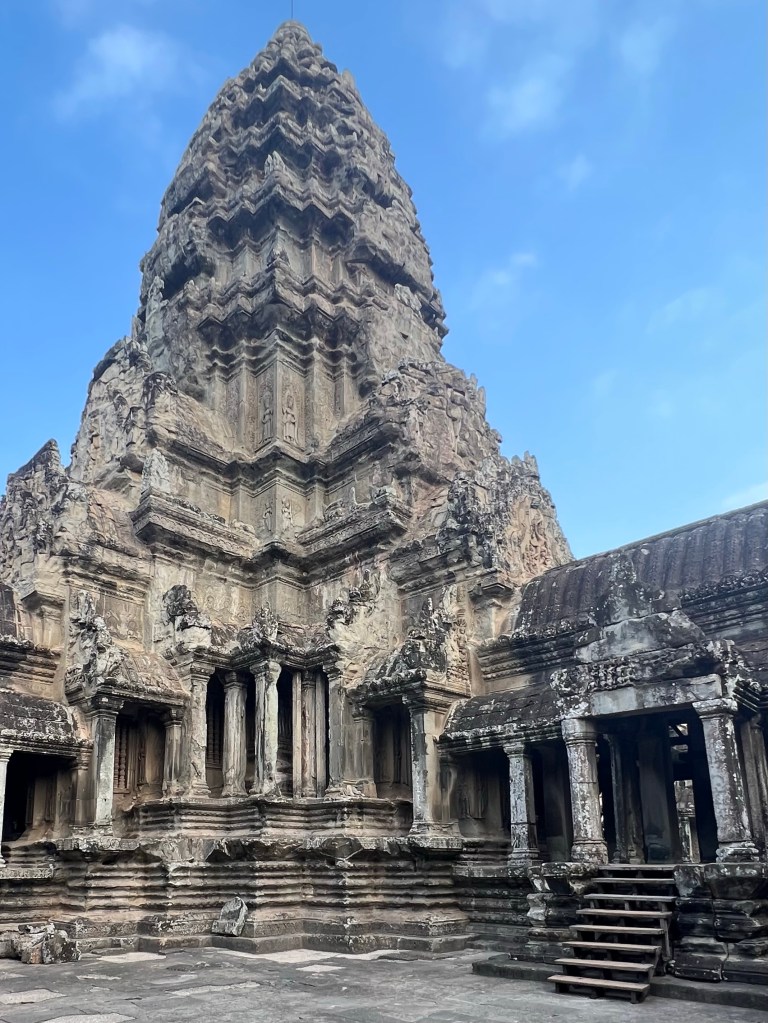
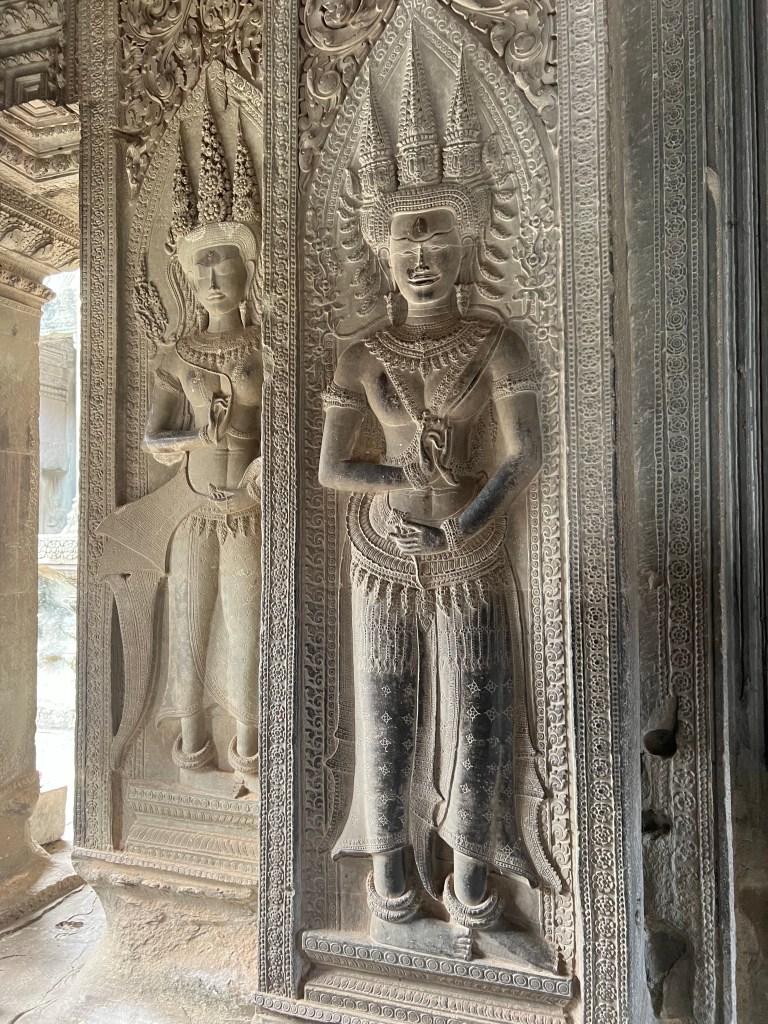
In the 65m central tower, where an image of Vishnu would have originally been, there is a reclining Buddha on the north side and a standing Buddha on the south. These are still worshipped today. Throughout the temple there are many, many images of Apsara the celestial nymphs many of whose bosoms had been shined by the public!
Although largely neglected after the 16th century, Angkor Wat was never completely abandoned and thus avoided being taken over by nature. In recent times, a number of different countries have been involved in conservation and restoration – some with greater success than others!
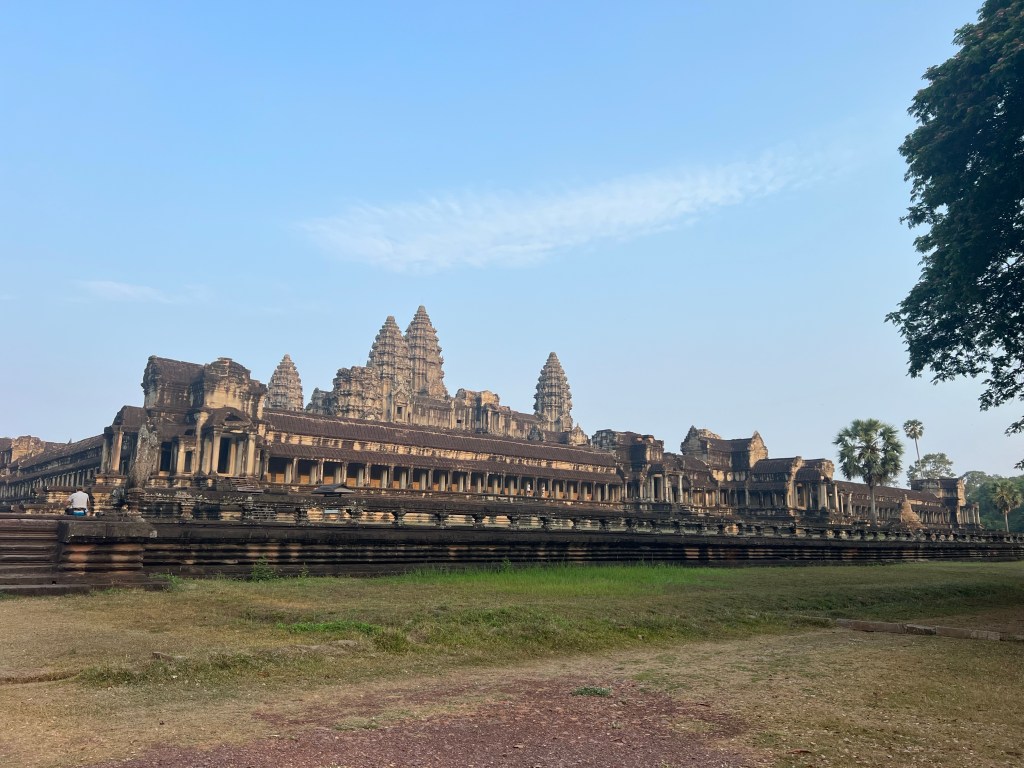
It really is hugely impressive, but by about 8.30am it was getting very hot, and we returned to the hotel for a well earned breakfast and relaxed morning …. writing this!
On the way back, Rit pointed out the Apopo Centre which trains giant rats to detect land-mines and also tuberculoses. Rats can be trained from ten weeks old to sniff out mines and are having significant success in helping to detect the 6m land mines which remain in Cambodia following the Vietnam war. TB is also a major problem in Cambodia and, with the help of the rats, there has been a 40% increase in detection rate. Amazing!
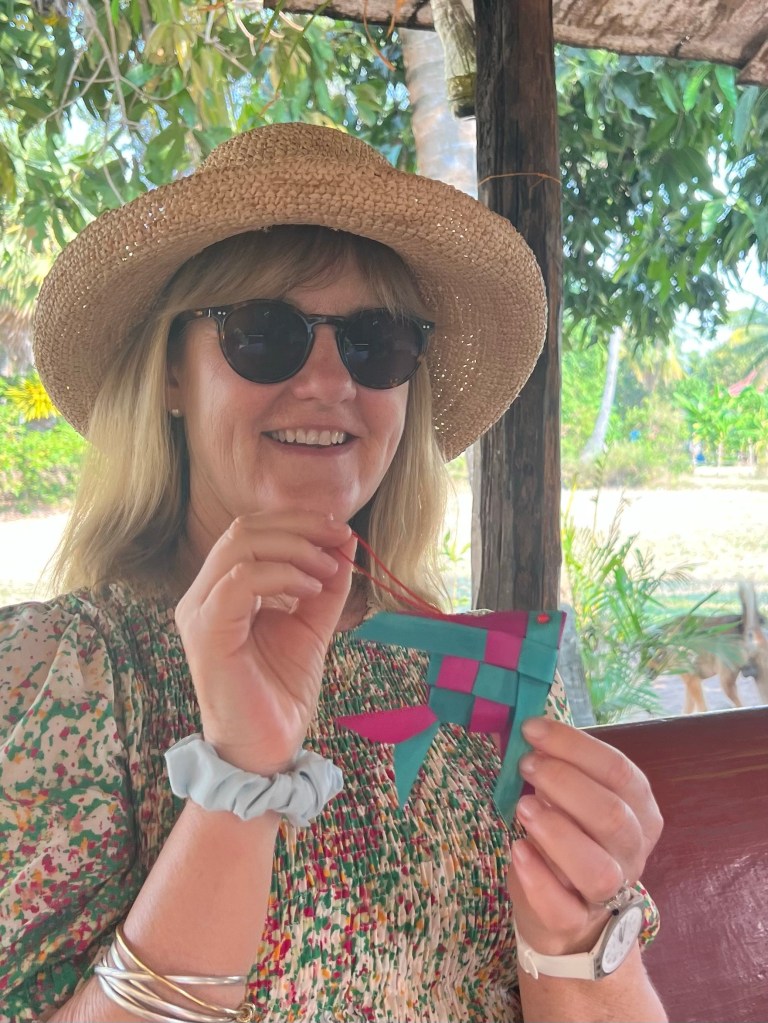
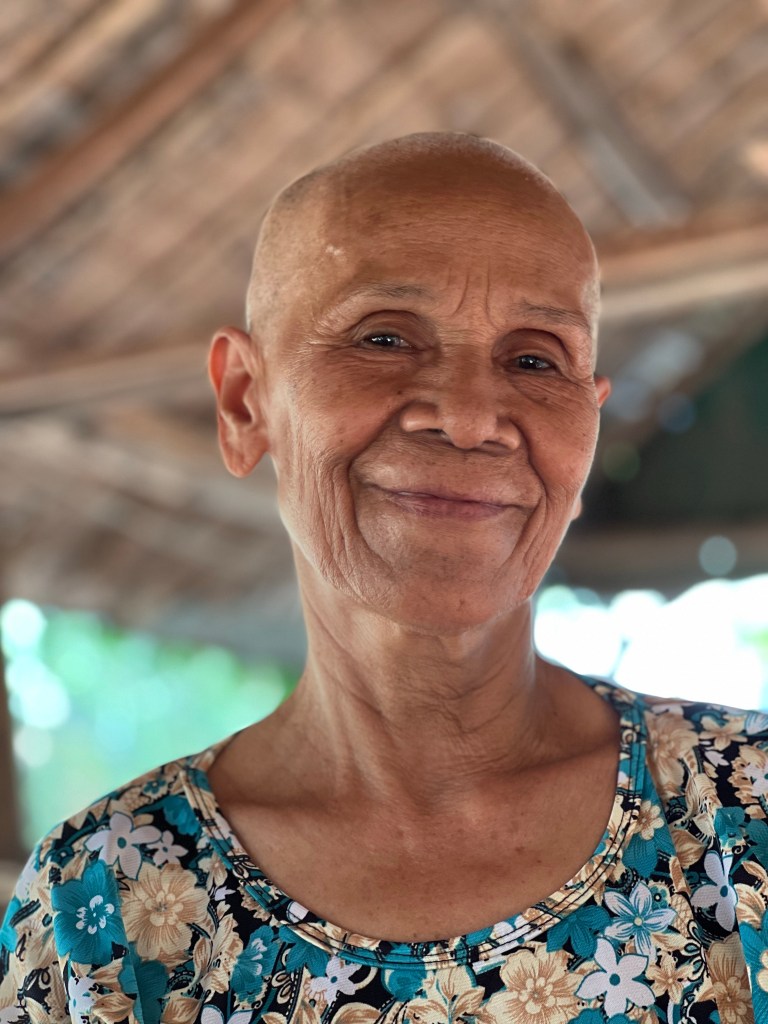
We left again at about 2.30, slightly apprehensive about our afternoon, described as ‘countryside senses’ and organised by About Asia. Having so far, only seen Siem Reap, and thought Cambodia was much more modern and sophisticated than we had imagined, it was a very different story as soon as we were in the countryside. This took only a matter of minutes from the heart of Siem Reap and we soon found ourselves driving through the poorest of villages and farmland. After about twenty minutes we stopped in a village and were taken to a house to meet a family. There were lots of people around, with children and animals running everywhere. We assumed this was because it was Sunday, however we soon discovered that it was because the lovely lady who was hosting us had lost her husband five days ago and only buried him yesterday. I am sure we were absolutely the last people she wanted to see, but she put on a brave smile. As is the custom, she had shorn off all her hair, as had her sons and grandsons. Her husband had had a motorbike accident and gone to hospital and then died of meningitis which seemed a little strange. Her daughter who had taught herself English, then joined us and first gave us a coconut tasting, my worst! And then an origami lesson using palm leaves. We were not very good, but with a lot of help from her and her mother, we made a sort of fish – mine, rather anorexic! I could see into their house and they had nothing – just one dark room with some rugs on the floor. The kitchen was a fire outside and goodness knows where the bathroom was. Eight of them lived here.
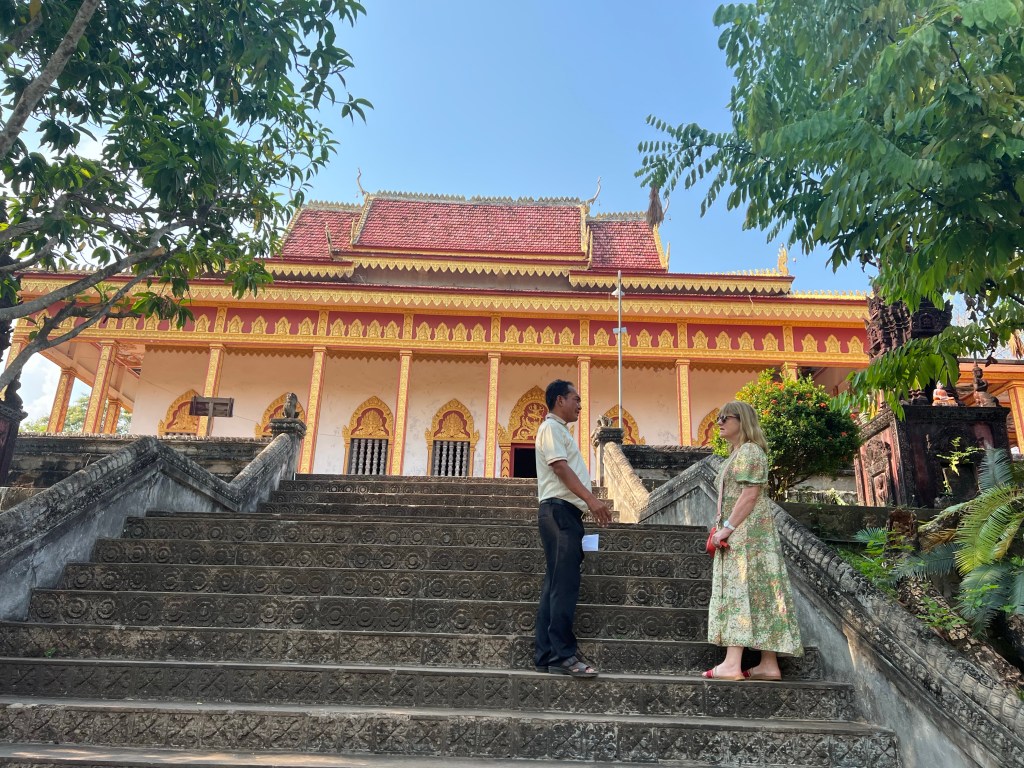
We were then taken to a temple to receive a blessing from a Buddhist monk. This was interesting and rather charming and after having had our blessing and a red piece of cotton tied around our wrist, we were allowed to ask the monk some questions, which Rit kindly translated. The one thing which I have learnt and been surprised by is that becoming a Buddhist monk here is not necessarily a calling, quite often it is a means to an end. Perhaps to get a better (and free) education, or even just free board and lodging. Rit explained that in the country, families tend to have many children and sometimes cannot afford to feed them, so they send one or more to the monastery. Our monk talked us through his daily schedule (starting at 4.45am) and it is certainly not for the faint-hearted, but it has meant he has been able to study at university.
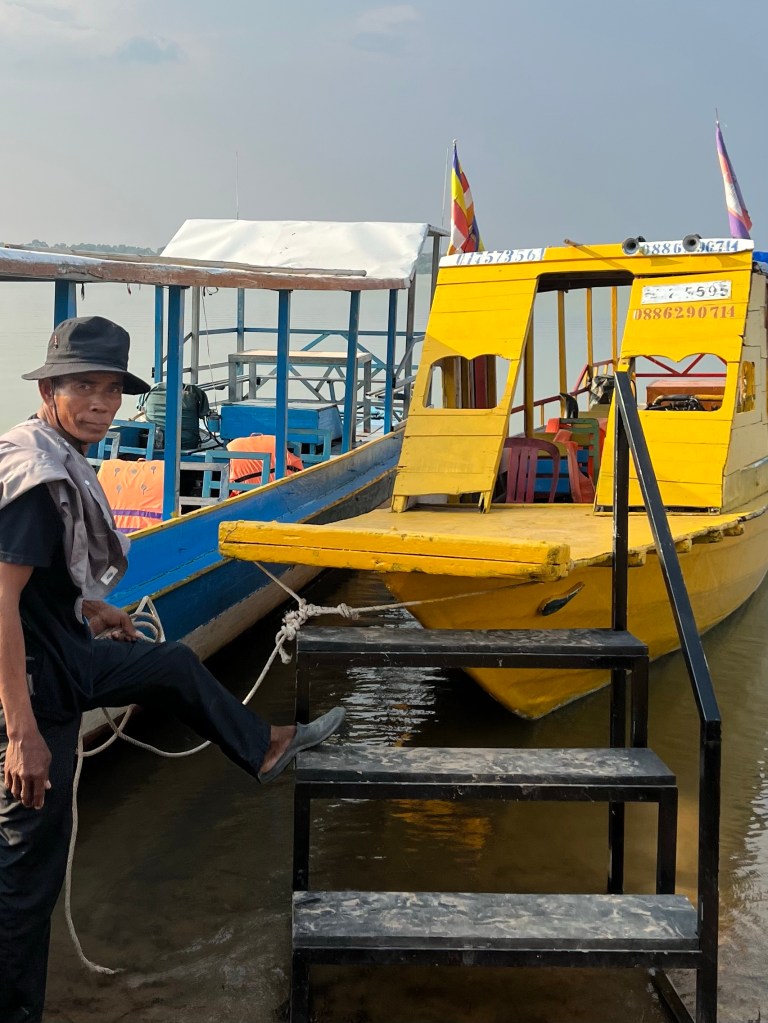
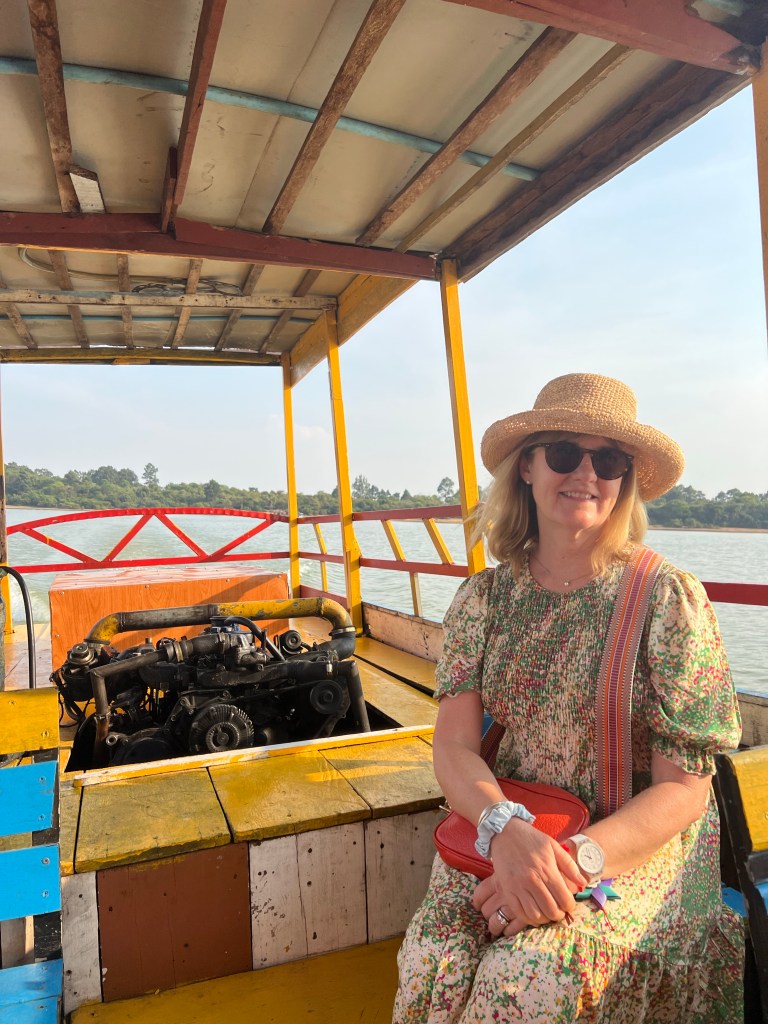
After this we went down to the waters edge of a huge reservoir (2.2km x 8km), built in the mid 11 century, with a man-made island and temple in the middle. A wonderful yellow boat was awaiting us with a mixture of plastic and coloured wooden chairs and an engine, I have a feeling our driver had built it himself! We went over to the other side of the reservoir in silence as the noise of the engine was so loud!
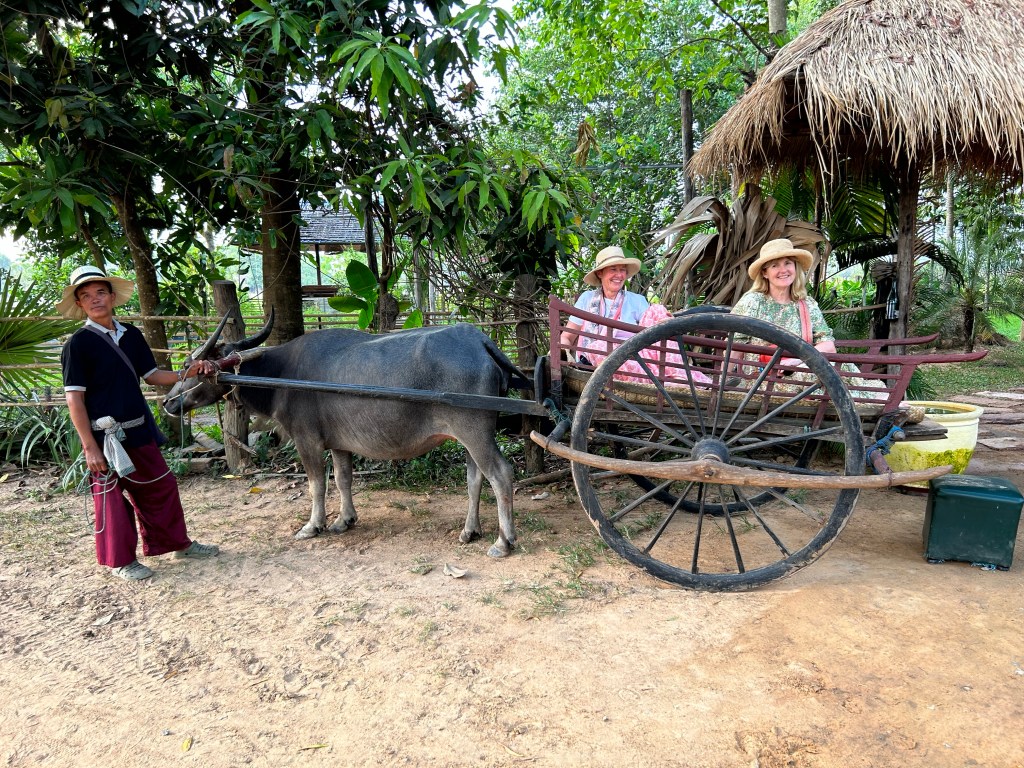
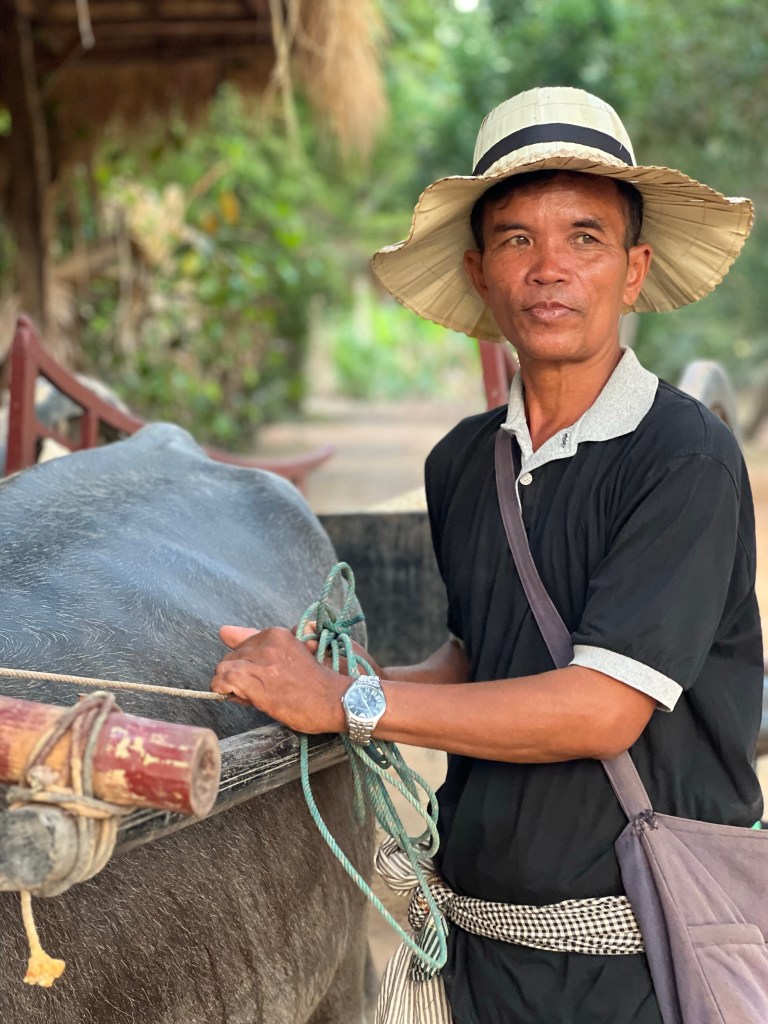
On the far side we were met by a lovely member of the About Asia team with cold towels and passion fruit juice! It was then into an cart drawn by a buffalo (try doing that elegantly!) and a little trip up the track – little being the operative word, about three minutes a bit like the donkey ride on the beach! But all very pretty and lovely seeing the cows coming home for the evening and the chickens too. A man pitching hay on to his stack.
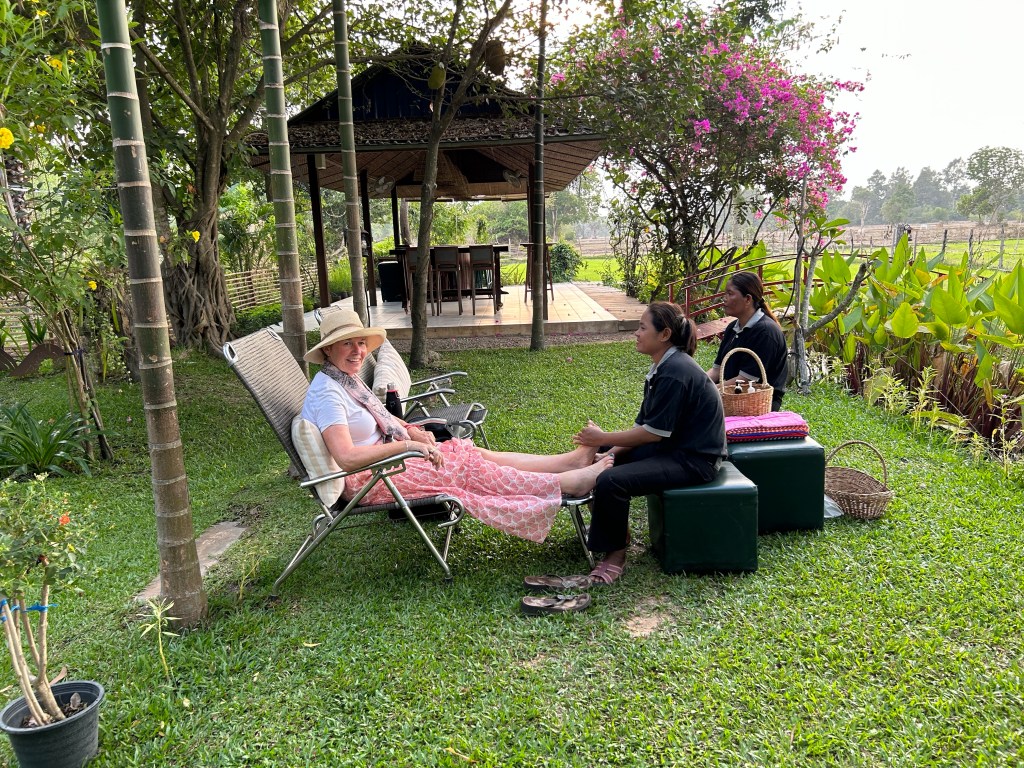
Back we came and were escorted into a little garden where two lovely ladies gave us a nice ‘firm’ leg and foot massage – both of us gritting our teeth with pain, but rewarded with a cocktail. (I am still on Lent, but nearly went for an alcoholic one this time!) We then sat in the most gorgeous spot watching the sun go down and everyone returning from their days work. If not dragged by a buffalo, everything is pulled by a motorbike, be it a trailer for people, animals, crops or food – sometimes on the back, sometimes on the side – they are so inventive.
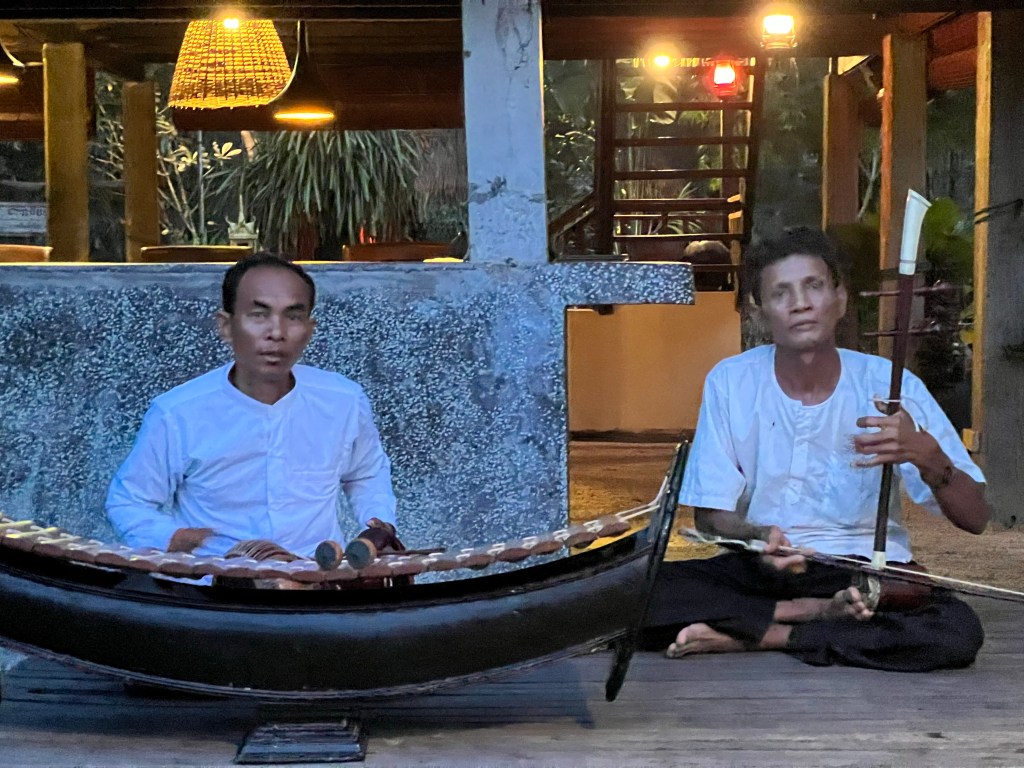
All this time we were being serenaded by lovely music played on traditional instruments – a bamboo Xylophone and a kind of violin called a dulcimer. Sadly no CD!
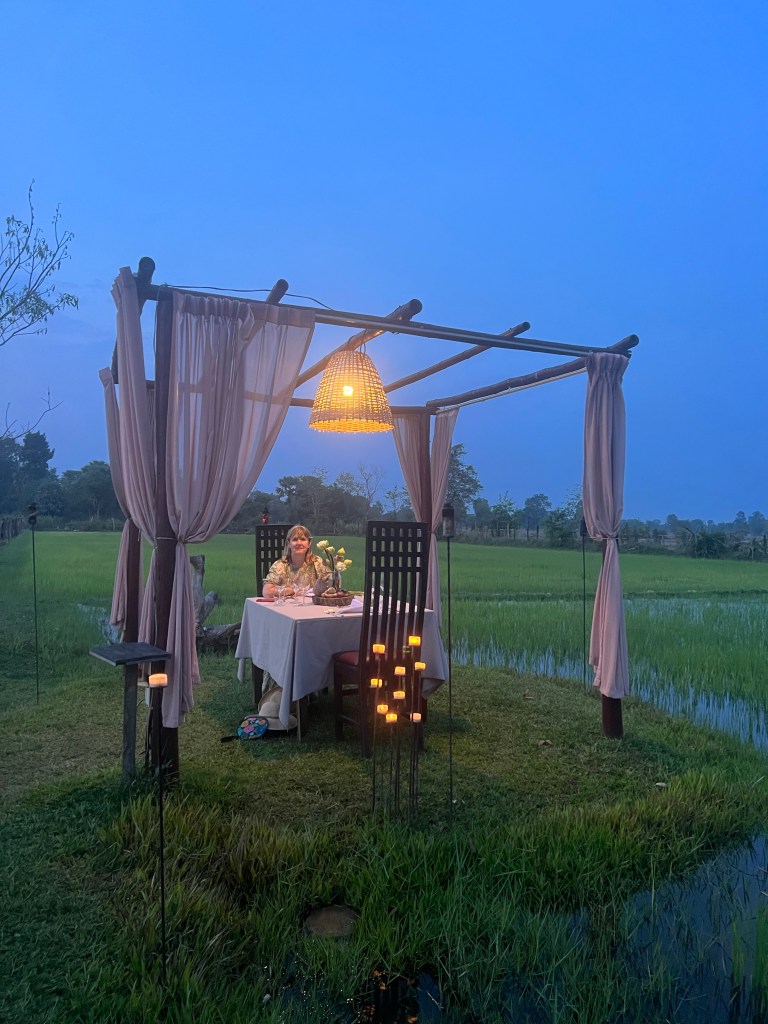
We were then taken to a little tented table in the middle of a rice paddy, all lit up with a beautiful centre piece of fruit and flowers and treated to a ten course traditional tasting menu! Serena and I were a little nervous about what we were going to be asked to eat, but it was in fact delicious and so beautifully presented, the volume however was a challenge and we could barely move by the end. They had gone to so much trouble, even following us around with an electric fan to keep us cool. It really was all very lovely if a tad cheesy. We were quite tired by the time we got home.
 EC-Rider Travels
Leave a comment