Today was a day of temples. Starting early to beat the crowds we purchased our passes for the next three days (at a very modern booth, producing passes with our photographs) and entered the 400 sq km Angkor National Park. The Khmer were prolific builders with each king, considered to be of heavenly descent, needing to outdo the last with bigger and better temples. Over 2,000 temples were built between the 6th and 12th century. Sadly we don’t have time to see them all!
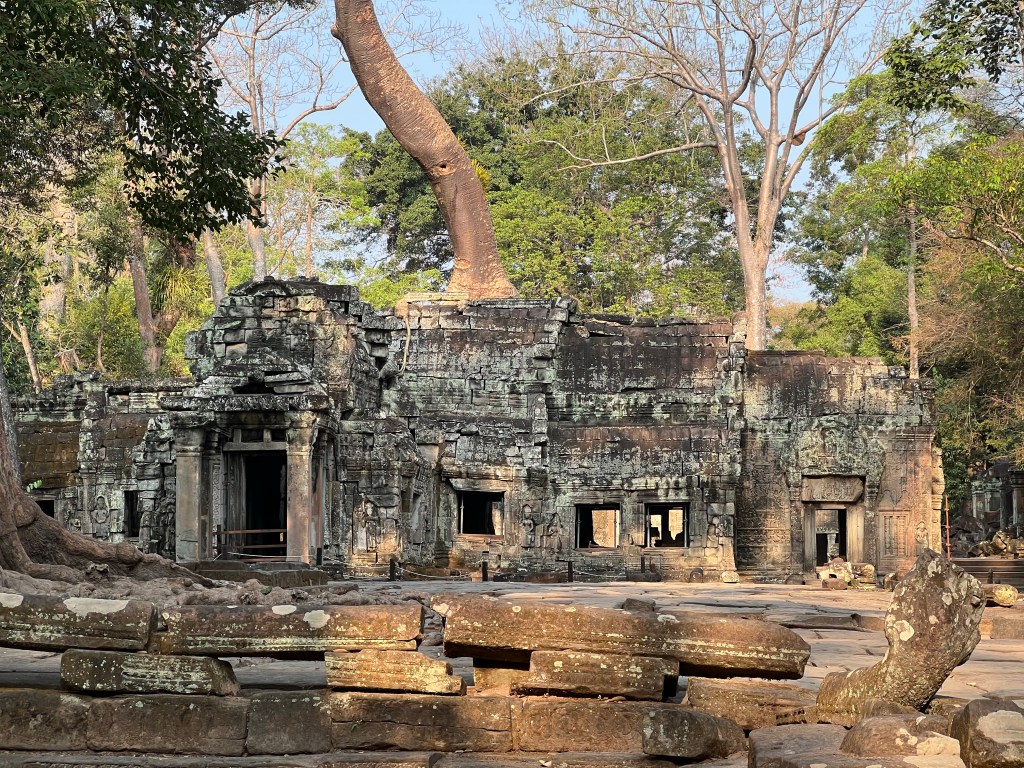
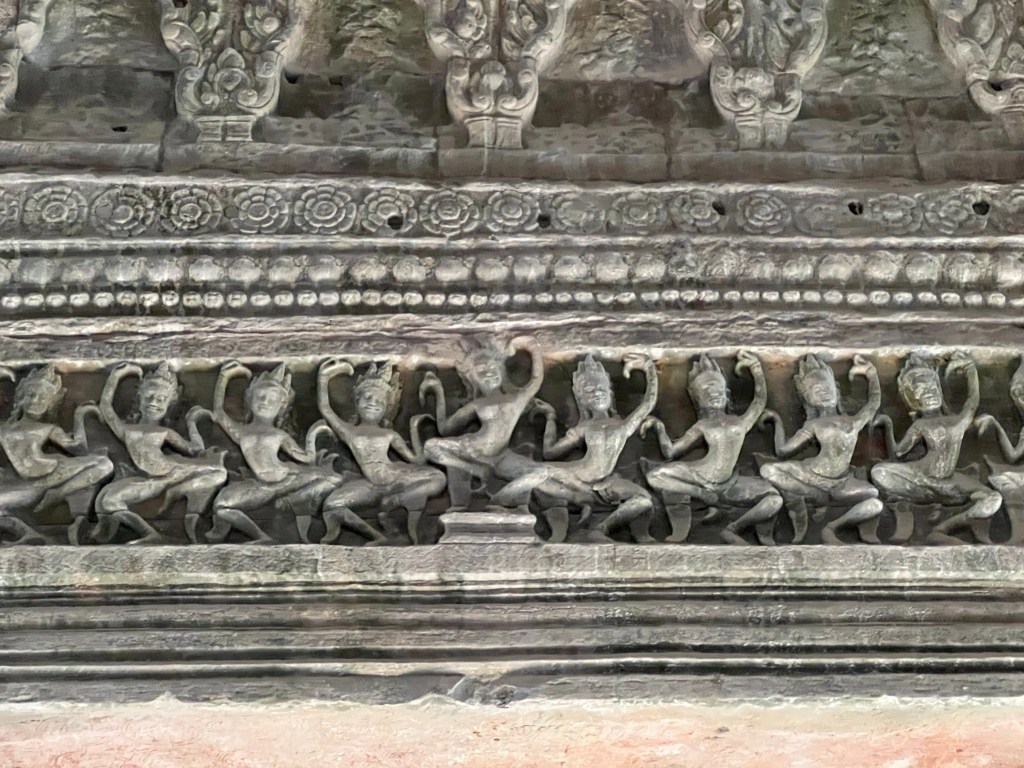
We started with the Temple of Ta Prohm (1186) one of the largest temples built during the Khmer empire by Buddhist king, Jayavarman VII which he dedicated to his mother. The outside wall measures 1,000m by 600m and was made from laterite. There were four entrances (gopuras) and a moat and inside there were galleries, a library, several shrines, a house of fire and a hall of dancers full of beautiful aspara images.
Although kings before him had been Hindu, Jayavarman VII was a Buddhist of the Mahayana school and built this, his first temple, as a Mahayana Buddhist monastery and center of learning. However, with so many Hindus in his kingdom, he also included Hindu shrines dedicated to Shiva and Vishnu. It was home to about 12,500 people, including 18 high priests and over 600 dancers, with a further 80,000 people living outside the temple walls to provide services and supplies.
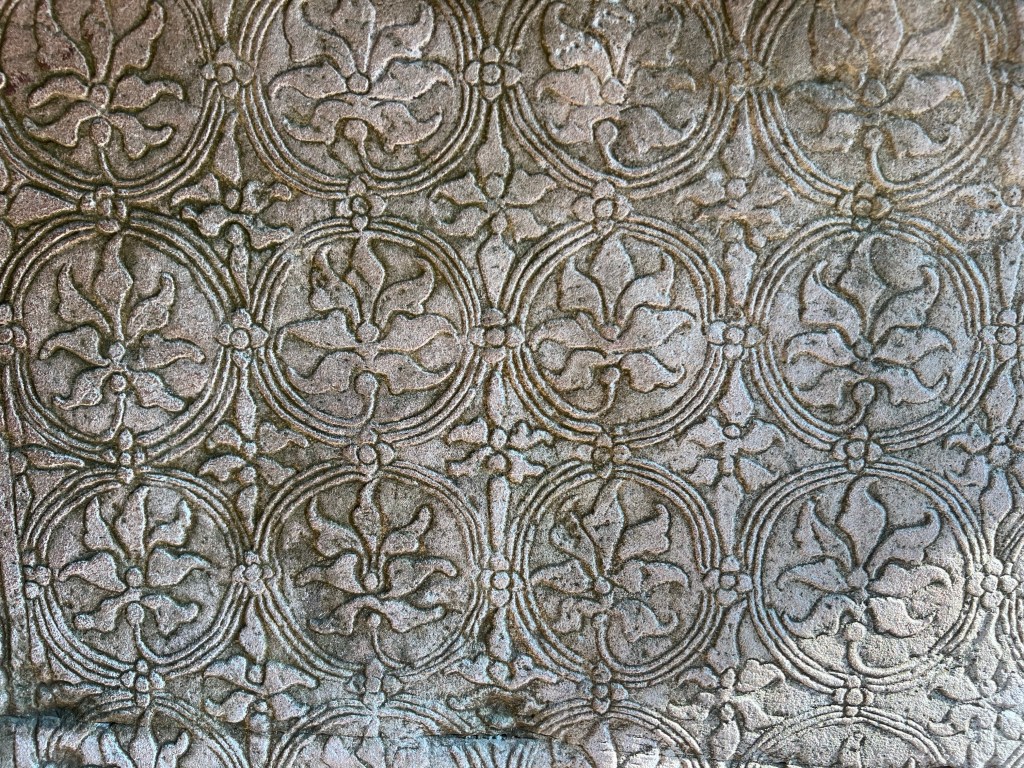
The temple was built in sandstone, which came from a quarry over 30 miles away and transported by bamboo raft and elephants to the site. It had a curved roof to allow water to run off into the moat and the most amazingly detailed carvings which, despite the porous sandstone, have survived. The inner temple of his mother was full of holes which would have originally had about 4,000 gemstone and over 40,000 pearls. Between the 10-14 century over 1m people would have been living in the city and at the time, was one of the biggest in the world.
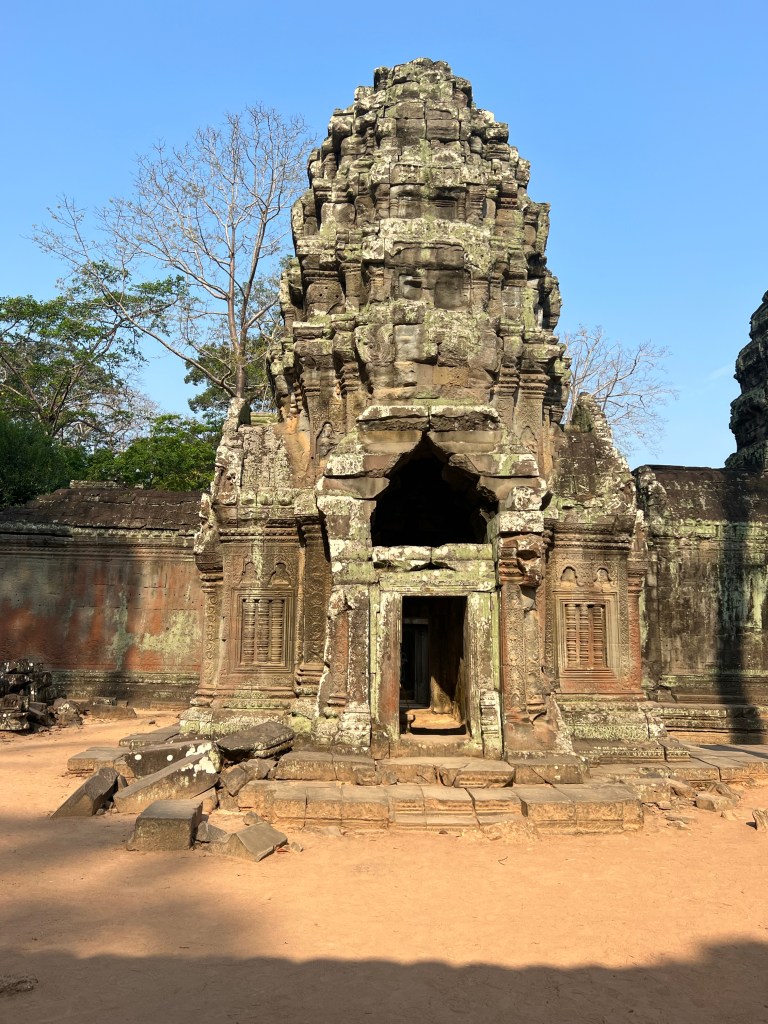
In the 13th century there was a Hindu ruler who ordered all the images of Buddha to be decapitated or removed so there are a number of headless Buddhas and rather sad gaps in the carvings.
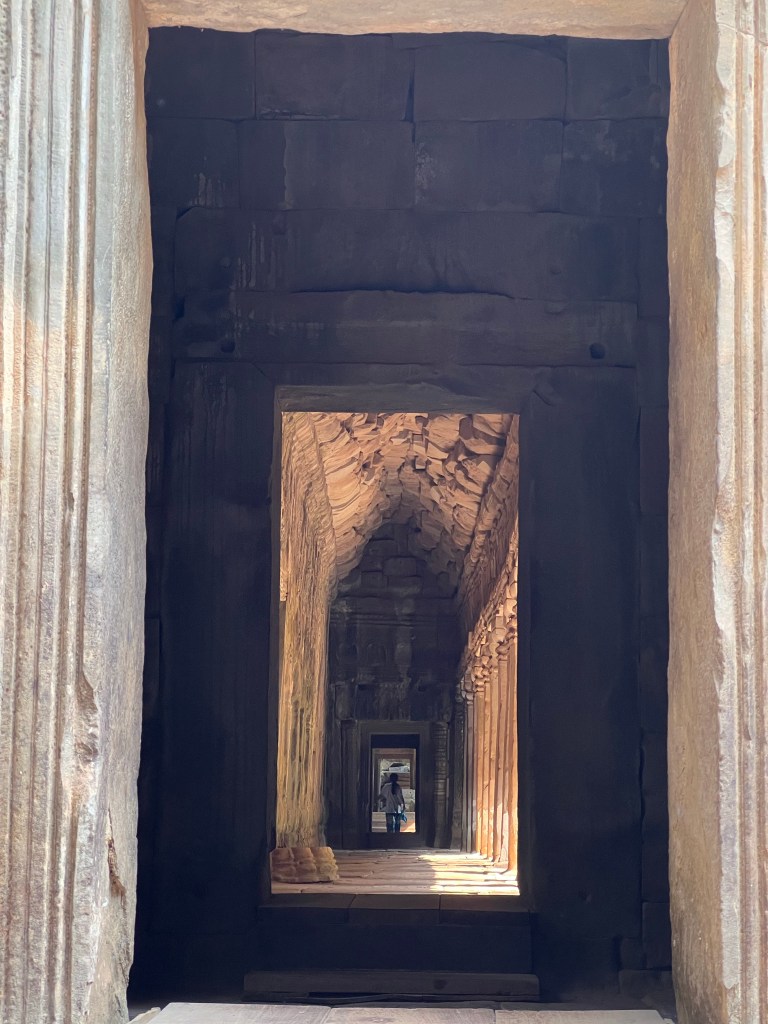
In 1431 the temple was abandoned and nature took over. It is now overrun by magnificent but invasive strangler figs, kapok and banyan trees whose roots have created the most incredible structures through the buildings.
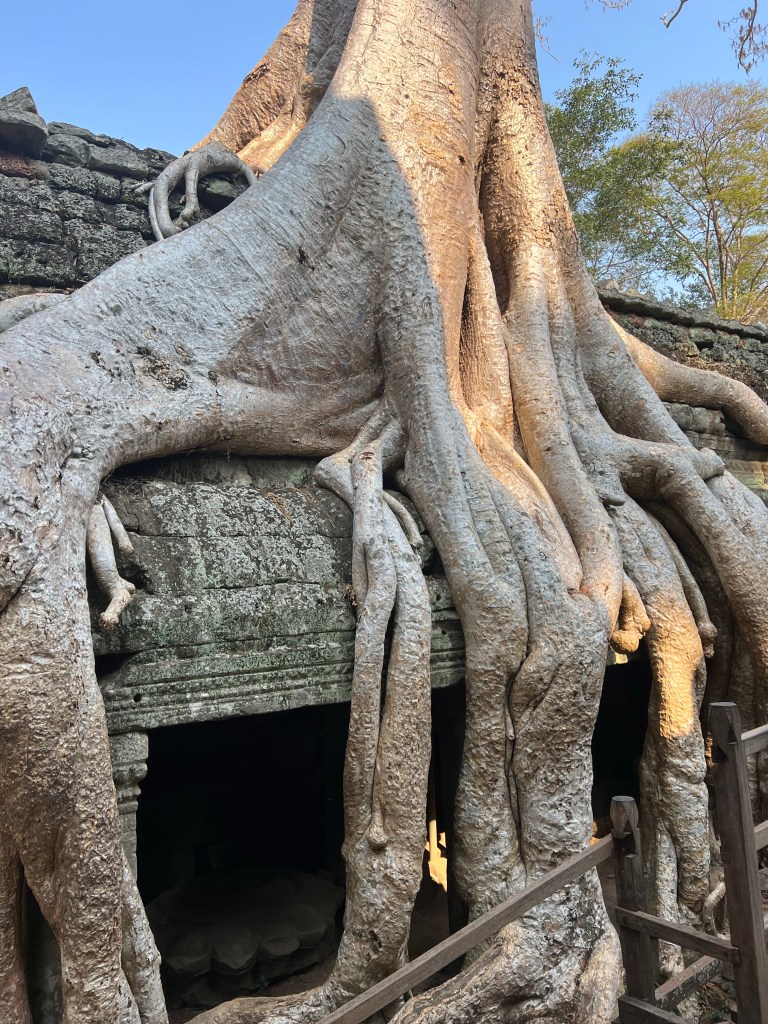
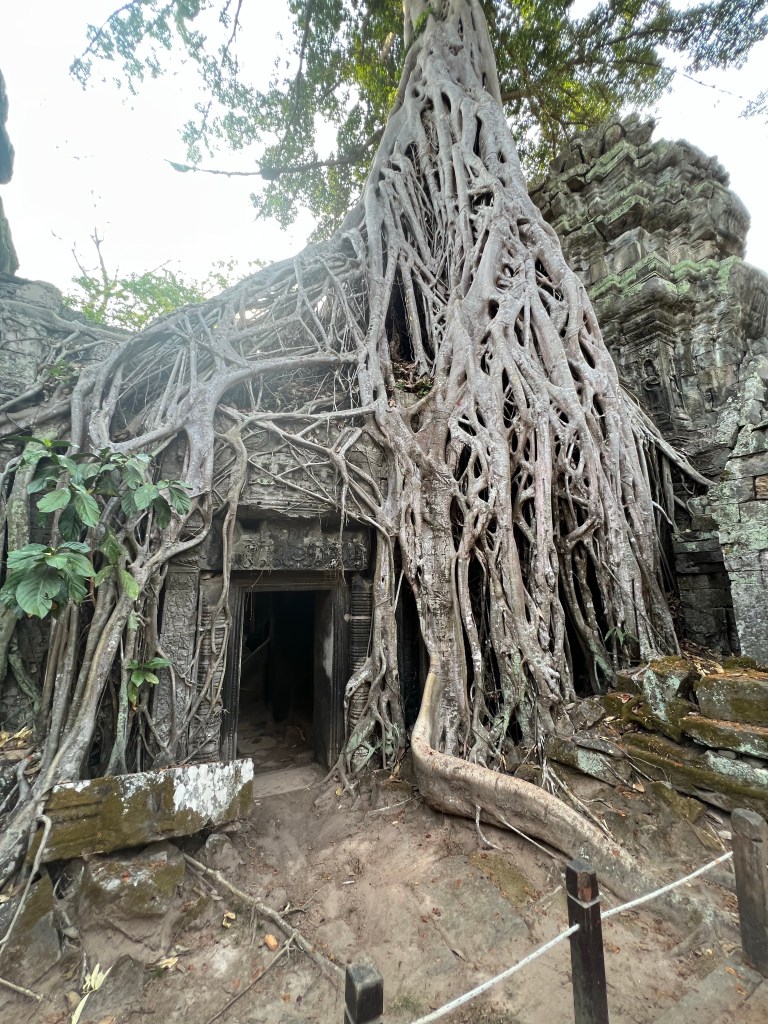
Some (not me!) might recognise it as the setting for the Lara Croft film, Tomb Raider with Angelina Jolie. Angelina, fell in love with Cambodia and adopted her first son, Maddox, from here (I can see why, the children are absolutely adorable). She has since funded a number of environmental projects and most recently established bee-keeping training programmes to help women earn a living in Siem Reap.
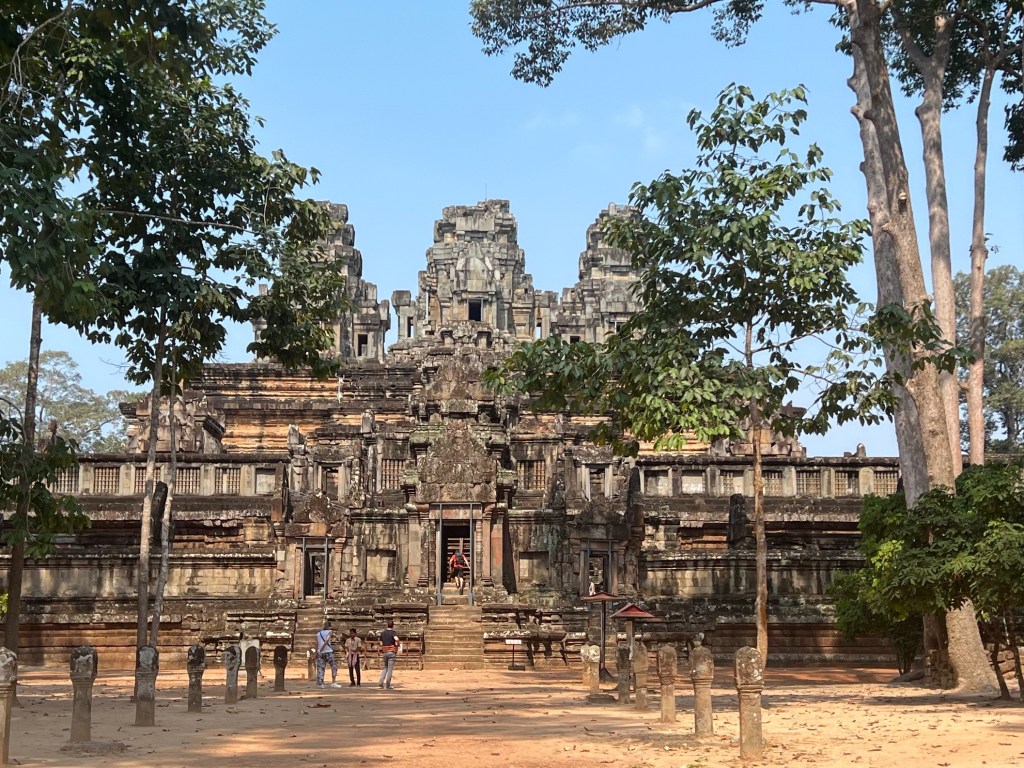
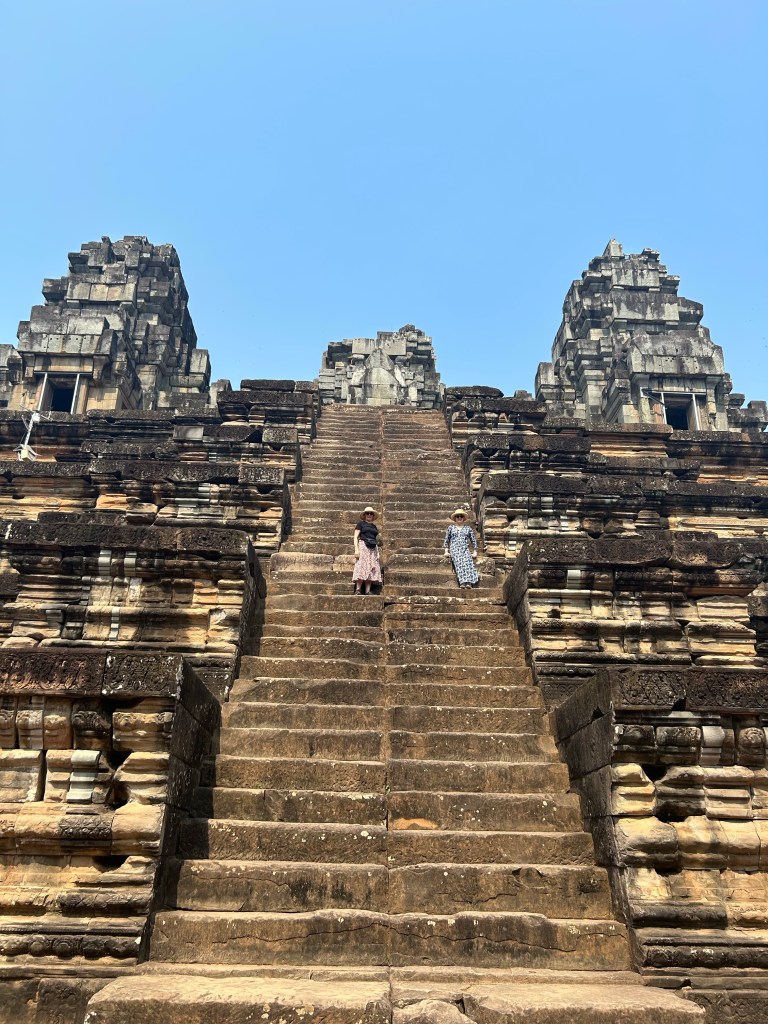
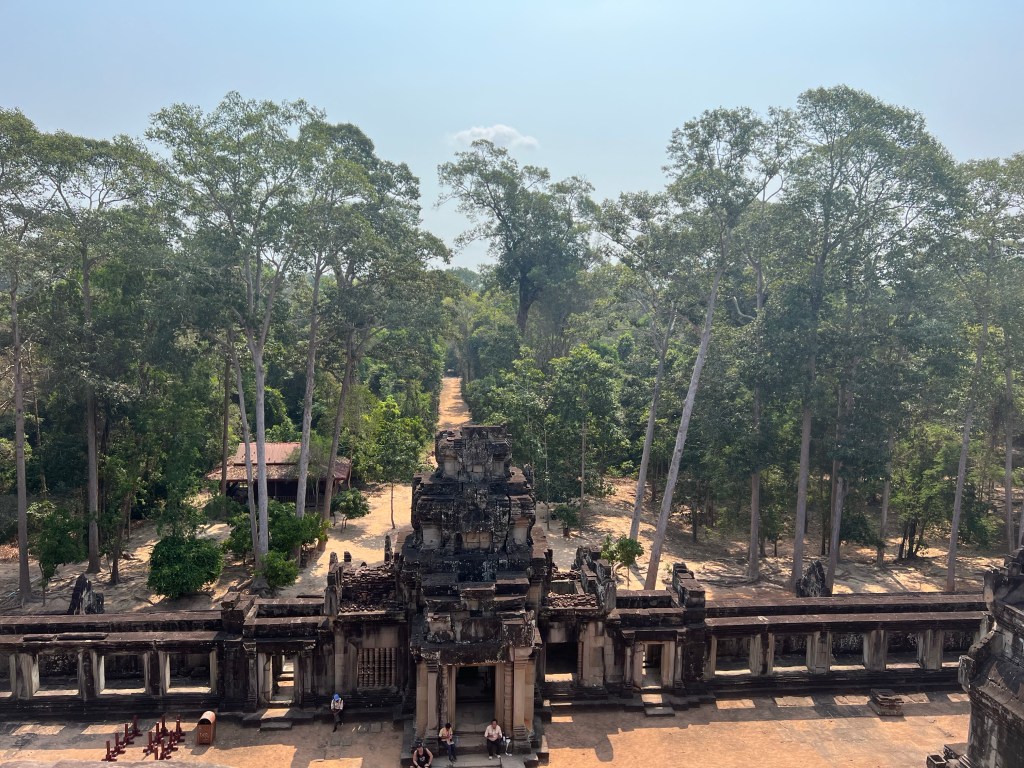
We then went to the Ta Keo Temple, built earlier, in the late 10th century as a Hindu temple to Shiva. It is a huge five tier pyramid, built by King Jayavarman V, starting when he was seventeen years old and intended as his state temple. It was not completed in his lifetime so his successor, King Suryavarman I, restarted work, however following a lightening strike on the central tower, he stopped work believing it to be cursed. For this reason it has no external sculptures or decorations. We climbed up the steep staircase to the top level. The steps are huge but amazingly narrow, to make them steep enough to support the tower. I am amazed people do not die on them daily!
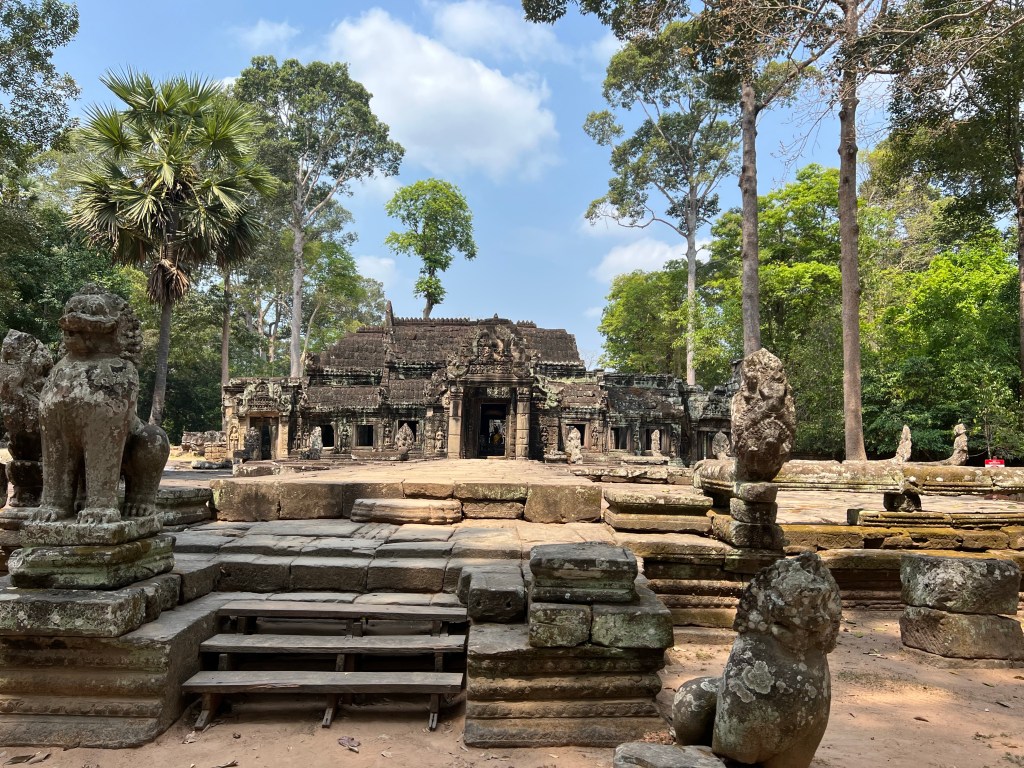
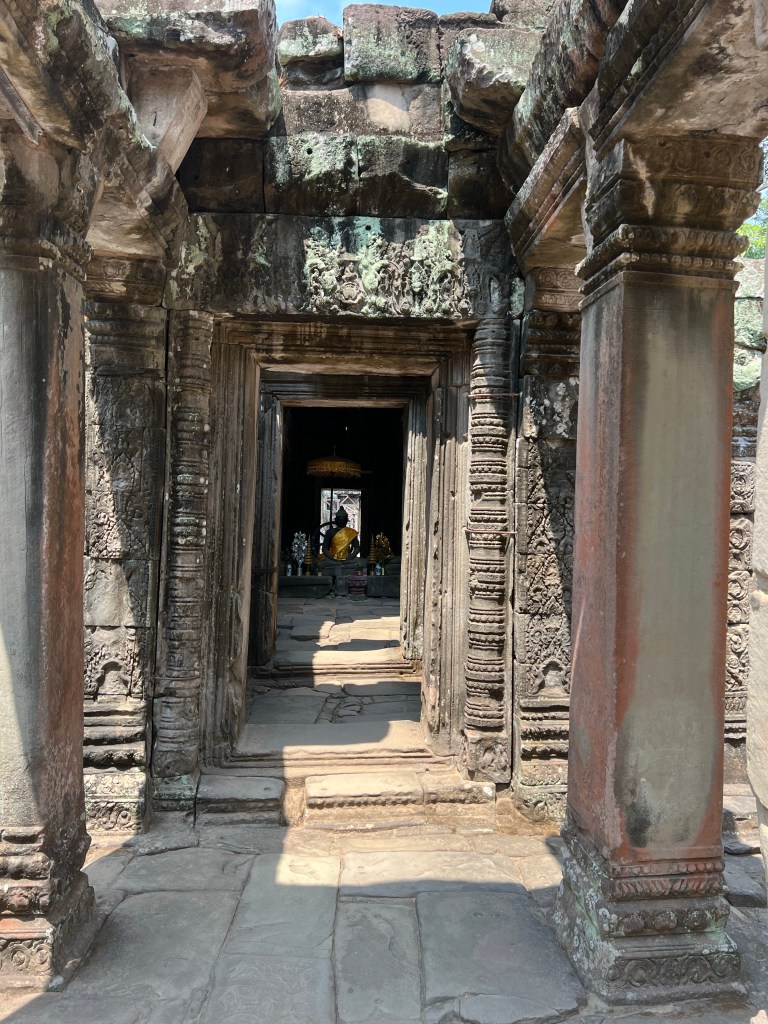
Next it was Banteay Kdei temple. Are you exhausted yet? And we are doing this in 36 degrees and 80% humidity. Actually this was one of my favourites, smaller and rather peaceful with barely another person and once again over-run by vegetation. Built in the late 12th and early 13th century by Jayavarman VII, it is similar in style with Ta Prohm, however, inferior sandstone was used which has not survived as well as others. It is still impressive with its gates adorned with four faces, apparently representing the god Lokesvara in the king’s image. Like Ta Prohm, it has a pillared hall of dancers decorated with a bas-relief of apsara dancers and there is also a seated Buddha that watches over the corridor. It served as a Buddhist temple, and active monastery several times, up until the 1960s.
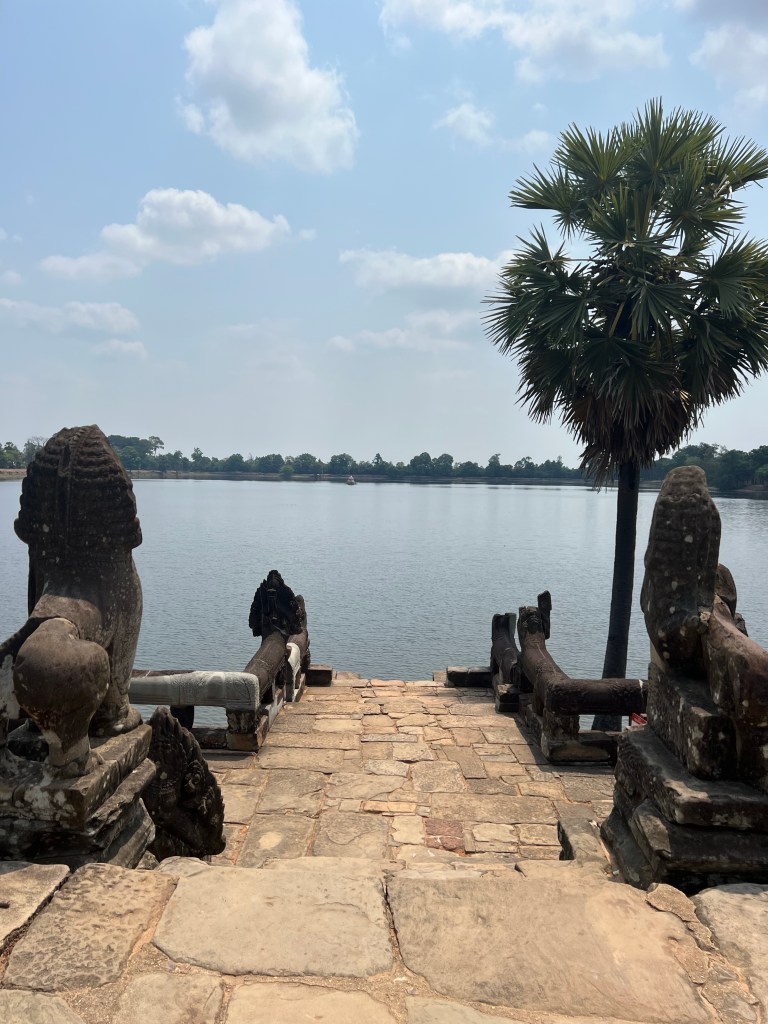
The final stop for the morning was Srah Srang, a 10th century reservoir built as the largest ever royal bath. It measures 700m x 300m and is thought to have once had a temple built on an artificial island in the middle. There were two wonderful lion statues guarding the steps down to the water, which I have to confess, looked rather inviting at that moment in time. In the 12th Century, our friend Jayavarman VII added a terrace on the west side and lined the pond with sandstone so the reservoir could became an alternative source of water for the city.
With the little grey cells feeling well exercised and a little weary, we returned to the hotel for a couple of hours R&R before heading out in the afternoon to visit the later city of Angkor Thom.
The temple is protected by a moat (originally full of crocodiles), and unusually five gates and bridges. The fifth being the Victory Gate and only for the king’s use. Each of the five bridges, is lined with carved stone balustrades of 54 gods (devas) on one side and 54 demons (asuras) on the other. They are carrying the body of a serpent (Naga) symbolising the story of the ‘Churning of the Ocean of Milk’, a Hindu myth – I am still to get my head around!
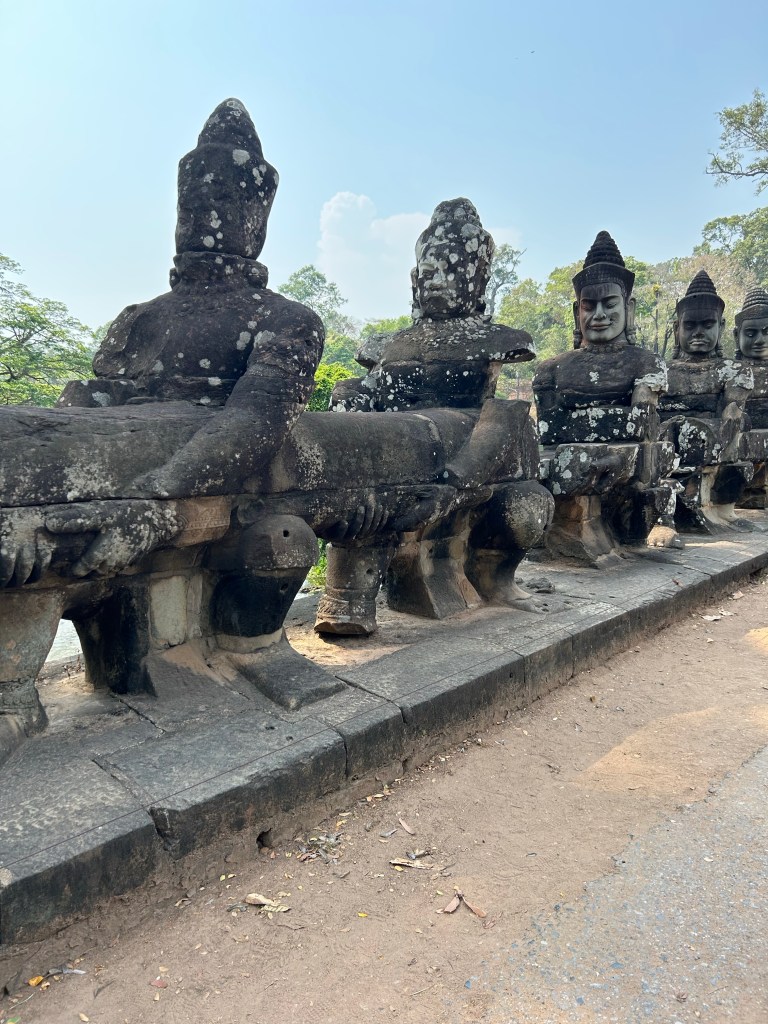
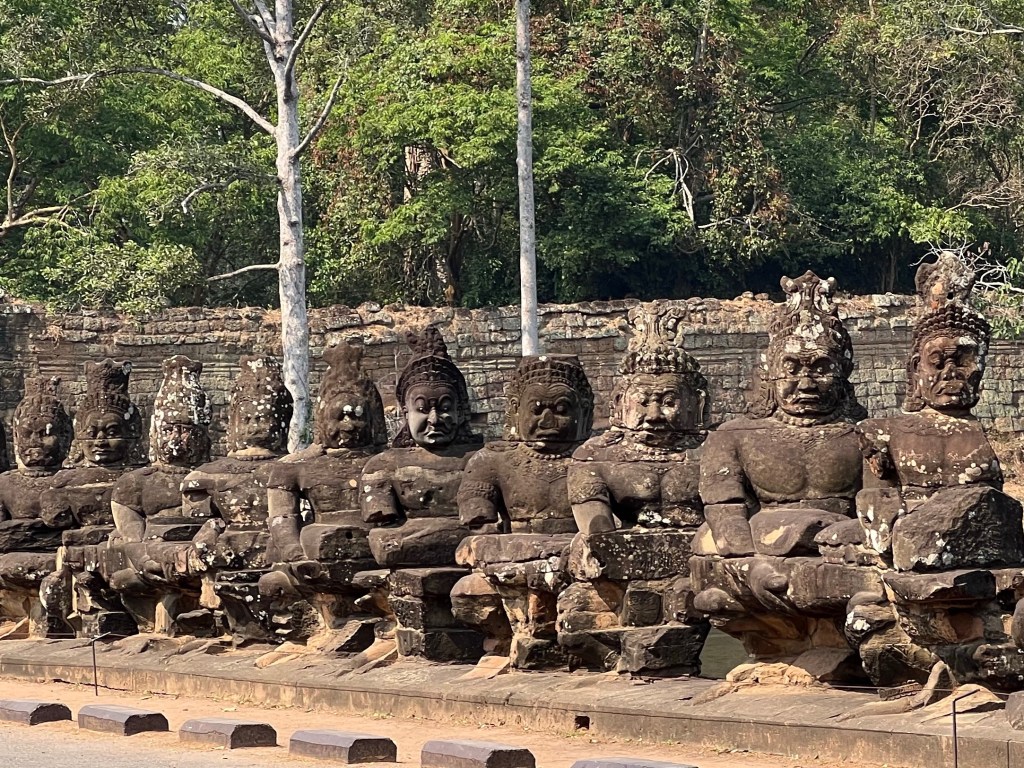
This was again founded by King Jayavarman VII, who during his reign oversaw the conversion of the Khmer people from Hinduism to Buddhism. He was a great believer in public works, creating schools, hospitals and reservoirs. We entered the city via the impressive South gate which is 20m high with four imposing faces of ‘Buddha’ in the king’s image.
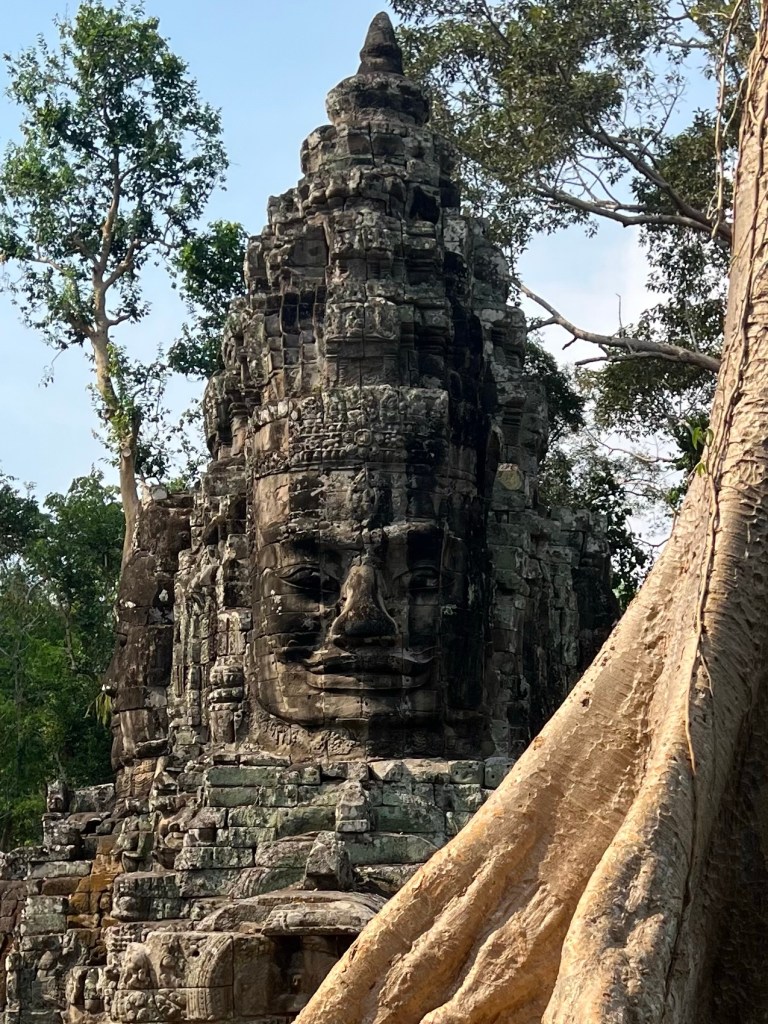
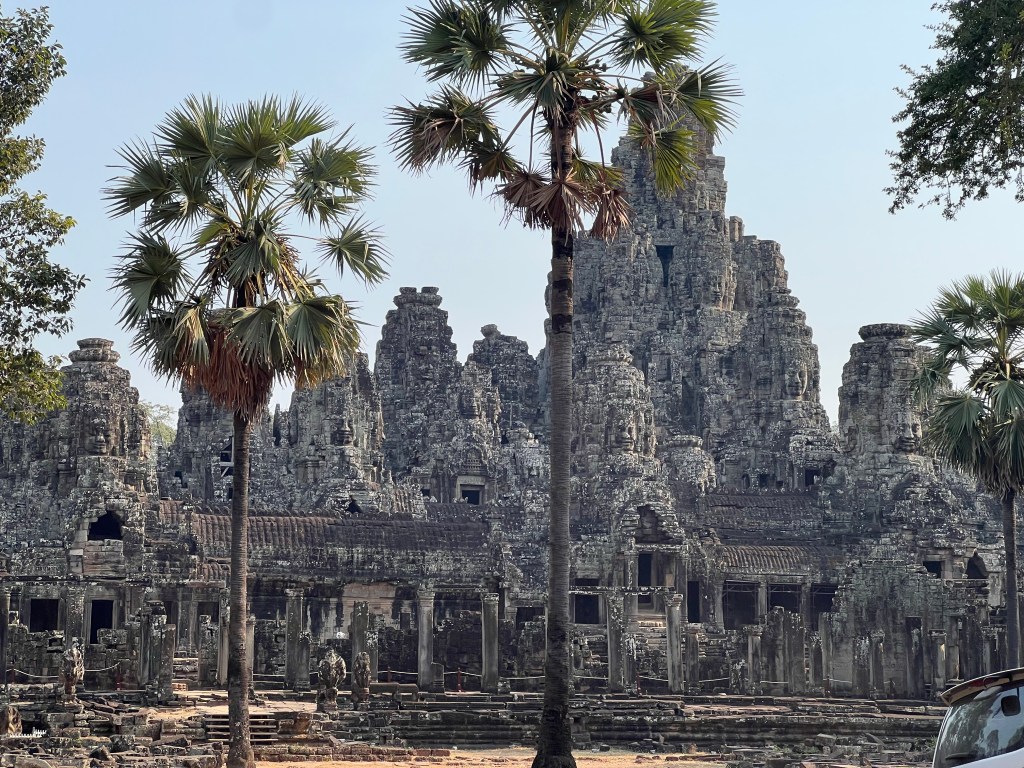
The city would have been about 3km square but only the higher classes would have lived within the city walls with a large number of others on the outside to look after them. At the centre of the city, built on an artificial hill, is the Bayon Temple. This decorative temple had 54 towers, of which 37 remain, each with four gigantic and rather enigmatic faces. There is much debate as to who they represent but the most popular theory is that they are the Four Faces of Prohm (Brahma) carved in the image of the Jayavarman VII himself as the Buddhist God-King. The four faces represent: compassion, forgiveness, equanimity and fairness/transparency.
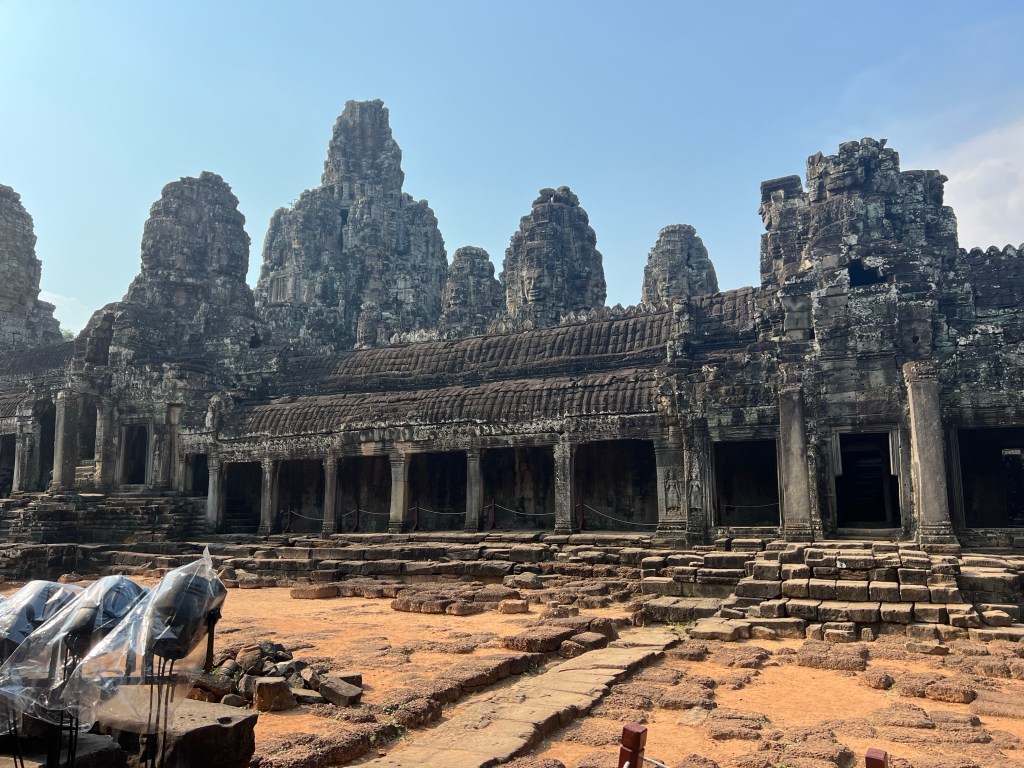
The main central tower originally had a seated Buddha, protected by Mucalinda, the serpent king, however, it was destroyed by King Jayavarman VIII. In 1933, these pieces were recovered and put back together. Again there is an impressive bas relief surrounding the galleries, portraying daily life at the time. This included the Chinese as soldiers, shop owners with Khmer wives all drunk aboard a boat!
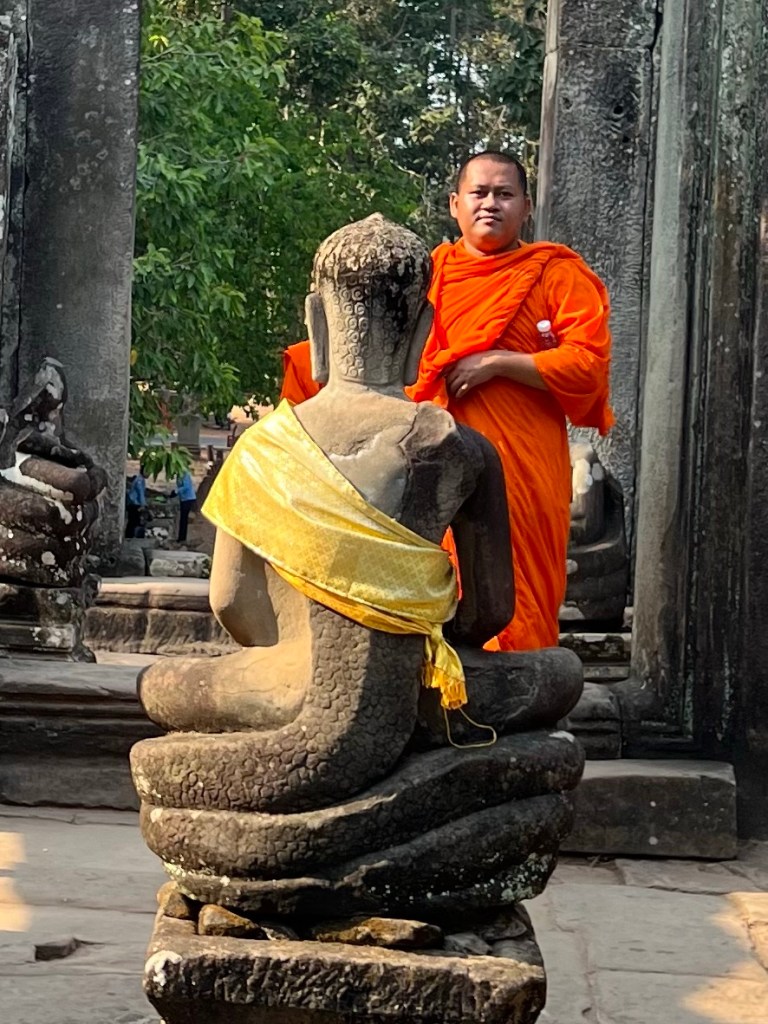
Although built as a Buddhist temple, with many of his people still worshipping the Hindu gods, shrines to Vishnu and Shiva were included in the temple each with a separate entrance – west for Vishnu, north for Shiva, south for Buddha and the east entrance for the king.
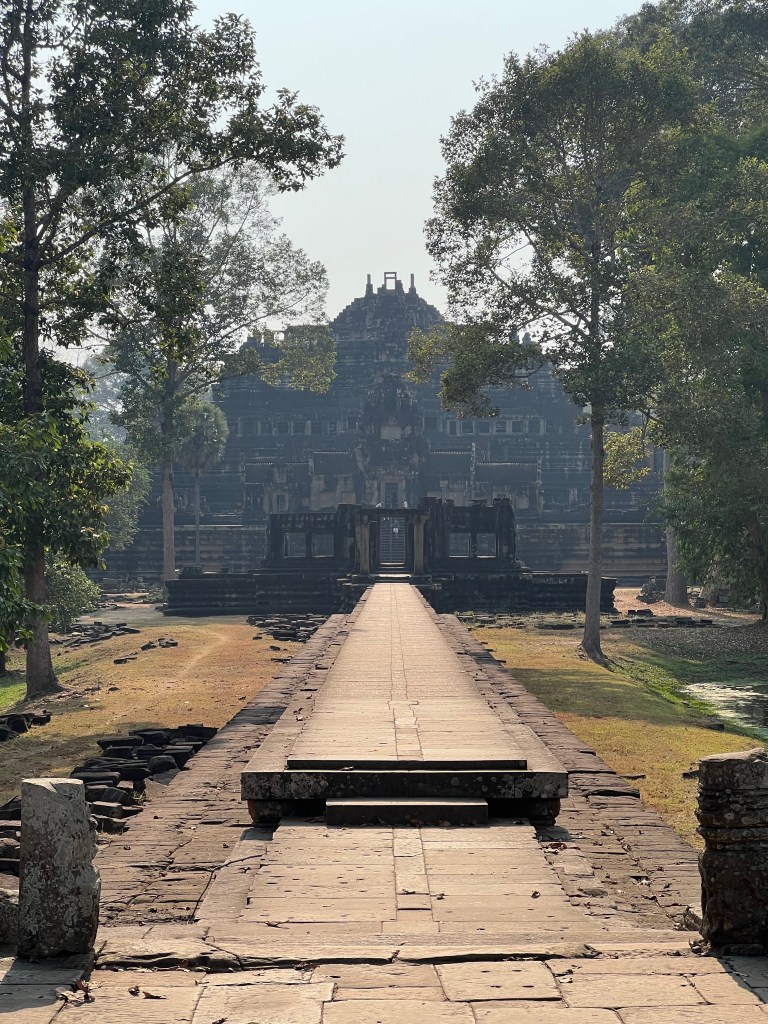
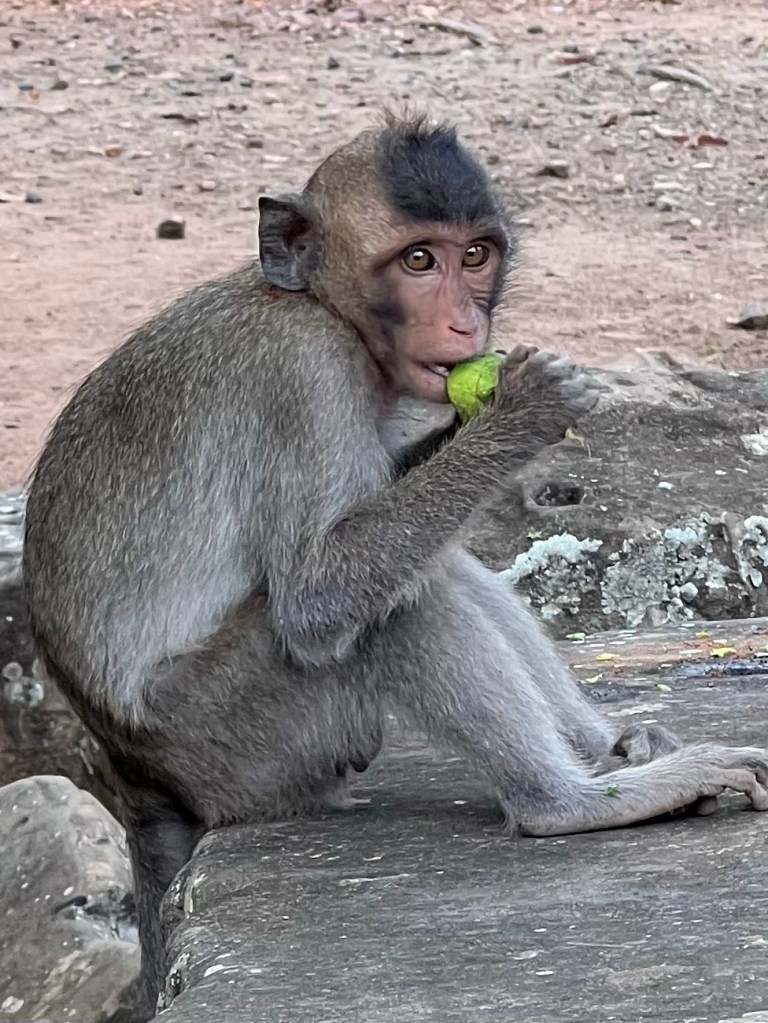
Just next door was the Baphuon Temple, also built on an artificial hill with large open grounds and a long elevated walkway leading to the entrance. At the prospect of this, we thought we might just do the outside of this temple! There seem to be conflicting views as to when it was built, but it is thought to date back to the 10th Century, so again before the time of Angkor Thom. The temple itself is pyramidal and huge, 120m x 100m and with its central tower raising 34m high, but sadly in a pretty poor state of repair. It was originally dedicated to Shiva and later converted to a Theravada Buddhist temple in the late 15th century. There was an impressive swimming pool of over 100m for the King and a more sensibly sized one for the Queen, which would have been covered and indoor. There were some rather cute monkeys playing in the grounds but, by this time we were almost dying of exhaustion and heat so decided to leave them to it and headed back to the hotel.
Despite plans to ‘go down town’ for dinner in a local restaurant Rit had recommended, we simply could not get further than the hotel bar, where we had a ‘nice curry’ and collapsed into bed. 4.30am start tomorrow – hooray!
 EC-Rider Travels
Leave a comment