
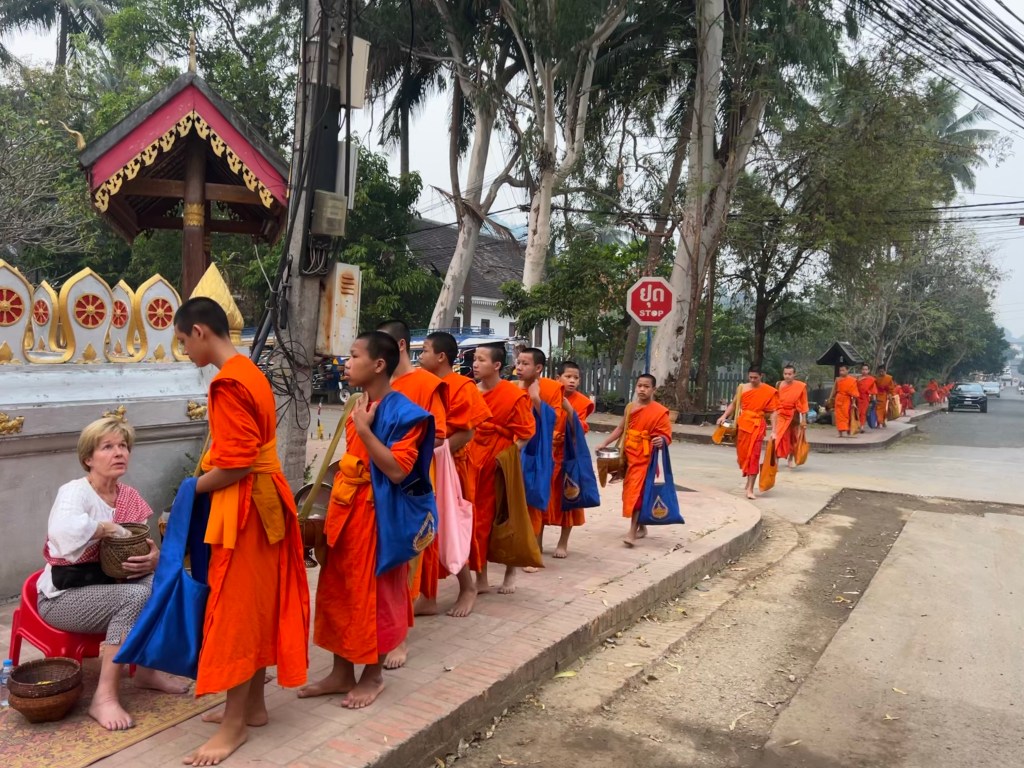
5am start this morning to take part in Tak Bat, which is alms-giving for the monks. We were picked up by Pang and Hell and taken back to L’Elephant where Pang had arranged little seats for us and ordered some sticky rice and biscuits to give to the monks. We were given a sash or pha which was placed over our left shoulder and sat quietly just in front of a temple, next to two wonderful old ladies who apparently came out every morning to feed the monks. At 6am, as the sun rose, a wooden gong sounded and hundreds of monks, from the 35 temples in Luang Prabang, started processing, barefoot and in silence up the streets each with a metal arms bowl. The street was lined with people and as instructed by Pang, we put a small handful of sticky rice in each bowl – and biscuits for the young/skinny ones. Pang later told us that the food is in fact all pooled, when they return to the temple, for breakfast. When we had finished our rice we poured a bottle of water on to a plant and made a wish/prayer to Mother Earth.
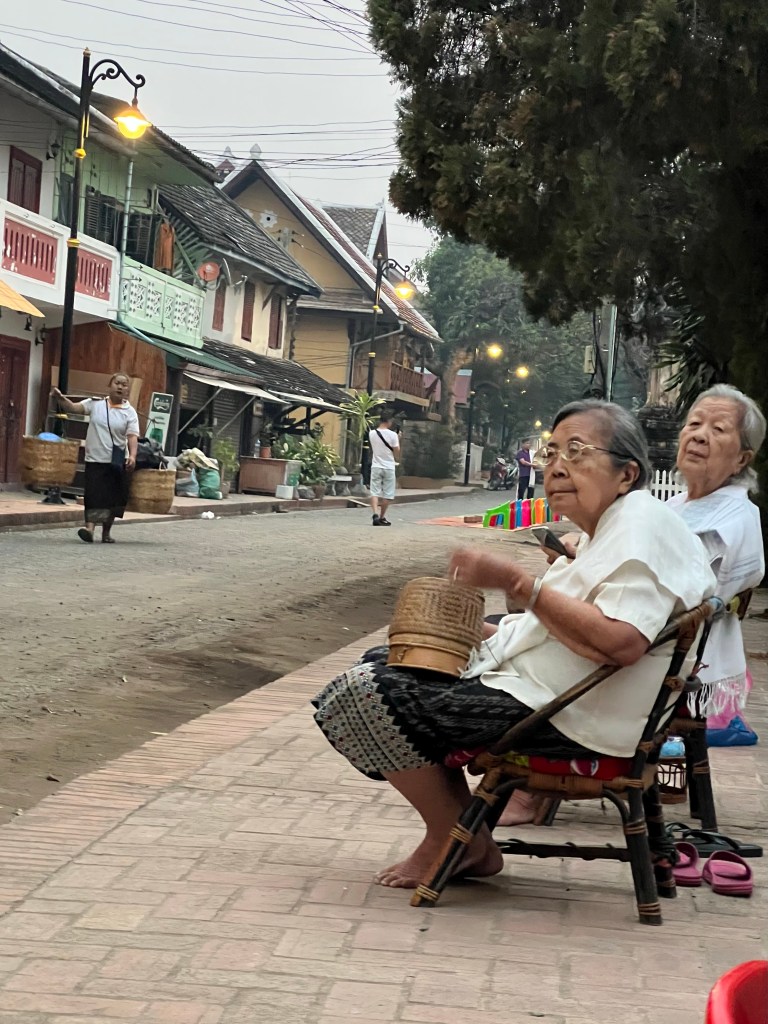
This custom has continued for over 600 years in Luang Prabang, with the monks depending on the generosity of the locals (and tourists) to feed them. Pang explained that by feeding the monks the people receive good karma and merit bestowed by the monks which counts towards their future lives.
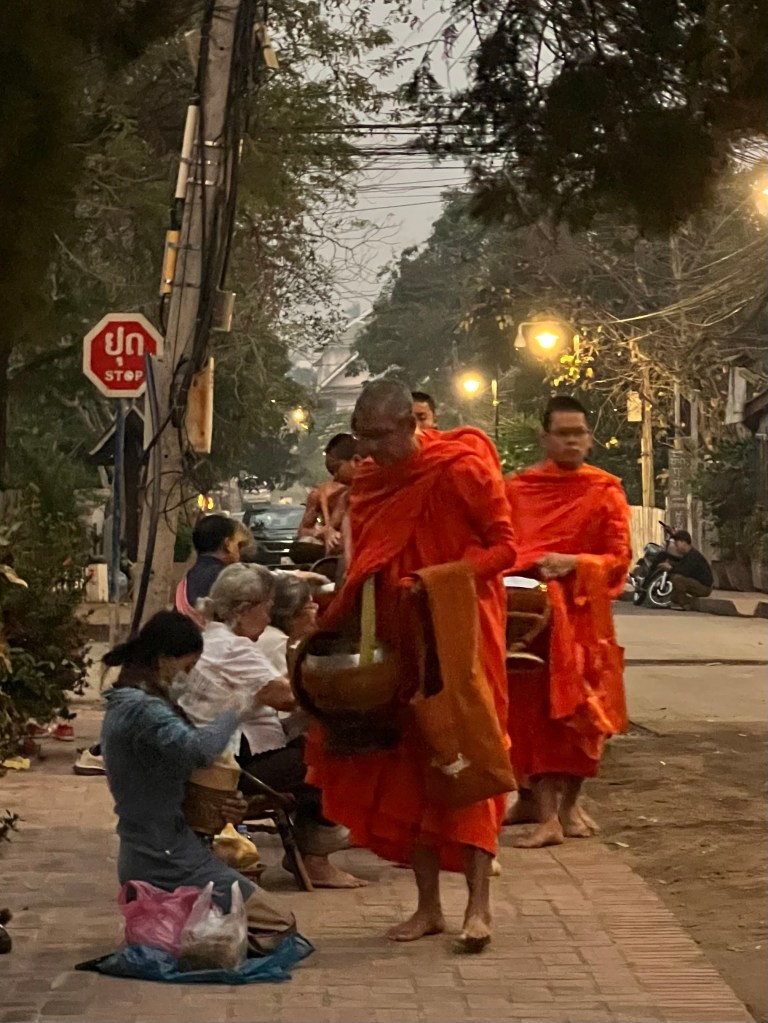
It was very moving with monks of all ages from young boys to elderly men. Nobody speaking and nobody smiling, with some in a state of meditation, I should think praying for anything but sticky-rice!
The majority of Laotians practice Theravada Buddhism. This originally came from Sri Lanka and is considered to be the oldest school of Buddhism tracing back to the original teachings of Buddha. Laos Buddhism is a unique version of Theravada Buddhism often related to animism and the belief in ancestral spirits. 66% of Laotians are Theravada Buddhists. Like Hinduism, Buddhism is considered a way of life rather than a religion and provides the basis of Laos culture
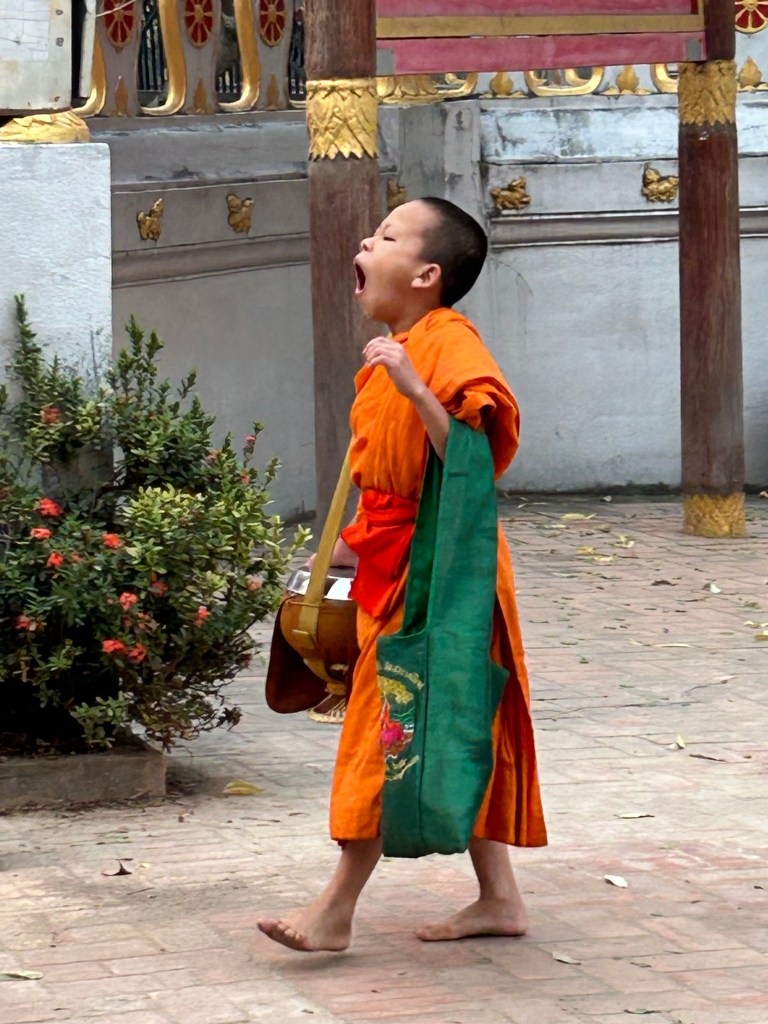
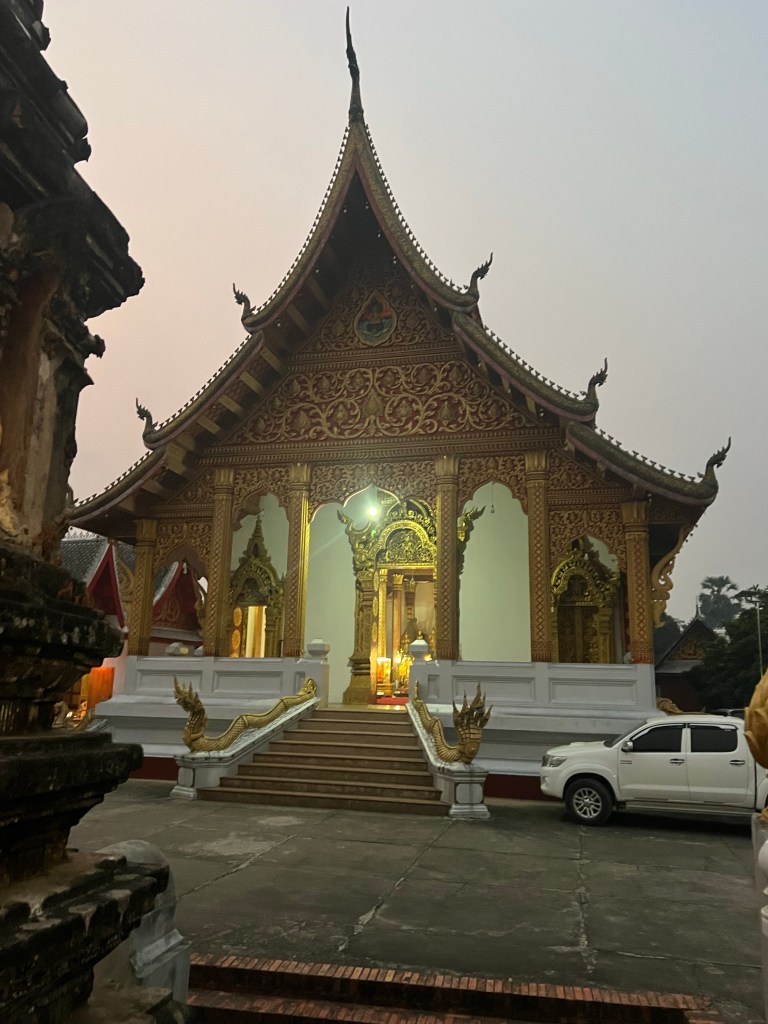
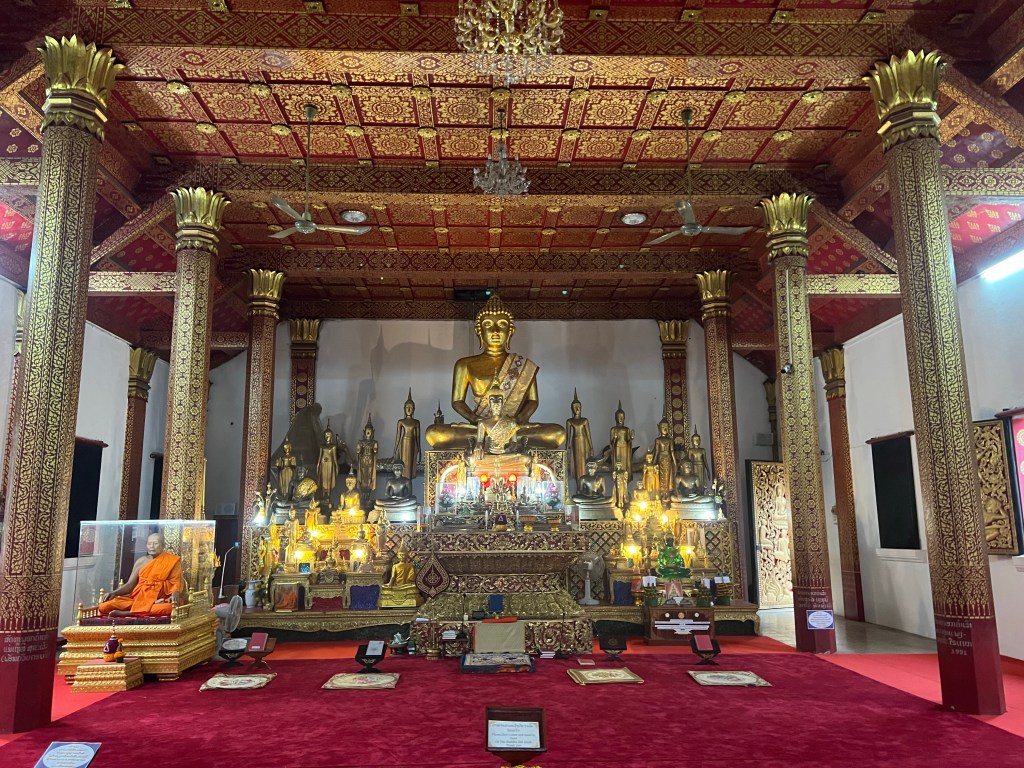
We had a quick look around the temple, so different from the Buddhist temples in Thailand. Much simpler with a central Sim or Ordination Hall, where there were several Buddhas; the four sided pyramidal That which houses a relic of Buddha; the Sala Hong Tham (Assembly Hall) where the monks were eating their sticky rice. It is also used for teaching lay-people Buddhist principals, or receive offerings; the Kuti, or living quarters for the monks; The Ho Kong (Drum tower) housing the drum to wake the monks and call the local people to prayer.
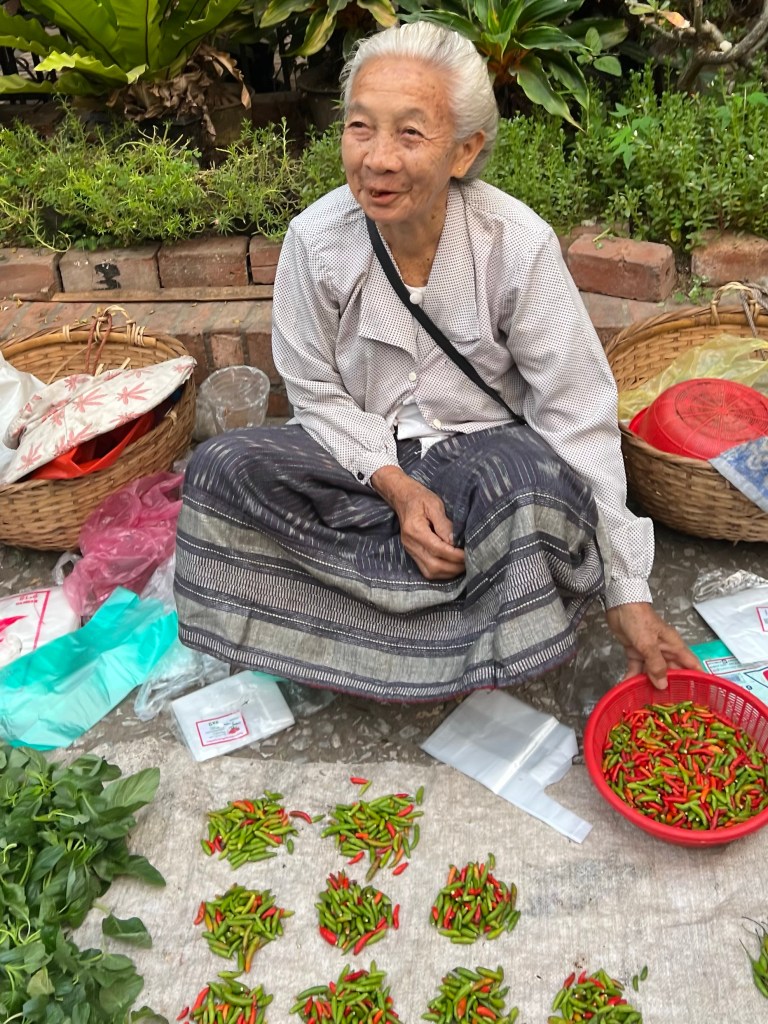
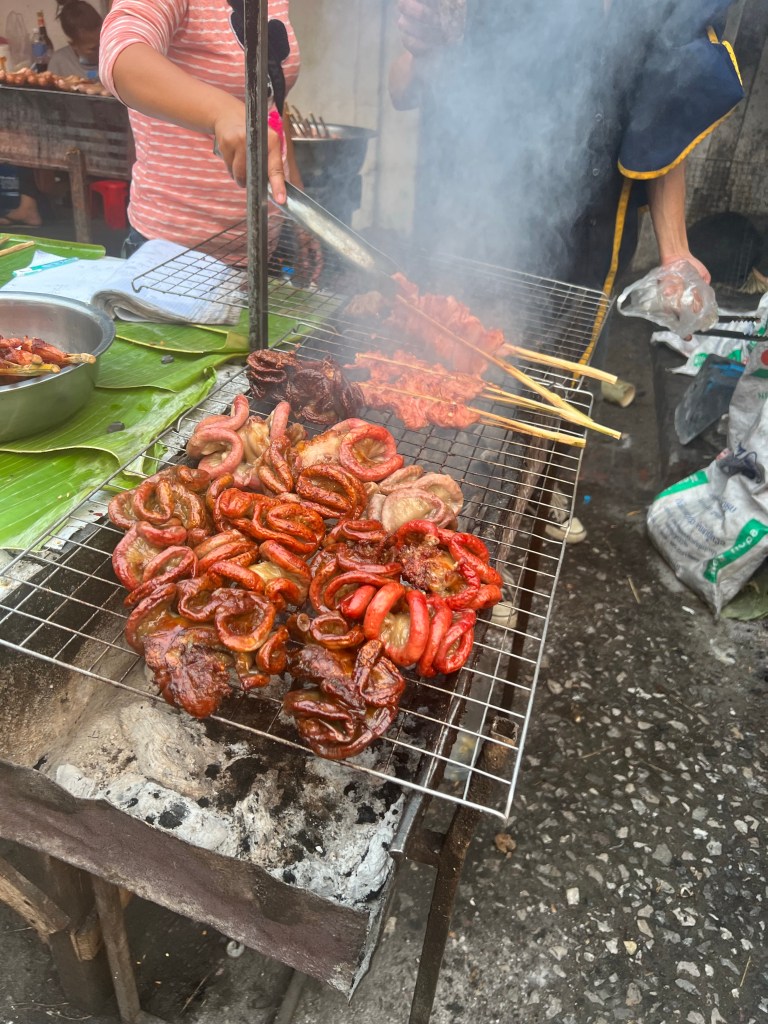
We then went to the morning market, which despite being only 7am was buzzing. The most amazing food was being sold, fruit and vegetables we had never seen, ants eggs for soup and every kind of part of a pig, cow and buffalo you can think of. I don’t believe anything is wasted. There was a huge variety of cooked food on offer which locals were buying for their breakfast.
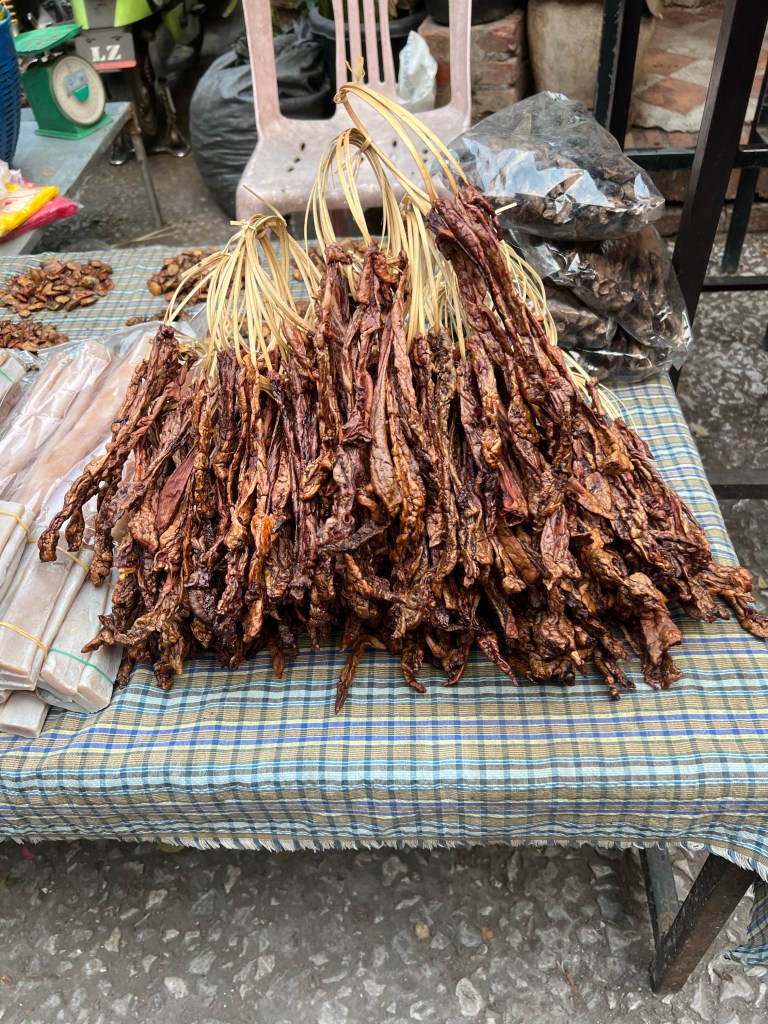
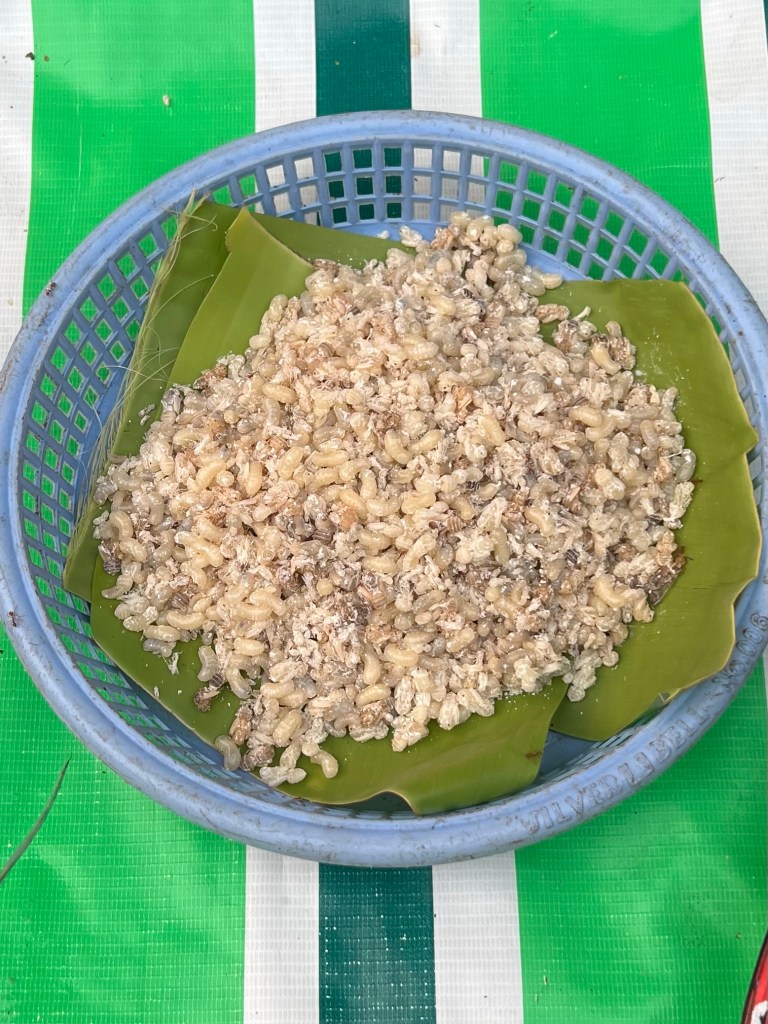
We decided to return to the hotel for ours and checked out of the rather comfortable Satri House Hotel to head north to Nong Khiaw. It was a three hour drive though the countryside, on very bumpy roads reminiscent of India. We followed the rather beautiful River Ou much of the way, passing a huge Chinese built and owned damn producing electricity for China, Thailand, Laos and soon Singapore. It was a pretty drive, though a number of very simple villages, with no cars, and people just sitting around. We saw rubber plantations and paddy fields but once again the plastic and rubbish was heartbreaking..
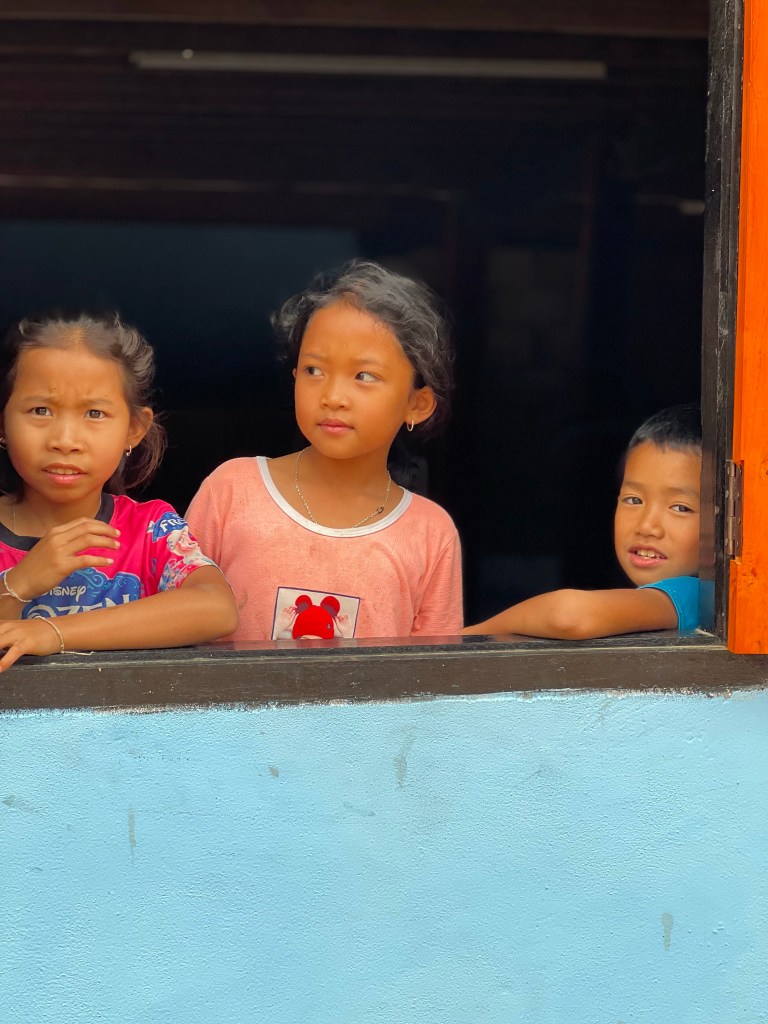
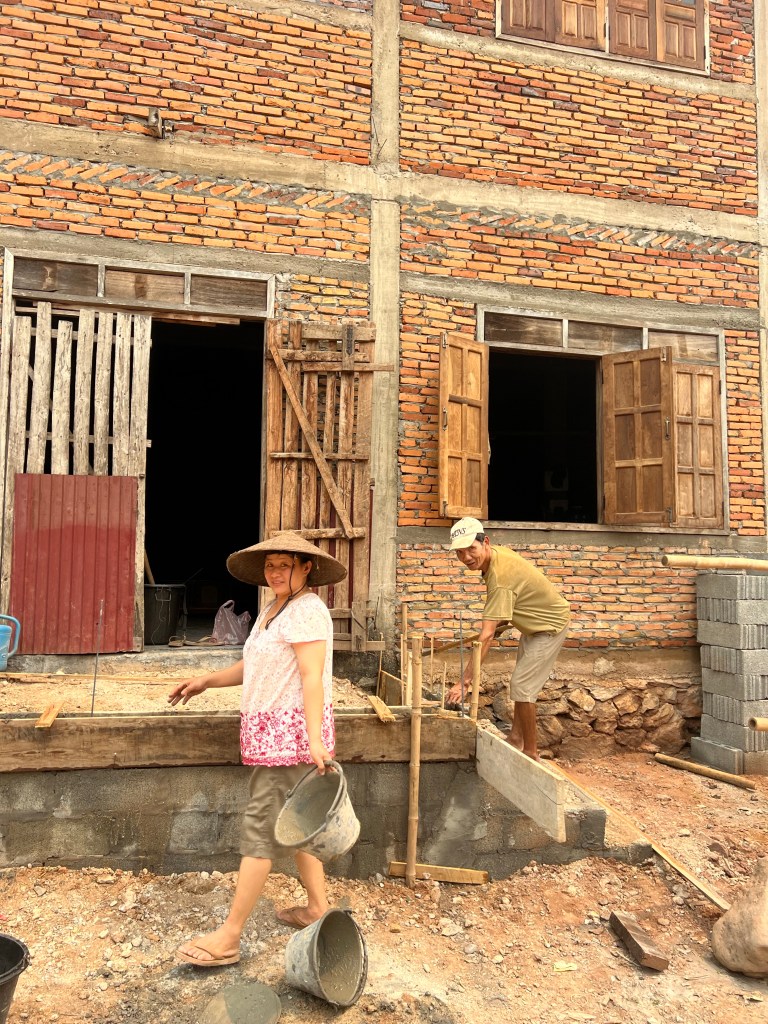
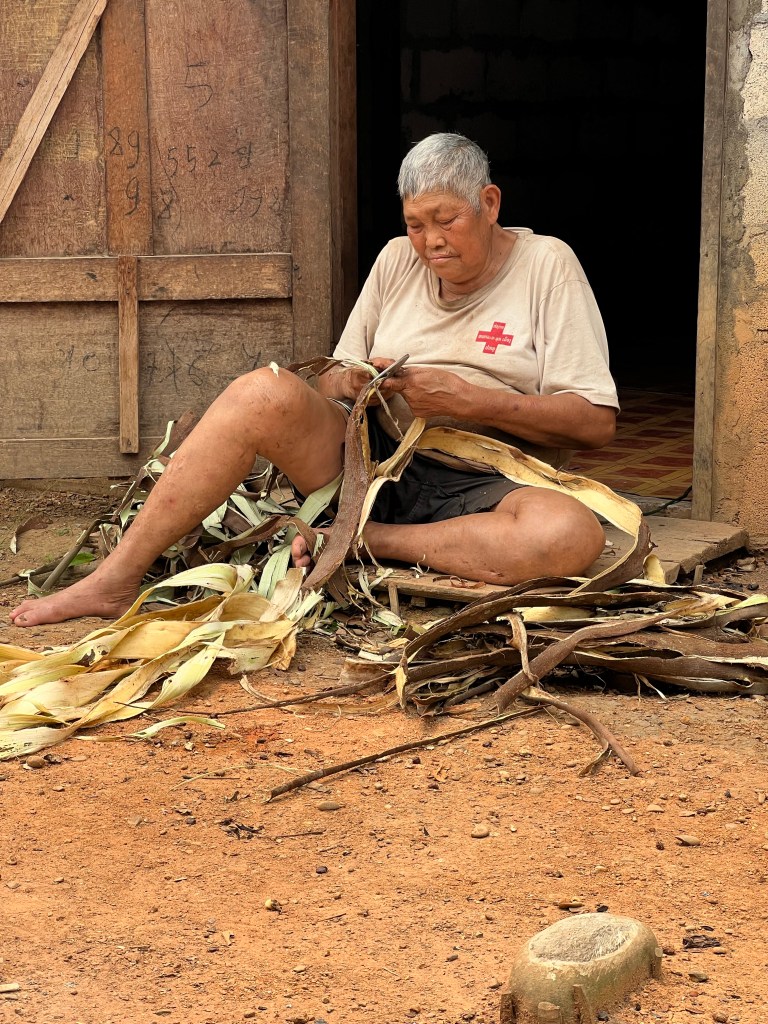
We stopped at a little hill tribe village of the Thai Dam tribe, where most of the villagers were involved in laying a new cable. We met lots of children who for some reason had the day off school (apparently it happens quite often in the villages); a lovely couple building their own house as and when they could afford the next part. And a lady stripping the bark of the jute trees to sell to the paper makers.
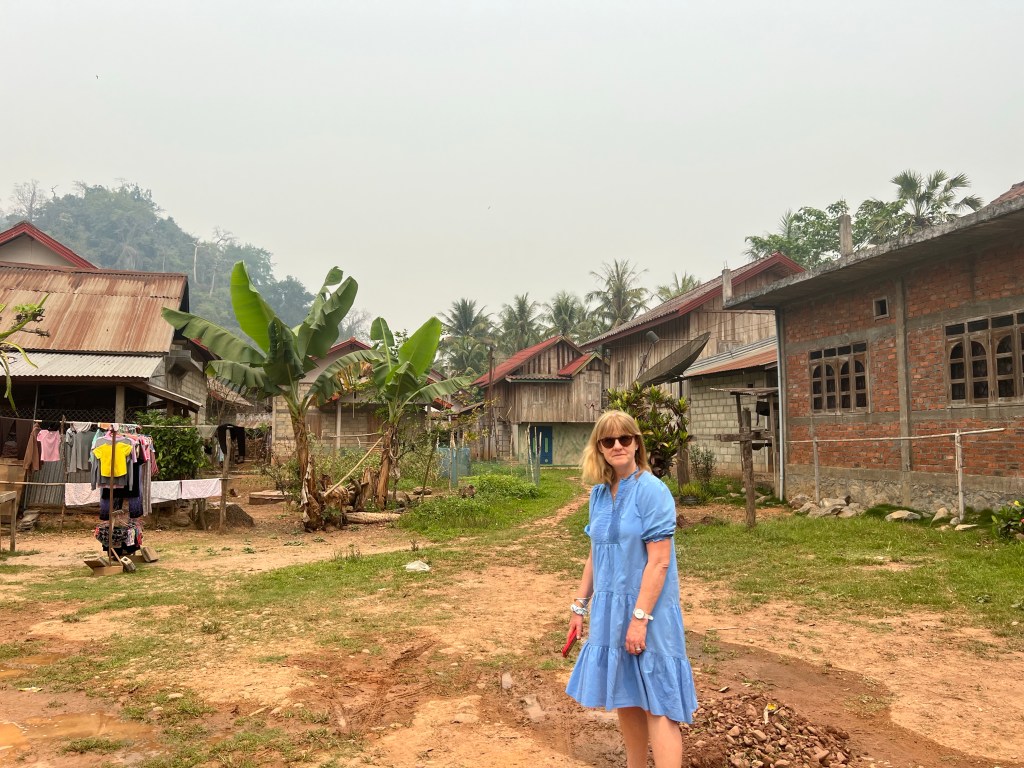
Also a dear old lady who recently lost her husband and then her son in a motorbike accident leaving her on her own. She was 77 and having to make thatching from strips of bamboo bark to earn a living. The poverty is extreme, though many of the traditional wooden houses have been replaced with brick and breeze blocks and apparently have running water, but as basic as can be inside. All the same they are the smiliest people you have ever met and it was lovely to see more women in their beautiful traditional skirts and the local secondary school also having these for the girls. Needless to say, despite the poverty, everyone has a mobile phone and several of the small villages we went through, had mobile phone shops!
There are 130 different ethnic tribes in Laos making up 15 percent of the population. They fall into four language groups: Lao-Tai, Mon-Khmer, Hmong-Mien and Chinese-Tibetan. The Hmong are the largest group with between 300-400,000 living mostly in northern and central Laos. Some of the tribes are only a few hundred and only found in Laos.
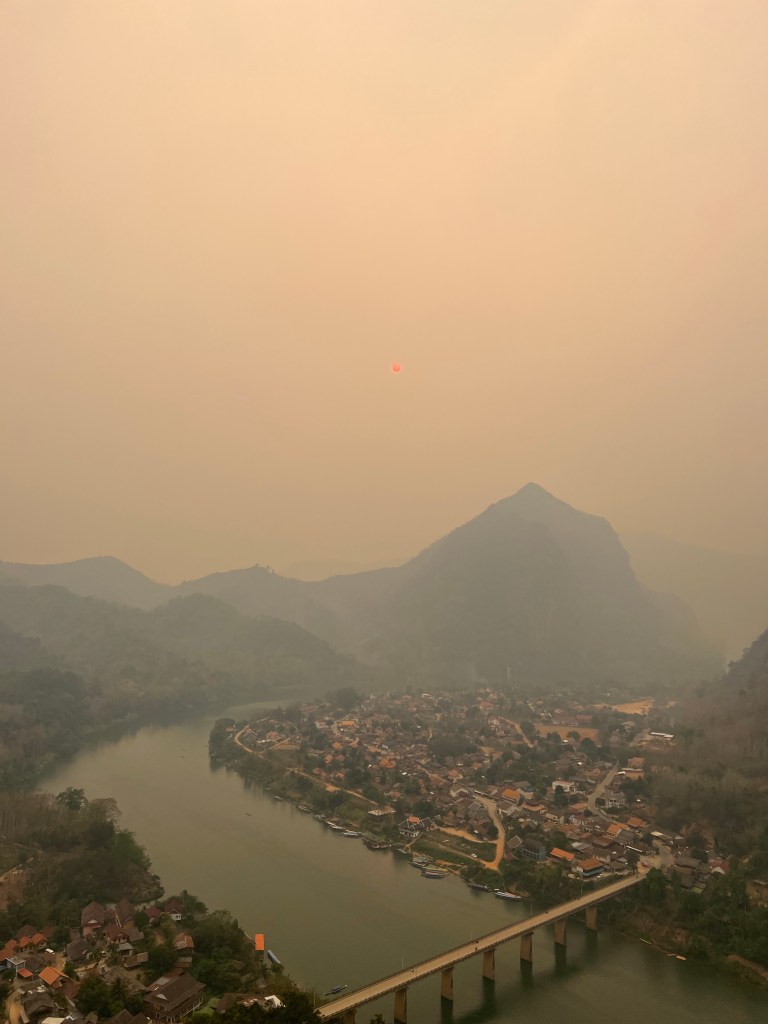
After dodging a number of buffalo in the road, we eventually arrived at Mandala Ou resort – perhaps a slight exaggeration on the resort front. It was described in our itinerary as ‘simple’ and I think this was fair, but it is in a beautiful position on the river, which I am sure without the smoke is incredibly beautiful. It is run by a very grumpy German owner who could not have been less excited to see us. He showed us our wee room and we then went to have lunch and then joined Pang for a hike up the mountain to the Xom Nang viewpoint. It was unbelievably humid and a pretty steep climb up very erratic steps – I was not looking my prettiest when we reached the top! Sadly the view was once again marred by the smoke, but I am sure should have been very lovely, looking down the river Ou and over to the mountains beyond. We returned for a shower and an ok supper in our funny little hotel and now lying on our concrete (literally) beds. Good night … I hope!
 EC-Rider Travels
Leave a comment