This morning, Alex brought me the most delicious pomelo for breakfast, which I am not sure I have ever had before except in Chase’s gin! Definitely, another new fave. He then sweetly took me all the way back to the airport to identify the ATM machine I had used on the off chance the card could be retrieved. He had managed to do this a couple of times before (it is nice to know I am not the only one to be so stupid) but sadly not the policy of Bangkok Bank. SO ANNOYING and SO STUPID!
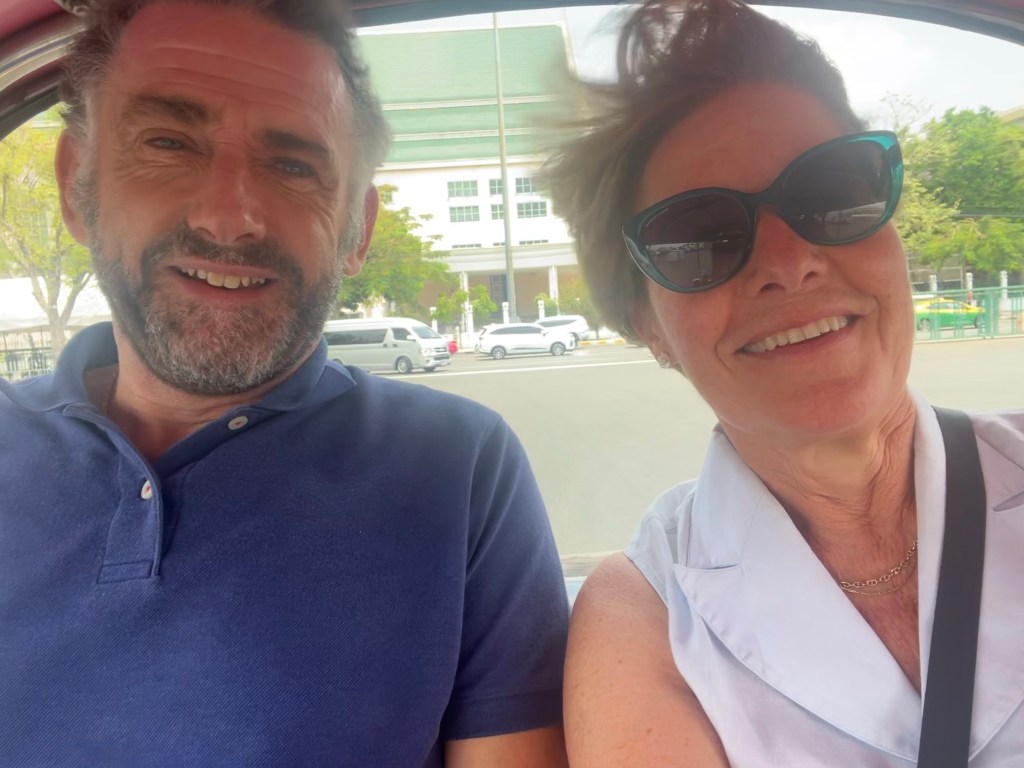
We went back into the city with the intention of making a quick visit to a museum which Alex remembered well but was not sure of the name. We started at the National Museum, but not convinced we were at the right one, we jumped into a tuk tuk to the Siam Museum. This gave a rather charming history, aimed at school children – perfect!
As we know from the King and I (which is banned here!) Thailand is historically known as Siam (pronounced see-am) and officially The Kingdom of Thailand. It sits at the centre of the Indochinese Peninsula, spanning almost 200,000 sq mi, with a population of nearly 70 million. It borders Cambodia and Laos to the east/northeast, Myanmar to the northwest and Malaysia in the south. Although 90% Buddhist, Thailand’s cultural influences have come from many of its neighbours and also India which contributed to the flow of Buddhism. There also seem to be a number of parallels with the Hindu faith, with some of their deities being worshipped in he Buddhist temples. They love their royal family, who play a central role in the life of its nation. They had a particular love for their last king, Rama IX who died in 2016 as Thailand’s longest serving monarch (66 years). He was a great king of the people leaving his son, Rama X big shoes to fill …. sound familiar? His daughter has been in a coma since before Christmas so there is much praying in the temples for her recovery.
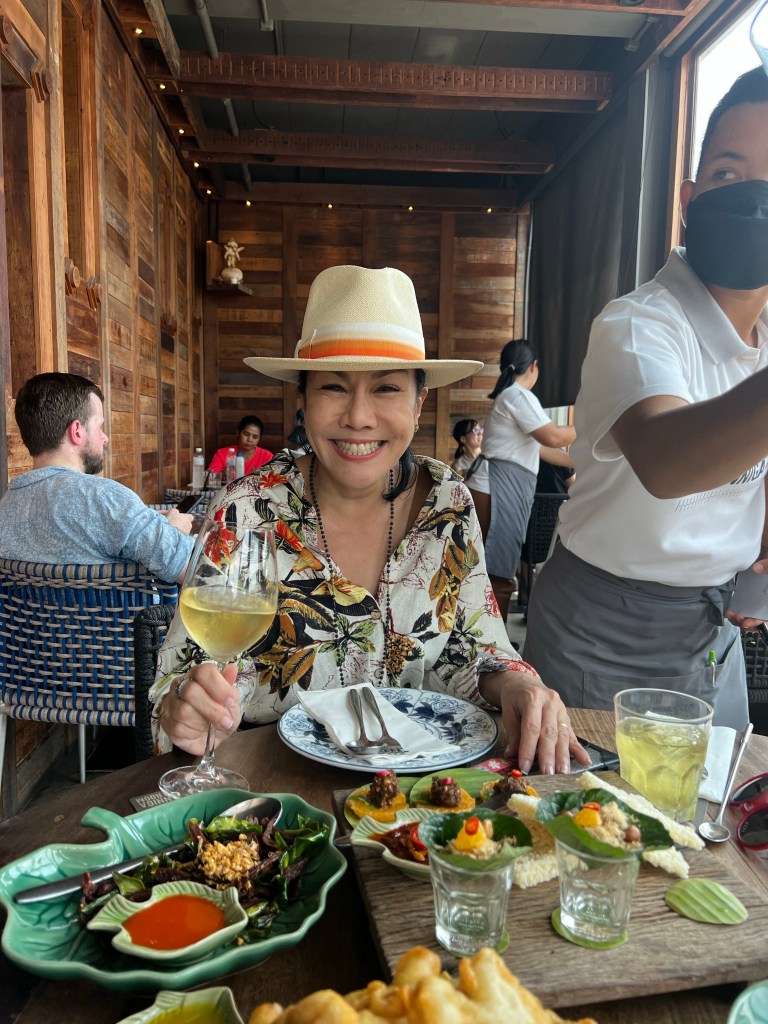
We then went to meet Tippy for lunch, at another lovely restaurant called Supanniga overlooking the river towards Wat Arun. Tippy ordered the most amazing selection of things she felt I should try, each one more delicious than the last. Unbeknown to me, she had organised a guide to show us around Bangkok in the afternoon and we were shortly joined by a lovely lady called Kat.
First stop was the Grand Palace and the hallowed Wat Phra Kaew (the Temple of the Emerald Buddha). I was not aware of this lovely outing, and dressed totally inappropriately, in a sleeveless shirt. So we quickly purchased a fetching little cape to throw over my wickedly bare shoulders. However, I still failed! They have the strictest guards whose job it is to find any excuse to make you go to their shop (no doubt run by his wife) to buy more to cover yourself. They could see I was wearing a sleeveless shirt under my new purchase, and I was marched off to buy a t-shirt which was apparently ok!
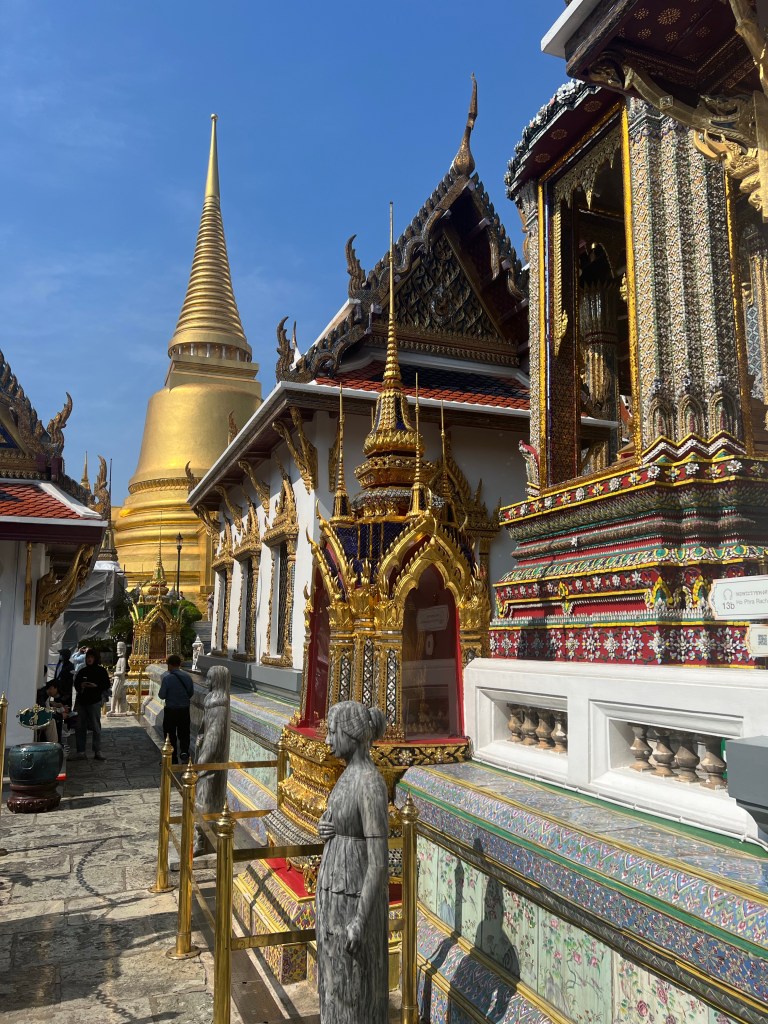
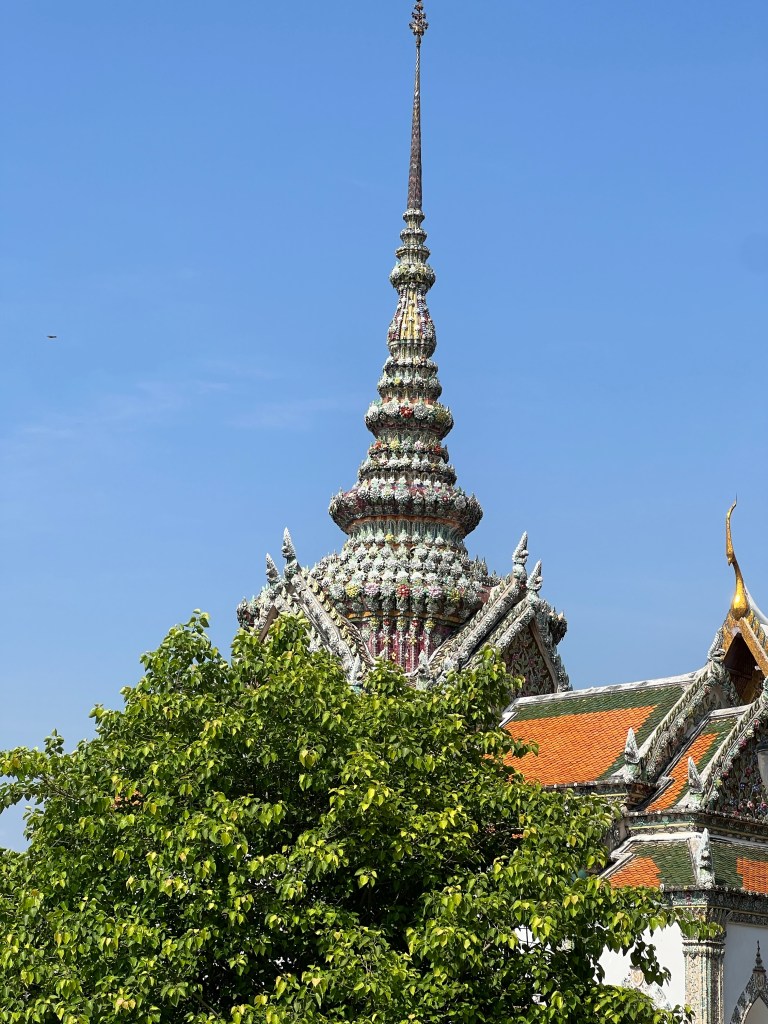
Anyway it was more than worth it! It literally/physically took my breath away. I don’t think I have been so blown away by anything so spectacular, since I saw the Taj Mahal. It is impossible to capture its scale and beauty in words or photographs, but believe me it is beyond anything you can imagine…. and immaculate. Kat explained that there is a constant team of Temple artists painting and restoring every element of the 94.5 hectares, including over 100 buildings.
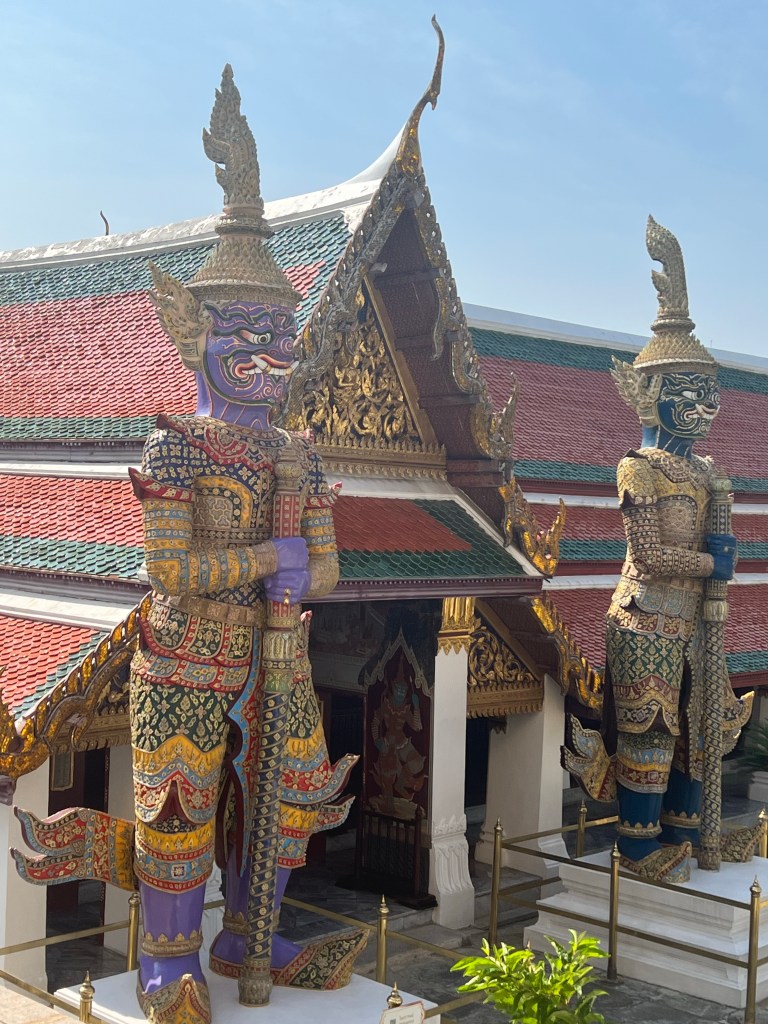
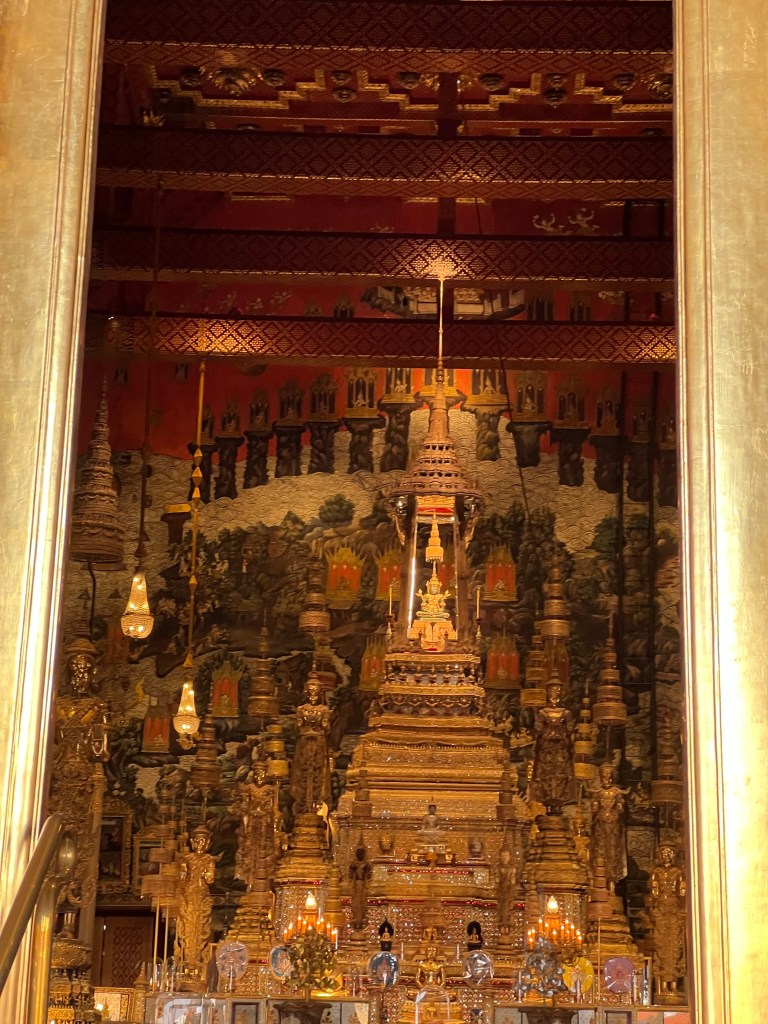
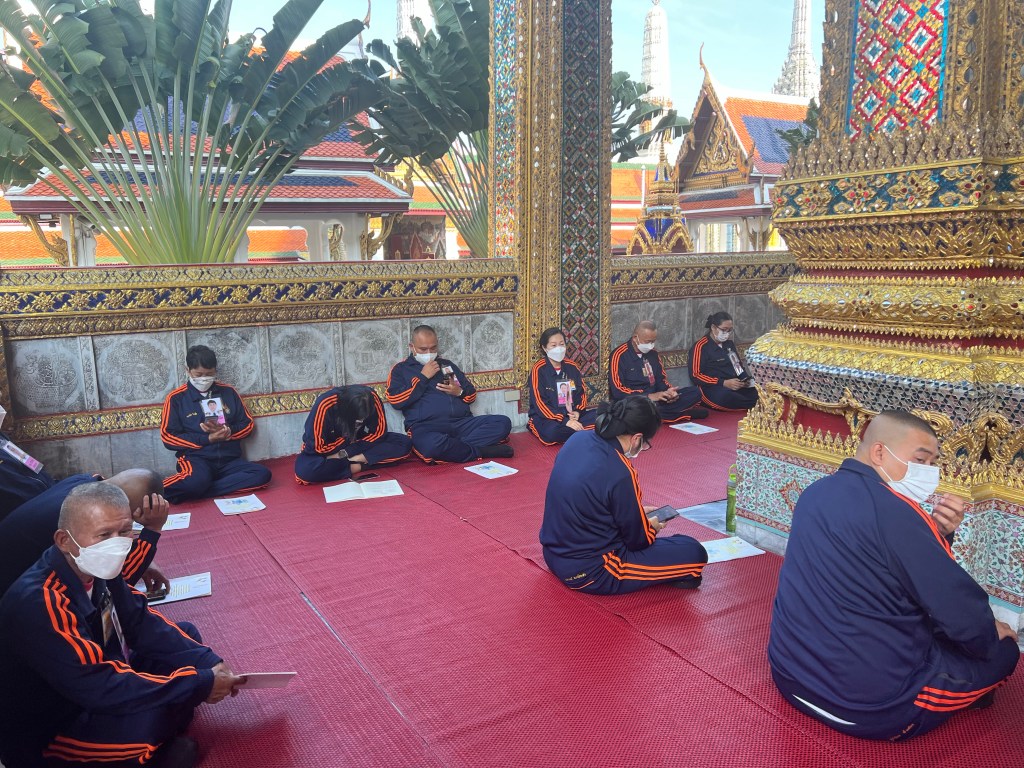
Wat Phra Kaew houses the incredible Emerald Buddha, which although not huge in itself is again pretty awe inspiring. It is regarded as the most sacred Buddhist temple in Thailand and the nation’s preeminent place of worship. Construction of the temple began in 1783 under Rama I, with every successive king adding, restoring and embellishing the temple, donating sacred objects and creating the most incredible national treasury. The Emerald Buddha is raised high on a series of platforms and no one except the King is allowed near it. Three times a year, there is an important ritual when the King changes the cloak of the Buddha to bring good fortune to the country during each season. Our visit was cut short as a group of soldiers were waiting to come and pray together for the king’s daughter.
Having once been under Siamese control, the Cambodian architectural influence is apparent with a number of more conical shaped Prang towers. King Rama IV wanted to move Angkor Wat to Thailand as he thought, his people would like to see something different. However, as I am shortly to discover, it is not very transportable so he ordered a miniature replica to be constructed, which gave me a taster of what is to come!
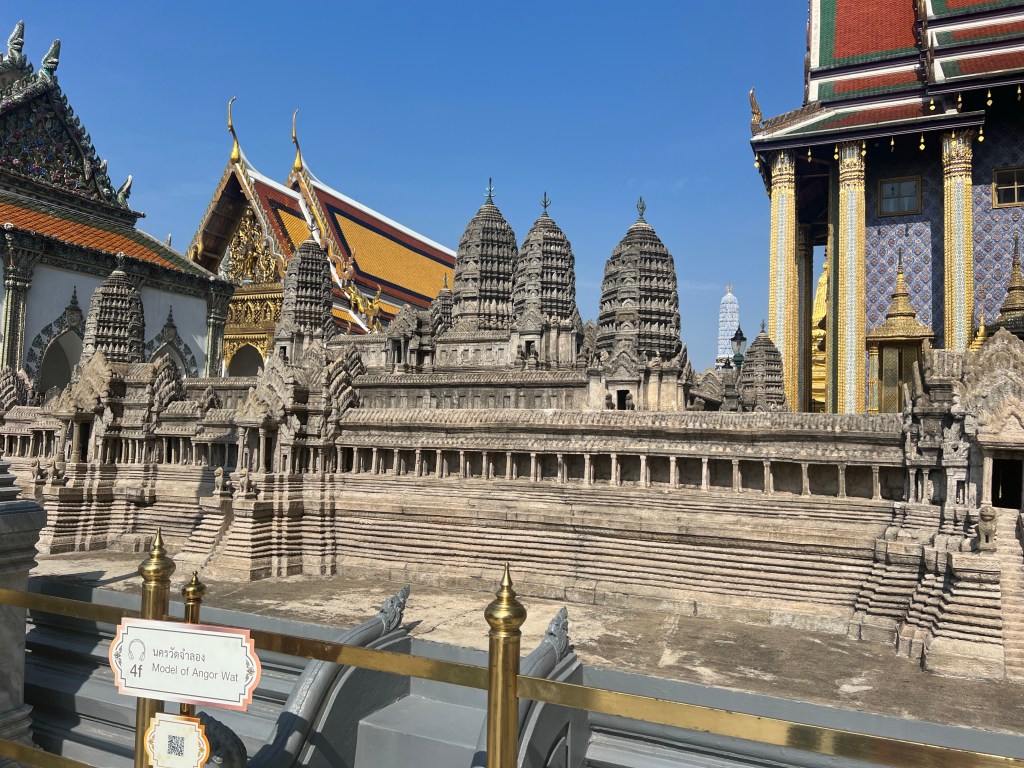
The Grand Palace is a former royal residence established in 1782 after King Rama I ascended the throne. Today it is only used on ceremonial occasions, but remains a pilgrimage destination for devout Buddhists.
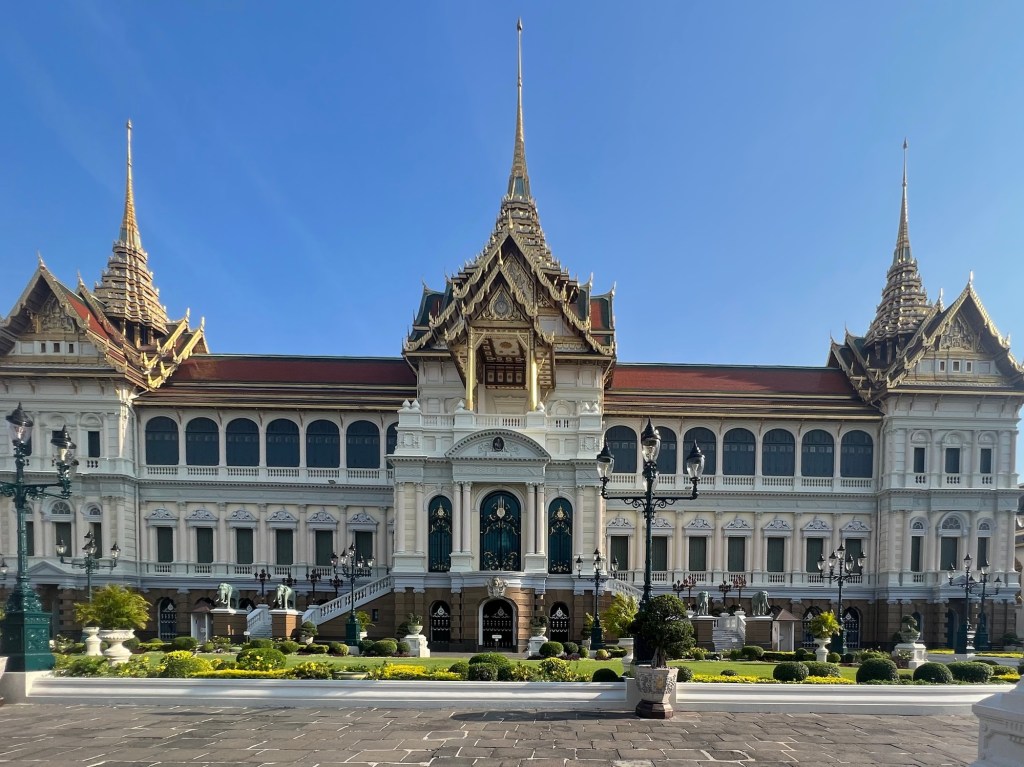
It was the setting for King Rama IX funeral in October 2017, which with a year of planning and the construction of a 50m high gilded pyre, was one of the most ornate and expensive funerals in modern history. It was attended by tens of thousands of mourners dressed in black. The coronation of the current king, Rama X also took place here in 2019 with the king carried on the Budtan Thong royal palanquin from the the hall’s throne room to the Wat Phra Kaew.
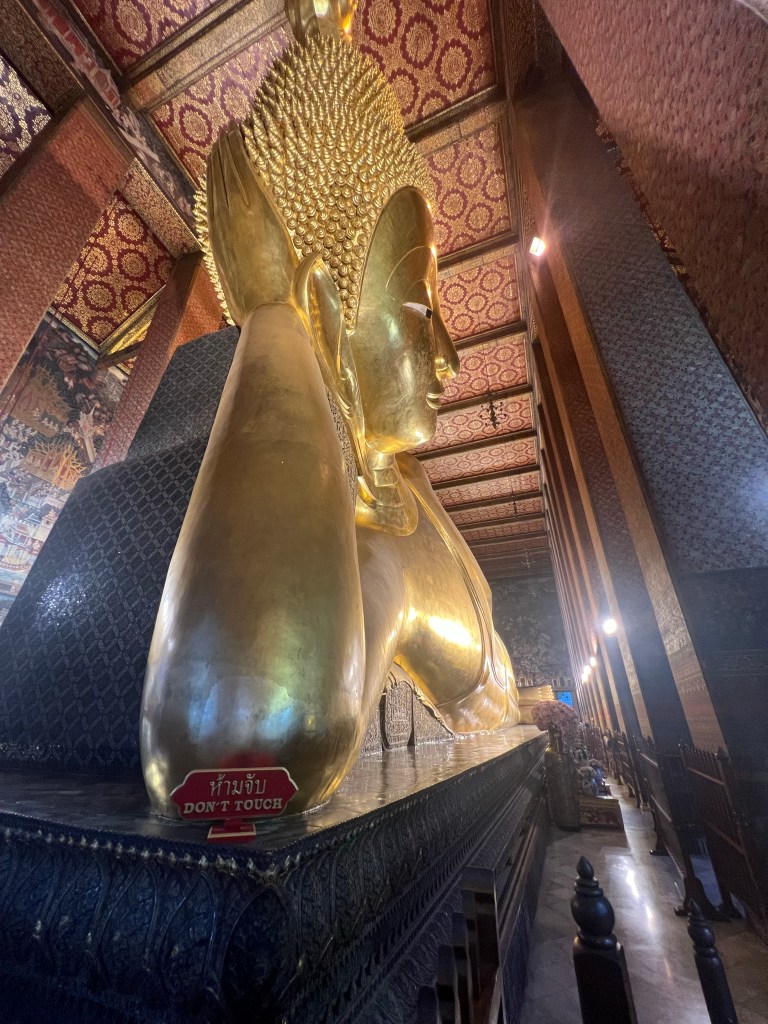
We then went to Wat Pho, with its magnificent reclining Buddha. Wat Pho is again associated with King Rama I who rebuilt the temple on an earlier site. It was later expanded by Rama III and now houses the largest collection of Buddhas in Thailand. This includes a 46m long reclining Buddha.
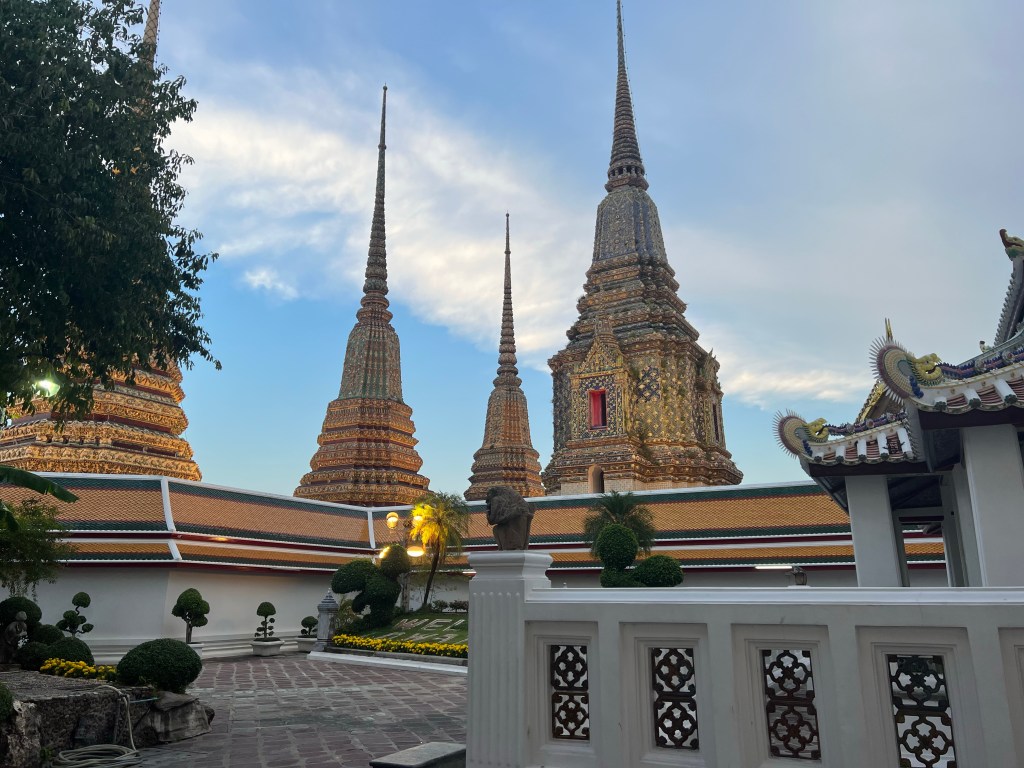
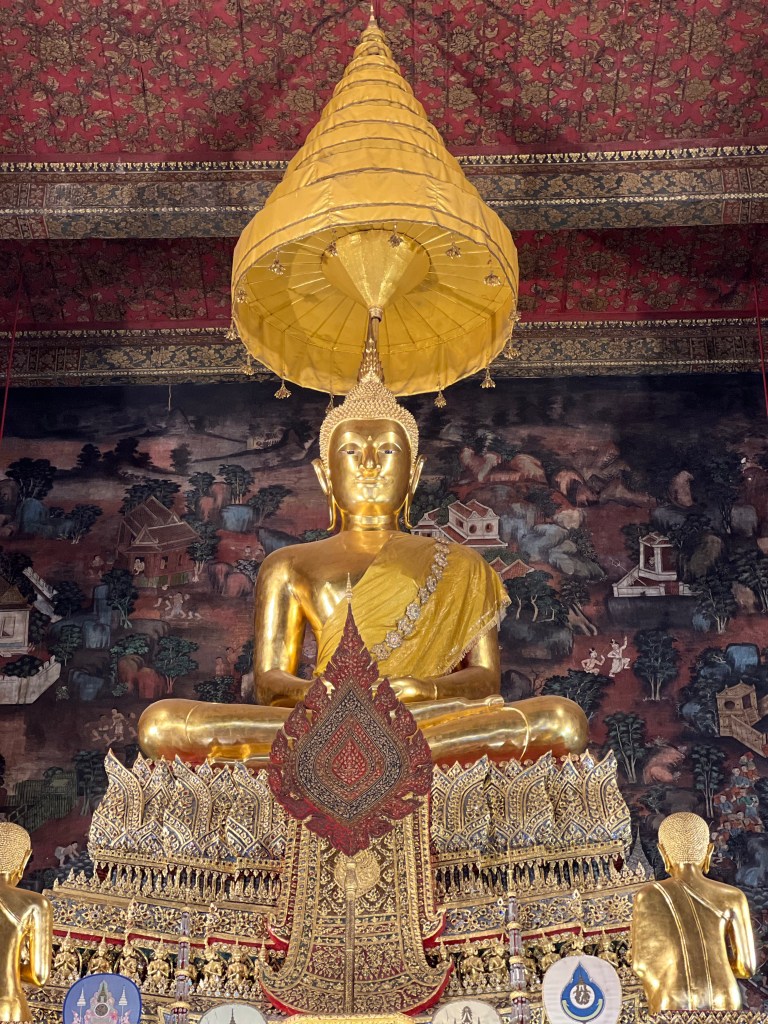
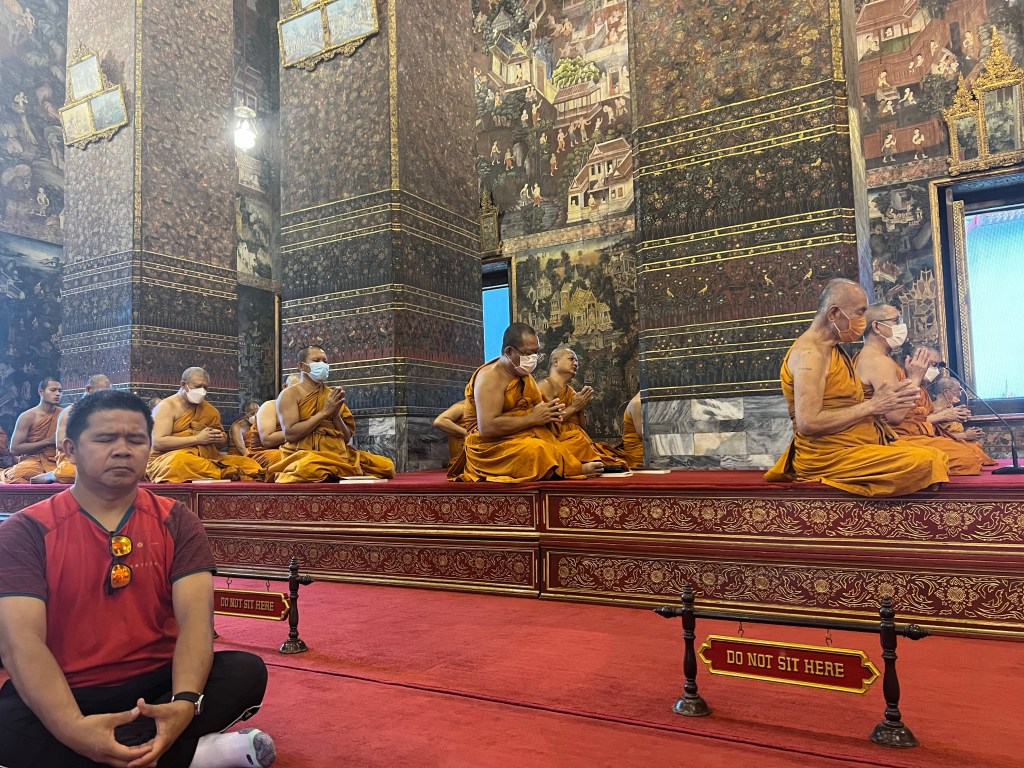
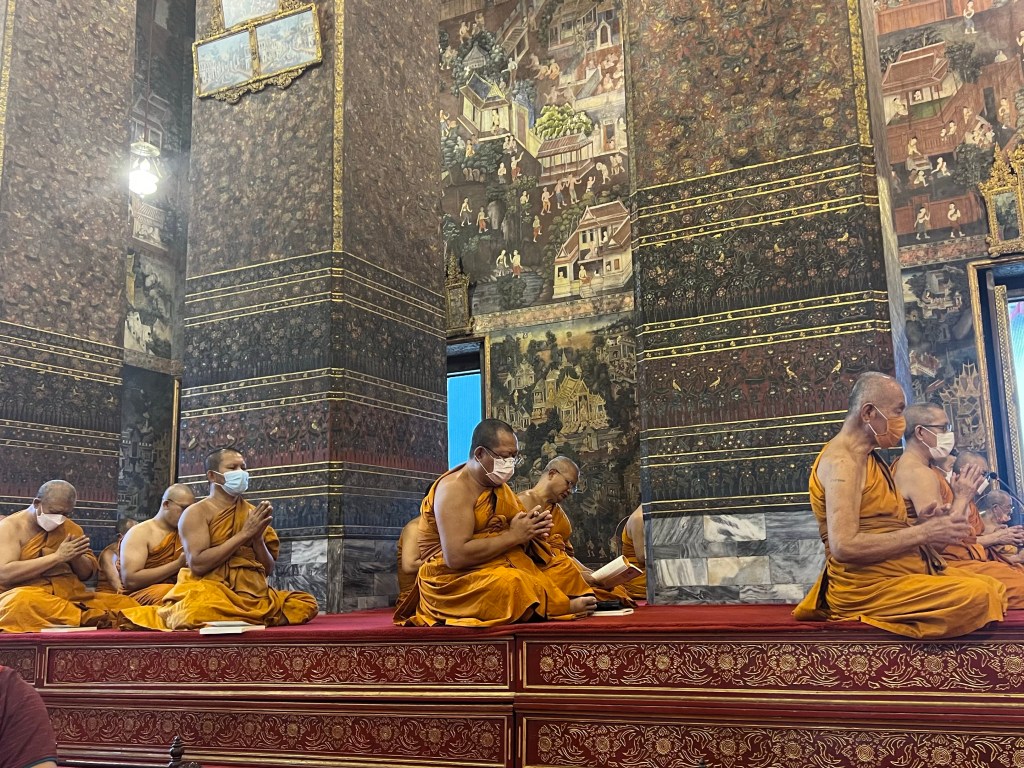
The main hall, Phra Ubosot, is the most sacred building of the complex. Inside is a gold and crystal three-tiered pedestal topped with a gilded Buddha made of a gold-copper alloy. The Buddha is under a nine-tiered umbrella representing the authority of Thailand. There were a number of Buddhist monks, to one side on their knees on a raised platform, chanting to Buddha, as they do several times a day. It was very moving and a privilege to witness such devotion.
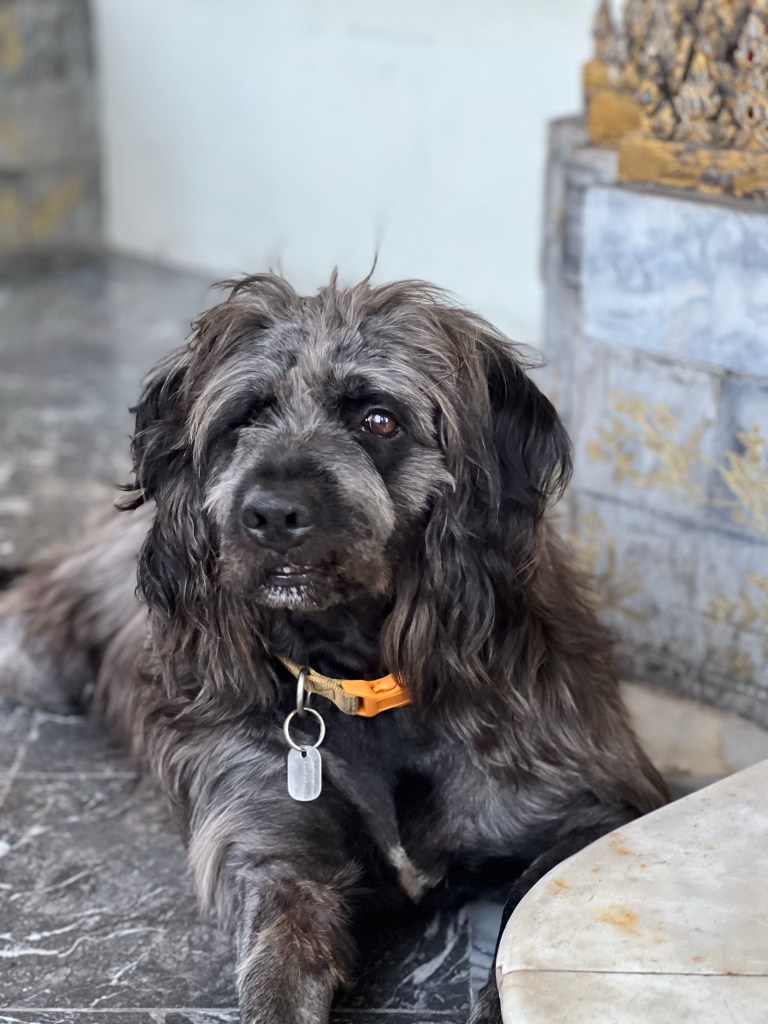
There was the sweetest temple dog who apparently always sits outside the hall.
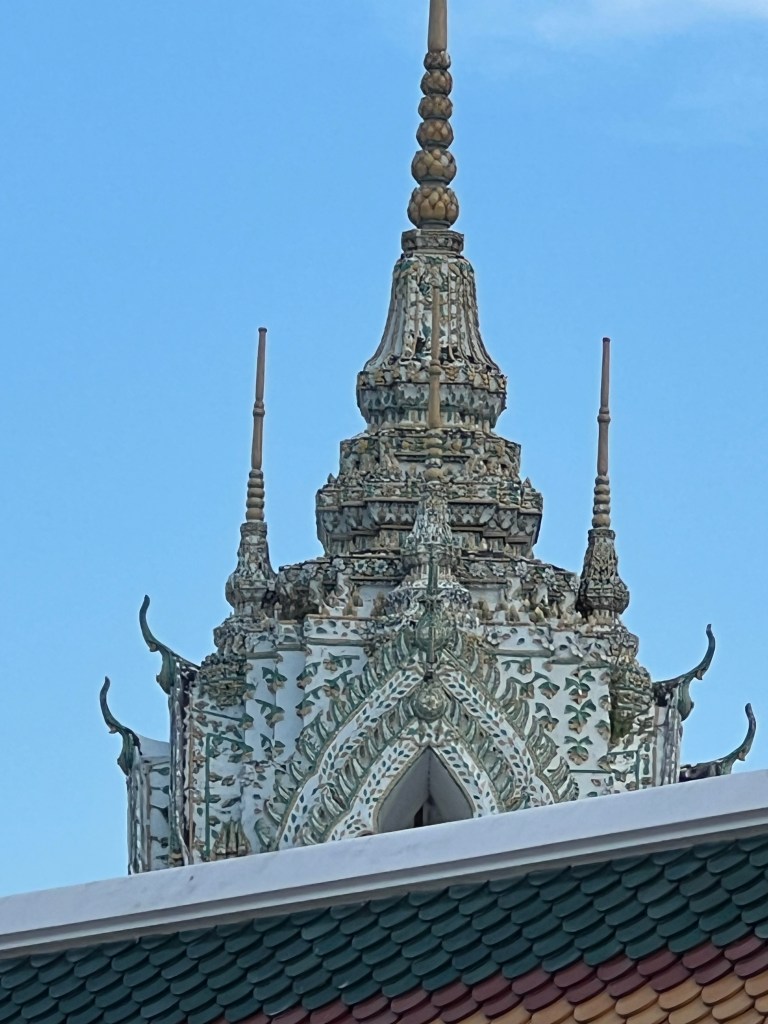
The temple was the first public university of Thailand, teaching students science, religion and literature using murals and sculptures. It is also known as the birthplace of traditional Thai massage and in 1955 a school for traditional medicine and massage was established at the temple and is still operational today.
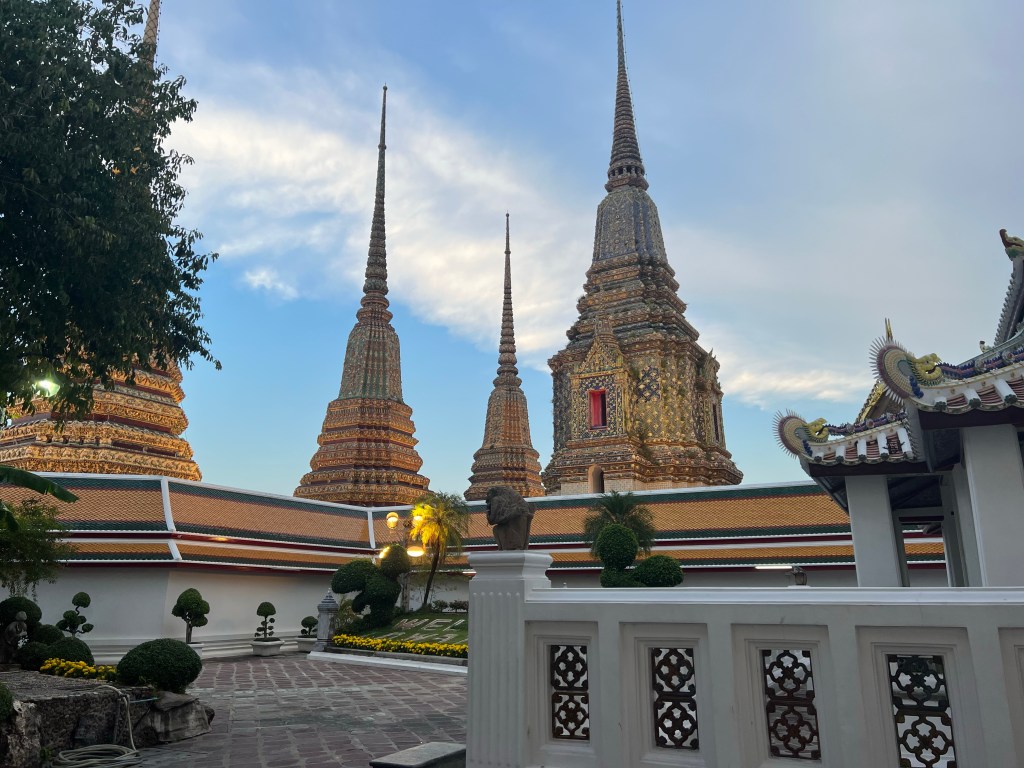
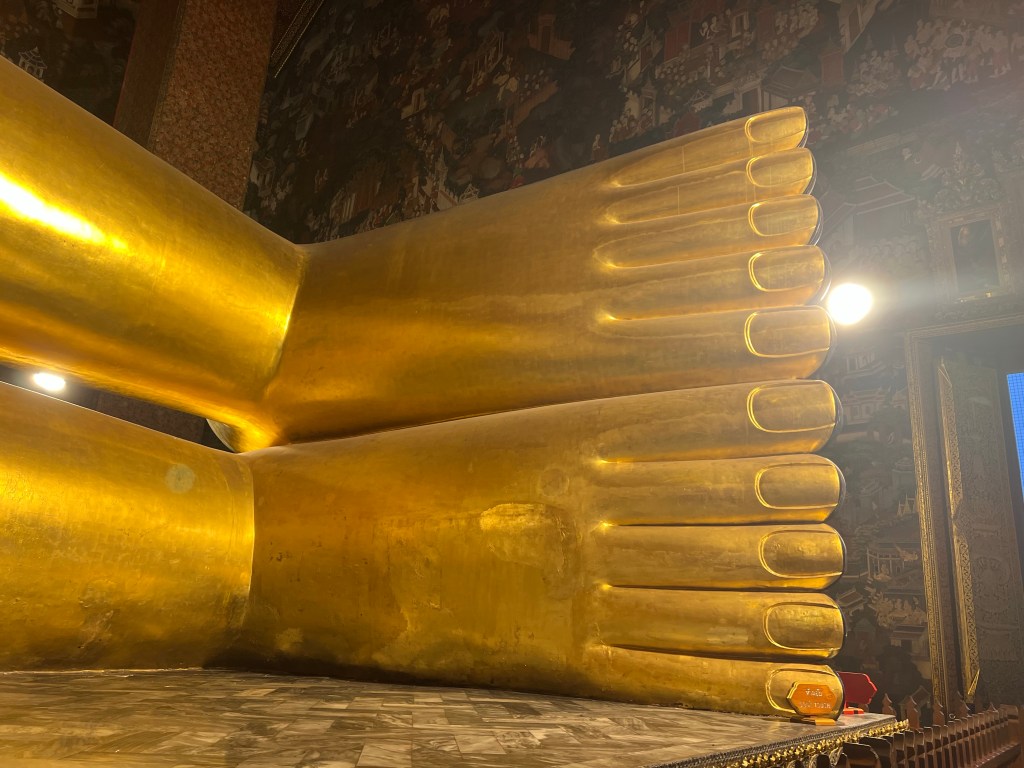
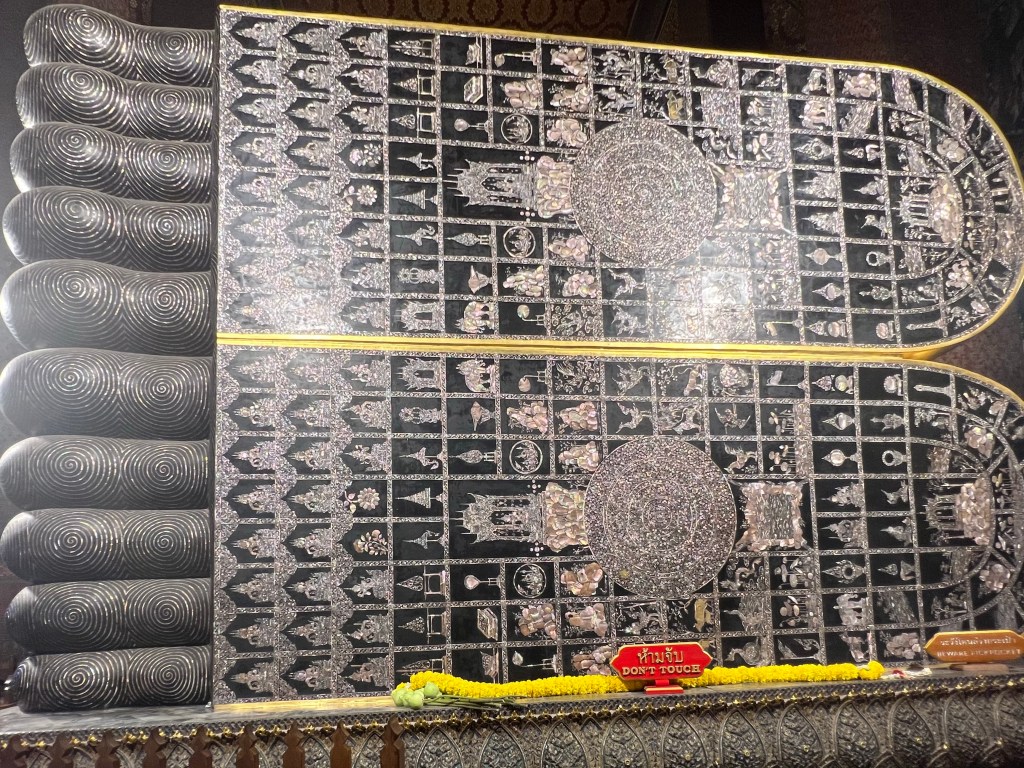
We ended the tour with a visit to the reclining Buddha. It is enormous. Built by Rama III in 1832, it represent Buddha’s entry to Nirvana at the end of his reincarnations. The figure has a brick core, shaped with plaster and then gilded. The soles of his feet are 3m high and each inlaid with 108 mother of pearl panels, displaying auspicious Buddhist symbols: dancers, tigers, elephants, flowers etc. At 46m long and 15m high, this is one of the largest Buddha statues in Thailand.
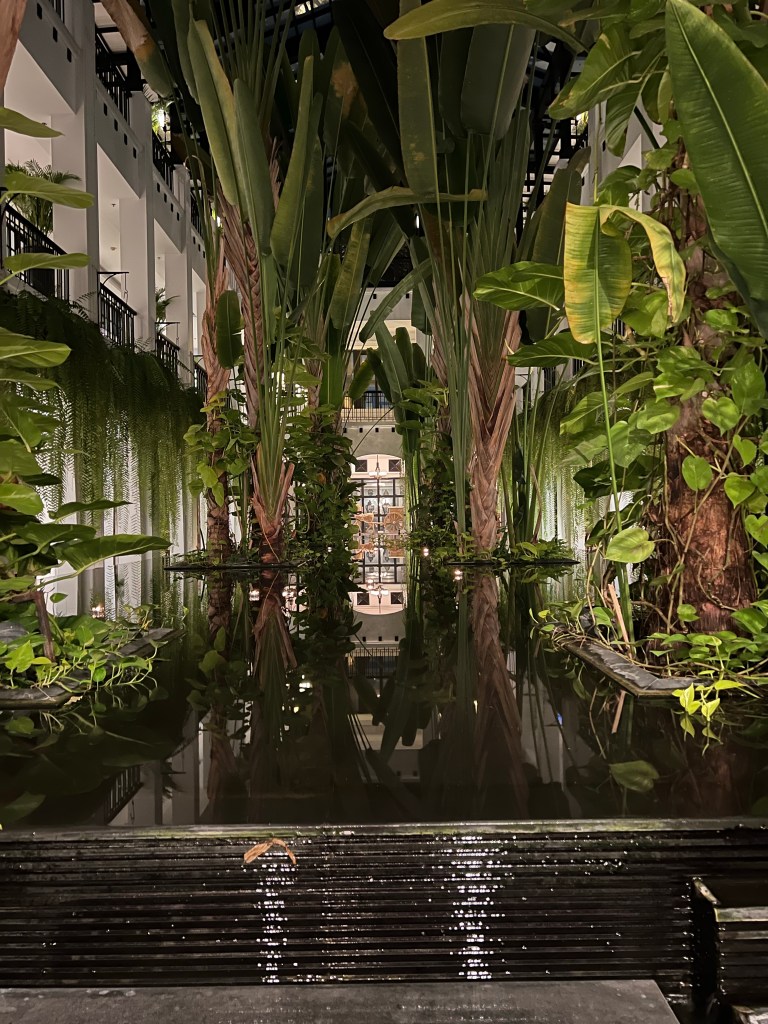
We then went to the most beautiful Siam Hotel for drinks and dinner. Having worked in the hotel trade in her early days, Tippy has amazing connections and seems to know most of the General Managers, so we were very well looked after and needless to say had the most delicious dinner. It is an incredibly stunning hotel.
 EC-Rider Travels
Leave a comment