
I was collected by Morgan this morning, a charming Indian of Portuguese descent. Our first stop was to see an extraordinary lunch delivery service, unique to Mumbai. The dabbawalas or Tiffin-wallahs have been delivering lunch to city workers since the late 1800s. As more migrant workers came to Bombay, from different parts of the country, their tastes and lunchtime requirements varied and really only home-cooked meals would do. So, in 1890, Mahadeo Havaji Bachche started a lunch delivery service, which is still thriving today.
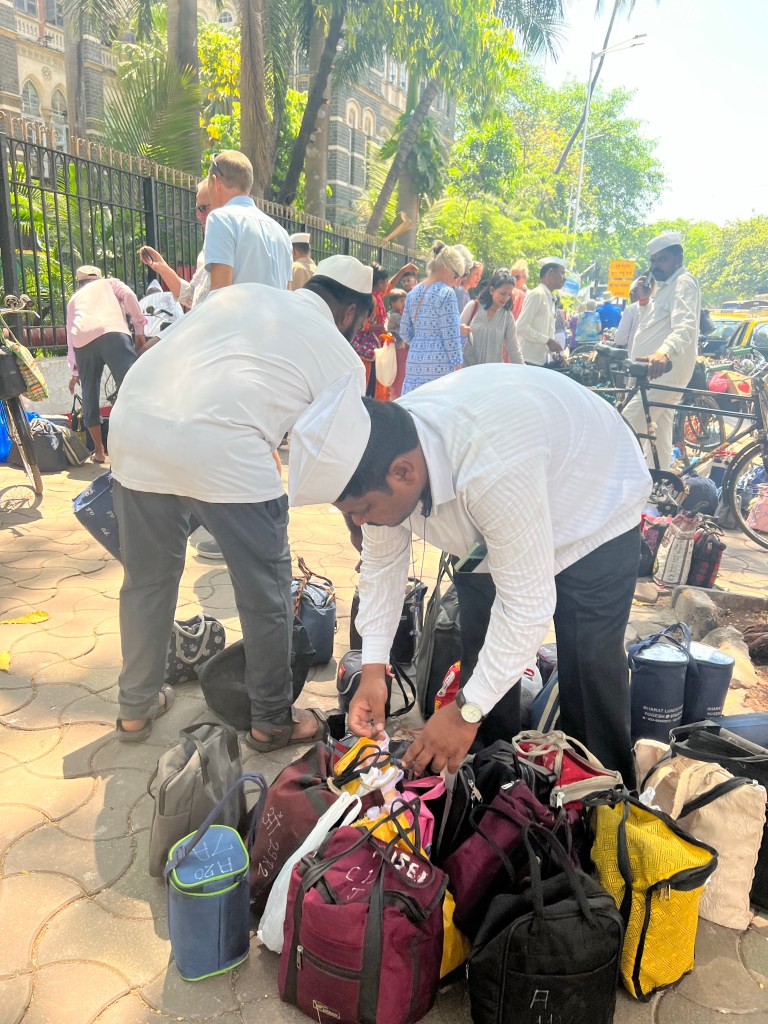
Starting with just 100 men, there are now over 5000 dabbawalas and at it’s peak there would have been many more. Originally from Pune, dabbawalas are largely from the Warkari sect and usually related to one another. Most have a low literacy level and yet can follow a complex, colour-coded system of English letters and numbers which would mean nothing to them in any other context. It is the most extraordinary example of teamwork and an organisational system which apparently rarely fails.
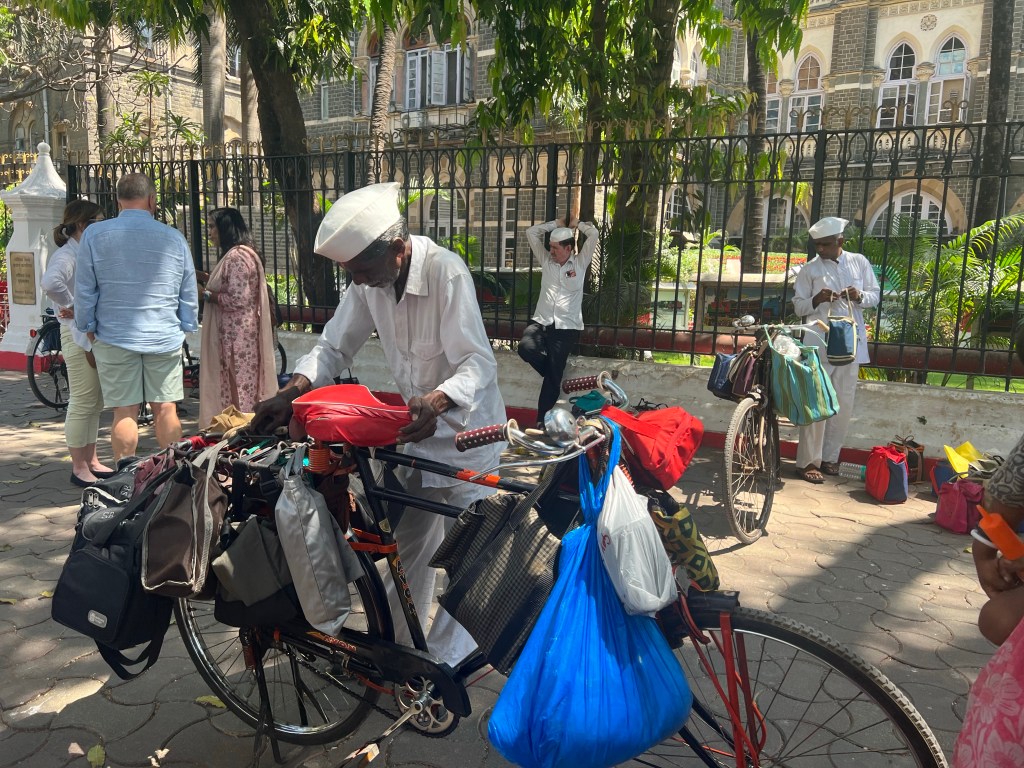
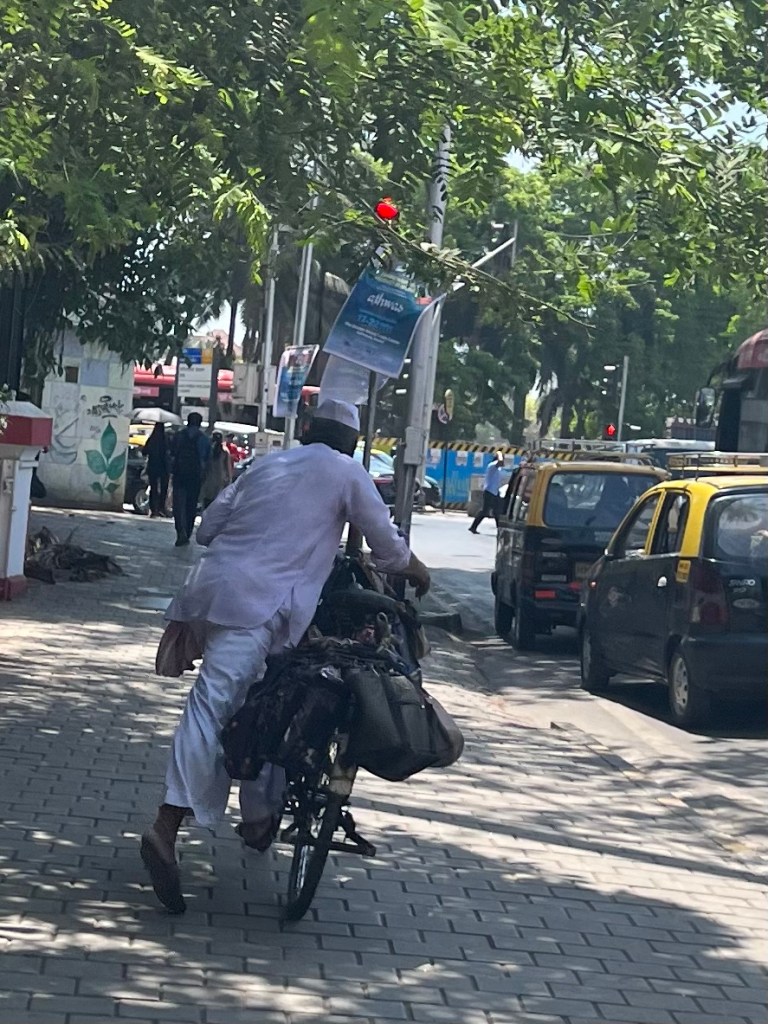
With long (2-3hour) commutes into work, workers leave early, before their wife has time to make their lunch, so later that morning a dabbawala will collect a lunchbox from a worker’s home. This will then travel by train, where it is sorted into areas and then bicycled, often changing hands several times before being delivered to various collecting points near the business areas. Here they are sorted for the last time and about 20-30 are loaded up on to the back/handlebars of a bicycle and somehow delivered to the right person, in the right office, at the right time. About 200,000 lunches are delivered in this way, every day. Later in the day, the dabbawala returns to the office to collect the bag/box and the system is reversed, so the boxes can be returned to the wife to wash-up ready for the next day. Amazing!
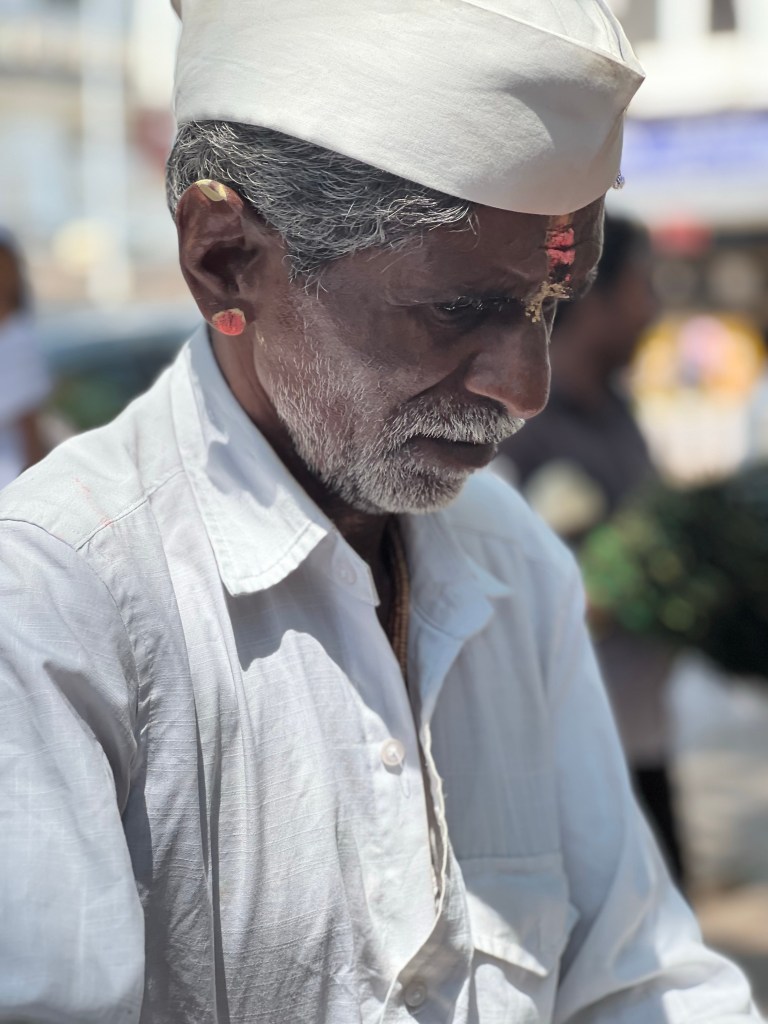
With more women now working, groups of non-working women have set up small businesses producing cooked meals from their homes and delivering them in the same way. It was quite something to see and truly impressive. Morgan told me that he went to a business conference in the Taj Hotel full of CEOs and business leaders from all over the world and their speaker was a dabbawala. I am sure there is much we could all learn from these guys.
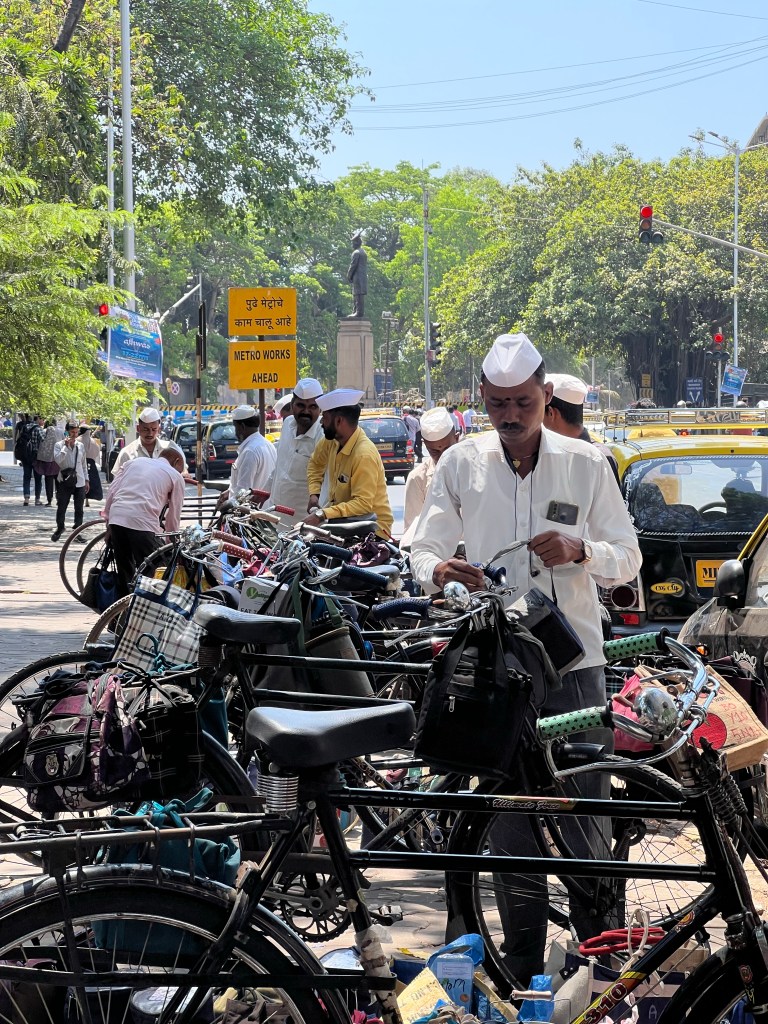
Dabbawalas have to provide their own bicycles and wear a uniform of white cotton kurta-pyjamas and a white Gandhi-type hat. Earnings for each unit are divided and paid out every month and fines are imposed if they are caught drinking, smoking, absenteeism or out of uniform.
We bumped into Yamini at the tiffin-station, who was guiding the lovely German mother and daughter we met at Malabar Purity. Quite a coincidence! Talking of which, Morgan mentioned, as we passed the Wellington Fountain, that he had once guided the Duke – I sent Antonia a picture – it was not immediately recognised! Morgan’s surname is also Rodrigues – too spooky!
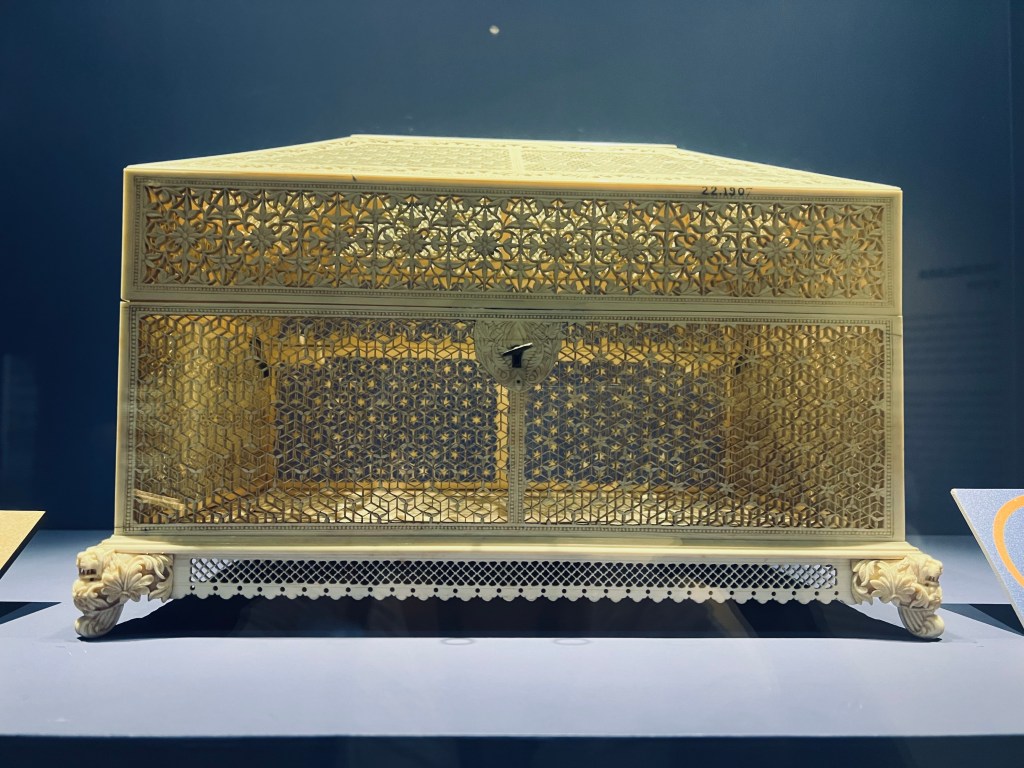
I spent the next hour or so at the Prince of Wales Museum which is small and compact and rather charming. Everything is surprisingly well displayed, if a little chaotic as needless to say building works are going on. The building, despite being designed by Englishman, George Willet, has quite an Islamic feel with a huge central dome creating a lovely bright hall.
We then went to a contemporary art gallery nearby which offers artists a platform to exhibit their work, usually for a week or two at at time. There was some interesting pieces, a lot quite sexual, which Indian seem much more open about, but I was not sure would look right in 29 Smith Terrace!
Next, was an attempt to continue the search for my pretty, Indian block-printed cotton dress like we all buy, and pay a fortune for, in the UK. Well let me tell you, you don’t buy them in India! They must be made specially for the export market. Disappointing!
We then drove to Malabar Hill to see the city from afar. On the way Morgan explained the reason so many of the buildings are in such a poor state, is due to the Rent Control Act introduced in 1948, preventing any increase in rent. So tenants of these buildings are still paying the same rent as in 1948 and landlords cannot afford to maintain their buildings. There are apparently 22,000 buildings across Mumbai, falling under this act.
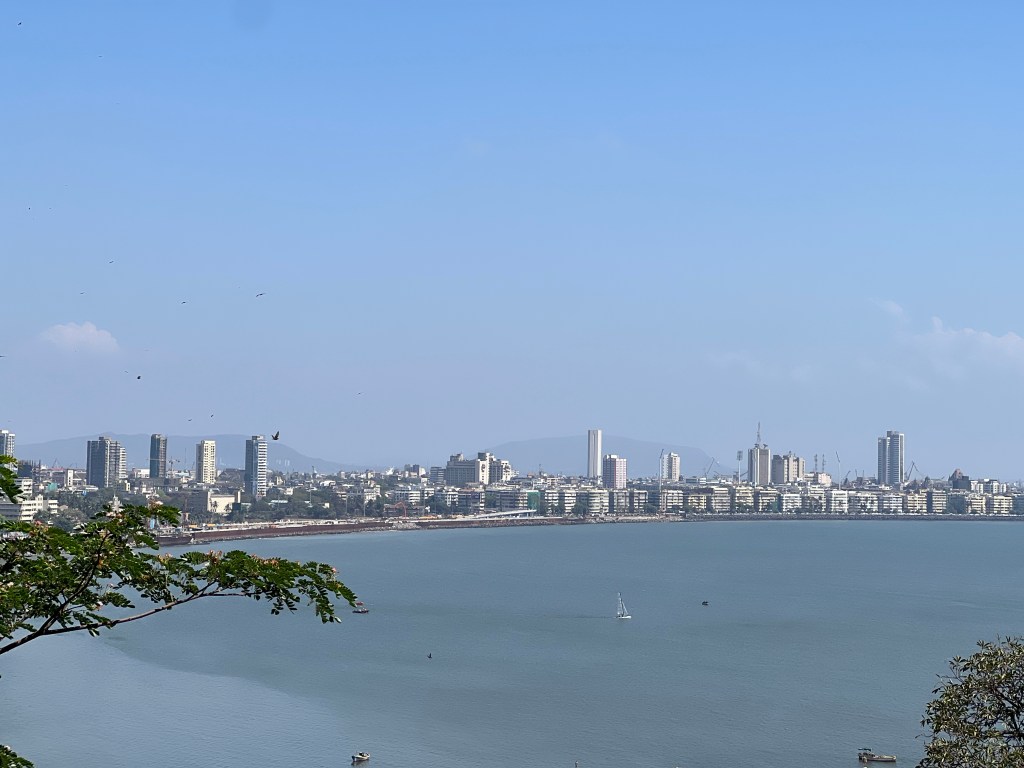
We reached what is known as the Hanging Gardens to look across Back Bay and the Arabian Sea, to the historical part of the city, where I had been staying and the central business area. Malabar Hill is an exclusive and expensive residential areas and home to business tycoons and film personalities.
Somewhat surprisingly, in the centre of this hill, in this highly desirable residential area, is The Tower of Silence. This is used by the city’s Parsi community (Persian descent) who continue with their 3,000-year-old tradition, of disposing of the their dead by leaving them in the tower and exposing it to scavenger birds. Traditionally this was vultures, however in the last ten years, vultures have become almost extinct due to urbanisation and a bovine drug which was toxic to them. Mumbai is now full of kites and crows which apparently help out, but more recently powerful solar concentrators have been used which desiccate the corpse, not in the half-hour of a flock of vultures, but still avoiding pollution of the body’s sacred elements fire, water and earth.
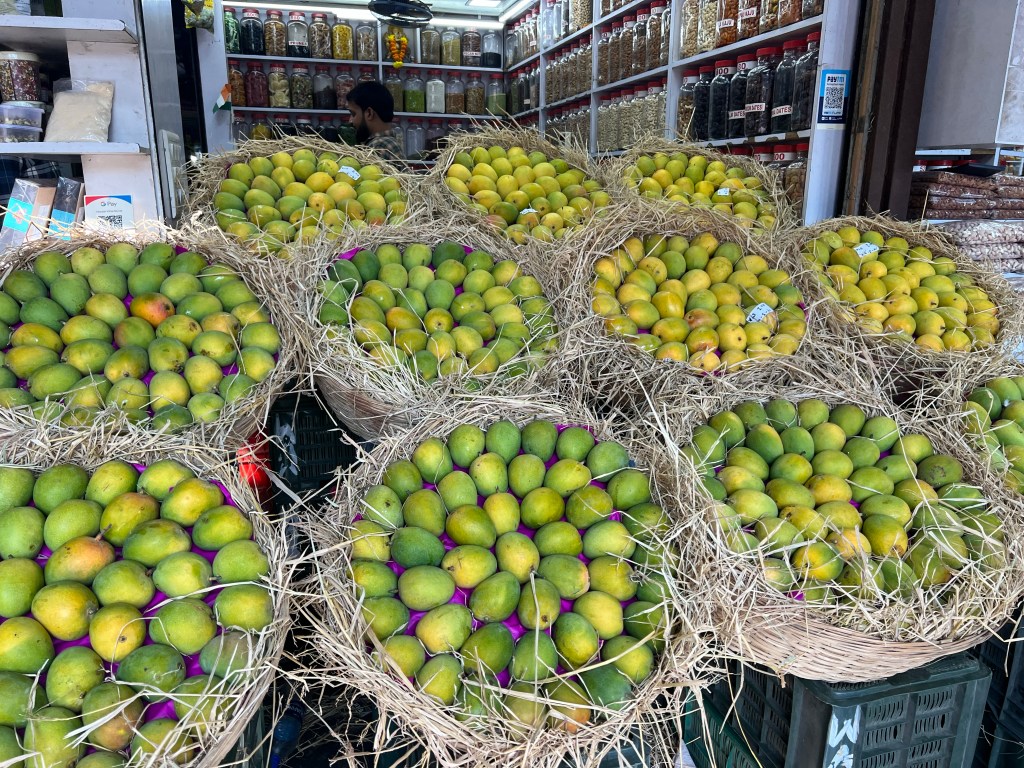
My last stop of the day was Crawford market. A huge wholesale market selling everything you can possibly imagine. Endless stalls all selling the same fruit, vegetables, beauty products, kitchenware and endless poor little caged birds, kittens, puppies and chickens. It was heaving. The first of the mangos have just come in, the most expensive Alphonsos, which cost a 100 rupees (£1 – you can get a dress for that) which are ripened in hay to speed up the process. Nearby was a fabric market, acres of stalls selling sparkly dress fabrics. Eliza would have loved it.
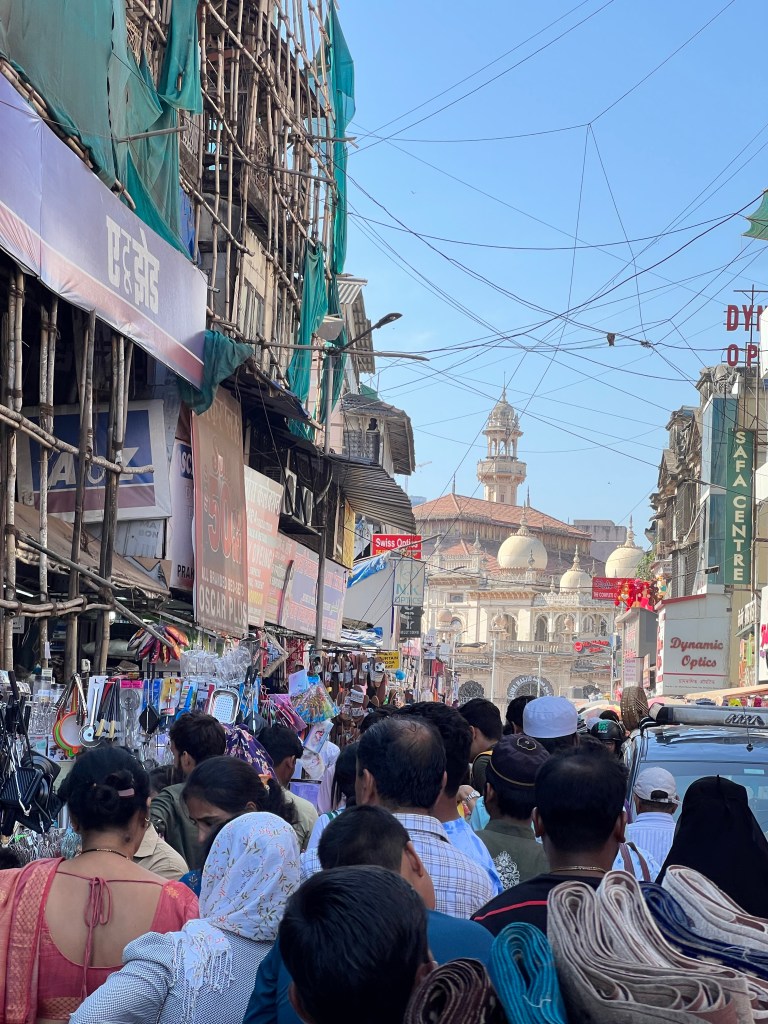
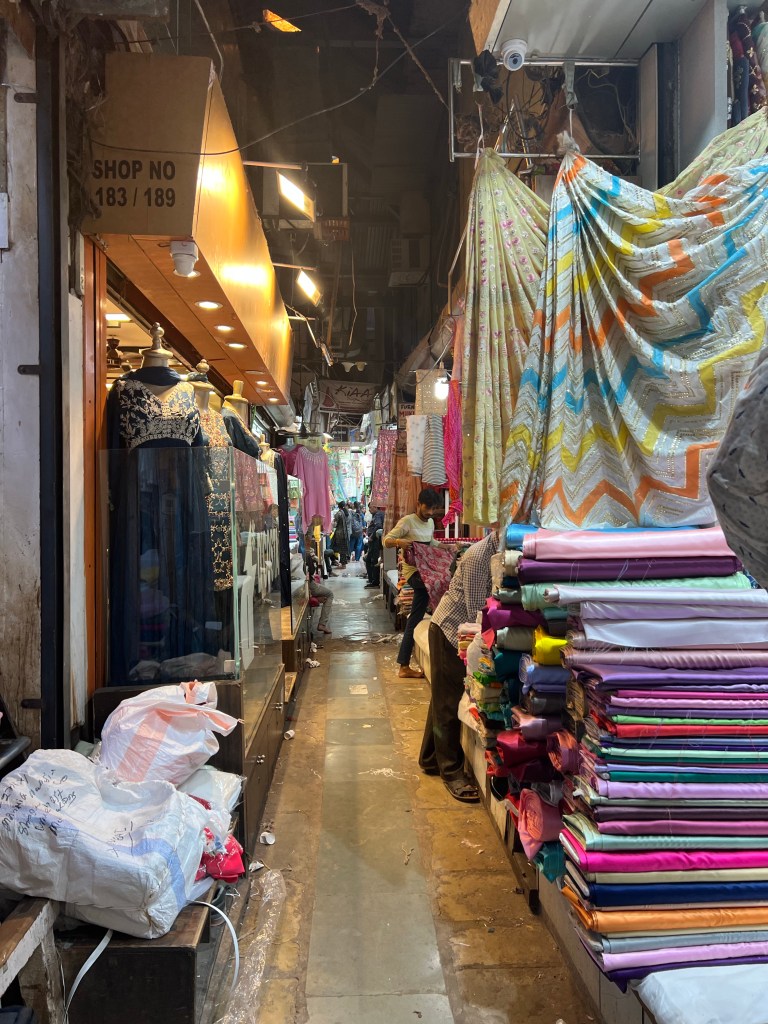
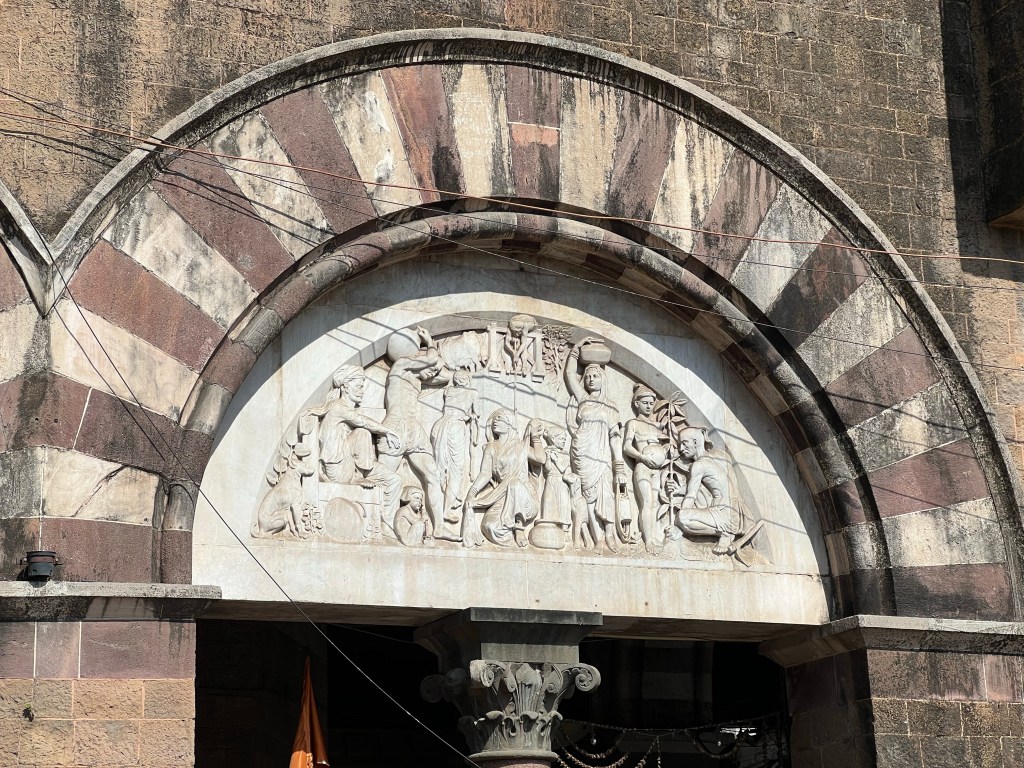
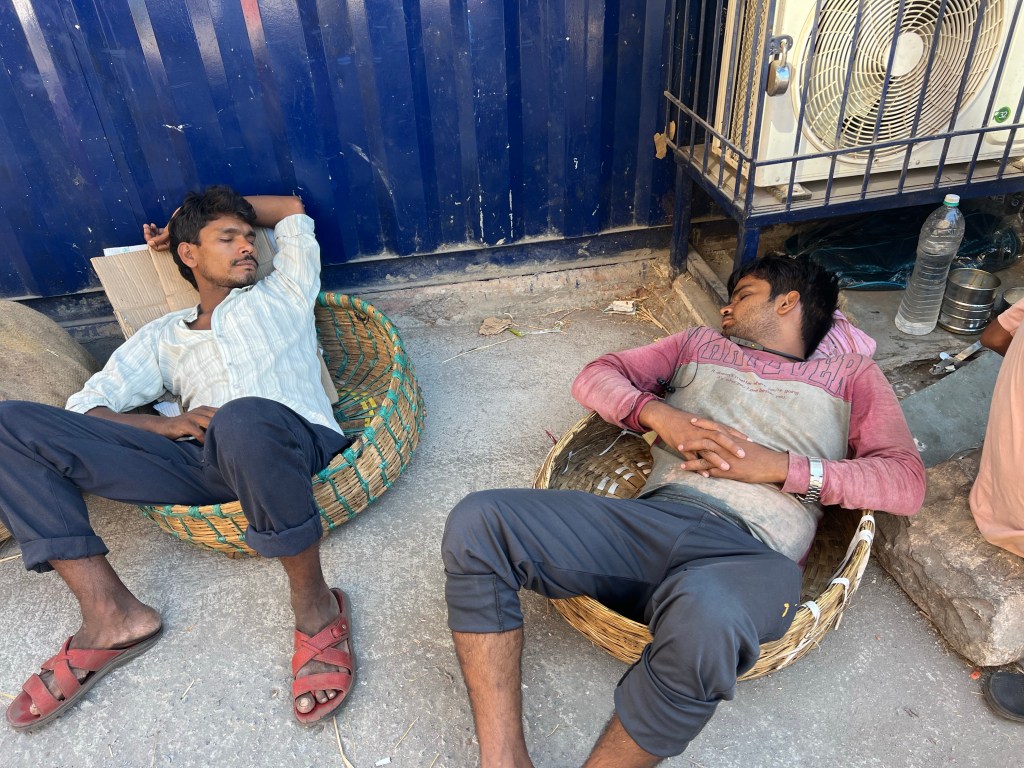
At one of the entrances, Morgan pointed out a carving above a doorway which was done by Lockwood Kipling, Rudyard’s father and Dean of the JJ School of Art nearby. There were people everywhere – quite a lot of them asleep.
Finally I was driven an hour and a half out of town, (only 20km) to stay at the Subha International hotel near the airport, as I have an early flight tomorrow. A good decision, I think, as although Morgan commented how lucky we were, there was no traffic, it was horrific; it makes London look like New Zealand! I had my last, surprisingly delicious, Indian meal and a rather more peaceful, if somewhat short night.
 EC-Rider Travels
Leave a comment