
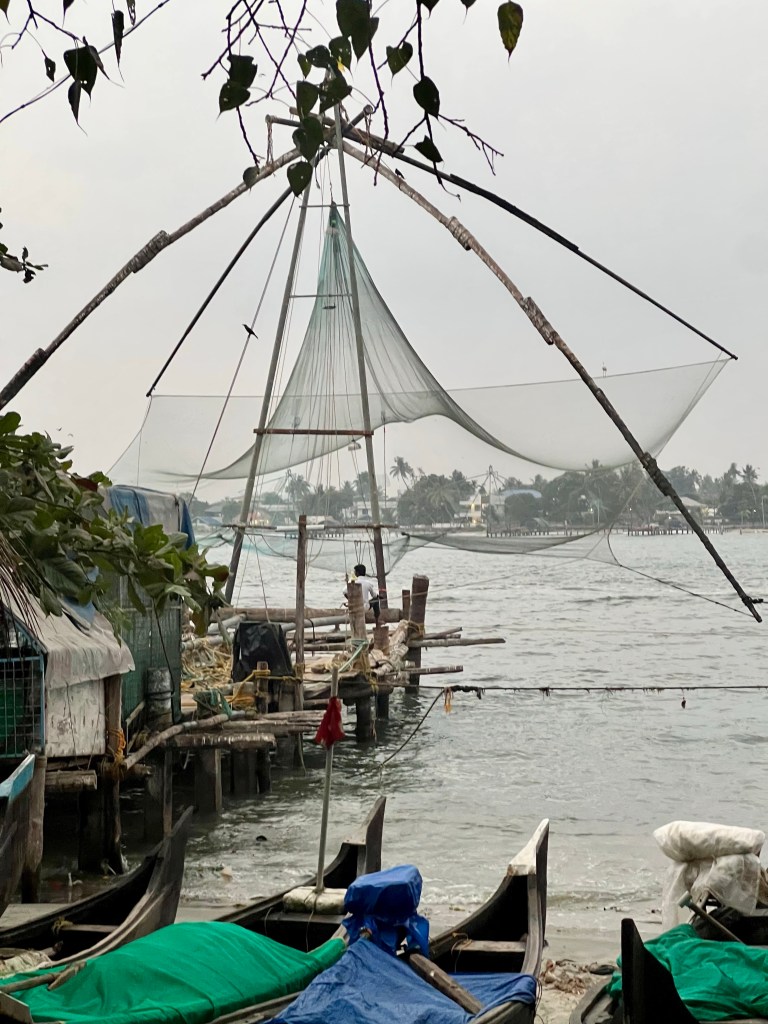
This morning I awoke to the happy sound of cricket being played on the parade ground on the other side of the road. After breakfast (fruit and yoghurt is not the Indian’s speciality!) we met our very charming guide, Clyde (bit of a surprise) who took us on a fascinating tour of this small city steeped in colonial history. Kochi (formerly Cochin), is the financial and commercial capital of Kerala and has a population of about 3.2m. It boarders the Arabian Sea and has a flourishing port, though recent deep dredging, to enable ever larger ships to enter, has meant loss of their beach, local life and particularly the fishermen. Those who wade out are now seriously limited by how far they can go with their nets and the famous giant cantilevered Chinese fishing nets are rarely lowered. They remain as a tourist attractions and are pretty magnificent. Thought to date back to 14th century, they are made of teak wood and bamboo poles, and work on the principle of balance and counterbalance. When operating each net requires at least four men to lower it into the water for a short time and then raising it by pulling on the ropes. It is sadly a dying trade as it is so labour intensive and the fish stock has declined with the dredging. There was much fish (and flies!) for sale along the front, but apparently little of this as caught locally and not from the Chinese nets. After the first monsoon there is a 45 day fishing ban to try and replenish the declining stock levels.
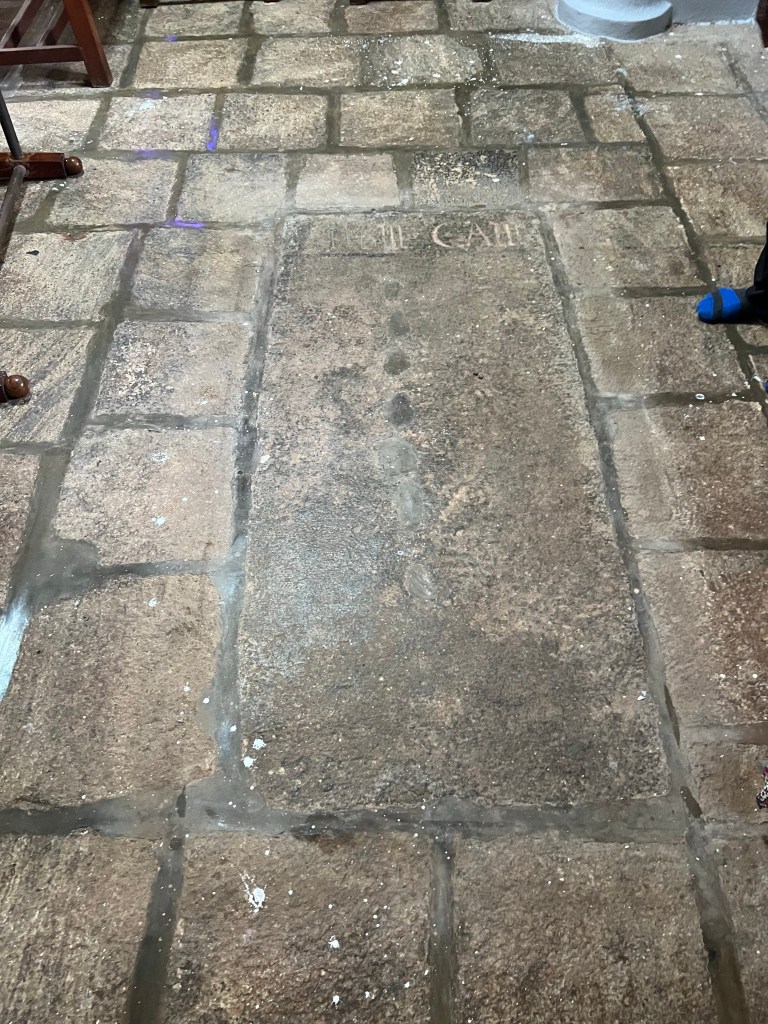
We first visited St Francis Church just a short walk from the hotel. Dating back to 1503, this is thought to be the oldest church built by the Europeans in India. Originally Portuguese, then Dutch and finally British who decided to move all the Portuguese tomb stones to one side and the Dutch to the other and install tiles from Stoke on Trent down the centre. There were giant fans down the two side aisles with holes in the wall for ropes so the punkawallahs could operate the fans from outside. After 1949 it became the Church of South India (CSI). Currently 18% of people living in Kerala are Christian.
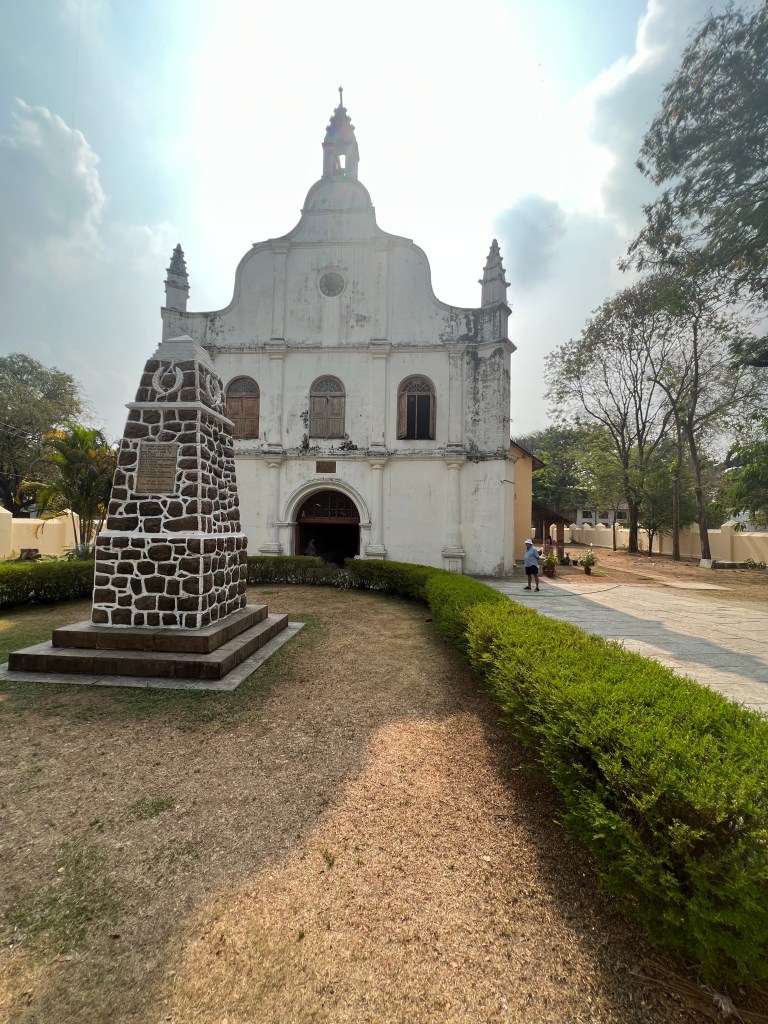
Vasco da Gama was originally buried in this church when he died in Kochi in 1524, before his body was returned to Portugal fourteen years later. It had a beautiful teak ceiling shaped like a ships hull made by the ship-builders who had come over on the ships to maintain them. The G20 summit is taking place in Kochi in a couple of weeks time so there was much ‘spittin’ and polishin’ going on.
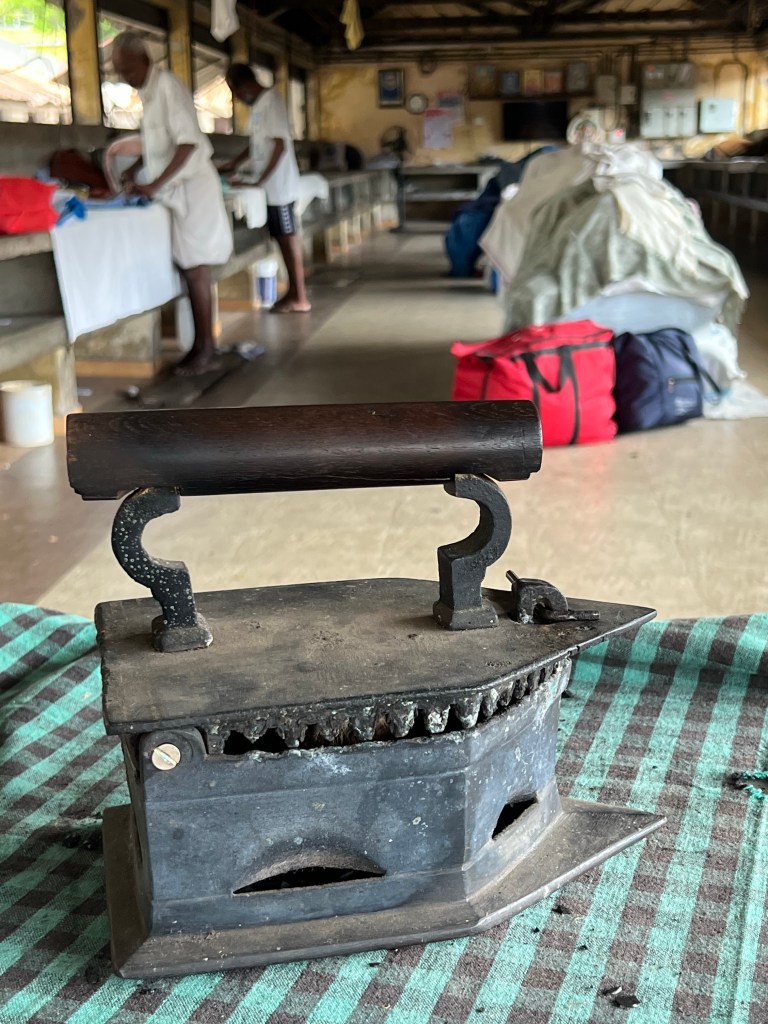
Clyde then took us to Dhobi Khana – the last remaining public laundry which has been operated by Tamils for generations. Originally from the Vannan community, they were bought to Fort Kochi, from Tamil Nadu and Malabar, by the Dutch in 1720 to wash the army uniforms. They were allotted 13 acres of land and set up their work around 80 sand bored ponds. When the British arrived they continued to use the Tamil Dhobi-Wallahs right up until they left in 1947. In 1976, as areas of the river became increasingly developed, and much of the Dhobi-wallahs’ land was turned into a children’s playground, they were given Dhobi Khana as compensation. Here they have forty cubicles, one for each family with a pool of water and a large stone. Descendants of the first families continue today, standing knee deep in water using traditional methods of soaking the clothes in bleach and detergent and then beating them on a laundry stone.
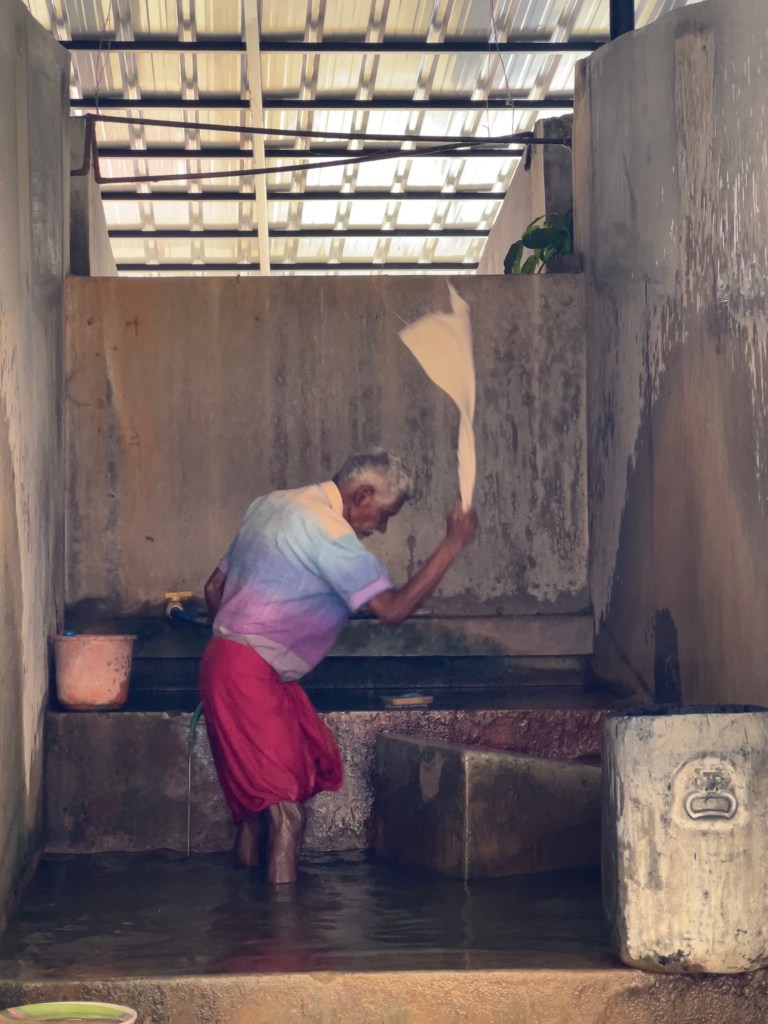
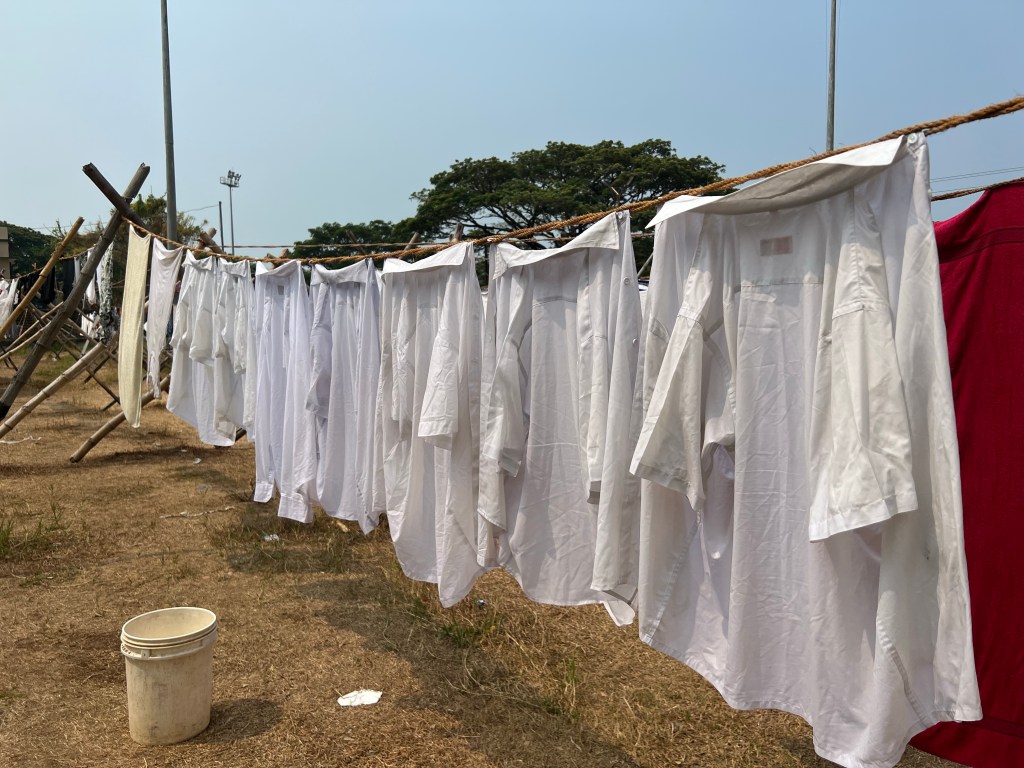
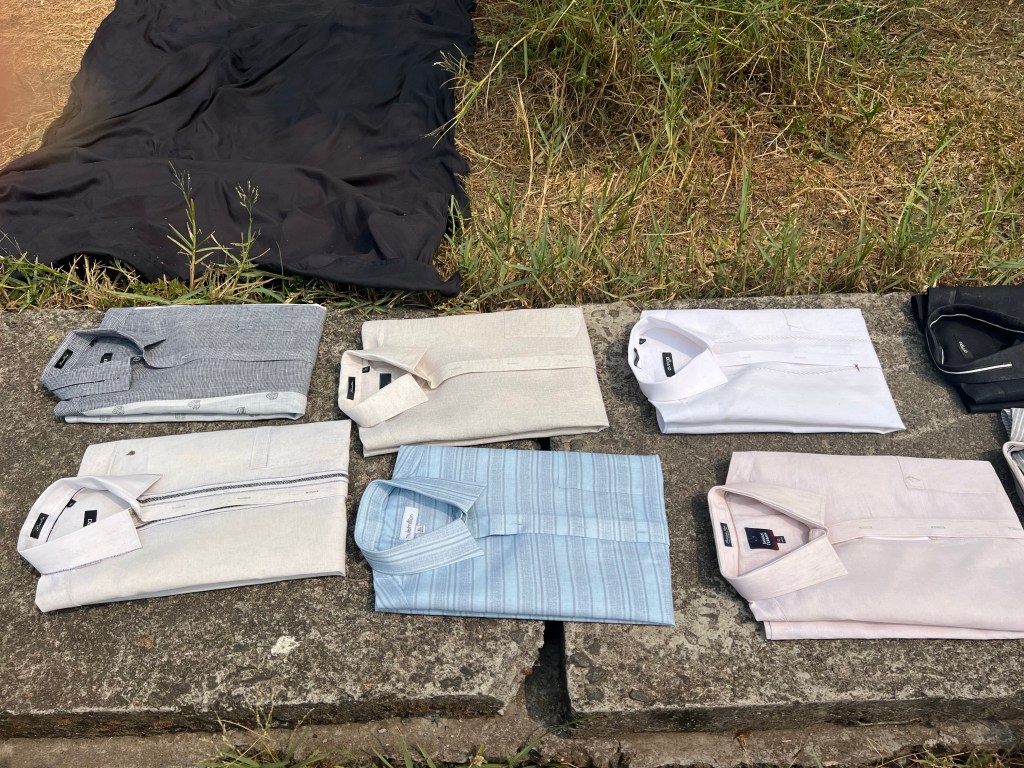
Rice water is used for starching before clothes are hung out on rows and rows of washing lines made of twisted coir rope. No pegs, clothes are simply squeezed between the twists of the rope. The families take in thousands of garments/linen every day from homes, hospitals, hotels and restaurants who still prefer to have their laundry hand washed, and I could see why. The result was immaculate, whiter than white and perfectly ironed. Some using huge triangular shaped flat electric irons, others using coconut fuelled irons (I could barely lift them). Most mind blowing of all is somehow the rows of identical white shirts, dhotis and sheets are returned to the right household/hotel at the end of the day. No name tapes here. Oh, I forgot to mention, it is all men!
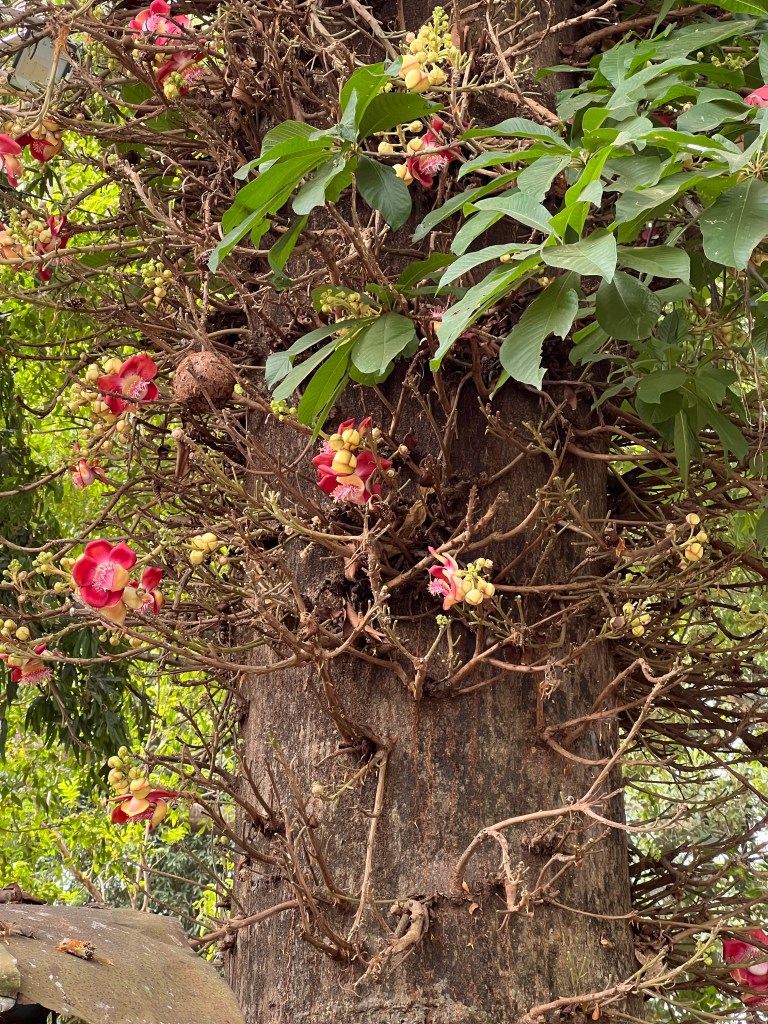
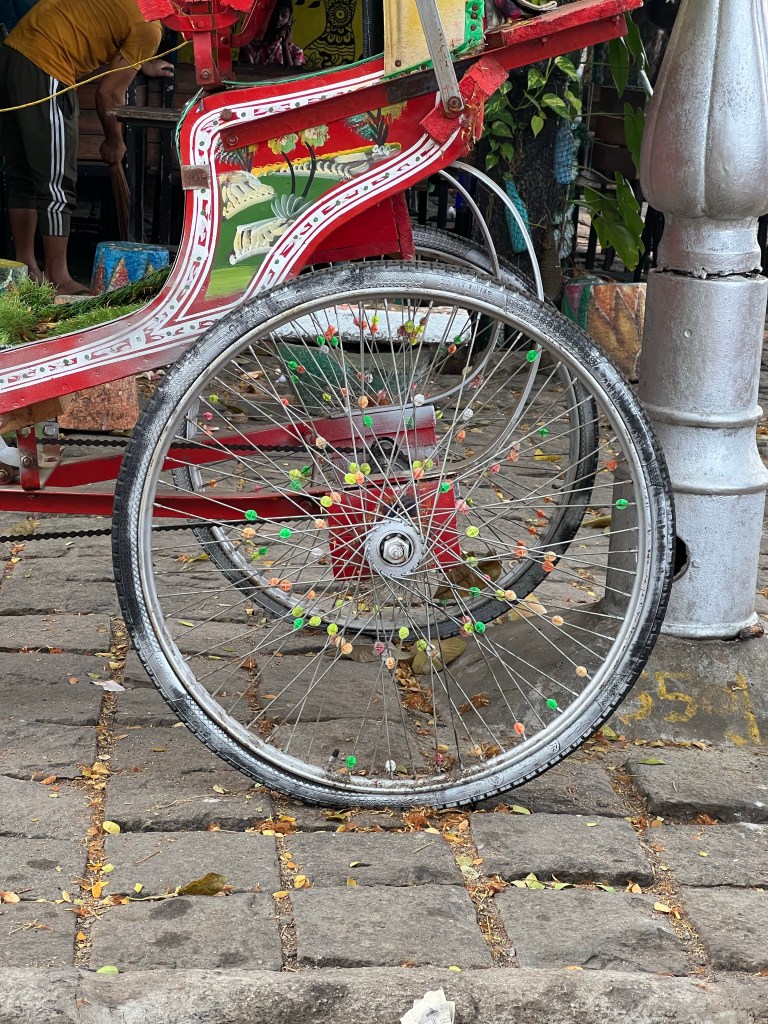
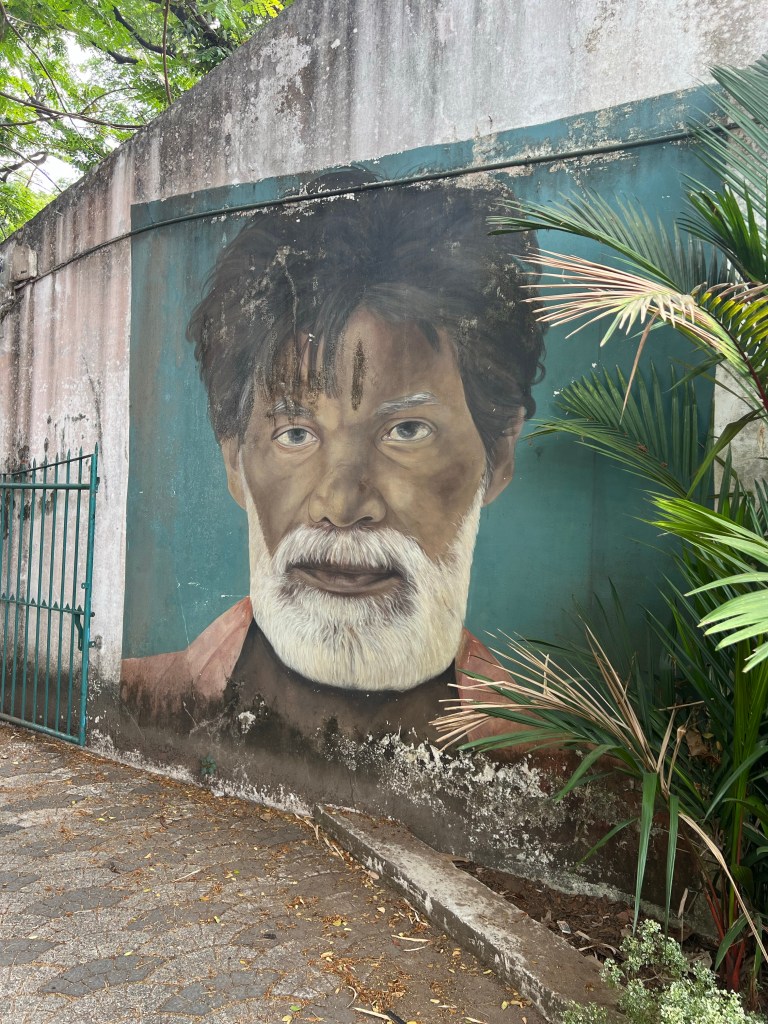
We walked through the park towards the Jewish quarter. They have the most stunning trees here, beautiful pink blossomed cannonball trees and huge old, old rain trees. Some of the old bicycle rickshaws remain but I have not seen any in action, they seem to have been superseded by the tuktuks. There is also wonderful street art on many of the walls apparently all coming out for the Biennale!
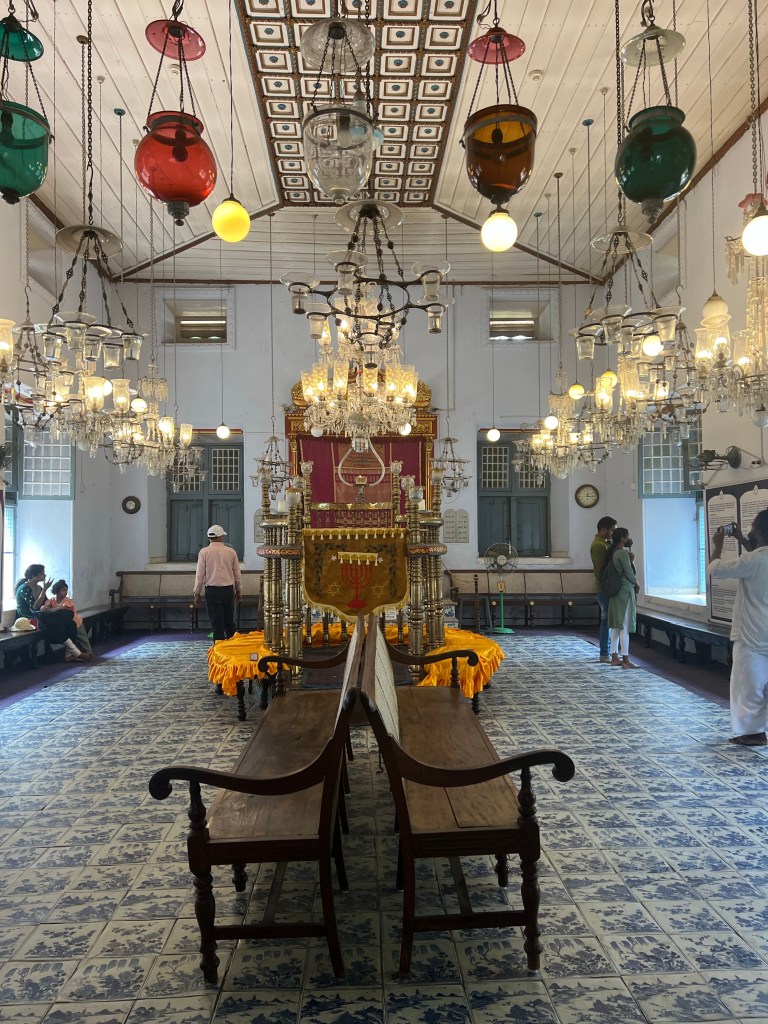
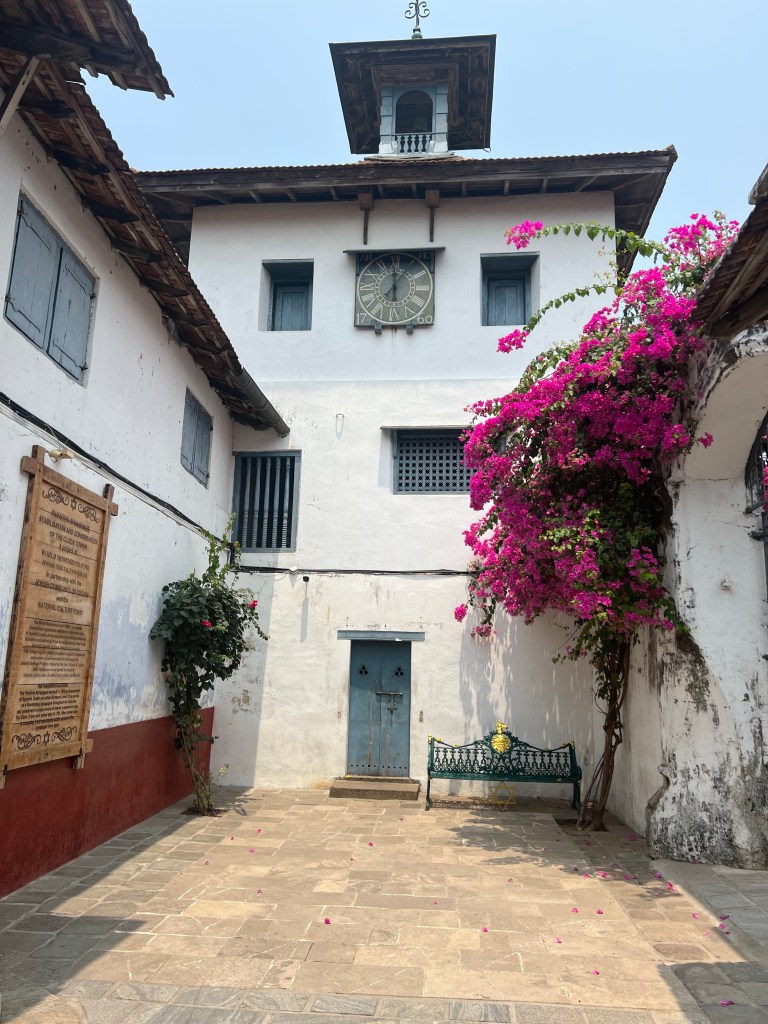
Jew Town, was once the heart of a thriving Cochin Jewish community, however all but a few Jews left Kochi after independence to return to the homeland when the new State of Israel was established in 1948. There are now just two families who remain and worship at the synagogue, but services are still occasionally held there by visiting Rabbis. The Pardesi Synagogue is the oldest in the Commonwealth, built by Sephardic Jews in 1568 for the flourishing Jewish community who were coming to Kochi to escape European persecution. It shares a wall with the Mattancherry Hindu temple next door and you can see the Star of David and Indian swastika (right-facing, symbolising the sun), sitting comfortably side by side. The floor was covered by the most amazing Chinese blue and white hand-painted tiles and the glass in the Perpetual Lamp came from Murano in Italy.
A key player in the Jewish community was a wonderful lady called ‘Sarah Cohen’ who when she died in 2019, was a the oldest member of the Kochi Jewish community. She dedicated her life to keeping Jewish traditions alive making hand stitched Kippahs and the most beautiful embroidered linen. King Charles and Camilla visited her in 2013. The couple running her shop, who had looked after her in her old age, thought it very funny that I was almost called Sarah Cohen!
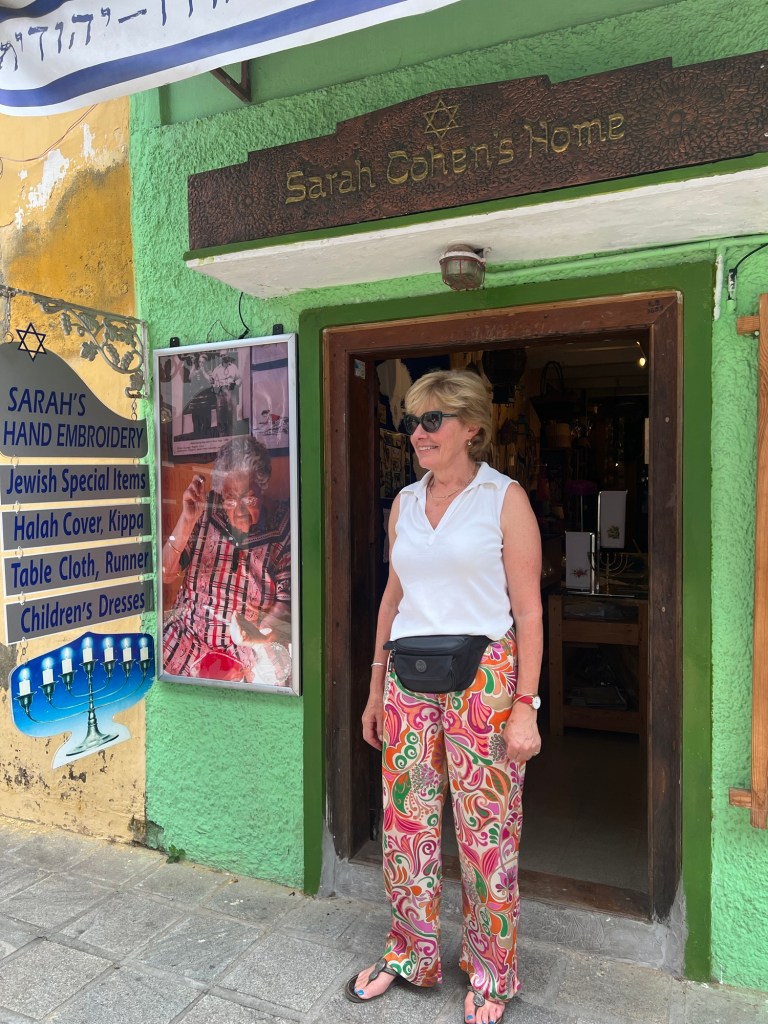
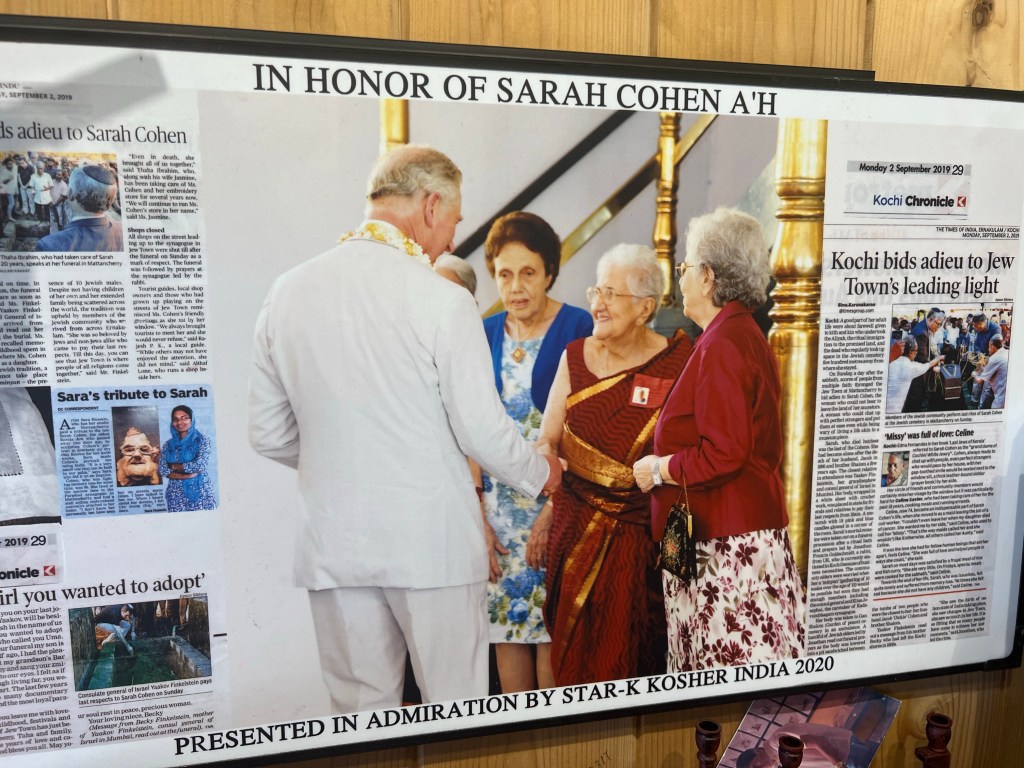
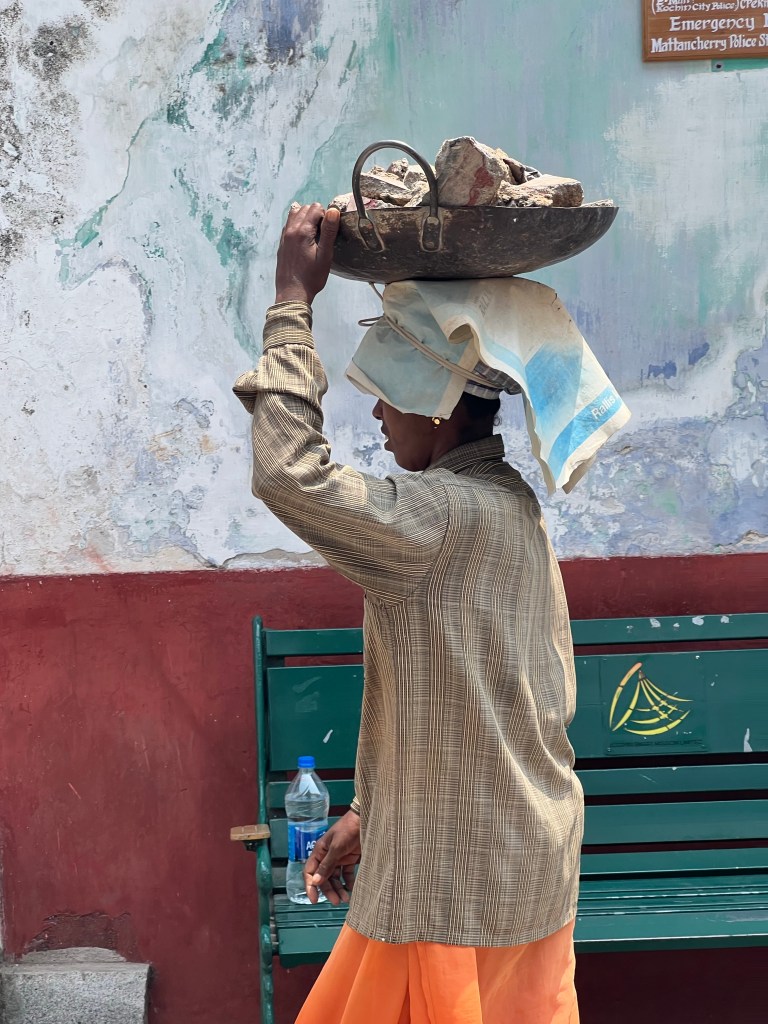
Most of the former Jewish homes have been turned into craft and souvenir shops, but the area is still very pretty and colourful. There are lots of people in ‘construction’, carrying building materials on their heads, working on building sites, but very little finished!
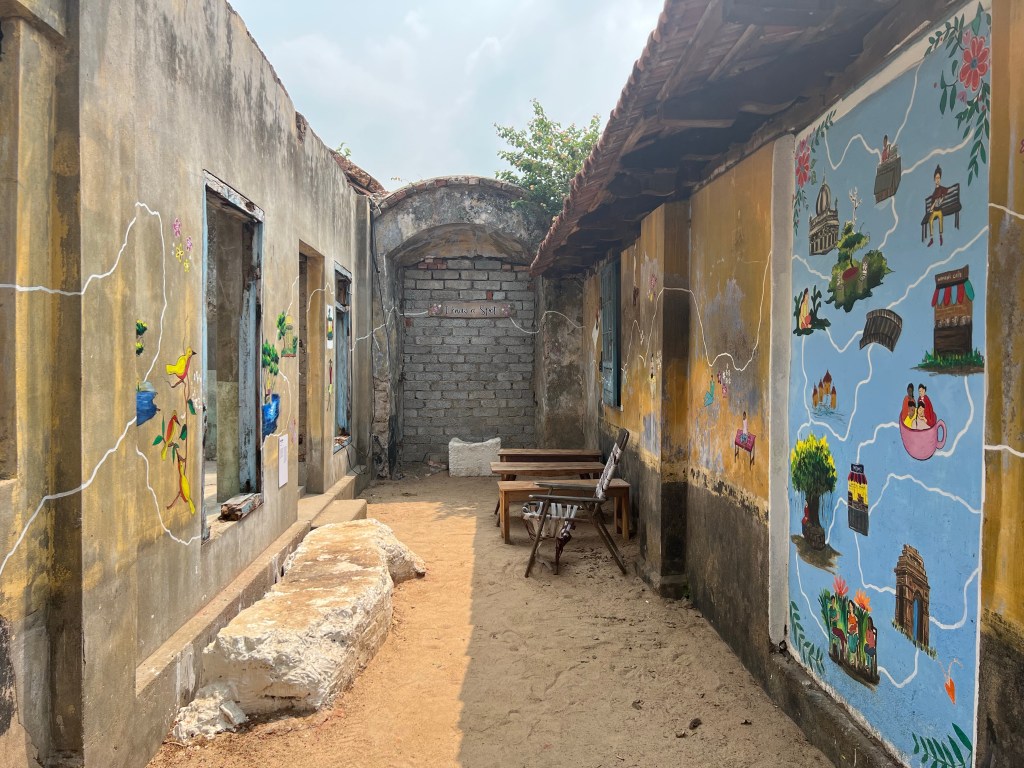
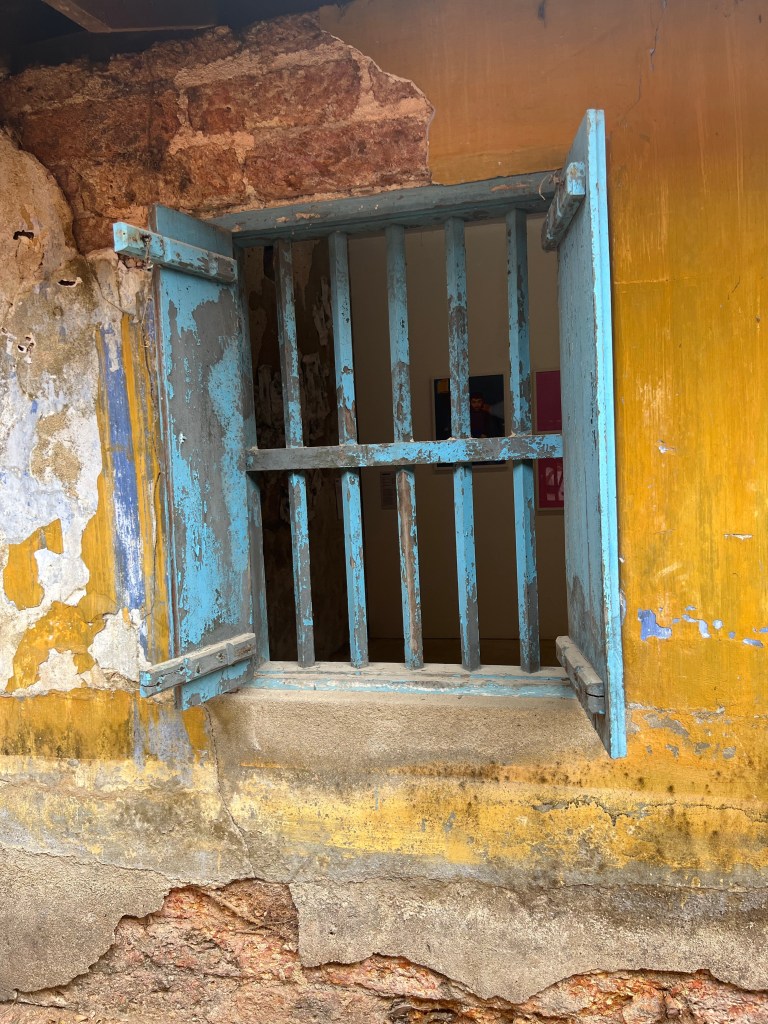
Nearby was the Mattancherry Palace which was built around 1555 by the Portuguese and presented to the King of Kochi as compensation for having plundered a temple nearby. Since then it served as a seat of the Raja’s of Kochi, in 1665 receiving a major refurbishment by the Dutch, thus it is sometimes known as the Dutch Palace..
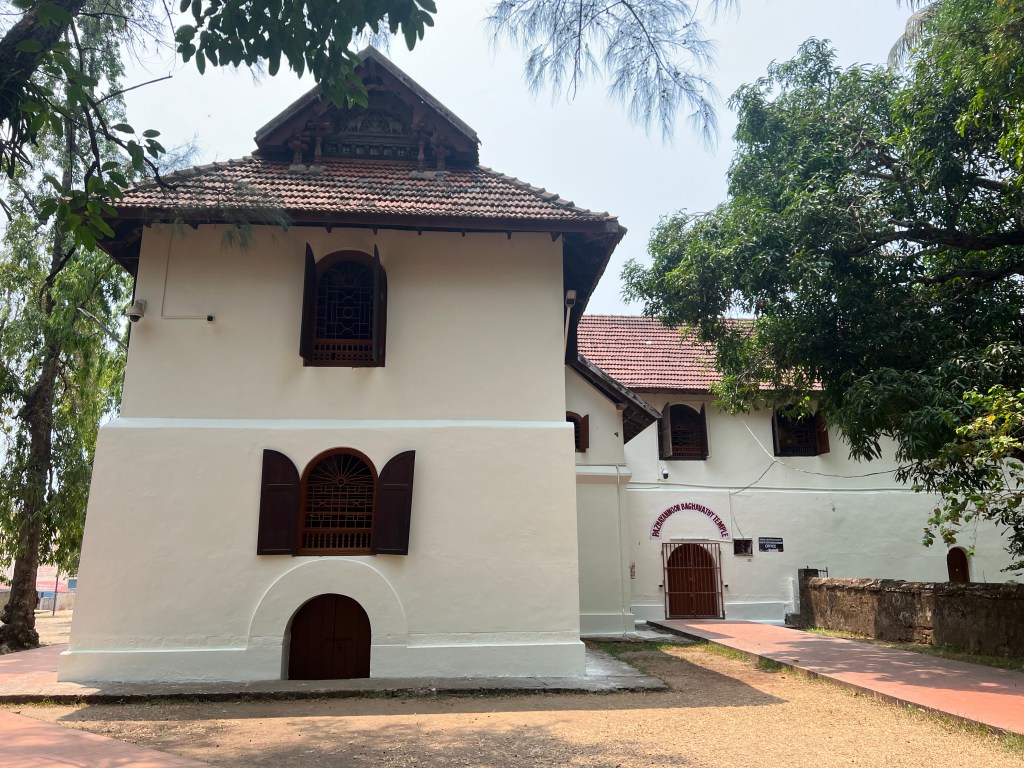
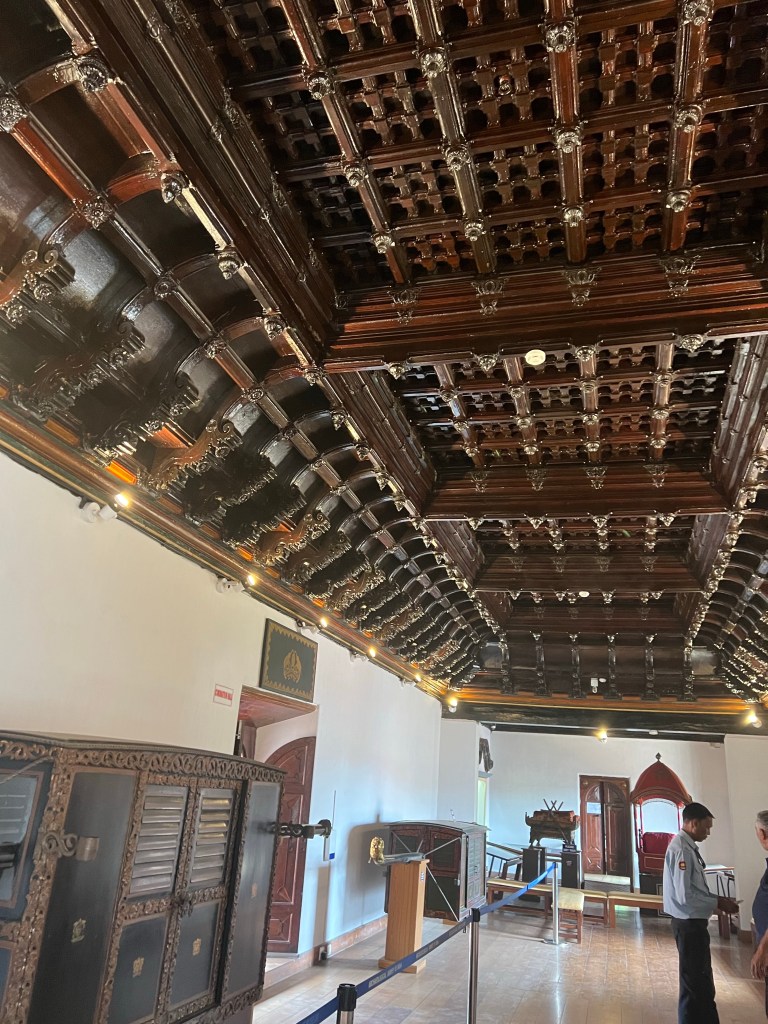
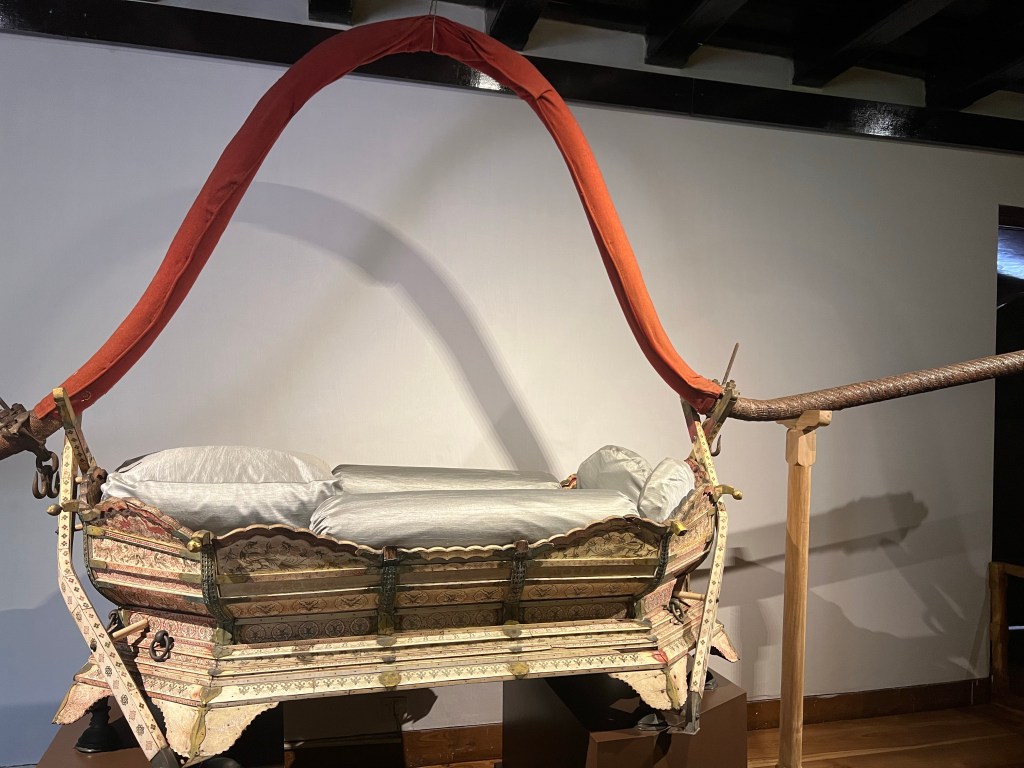
This two storied, quadrangular building consists of long spacious halls, with again stunning wooden ceilings, surrounding a central courtyard with one of its three temples dedicated to the deity of the Royal family – Pazhayannur Bhagavathi. There are two more temples dedicated to Lord Krishna and Lord Shiva. The Maharaja’s bedroom had the most exquisite frescos on the walls, there were a number of paintings of the Maharajas over the years, in Western style, seemingly bearing little resemblance to one another. Somewhat obtusely in Kerala, the line passes through the Maharaja’s sister (Matrilineal inheritance.), ie it goes to his nephew. If there is no sister one is adopted from the extended family. There were also a number of palanquin for the ladies who were not to see or be seen by ‘the untouchables’ and a beautiful open ivory one for the Maharaja.
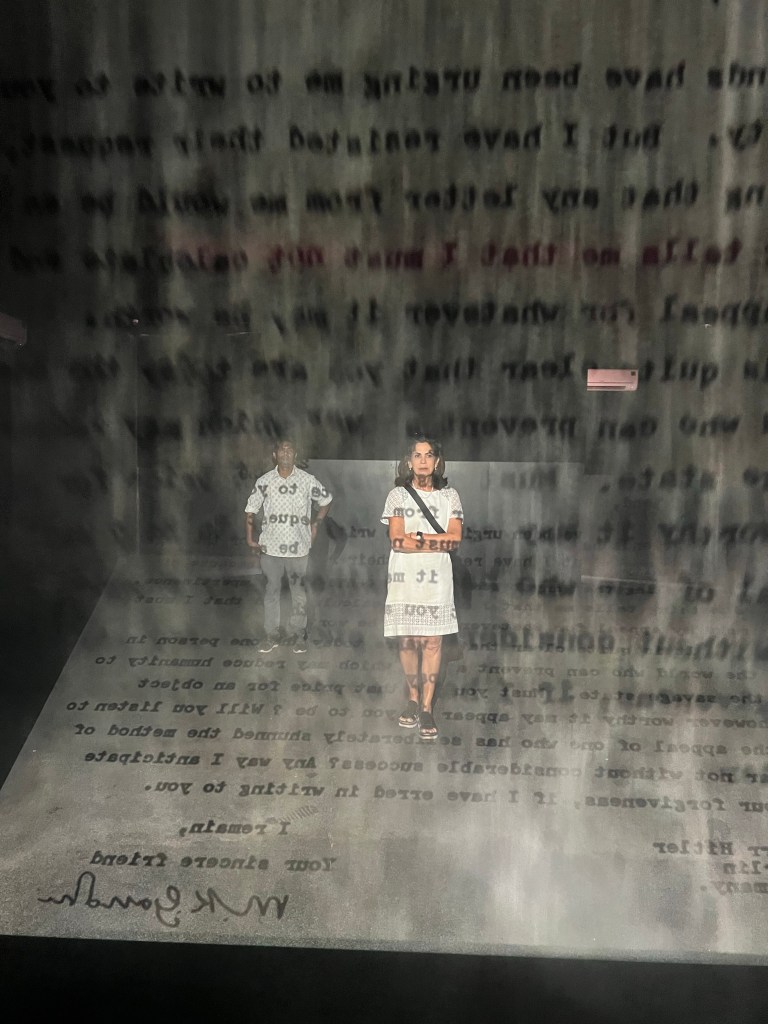
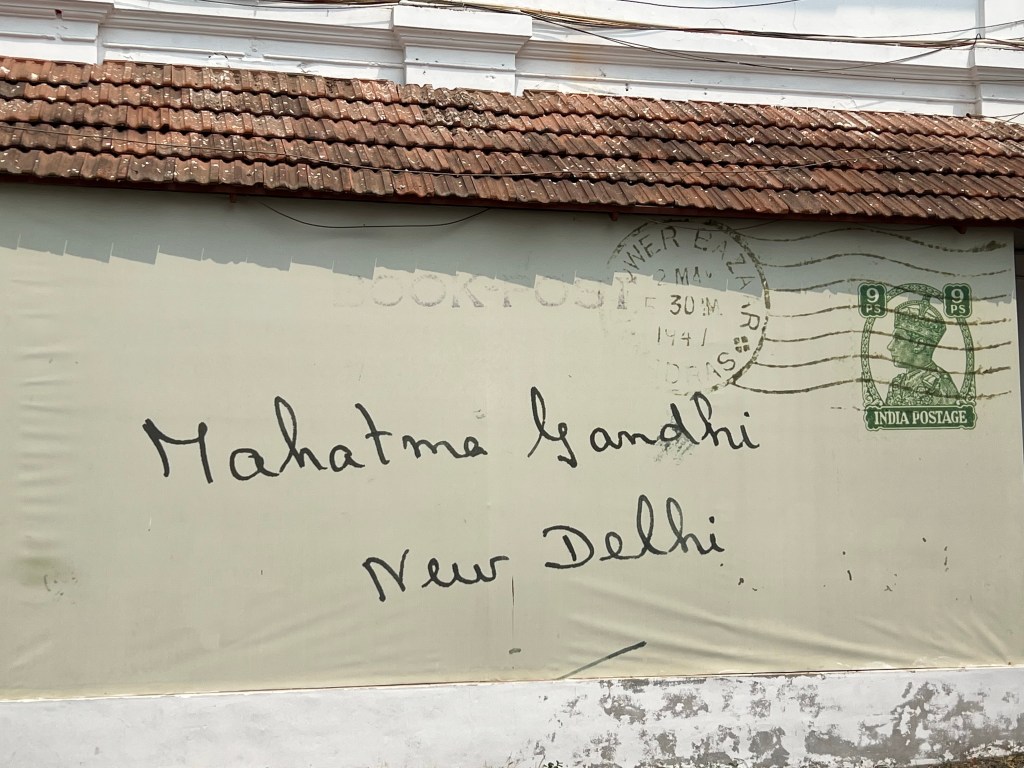
While we were in the Jewish quarter, Clyde suggested we might visit some of the satellite exhibitions of the Biennale which we are due to see tomorrow. We saw some pretty extraordinary work and installations one showing letters from Mahatma Gandhi to Hitler just before the outbreak of WWII (fear he may not have received a response) and also an exchange of letters with Mountbatten written on the back of his old envelopes addressed simply to Mahatma Gandhi, New Delhi!
In the evening Analida and I went for a nice stroll down the waterfront to see the Chinese nets in action, but again sadly not. But lots of other action, it was humming with people, mainly local we thought, with lots of guys having guy time and girls having girl time. A few courting couples, but otherwise you don’t seem to see the sexes together unless in a family. Several engaged couples having their photos taken, on the beach, ankle deep in the rubbish, which they just don’t seem to see. It is so sad and just awful for all the wildlife. We then did a little retail therapy and had a good dinner at a restaurant Clyde had recommended.
 EC-Rider Travels
Leave a comment