
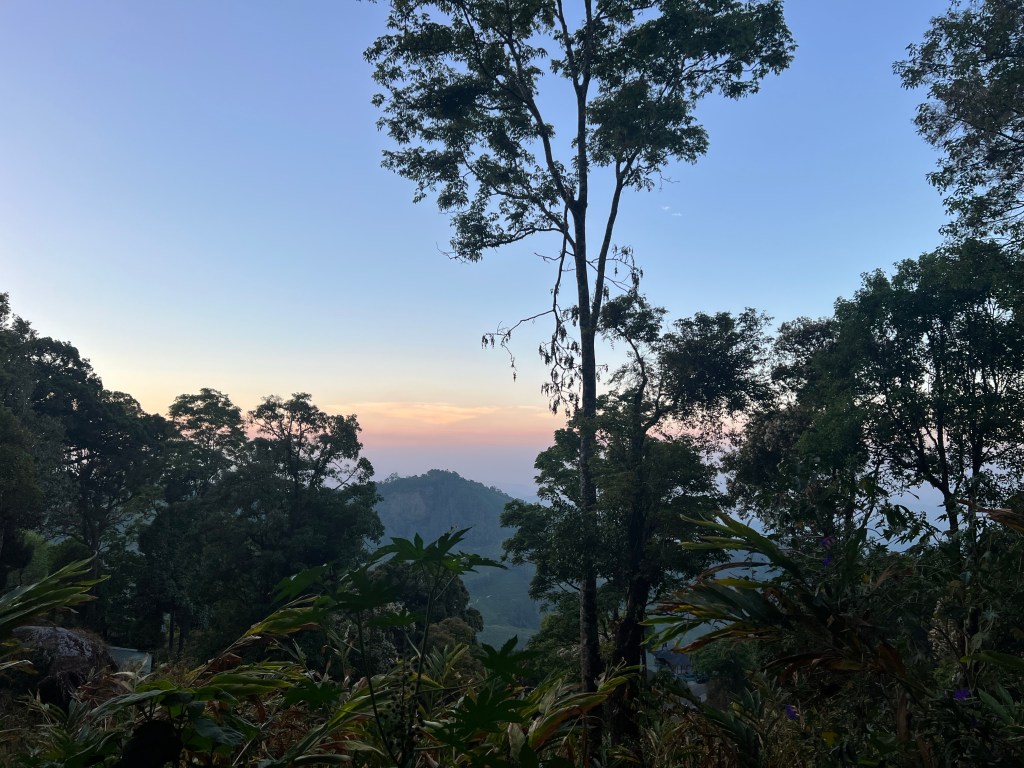
I had had enough of just hearing all the amazing bird-song here so decided to join Ancel for an early morning bird walk. So at 6.30 we headed off together amidst the most stunning sunrise and a cacophony of different sounds, all of which Ancel could recognise, but none we could see. I think they had that Monday morning feeling, however they eventually got out of bed and we saw an amazing number of different birds, all looking identical from a distance but Ancel distinguishing between them and indeed through the binoculars they were indeed all different.
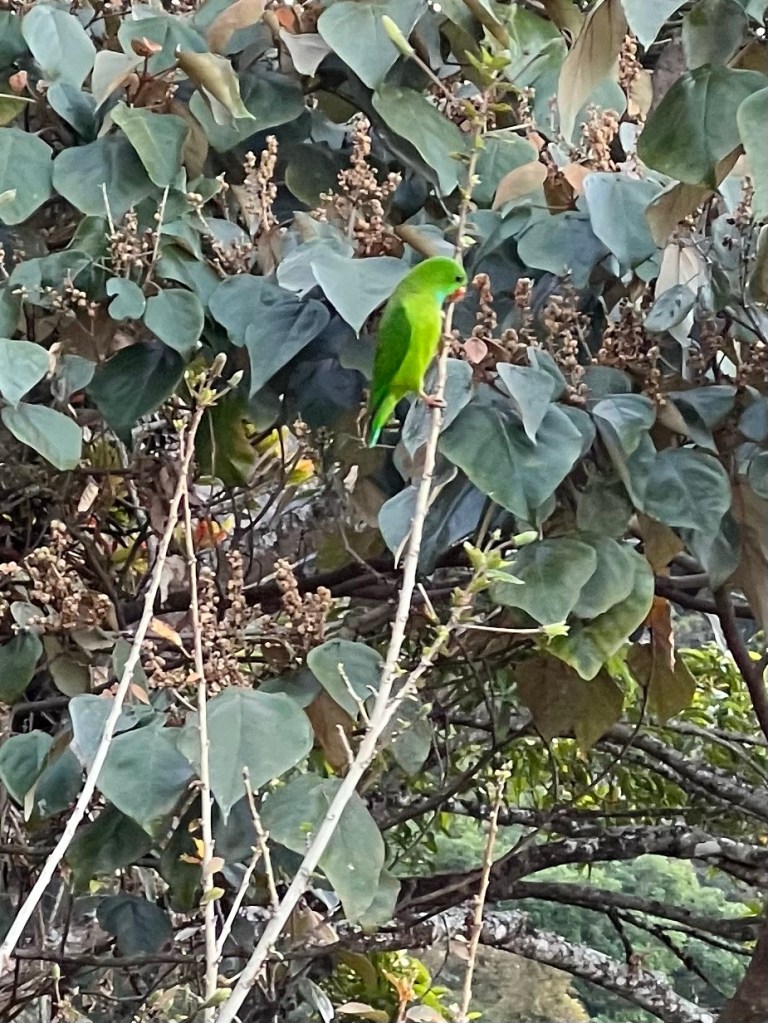
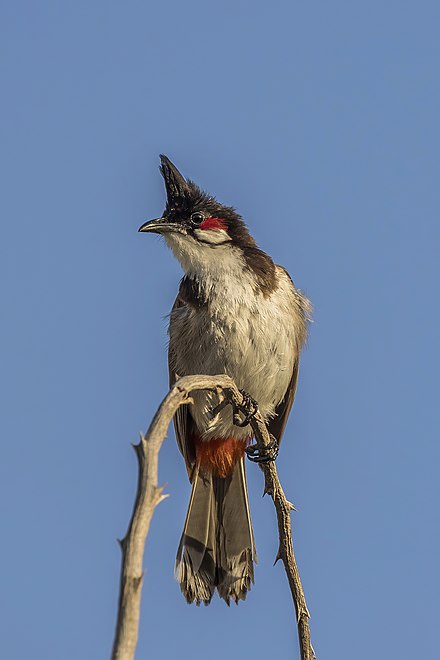
Only a couple stood still long enough for a photo, but loved seeing a Rufous treepie, Malabar whistling thrush, Red whiskered bulbul (very sweet and very common!), Indian white eye, Vernal hanging parrot (only Indian parrot), Warbler, Blue capped rock thrush, Yellow-browed bulbul, Palani laughing thrush, Red spurfowl, Emerald dove, Painted bush quail, Tickells leaf warbler, White crested laughing thrush (he was adorable!), Nilgiri wood pigeon, Velvet fronted nuthatch, Spiderhunter (like a humming bird) and a very sweet black Nilgiri squirrel – not bad for a morning’s work!
I returned to join Analida for breakfast and an update on the Oscars from Tom and James. Arun then drove us to Munnar to meet our guide, Sendil, who was to introduce us to the unbelievably complex and labour intensive process of making ‘a nice cup of tea’.
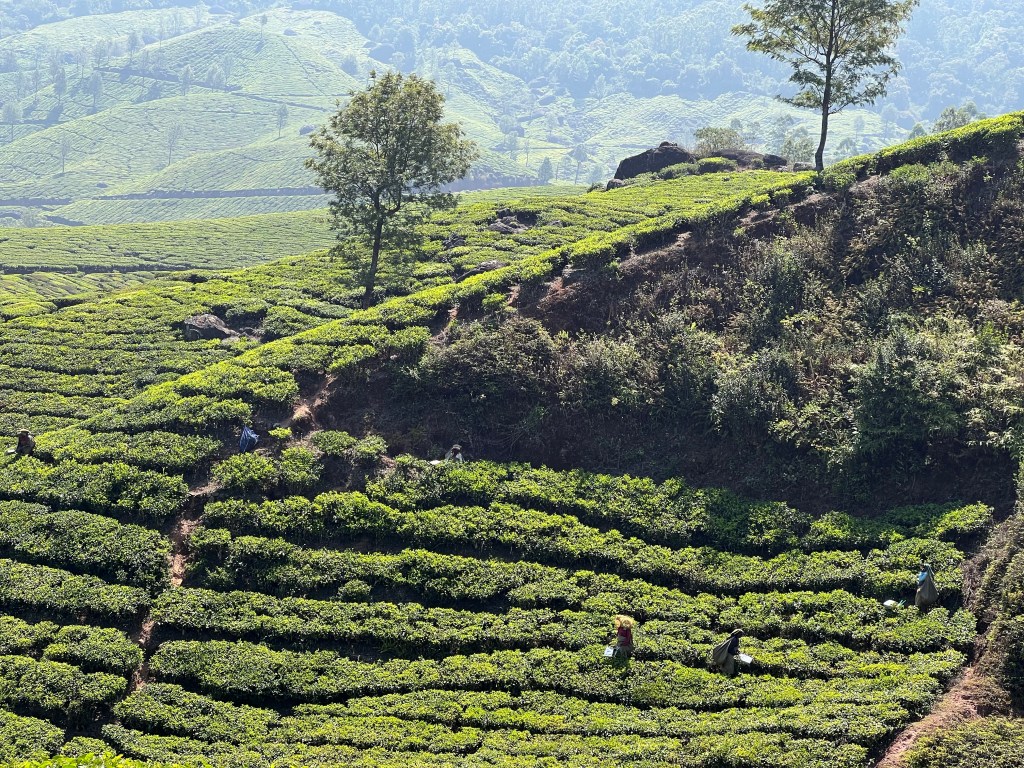
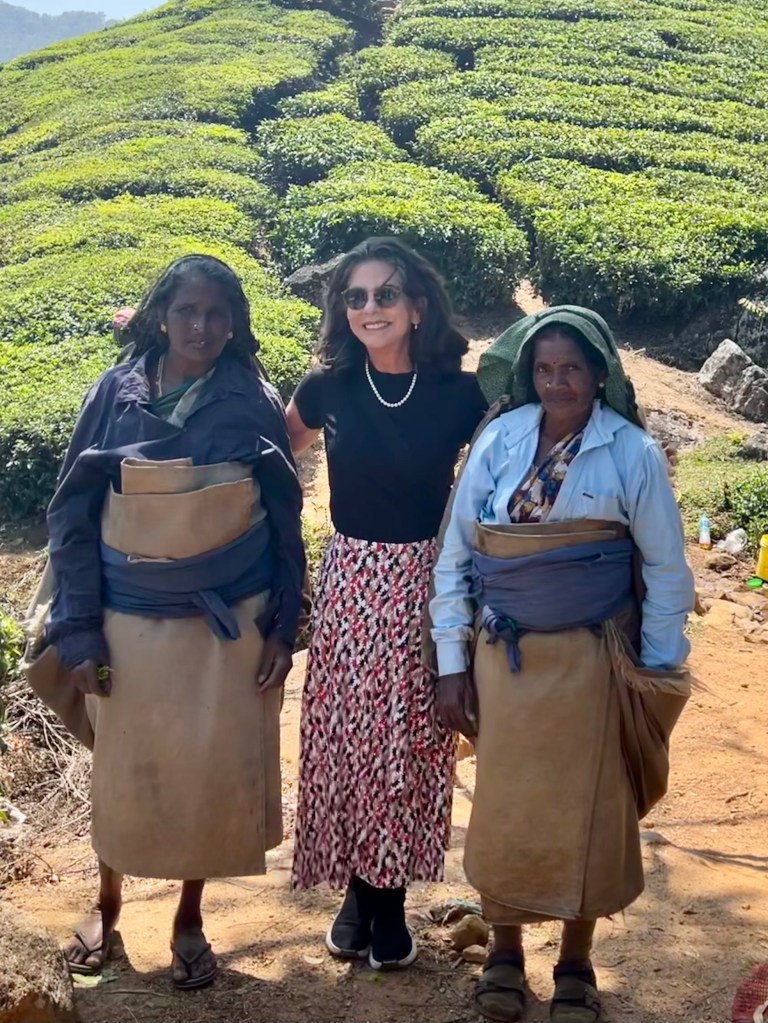
Tea plantations are incredibly beautiful, rolling hills of vivid green bushes punctuated by spots of colour which are the hard-working pickers (all women). We met two of these lovely ladies who had started work at 8am and will continue until 5pm in the searing heat. They are assigned specific rows which are theirs, and they return to these rows every 14-21 days to re-pick. Here in Munnar, they use shears, where as in Ooty they were hand picking for the very best quality tea. The ladies are paid a basic salary providing they pick a minimum of 27kg and then a bonus is paid for anything over and above this. But it is still very, very little. We had a go using their shears which are attached to a metal frame covered in a piece of t-towel which catches your leaves before they are emptied into the sack. The ladies looked as though they were in their sixties/seventies but I fear were very much less, and had worked in the tea plantation since they were girls and their mothers before them. They appeared happy in their work and interestingly were Tamils from the neighbouring state of Tamil Nadu, as indeed are all the pickers, the Malayalis of Kerala apparently do not pick the tea.
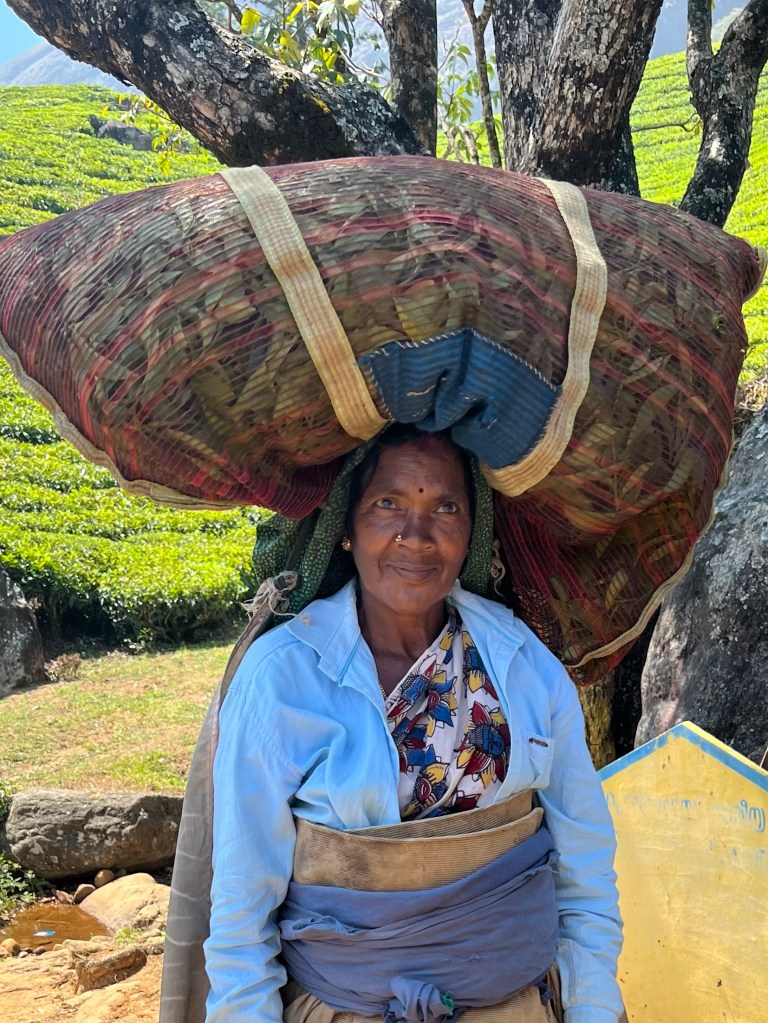
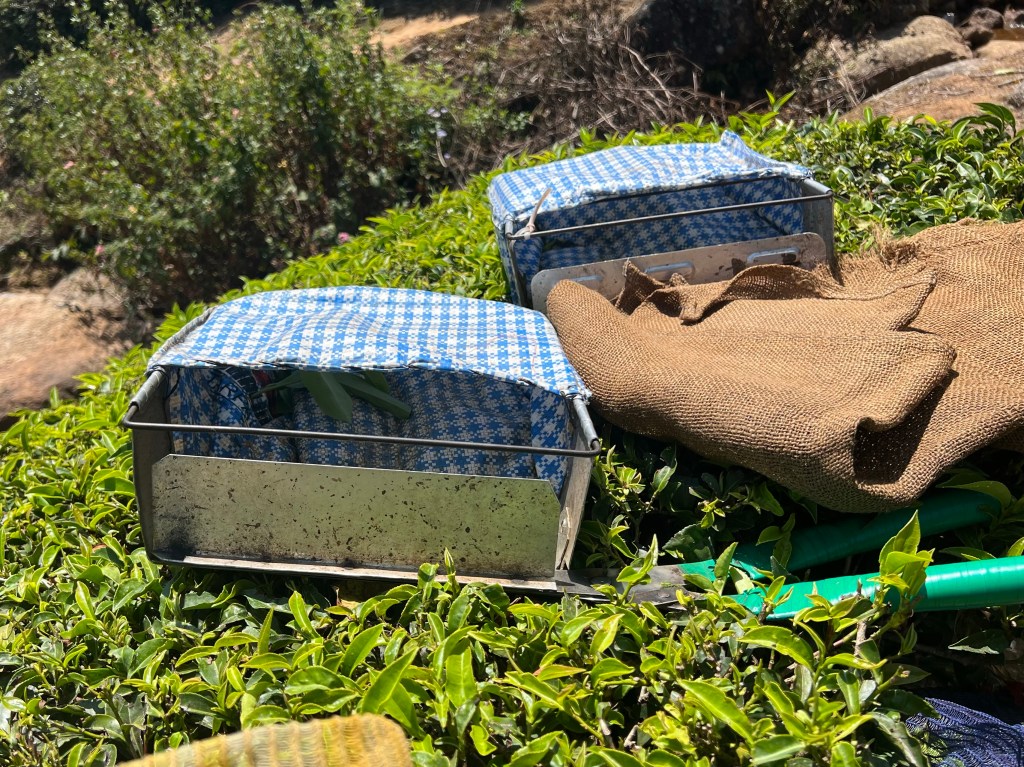
Tea trees last from 80-100 years and are planted in triangles to allow drainage and prevent soil erosion. They are pruned every five years in rotation. As we walked through the plantation, we saw much evidence of porcupines, including two or three of their quills, but sadly, being nocturnal, they were not coming out to play.
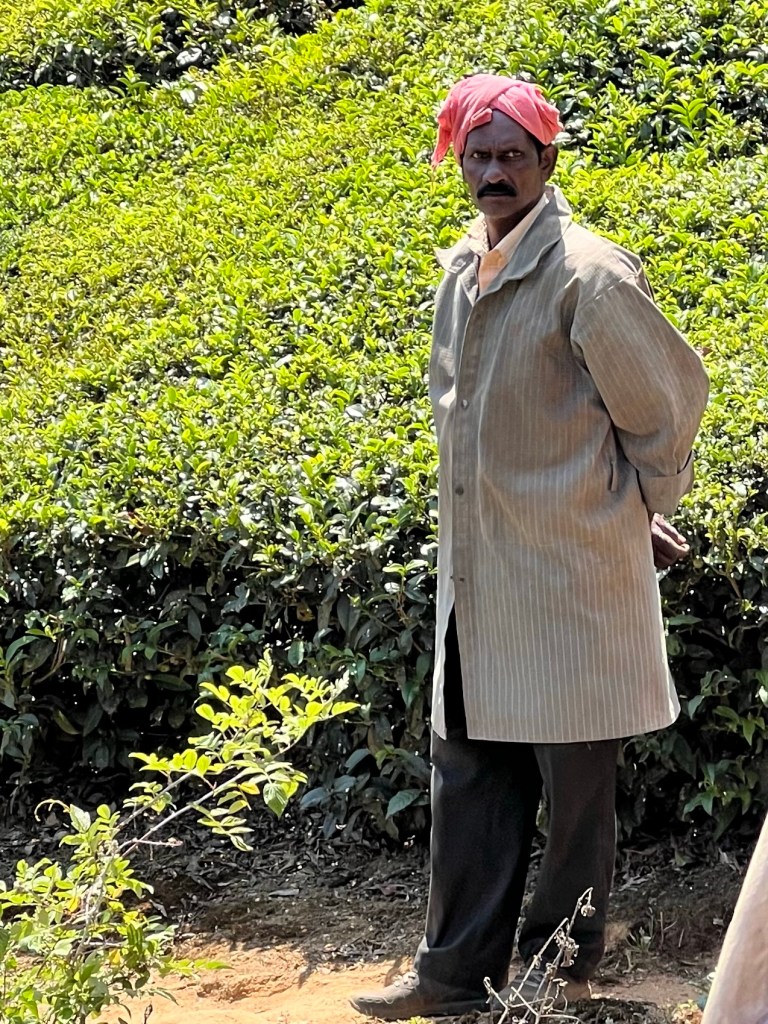
We learnt many surprising facts about tea, not least, that all tea, whether it is green, black or white comes from the same plant just using different leaves of the plant and processing it in different ways. The tea tree is related to the Camelia (who knew!) and there are just two varieties, the Camellia sinensis largely in China and the Camellia sinensis assamica the main tree in India. Climate, habitat, altitude, when it is picked etc all have a bearing on the taste of the tea. India is one of the largest tea producers in the world, although over 70 per cent of its tea is consumed by the 1.4billion Indians in India.
The very best tea, White Tea, is handpicked and just uses the tiny central bud. Processing is kept to a minimum, the buds are simply allowed to wither and air dry in the sun as quickly as possible to prevent oxidation. There are two major methods of Indian tea processing: Orthodox and CTC essentially one rolling and one crushing the tea. The former making more refined tea and was developed by the British in the 19th century. With the exception of white and green tea, all tea goes through five processes (though sometime several times over): withering, rolling or crushing, oxidation, firing or dehydration and sorting. Green tea is steamed and not allowed to oxidise, to keep it green. (not my favourite, but I know very healthy).
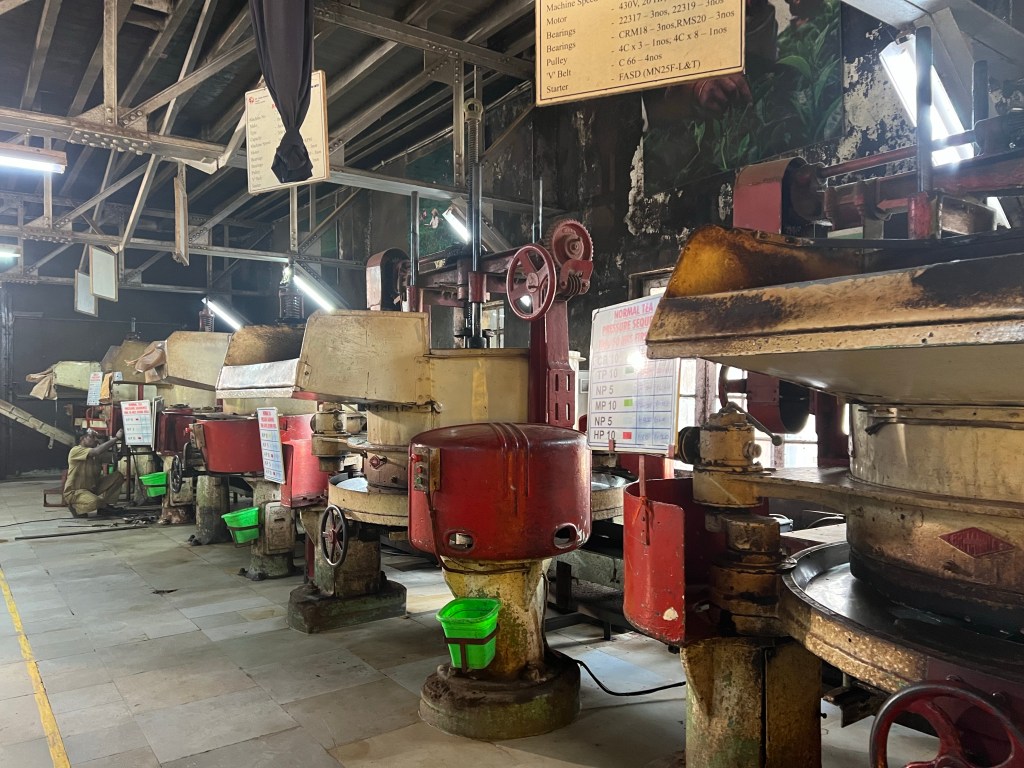
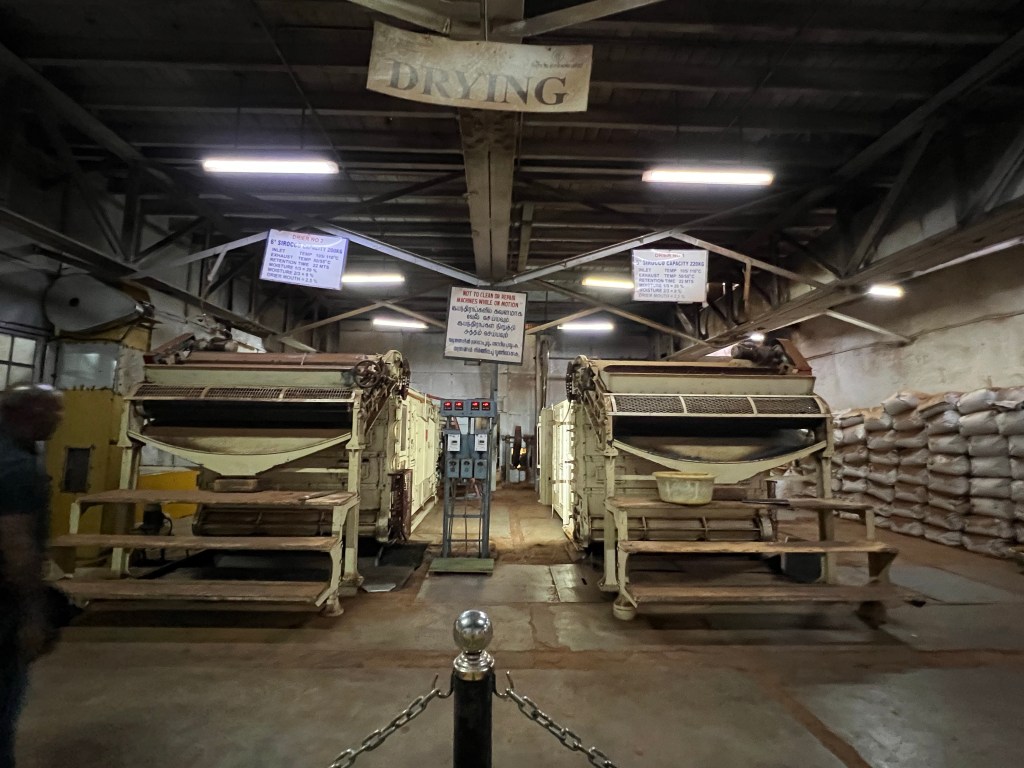
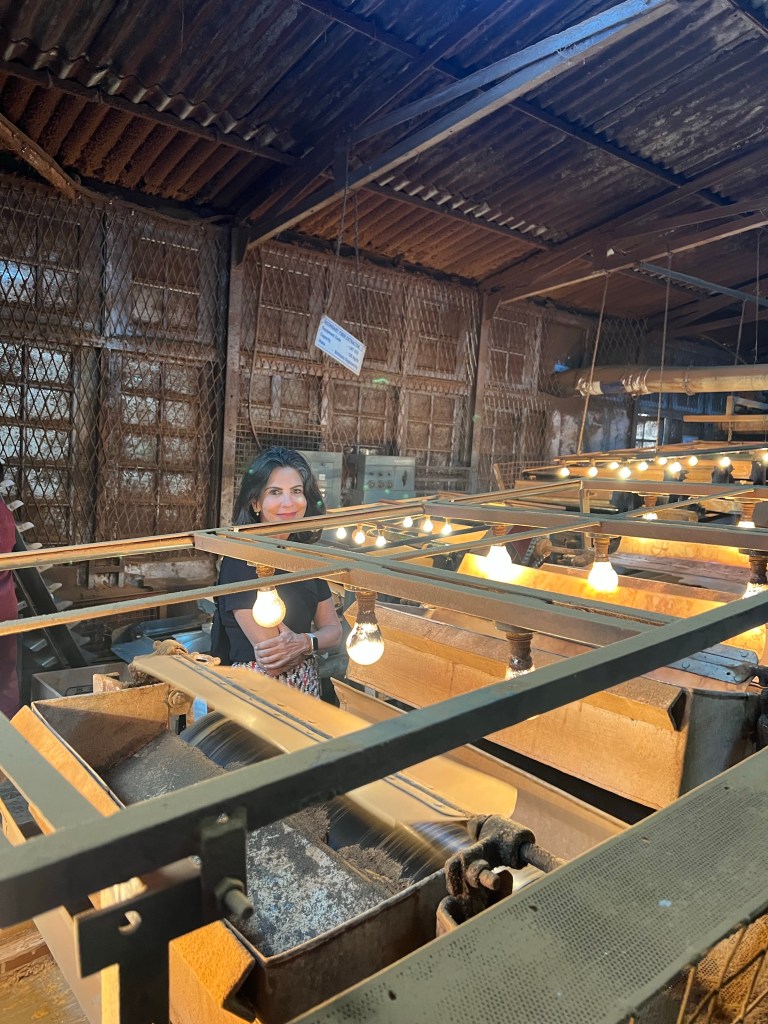
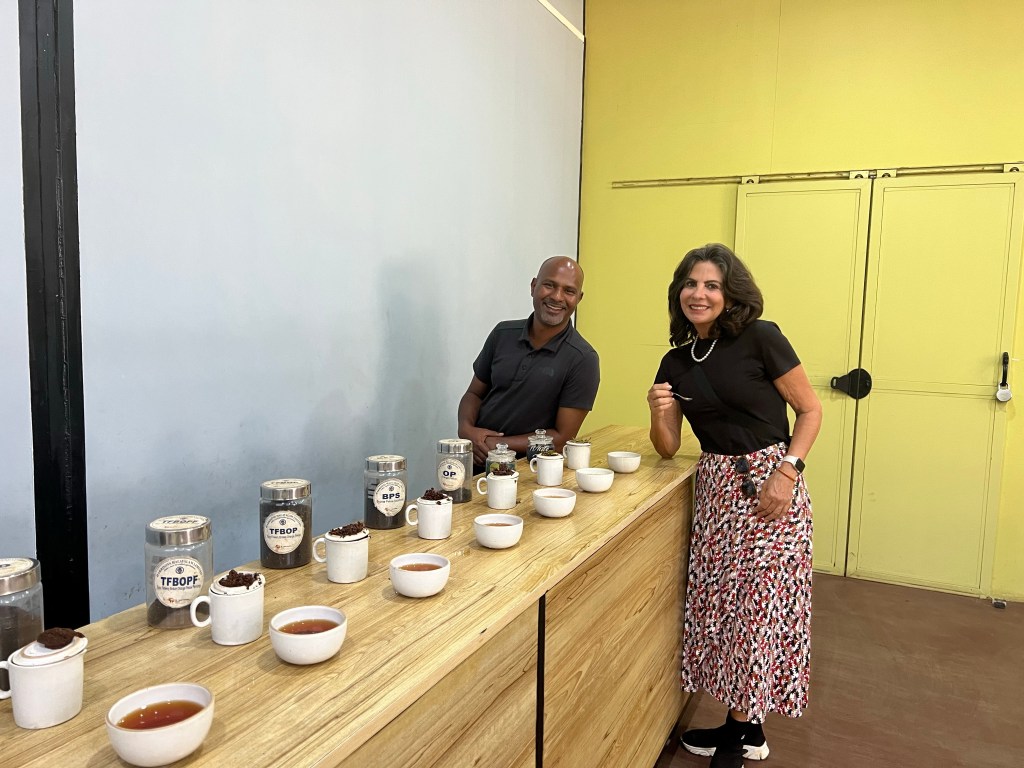
Being a Monday, and no picking on Sunday, the tea factory was closed, which was a little disappointing at first, however it meant we could see everything up close – nothing has changed in about 100 years and all the machinery, made in England, was still operational. Health and Safety and hygiene is not a priority and the majority of the work is still done by hand. We had a tea tasting at the end, luckily for Analida, her sense of taste and smell has not returned following Covid, so I dutifully tasted about ten very different tasting teas all made from leaves off the same bush.
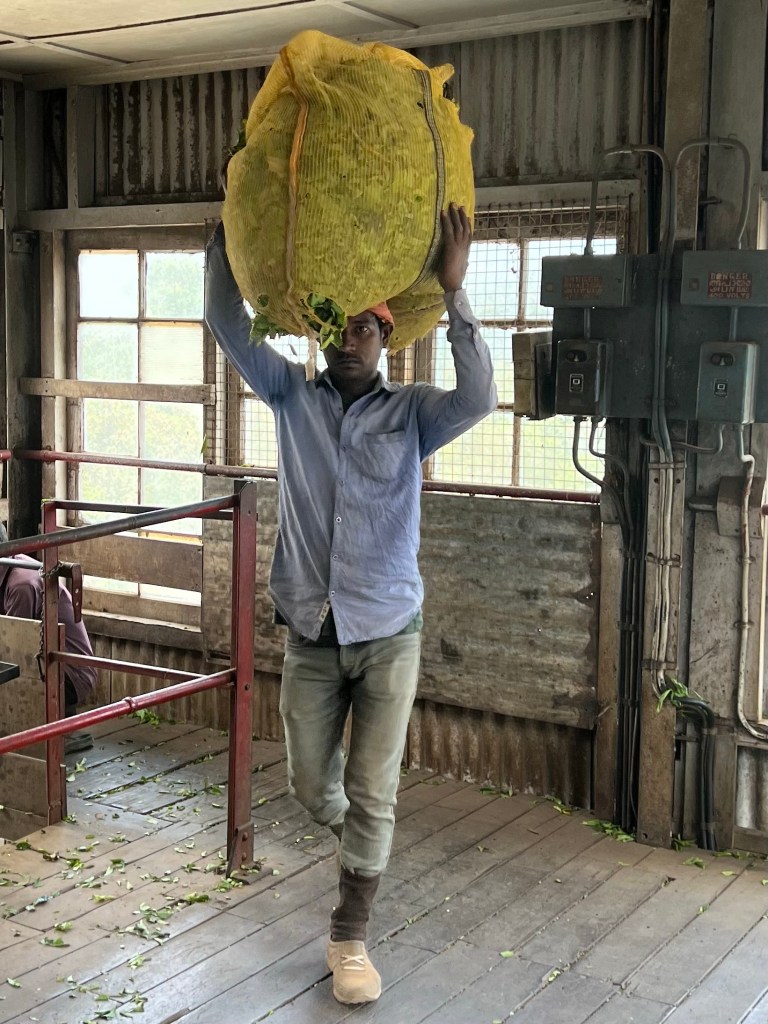
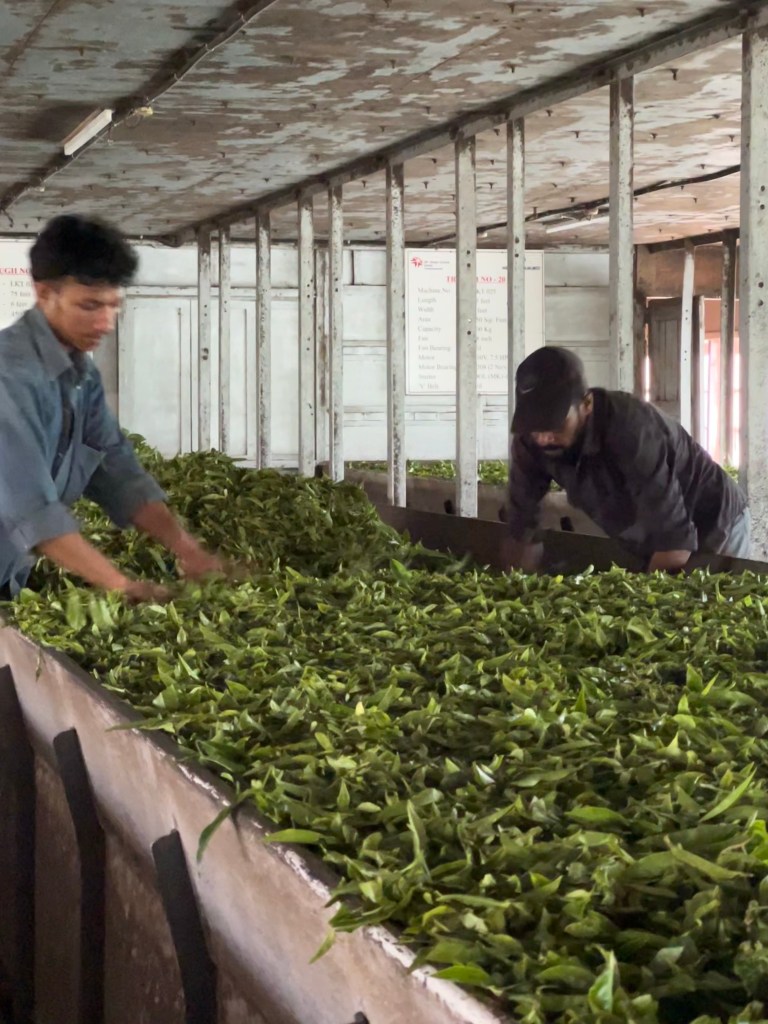
Just as we were about the leave, the mornings load of tea arrived so we were able to see the first stage of the process. Bags of tea were unloaded from the truck, one by one, onto a lift, up to the third floor, taken off the lift and emptied by hand onto the withering trays where they are carefully levelled out by hand…
We returned to the hotel and had a little rest before heading out again with Ancel on a tour of the Windermere Estate and their Cardamom and coffee plantations. We did not see much evidence of the latter but Cardamom is very much in evidence. Related to the ginger family, cardamom is a leafy plant growing up to 6m in height. Again it was humbling to hear how much work goes into making the powder or dried seed we all have in our cupboards. Not least that it is all picked by hand and the fruits are right down at the base of the plant …. growing on the side of a hill! The picking season us from July to February and a plant will produce fruit every forty days, lasting about 17 Years if it is looked after. The fruits are picked just before maturity, cleaned and dried in the sun or in a heated curing chamber.
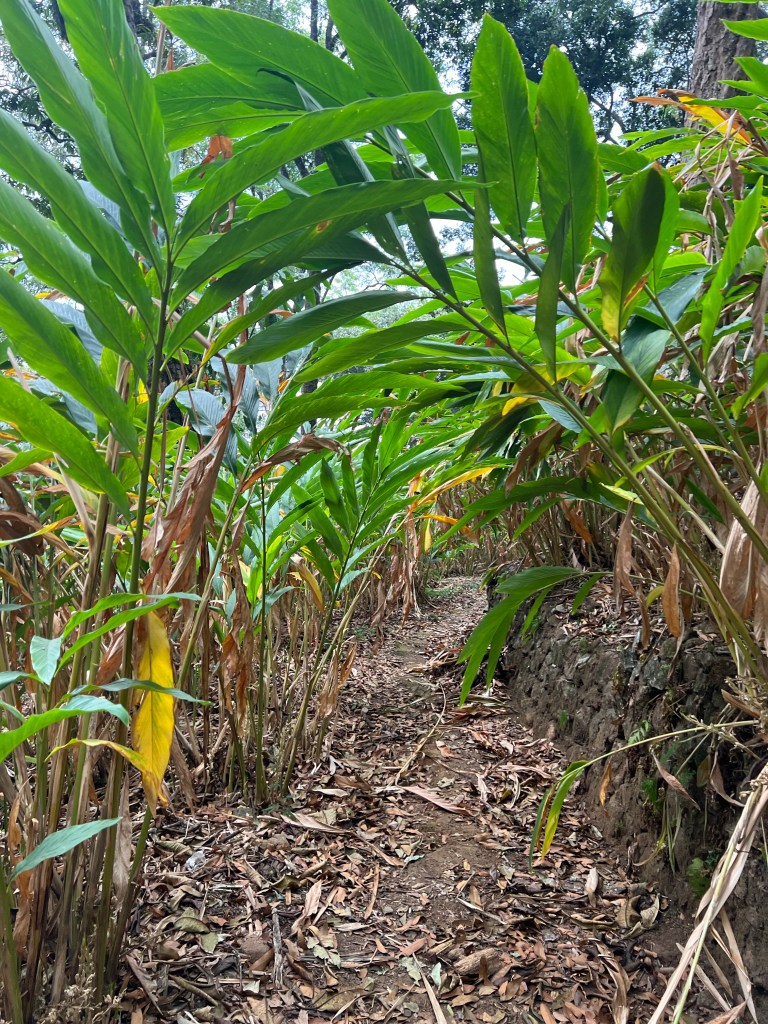
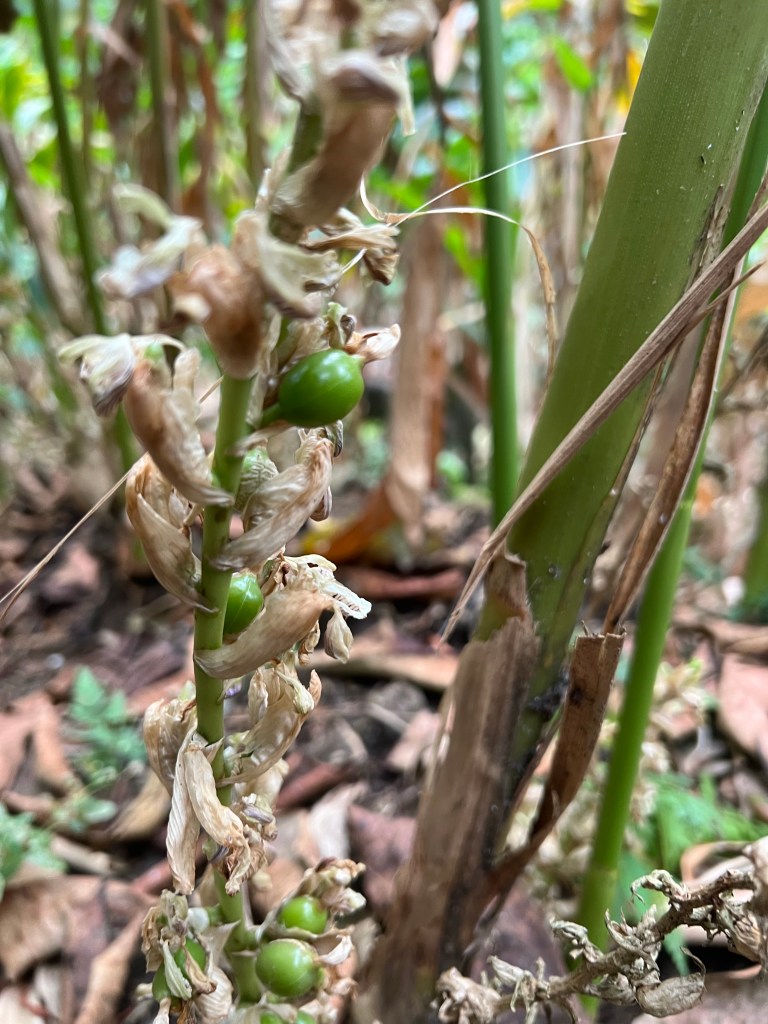
The plantation was 60 acres and has 22 people working on it year round …. bit different from Hilldrop! We saw a number of additional birds on the walk including a serpent eagle sitting patiently in a tree, a white-cheeked barbet, a magpie robin (robin shaped but black and white), and a beautiful racket-tailed drongo, which imitates other’s birdsong. It was a lovely walk.
We had quite a nice supper in the hotel and early bed – it had been a long day!
 EC-Rider Travels
Leave a comment