
We left the Svatma Hotel with another charming ritual by one of the beautiful receptionists, blessing me and our onward journey.
With Arun at the helm we continued south-west, passing the most incredible 7th century Tiruchirappalli Rockfort balanced on the top of a 83m rock. Within this is the Uchhi Pillayar temple dedicated to Lord Ganesha. Sadly we did not have time to visit, or climb the 500 steps to the entrance.
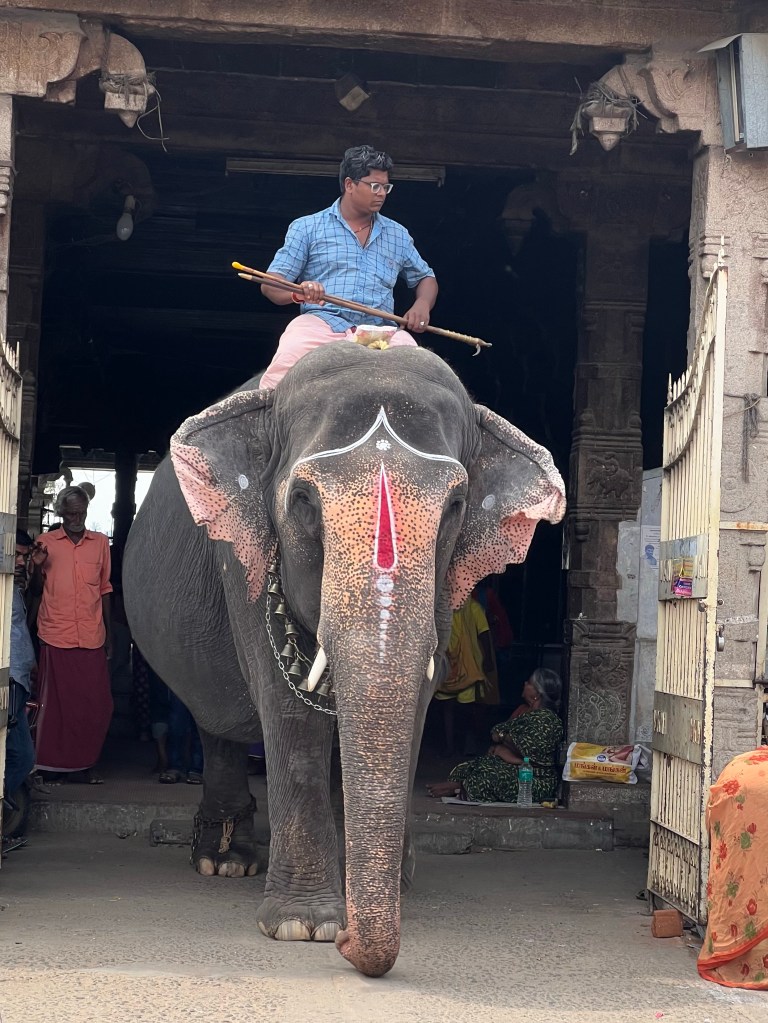
We continued on to Srirangam and visited the Amma Mandapam – a holy bathing ghat and devout place or worship where many religious activities take place, primarily funerals. Bodies are usually cremated, though until a few decades ago they were just as likely to be put out on a pyre and launched out into the water to be eaten by the crocodiles! People are now cremated within a day, or a little longer if family members need to come from a distance. The men of the household go into 16 days of mourning, usually meaning they stop work, no alcohol, no meat and no shaving or haircuts. On the third day the family take the ashes to the holy ghat, the men would wash in the river, mix the ashes with water form the river and release them into the river. A ceremony is usually held on the seventh and sixteenth day. On the 16th day the men will again wash in the river (sometimes the women too) before a ceremony involving 16 pots (one for every day of mourning) are laid out in a square and receive blessings from the Brahmin. The wife/daughter will have previously been to the Brahmin to be told what gifts to bring for the ceremony. After the ceremony, the men of the family usually shave their heads and are given new clothes by the family. For Hindus, death is a gateway to another life so it is not a sad place but truly spiritual and made me quite emotional with lots of thoughts of Dad. ❤️
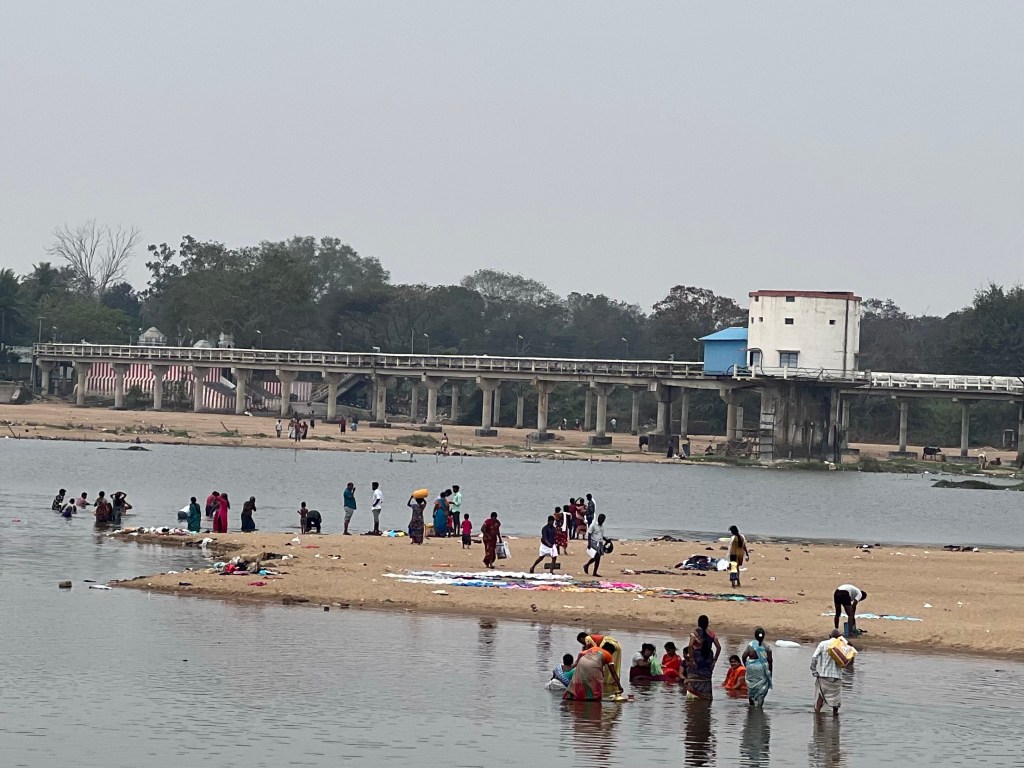
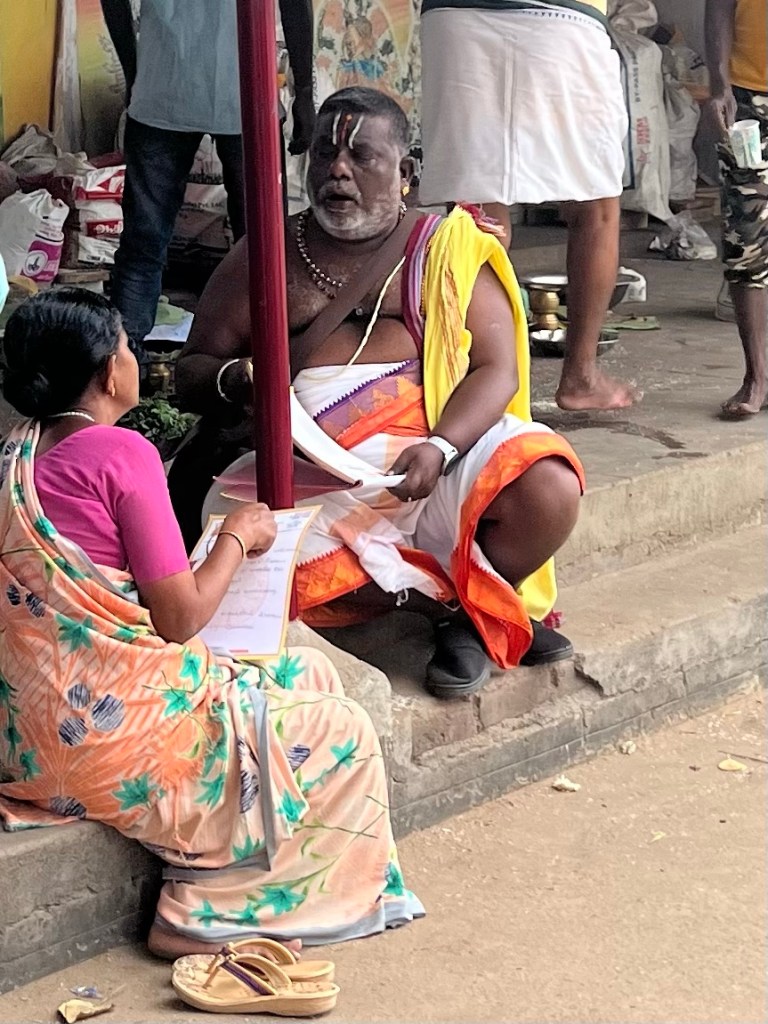
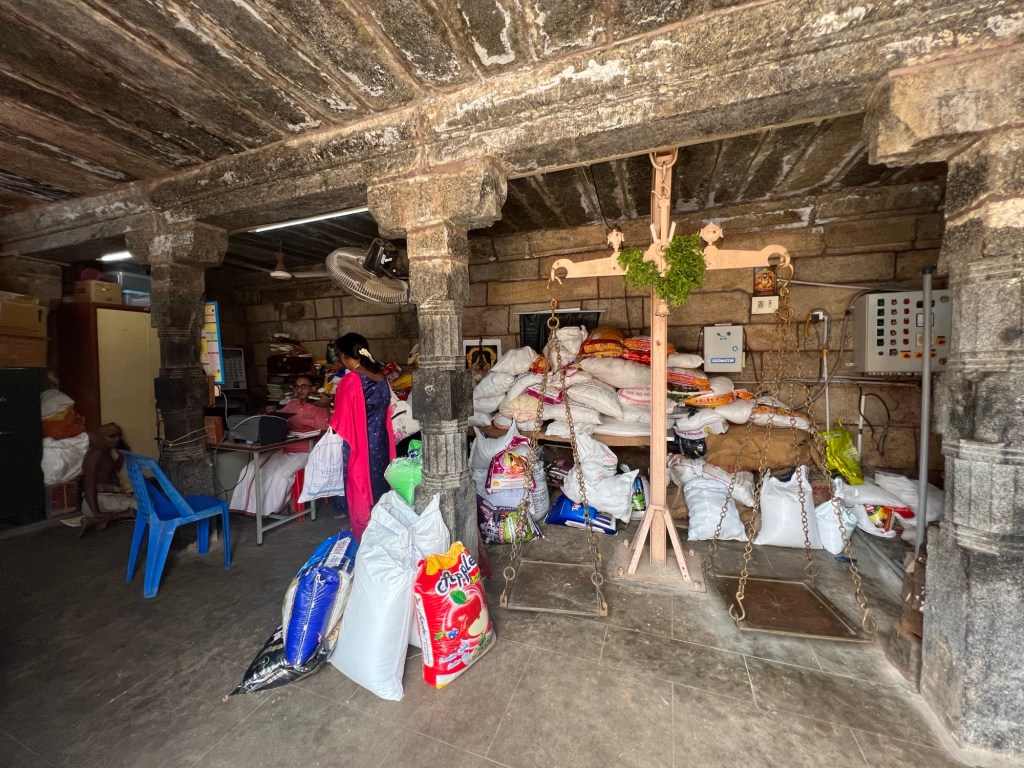
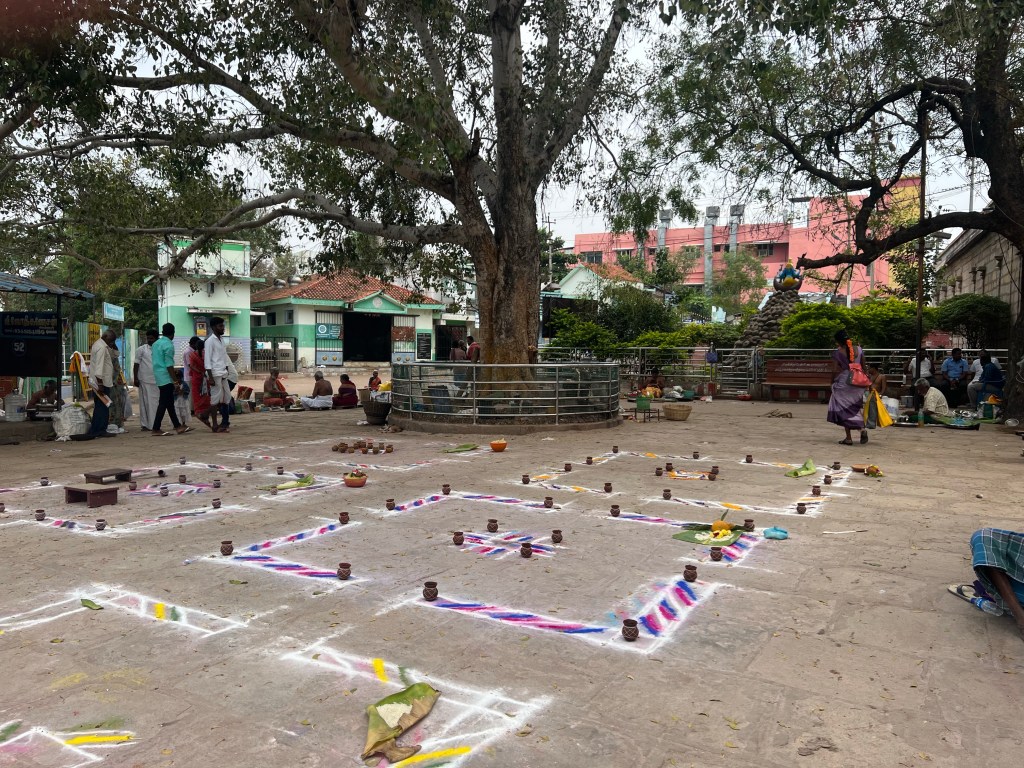
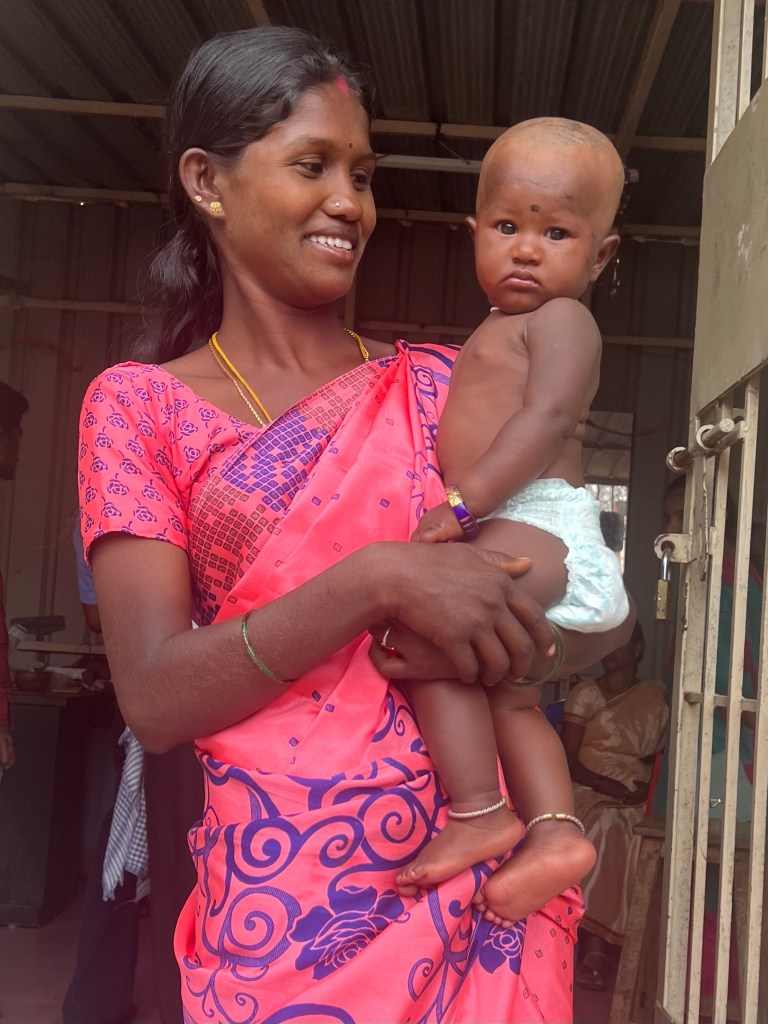
Another custom which takes place at Amma Mandapam is shaving the hair of babies or children of three years as a cleaning ritual to remove unclean birth hair. This is usually accompanied by ear piercing. When you think of the fuss we make about cutting those first locks! We saw a number of women too, with shaved heads, and Rebecca explained this was a sacrifice they sometimes make to their deity if someone close was very ill or to thank them if they had recovered. Shaved heads are often covered in yellow turmeric paste, which acts as an antiseptic.
We then visited the Sri Ranganathaswamy Temple which sits on an island between the Kollidam and Kaveri rivers. It is dedicated to Ranganatha (another incarnation of Vishnu) and is the most important of the 108 temples dedicated to Vishnu. Sitting on an island, made it vulnerable to flooding and attack. It was destroyed by the Delhi Sultanate in the early 14th century and rebuilt later that century with more walls and gopuras being added in the 16th and 17th centuries. It now has seven concentric walls around the central 7th century golden temple and is the world’s largest functioning Hindu temple. It is like a city in itself, covering an area of 155 acres with 81 shrines, 21 towers, 39 pavilions and many water tanks. We saw a sad mangy cat walking down to one of these which quietly dipped its paw into the water and whipped out a fish – amazing!
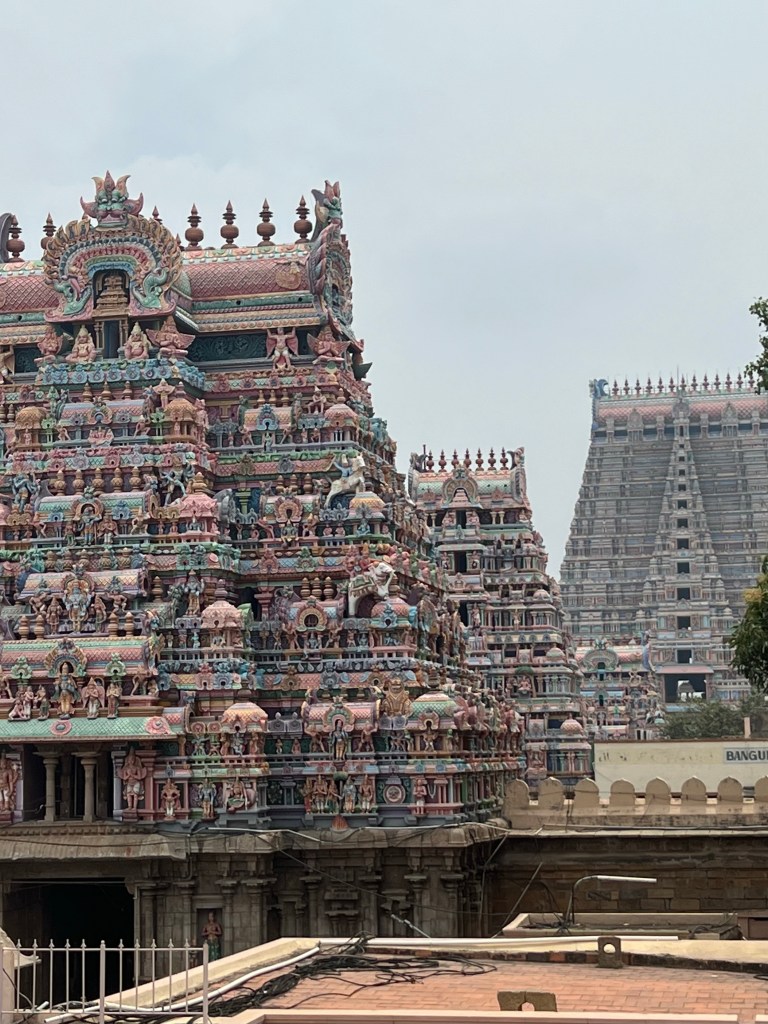
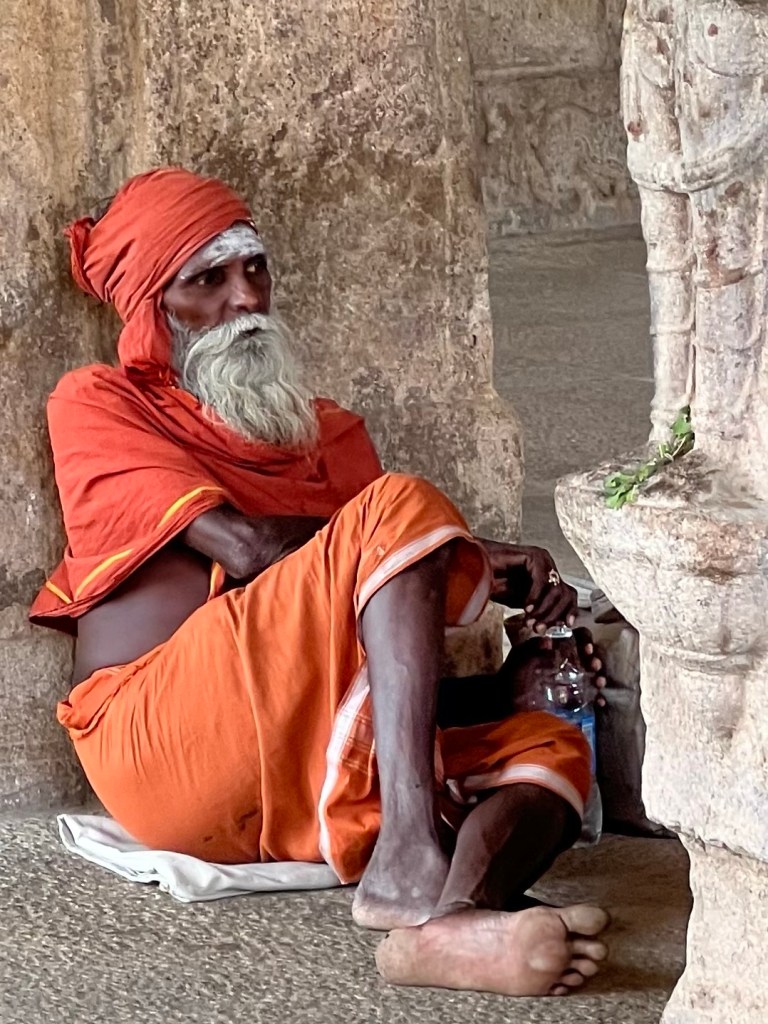
It is a particularly important temple and non-Hindu’s are not permitted to enter any of the shrines, but we saw a few of them from a distance, and one Brahmin seemed more then welcoming as he was a Rishi Sunak fan and wanted to know what I thought of him. He was also most concerned I did not have a husband and gave me a blessing saying he looked forward to seeing me next year with a nice Indian husband and a baby! Maybe Abraham’s Sarah was not so special!
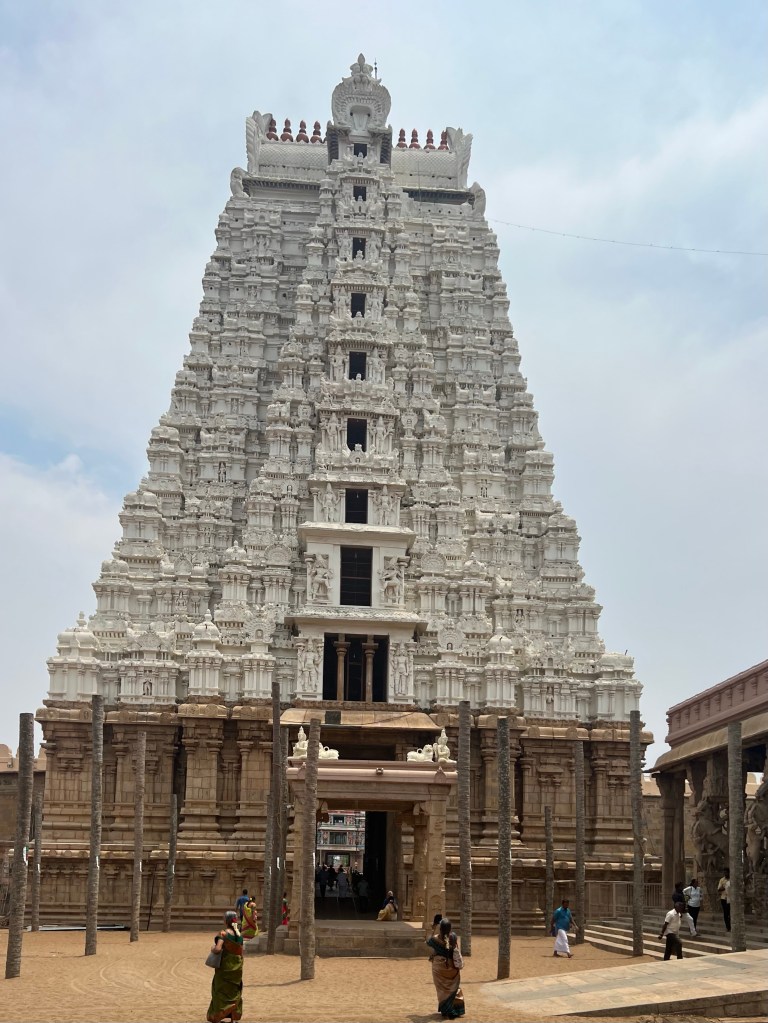
We also saw the incredible 16th century White Tower, possibly my favourite of all, this is bordered by the 1,000 Pillared Hall (sadly closed) on one side and the Sesharaya Mandapam on the other, with the most amazing carved pillars. Some of these showed soldiers in Portuguese dress, so likely to date to the early 16th Century when they were here. They were all riding very well endowed horses!
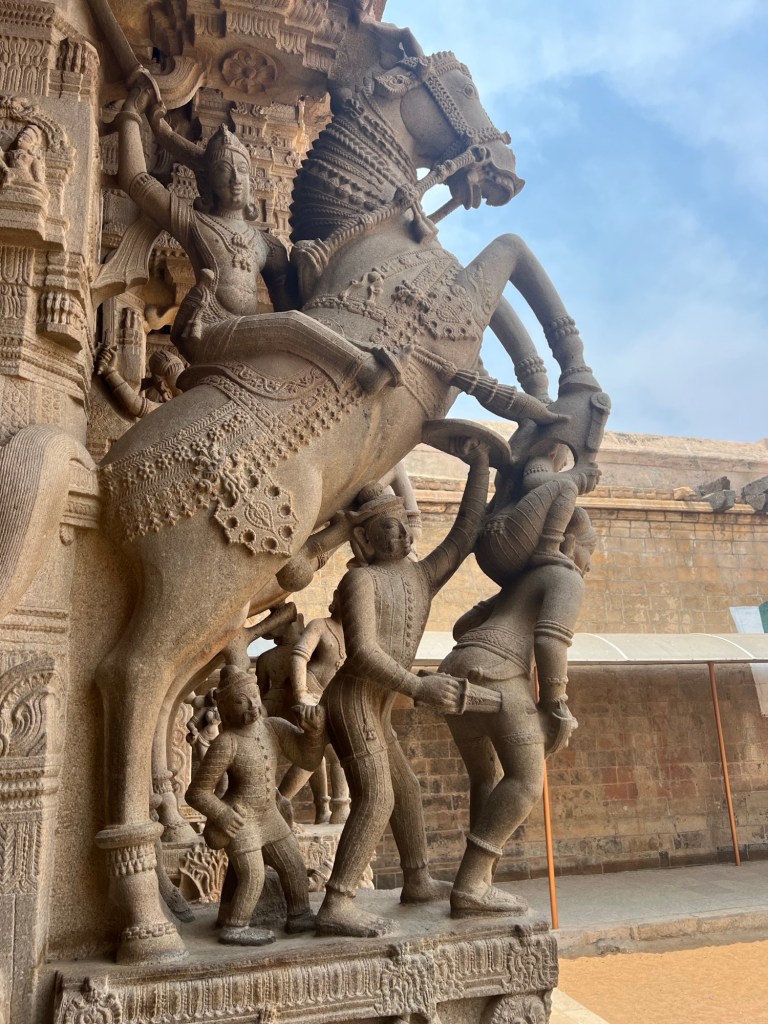
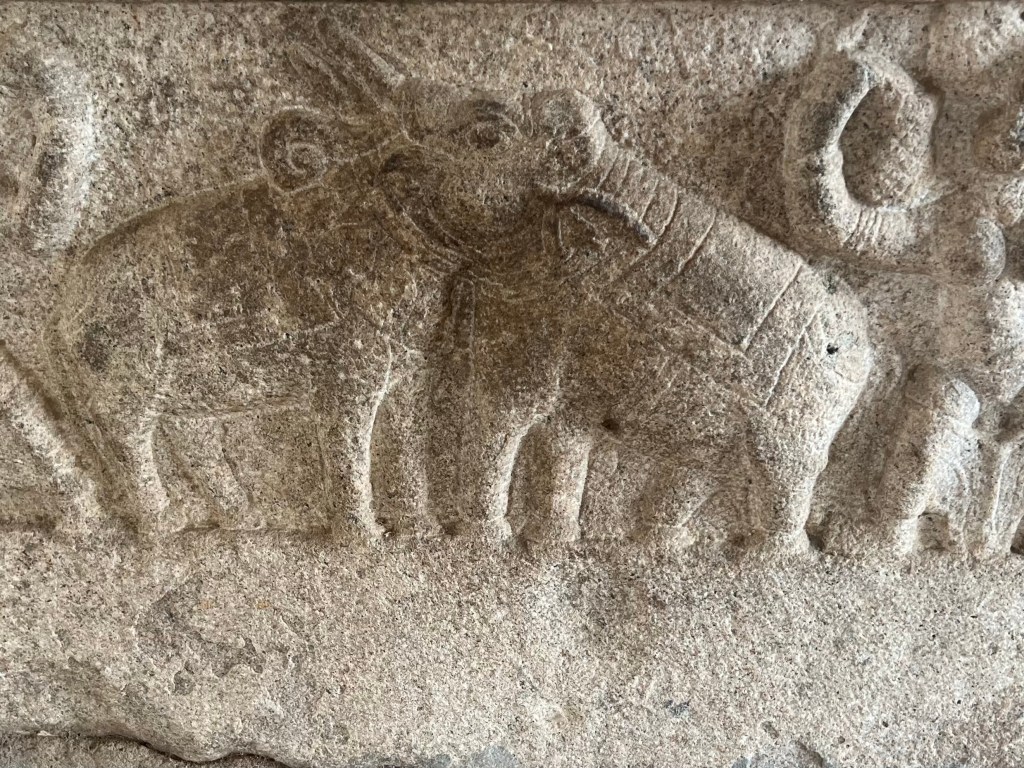
There was the cleverest carving of a bull and an elephant, with just one head, somehow doubling up as both – see below.
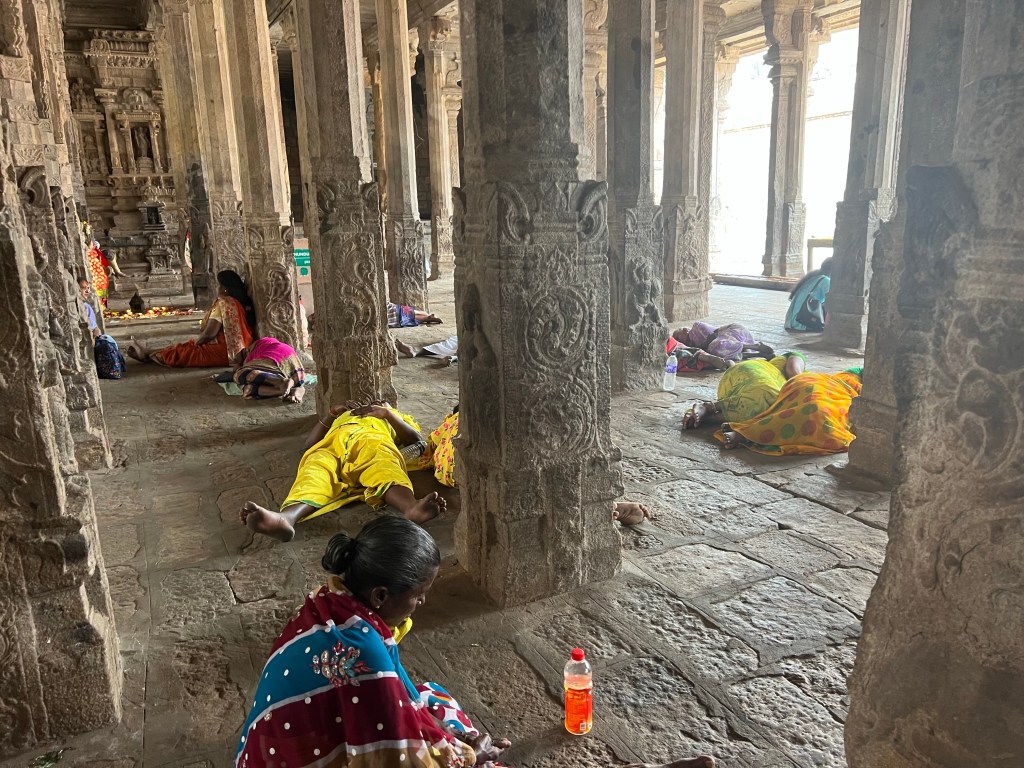
A mandapam is very much somewhere were you can sleep and there were men asleep between many of the pillars on the hard stone floors.
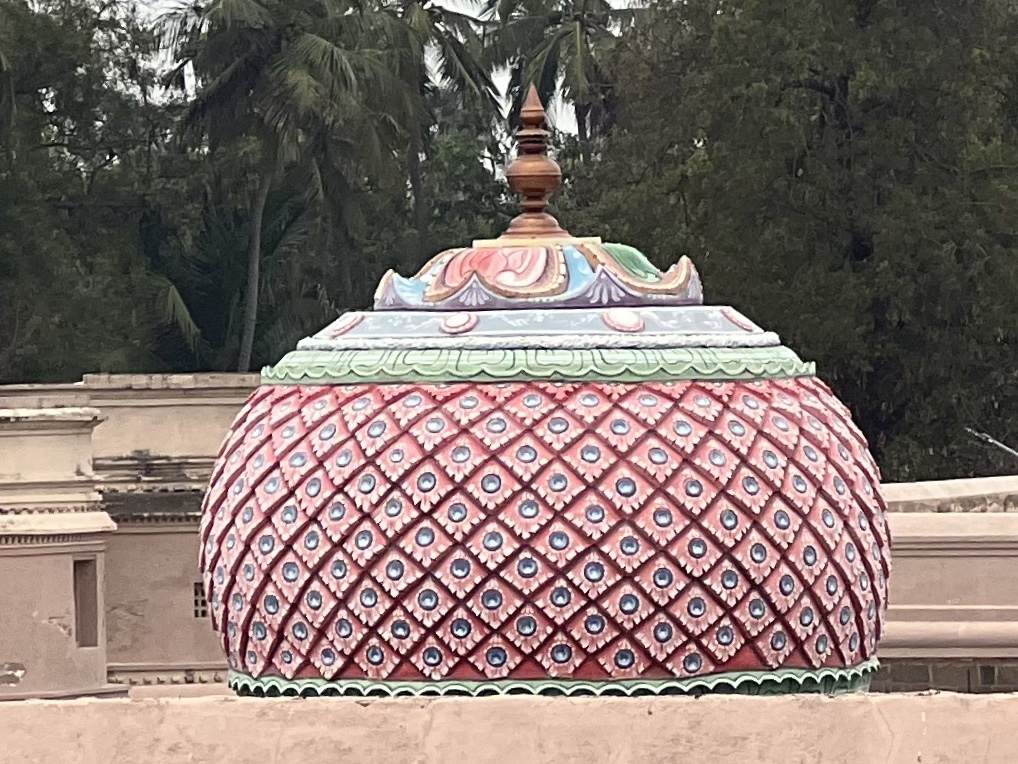
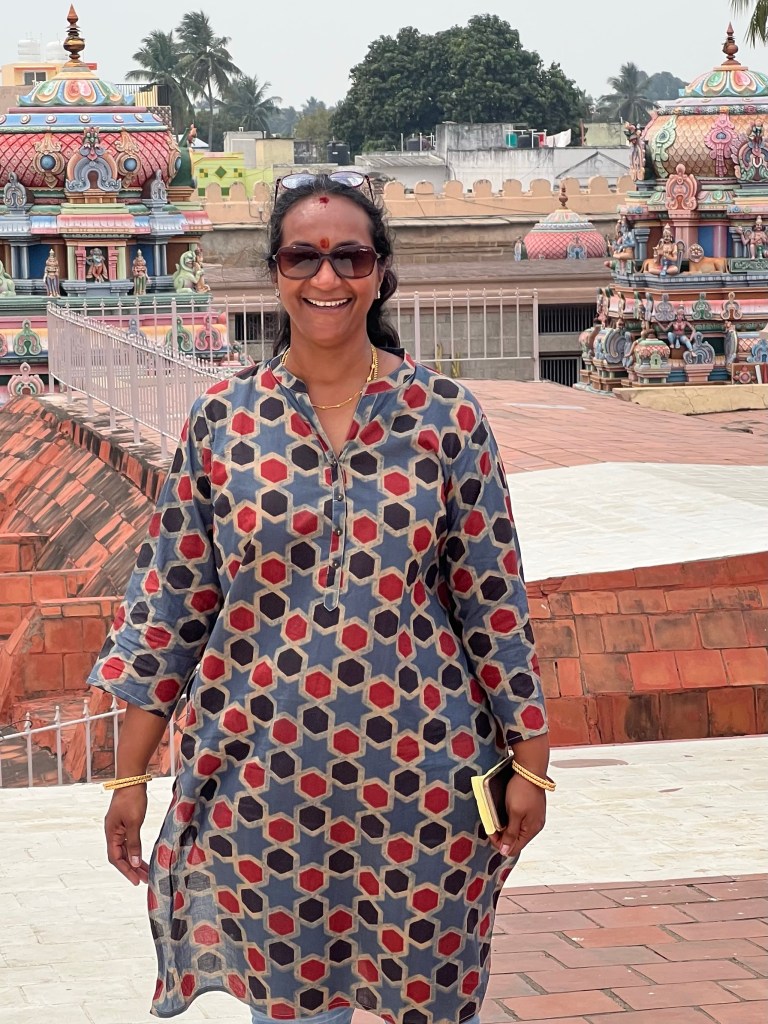
We went up on to the roof of one of the buildings and had an amazing view of the whole complex including the central golden temple, which sadly you are not allowed to visit. It is not easy to encapsulate in a photo and sadly photos are rarely allowed inside, so I will have to rely on my memory! The whole temple, has to be repainted and reconsecrated every twelve years.
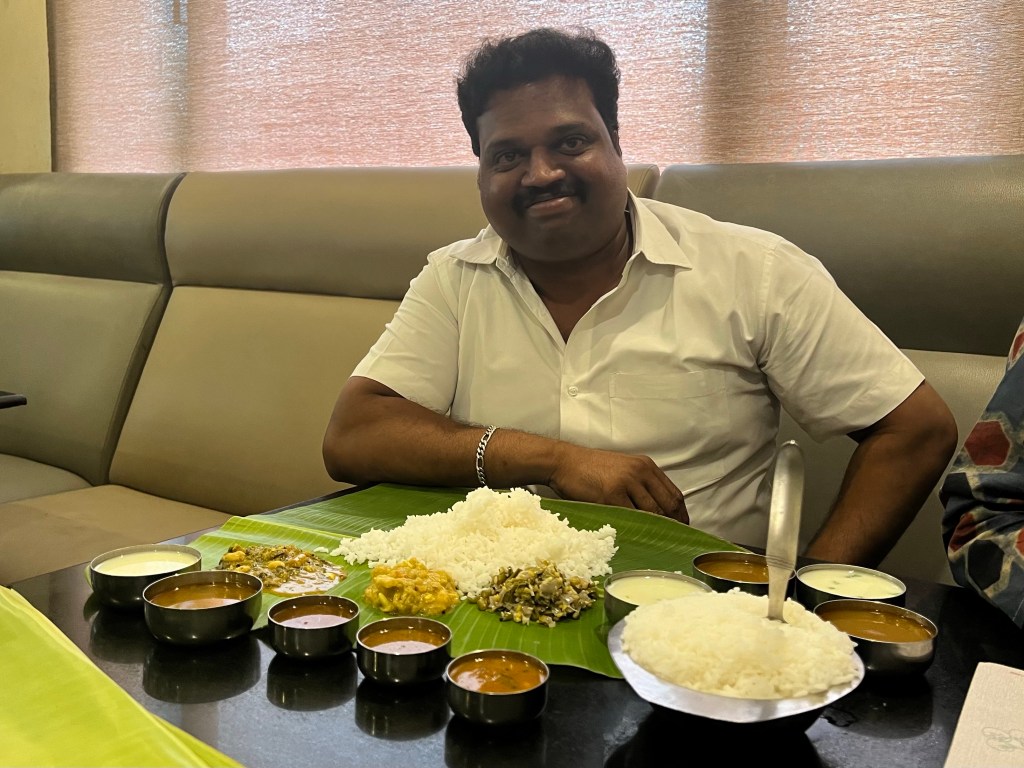
Arun chose the lunch venue, a proper Indian restaurant full of locals and I attempted eating, like them, with my hands – let me tell you it is not as easy as it looks and I had plenty in my lap for the journey. Arun and I then had to say farewell to Rebecca who was heading back to Chennai. Once again, I found it a bit emotional! She really has been the most outstanding guide and we have laughed so much. Still I have the wonderful Arun and before Rebecca’s front seat was cold I had jumped in and off we went…..though feeling a bit sad.
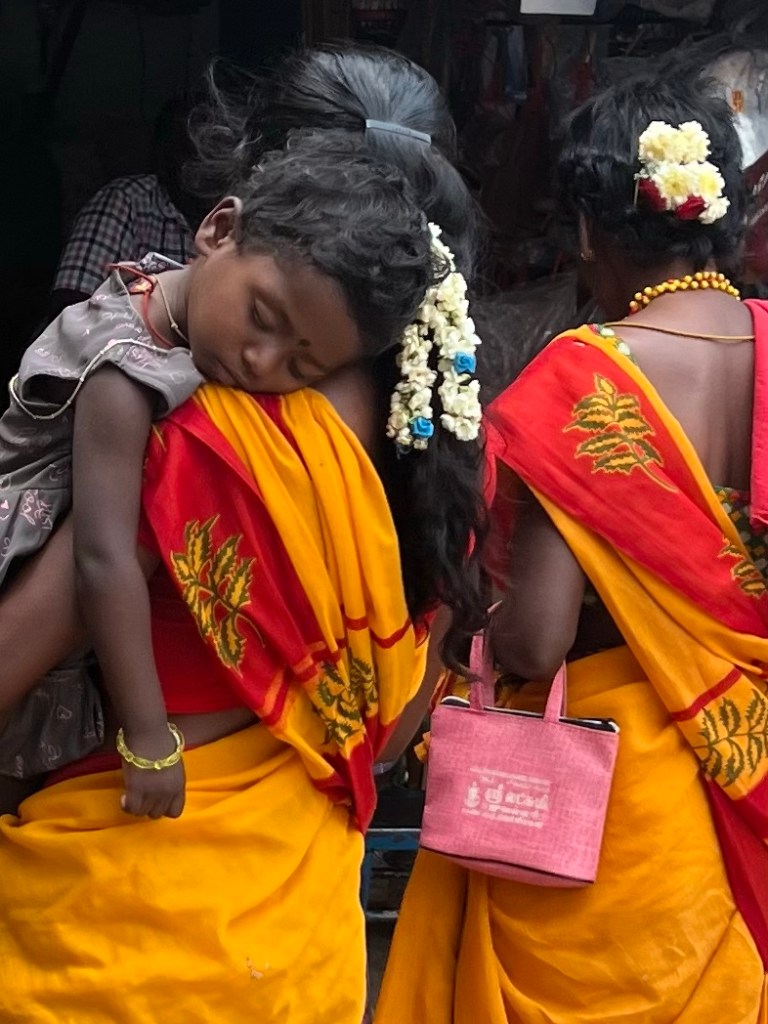
As we drove along, the ‘motorway’ there were groups of people all dressed in red and yellow walking along the side of the road. Arun explained they were on an annual pilgrimage to worship in the temple in Samayapurem. They walk barefooted sometimes for days, taking nothing with them and relying on villagers to offer them food and drink on the way. After they have been to the temple, they are permitted to take a bus home. On the other side of the road were men in green who were devotees of the Lord Murugan (second son of Lord Shiva), and heading for the the Palani temple approximately 85km away. We passed a funeral also going on at the side of the motorway with flowers strewn across the road.
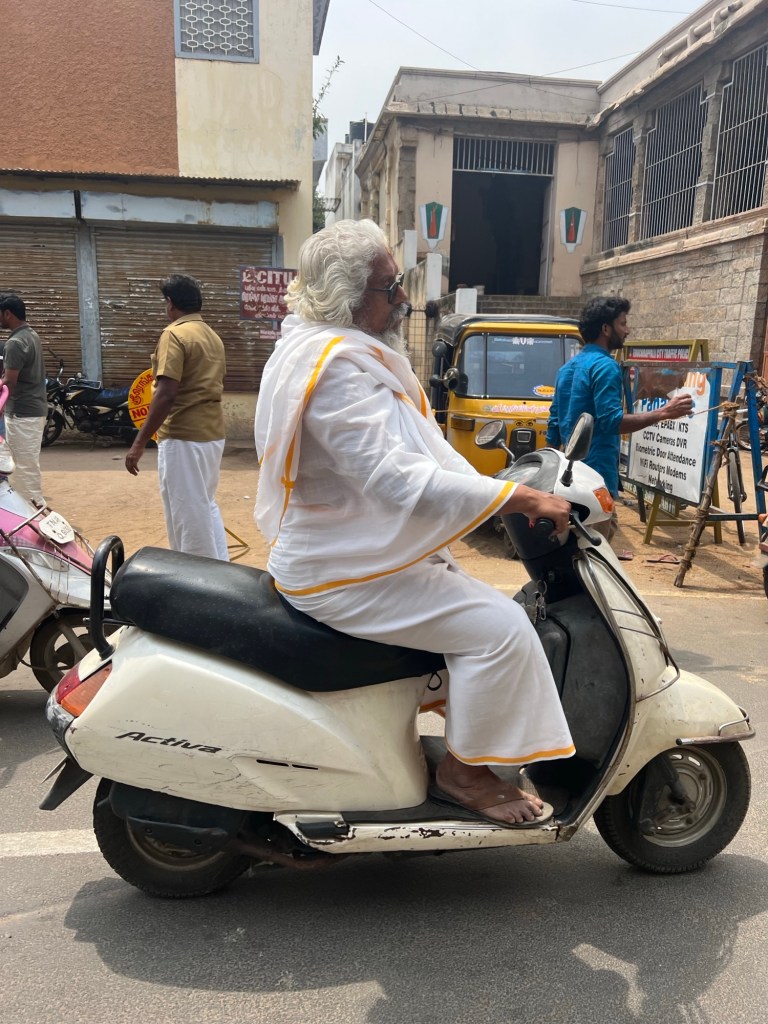
This country has more rules and regulations than you can possibly imagine, but I have yet to find one that is followed – bit different to Singapore! Barely anyone wears a helmet on a motorbike and you seem to have as many on a bike or bicycle as you can, in the back of a truck, or in a tuktuk. There is no hands free and everyone is on the phone, whether driving or walking. At one point we were on a dual carriage way and a car came down in the wrong direction – no one seemed remotely surprised!
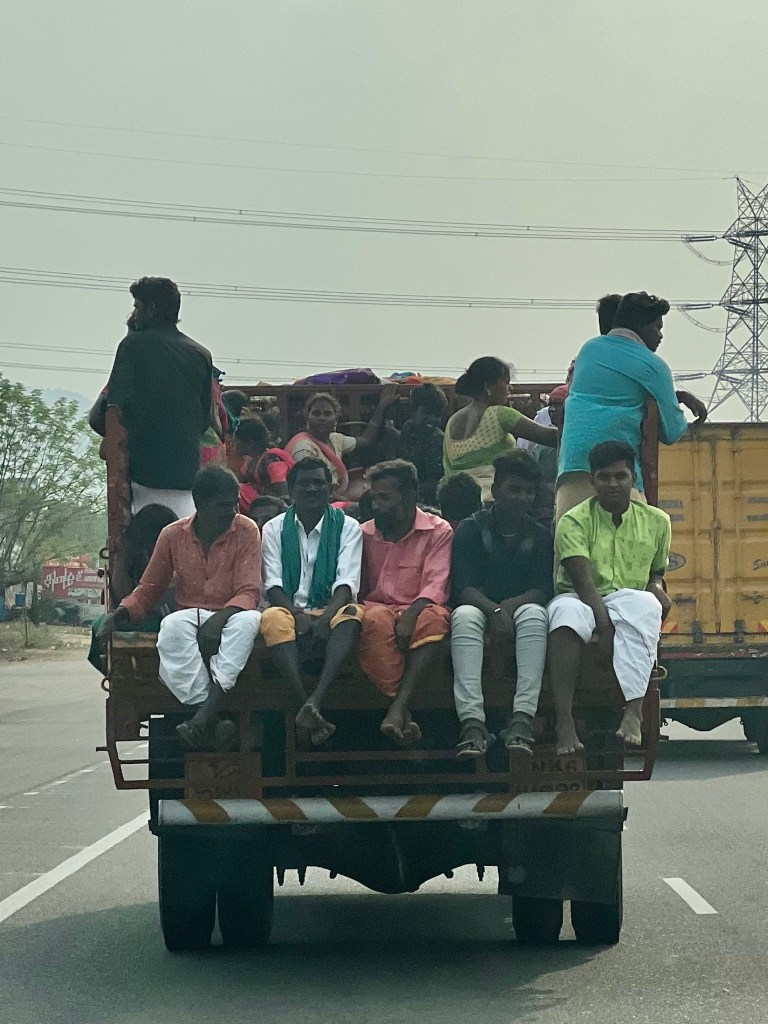
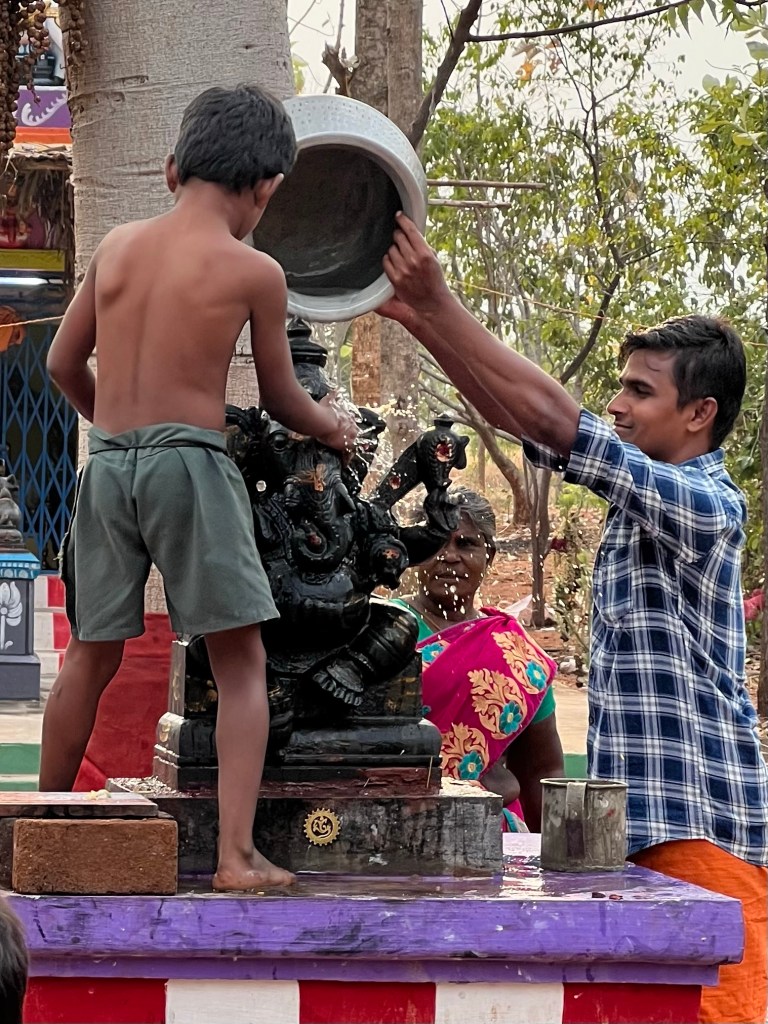
After a while we came to Dindigal where we took to the country roads as we headed for a place called Thandikudi. We saw rice being harvested by the most amazing looking tractor driven combine and bufffalo, sheep, goats and cows all being herded down the road by ladies, bringing them home to bed. Goodness knows how they find the right ones, with them all just roaming freely. We passed through some small, incredibly poor villages, saw a body being buried on the side of the road and a lovely family washing the deity at one of the temples.
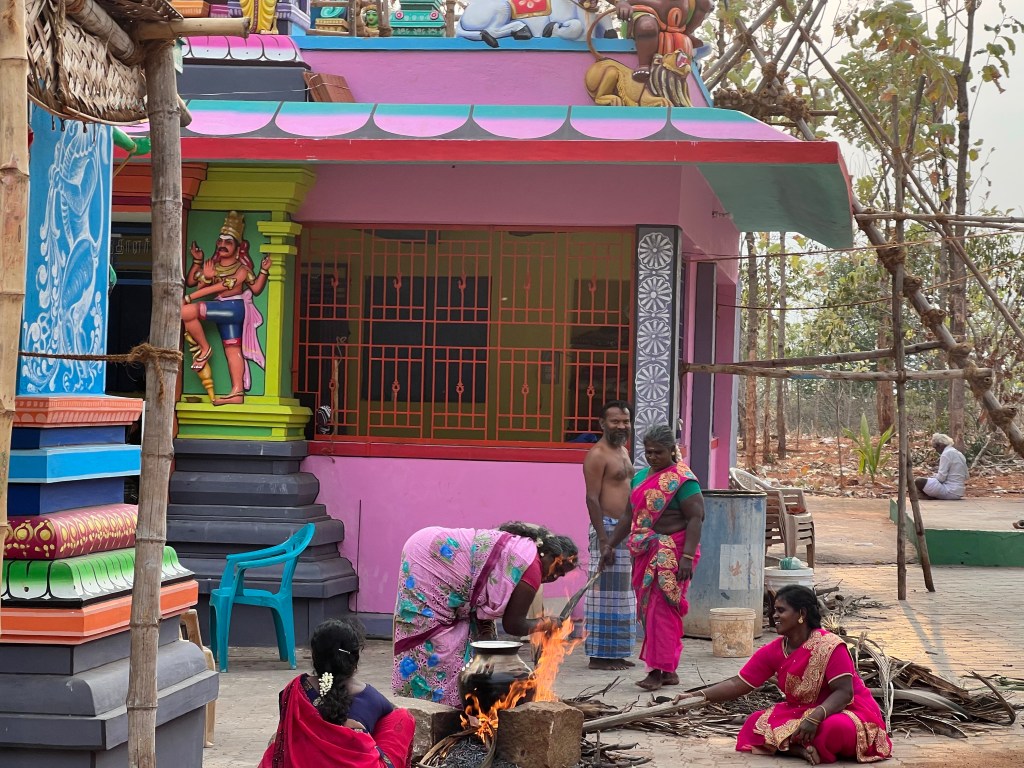
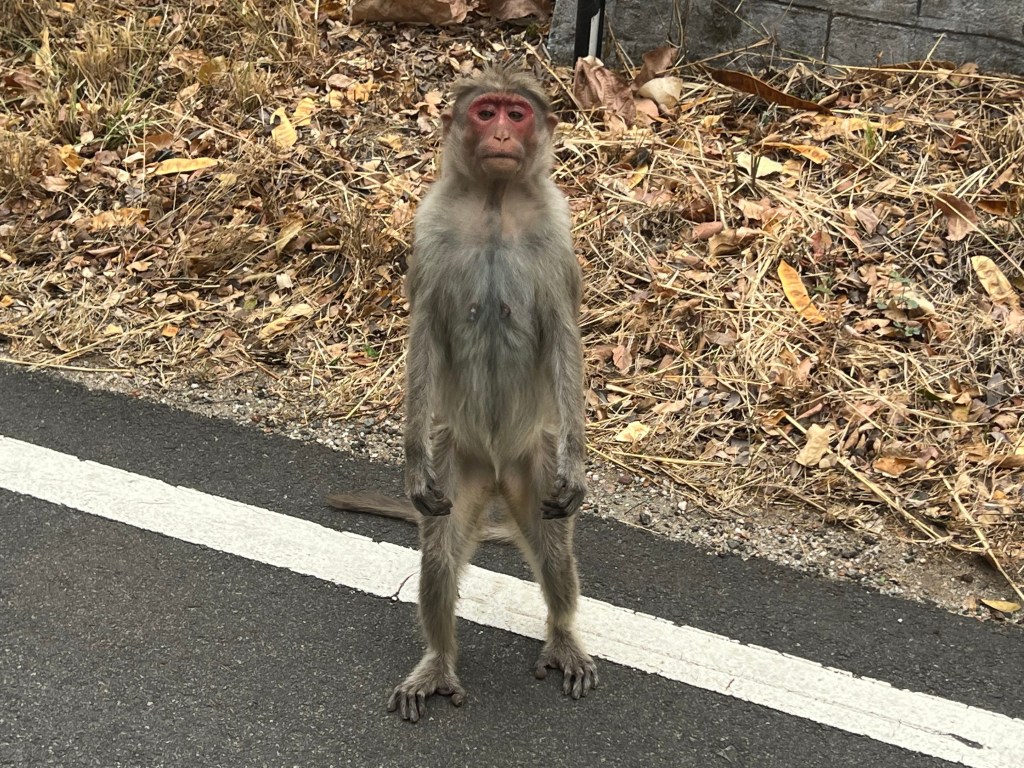
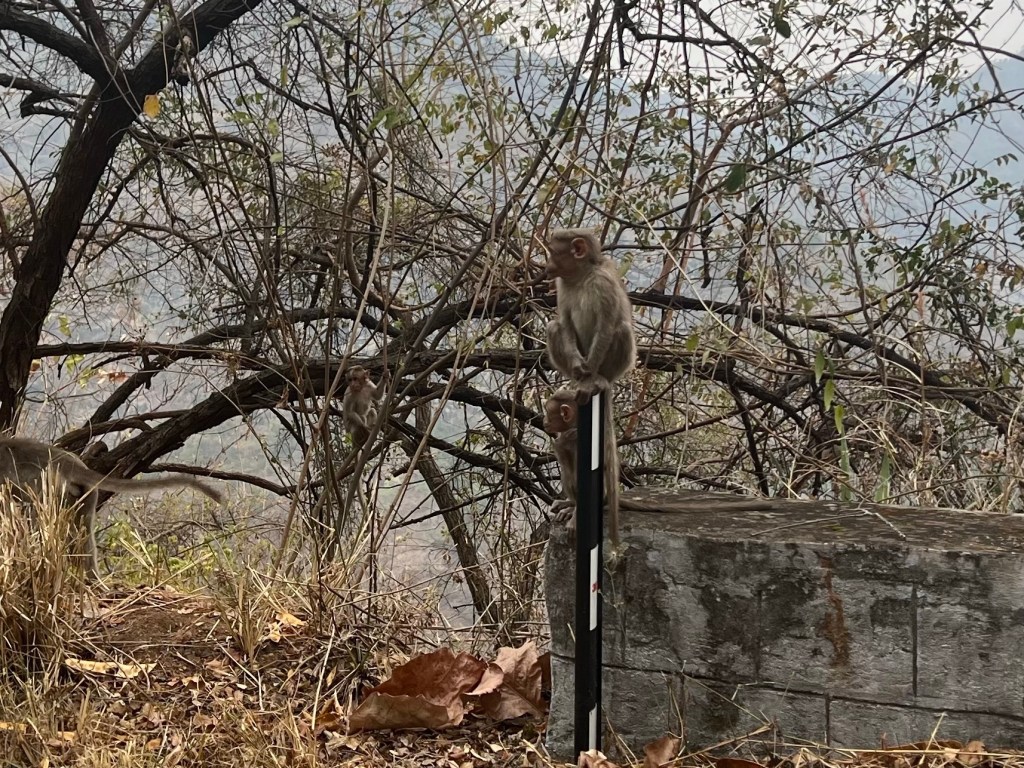
We passed banana and coconut farms until we started the climb up the Palani Hills. The road only goes to the Rajakkad Estate and a couple of tiny villages on the way. It is incredibly narrow and windy, but very much two way and we met many cars coming the other way, including the bus, which does not slow down for anyone. A number of bemused bonnet macaque monkeys signalled the way until we reached the village of Thandikudi. Here we took a sharp right up the most amazing road passing coffee trees and others with pepper corns growing up them, until we reached our destination.
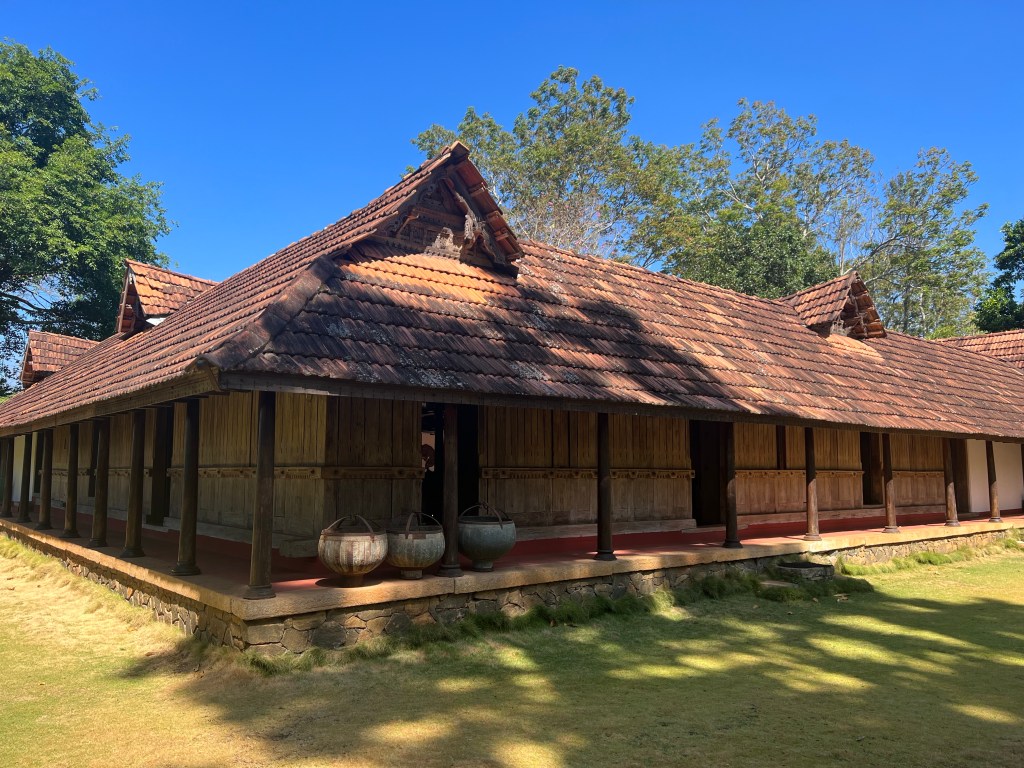
Well this is something very different and very special. I am not sure what I was expecting but not a clearing in a forrest with an enchanting four sided wooden bungalow around several pretty courtyards . It is in fact a former 18th century summer palace of the Maharajas of Travancore, originally situated in the Nelliyampathy Hills of Kerala. It was purchased by Jeremy Fry (of Fry’s chocolate) who dismantled it into 20,000 individual pieces and after restoring each one, rebuilt the palace first in Kerala and then here in the hills of Tamil Nadu at an elevation of 1,000m and 50km away from the nearest town. And he was eighty! Jeremy sadly only lived here for one year and it was then turned into a small hotel by his son Francis with Robesh, who still runs the place as if it is his home.
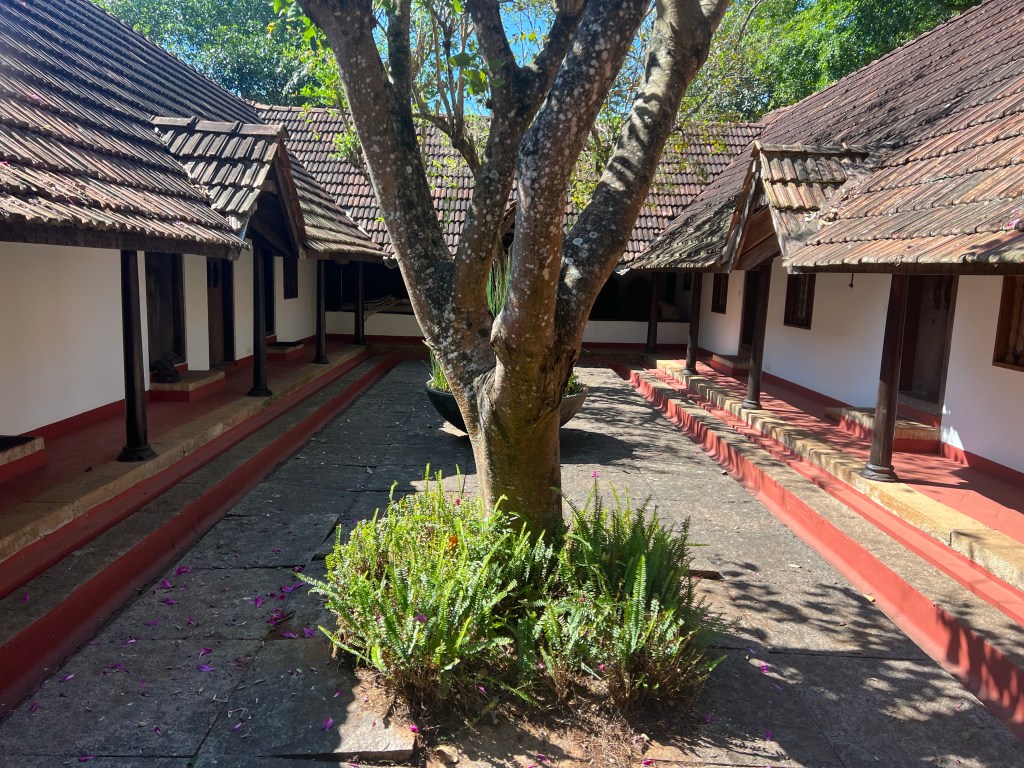
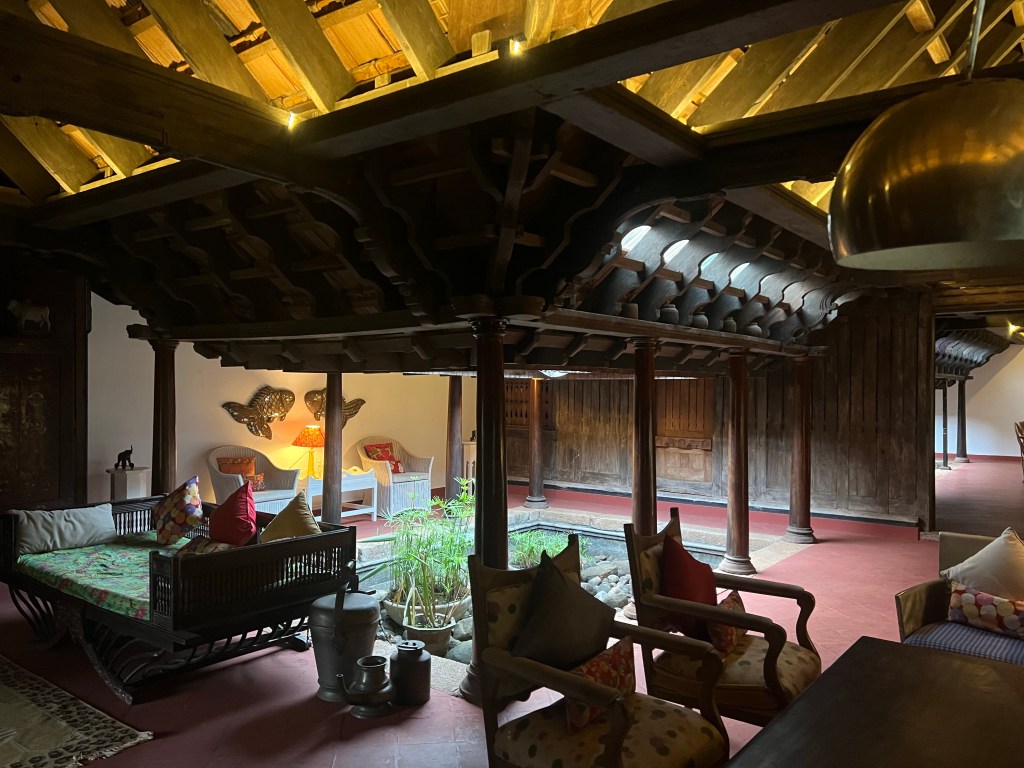
I can’t wait to explore tomorrow, it is set within a 50 acre working plantation of bananas, oranges, peppercorns and coffee, it has its own little farm and vegetable garden, and is as self sufficient as it can be. It has just eight rooms, coming off the central courtyard, which are all different, simple but comfortable. It really is very lovely. I am sadly the only guest staying, though Robbesh tells me they have been busy over the last couple of months. I had a truly delicious dinner (not too spicy), can’t believe they went to so much trouble just for me, and with somewhat wayward Wi-Fi, I had a nice early night.
 EC-Rider Travels
Leave a comment