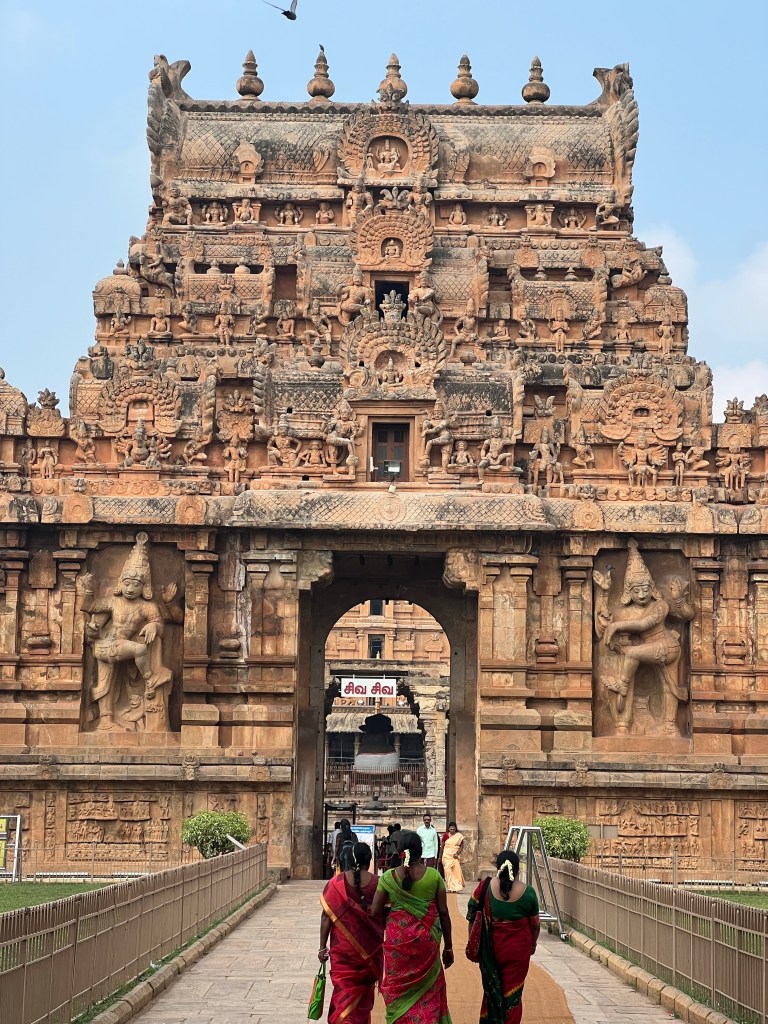
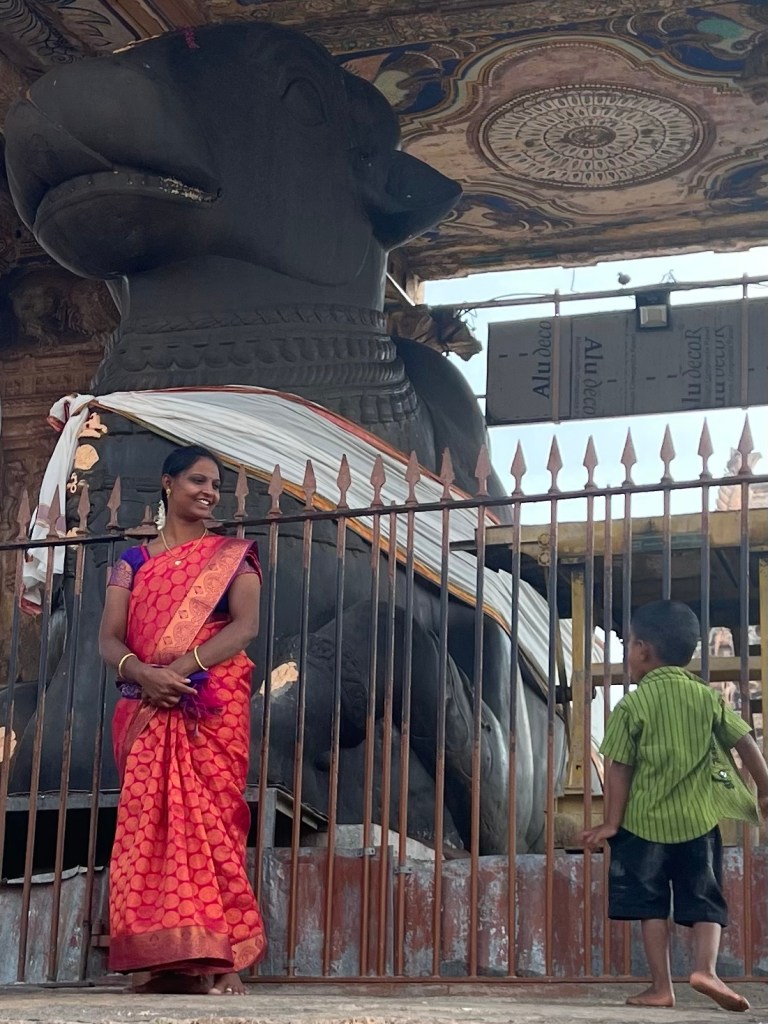
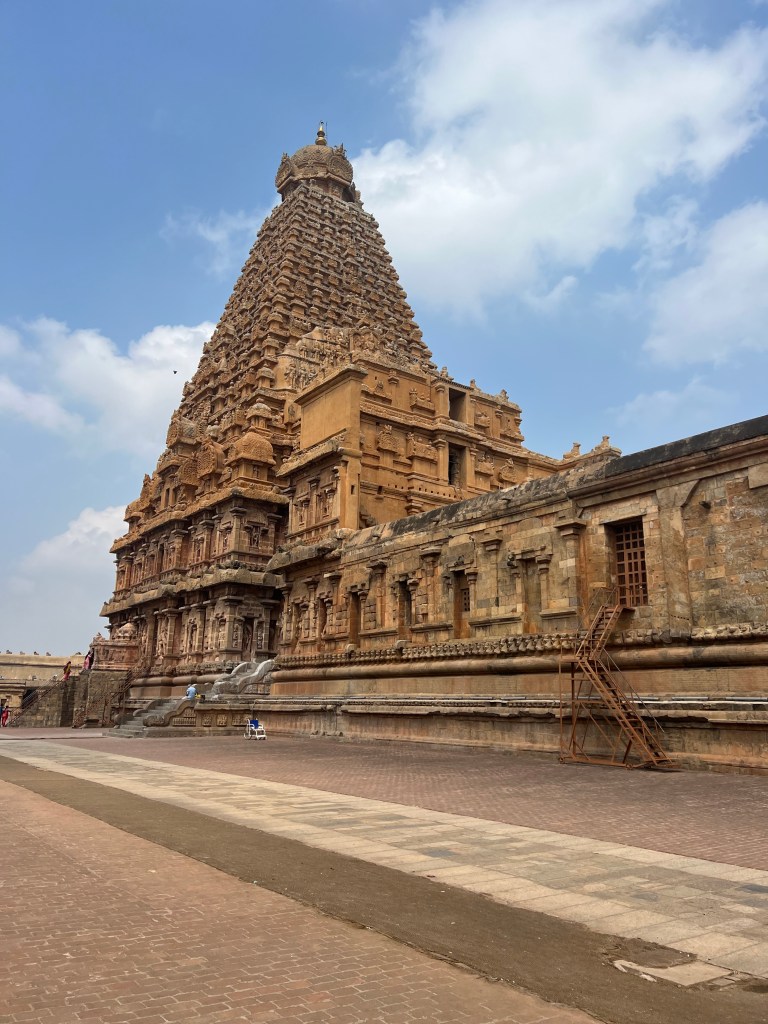
We started today with the Brihadeeshwara Temple built by Rajaraja Chola I, father of Rajendra Chola’s (yesterday’s temple), and completed in 1010. It is a Hindu temple dedicated to Shiva and is one of the largest temples in India and a UNESCO World Heritage Site. The temple tower is the tallest in the world at 66m high, the cupola, thought to have been carved out of a single rock, weighs around 80 tons. The temple is dedicated to Shiva in the form of a huge linga (phallus – though not very obviously!) which is 8.7m high, occupying two storeys of the inner sanctum – apparently one of the largest monolithic linga sculptures in India! We filed past this which was adorned with a pair of silver eyes relating to a story about one of his saints, Kannappa Nayanar, who sacrificed his eye for Shiva. There is a big statue of Nandi carved out of a single rock at the entrance. The entire temple structure is made out of granite, the nearest source of which is about over 50 km away….. disappointing for its builders and their poor bulls!
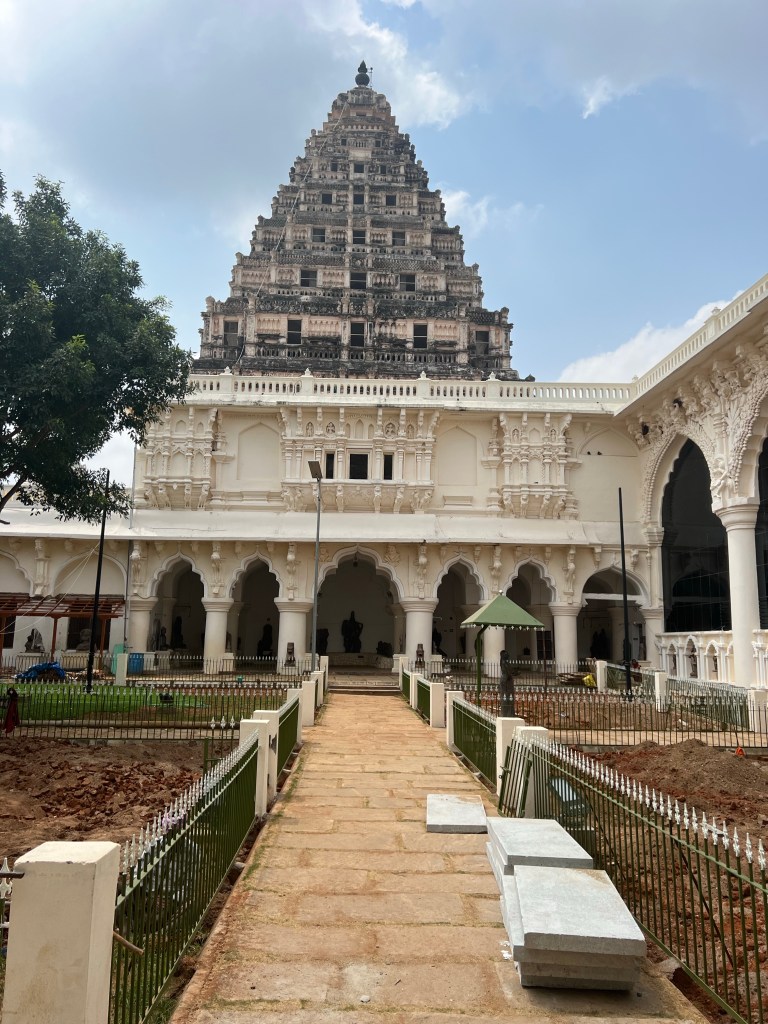
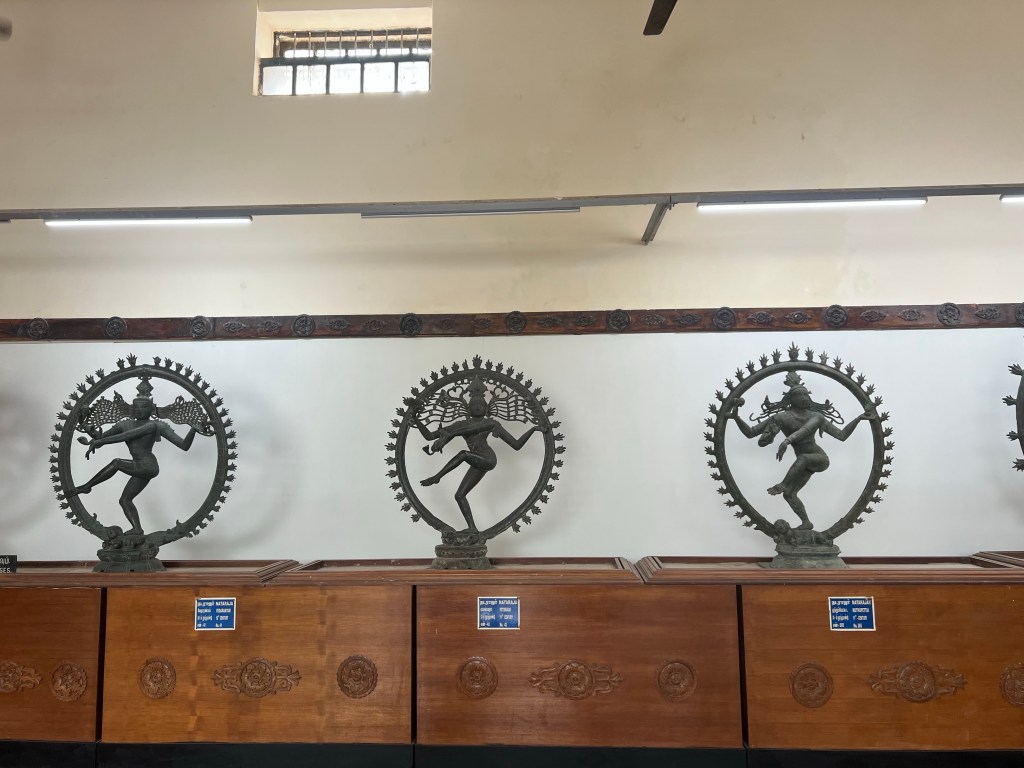
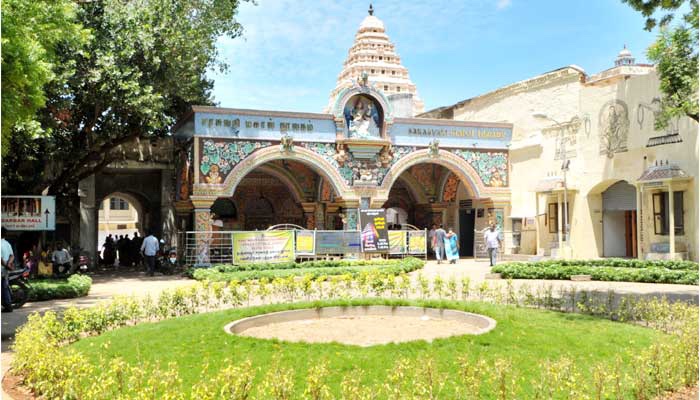
We then went to the Tanjore museum within the Thanjavur Palace, weaving ourselves between the workman and the half built pathways, we saw some rather amazing bronzes of the various deities. These were similar to those in Chennai but more delicate and certainly mean a little more to me, than they did then. Next to the museum is the Saraswati library, one of the oldest in Asia. It had the most amazing palmleaf manuscripts written in Sandskrit, including some miniature ones; beautiful illuminated illustrations; medical books from the 1800s and a set of 18th century lithographs, by Charles LeBron, showing a comparative study of human faces with those of birds and beasts – quite spooky! Really enjoyed this.
I then watched a film about Tanjore, and though I had been to many of the places they were showing, I failed to recognise any of them. Somehow they had cleared and cleaned the streets and avoided all the endless building work – a somewhat tinted spectacle view, but interesting.
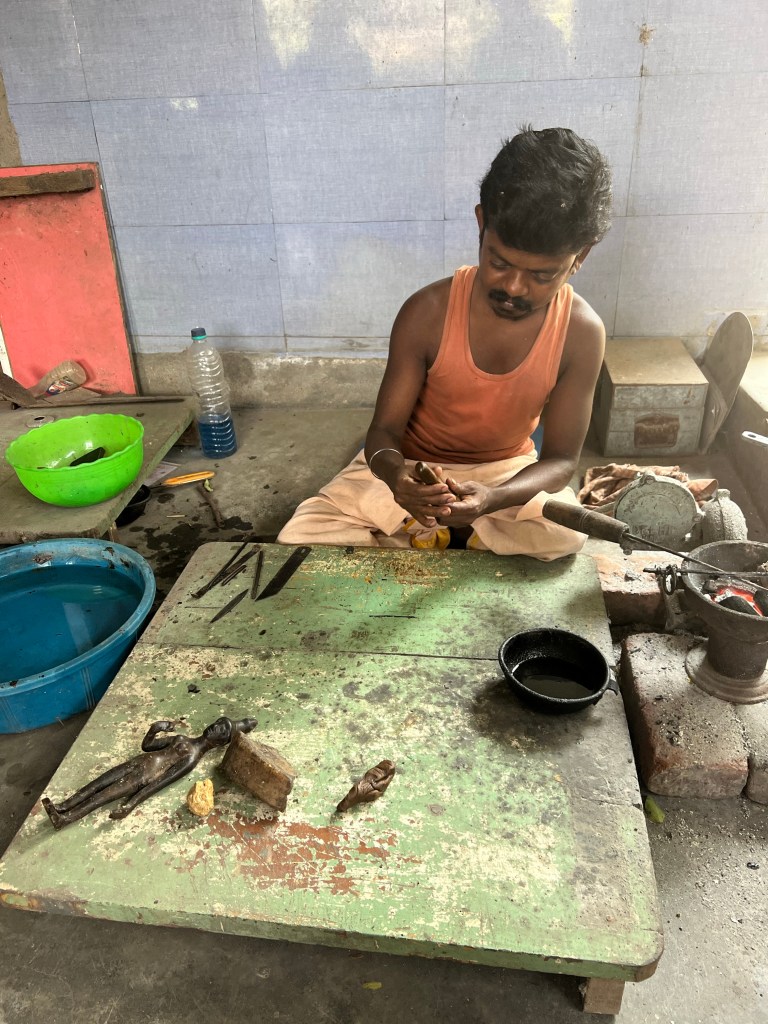
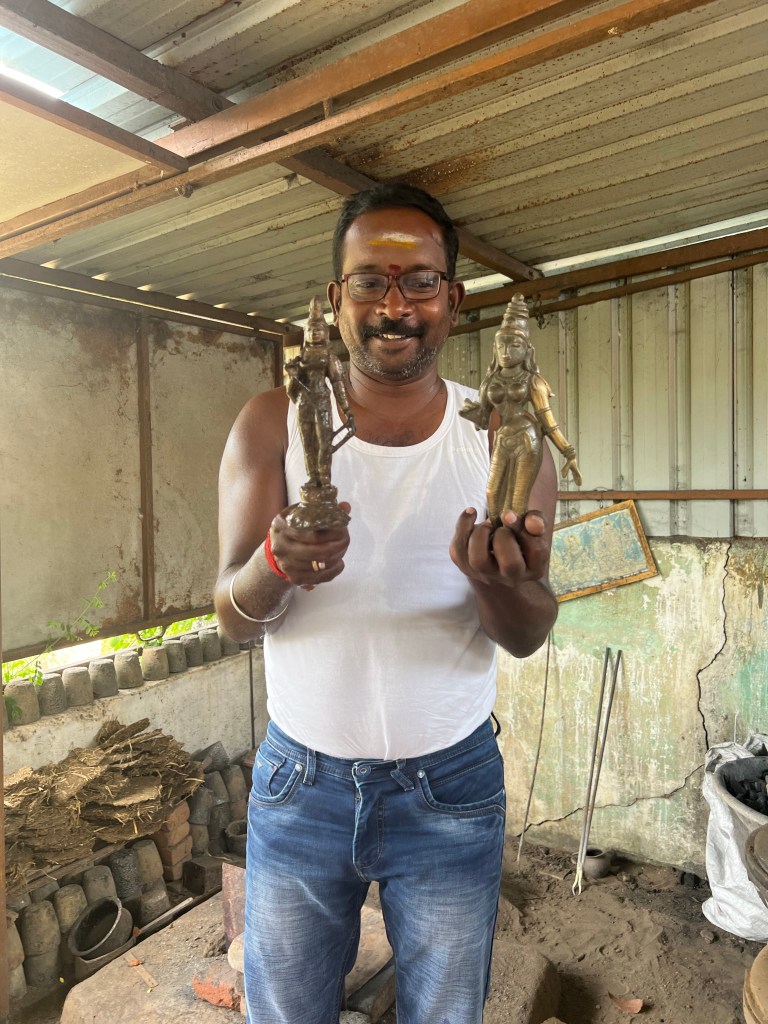
We then went to see one of the many bronze foundries who reproduce ‘antique’ religious statues of India’s Chola Dynasty. This was Arun’s find and he drove us to a back street where we walked into someone’s humble home, to see a group of three men working on the floor. They still use the ancient ‘lost wax’ method – sitting on the floor and using minimal tools. The owner explained, every section of a figure is made separately. They start with a model of the figure, using a mixture of bees wax from old hives and resin which are heated together to form a putty like material. While still hot, this is moulded into a part of the body, in our case the hand. These are then attached to one another and taken to the next guy who covers the model in clay – made from silt from the river Kaveri – just outside the window. This dries in the sun for a few days, a hole is made in the base and the mould is heated over a fire to melt the wax, leaving the shape of the statue inside the mould. On to the third man who is siting by another small fire-pit from which he picked out a pot of red molten bronze, and carefully poured it into the hole of the mould. He then poured water over the burning hot clay until it stopped hissing and smashed the clay to reveal the sculpture. It was amazing to see, the guys, wearing no form of protective clothing, had worked in this little foundry for years. The owner explained the skill involved and how easily things can go wrong – if the mould is defective, or the temperature of the bronze not quite right, it can cause air bubbles or cracks rendering it useless.
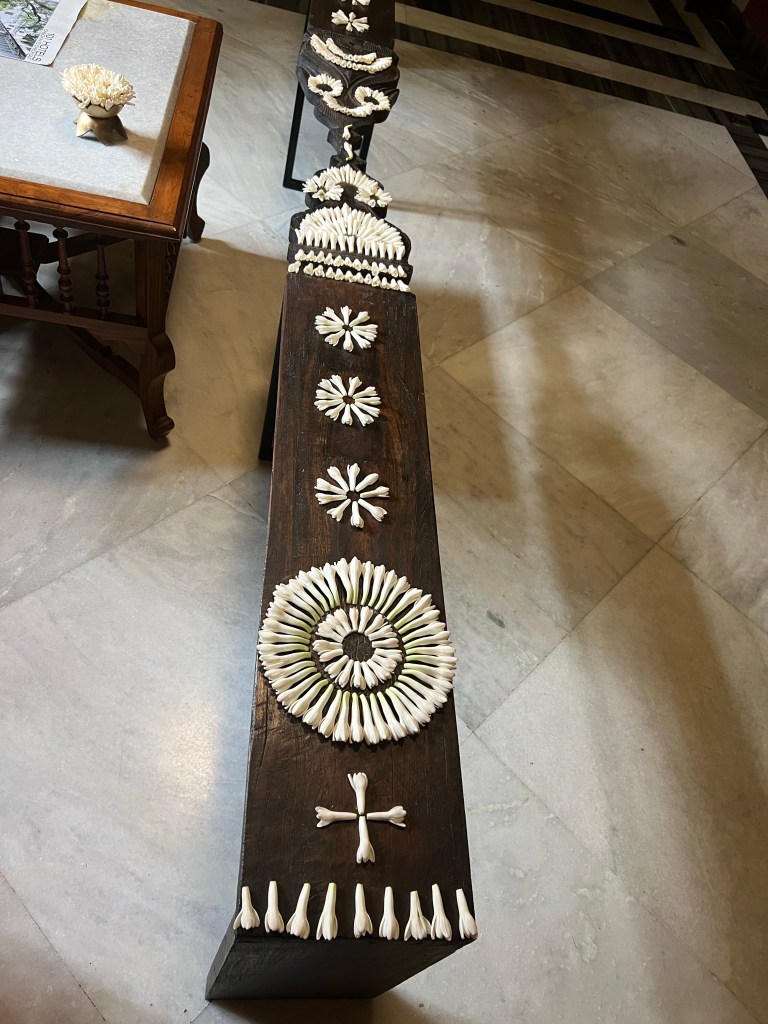
I returned to the hotel to be greeted by Vaibhav, the very charming manager, who was keen to show me round this rather wonderful historic property. Its owner was a dancer with a great love of music and there were wonderful old instruments around. He was then keen to show me the Spa which included a ‘sound spa’, where you have a treatment with just sound, using instruments similar to those we saw at Auroville. He gave me a demonstration explaining that this was one of very few places which offered such a treatment. I was not convinced it was for me, but realised I was most definitely expected to have something so happily succumbed to a blissful aromatherapy and natural body scrub – including a sauna – hate them – but the rest was heaven.
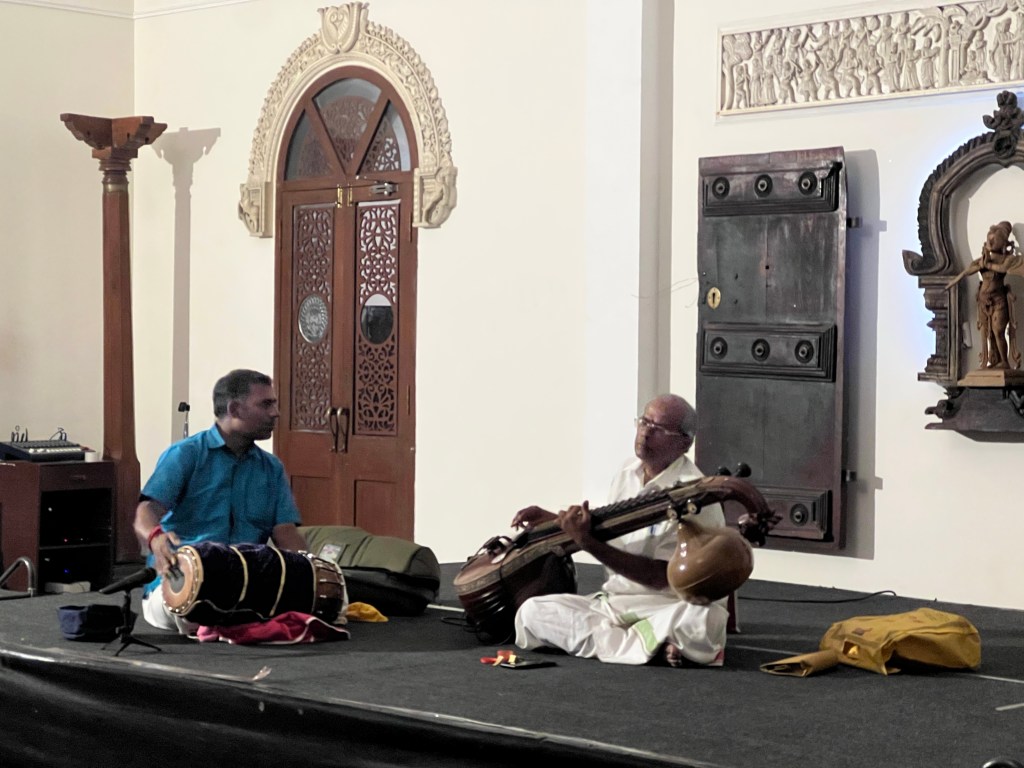
It was then a quick change as Vaibhav was very keen that I should attend the Verna musical recital. This huge instrument, made out of the wood of a jackfruit tree, was born in Thanjavur. It is played, sitting on the floor, usually accompanied by a drum. Both musicians were incredibly talented and you have never seen fingers move at such speed on both the drum and the verna but I am not sure I am getting the CD!
 EC-Rider Travels
Leave a comment