
This morning we visited the most extraordinary place called Auroville – by its own admission…. an experimental community. It was established in 1968 by Mirra Alfassa – the spiritual companion of Sri Aurobindo. Known as ‘Mother’, her ambition was to: Create a universal town where men and women of all countries are able to live in peace and progressive harmony, above all creeds, all politics and all nationalities. The purpose of Auroville is to realize human unity.
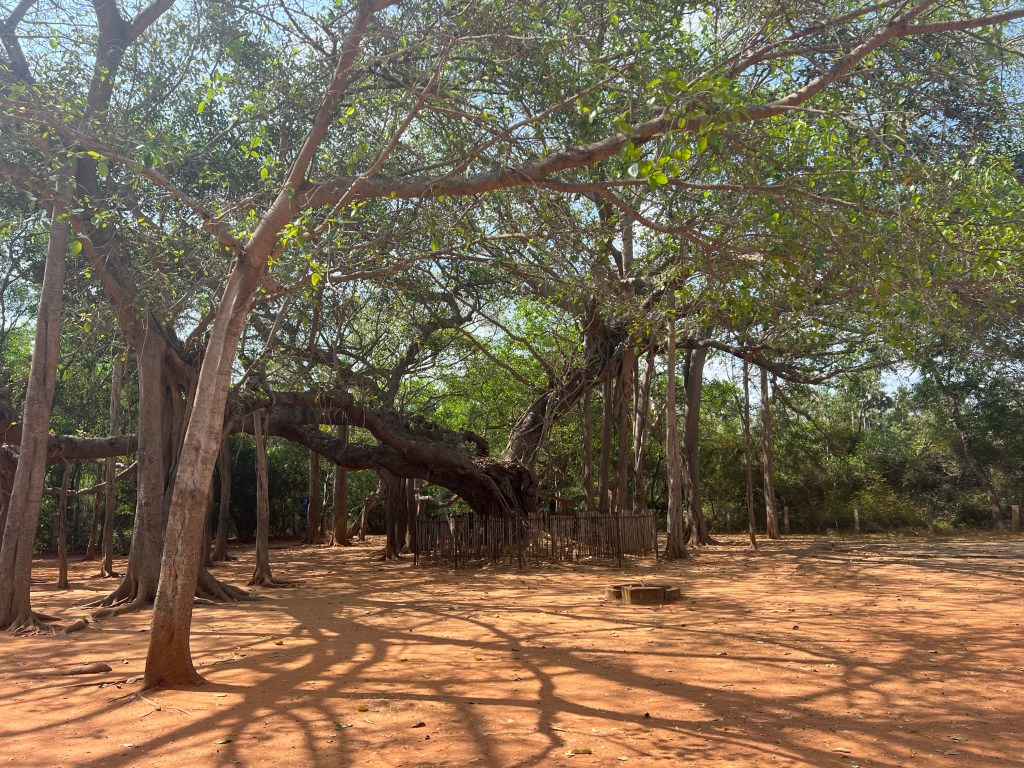
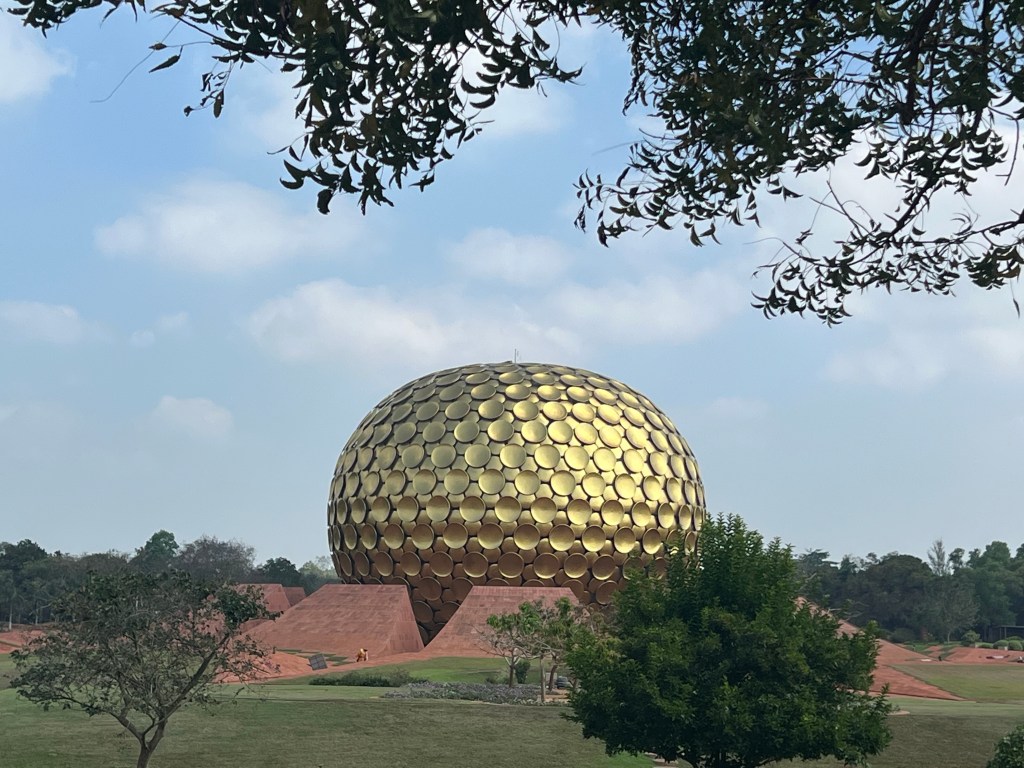
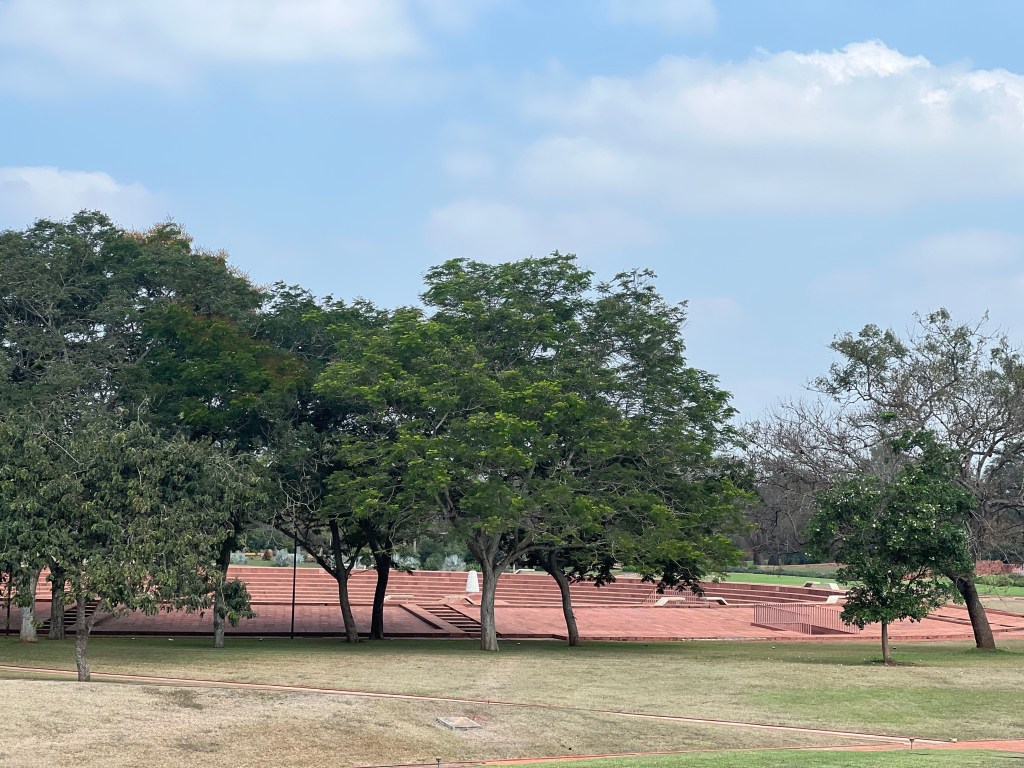
The site, approximately 3,000 acres, is set around the most incredible old Banyan tree which has dropped aerial roots in a circle around it, thought to be like a Hindu temple. Auroville has grown from a barren desert to a bioregion of more than three million planted trees. There are a number of villages, with shops, schools etc all around an oval Peace Area with the Matrimandir, in the centre. This is a huge golden golf ball like globe, for silent meditation. It was conceived by Mirra Alfassa as “a symbol of the Divine’s answer to man’s aspiration for perfection” Sadly visitors are not permitted inside the Matrimandir as it is only for the ‘Aurovillians’. Matrimandir is surrounded by 12 petals which will lead soon into 12 gardens. Nearby is the amphitheatre with the Urn of Human Unity which contains the soil of 124 nations and all 28 Indian states, presented at the inauguration on 28 February 1968.
The township was originally intended to house 50,000 residents who were to live in perfect human unity. Currently only 3,282 people from 54 countries live there, with two-thirds from India, France and Germany.
On the face of it is seems like utopia but I was not convinced. The idea is you give up everything to live in Auroville, sell everything and give the money to the community. This goes towards your house and a small monthly salary which you are paid. Auroville doesn’t use currency but an Aurocard for transactions. Healthcare, electricity, schooling is free, and social enterprise is very much encouraged… however any money earned contributes to the towns upkeep. Although everyone was buzzing around on bicycles and mopeds looking very hippy and happy, I found it all a bit creepy.
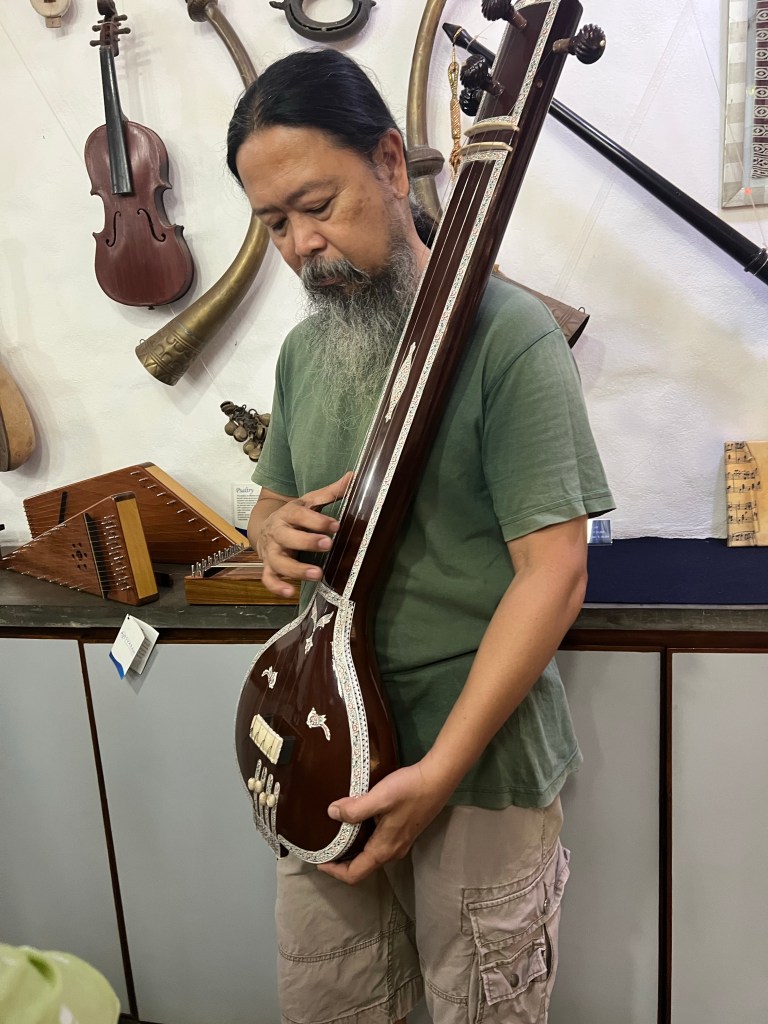
They are however doing some good work, introducing and encouraging handicrafts to local women, a big educational project to encourage recycling and elimination of plastic (they have some way to go!). They do also make the most amazing musical instruments, mainly out of natural or recycled materials. We were given a tour/demonstration of these in the Svarem Sound Garden, and they were pretty amazing, I think they are largely used for meditation.
Mariam’s brother, Kuri who lives in Pondicherry, had kindly invited me to lunch and after we had fought our way through the heaving crowds (today being a National holiday for Paurnami Vratam) I met him in a micro-brewery in the centre of town. So kind of him, and a delicous and most entertaining lunch, even if he found my no-alcohol lent resolution a bit difficult to comprehend!
I then rejoined Rebecca and Arun and we went to visit a paper factory – an Auroville based project making paper from the cotton offcuts of other projects. Cotton is ground down into a paste to make strong, durable acid free paper and decorated in various different ways.
If I had my suspicions about Auroville earlier, they were definitely confirmed after we visited an Ashram which also housed Mirra Alfassa’s tomb. Bearing in mind that an Ashram is a place where you go for spiritual or religious comfort and retreats; never has anywhere been less welcoming. There was a group of horribly aggressive men at the door shouting at you to turn your phone right off and as you entered a few of their grumpy friends directed you passed hundred of flowers in pots. You then reached her tomb, again covered in flowers, apparently replaced every day, with more aggressive men pushing you through and polishing any finger-mark anyone might make on the marble. Devotees were streaming passed her and dropping to their knees. Ironical really for someone who did not believe in any kind of religion, symbolism or floral tributes!
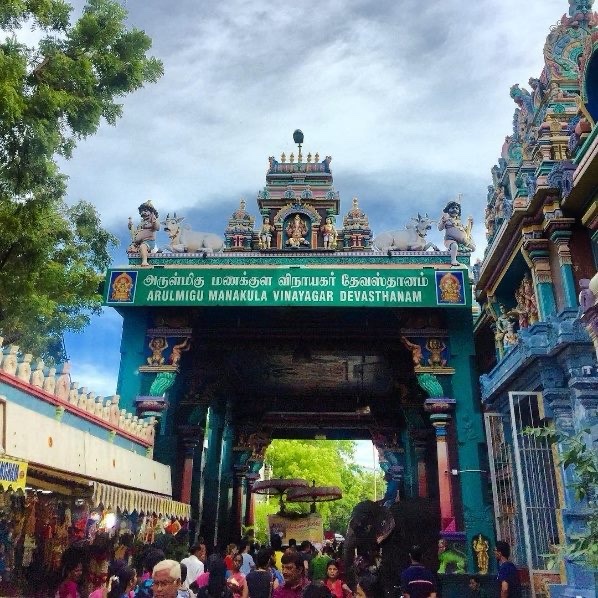
We then dropped into another very different Hindu temple, called the Manakula Vinayagar Temple, this time dedicated to Ganesh or Ganesha a rather sweet, elephant-headed God. He is the son of Shiva and the remover of obstacles. He is the first god worshipers see when they visit a temple. Until recently, there was a real live temple elephant here called Lakshmi, but she died suddenly in November (aged just 32), and this custom has now stopped. It was a very happy place with lots of people sitting around on the floor having a nice chat while others took offerings to one of the Brahmins to have their prayers made to Ganesh.
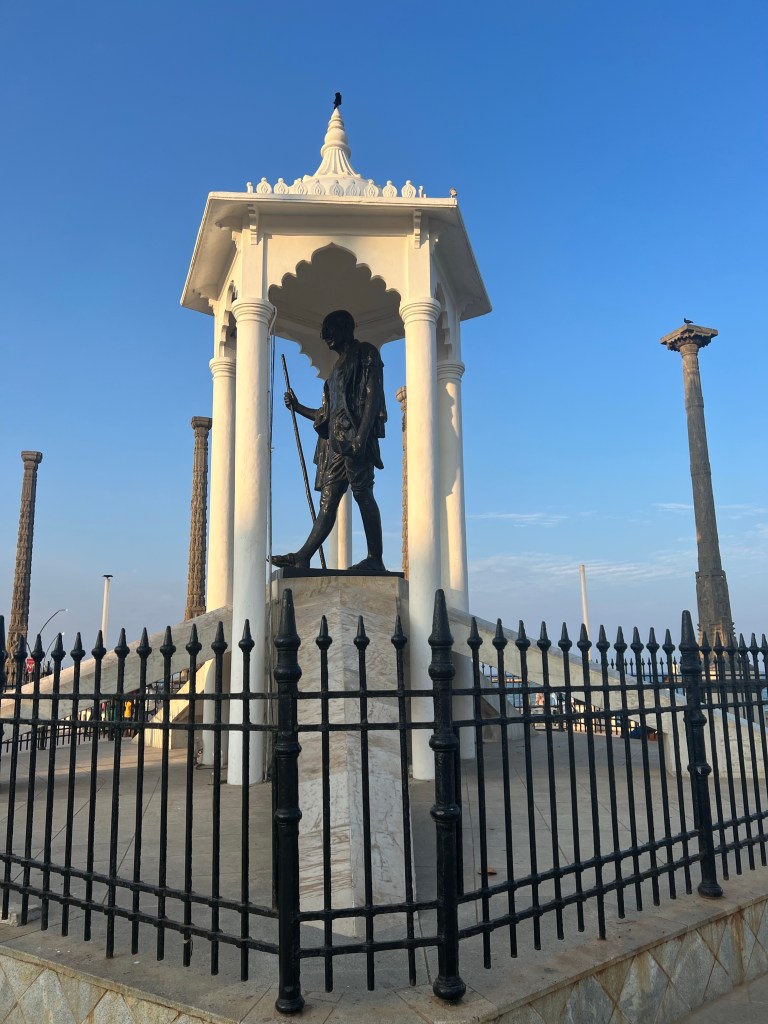
Final stop of the day was the Rock Beach which runs for 1.25km looking out into the Bay of Bengal. There are rocks all the way along, so swimming is not possible, but a welcome breeze. There is also a rather beautiful statue of Gandhi – though a little too shiny for his liking, I felt.
Only quite a nice supper in the hotel, but very sweet waiters!
 EC-Rider Travels
Leave a comment