
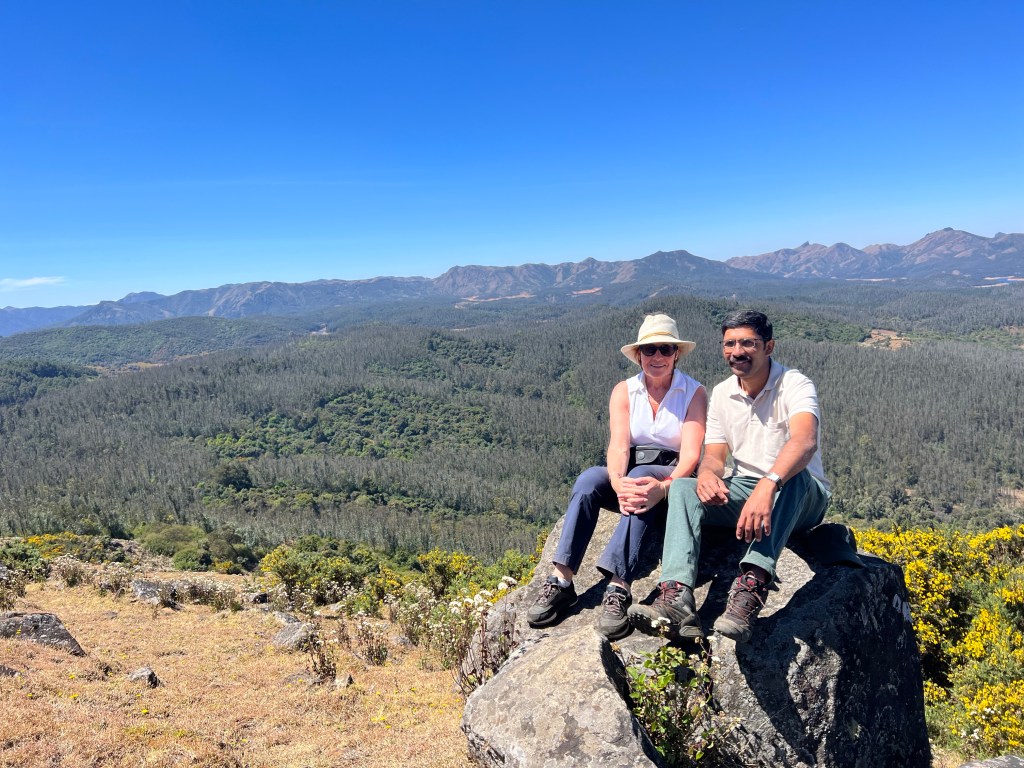
After the most hysterical breakfast with Thankan relating stories of her ‘terrible’ family, I left them all to be taken by Bala to meet Thorthey. Thorthey is a member of the Toda tribe and lives in a Toda village within Ooty itself. He kindly agreed to take me on a trek to see some of the Toda villages. We drove for about twenty minutes further up into the hills and then started walking up through a tea plantation. Thorthey explained that only the Toda had the right to roam along such routes. Loyal Bala escorted us (I think on Mariam’s instruction) walking behind me in case I fell – some of it was in fact quite steep, but unbelievably beautiful.
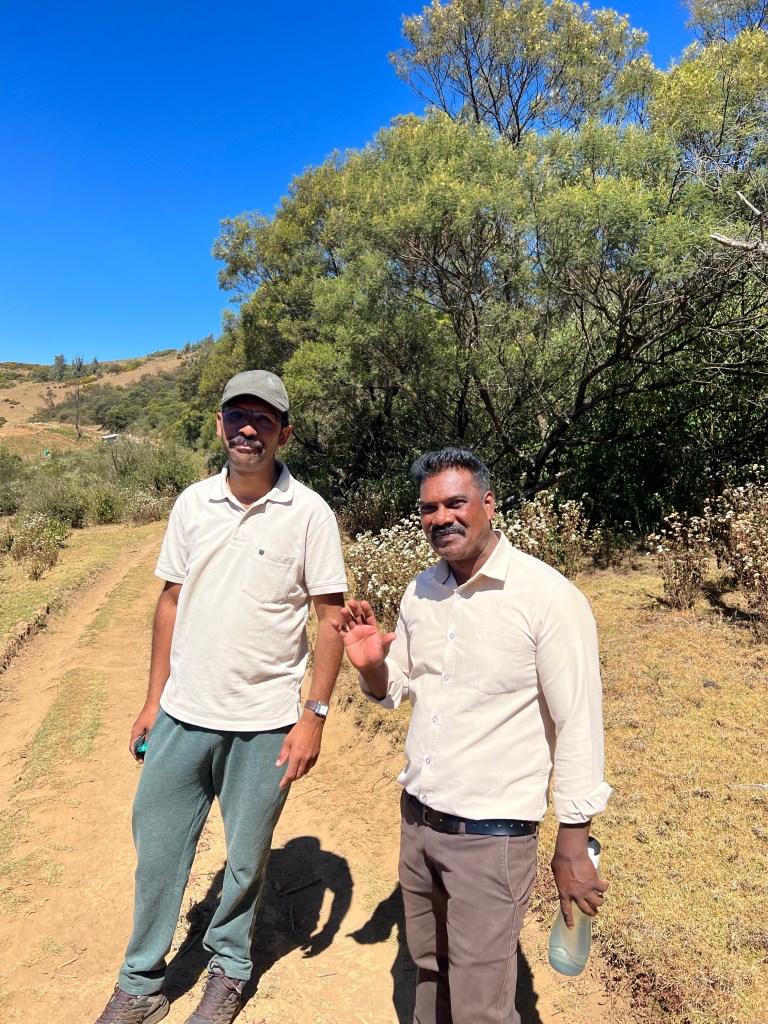
Along the way, Thorthey explained a little about the Toda way of life and his upbringing in a Toda village. In many ways there were parallels with the Aboriginal thinking. Like them they worship and learn everything from nature, and with only a spoken language (no written), everything is passed down from generation to generation by word of mouth. It is thought that they have lived around Ooty for over 4,000 years but it is difficult to prove with no written record.
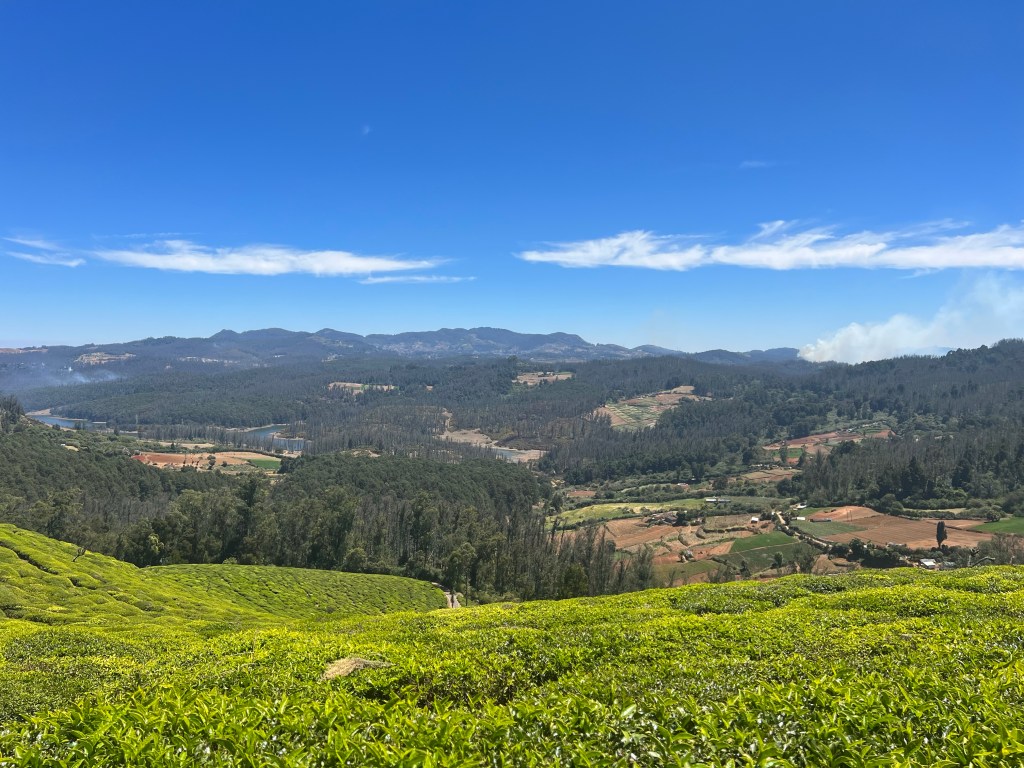
There are approximately 2000 Toda people today, living in about 125 villages or ‘Munds’ around Ooty, each village being made up of five or six houses for one extended family. There are about 500 families divided into fourteen different clans. They marry young (girls about 15) outside their clan. The girls then move to live in their husband’s village. Their economy is pastoral with just semi-wild buffalo for their milk, their wealth being measured by the size of their buffalo herd. Their buffalo wander freely, in fact I saw a herd walking through the town with their calves yesterday, which must have belonged to Thorthey.
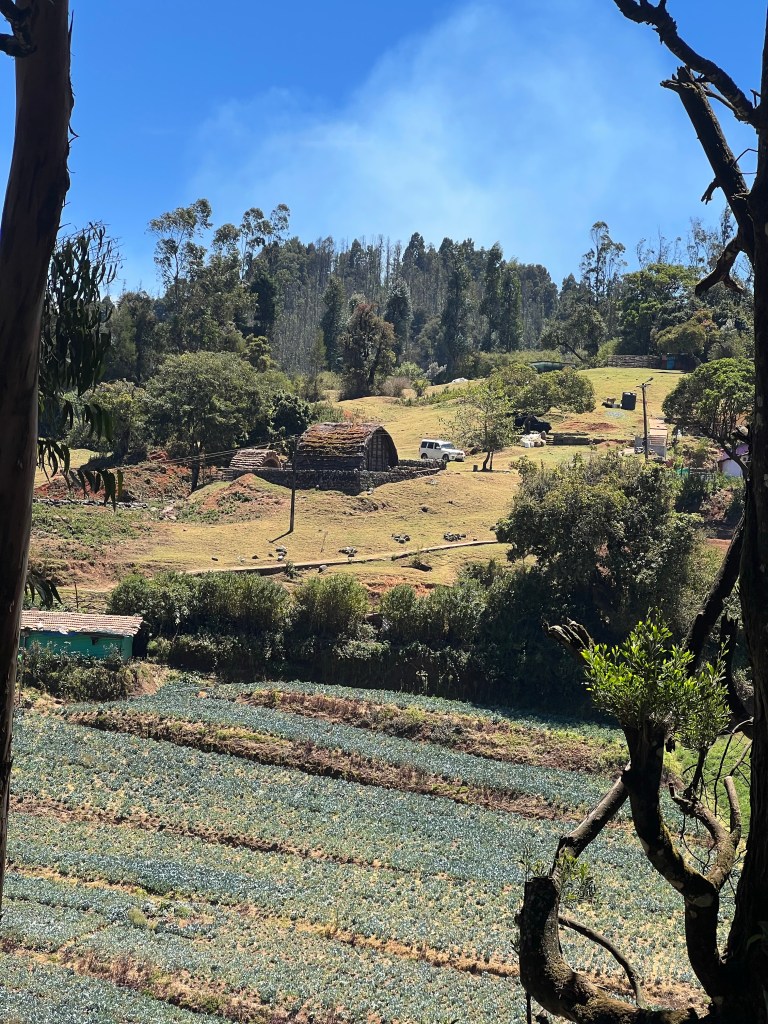
Toda are vegetarian and used to live purely off the fruit of the forrest and the milk and ghee from their buffalo. More recently they have started growing vegetables, particularly carrots, cabbages, garlic, potatoes and radishes. With help from the Government, they have also replaced their traditional bamboo barrel-shaped houses with conventional brick houses and sadly lost some of their traditions to western ways. For example they used to practice polyandry (where women can have several husbands) and female infanticide (killing female babies). So not all bad that some of these have gone!
There is real concern about the invasive trees – particularly eucalyptus and wattle – which have pushed the indigenous shola trees out and is one of the reasons why the tigers and leopards are moving closer to the villages. Thorthey showed me plants which they still use for medicine, for antibiotics and one which cures jaundice and can also measure if a a sickness prevails – if it tastes ok you are unwell, but turns disgusting if you are ok! (would stop wolf wolf!). He also explained how they used to collect honey by hand. No smoke, just gentle blowing down a hole to get the bees to leave their nest, but being careful not to scare them so they always came back…. if they try to sting you you just have to give them a gentle blow?!
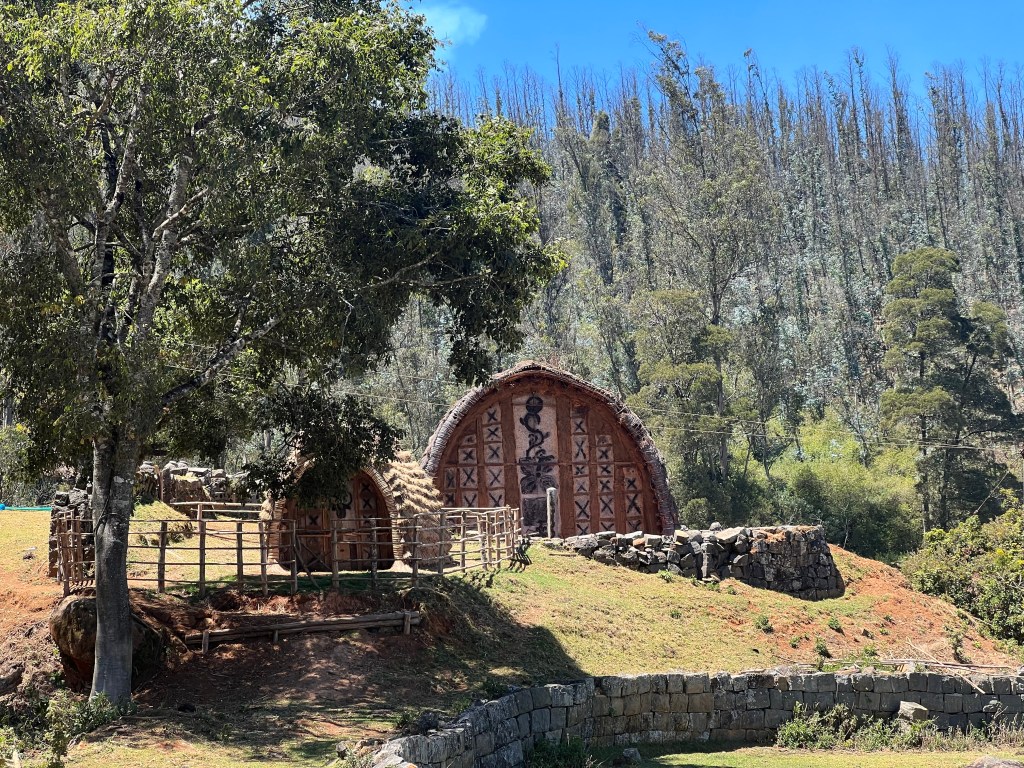
Toda religion features the sacred buffalo with special buffalo kept for the temple who may only be milked by the priest. Every young man becomes a priest for a period of time and is allowed no contact with anyone or anything man-made. It is supposed to be a time to reflect and mature whilst praying to nature, their buffalo and human health. A Toda Temple is made of bamboo, grass and cane with no rope or other form of fastening. The decoration on the front is painted with buffalo butter which turns black in the sun. The door is tiny so the priest has to crawl in on his hands and knees. No women are allowed to enter and it is only used by the priest.
It was the most fascinating morning and I could not recommend Thorthey as a guide more. He does no marketing, believing, in Toda fashion, that word of mouth is best so has asked me to include his contact details here should you know anyone coming to Ooty. He does a number of different treks and is also a golf coach. Thorthey Good: Toda trecking guide and nature walks: 0091 9751 155 691.
Mariam took us to lunch at the Ooty Club, which once again was like returning to the time of the Raj. I can’t believe much has changed since 1947 with the most wonderful hunting pictures on the walls and heavy wooden plaques listing the MFH and also those who had won the Ooty Hunt Cup – including Grania Craig-Harvey’s Uncle Andrew! I am sure there were many others related to some of us in some way.
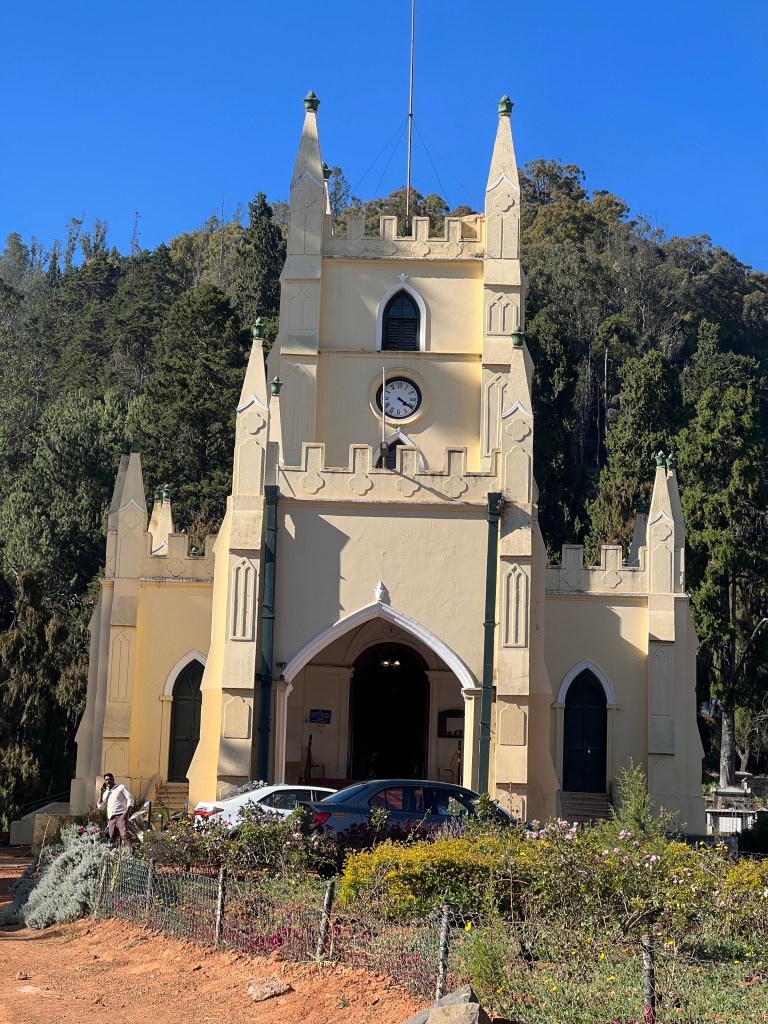
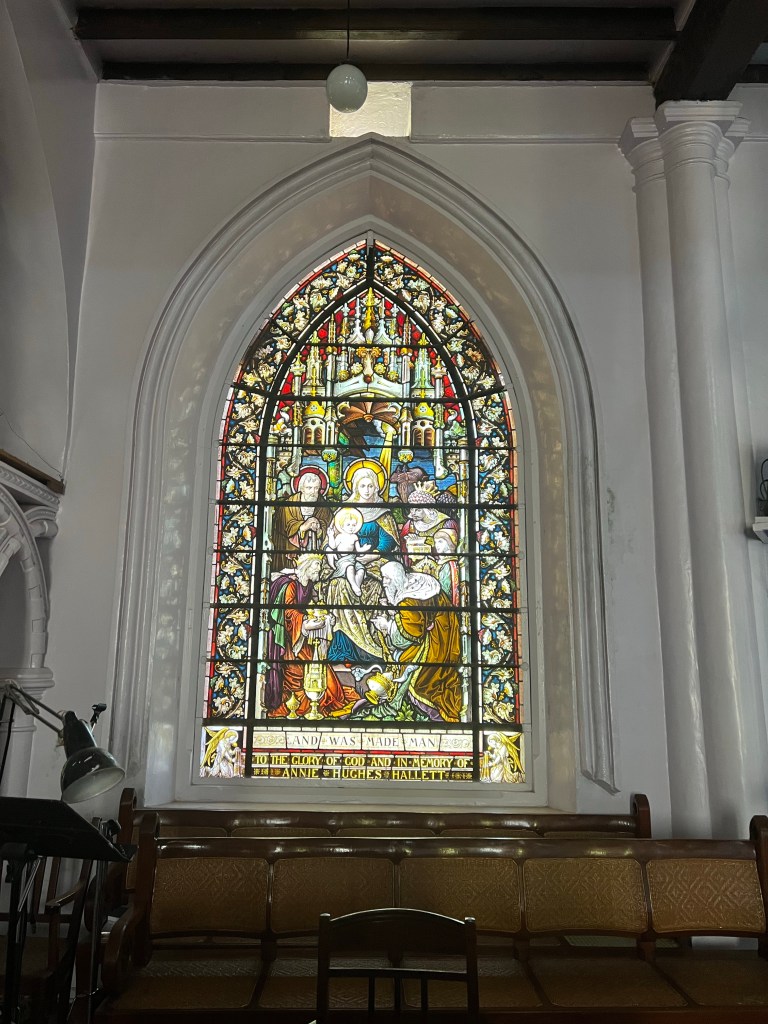
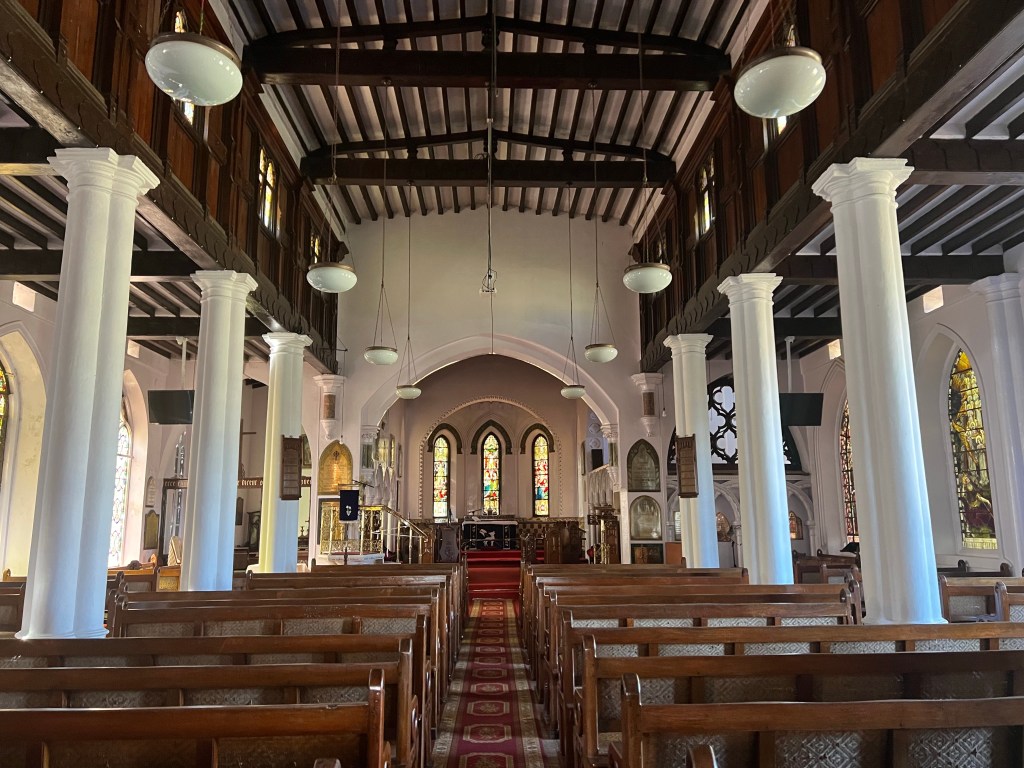
Don and I then went to have a look at St Stephens church which was built in 1829 by the then Governor of Madras, Stephen Rumbold Lushington, exclusively for the British. It is gothic in style with some lovely stain glass which at the time apparently cost Rs 24,000 – the equivalent of about £245. It is well maintained, though the cemetery, full of British graves, was in a pretty poor state. On the other side of the road is a second, much more simple church, built about the same time for the Indian worshipers…. not very Christian.
Hari invited us to dinner in his beautiful colonial house about fifteen minutes away, which was another amusing evening, with Thankan on flying form and sorting out everyone’s lives. She decided, I would be moving into Hari’s East Wing, while the 200m unemployed Indians were moving to Chelsea. She is wonderfully bonkers!
 EC-Rider Travels
Leave a comment