Oh my goodness, it was like being back in the jungle, with a 4.45 start in order to drive up the coast to meet our coach at Noosa. Never my finest hour, but we made it and met our fellow travellers and Darrell our guide, who I think had similar feelings about the time of day. We boarded an unusual looking 4WD bus and drove an hour and a half north collecting a few more companions at Rainbow Beach (not very rainbowy) and on to Inskip Point. It was an amazing drive through varied countryside of beautiful farmland, fruit farms, crayfish farms and intense forestry. We saw some kangaroos just ‘hanging’ with the cows, the first I have seen in the wild, and drove down the most amazing dead straight red-dirt road which went up and down like a rollercoaster. When we reached Inskip Point we joined a queue of 4WD vehicles on the beach and boarded a ferry which took us all over to Hook Point on Fraser Island.
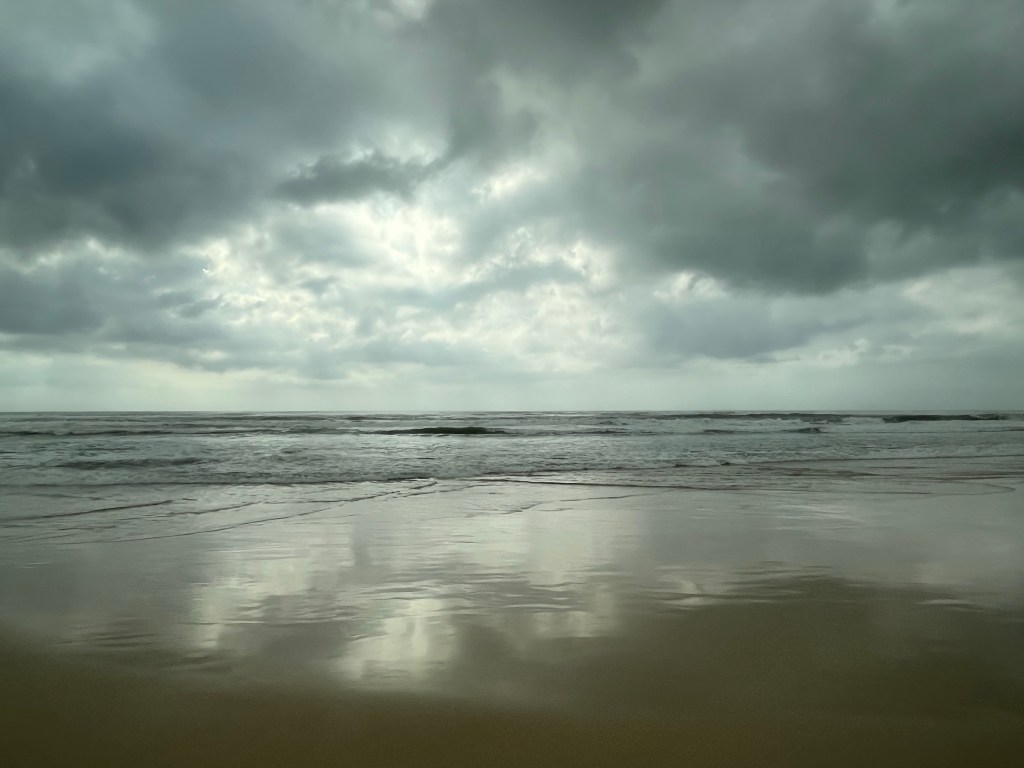
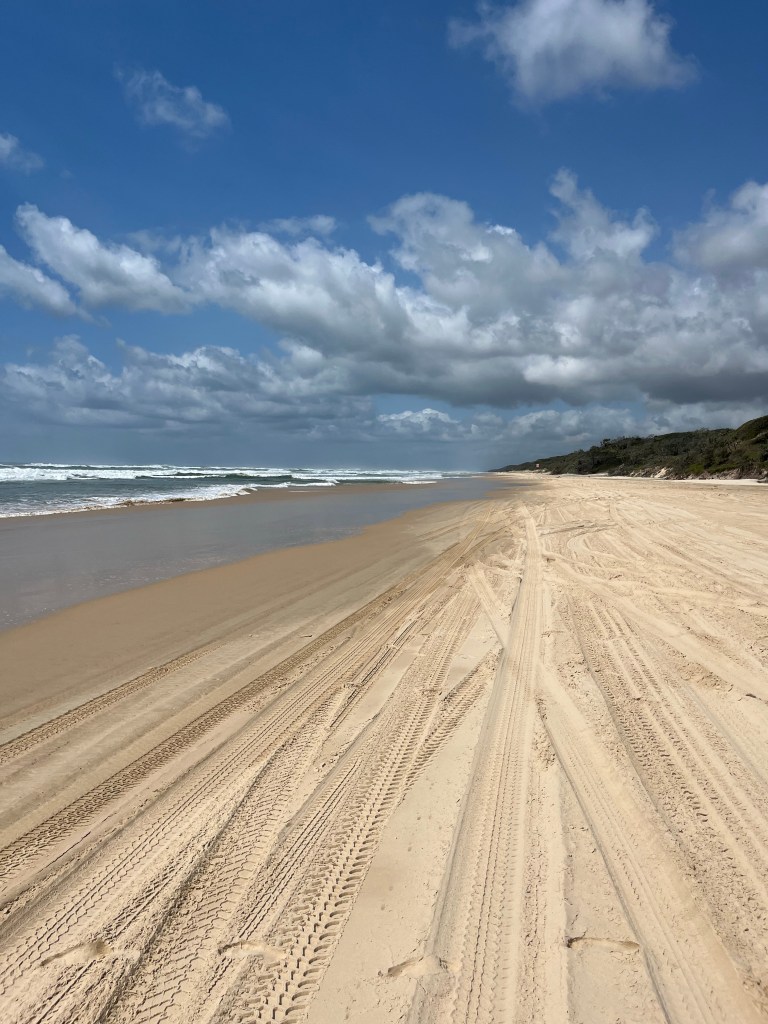
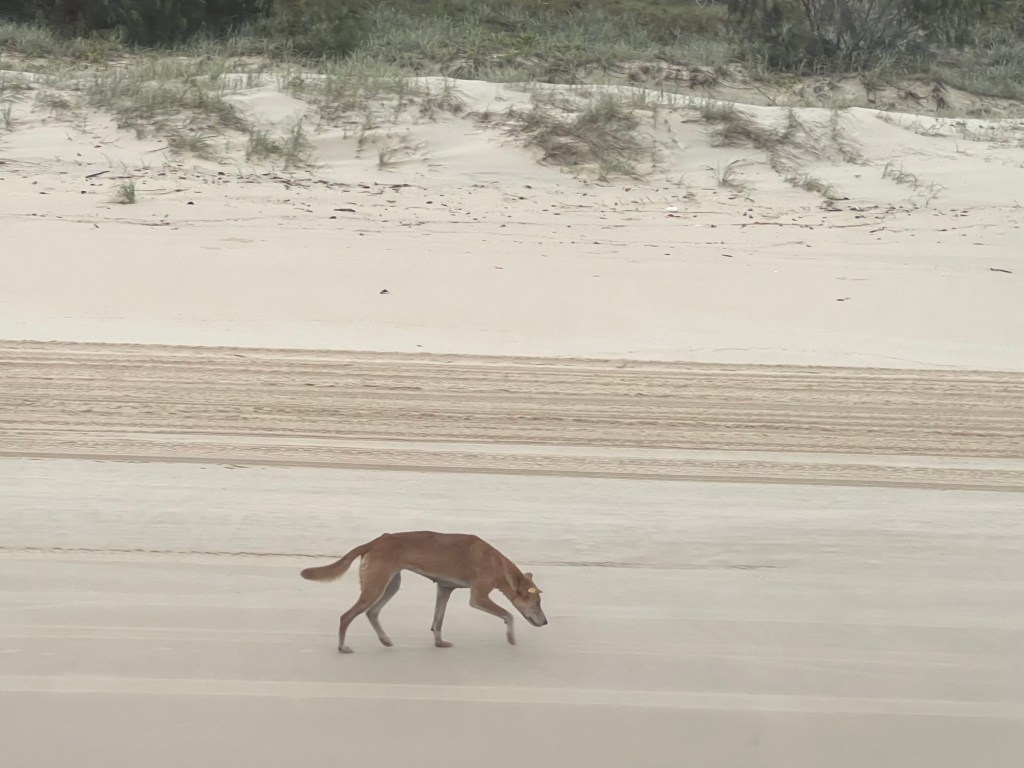
Fraser Island is the largest island of the East Coast and thought to be the largest sand-island in the world. It is 123 km long and 22 km wide. It is made up of impacted sand on a volcanic bedrock and estimated to be 750,000 years old. Plant life is abundant (due to the fungi in the sand – who knew!) and there are rainforests, eucalyptus woods, mangroves and peat swamps. Only a few mammals live on the island: swamp wallaby, ring-tailed and rush-tailed possums, short and long nosed bandicoots, four types of gliders (like flying squirrels) and also a population of 75 dingos. Bandicoots, (like I saw in the Botanical Gardens in Hobart) are, I am afraid the main source of food for the dingos. They are marsupials with backward facing pouches to protect their young when burrowing and with just a 17 day pregnancy, they produce many young to keep the dingo larder replenished. There is also quite a diverse range of birds, reptiles and amphibians though we failed to see many.
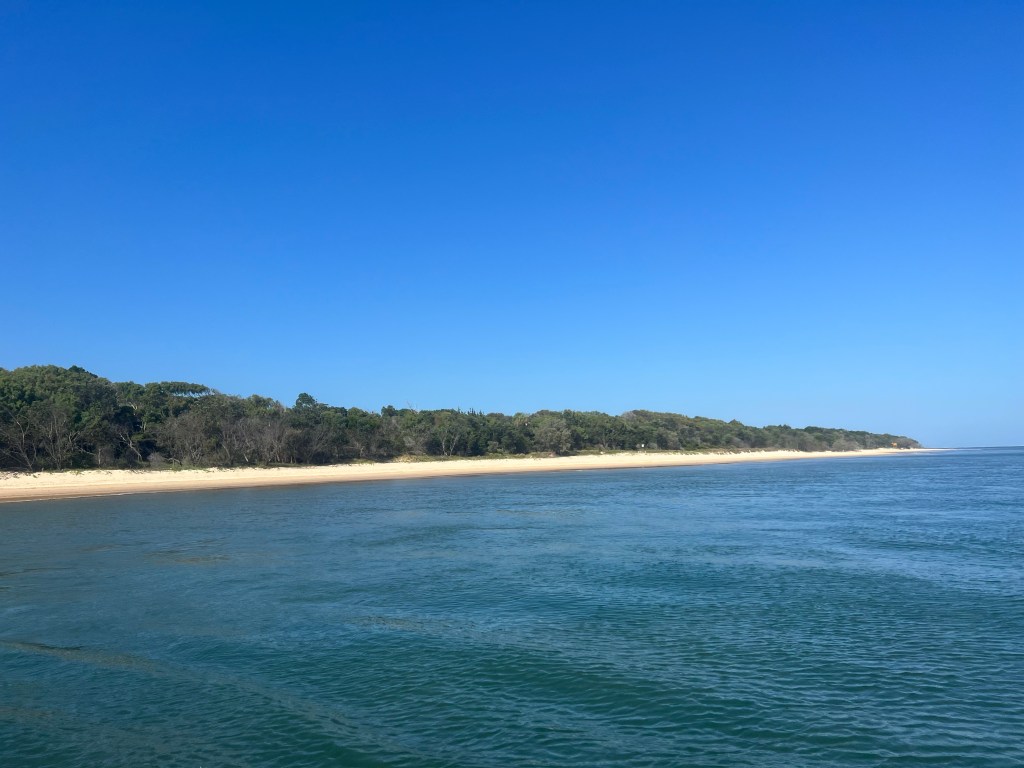
We drove off the ferry and headed down 75 mile beach, the tide was just going out but was still high and it took some pretty skilled driving. We saw dingos on the beach and several beautiful White Bellied Sea Eagles up in the trees.
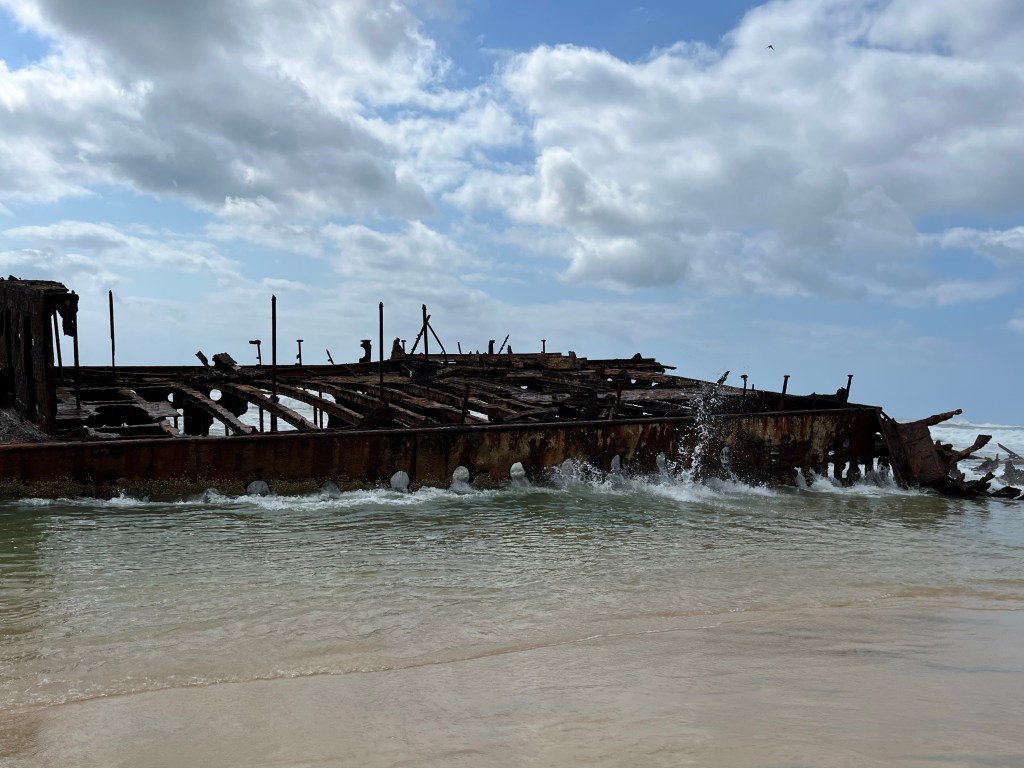
Our first stop was to see the wreck of SS Maheno, a former Scottish built, New Zealand luxury ocean liner which had also been used as a WWI hospital ship. After an illustrious career she was rather unceremoniously sold to the Japanese in 1935 for scrap and was being towed back to Japan when she was hit by a cyclone and washed ashore. She became a popular tourist attraction and is rather incredible to see with the waves crashing through her portholes.
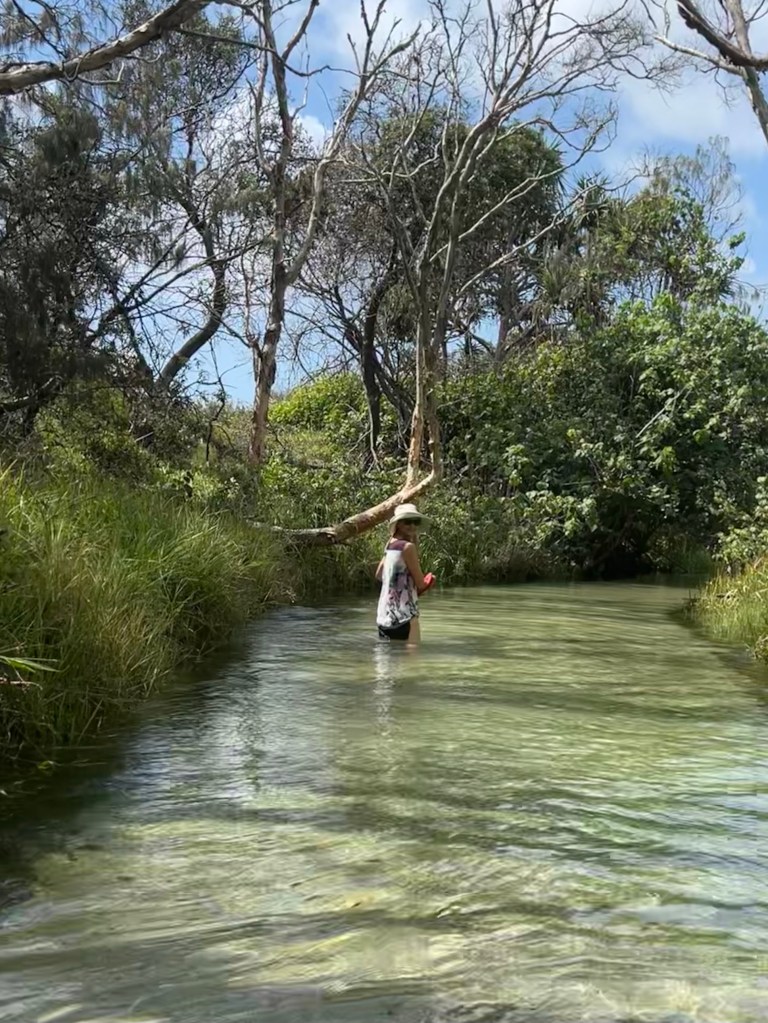
We then drove back along the beach to the most beautiful Eli Creek where there were unfortunately a few others. Surrounded by small pieces of pumice stone from under-water volcanic explosions, this creek pours up to four million litres of clear, fresh water into the ocean every hour. Darrell suggested we took a short walk and then walk back down the creek, which Diana and I obediently did, though I am not sure any of the others did! It was pretty deep, but very beautiful. This was rewarded with a nice cup of coffee and a rather fine banana muffin.
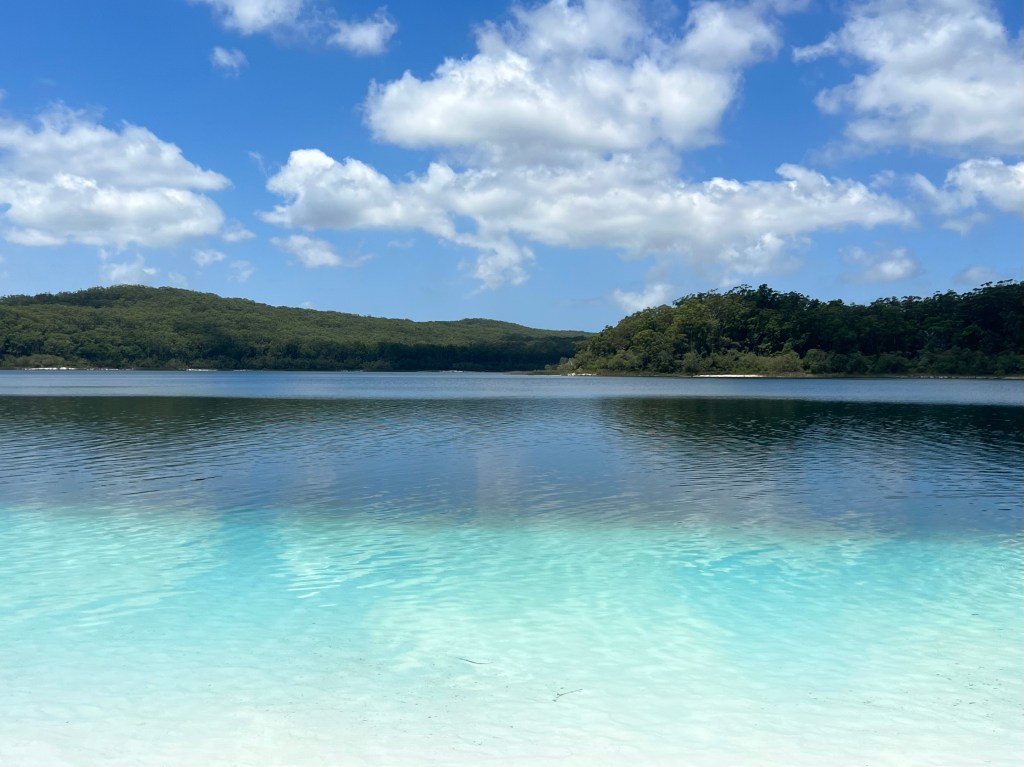
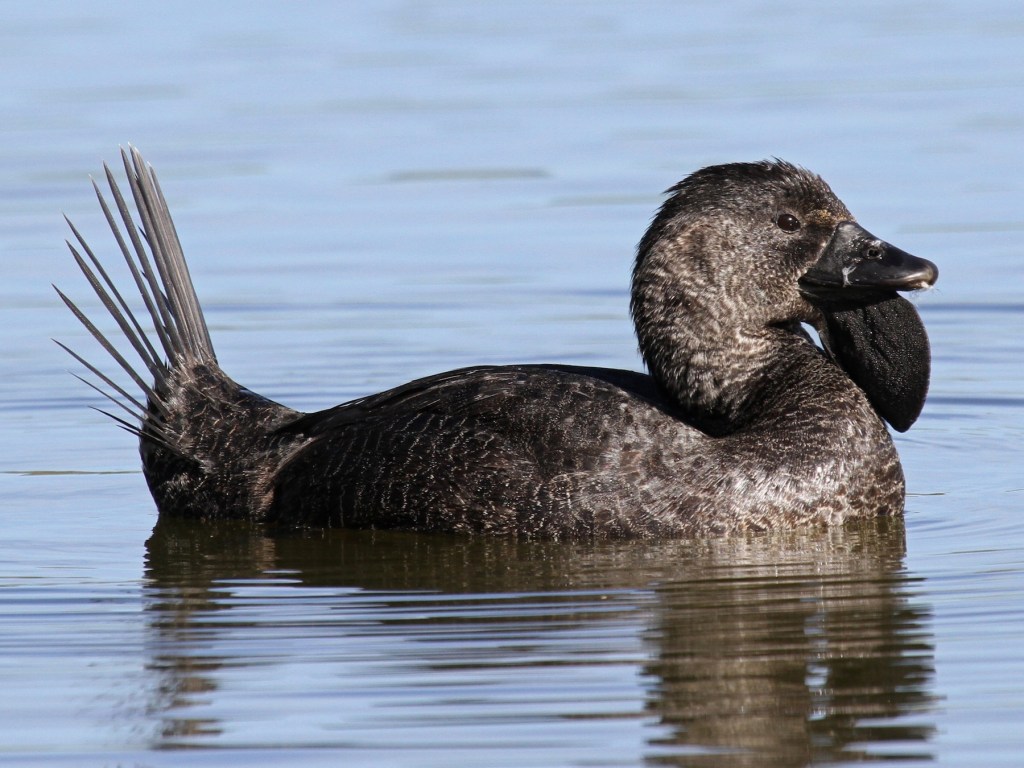
We then drove an hour or so across the island, on very bumpy sand roads with Darrell swearing at his creaking gear box and the demanding programme the company had put together. Meanwhile we were all dying of heat, as the air-con had given up on us as soon as we reached the island! Darrell had been brought up on the island by his grandparents, who had purchased their plot of land for £7 in the 1950s. He knew where everyone lived and everything about them. But was still not having a good day! He was negotiating this terrible terrain to take us to the very beautiful Lake McKenzie (Lake Boorangoora) and my goodness was it worth it. The water was crystal clear and bluer than anything I have every seen with the finest sand of almost pure silica. The water has a low PH content so is again slightly acidic so few creatures live in or on it. But blissfully warm and completely lovely to swim in. Diana and I decided to swim across the lake – admittedly rather further than we thought, but on the way back saw the most hysterical dodo-looking duck called a Musk duck! There are over 100 fresh-water lakes on Fraser Island and Darrell showed us photos of others which are the most amazing colours; a red lake, due to the tea-tree, and others green and deep blue, though sadly we did not see these.
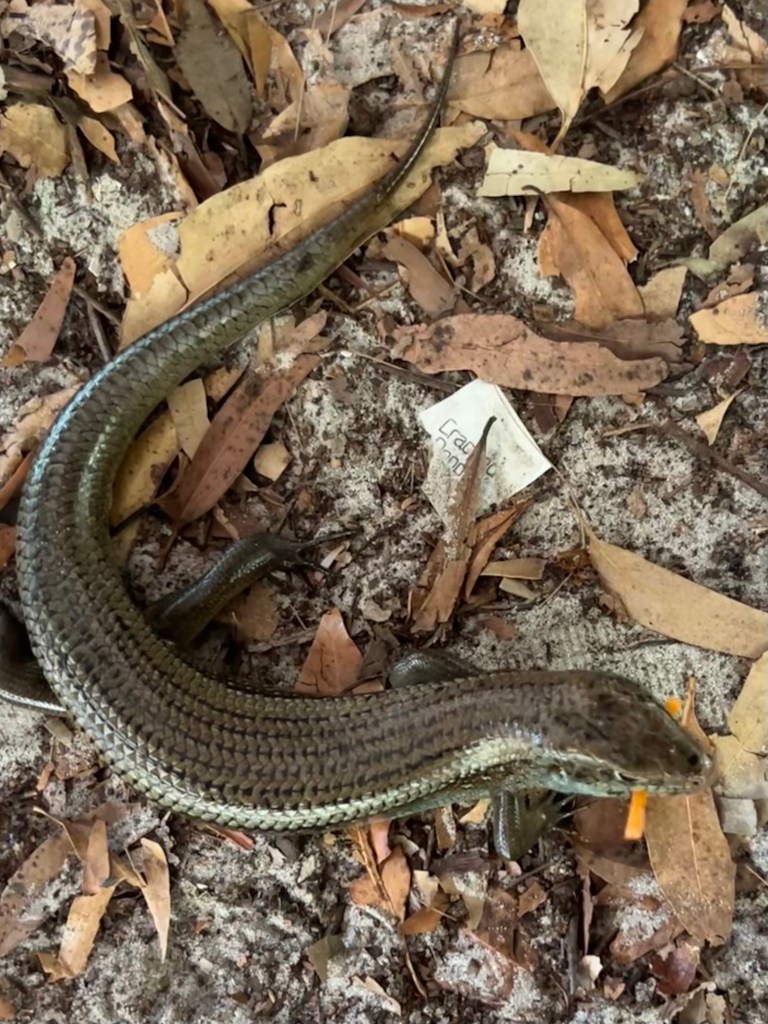
We were then given a nice sandwich and soon joined by a very friendly blue-tongued lizard who was rather partial to the carrot from mine. There is a $2,500 fine for feeding a dingo, so passing carrot to my friend had to be done very surreptitiously. Conservation on the island is, quite rightly, taken very seriously, and you are restricted where you can go, camp, swim etc. You are constantly reminded to leave nothing and take nothing from the island except your memories – I like that! There are a few small villages and a couple of resorts and campsites but it is largely unspoiled except for the endless 4WD tracks up and down the beach ….. but they will be gone by tomorrow!
Needless to say there is a sad story of the indigenous Butchulla people who lived on the island … from 5,000 years ago. European colonisation in the 1840s destroyed the foundations of their Aboriginal life and by 1890, their population had been reduced to only 300, most of whom were taken off the island in 1904 and relocated in missions miles away. So awful. There are now only a handful of surviving descendants of the Fraser Island Butchulla people.
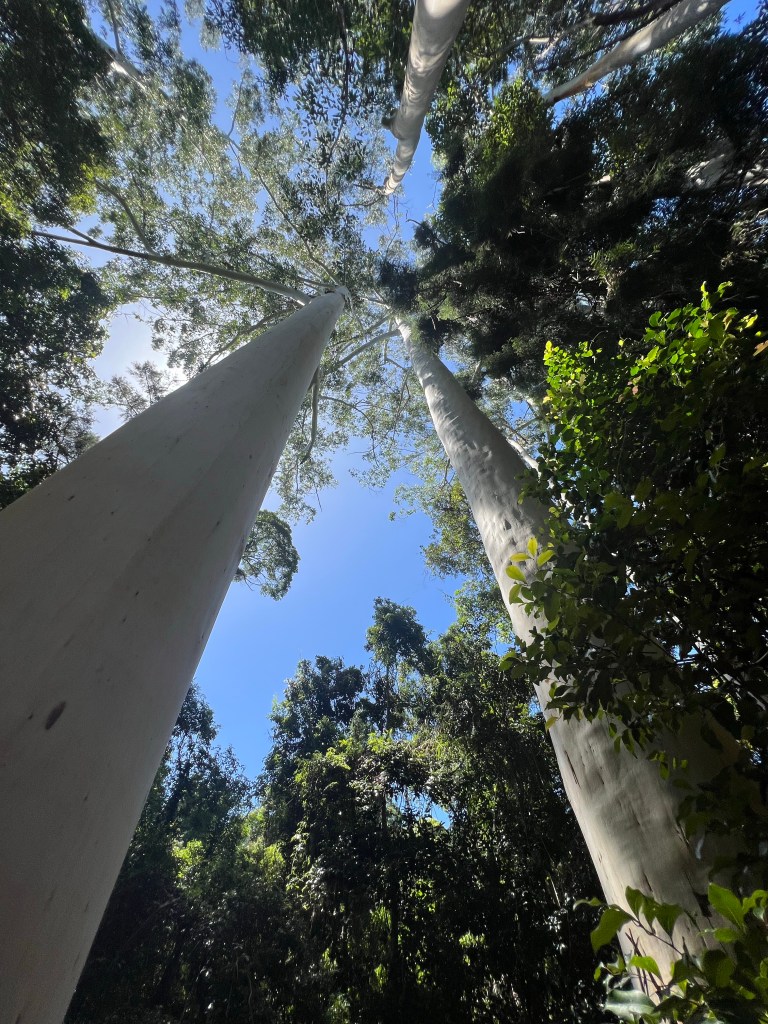
Our final jaunt was back along the bumpy track to do a short walk in the rain-forest. It is all very organised and somewhat contrived with boarded walks and even a leaf-blower removing all the fallen leaves in front of us! But still we got a taste of the rainforest and with the land being very much more fertile in the centre of the island, there were some pretty magnificent trees in particular the satanay tree. We saw some really beautiful butterflies including the blue triangle butterfly and a gorgeous huge black and white orchard butterfly.
Our return journey started at about 3.30, as we were waved off by another dingo, some dolphins and the most enormous silver fish jumping out of the ocean!
Back to our little house by 6pm for Diana to quickly brush her hair and join an on-line Board Meeting. Delicious lasagna after the meeting and bed. It had been a long, but great day.
 EC-Rider Travels
Leave a comment