
Amanda joined me this morning for an early snorkel and we headed out to the wreck. It was the most beautiful morning and the sea was much calmer. We had an incredible time, seeing another mass of fish we had not seen before and at last, Amanda saw a turtle – in fact many of them. We came across what must have been a turtle community centre where there were about seven, of all different sizes. One of them came up to swim with us… they are just too sweet. Talking of sweet, the Boobys were very much on duty on the wreck this morning, looking so smart in their white waistcoats and matching white feet – love them too. There were so many rays, again of all sizes and varieties, many of them just resting on the floor of the wreck and then there was another of the ol’ Sicklefin Lemon Sharks which came within inches of us – goodness they are big!
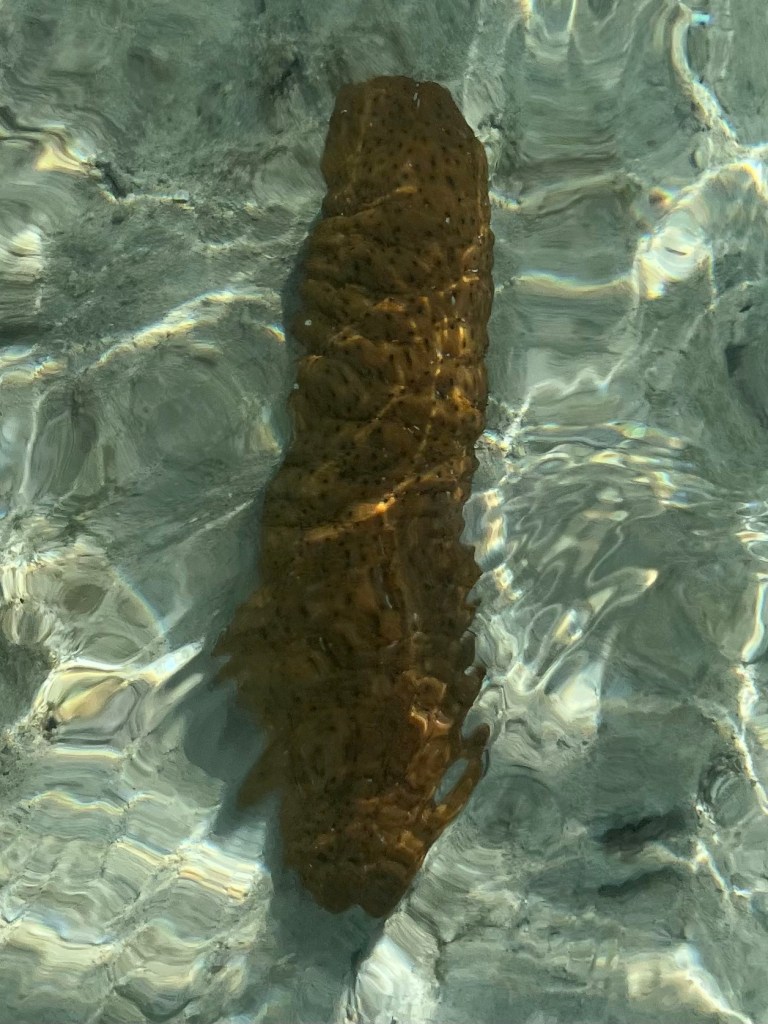
It was a very hot day so we had a bit of a lazy morning by the pool, and then in the afternoon we went on a reef-walk with Katie the Reef-Master who was very knowledgeable and we spent a happy hour looking at various species of sea-cucumbers. Who knew that they breathed out of their bottom and if you are a pearl-fish you wait for one of their in-breaths and then swim up for a cosy night inside a sea-cucumber, popping out on a outward breath the next day. Unfortunate for the cucumber, however, if the pearl-fish wakes in the night and feels peckish as he is likely to tuck into its gonads – though apparently they regrow! We also learnt that you do not want to bait a sea-cucumber as it releases a stink which will take days to get rid of.
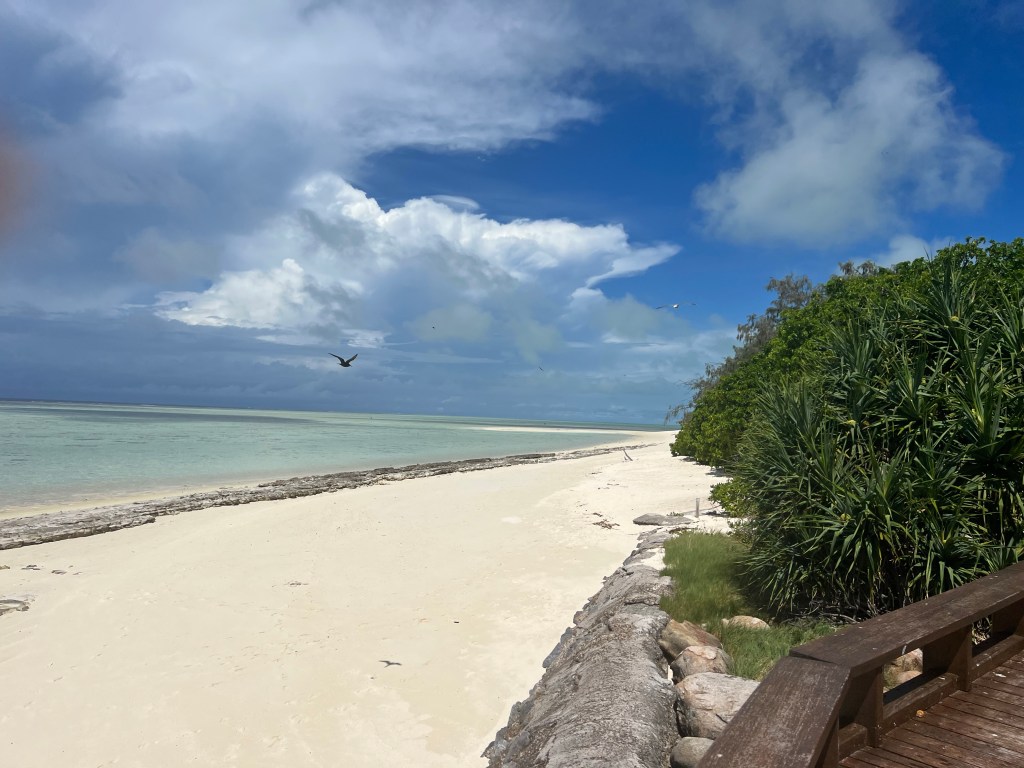
She pointed out all the different kinds of coral and explained the burning question I had, about the lack of colour in the coral – not like on David Attenborough. It was all quite technical to do with the sun and the algae but as you go further north it becomes more colourful. We saw some lovely pink coral, sea anemones and sea stars (we were told we should not call them star fish as they are in no way related to a fish!). Sea stars have their mouth on their underside and their bottom on their top. When they feed, their whole stomach comes out of their mouth and they take in the food, digest it and absorb it into their body. They can reproduce both sexually and asexually and can regenerate damaged parts of their bodies.
After our reef walk I went on one last snorkel buddying up with the couple next door who were very knowledgable. We went back out to the wreck and round to where the turtles were this morning, but sadly just large imprints in the coral remained. I learnt from them, this was not so much a turtle community centre but the local spa or ‘cleaning station’ where the turtles would regularly come to clean their shells on the coral and little cleaning fish would give them a special treatment. We saw a couple of turtles on our way back and quite a number of quite big sharks!
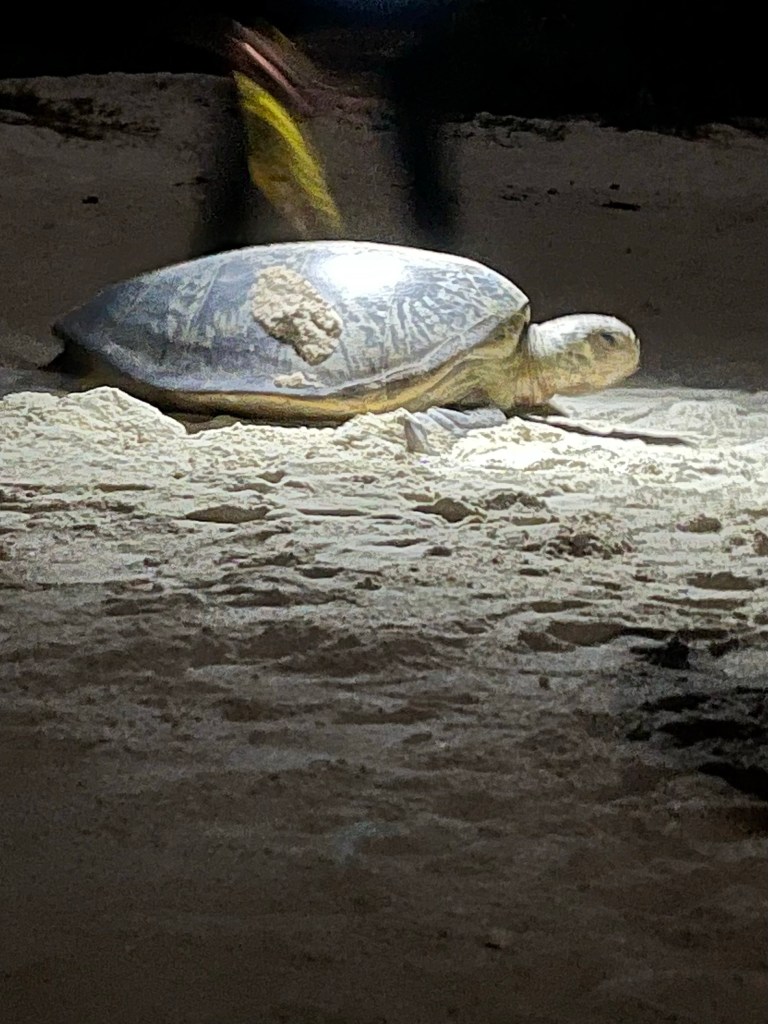
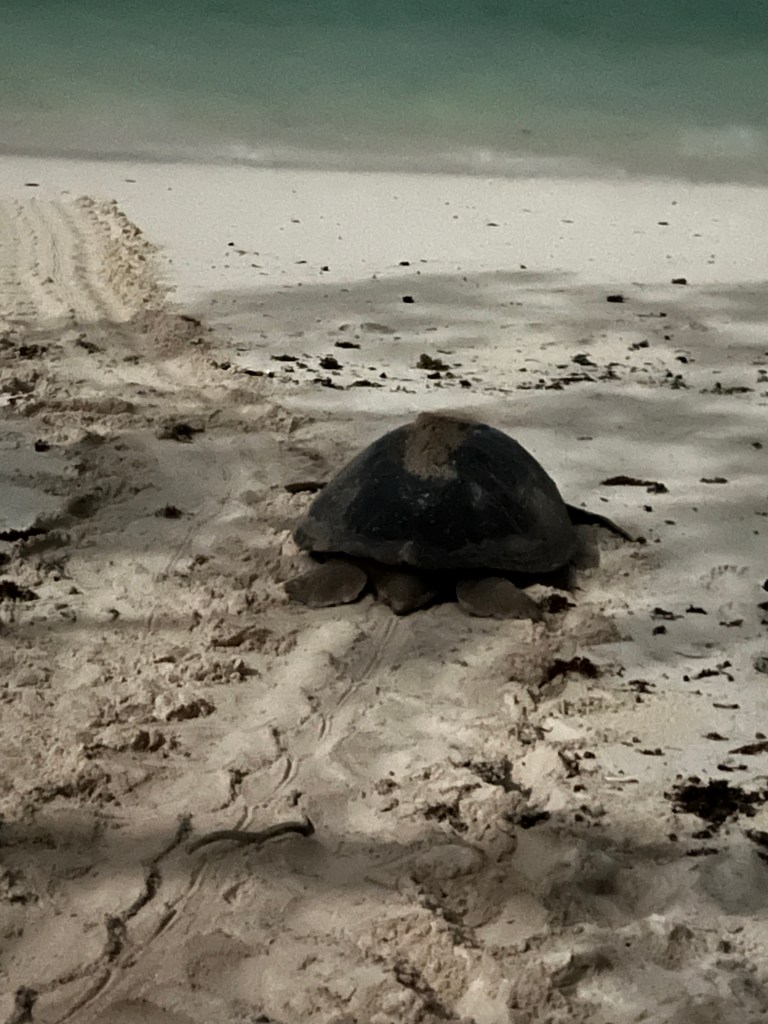
After supper we went on a turtle-nesting walk with Mossie which was very special. We saw several turtles coming up the beach and he took us right up to the nests where the mothers were nesting and we even saw one laying the last of her eggs, covering them up and heading back to the water. Once again we learnt so much … turtles reach sexual maturity when they are about 30 with only 1 in 1000 hatchlings reaching this stage of life. When they are fat and strong enough, they will return, often from several thousand miles, to the vicinity where they were born. They mate with several males and store the sperm, which all gets mixed up and used to fertilise several clutches of eggs.
When ready to lay their first clutch they drag themselves up the beach and find a good spot to build their nest, usually trying out a few spots before deciding on the best one. Using their flippers to first dig down to the wet sand they then dig a deep hole (about two feet) to lay their eggs. They will lay up to 120 eggs in a batch and usually between five to eight clutches in any one year. She then buries her eggs, pushing sand down between them for protection and then covers the whole area in sand to disguise where they are. The female will only lay every five to eight years, when she gets fat and strong enough again. The eggs, rubbery in texture, take about 60 days to incubate – varying slightly according to the outside temperature which of course also determines the sex of the hatchlings. We sadly did not see any hatchlings, but it was SO exciting to see eggs being laid.
 EC-Rider Travels
Leave a comment