
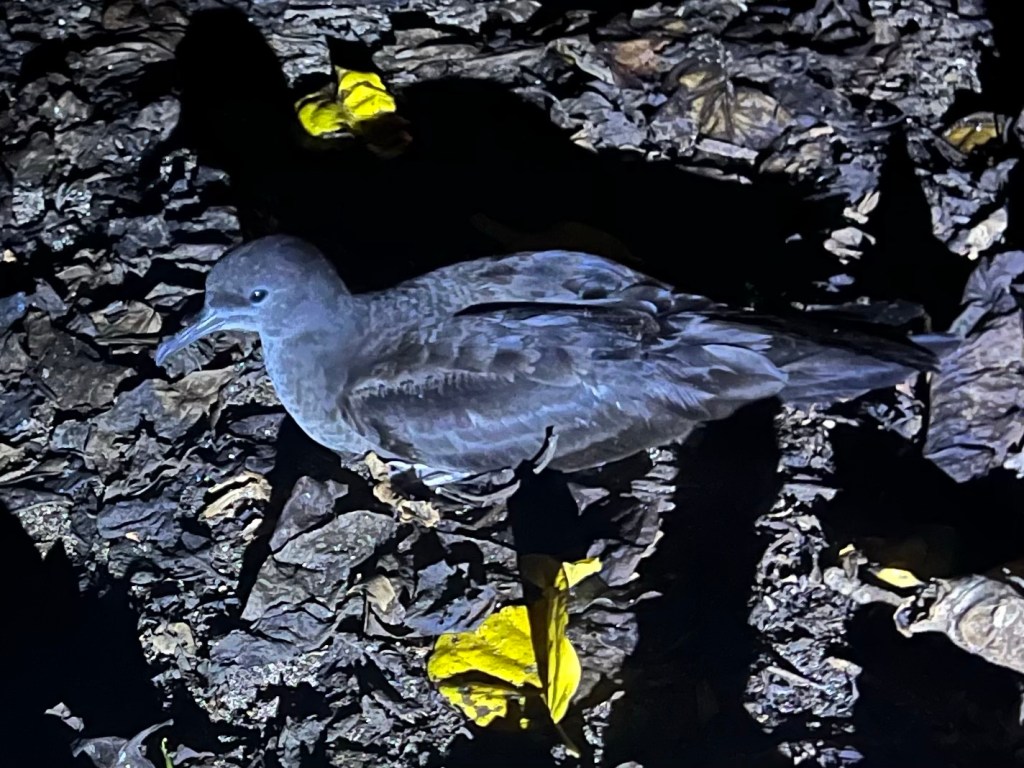
It was quite a noisy night! Andreas had mentioned that the Mutton Birds were fairly vocal and again he was not joking. They only come to the island at night, to reunite with their pair who will have been left in the underground nest incubating the eggs or looking after the baby. They greet each other with the most wonderful hooting noise, like a ghost, which they can make on both the inhale and exhale meaning they never have to draw breath! And if they are worried or fighting they make a noise like a crying baby. We are next to a young family and was convinced it was one of their children keeping us awake all night!
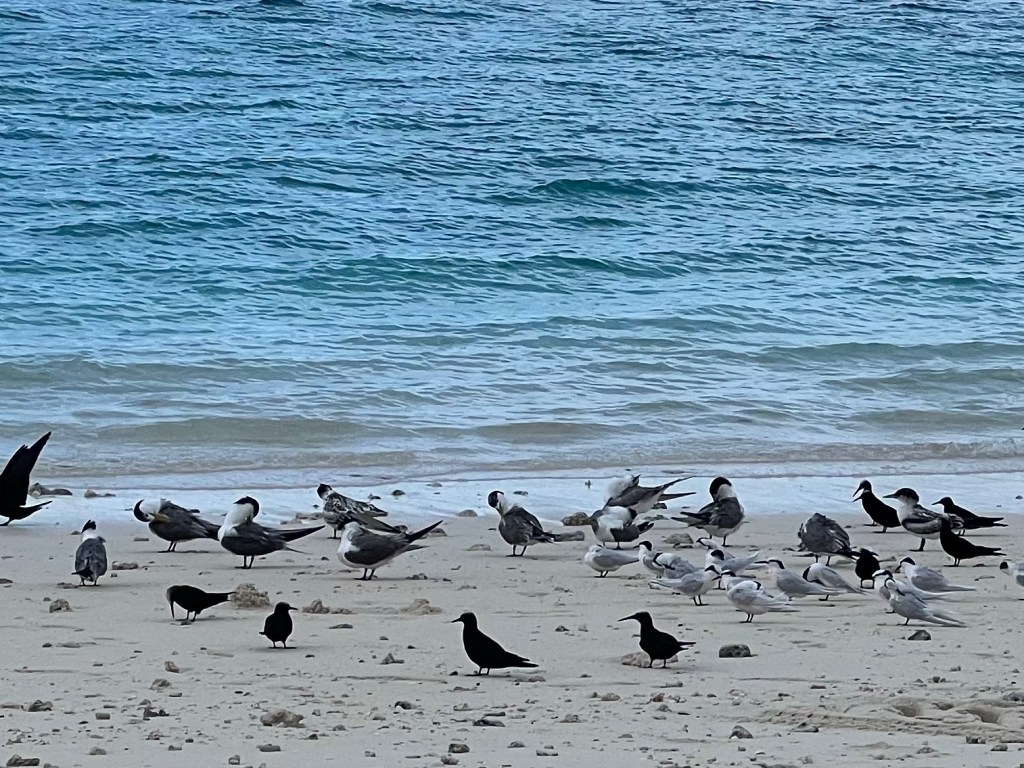
Despite the lack of sleep, I was so excited by our snorkel yesterday, I got up early to swim around the jetty and to the wreck which you are only allowed to do first and last thing of the day. It was pretty choppy but all the same, I saw so much including an incredible number of sharks at very close quarters – they are remarkably beautiful. There were also the most amazing number of different birds down on the beach all happily living side by side.
After a pretty disgusting breakfast, we went out on a boat to snorkel further outside the reef with a guide. We saw SO many more different fish, shoals of them of every colour under the sun. Many rays, a much larger shark called a Sicklefin Lemon Shark (10-12ft!) and at last a turtle. A huge one which I almost ran into. I had seen her on the sea-bed, went back to find Amanda, and needless to say when I returned she had gone and then suddenly there she was, at my side – such a treat. I swam with her for about five mins before she had to head off. Note to self, hire an underwater camera next time!
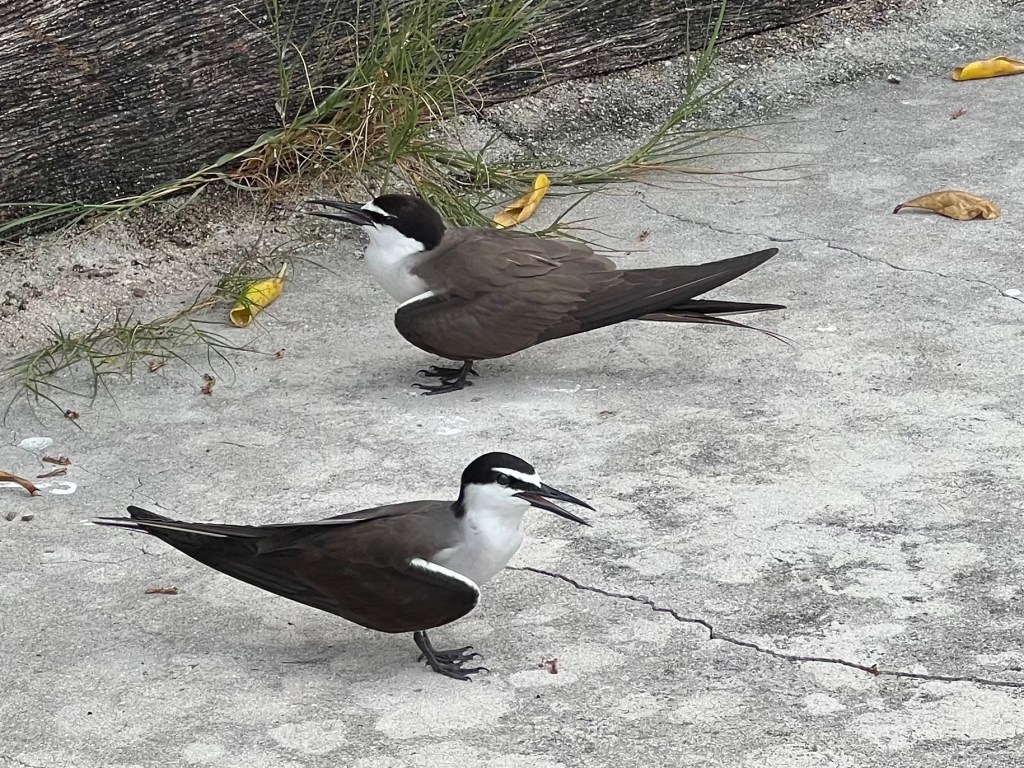
On our way back Amanda and I saw the most amazing performance by two courting Bridled Terns on the helipad!
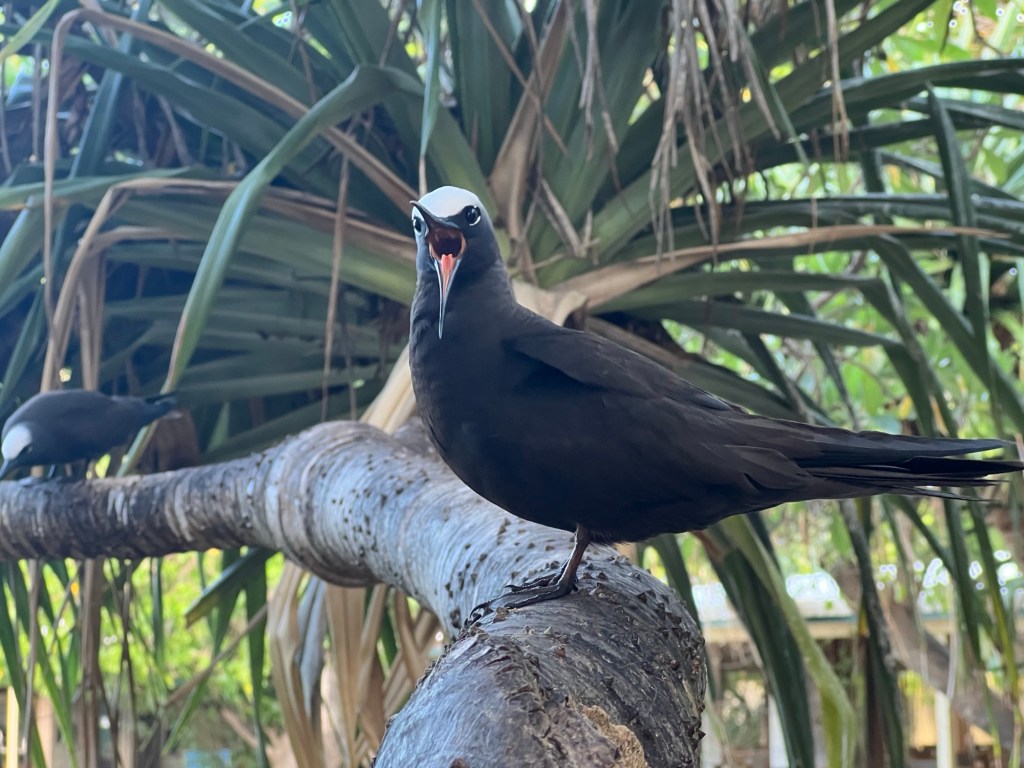
In the afternoon Andreas took us on a bird walk. No shortage of specimens at this time of year. We learnt more about the Noddys (or White Capped Noddy Terns) who are only here to breed, arriving in November and leaving in May. The males gather the Pisonia leaves and the females make the nests. They take it in turns to look after their young while the other goes fishing, skimming small fish from the surface.
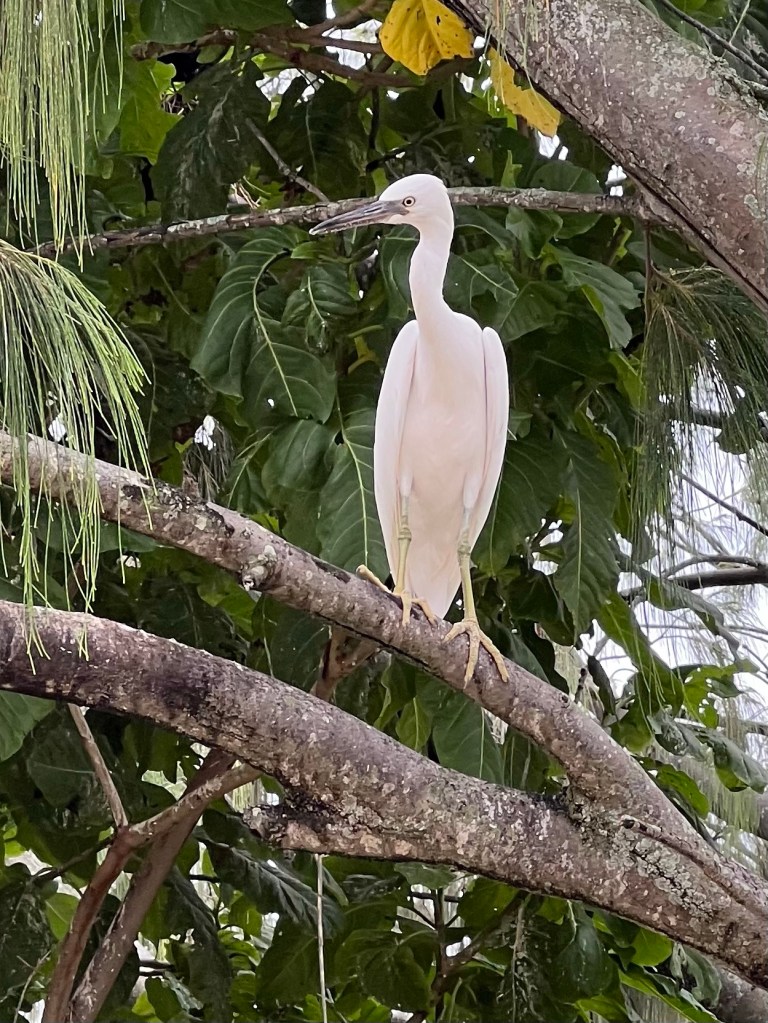
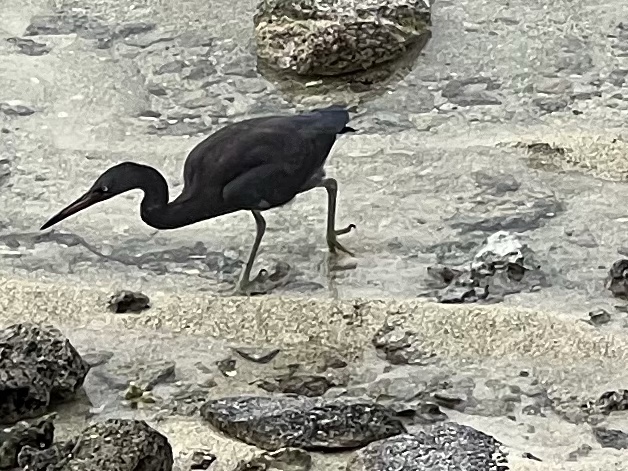
There are two varieties of Eastern Reef Egret or Heron, the white and the grey and they live here all the year round. They lay two eggs but only one chick survives with the strongest pushing the weaker one out of the nest – not very kind.
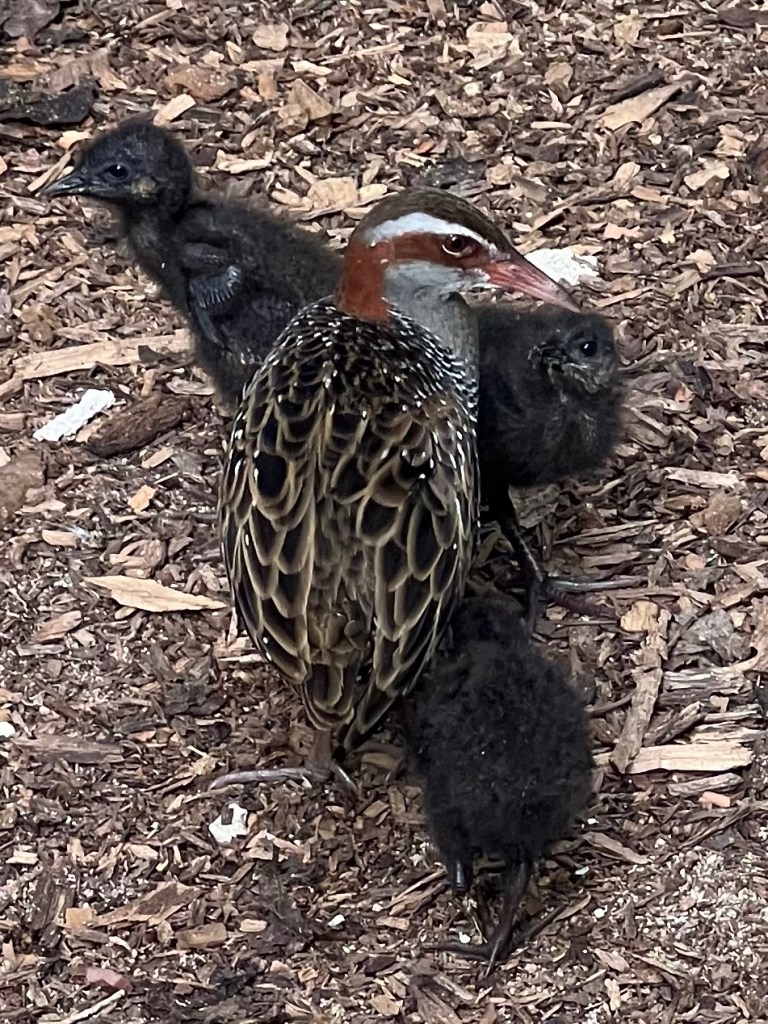
There are also numerous Buff-Banded Rails running around the resort – very pretty birds a bit like a skinny partridge. We have a pair and their children living next to our house. They are also here all the year round nesting in the roots of trees. They have up to nine chicks but these are often eaten by the gulls and egrets. They rarely bother to fly!
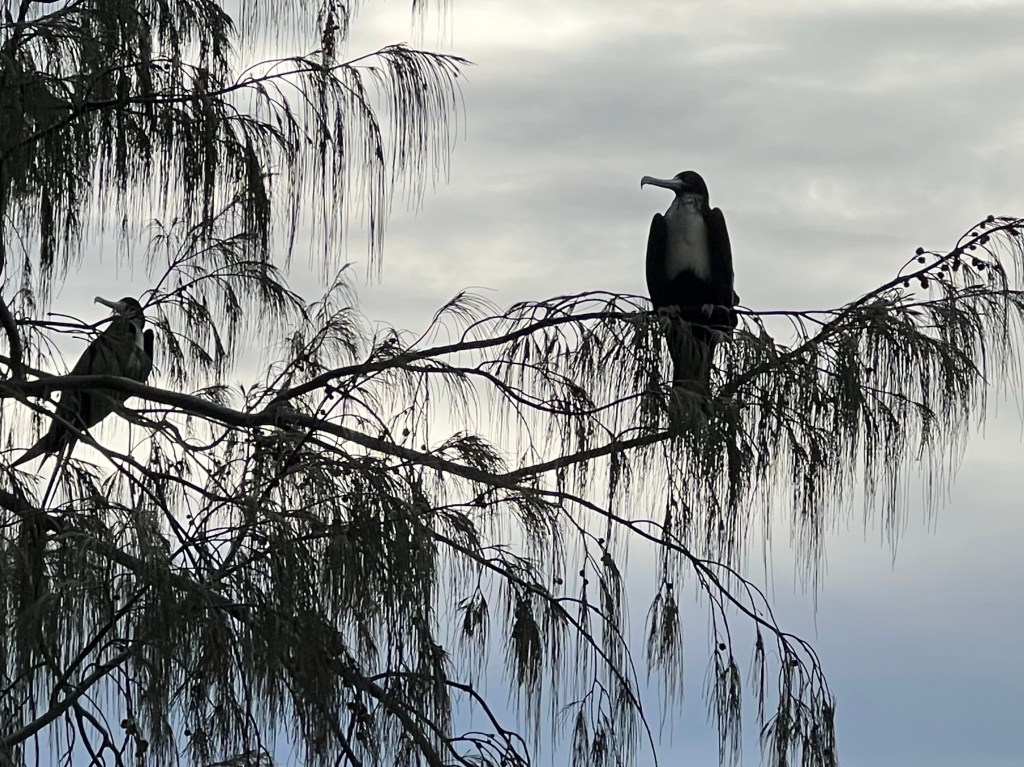
We also saw Crested Terns, who just visit Heron Island but breed in colonies elsewhere, the Ruddy Turnstone, so named as they turn over the stones to catch crabs etc underneath. They migrate every year to breed in Siberia – that’s a long way. We saw huge Frigate Birds who come in when a storm is brewing and an adorable Brown Booby at a distance. These close relations to our friends the Blue Footed Boobys in the Galapagos, have webbed feet and can dive up to 30m.
Although it was too early in the day to see them, Andreas explained more about the illusive but very noisy Mutton Bird or Sheerwater. They also come to the island in November to breed, building their burrows (up to 2m) in the nice soft sand. They pair for life and have just one chick which they take turns to look after, while the other is out fishing. They have polarised vision and find their way to their burrows by smell (there is plenty of that!). We saw some later in the evening, looking rather drunk, with their short vision and their legs seem far to far back. They also leave in May and live the rest of the year on the sea. It was all so fascinating.
Amanda and I then went for a walk around the island and met one of the scientists who explained about the amazing work he was doing to try and find a way to cool the nests of turtles to encourage more males to be born. As we learnt in Costa Rica, the sex of a turtle is determined by the temperature of the egg, the warmer ones on the inside becoming female and the outer ones becoming male. With global warming, the temperature of the ground is rising and fewer and fewer males are being born. One way to cool the nest is with fresh water, but this is not always available and is expensive, so this guy was looking to see if seawater could be used without the salt compromising the development of the egg.
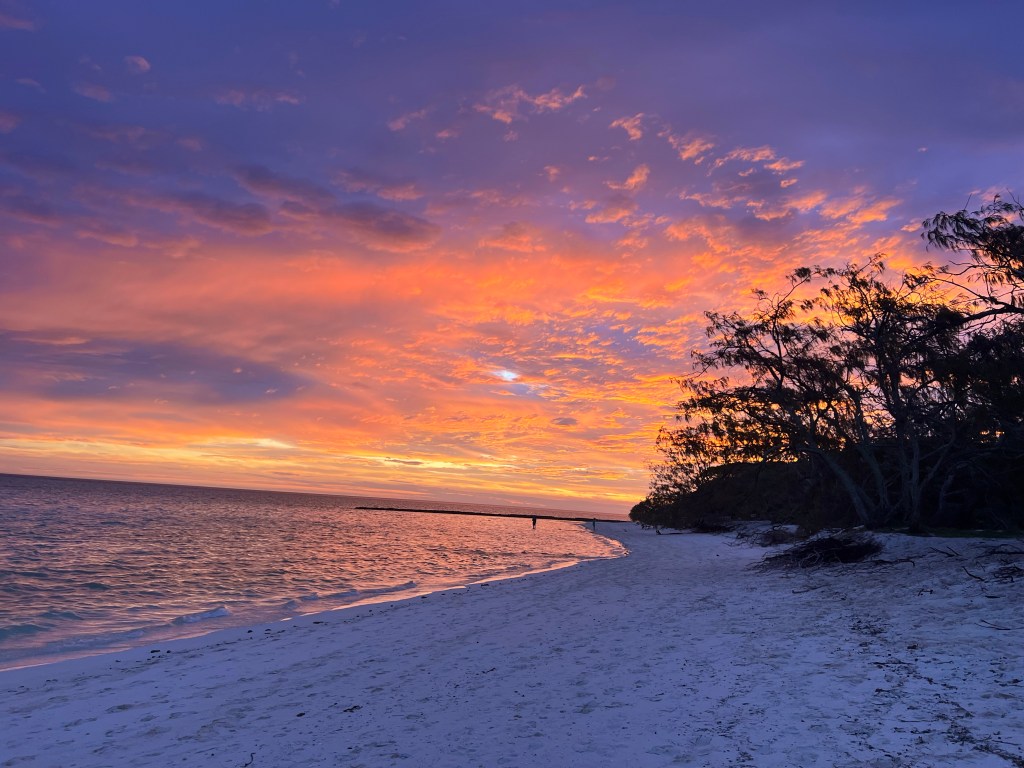
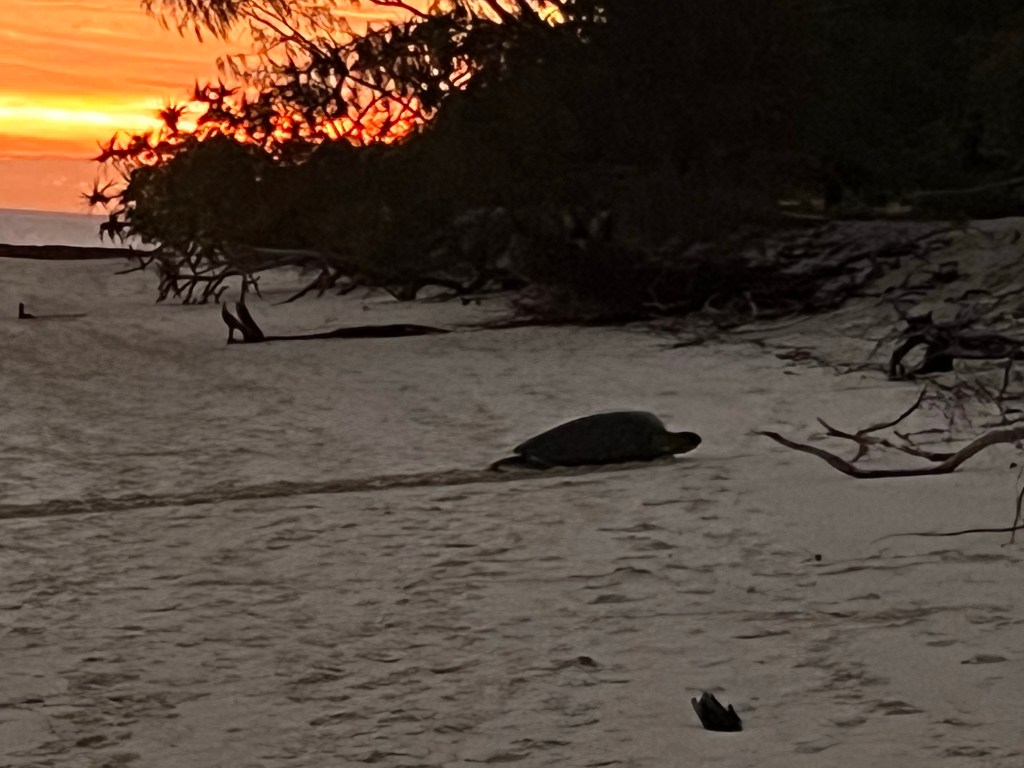
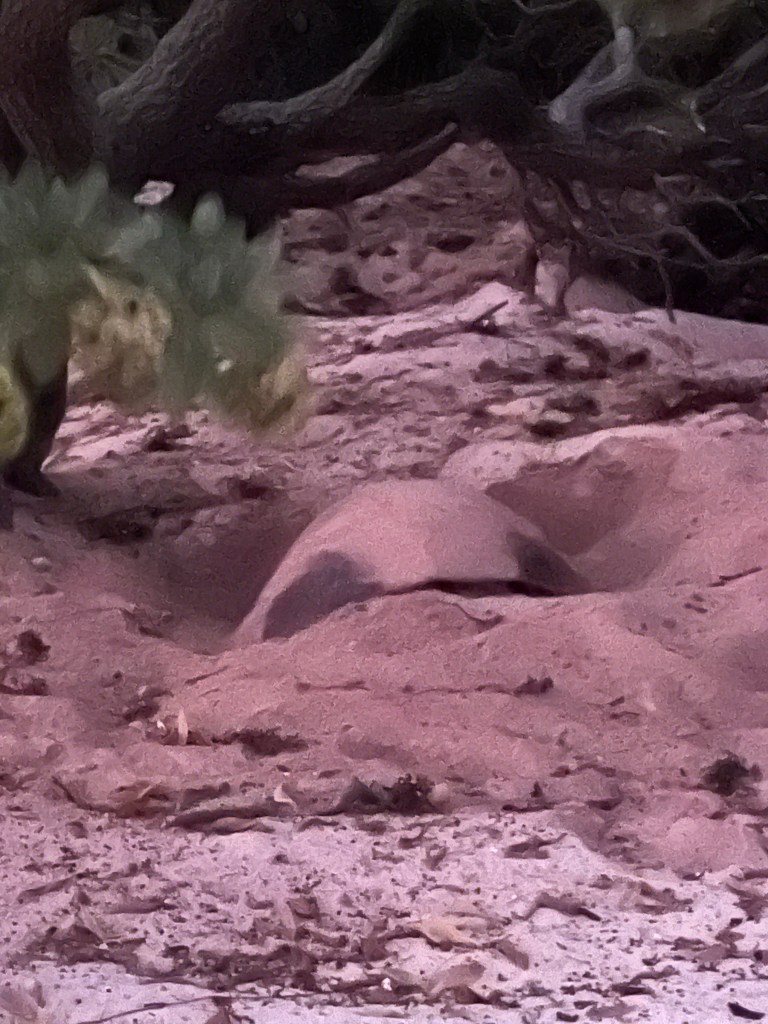
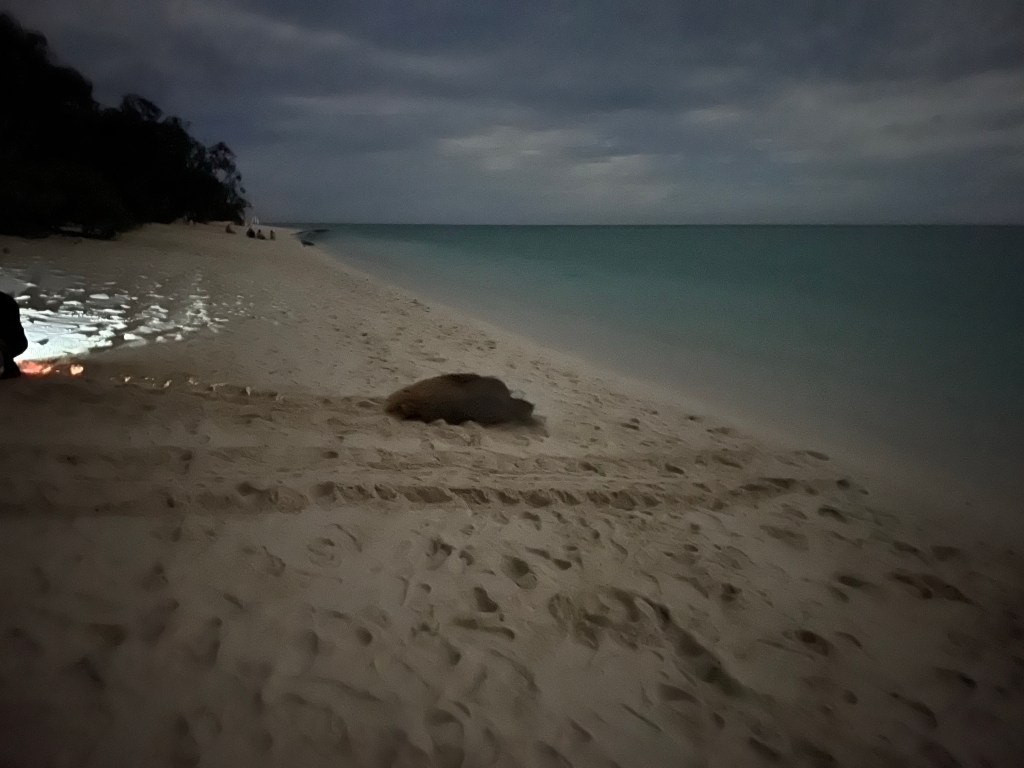
Just as the sun was going down we saw a number of the huge great mumma turtles coming up the beach to lay their eggs. Such an amazing sight to see and needless to say we got very delayed watching them and were given a bollocking for being late for supper …. again…
 EC-Rider Travels
Leave a comment