Quite an early start to catch our ferry, having efficiently arranged a taxi from the hotel the night before. This, however, failed to materialise. Not unusual we felt, as the nice guy behind the reception offered to drive us himself … as I fear he did most mornings! We arrived at the ferry terminal about ten minutes later where I thought there may be a handful of other people lucky enough to be going to this special island, to find about 200 of all shapes and sizes including a mass of school children. The boat had a hitch so we had a delayed start but eventually we were on our way across the seas heading 80km north east.
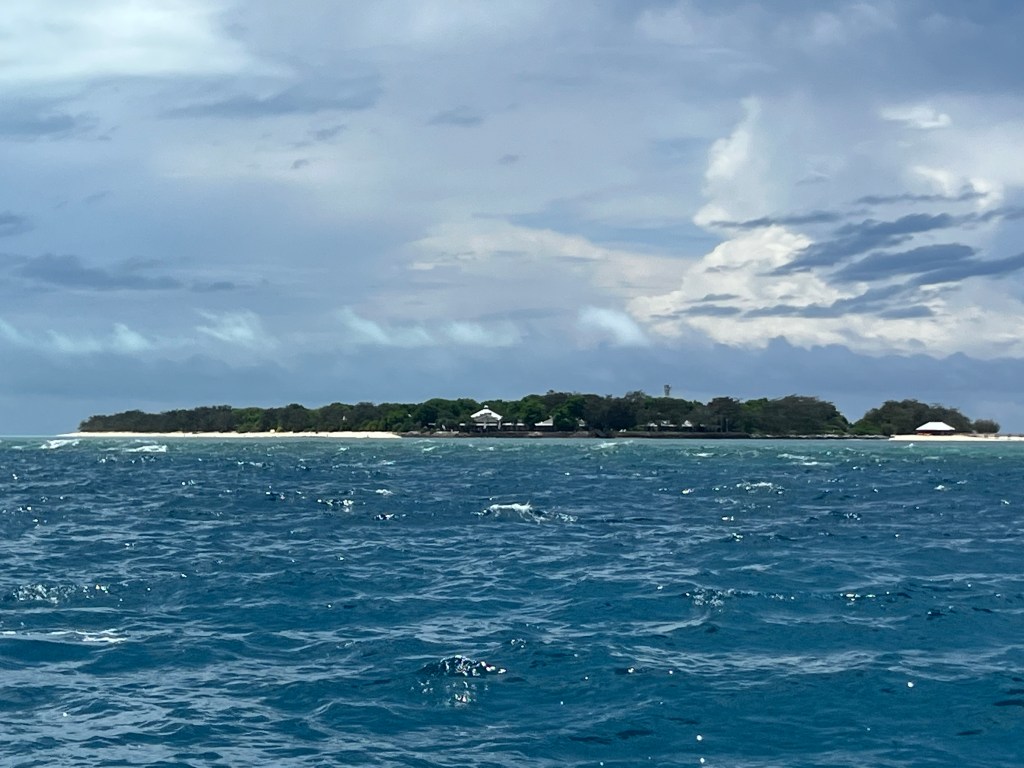
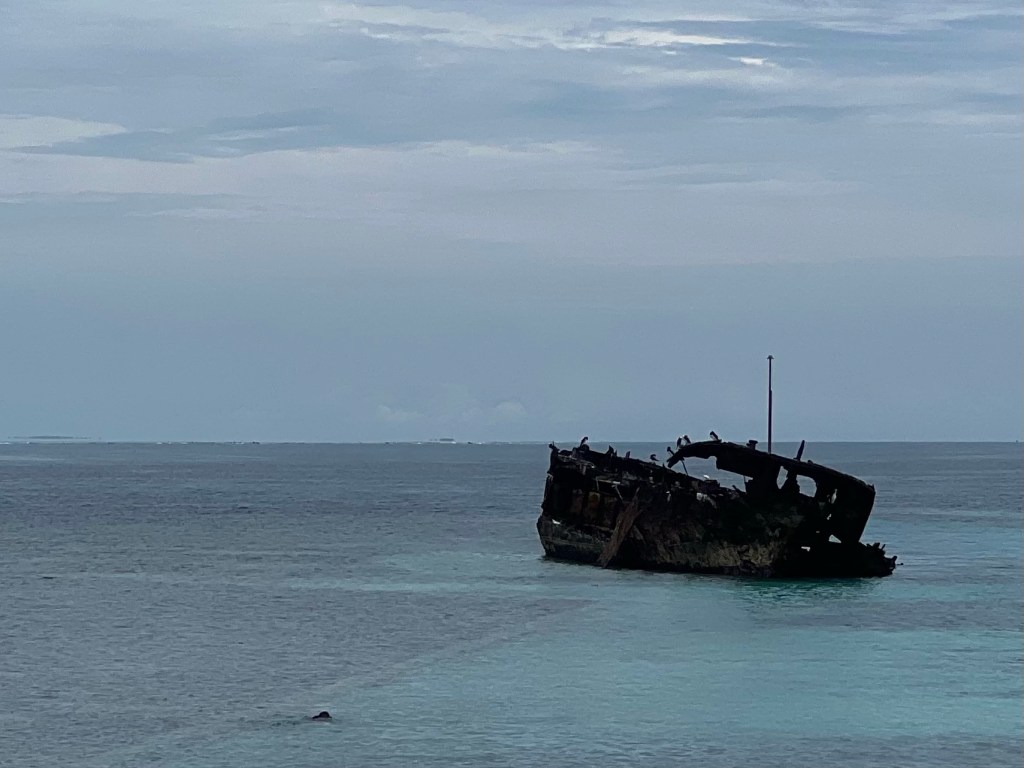
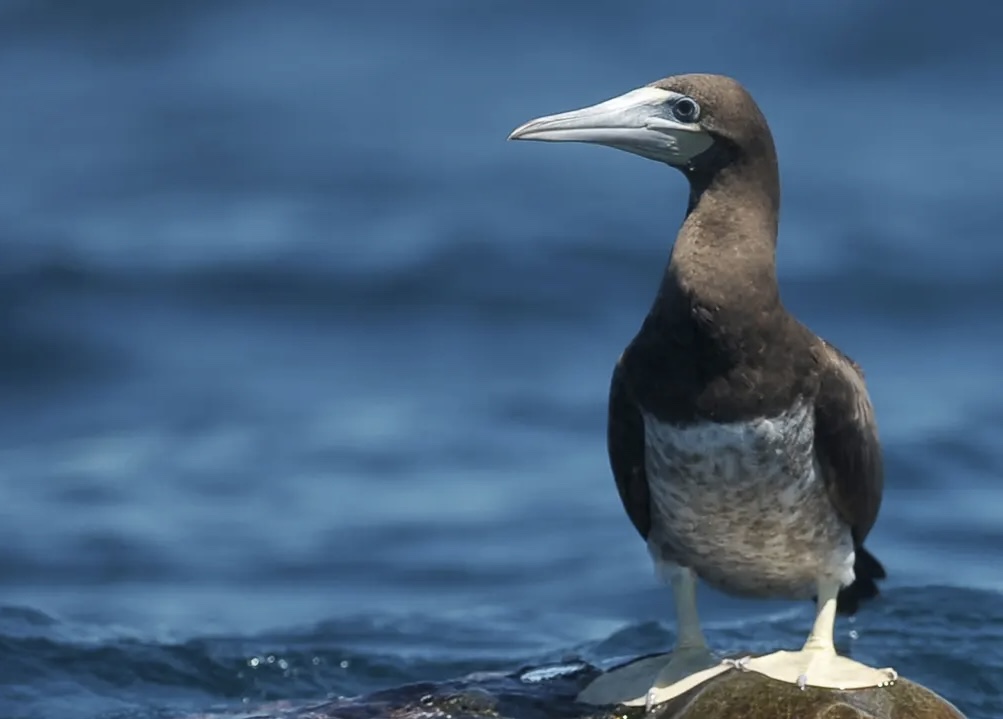
It was a relatively smooth two hour journey and at last we saw a stunning, small island in the middle of the ocean, approaching it passed a wonderful old wreck guarded by masses of different kinds of cormorants, Brown Boobys (so sweet!) and of course herons. We disembarked and were given a detailed briefing of the dos and don’ts of this very special and fragile place and as we entered the resort we were welcomed by the most amazing sound of birds. Looking up, every tree was full of dear little white capped fellows, called Noddys.
The resort is on the north-west of the island and larger than I imagined, accommodating up to 300. It is very much an eco/conservation resort for nature lovers, and divers and though right up my street, it is certainly not the luxury experience! We sneakily managed to check in early and were shown to our room right in the centre of the hotel near all the action! No air con but fans and only half a curtain, but this soon got replaced. There is no natural water and only their own sewage system so there is quite a strong odour but we soon got to love it! Our fellow guests are an interesting group and Amanda and I agreed we didn’t feel the need to change for supper. We went to get our snorkels and fins and booked all the activities we wanted to do ….. which was most of them!
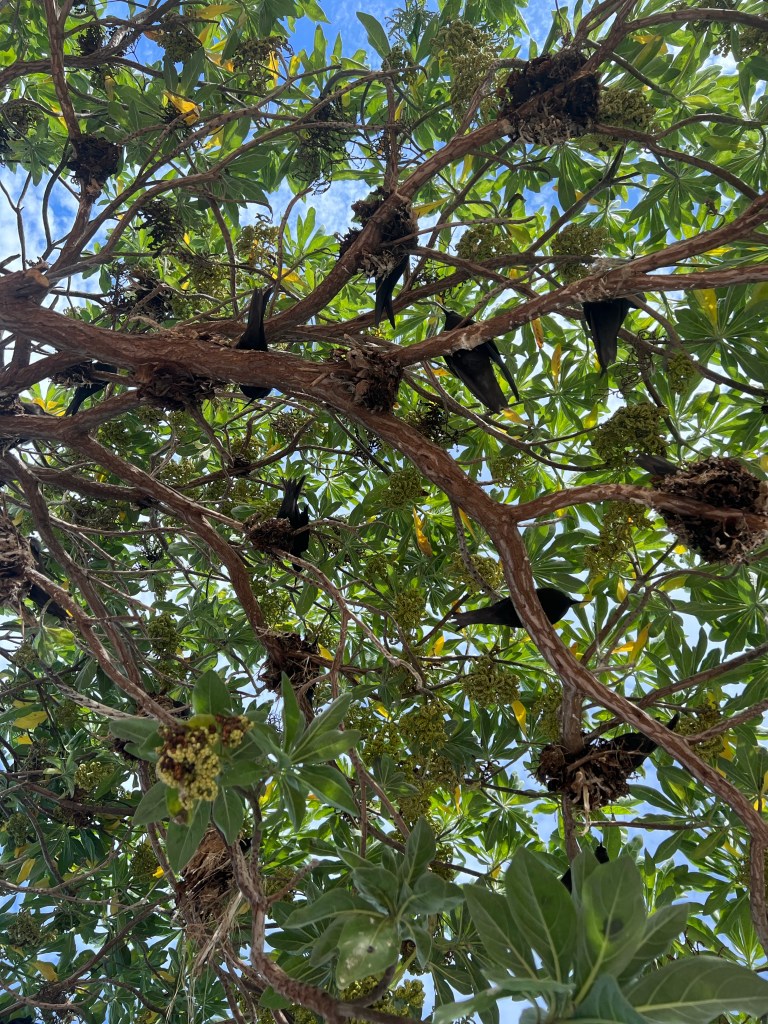
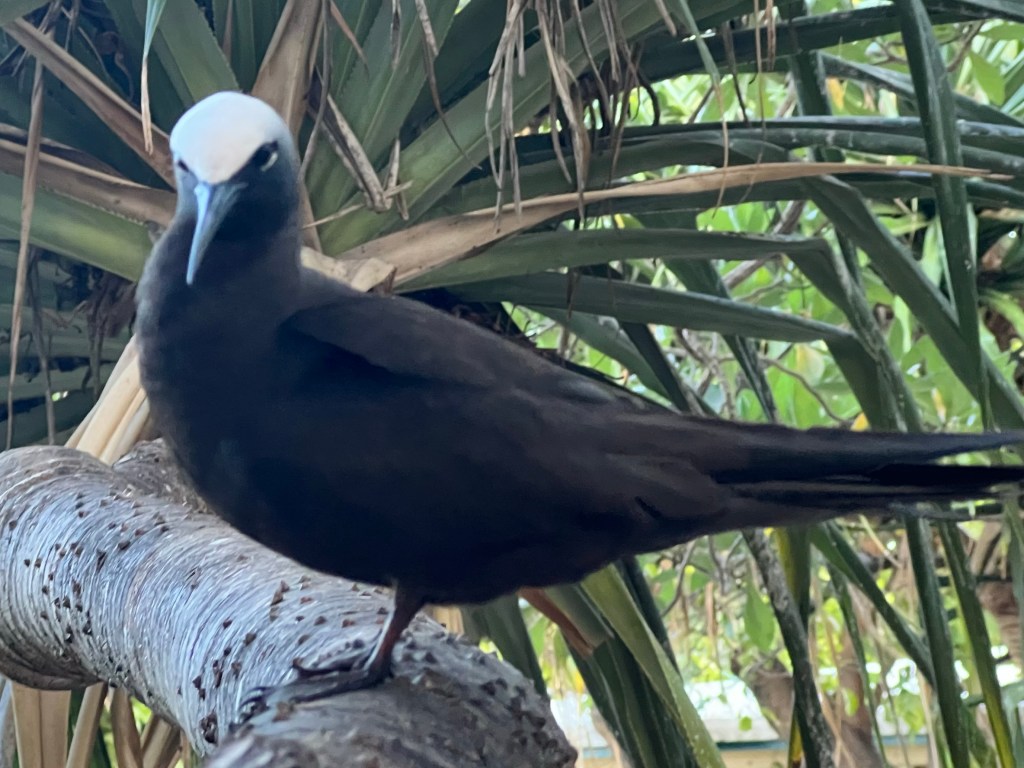
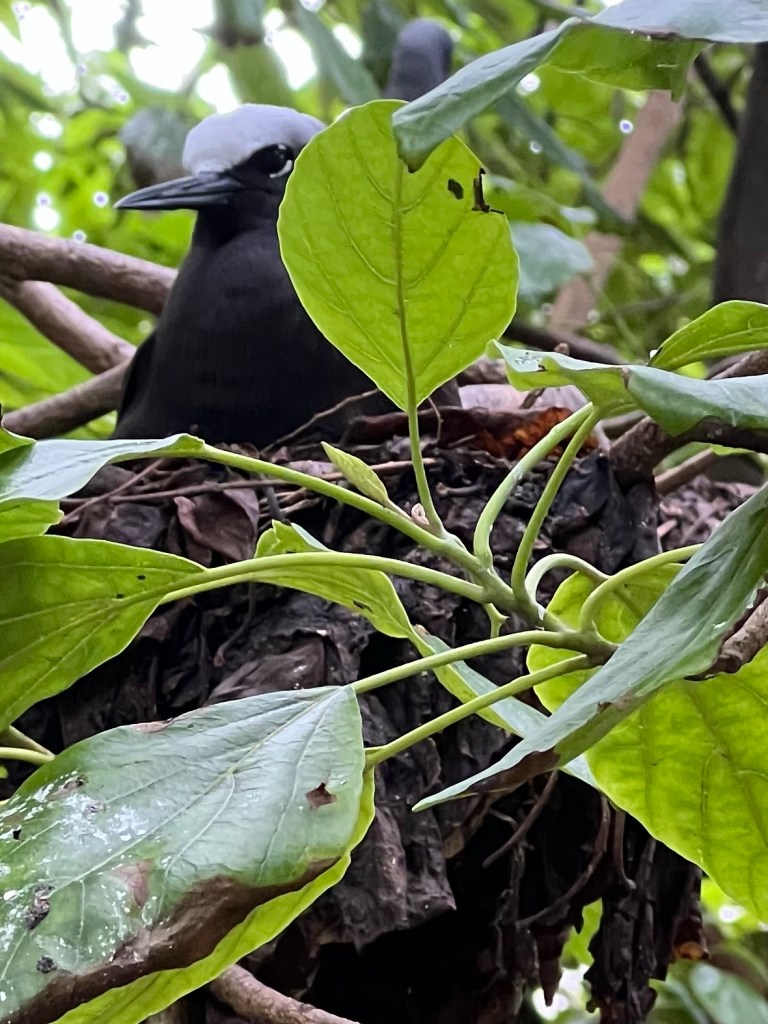
The first was an Island walk, with Andreas, where we learnt about this extraordinary corner of paradise. Heron Island is a coral cay on the western side of Heron Reef at the southern end of the Great Barrier Reef. It was created about 5,000 years ago from a build up of sand and coral. As it grew it was able to trap rainwater and attract birds. The bird poo made the sand fertile and gradually plants, from seeds brought in by the birds and the sea, started to grow. The ground is still poor and only a limited number of plants and trees grow. Largely the Pisonia Grandis tree, the leaves of which the Noddys use to build their nests. There were other interesting plants such as the sandpaper fig with leaves rough like sandpaper and the orange sea trumpet tree.
The island is not believed to have been inhabited by indigenous people or indeed anyone until the early 20th century when a turtle cannery was established 😒 but fortunately this venture failed as did other attempts of establishing fisheries. In 1932 Captain Christian Poulsen, started bringing fishing parties to the reef, and realising its potential as a holiday resort, bought the lease of the island for £290.
In the 1950s the University of Queensland established the Heron Island Research Station, where extensive research is carried out on marine and bird life on the island. It was used by Sir David Attenborough for his programme on the Great Barrier Reef.
Talking of which Andreas told us that Heron Island has around 900 of the 1,500 fish species and 72% of the coral species found on the Great Barrier Reef. Now is the nesting season and this little island (800m x 300m – approx 16 hectares) is home to over 200,000 birds. The noise is deafening with Noddy birds in every tree (pooping on your head) and Mutton bird nests (in the ground) wherever you go. You have to tread very carefully.
The other excitement at this time of year is it is both turtle nesting and hatching time. They have two breeds here the Green Turtle approx 1,500 and the Loggerheads of which there are only 17. They are all carefully monitored and when the rare loggerheads lay their eggs (often far too close to the shore), they are carefully moved to a special cage to increase their likelihood of survival. There are also many, many sharks and rays here of several different varieties – apparently all harmless??
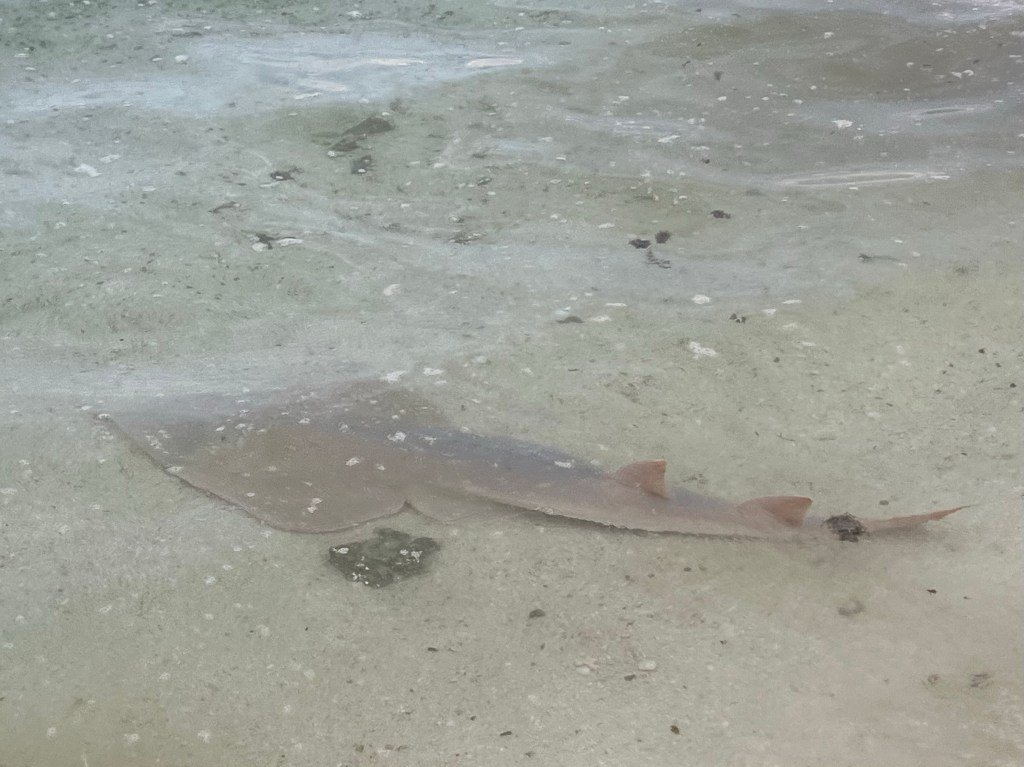
We returned to the fold and quickly donned our snorkels and fins and headed back to Shark Beach for a swim. It was no joke about the sharks and rays, they are everywhere and close, close to the shore. Beautiful black-tip sharks (5-6ft long but look so much bigger through the mask!) and many different varieties of rays including a rather strange flat nosed fellow called a Shovelnose Ray which is shark-like and, misidentified by early settlers, is how the beach got its name. I only saw one turtle but just so many different kinds of fish of every size, colour and creed. It has been on my bucket list for ever to snorkel on the GBR and I can’t really believe I am here.
As we were leaving, we could see a couple of turtles swimming just off shore which we thought might be coming in to lay their eggs but they were sadly in no hurry and we had to get back as our pre-booked dinner reservation was fast approaching! Quite hungry after a long day, though as we soon discovered, you don’t come to Heron Island for the food!
 EC-Rider Travels
Leave a comment