
An even earlier tour today as we headed to a distant sand dune called Tali Wiru (meaning beautiful sand dune) to watch the sun rise over Uluru, with rather handsome Jack. Sadly it was cloudy so not much of a sunrise but great to see ‘the rock’ from a different perspective and just lovely to be out in the desert. We returned to the hotel for a quick breakfast and then went back to Uluru and did a similar but extended tour of what we did yesterday, learning lots of new things from Jack.
He particularly focussed on the Tjukurpa. This is the basis of Aṉangu life, dictating their values, customs, religion, laws and ethics. It records the creation of life and the landscape and teaches Aṉangu people the way to relate to each other and the environment. Tjukurpa is law to them. Much of this is taught through stories which have been passed from generation to generation. These all have important morals and messages which form part of Tjukurpa and many of the formations in the rocks are linked to these.
We heard several stories – the Mala story teaching the importance of finishing what you start, being mindful of others’ traditions, listening to warnings of danger and that dingos are dangerous; the story of Kuniya and Liru, teaches that hell hath no fury like a woman scorned, explaining why we should listen to a woman’s intuition and care for the injured; and the Lungkata story teaches it is wrong to steal and lie, explains what happens to the greedy and dishonest and warns of the dangers of climbing Uluru. Jack showed us the physical evidence of these stories imprinted on Uluru – black snake marks, scars, crevices and rock formations – explaining the importance of these to the Aṉangu who believe wholeheartedly that they are literal evidence of these stories, taking place as part of the creation.
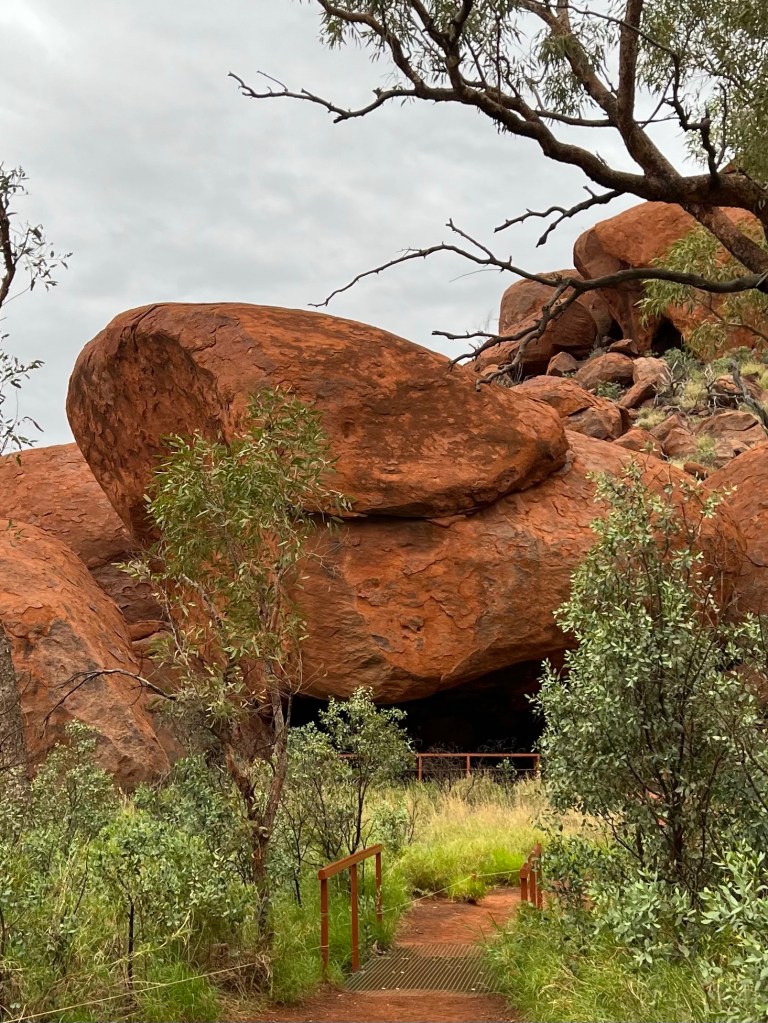
He also told us of the different rituals and ceremonies (Inma) held by the men and the women at various sacred sites around Uluru. The Aṉangu never share these with non-aboriginal people and what happens during these Inma, remains a secret. They have what they call Men’s Business and Women’s Business and not even the Aṉangu men and women are privy to each others. Indeed, should they be found to have any such knowledge, they would be severely punished – apparently a spear through the leg! There are thus areas of Uluru which are sacred under Tjukurpa and cannot be visited or even photographed from a distance for fear images might go up on the internet and their people might see them. Kata Tjuta is a mens’ only site and Aṉangu women do not go anywhere near it.
We saw where the young men, about to reach maturity, were taught how to hunt by hiding behind a rock and watching the hunters at work. They would watch as a herd of emu or kangaroo came to the waterhole and count them in and out, letting the hunters know when the penultimate one has passed so they could kill the straggler and not scare the others into not returning. Clever!
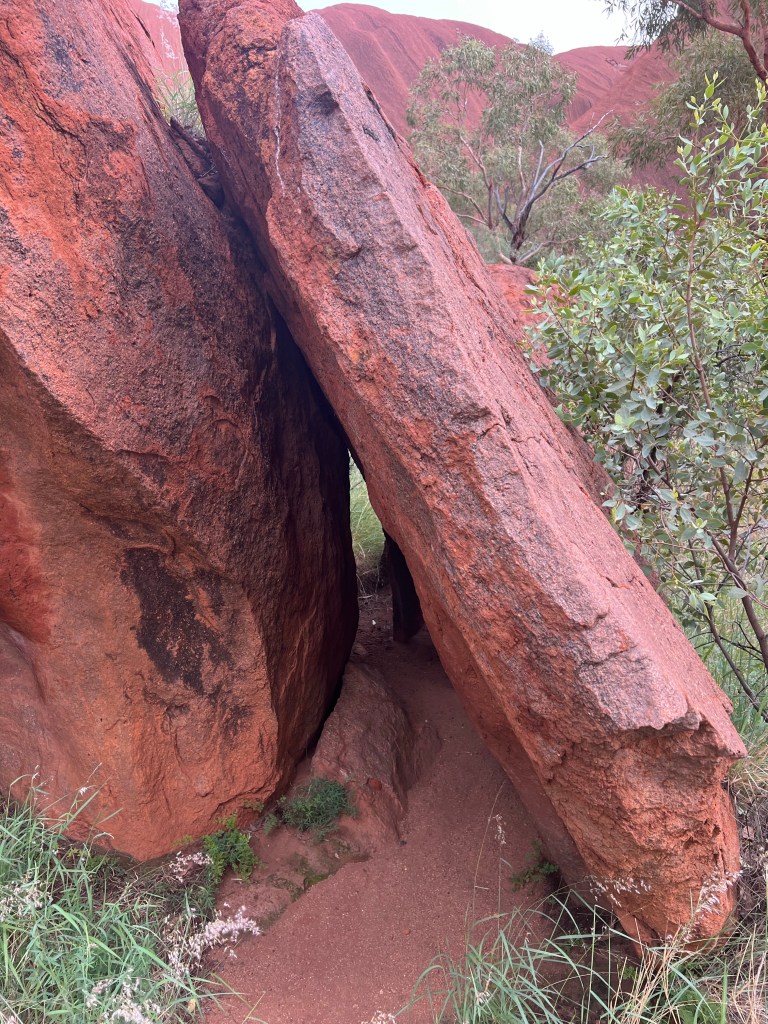
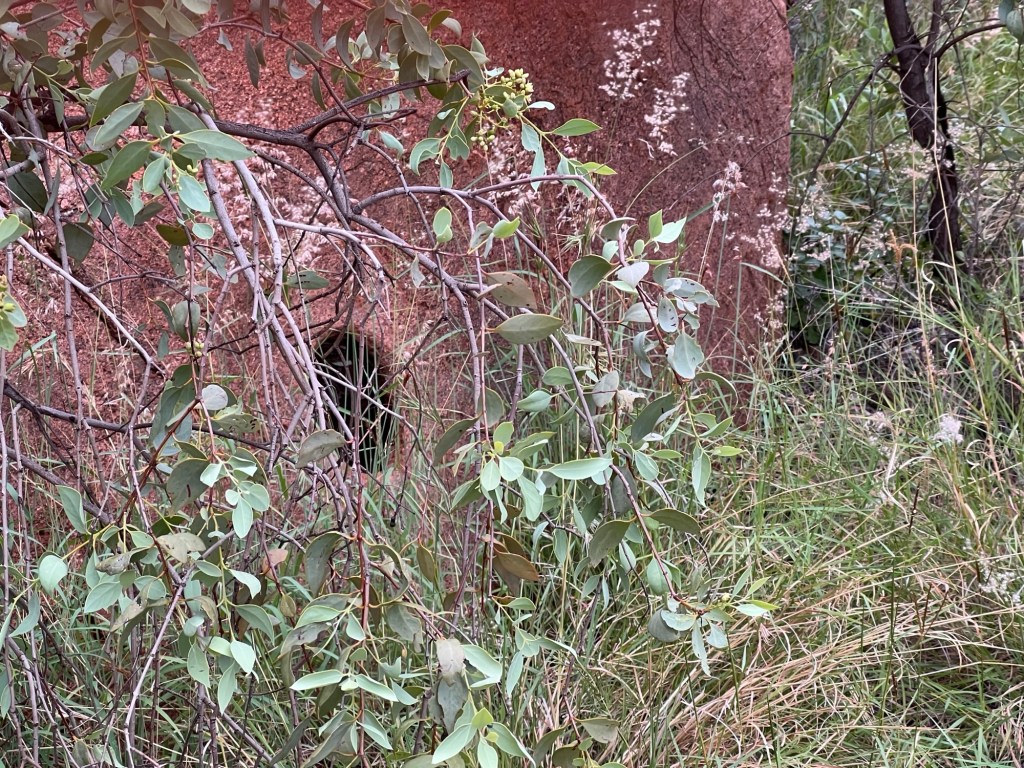
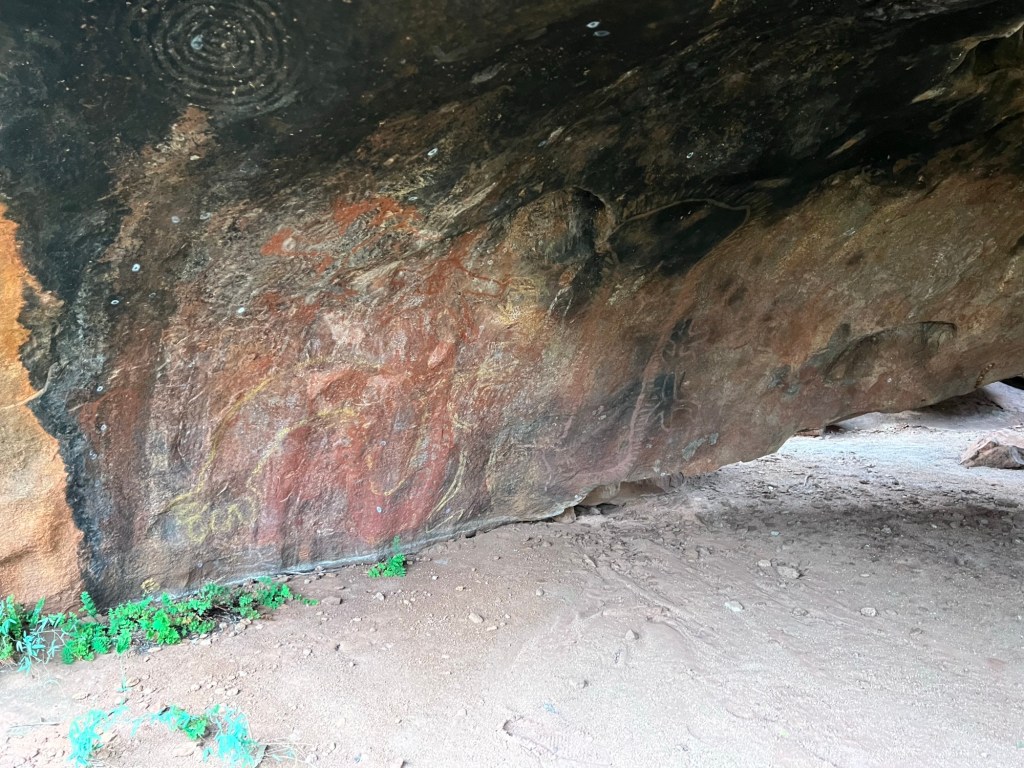
There was also a wonderful cave for the elderly, near to the waterhole and the kitchen cave, so they could watch what was going on and their children and grandchildren could keep bringing them food and water… perfect! We could see the blackened roof from their fires and again some wall-art from teaching the young children.
Jack also explained how the Aṉangu see the desert as their shopping mall – their chemist, bakery, butcher and hardware store. He showed us the very important mulga tree, the source of most of their tools and the witchetty grub. This small bush-like tree is prolific near to the rock and the water source. He also showed us the various fruit trees and grasses from which the Aṉangu gather their food and grains and the desert blood-wood tree with its red sap, which is a natural antiseptic. Desert oaks, about the only trees further away from Uluru’s water source, seemingly bearing no relationship to our oak tree, though apparently the grain and hardness of their wood is similar. They are very slow growing and can dig deep (30m) for their water. They are also resistant to fire so can survive pretty well anything.
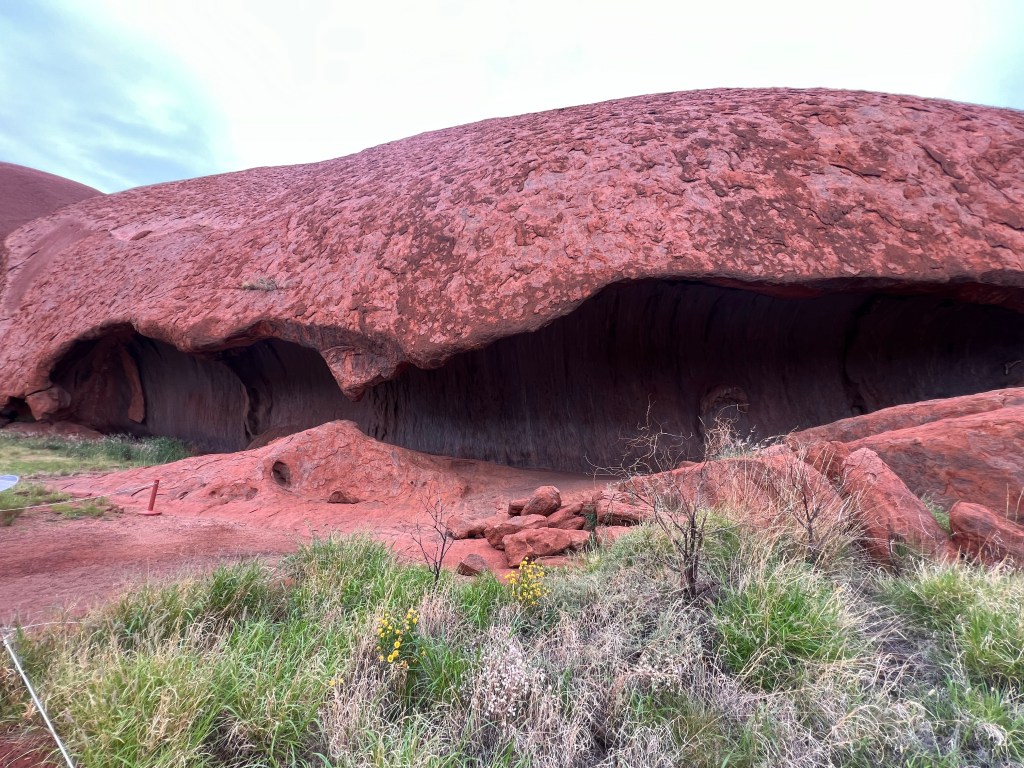
We visited a second waterhole at the impressive Kantju Gorge which was used by the Aṉangu as a source of water and finished the morning with a visit to the Cultural Centre. This really does seem to be a truly collaborative project with the Aṉangu and was well laid out and fascinating. It was opened in 1995 to mark the tenth anniversary of Uluru being handed back to its traditional Aboriginal owners and included two galleries of their art and a great shop. I would like to have spent more time there, however it was now 11.30 and we had been going for seven hours, so it was probably time to go back!
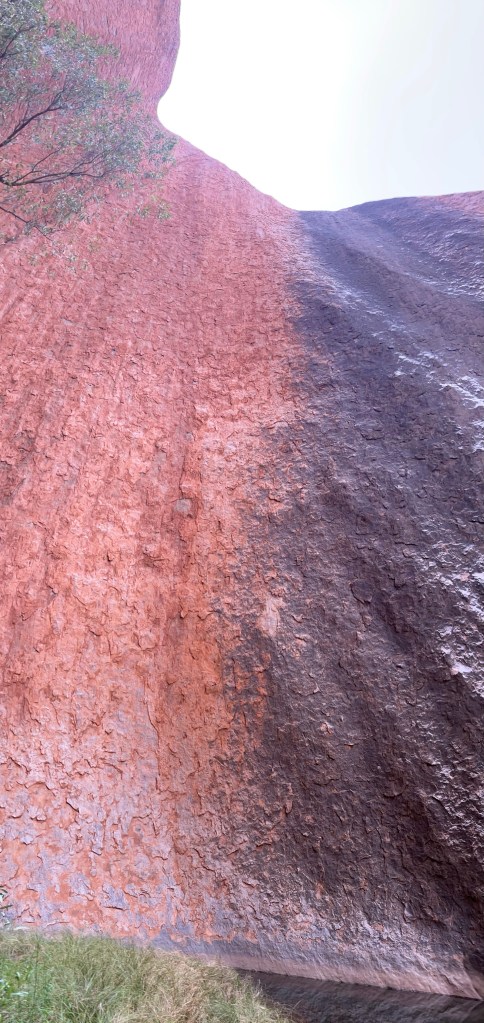
Slightly by accident, we did a third tour to Uluru in the afternoon. which was perfect for me as I need to be told things at least three times and to be honest this is all so complex, I am only just ‘beginning’ to get my head round it. The afternoon tour was with Jo and a reversal of what we had done in the morning. We started in the Cultural Centre which I was delighted about then back to Uluru to hear the above stories again – though slightly elaborated by Jo which was great. Each time you learn just a little bit more.
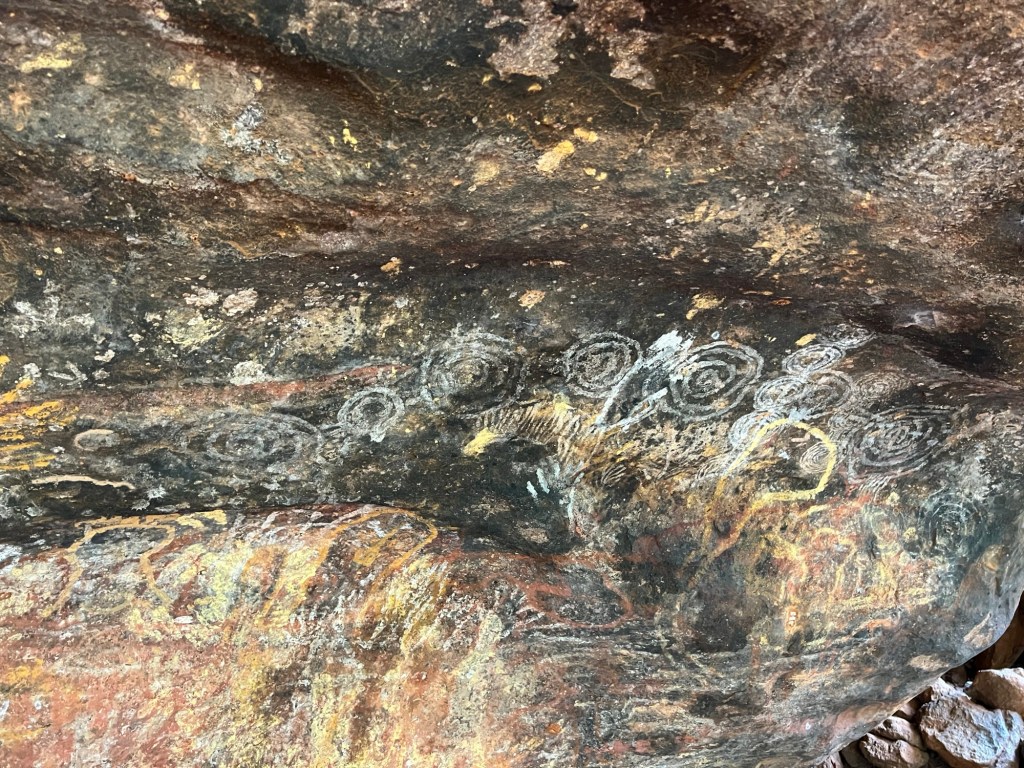
In particular she expanded on the meanings of the wall art. The ‘eyelash’ representing the traditional male belt/or women’s skirt given on maturation and woven with the elders’ hair (similar to Taquile island in Peru); the ‘yellow flower’ representing the honey grevillea plant and its delicious sap; three prongs, representing emus; boomerangs and the concentric rings mapping out various meeting places or waterholes linked by a journey (in this case, there and back, as there were two lines); Amazing to think they have been used to teach the children for 4-5,000 years.
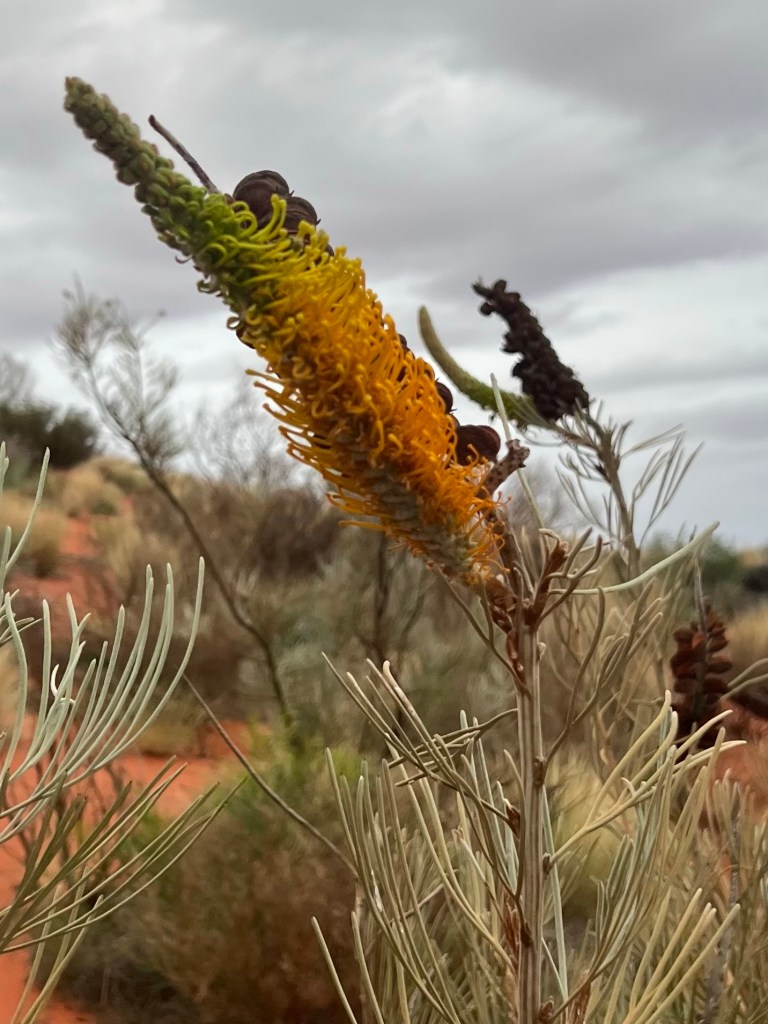
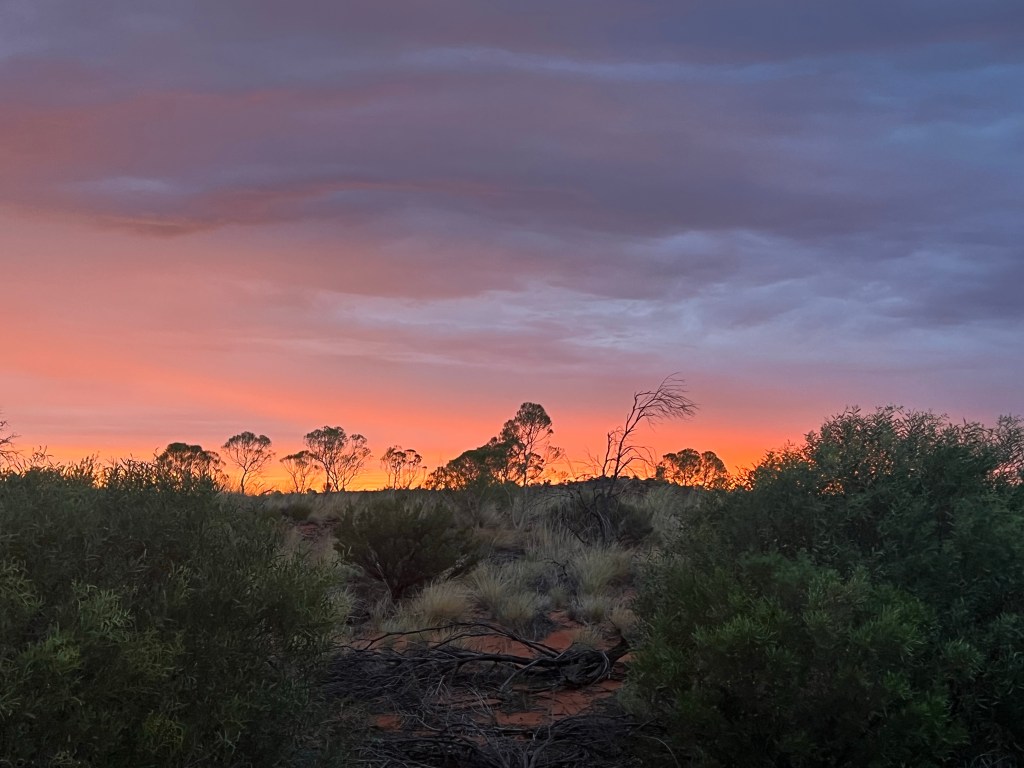
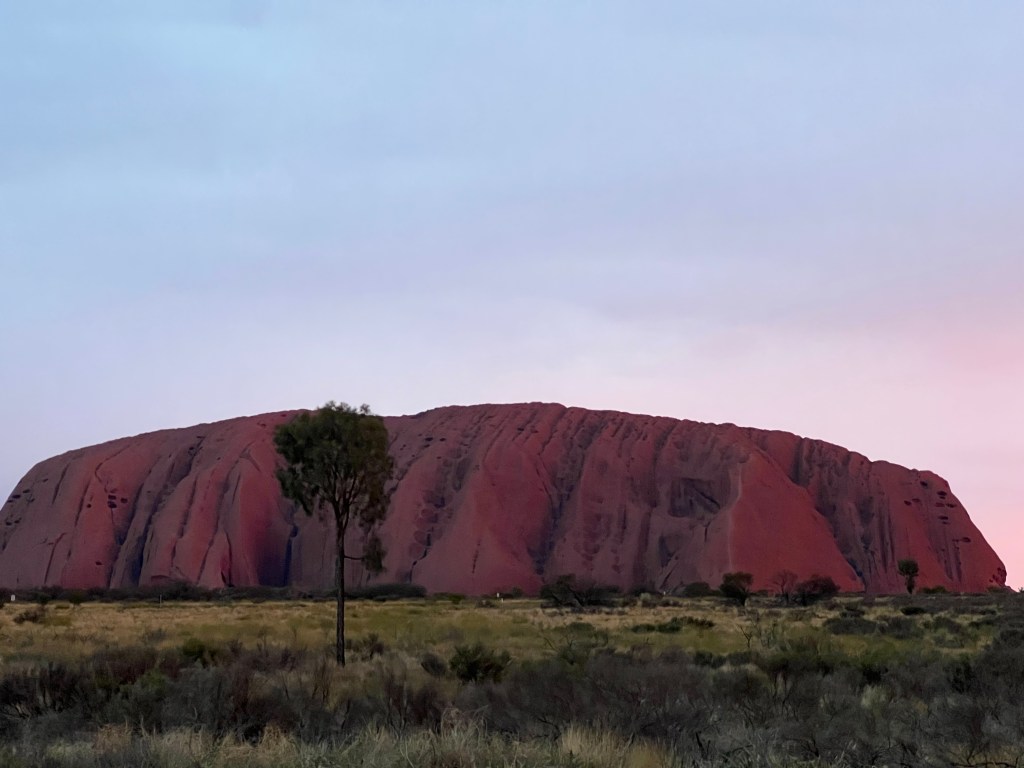
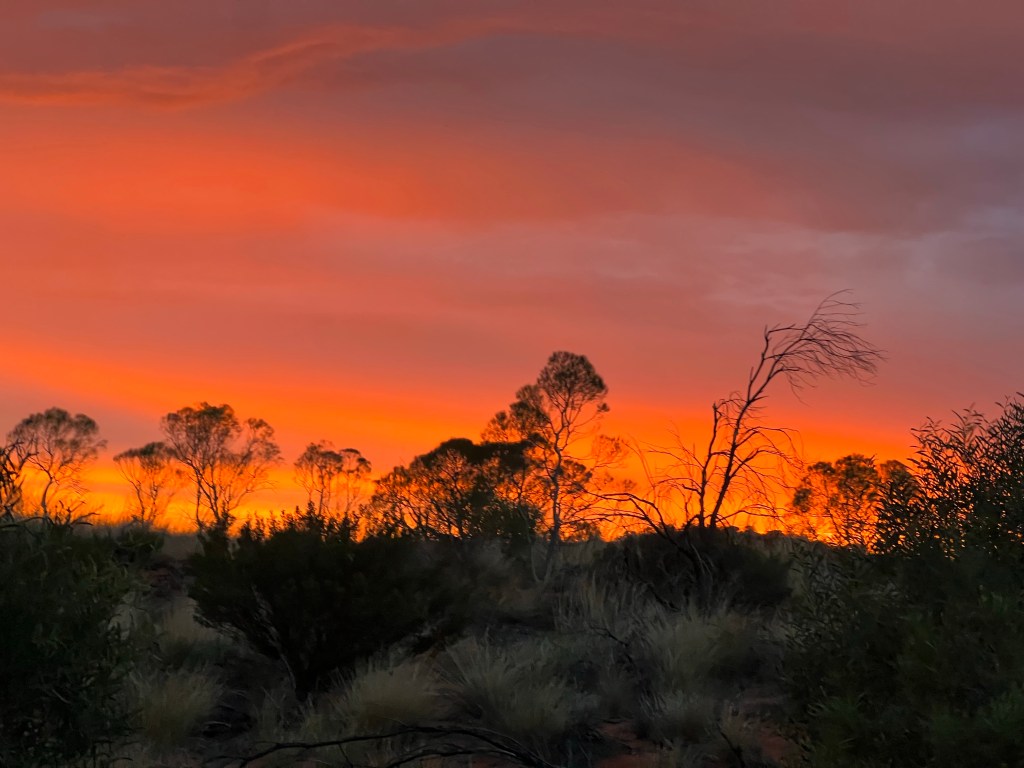
We finished the tour with the sundowner watching the sun set over Uluru. Sadly still cloudy so we did not see Uluru in its full luminous glory but we had some very pretty skies. Sarah also found what we thought might be an emu egg – causing great excitement as there are very few of these around here now. We await to hear!


 EC-Rider Travels
Leave a comment