
Rimu Lodge is a seriously nice place to stay and we could not have been more welcome of comfortable. Sue Ellen gave us the most delicious breakfast, but we sadly had to leave soon afterwards as I had booked a boat tour on the Okarito Lagoon to see their great white herons and spoonbills. It was pouring with rain and we had received a message saying the tour may be cancelled but to pop by if we could. We could, so we did, going through every kind of weather possible until we arrived at the lagoon in bright sunshine. Here we met Paula and her partner Swade and were taken on the most wonderful two hour tour of the Okarito Lagoon.
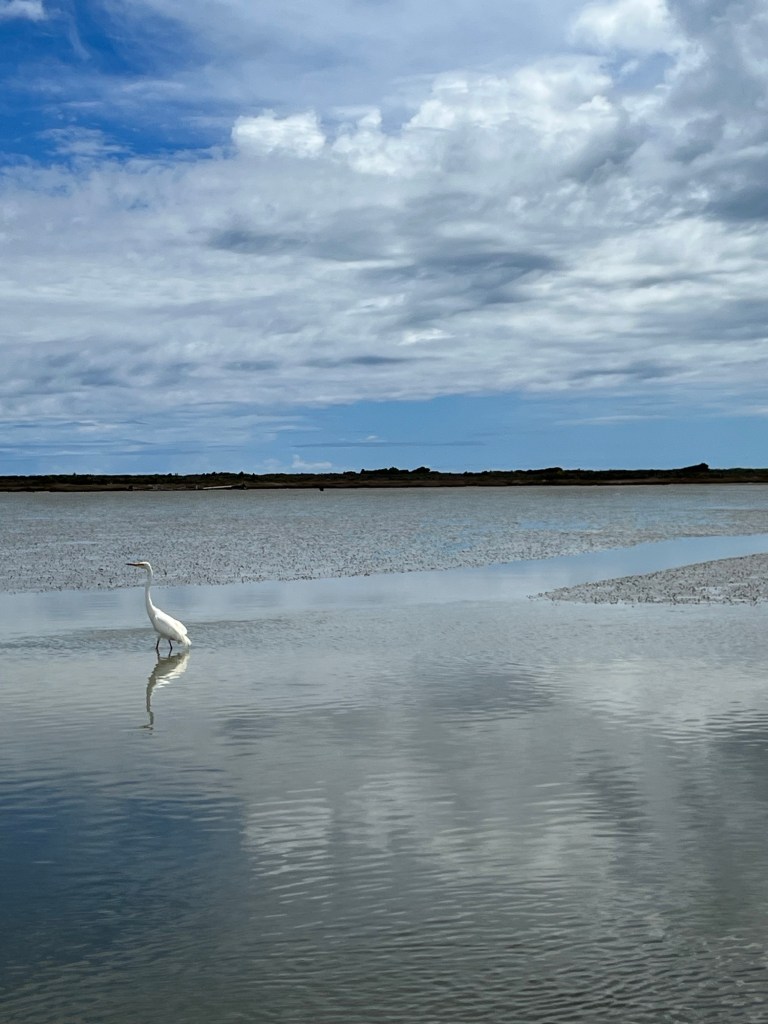
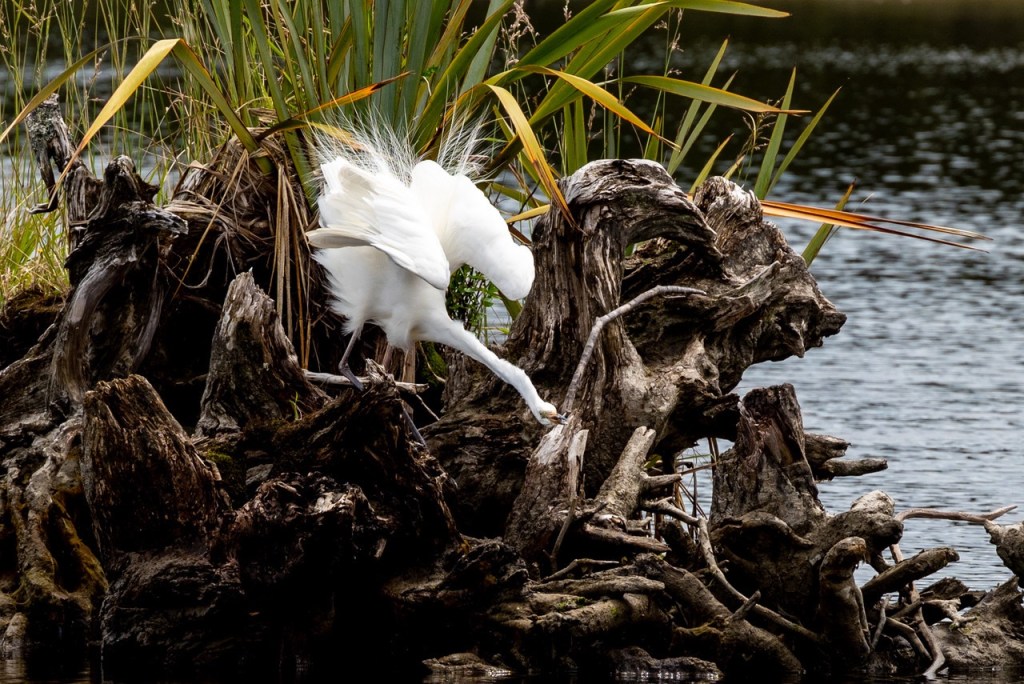
The Okarito Lagoon is the largest unmodified coastal wetland in New Zealand and covers an area of about 3,240 hectares. It is part salt water going into fresh and is the home of a multitude of birds some of them very rare and only found here. We were particularly there to see the Great White Heron which is the largest heron, up to 1m tall, and unique to New Zealand. There are only 180 of them in New Zealand and they all come to nest together in a colony near the lagoon. After their young have fledged, they become very territorial and only about 12 will stay, year round, at Okarito. When breeding they have a black bill and special breeding feathers and both the male and female look after the young. Once the young have fledged, they are on their own and the parents go back to their solitary lives and start claiming their territories. We were incredibly lucky and saw six of the twelve including one in the ‘hair salon’ having a major preen to get rid of its breeding feathers.
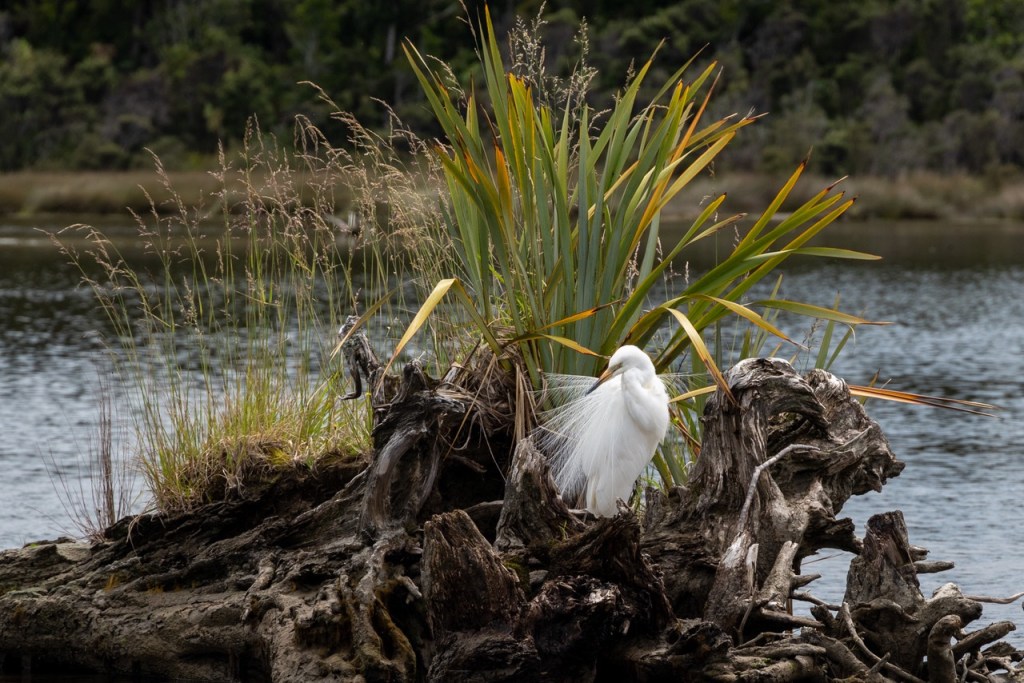
Apparently we were very lucky to see this and it doing ‘a stretch’. Paula said she had only ever seen it once before!
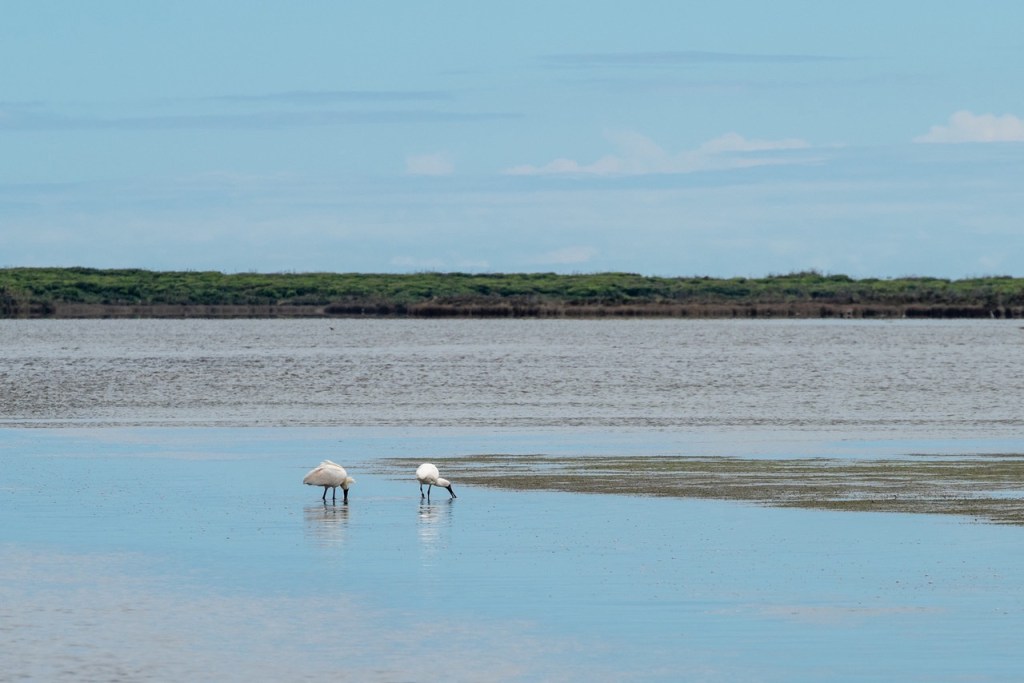
Another key bird on Okarito lagoon is the Royal Spoonbill, which is the most wonderful looking bird with just the best hair-do. Much more sociable, they appear in pairs churning up the water, in perfect unison, with their funny spoon-shaped bills.
We also saw Godwits, the sweetest little fellows which can fly up to 100kph and do so, non-stop all the way from Alaska, for the summer. (They are apparently the longest, non-stop migratory bird). There were small black billed gulls, also only found in New Zealand and under serious threat; endless cormorants (not threatened!), pied and variable oyster catchers (the latter, totally black, obviously!) pukekos, banded dotterel, pied stilts, caspian terns and many many duck – truly lovely
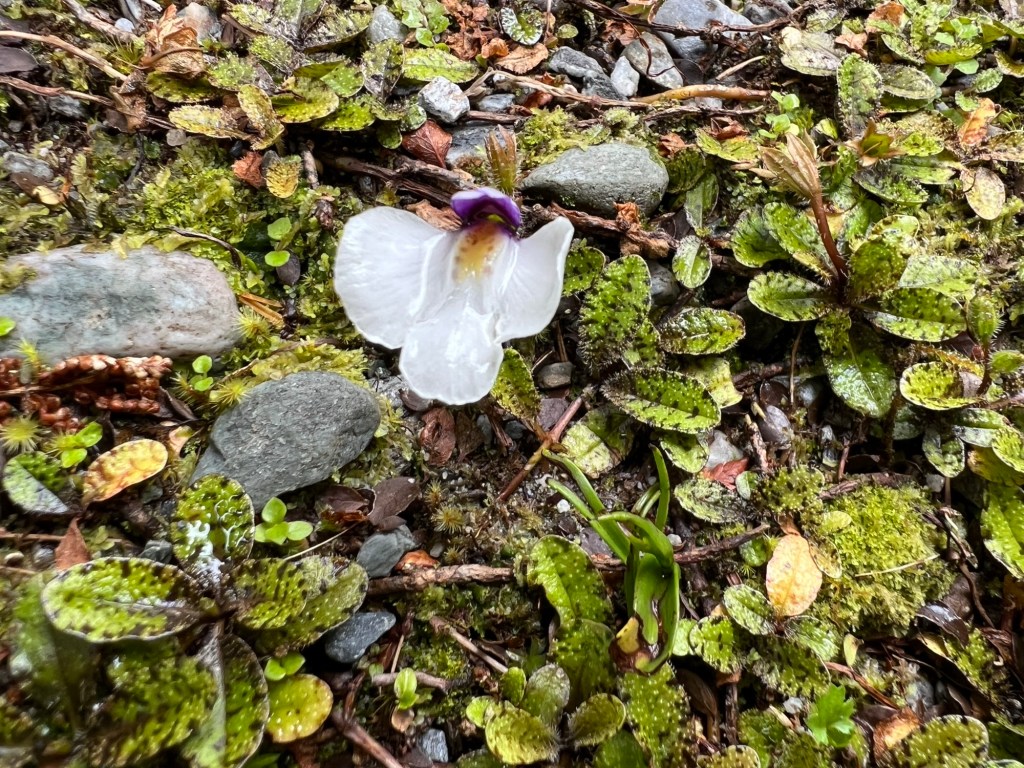
As we approached the bank, Swade introduced us to many of the native trees, with totally unpronounceable names, and also to a rather lovely Ladies Slipper orchid growing as an epiphyte on one of them and the orchid-like swamp musk growing under on the bank.
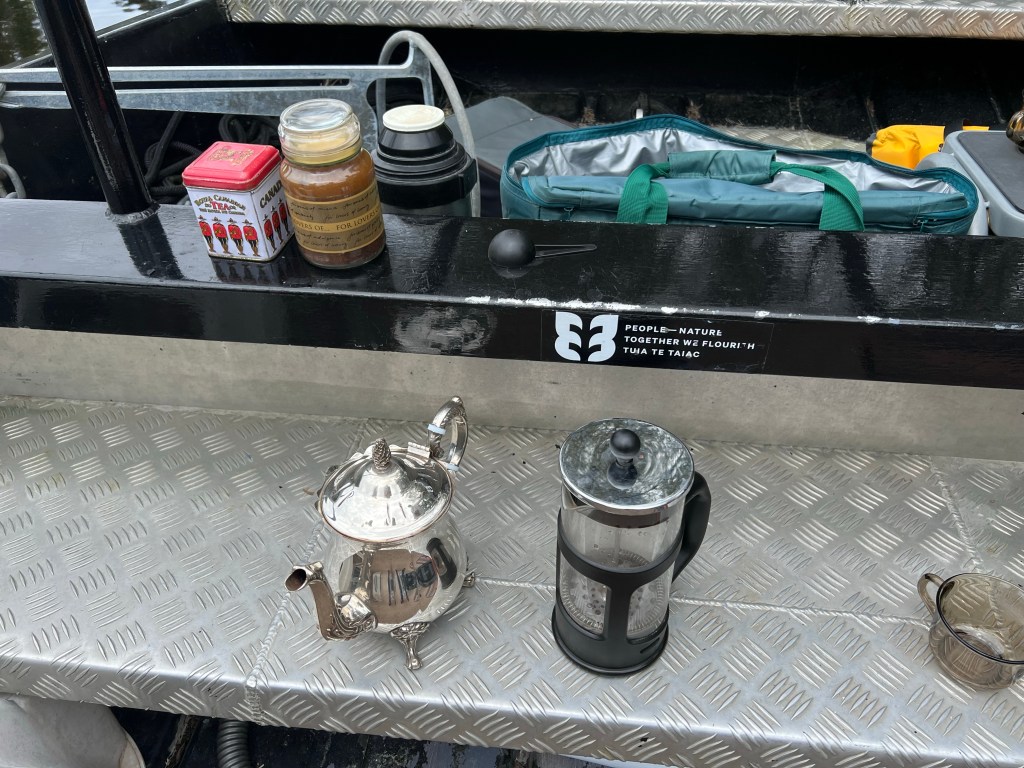
This was all before he drew out the silver tea-pot for a nice cup of tea and delicious chocolate cookies he had baked that morning.
Paula explained about the extraordinary conservation programme which is going on in the surrounding reserve where area by area they are trying to get rid of all the stoats, possums and rats which are eating the birds eggs. This is done literally by a team of men/women with a series of traps and cctv cameras. It seems somewhat far-fetched, but is apparently very effective and more and more of the forest is now ‘pest’ free and numbers of birds are greatly increasing. Their is an intensive programme to save a particular species of kiwi, only found in this area, called a Rowi and these have increased from 60 to 600. I would so love to see one. On the way back we saw black swans in flight – who knew they had white under their wings. What a really special morning.
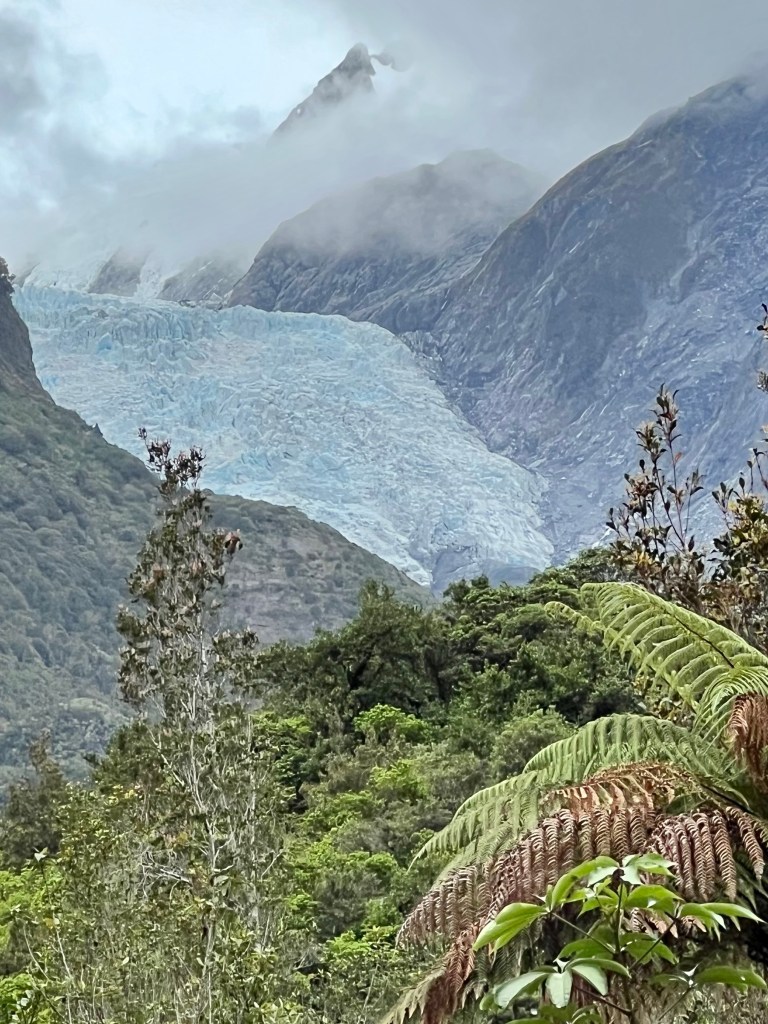
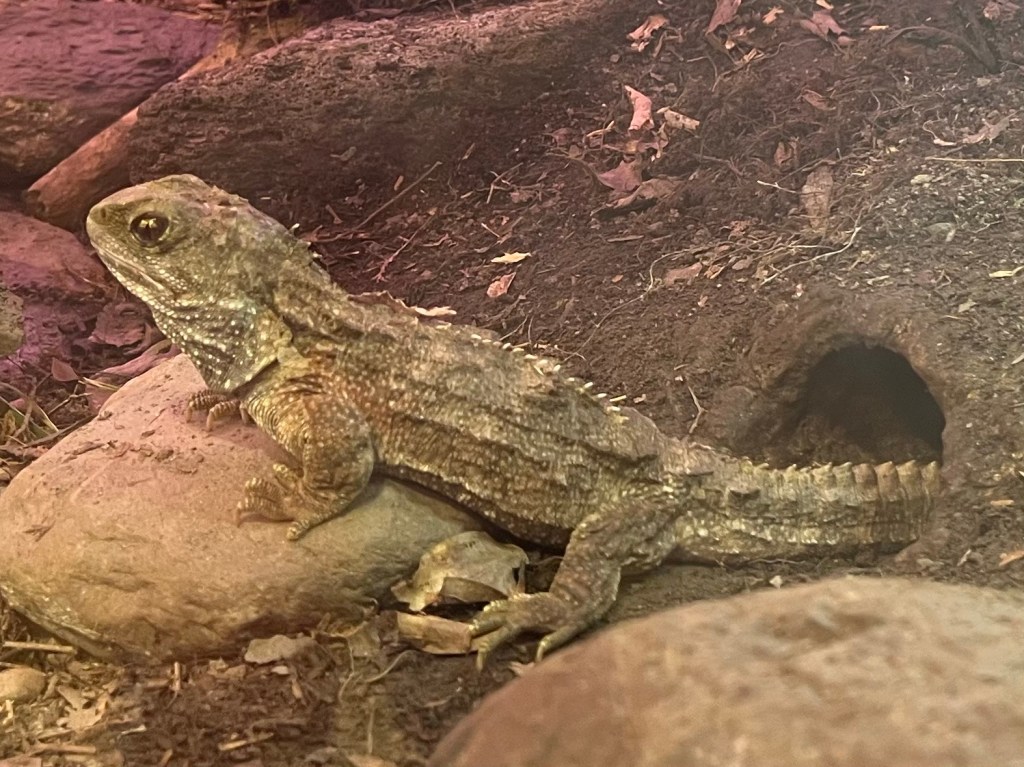
We then headed to our next destination, Lake Moeraki. On the way we stopped off to see the Frank Josef glacier and visit a kiwi sanctuary, which Paula had mentioned was caring for some of their special Rowi kiwi’s before being returned to the wild. Unfortunately they had been returned that very day! However they also cared for some extraordinary reptiles, called Tuatara, which are only found in New Zealand and the last of the reptile survivors of the dinosaur age. They once lived throughout New Zealand but now only survive in the wild on some of the islands with no predators – rats, stoats and possums!.
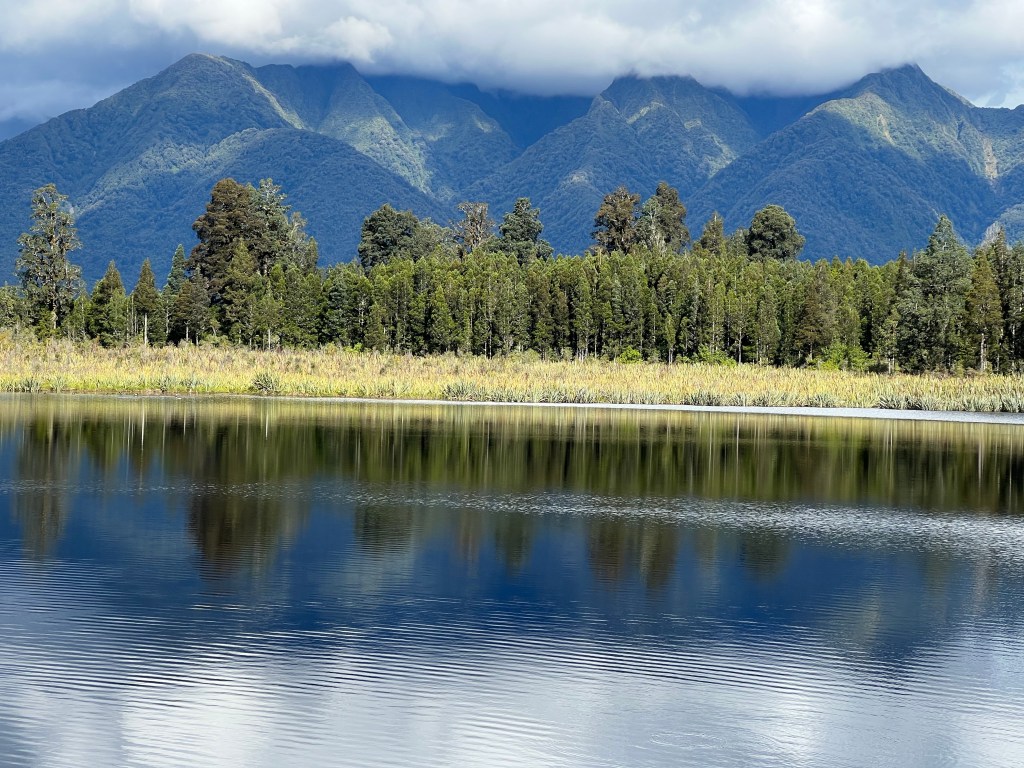
It had also been suggested we visit Lake Matheson, renowned for its ‘reflections’ which with time running out, I did on the run to the lakes edge and a quick photo. The conditions were not perfect, but it was pretty, pretty.
About an hour further on, we arrived at Wilderness Lodge in the early evening in time for a delicious supper. Unbeknown to us this is a lovely eco-lodge, offering wonderful nature walks and talks. I joined the evening walk, with owner and eco-warrior Jerry, to see glow-worms in the trees along the roadside and also have an interesting astronomy lesson. It is funny seeing everything upside down! We sadly did not see many of the night birds but heard both the Morepork owI and also the Long tailed cuckoo. The latter comes all the way to New Zealand, from French Polynesia or Papua New Guinea, to lay its eggs. However, like other cuckoos we know, rather than building their own nest they requisition the nest of a little brown creeper (about a third of their size) chuck out their eggs and lay their own (one per nest), leaving the brown creeper to rear their chick. Not very kind!
A very comfortable room was most welcome on my return.
 EC-Rider Travels
Leave a comment