
After the most delicious breakfast (made by us!) we set off to visit the Waitangi Treaty Grounds, crossing to the other side of the bay via the little ferry to Paihia. An impressive museum has been created to present this historic site considered to be the birthplace of the New Zealand nation. Te Tiriti o Waitangi, was the written agreement between the British Crown and the Māori chiefs after which, New Zealand became a British colony and the Māori became British subjects.
We had an excellent, and most diplomatic, guide who explained the extraordinary history of this important treaty.
Following New Zealand claiming independence in 1935, an Englishman, William Hobson, was made Consul to an Independent New Zealand and was sent there with one goal – to get Māori to sign over sovereignty to Britain.
With no legal training, William Hobson, drafted a treaty to present to the Māori chiefs. Unimpressed with Hobson’s efforts, James Busby the British Resident, redrafted the treaty, adding an all-important promise, that Māori would retain possession of their lands, forests, fisheries, and other property. It was then translated into Māori by missionary, Henry Williams and his son Edward, although some of the terms slightly differed. It was presented to around 500 Māori at Waitangi on 5 February 1840 and following much heated debate, more than 40 chiefs signed the treaty the following day. Our friend Hone Heke, ‘whose restaurant’ we were in last night, was the first chief to sign. Copies of the treaty were then taken around the country and many more chiefs signed.
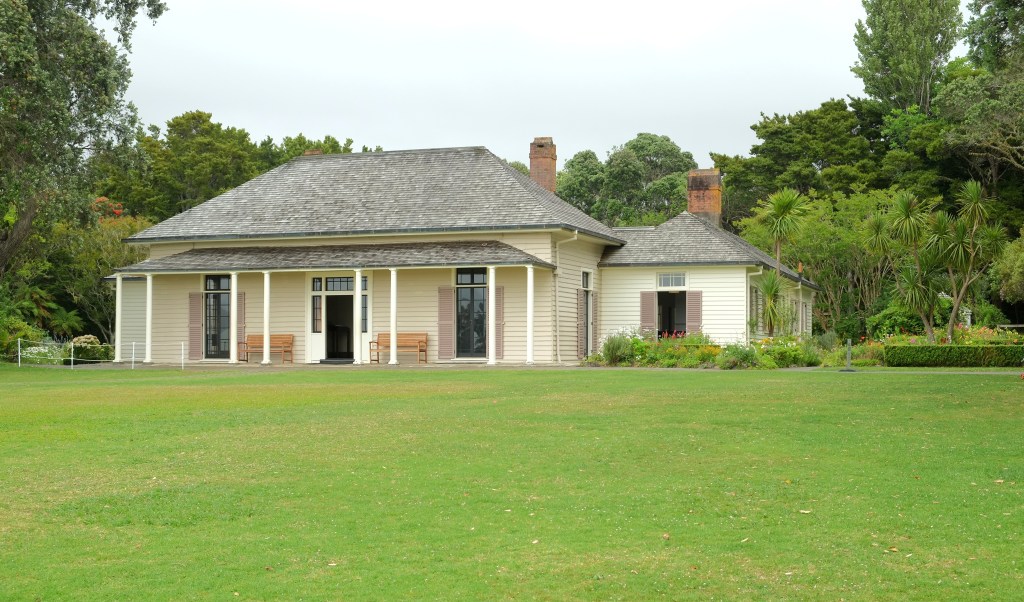
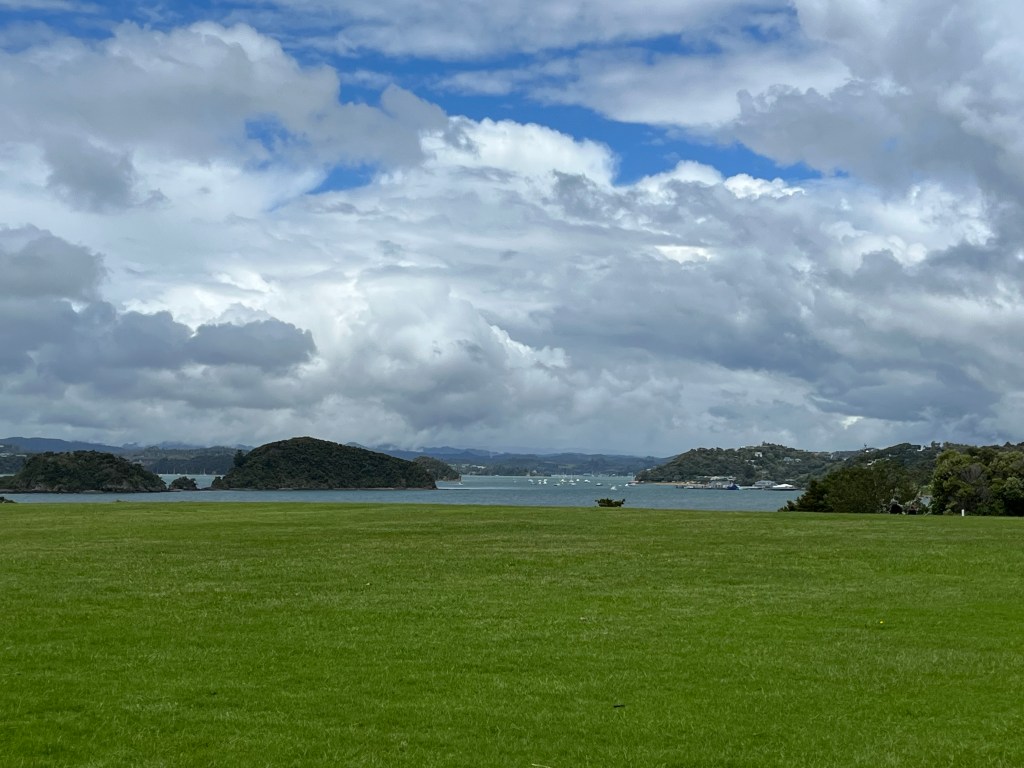
overlooking the Bay of Islands
The treaty laid out a number of principals to protect the Māori land and livelihood and although intended to create unity, different understandings of the treaty (from two differing translations), and breaches of these principals, caused considerable conflict for many years to come as the Māori lost more and more of their land. Several groups of Māori travelled to England to petition the British monarch and government asking for treaty rights to be observed but to little avail. The British did not behave well.
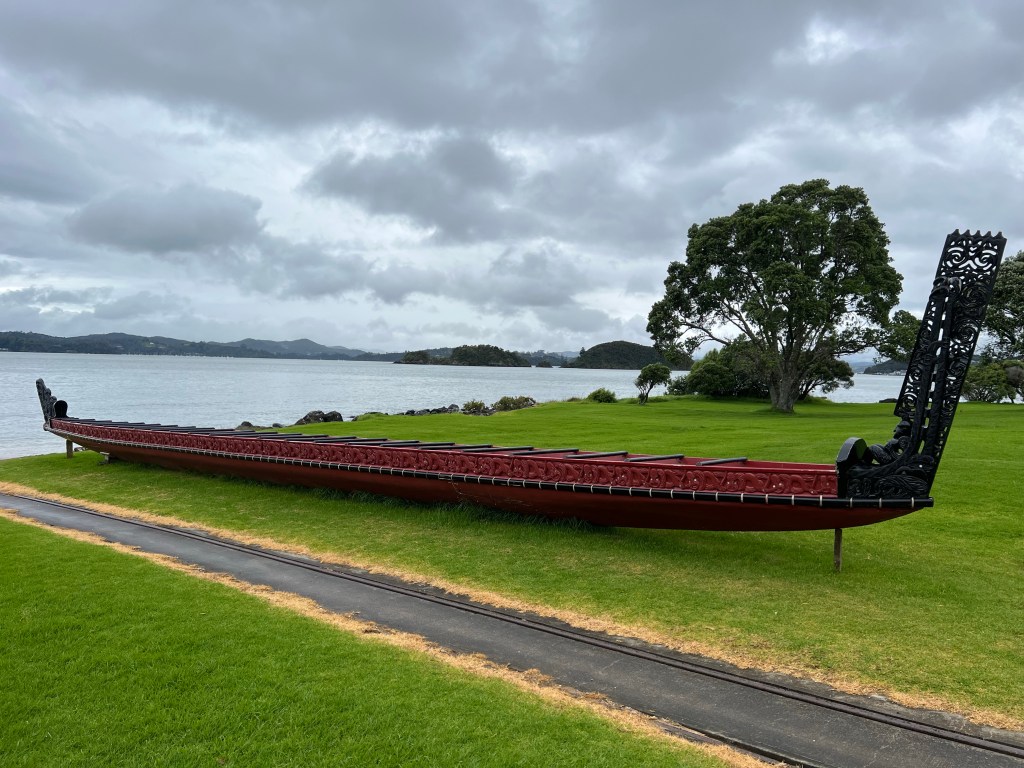
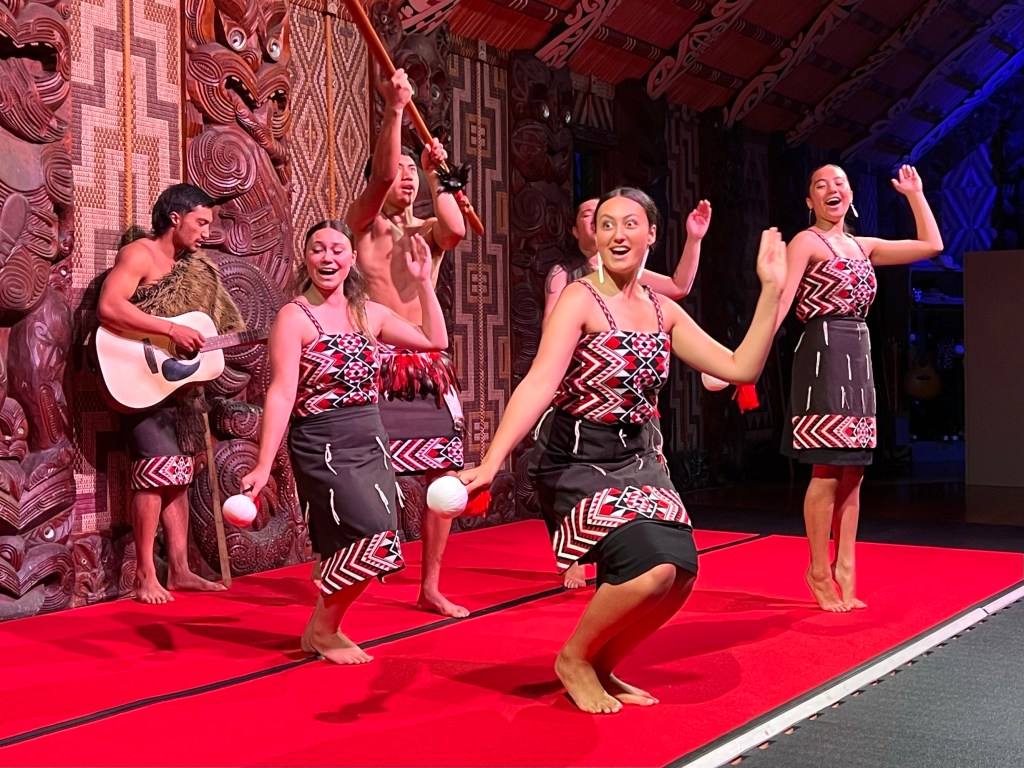
At the end of the tour we were treated to a presentation of the Māori indigenous culture by the resident performance group. We had waiata (singing), poi, stick games, Māori weaponry and the most amazing dance with strings with what looked like balls of burrata on the end! It was in fact a very charming and slick performance. Māori can do the most extraordinary thing with their eyes opening them wider than you can imagine and staring out without blinking – it must have been pretty intimidating on the battlefield.
We finished the afternoon by going on a rather amazing drive over the hills in search of some waterfalls, which were not hugely impressive, but it was all very pretty.
 EC-Rider Travels
Leave a comment