
It was quite a wet night! But dryish when we got up to set off on our first journey into Tortuguero National Park. This 26,650 hectare forrest was heavily logged for mahogany and palm and is thus a second growth forrest now heavily protected and dedicated to the conservation of sea turtles. The river itself feeds into the Caribbean ocean and is 99% fresh water. We headed off in a boat with Luis our guide (who I unfortunately kept calling Eric!), and headed up the Tortuguero river, within seconds seeing an amazing number of different birds – apparently there are 256 different species here.
It is incredibly beautiful and we immediately saw two different kinds of toucans: the black-mandibled toucan which is black with a yellow breast, throat and cheeks and funnily enough black lower beak. Soon after, we saw a keel-billed toucan, which is the largest found here with its huge, rainbow-coloured bill – love them! We saw several different king-fishers (Amazon, ringed and green) all happily darting about. The largest, ringed kingfishers, live in holes in the riverbank away from predators.
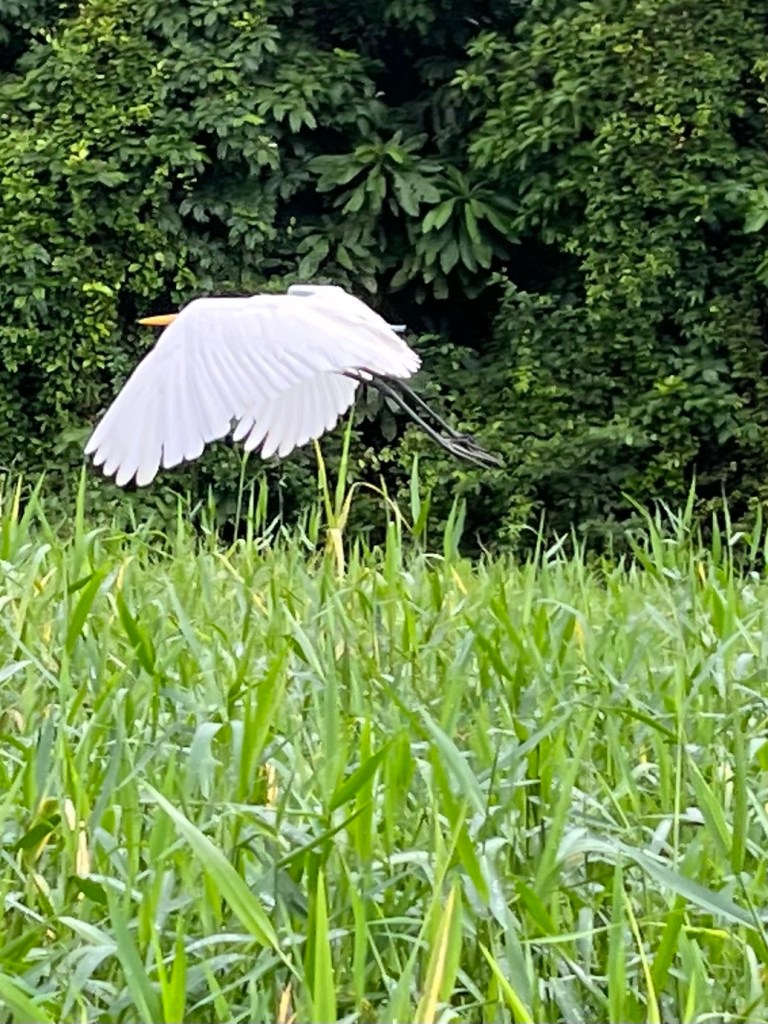
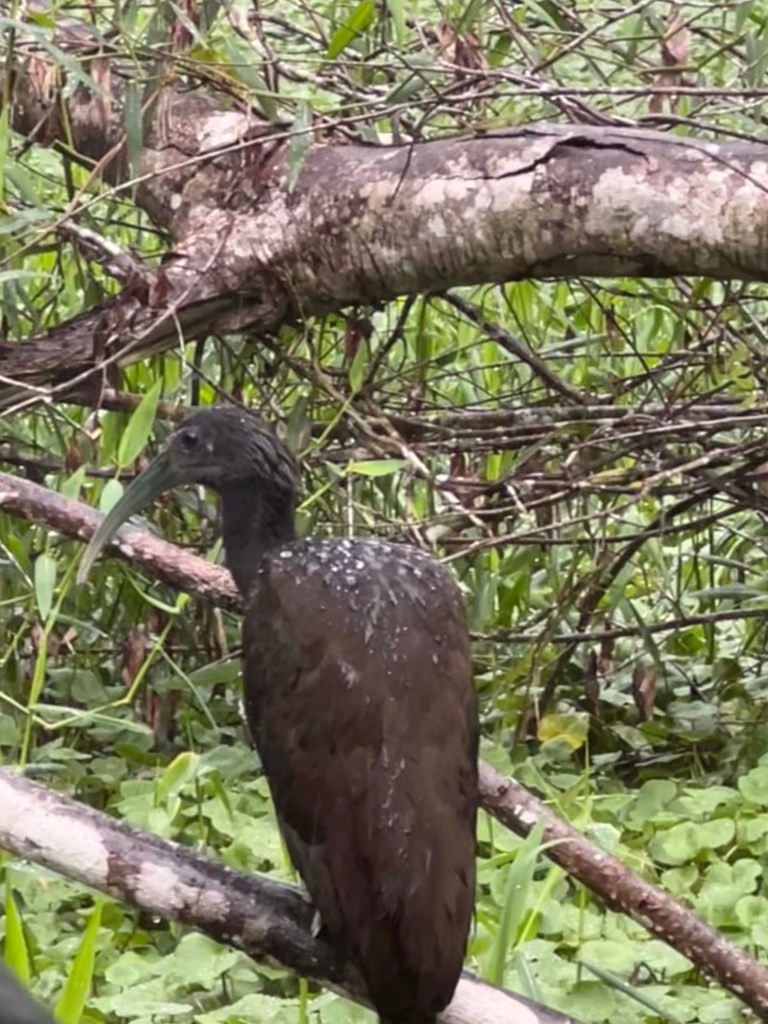
We saw turkey vultures, grey-necked wood-rail, fly-catchers, a lineated woodpecker with his red head, working very hard. Green ibis; tiger, green and little blue heron; snake bird; great egret and great kiskadee, a northern jacuna (different from the one I saw in the Amazon) and the rather boring yigüirro or clay-coloured thrush which is the national bird of Costa Rica. It seems a curious choice.
The heavens then opened and the rain-forrest more than lived up to its name – no one looks more miserable in the rain than a green ibis.
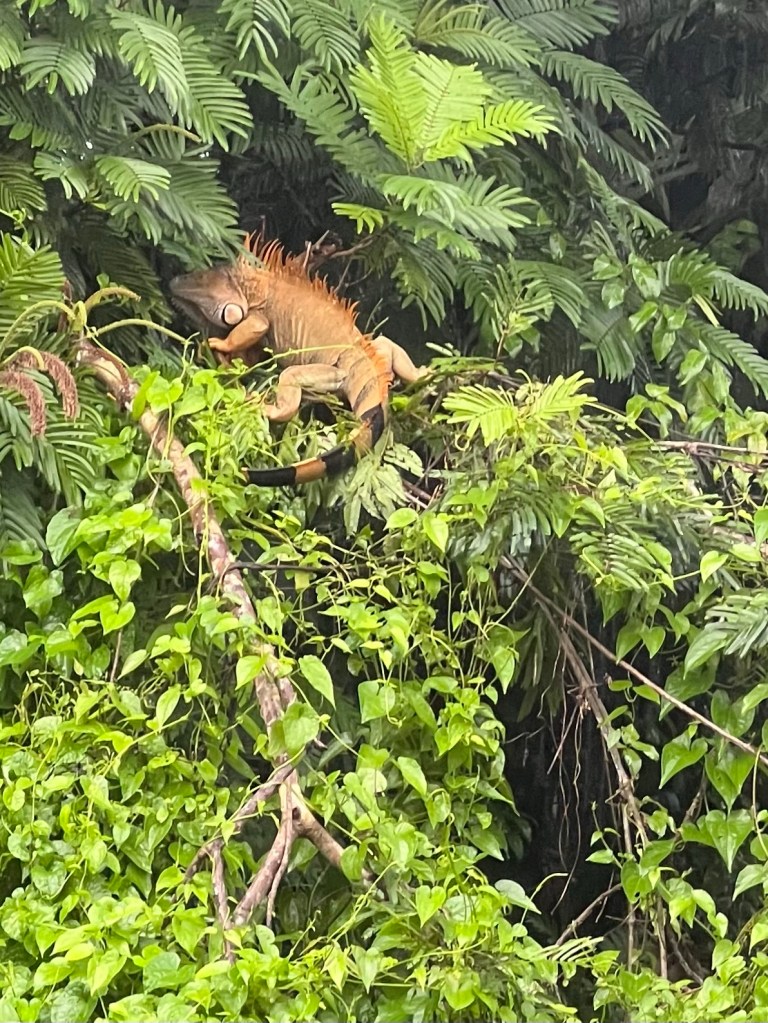
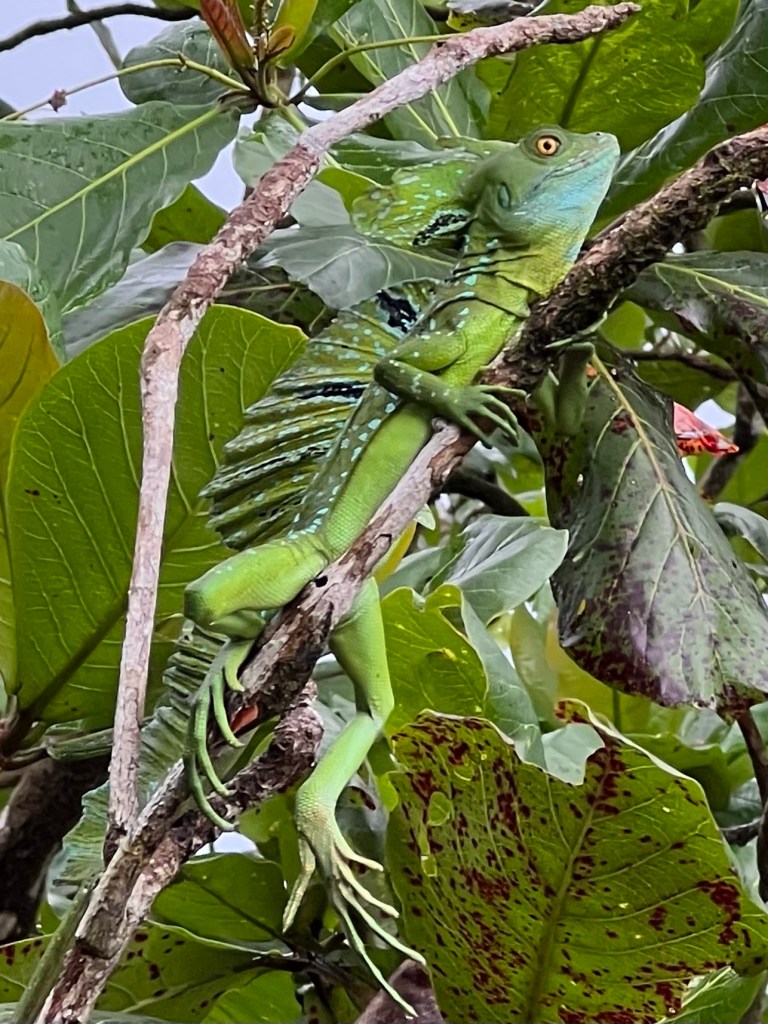
We carried on regardless and were rewarded with an osprey or fish eagle, who had had a good morning and was flying with a considerable sized fish in its claws. It apparently does not kill the fish when it catches it, but flys around with it until it dies. We saw a wonderful male green iguana in the trees, which had turned orange ….. as it was the mating season. And a bright green basilisk lizard draped handsomely along a branch amongst some identically coloured leaves.
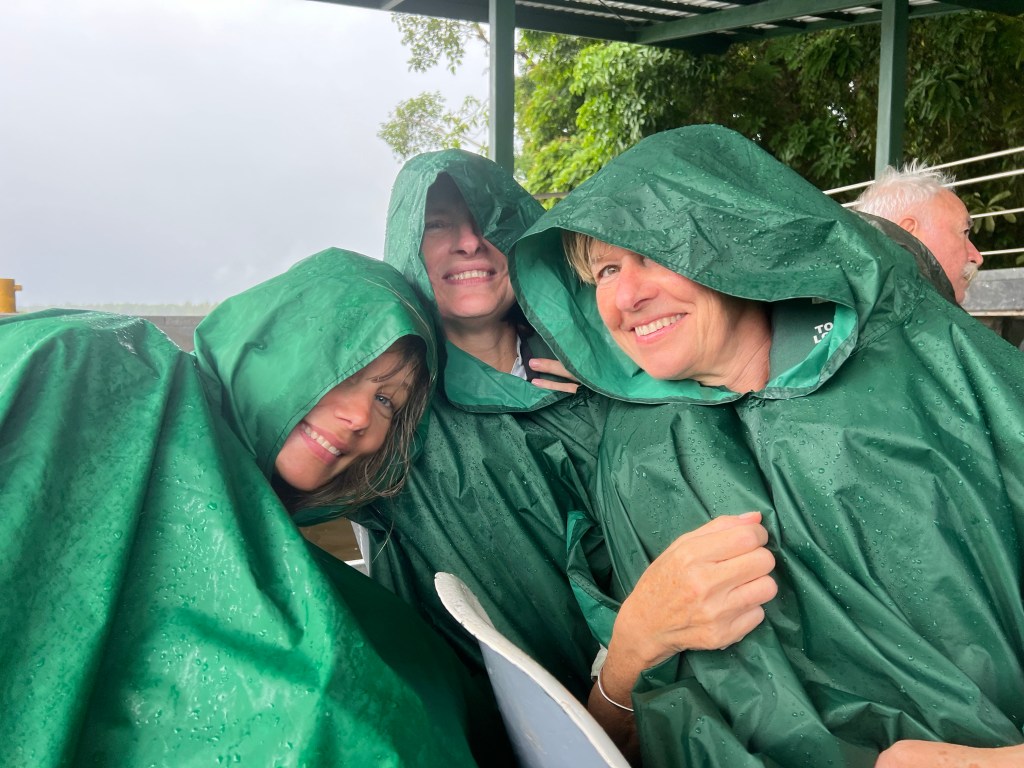
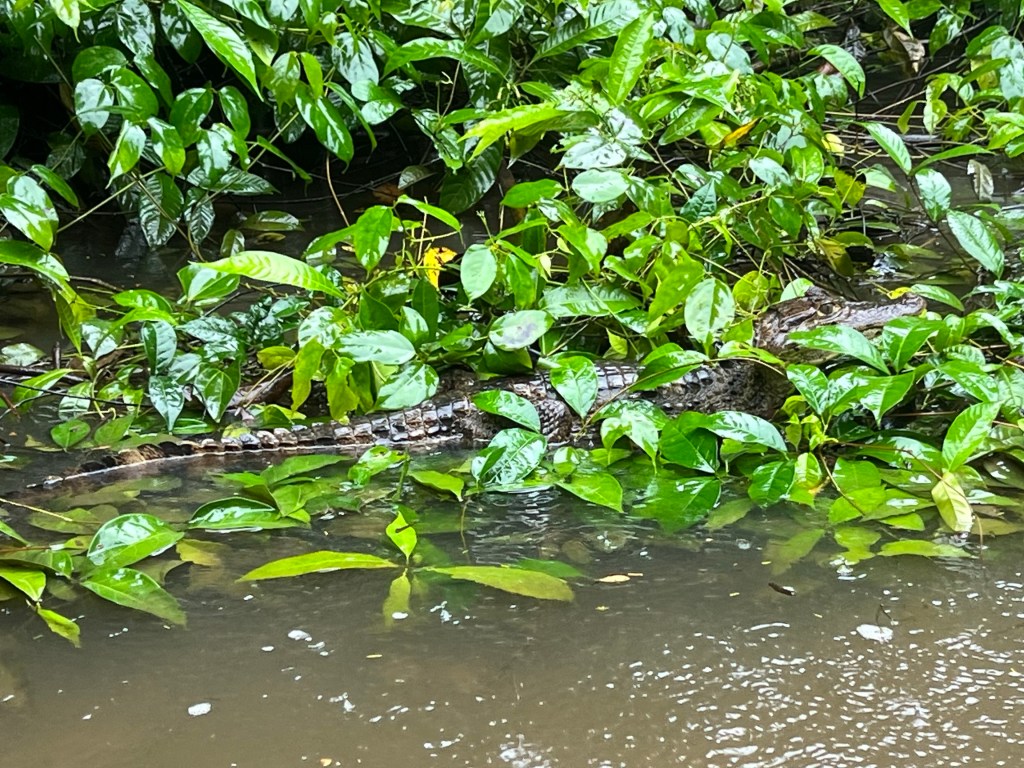
As we were about to turn back we saw a 10/11 year old spectacled cayman lying in the reeds and then to top it all, a white capuchin monkey up in the trees. Despite very smart Tortuga Lodge ponchos, we were soaked through to o our knickers by the time we got back, but goodness it was fun and breakfast was great!
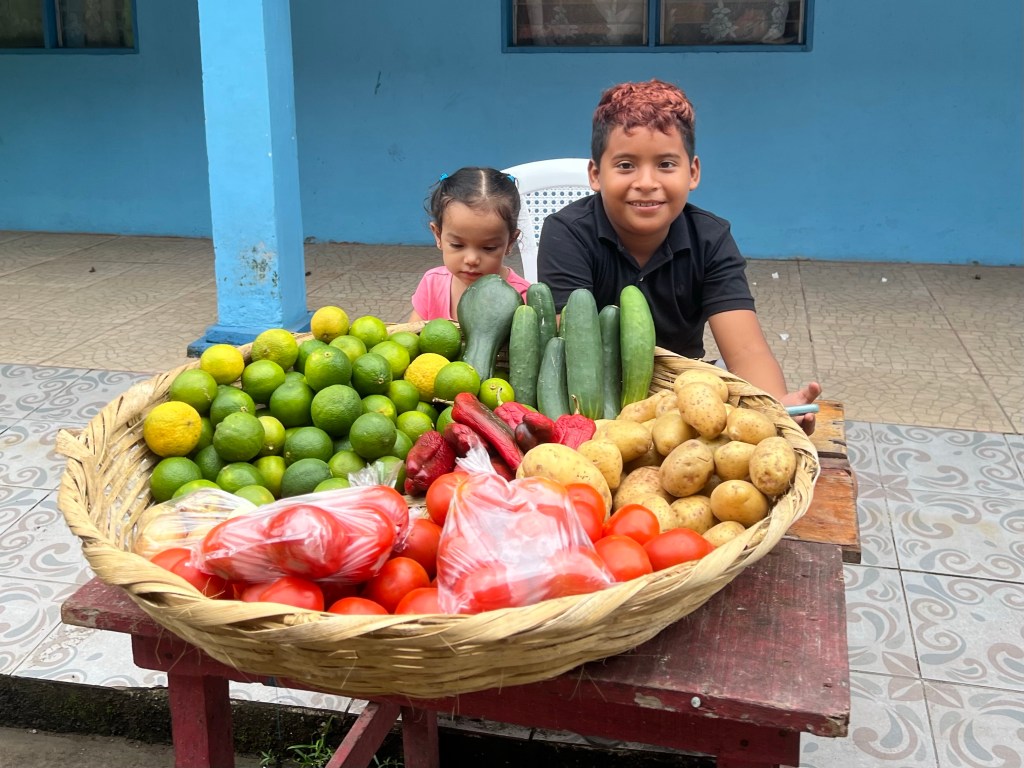
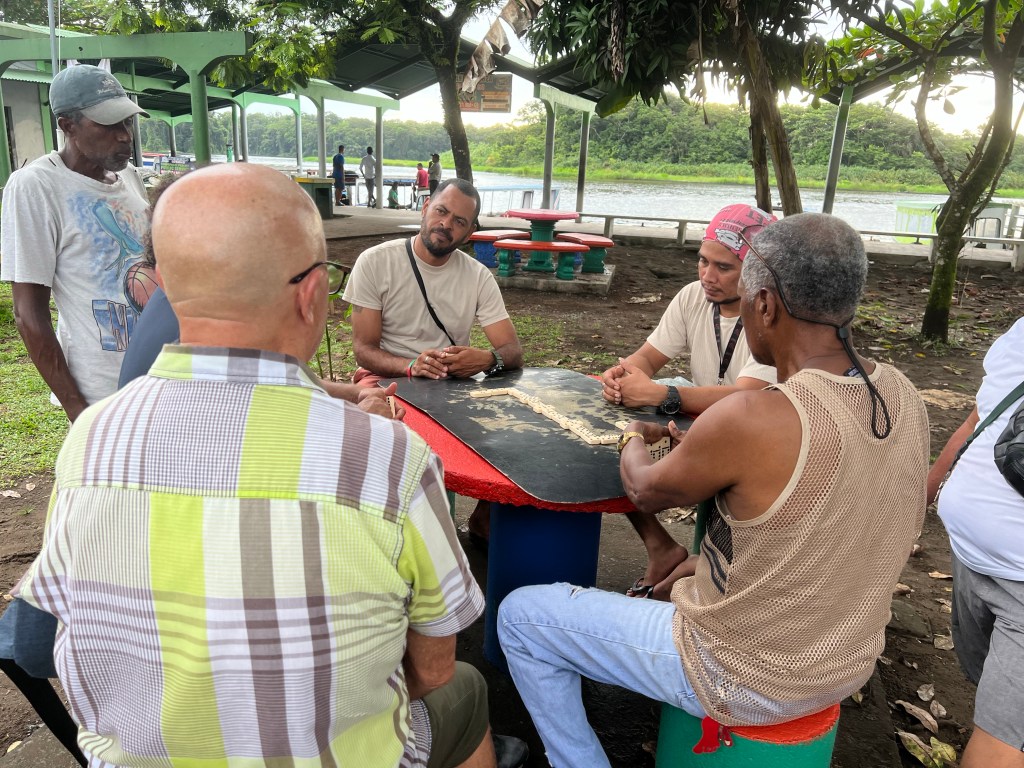
In the afternoon we joined the first staff shift on their homeward journey back to the local village. (I saw them arriving before 6am). Before heading into the village we watched a fascinating video on the turtle conservation programme here in Tortuguero, learning how the American, Archie Carr, had turned the industry around from poaching the turtles for sale for turtle soup and for their shells and eggs, to preserving them. This was largely achieved through education of the local communities and showing that long term, the turtles could bring them more income alive, than dead – ie through tourism. Which looking at the number of people there were in the little town, proved more than true. We joined them walking the length of the town past a very noisy and competitive game of dominoes and making one or two little purchases. The village is comprised of a variety of cultures: Hispanic, Miskito Indian (Nicaragua) and Afro-Caribbean. Both Spanish and Creole are spoken.
Tortuguero beach, which is a black volcanic beach on the Caribbean coast, two minute boat journey across the river and the airfield, is the most important nesting site of green turtles in the Western Hemisphere. Giant leatherback, hawksbill, and loggerhead turtles also nest here. The green turtle population came perilously close to extinction in the ‘60s when nearly every female turtle arriving to nest in Tortuguero was killed for the export market.
This evening however, we witnessed the next generation of green turtles making their first journey into the big – and if you are a turtle – very bad world. With less than 1 in a 1000 chance of reaching maturity, you hatch within a short time of your 100 or so brothers and sisters in a nest buried 60-100cms deep in the volcanic sand. The incubation period is about 45-75 days and the temperature of the sand determines your sex, the cooler sands producing males and the warmer, females. The hatched young turtles spend five to seven days in the nest, gradually rising towards the surface. Eventually they break free on to the beach and, somewhat wobbly at first, make their way to the sea. In the case of Tortuguero beach, some 50 yards or so, avoiding a string of predators which might be keen to add them to their dinner menu: dogs, iguanas, birds of pray, crabs, lizards, raccoons, wild-pigs or even fire ants. Once they reach the sea they have to fend off a multitude of carnivorous fish such as snapper, grouper and barracuda. It is not an easy life.
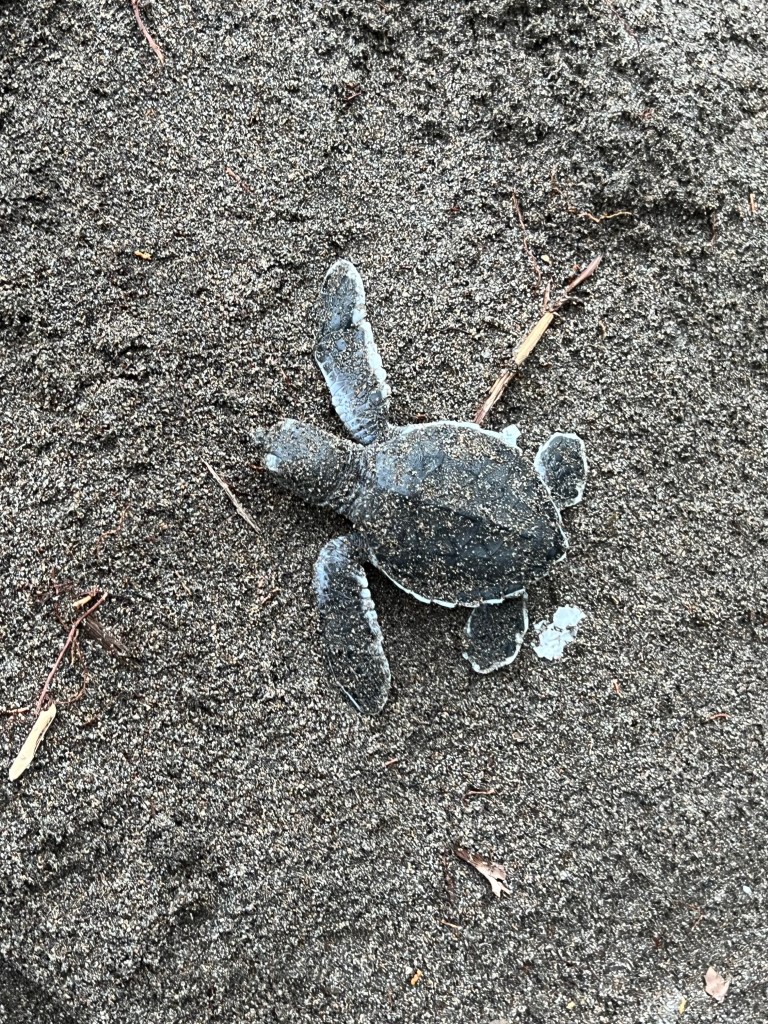
Should they reach maturity, they will not go on dry land for the next 25 – 35 years and then, only the females, to lay their eggs, having been mated by a male nearby in the water. Males aren’t always necessary – as after mating, female turtles can store sperm for several years, fertilizing their eggs when it suits them. Males never go on dry land again! The females dig a nest in the volcanic sand and lay approximately 100 eggs which she covers with the sand before heading back into the sea. The nesting season is from 1 July – 31 September and hatching takes place from September to December. Almost all turtles return to nest on the same beach where they were born, which is often thousands of miles from where they find themselves some 25 years later. There is a theory that the earth’s magnetic field imprints these locations on the hatchlings. Others believe that sea salt/water/beach scents are what serve as the turtles’ homing signals. Just incredible and such a privilege to have seen.
 EC-Rider Travels
Leave a comment