
With a head full of a horrible cold, I finally met Tim and Emma – so annoying as I had been looking forward to it for weeks. Still it was so lovely to see them and we had a happy breakfast together. Also excited about the delicious Costa Rican coffee we would be offered on this coffee farm…. sadly not so delicious, but very, very good pineapple!
It was pretty cloudy/rainy but in the afternoon we were taken on a fascinating tour of the coffee farm. The owners of Finca Rosa Blanca had bought the neighbouring 32 acre coffee farm which winds through jungle, up and down dingley dells and over several streams. It is totally organic and quite unusually specialises in what is termed as shade grown coffee production with the coffee plants growing under the canopy of 6,000 trees, of fifty different varieties. This reduces productivity but increases the quality. As in most of Central America there are only two seasons in Costa Rice, the wet (May-Nov) and the dry (Dec-April)! The coffee harvest is from November to January and is just starting now.
The coffee fruits are ready to be picked when they are red (of for some varieties, yellow). Everything is picked by hand and this farm relies on casual labour, mainly immigrants from Panama and Nicaragua. Pay is low, but in cash on the same day (permitted by the Government) and is according to how much you pick. Approximately $3 for 12kg of fruit, a good worker can make about $24 per day, but it is back-breakingly hard work. They tend to pick in the morning (5.30-2pm) as it usually rains in the afternoon …. as we experienced!
There are two main kinds of coffee Arabica (60%) which is higher quality and smoother and Robusta (30%) which is lower quality and higher in caffeine. By law only Aribaca may be grown in Costa Rica. The quality of coffee depends on the soil, elevation, climate and careful management. Higher elevation, and thus cooler temperature, produces a better quality bean. Finca Rosa is high at 1,200m.
The flower of the coffee plant has five petals and is similar and related to jasmine, however its fragrance only lasts for three days. The flower is used for tea. The flower falls off leaving the fruits which ripens over the next 6-7 months.
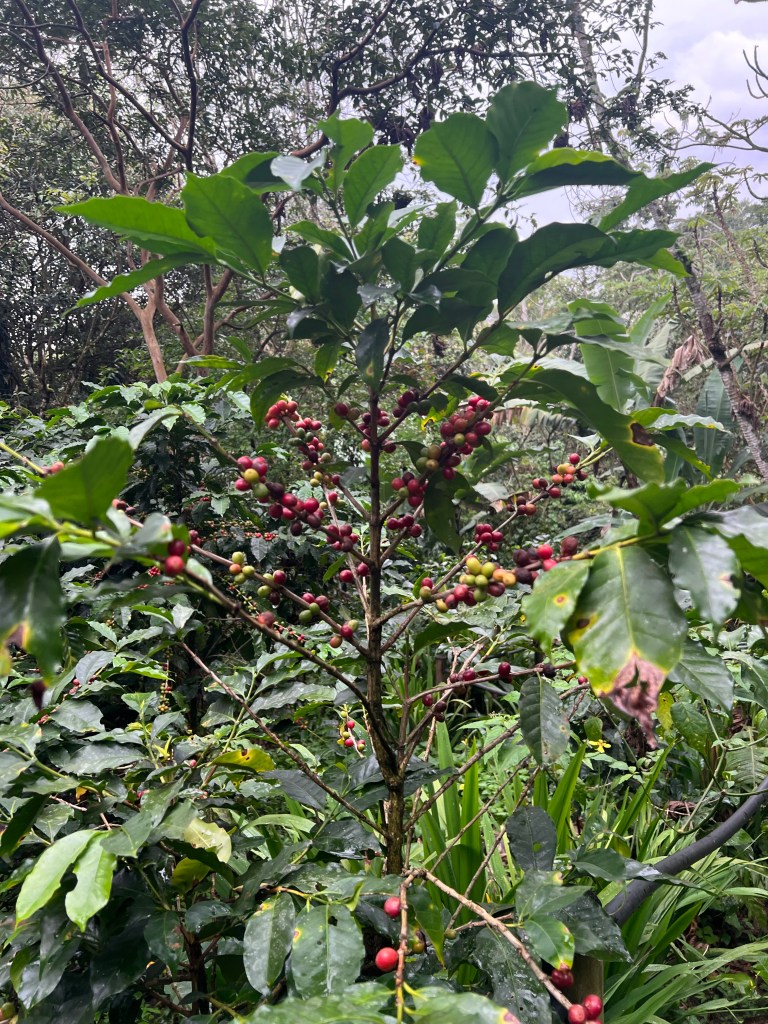
There are constant problems with the fungus, Roya and a bug called Broca, which attack the plants indiscriminately. Being organic this has to be treated naturally and is a constant chore. Irrigation is also organic, using water held by banana plants – 60% of a banana plant is water. It reaches maturity after 18 months, and after the fruit falls, it dies. During the dry season, the plants will be cut down and the water released irrigates the coffee plants. The fibre is used for paper.
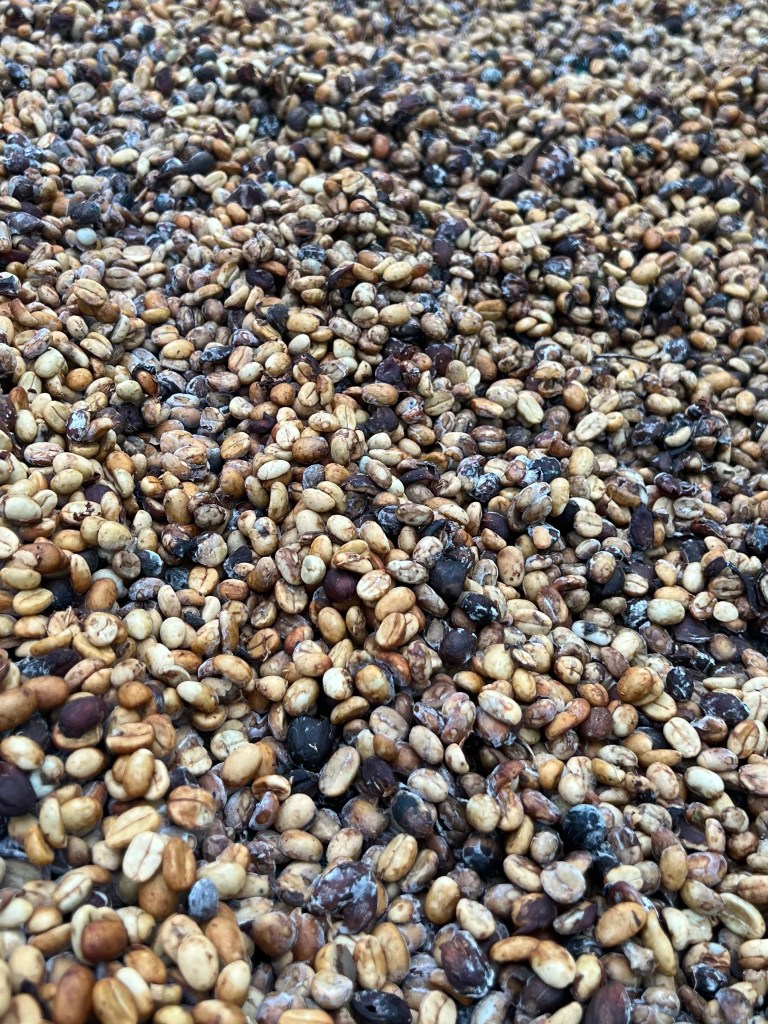
There are several different ways of processing coffee and Finca Rosa employs all of them, although predominantly uses the Wash Process. Washing the ‘cherries’ as they are called and separating the pulp from the bean. The pulp is used for fertiliser, livestock feed or as an ingredient in essential oils. The separated beans are then moved to the fermentation tanks filled with water where they stay for 16 hours. The sugar and outer mucilage is dissolved and rises to the top. The beans are then laid out in tunnels to dry for about 16 days or until 90% of the moisture has gone. This is how it is exported and then roasted at its destination.
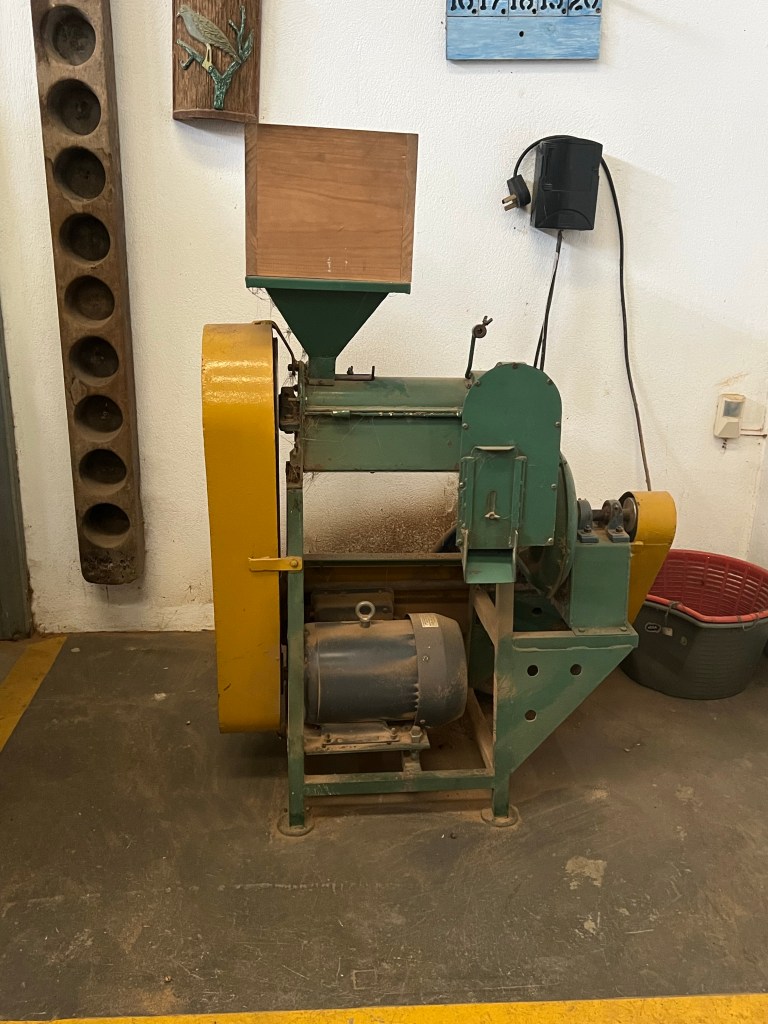

Finca Rosa also uses the Natural Method, the simplest but most time-consuming. The cherries go straight into the sun for up to 35 days, but need to be constantly turned to ensure even drying. Flavours and sugars from the fruit and skin are absorbed into the bean, resulting in a more complex flavour. A third method, is the Honey Method which is rarely used except in Costa Rica and leaves some of the mucilage on the bean while it is drying, giving it more acidity than the natural but less than the washed. This is very popular amongst the aficionados. Finca Rosa produce 4.5tons of beans off their 23 acres.
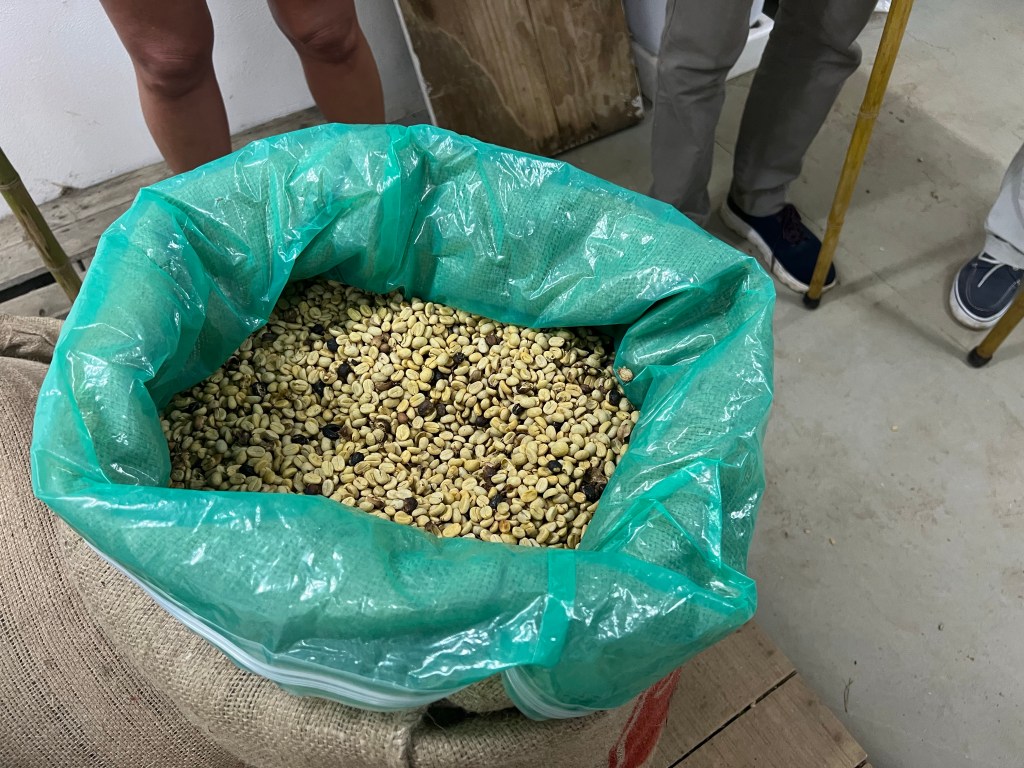
It is then to the roasting process – 10 mins for light roast, 12 mins for medium and 13 for dark. The darker the roast the stronger the flavour and lower the caffeine. We then had a tasting which was hilarious, there was a lot of talk about all the different aromas everyone could smell (apparently there are 250!), Tim and I thought they all smelt like coffee! I am not sure we will be invited to the next Coffee Cupping summit.
Some interesting coffee facts: Never use boiling water; Brazil, Vietnam and then Colombia are the largest producers; Finland is the biggest per capita consumer.
It was then cocktails and dinner in the restaurant with our new friend Charles who was travelling alone. Charming guy doing research for his travel company.
 EC-Rider Travels
Leave a comment