
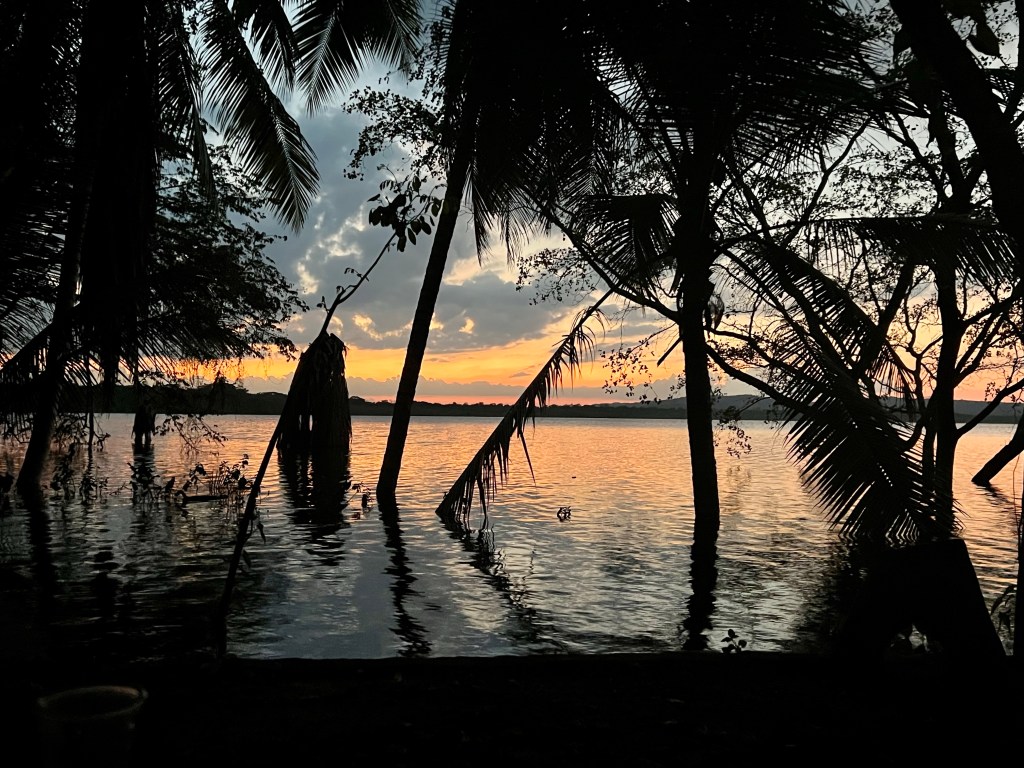
This is another very spoiling hotel and we woke to wonderful jungle noises with a stunning view across the top of the canopy to lake Peten Itza. This is the third largest lake in Guatemala, measuring 100 Sq km and approximately 160m deep with the lowest 50m below sea-level and thus salt-water.
Fito joined us for breakfast and we headed off with Hans our driver on our excursion to our first two archeological sites. These were about an hour away and we had an interesting drive seeing a very different side of Guatemala. We are now in the north east of the country, in the ‘lowlands’ close to the Belize boarder. It is an area of much gentler hills with very white, chalky soil. Farmland is poor in this area so limited to predominantly cattle with just a few vegetables – beans, corn and squash – grown by the families for their own consumption. All other fruit and vegetables have to come from further south in the highlands. The population is much lower here and the villages small and spread-out. Noone wears traditional dress which is sad. Until relatively recently the area of Peten was pretty well isolated from the rest of the country as access is so difficult unless you fly. I remember Mum telling us that she and dad flew on a small plane directly into the site, landing on a very short grass runway. It was not until the 1980s that the first tarmac road was built in Northern Guatemala from Flores to Tikal, again, to bring the tourists. Tourism in this part of the country is still relatively undeveloped.
The chalky ground with minimum top-soil also results in many of the trees having their roots spreading out above ground. They have a chewing gum tree where scars could be seen from the collection of sap. American, John Adams was first to see the potential of gum and set up the first chewing-gum company called Chicle (Maya name for the tree) but the cost of extraction was not viable. Wrigley’s caught on and after WW1, started sending small planes into the jungle to collect the gum. The only upside of this (you know my views on chewing-gum!) is that archaeologists started to take advantage of these planes to visit and start excavating the site. Artificial chewing gum is now very much cheaper to make, however the natural product has recently started being purchased by the Japanese to use in the manufacture of electrical components.
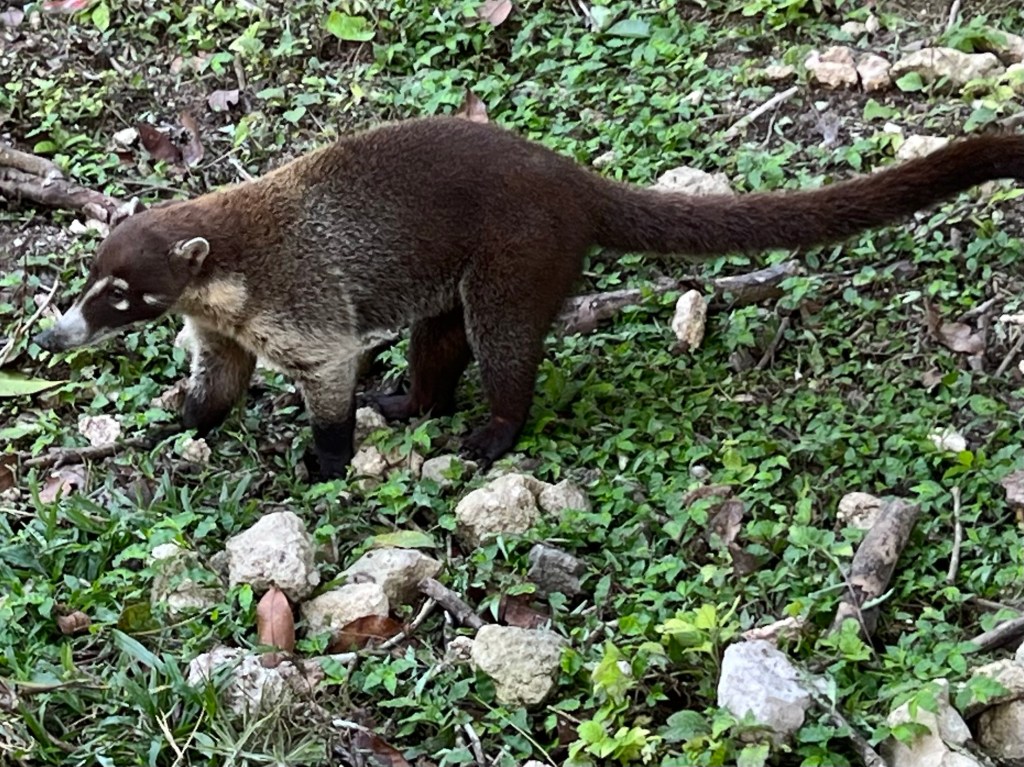
Hans is the most incredible animal spotter and as we drove into the reserve he pointed out a large raccoon type person called a coati, quite common here I think, but rather sweet with its long nose and bushy tail. We had a quick lunch in the park lodge and headed off to the first site, Yaxha.
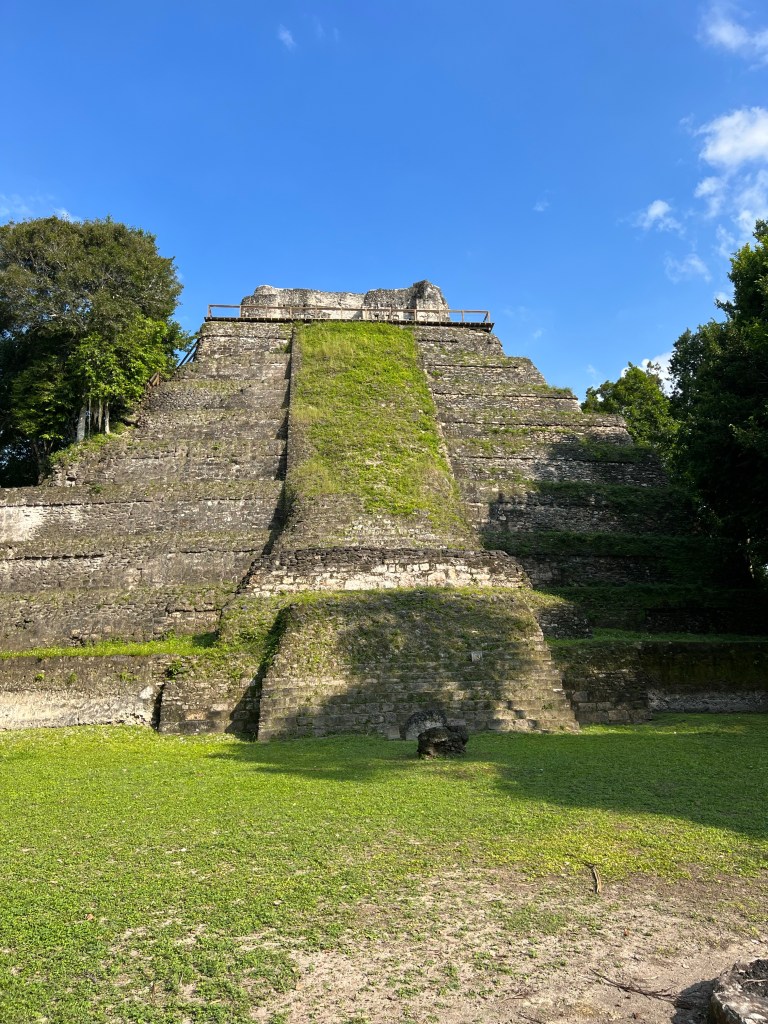
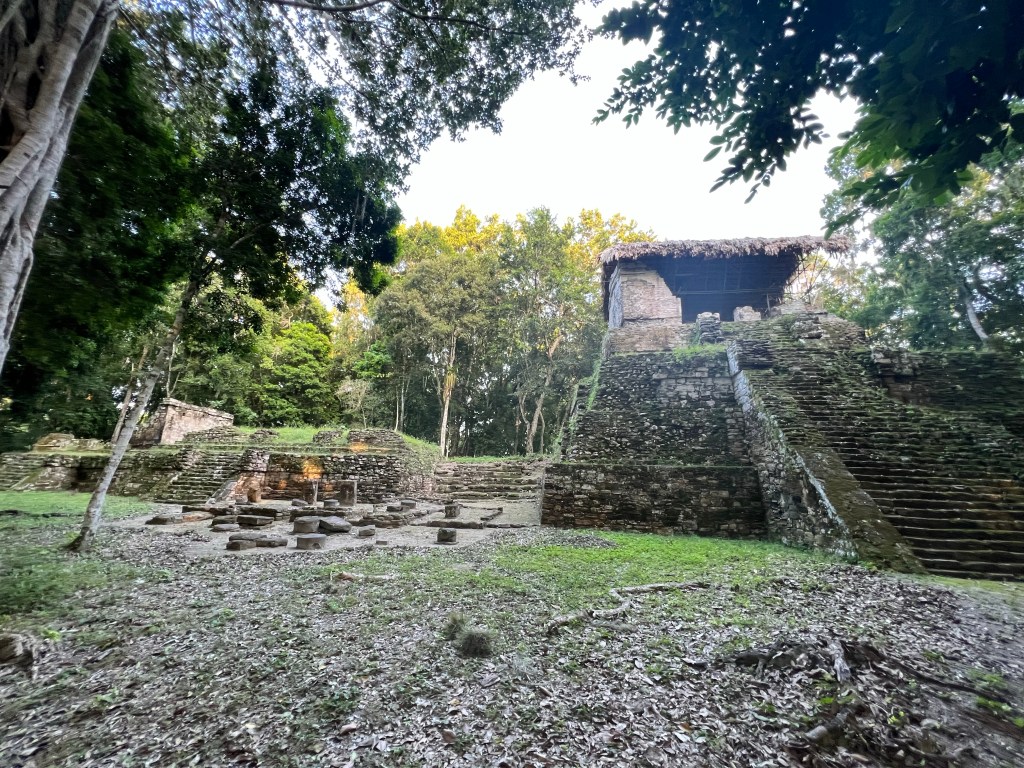
Yaxha was the third largest city in the region and experienced its maximum power between AD 250–600. It was located on a ridge overlooking Lake Yaxha, the name meaning blue-green water. The kingdom is estimated to have covered an area of over 200 sq km and at its peak, would have had a population of 42,000. The kingdom was ruled by a king who was more of a religious leader/wise man. He had total power over his people (religious, economic and political). He also had access to the calendar from which he could predict the weather and would tell his people when the rains were coming, and they thought he had divine/magical powers. The main temple has a flat top and shrine, and unusually a staircases leading up to it on all four sides which is likely to mean it had astronomical links..
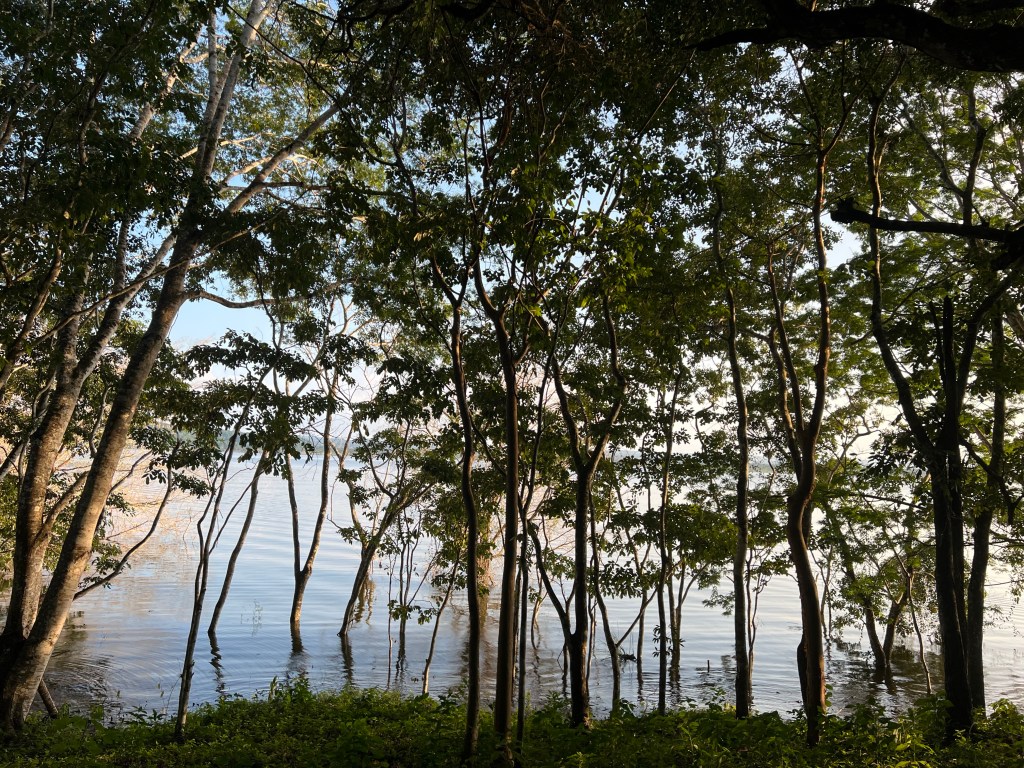
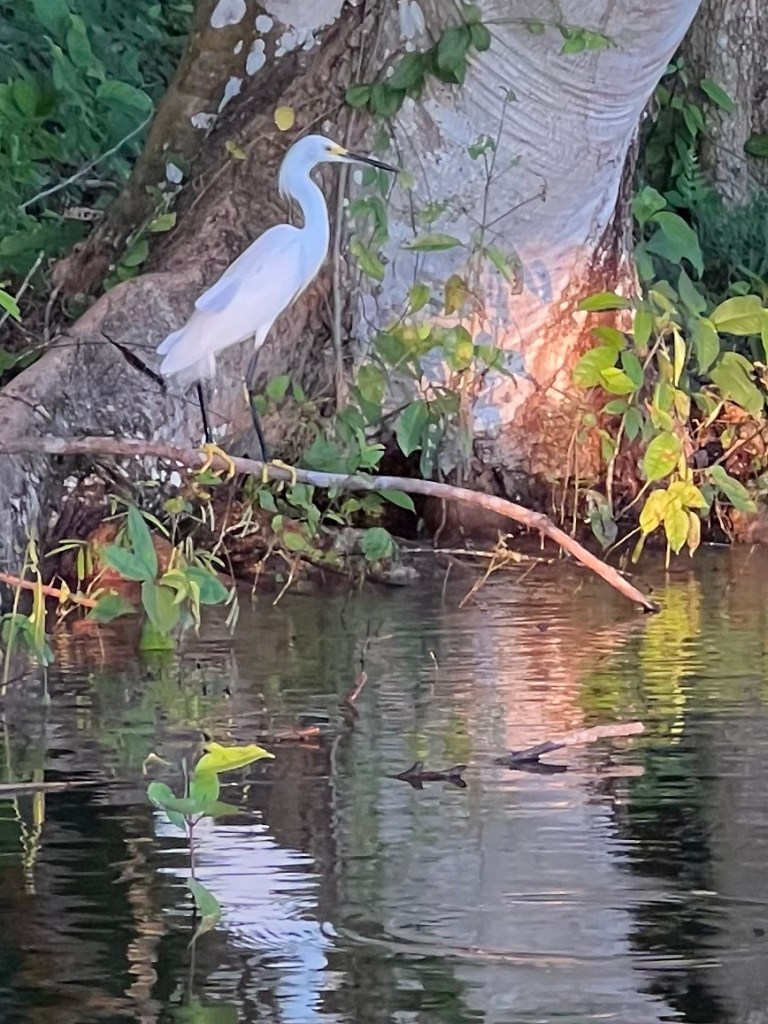
We then walked down to the lake where a boat was waiting to take us over to an island where the small city of Tapoxte had been. This was the site of a kingdom which, at times, spread over several islands at the western end of the lake. Again only partially excavated, it appears to have been inhabited over two different periods – the classic period (250-900AD) after which it was abondened and then re occupied from around 1200 until the Spanish arrived in early 1500. There is a theory that during the later occupancy, royal and senior families came south from Chichen Itza in Mexico after the start of its collapse in late 1200. This theory is supported by the combination of Yucatec-Maya language which is spoken in this part of the country.
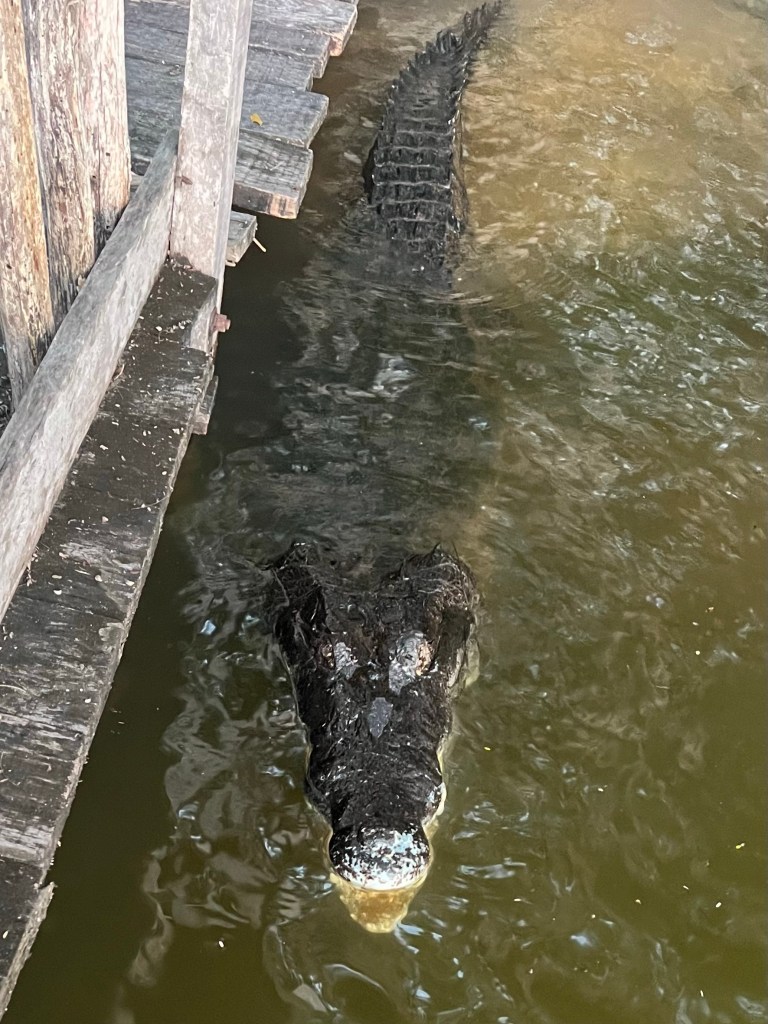
As we came off the boat there was the biggest croc I had ever seen – a moreletii – lying in the water along the jetty… huge and amazing.
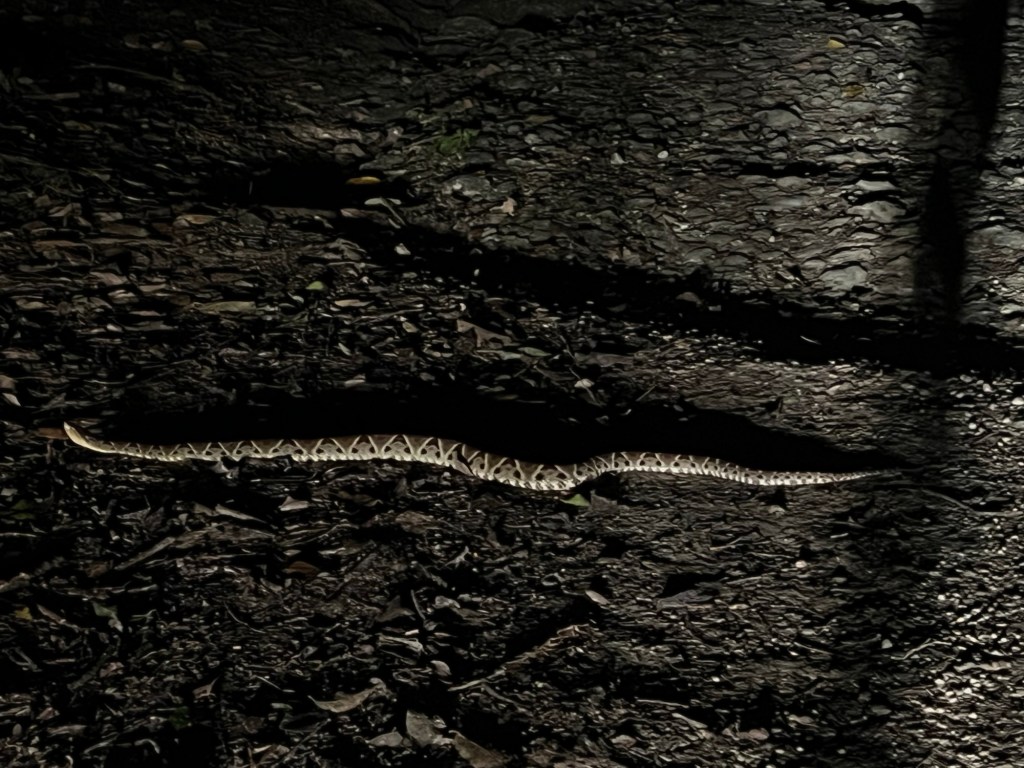
On our way back we saw a ferdelance snake crossing the road in front of us – apparently one of the most lethal vipers in the world. It is blind but can detect heat and is a particularly efficient night hunter. It was fully grown and the biggest Fito had seen, so great excitement. After discussing how lucky we were to see one, we saw another, but not so big!
A little further on we saw a tarantula in the road, however it appeared the last car may not have been so careful and fear she had been hit. We then came across a little possum taking a walk along the side of the road. Quite a night safari.
 EC-Rider Travels
Leave a comment