So lovely to have Lottie here, we have not stopped talking and just so nice to have someone to have a good laugh with. After another delicious breakfast we met Carlos our guide for the day. And what a privilege to have him, he is one of the top guides in Guatemala and had recently been invited to London to speak at the RGS on the Mayan dynasty. He was fantastic and very funny and got the most hysterical giggles.
We started our tour behind our hotel where there was one of the many ruins of Antigua as a result of the earthquakes in 1773 and more recently in the 1976. El Carmen was a lavish Catholic church in the city of Santiago de los Caballeros de Guatemala as it was once called. It survived the 1773 Santa Marta earthquakes relatively well but was almost destroyed by 20th-century ones. Despite this, the Baroque facade remained in pretty good condition. Carlos confirmed that our hotel was indeed a former nunnery of El Carmen and its owner had found many of the treasures which are displayed in the hotel, buried within the ruins of the property he had bought.
The city was founded in 1541 and for two centuries Antigua was one of the most powerful and most stable economies in Central America and was the reason the Spaniards initially chose Guatemala as the head province of Central America. Guatemala had no silver or gold, but did have jade which, amongst other uses, the Mayans used to decorate their teeth. A green flash of a smile, due to green inlays, was considered a great status symbol. We visited a jade factory shop where we were shown the various qualities/colours of jade and how they polished the stone.
Many churches were built by the four religious orders who came from Spain to Guatemala: the Franciscans, Dominicans, Clarissines and the Jesuits – they were incredibly wealthy and powerful and built 38 churches in Antigua, a city of just seven streets and seven avenues. Although the designs of these churches were Spanish, the construction was by the Mayan people who were skilful and built extraordinarily resilient buildings. It was remarkable to see how much was still standing despite the many earthquakes.
The Spaniards encouraged the Mayan people to set up 13 communities around the city to not only protect them from invasion but to act as their work-force, farmers, builders etc and one community, situated high up one of the volcanos, had the job of collecting ice, from the volcano, for the Spaniards.
After the 1773 earthquake, the Spaniards left Antigua and moved to Guatemala City which became the fourth capital, leaving Antigua in ruins. The people, including many Mayans moved in and lived amidst the ruins and after ten years gained ownership of the properties. Antigua is in constant threat from both volcano eruptions and earthquakes. Of the three volcanoes surrounding the city, only Fuego is active and produces small gas and ash eruptions up to 280 times a day. 2010 was the last major eruption, killing 350 people living in the foothills, however the earthquake of 1976 devastated the whole country, killing 23,000 people and traumatising survivors still today. There are a total of 37 volcanos in Guatemala of which three are active.
Carlos explained about the amazing wooden doors or gates the houses had, very often with a smaller door cut in for people to go through. The door knockers were placed out of reach, high up the door, as these were only for wealthy people who usually arrived on horses! There was then a lot of talk about knockers, Carlos frequently saying, now ‘look at those nice knockers’ after about the fifth time, I thought I should explain that to a Brit this had a slightly different connotation – I thought he was going to keel over he laughed so much.
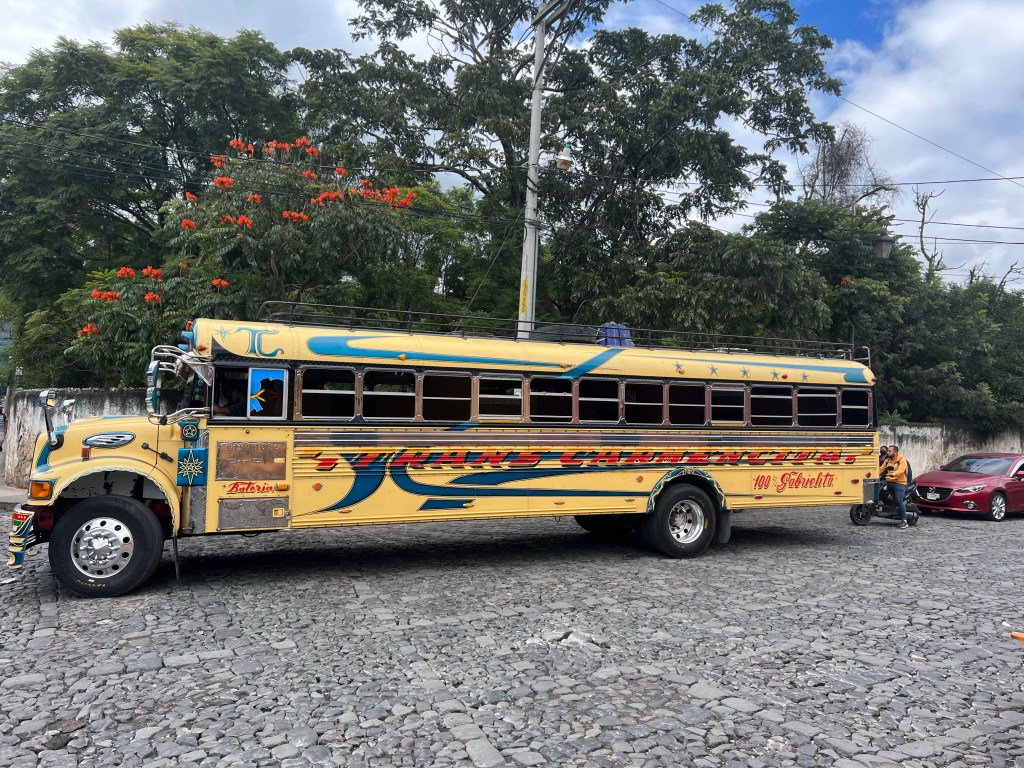
Antigua is incredibly busy with traffic going in every direction, however there are no road signs, or traffic lights and when you come to a cross-roads, of which there are many, it is simply a case of who dares wins! The buses are colourful old chicken buses from the US which have had to be adapted to cope with the narrow streets and also the heat on their braking systems. But still a great sight to see.
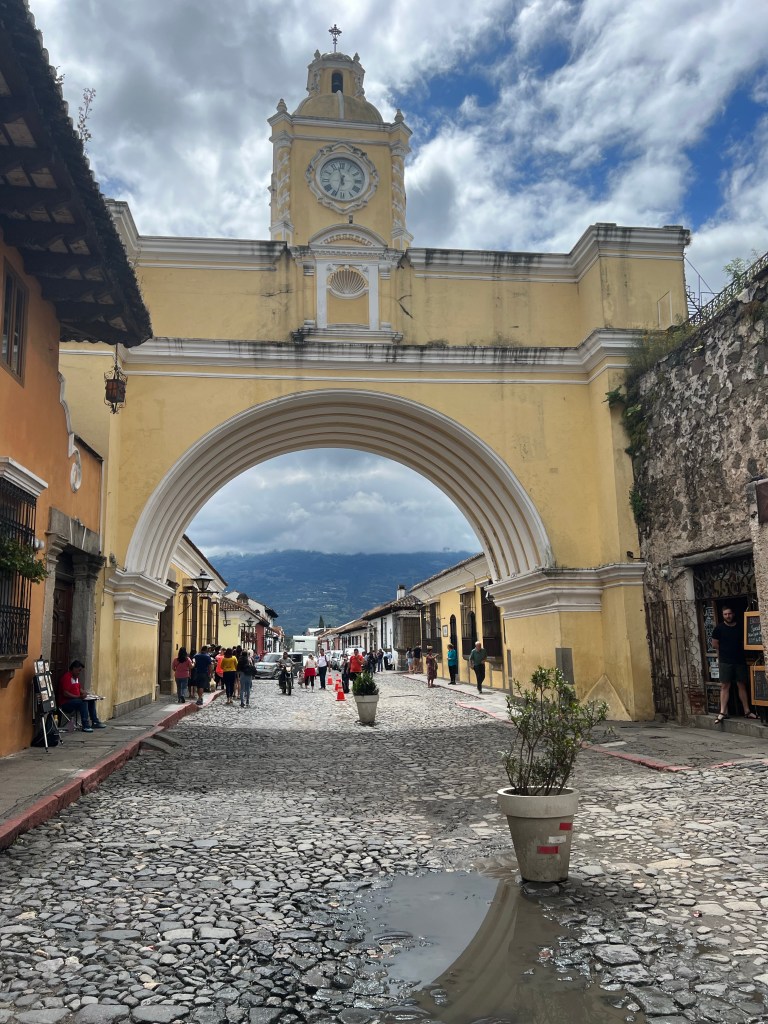
The most iconic sight of Antigua is the Santa Catalina Arch which was built in the 17th century, to connect the Santa Catalina convent to their church on the other side of the road. This allowed the cloistered nuns to pass from one side to the other without being seen. Amazingly this survived all the earthquakes intact. The Arch plays an important part in the many processions taking place in the city, most recently over the three day holiday which celebrates All Saints Day and All Souls Day, or the Day of the Dead as they call it, which happened last week. This is very much a time of celebration to remember and show gratitude for those who have gone before, acknowledging them as the root and foundations of ones own life. Cemeteries turn into places of color, decorating the graves, which are above ground, with flowers and ribbons. Everyone dresses up in their best clothing and spends the day enjoying the festivities with music and picnics. Unique to Guatemala are the kites which are flown during this time and there were lots of remnants stuck on overhead wires from the procession and celebrations over the previous few days.
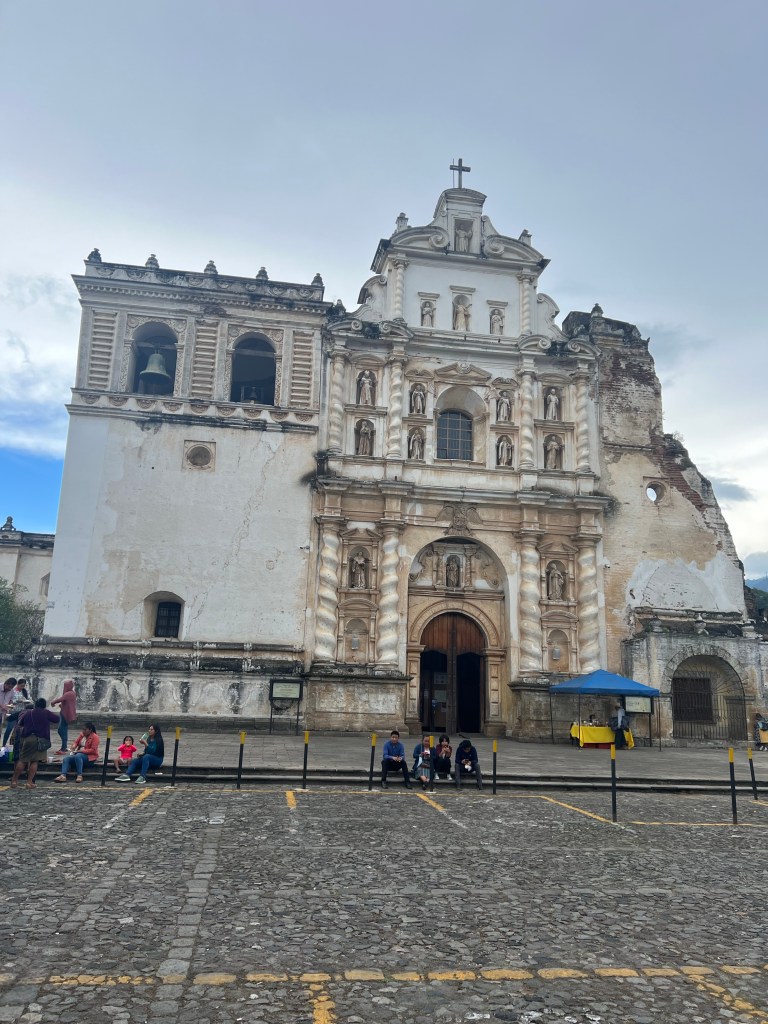
There are many complex Mayan myths surrounding the birth of humanity which are based on the four colours of corn grown in Guatemala: red representing East; black for West; white for North, yellow for south and green/blue is the centre of the earth. These five colours make up the Mayan palate and are the colours used in their fabrics and to paint their houses and churches. There is a fascinating syncretism combining Mayan religious beliefs and Catholicism, believing that within the catholic saints there is also a Mayan god (Sun, Wind, Stars etc) and when they light a candle to their saint they will pray to that saint in Mayan.
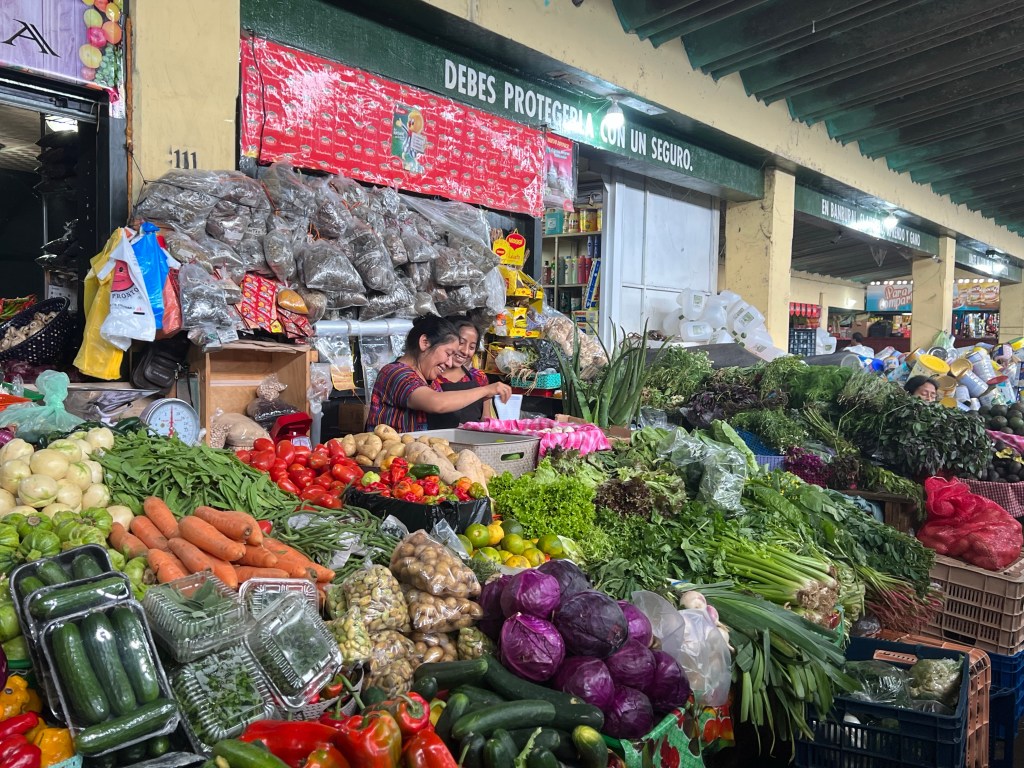
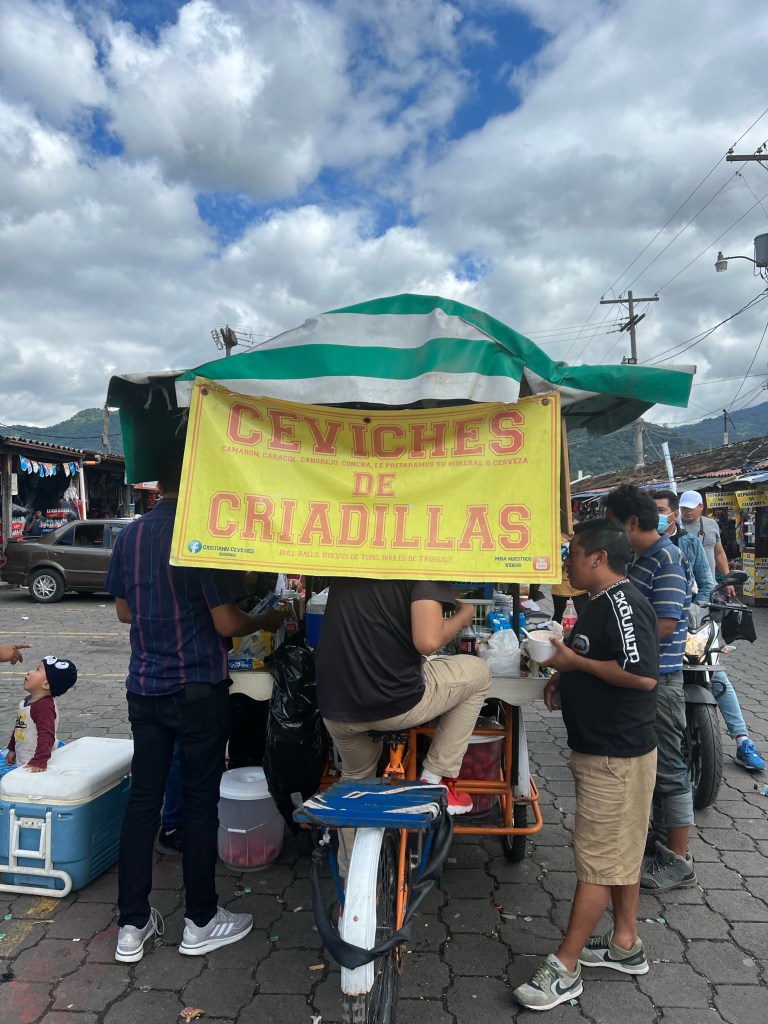
Carlos then took us to the local market which was fascinating, there was not much you could not buy there, both legal and illegal. The most amazing fruit and vegetables and some curious looking meat and fish including dried iguana (illegal!), wonderful games for the children such as colourful pinata ready to be stuffed with sweets and bashed to smithereens. Outside there were various stalls including one selling ceviche of bulls balls – many men were queuing for this!
We visited a number of churches, some in ruins and some that survived the earthquakes, which were painted in gorgeous colours with what looked like piped icing on the facade! The churches are much plainer inside than those of South America, though with an impressive alter and many alcoves dedicated to saints wearing somewhat curious/elaborate clothes which I always find a little uncomfortable.
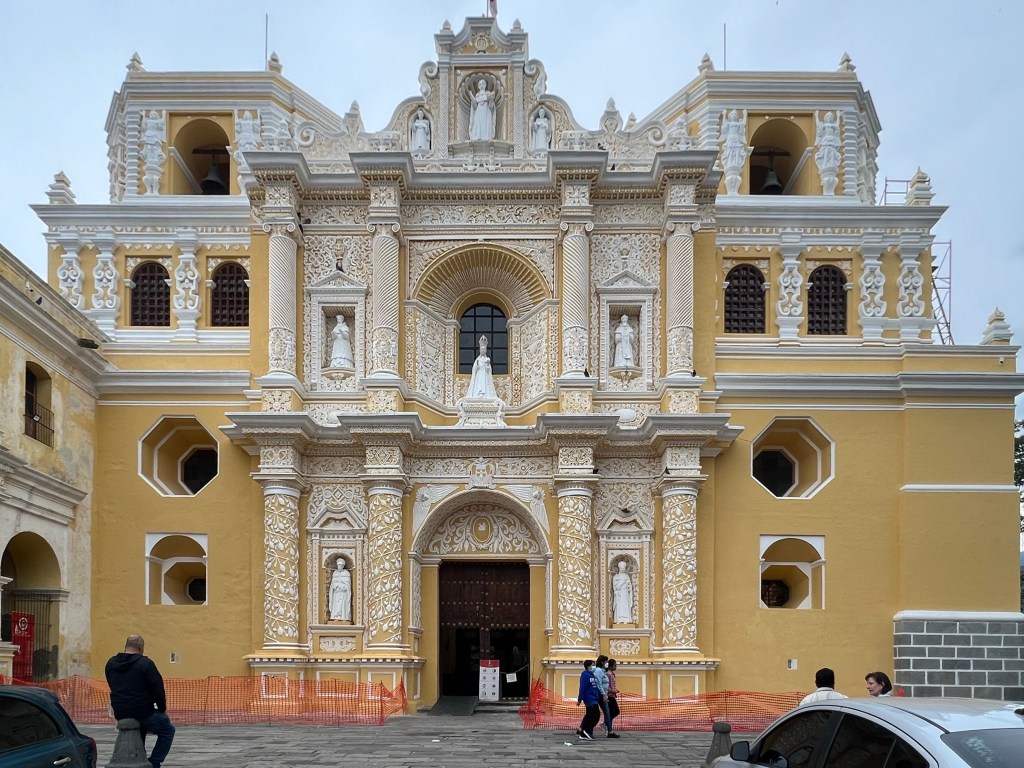
In the Church of La Merced there is the most beautiful wooden image of Christ made by an unknown Mayan sculptor. This is used to lead the major Easter procession every year. It is carried on an enormous wooden float by 68 (carefully measured) men for a procession lasting more that 36 hours. The procession walks on a carpet of coloured sawdust made by the various households on the route. It is apparently the most incredible sight to see.…. another reason to come back.
That evening we went to a very jolly little restaurant, which Carlos had recommended and despite being a Monday night it was in full swing with parties going on around every corner. Then back to our gorgeous little hotel for an early-ish night. Lottie still awake which is impressive!
 EC-Rider Travels
Leave a comment