It has been a bit of a travelling day but needless to say no ordinary one. Noel and David arrived early to pick me up and we headed south to Potosi. A stunning drive along a good road without a soul on it, through mountains and lots of native villages. Once again evidence of improvements were seen. Social housing which cost people approx £25 per month; in addition to schools, there seem to be sports centres and often technical colleges in the towns teaching general skills – plumbing, carpentry, electrics etc. There have been major water projects, connecting everyone, providing irrigation systems and building a 100 damns and reservoirs. They are also offering a free conversion of petrol to gas cars. They have built 7,000 telephone masts and in theory everyone has coverage and internet (better than Ramsbury!). Amazing eh! But there is still a long way to go – the poverty in which people are living is unreal, though they all seem to have a mobile phone!
We rose higher and higher and went across what are called the Retiring Flats (I think) at 3,300m, quite stunning, where there was quite advanced farming going on – largely potatoes – mainly by hand but I did see the odd tractor (apparently provided by the government). Everything has to be grown organically. Pesticides are prohibited and the only fertiliser which can be used is urea. Most of the houses are made of mud-bricks and the landscape is covered in the prettiest grasses.
We kept rising until we reached Potosi, the highest city in the world at 4,200 feet. In the 16th Century it was the second largest city in the world after Naples – ‘Not a lot of people know that!’ It is of course famous for its silver and behind the city is Sumaj Orko (Silver Mountain) which has been the source of silver for five hundred years. Between the 16th and 18th century 80% of the worlds silver came from this mine. It is said that you could build a bridge of silver all the way to Spain with the silver from Sumaj Orko and another one of bones from all those who died (particularly African slaves) mining it. The mountain is collapsing due to all the mining – it used to be 5,240m hight and is now 4,400. Mining is now only allowed above 4,000m. I was given a tour of the ‘Mint-House’ where they used to make the coins which was interesting, but I was desperate to find the silver-dip as everything was so filthy.
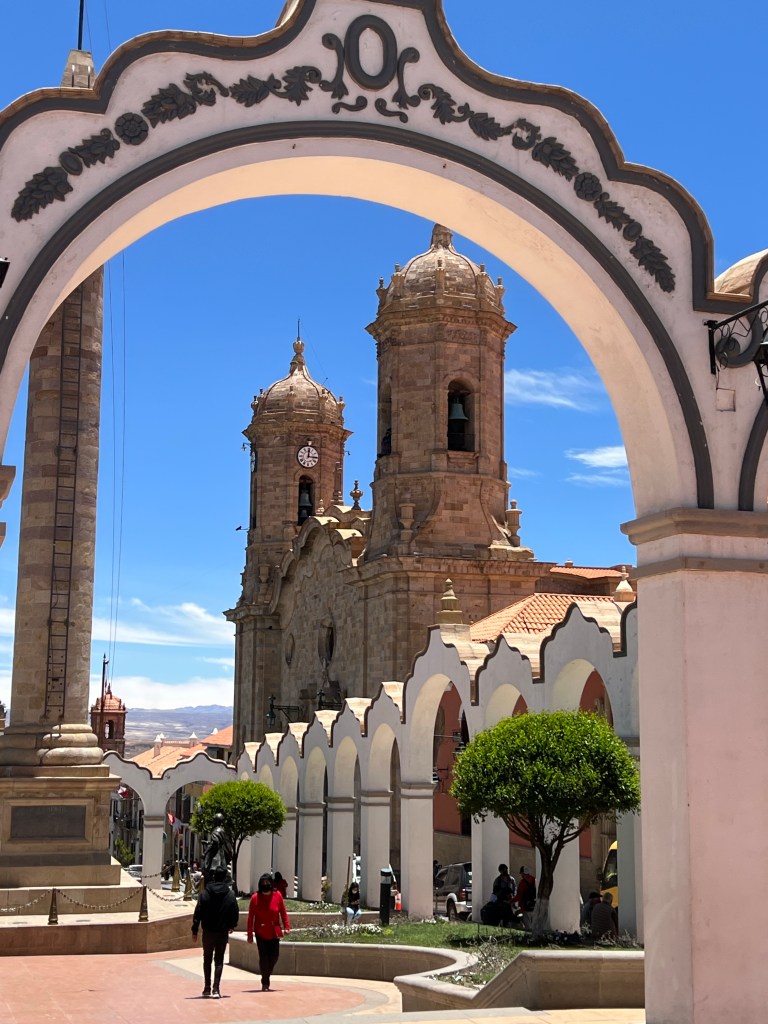
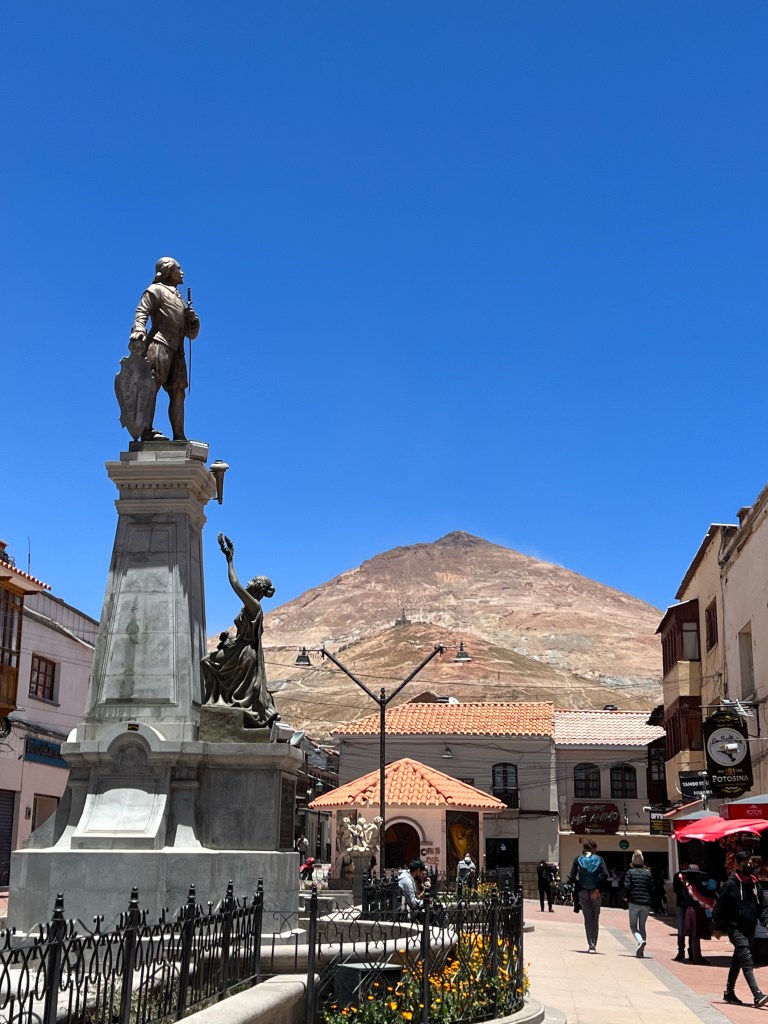
After lunch we walked through the town and and saw a number of early baroque churches from the mid 16th century in remarkably good condition and then met David and headed off on another stunning four hour journey to Uyuni. We travelled across three mountain ranges seeing the most extraordinary variety of landscapes. Initially rugged mountain which looked like Skye on steroids, with mountains from deep red to green and everything in between depending on the copper or iron content. They have so many natural resources: petrol, natural gas, gold, silver, tungsten, zinc, lead, copper, tin sulfur, potassium and borax not to mention their newly found lithium and hundreds of semi-precious stones – why they are not one of the richest – rather than poorest, countries in the world, I can’t imagine.
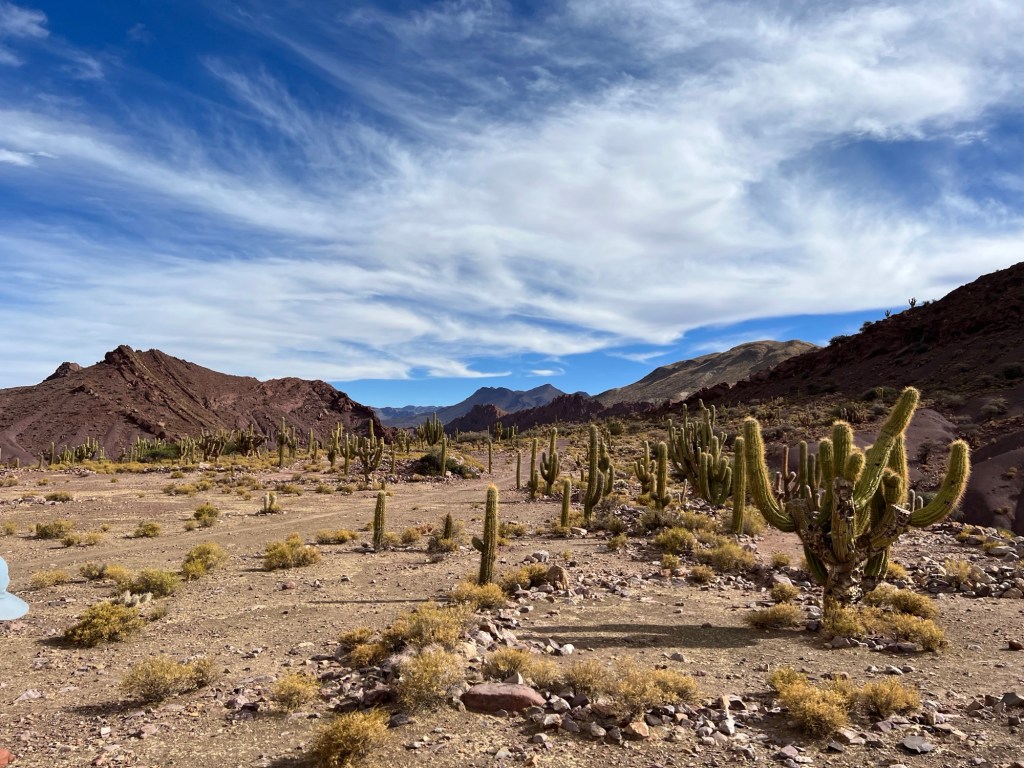
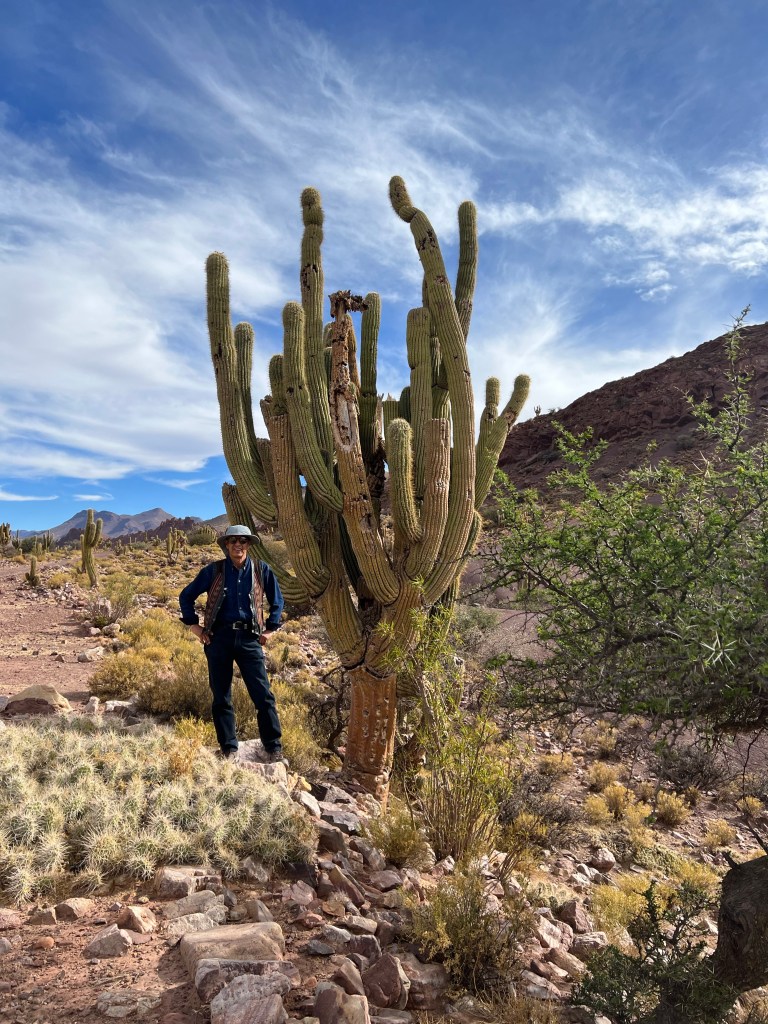
The landscape suddenly softened and turned to sand and had the most incredible cacti of different varieties – Noel knew them all but I am afraid I couldn’t keep up with them. What I did glean was that a cactus only grows a cm a year and there was one which was thought to be about 750 years old, though I have to admit, didn’t look very well.
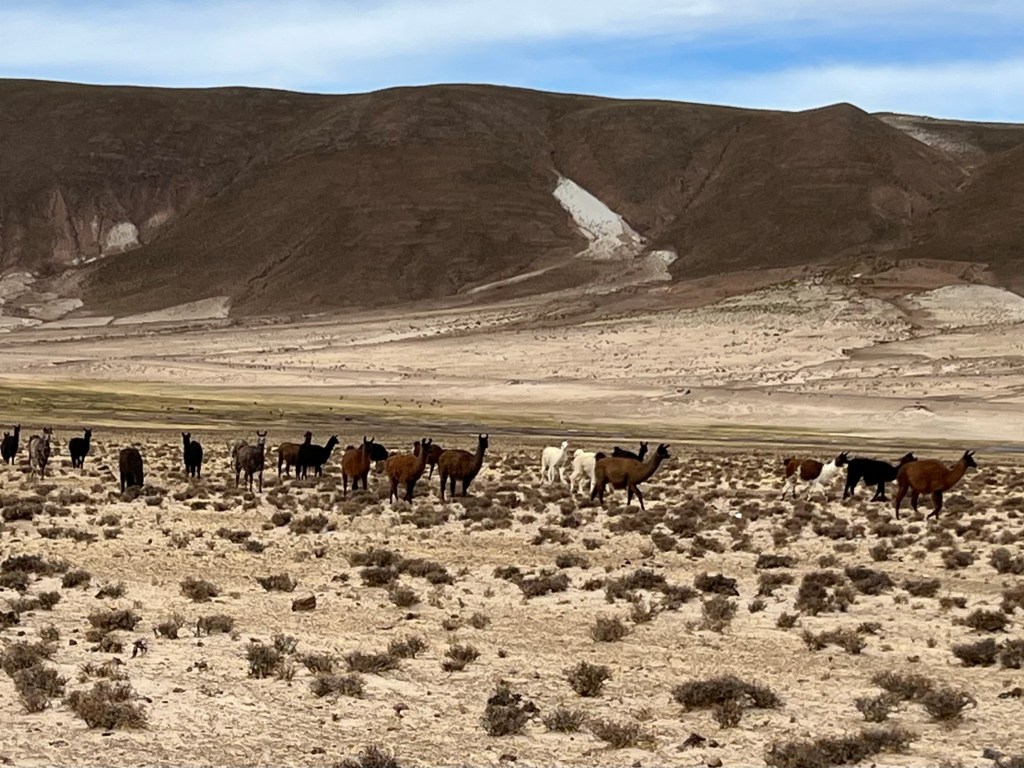
The landscape then completely flattened out and was covered in llamas.
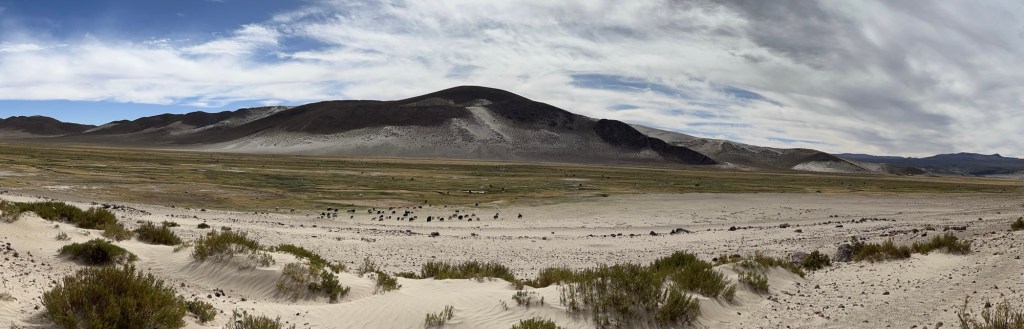
As it was about 4.30 in the afternoon and obviously tea-time, we saw many of them in lines (caravans) coming across the plane led by their alpha llama – no dogs or horses rounding them up, they just make their way home on their own – quite sweet?
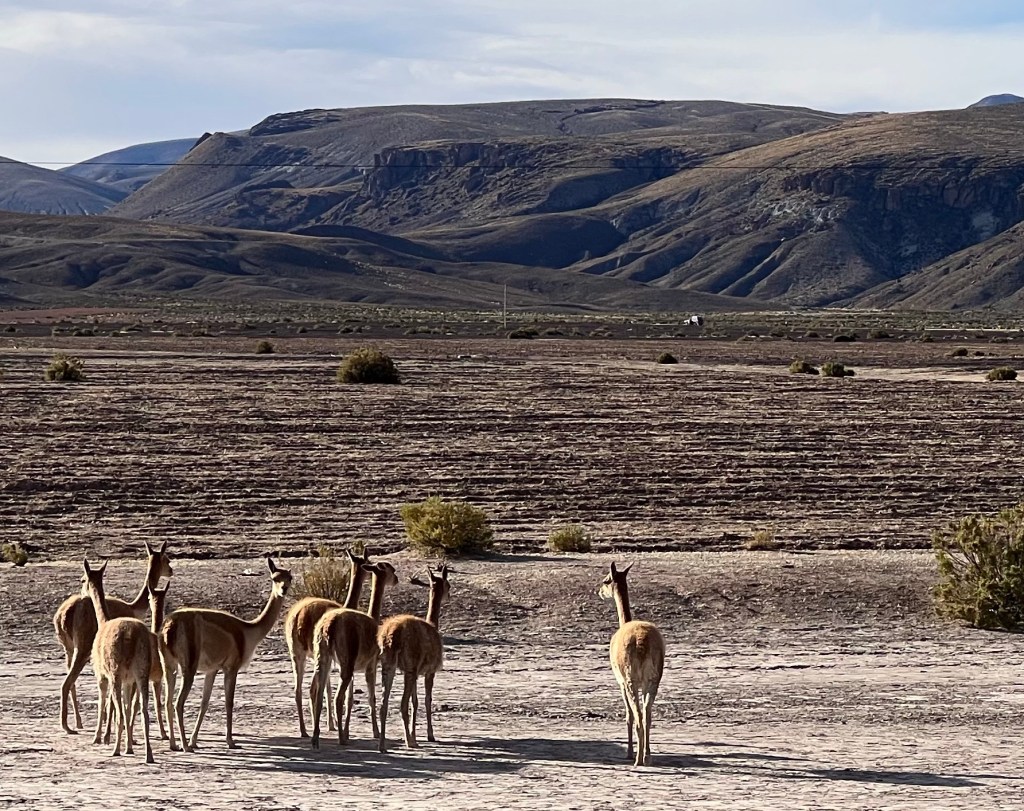
We also saw a number of vicuña which of course are not domesticated and fend for themselves. They are now protected (again something this government has done) and the population has increased from 20,000 to 400,000 in the last fifteen years. Quinoa is the only crop which can be grown at this altitude.
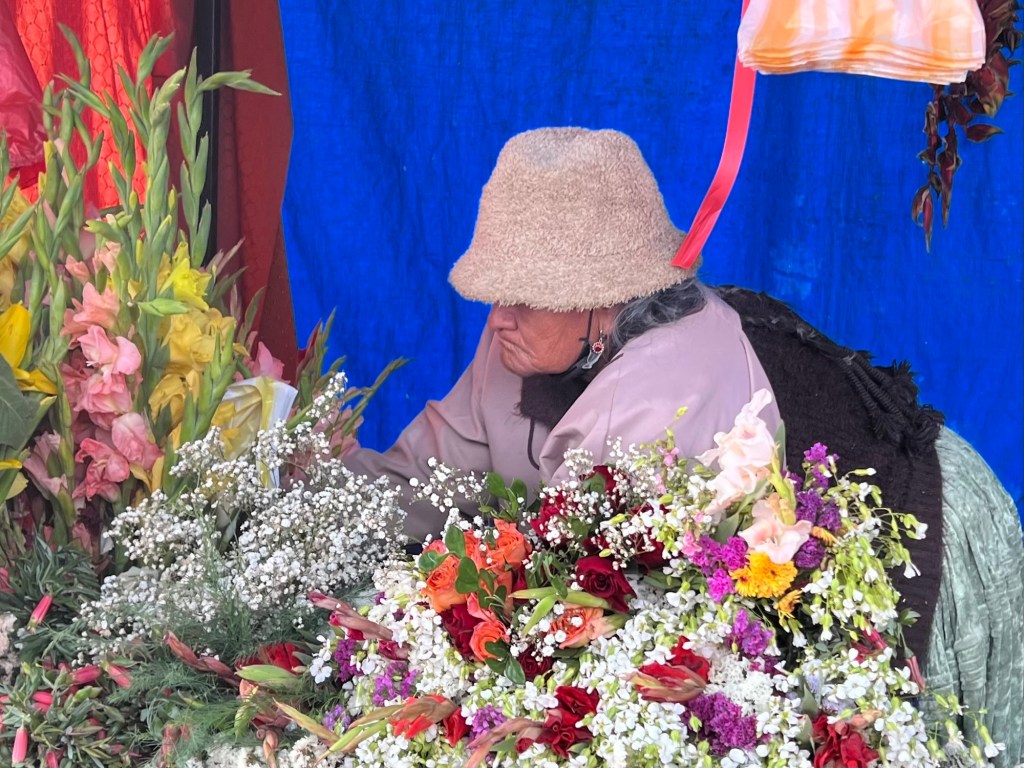
We drove into the town of Uyuni where there was a market selling flowers, gifts/offering and lots of purple and black ribbons for All Souls Day. This is a major event in Bolivia and yes – another holiday while people visit the graves of their friends and relations. Amazing to see, once again everyone sitting on the floor, in their traditional dress and wonderful hats selling identical things to their neighbour.
We then travelled on a dirt road for about half an hour until we reached the amazing Luna Salada which has been made out of blocks of salt.
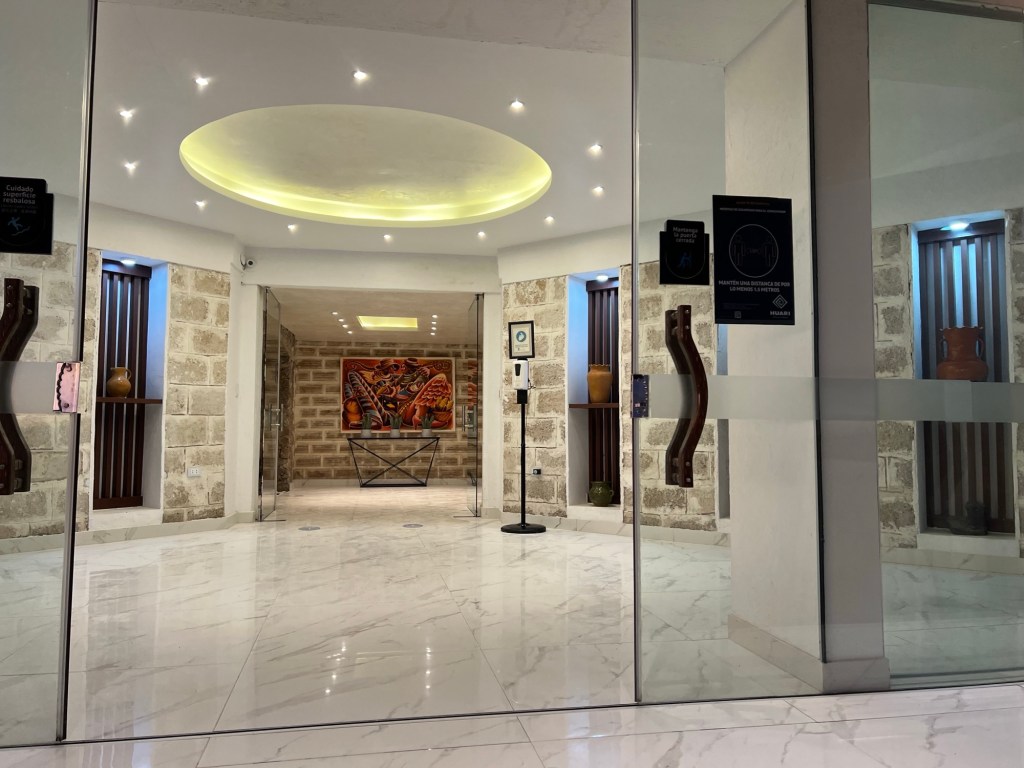
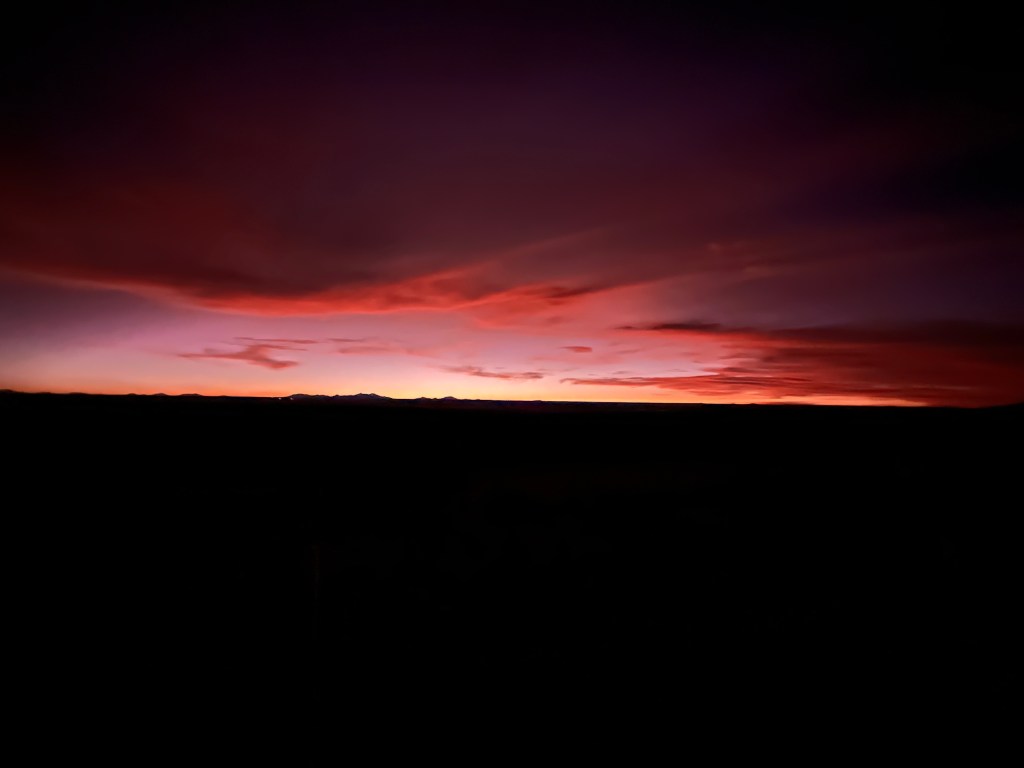
The sun was just going down when we arrived so I have not yet seen what is outside but the sun-set was spectacular. A very peaceful place or so I thought, until about 60 teenagers arrived for a Halloween party. I waited patiently to see the wonderful costumes they might have but no – maybe they will change later. Honestly this Halloween thing has got a little out of hand!


 EC-Rider Travels
Leave a comment