Goodness things looks so very different in the cold light of day – including our hotel, which is perhaps a little more than tired – verging on ‘totally exhausted’. Analida was very disappointed, as it had been so highly recommended and she hoped might be quite special. I fear it is simply another victim of COVID and had had no maintenance for the last two years. Analida was keen to move, but I persuaded her it was not important, and we headed off with Katia and Milena. Unfortunately today is another public holiday – they seem to be most days in Brazil – so most things are closed, which was a bit sad. Anyway we drove back to the historic centre and spent a happy few hours walking around and looking at some of the many, many churches. Salvador boasts a church for every day of the year, and I can believe it, there is one on every corner. And not just a little chapel – huge and ornate with each one having more gold than the last.
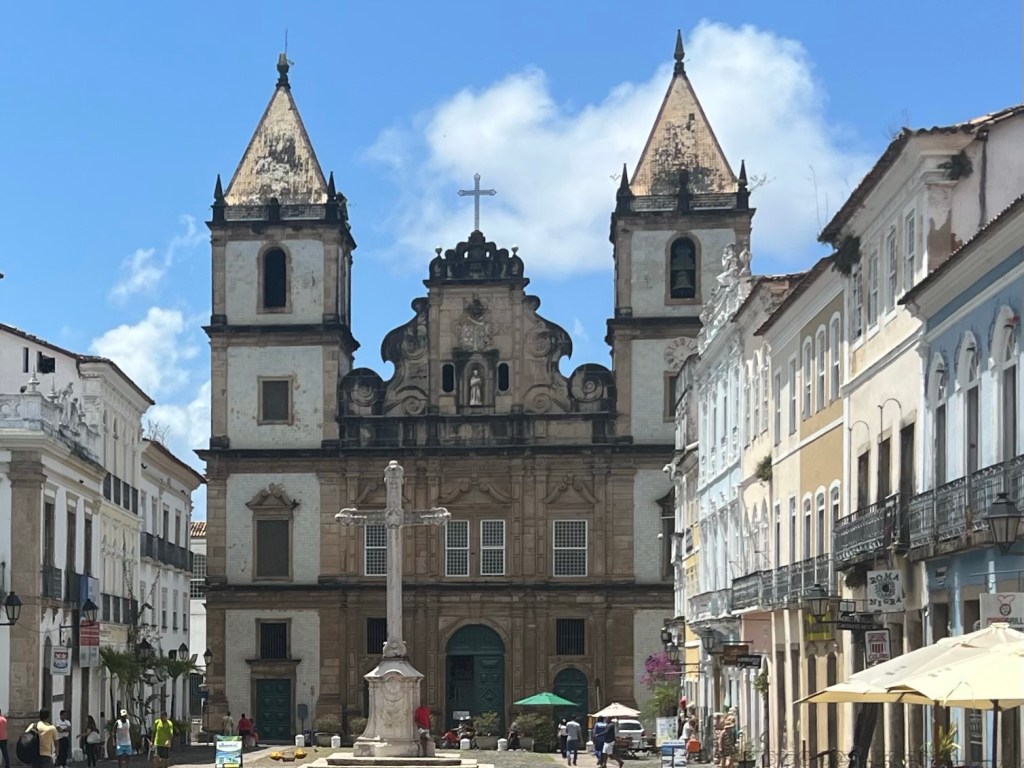
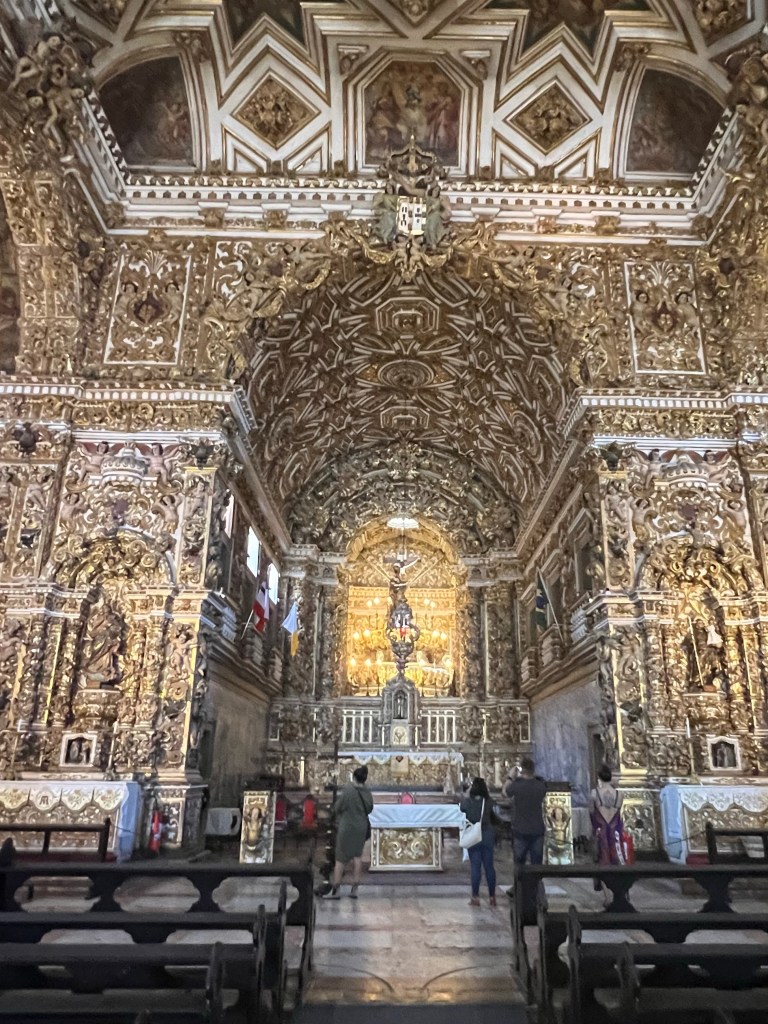
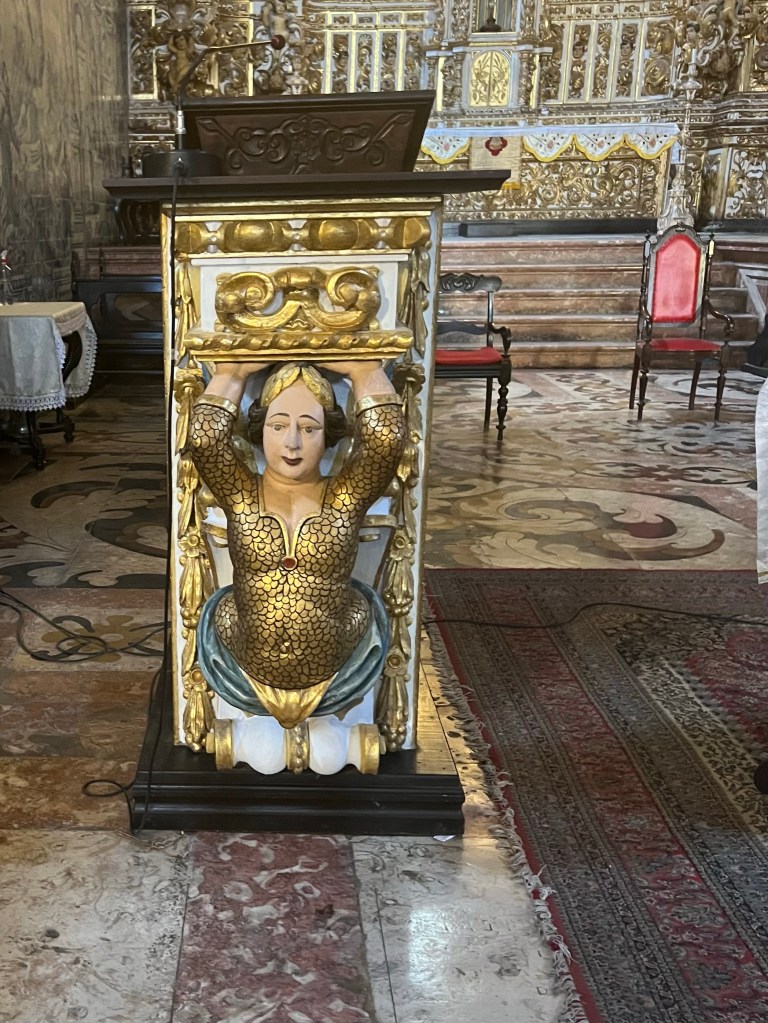
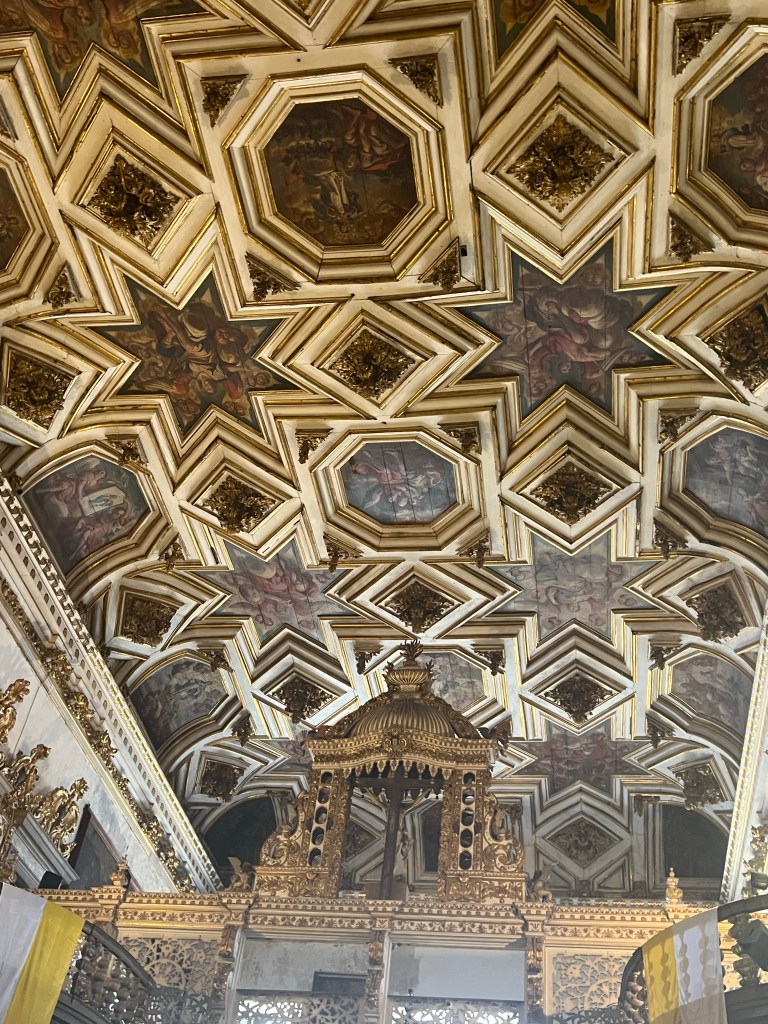
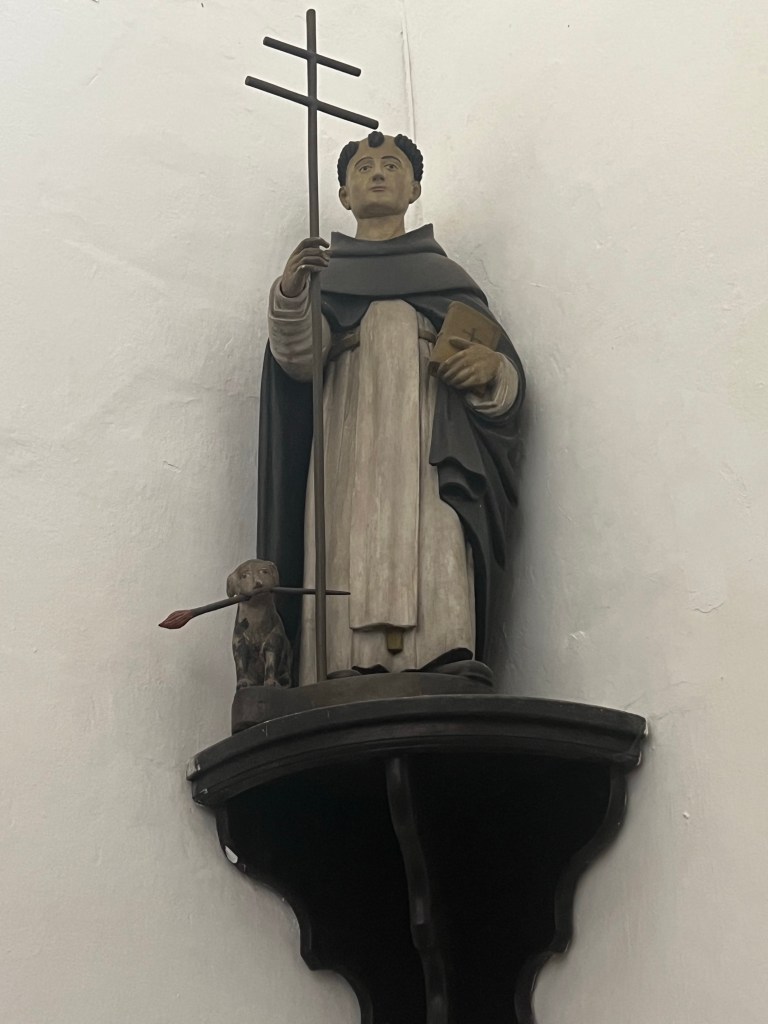
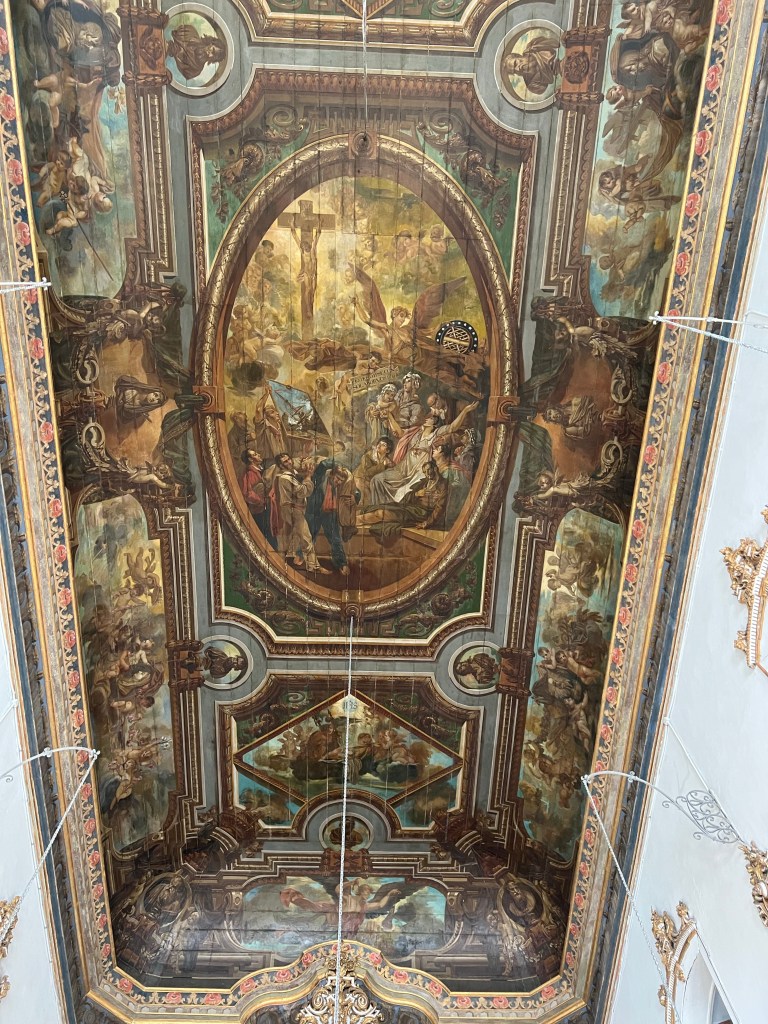
Of particular note was the Church and Convent of St Francis, built in the mid eighteenth century in true gaudy Baroque style. Extensive carving in jacaranda wood is covered in gold leaf throughout making it literally a golden church. It does, however, have the most spectacular painted ceiling surrounding a rather beautiful organ. There a blue and white Portuguese tiles at the entrance which continue into the cloister, although this was sadly closed. In front of the very golden alter were the most surprising lecterns with the book rest propped up by rather busty women who looked as though the would be more comfortable on the front of a ship! The two towers, added later, are covered in mother of pearl tiles.
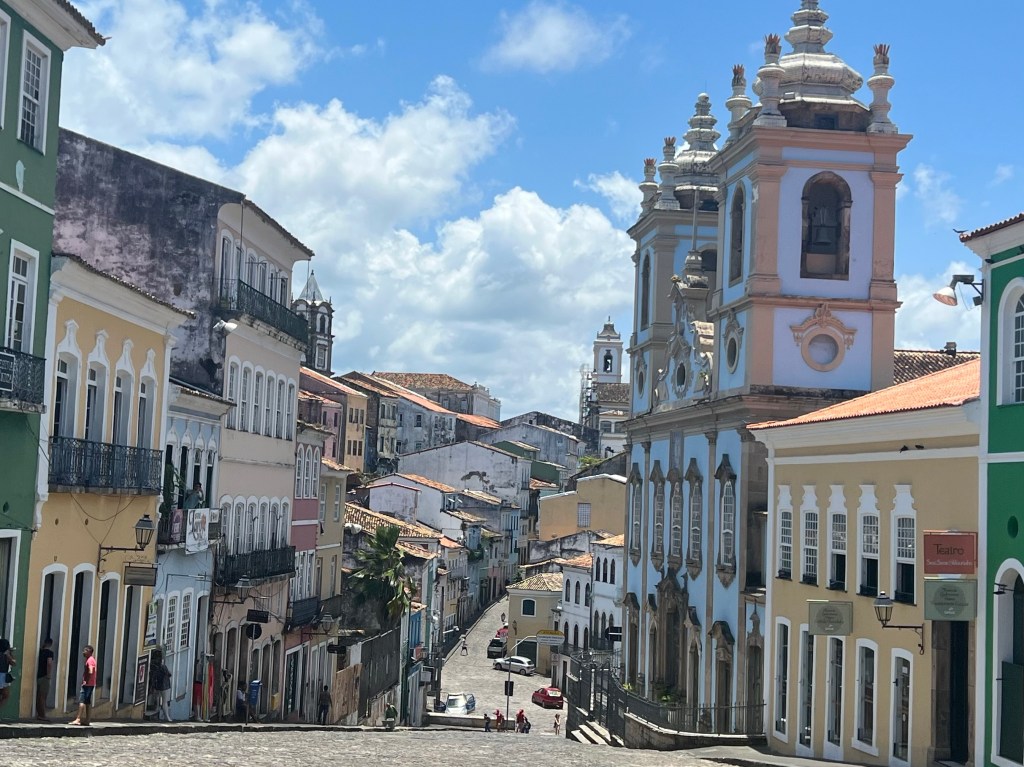
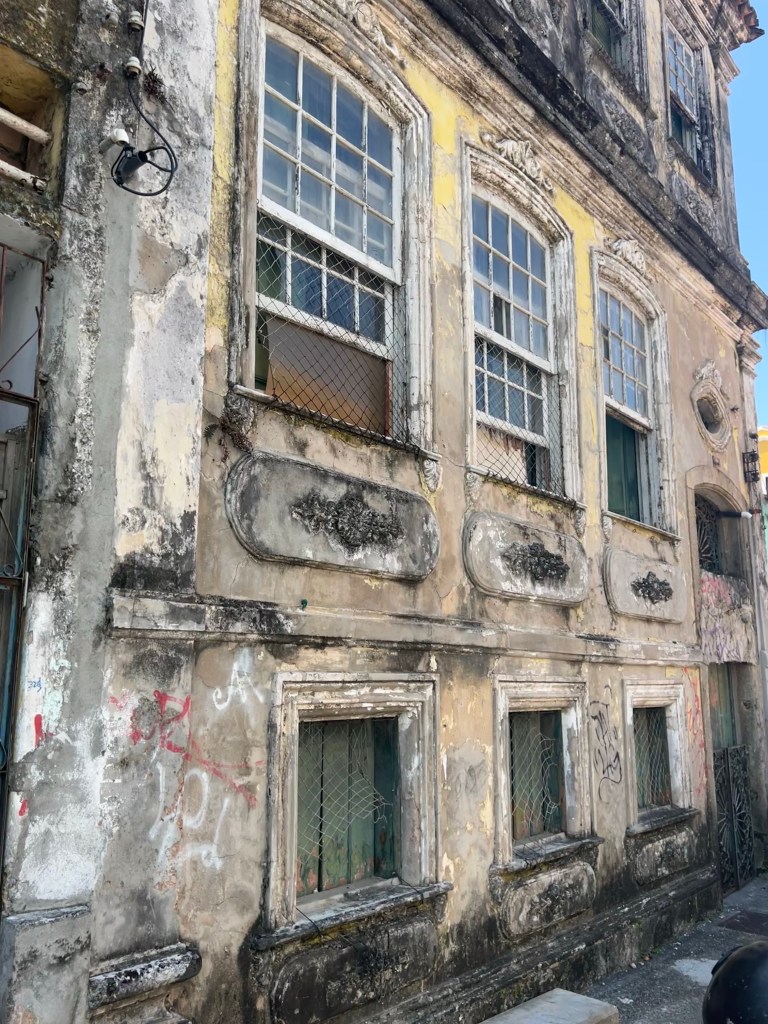
Again, the cold light of day revealed much sadness in the historic centre and many of the buildings which until recently were housing thriving businesses have been abandoned and fallen into a terrible disrepair. We saw a photograph of the street we were in, about five years ago, and it told a very different story. So sad. However it was still all very attractive and, being a holiday, there were very few people around and we had it almost to ourselves. Apparently it is normally heaving with tourists and you cannot see a thing. We saw the building where Michael Jackson made his famous video ‘They don’t care about us’ but sadly not much other music, dancing or capoeira being a holiday. Apparently tomorrow there will be masses! 😔
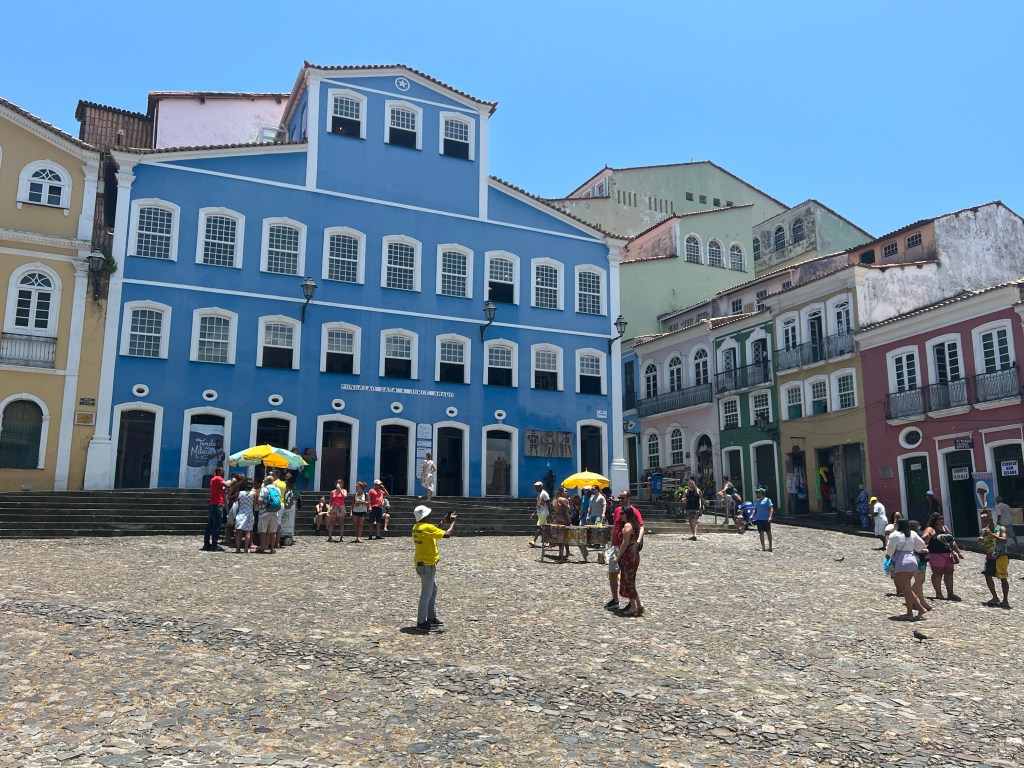
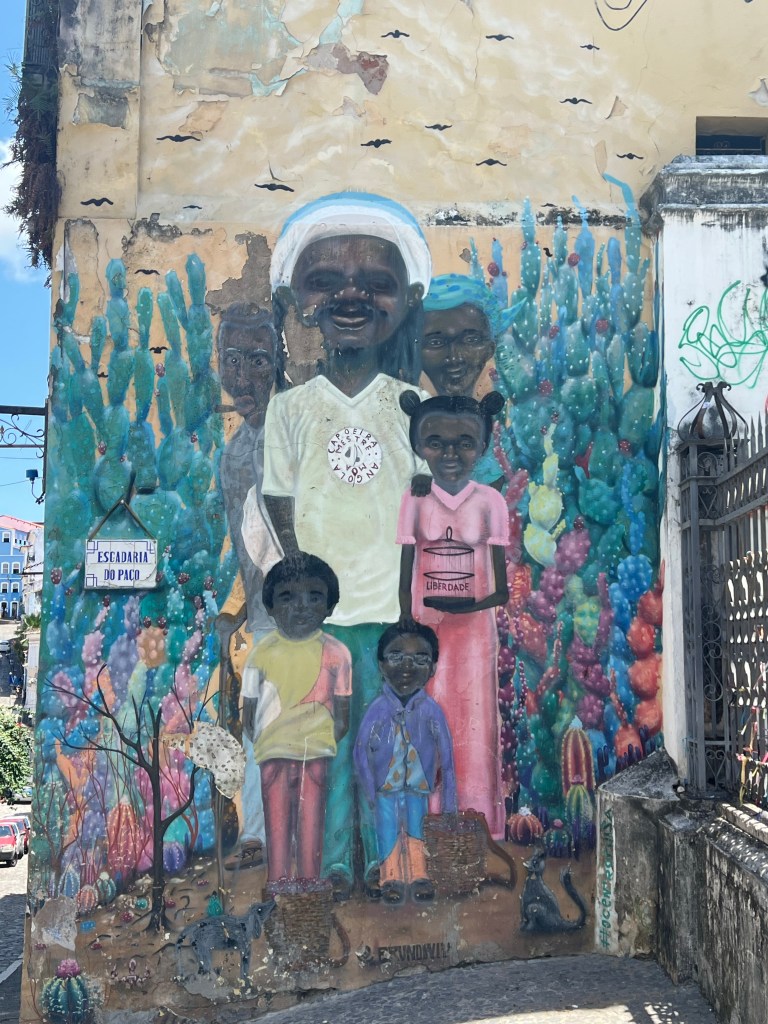
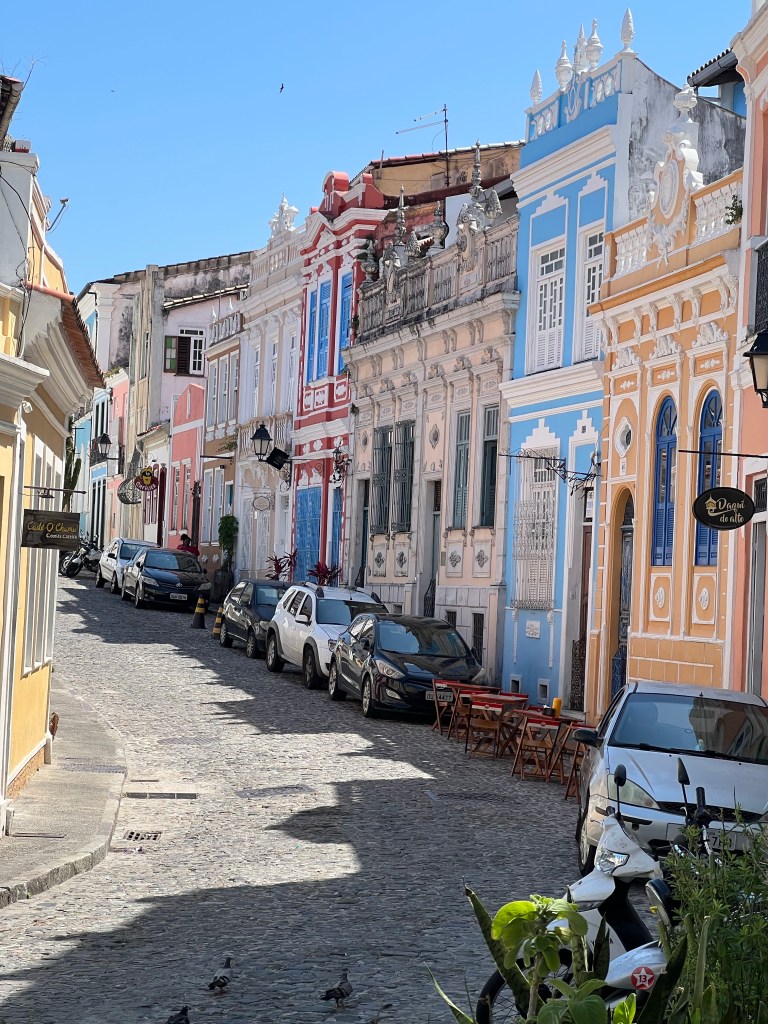
Salvador/Bahia has a different vibe to Rio, the African influence is very strong and comes through in almost everything you see. There is of course much cross culture and mixed race, but most people of Salvador are black – attractive and very smiley…. though I was warned this was a clever front! The buildings are very brightly coloured and have the most wonderful doors and iron-work. Being on the coast, there is a breeze and most doors seemed to be wide open with a pretty metal gate across for security. As in Rio, there is graffiti everywhere which is tragic, however there were a few gems to be found.
After wandering around for some time, Katia and Analida were keen I should try true Bahia food so we had lunch in a cooking school, where I tried the most amazing things – some delicious, some not so much. Coconut (not my fave) is used in almost everything, but funnily enough when mixed with some things, it is rather good. They are renowned for their puddings, which are very sweet and usually coconutty!
Milena then met us and drove us around some of the other areas of the city. Again I think the darkness last night gave me slightly tinted spectacles about its sophistication. It is still very third world, with areas of extreme poverty, interspersed with a few lovely old falling down colonial houses. Similar to Rio, most of these have been replaced with tower-blocks, some are smart and sophisticated but most are pretty run-down. Many, many people are just ‘hanging out’, while others are just hanging out of their windows! There was so much Katia wanted to show us but sadly all close-ed (as she rather charmingly kept saying) being a holiday.
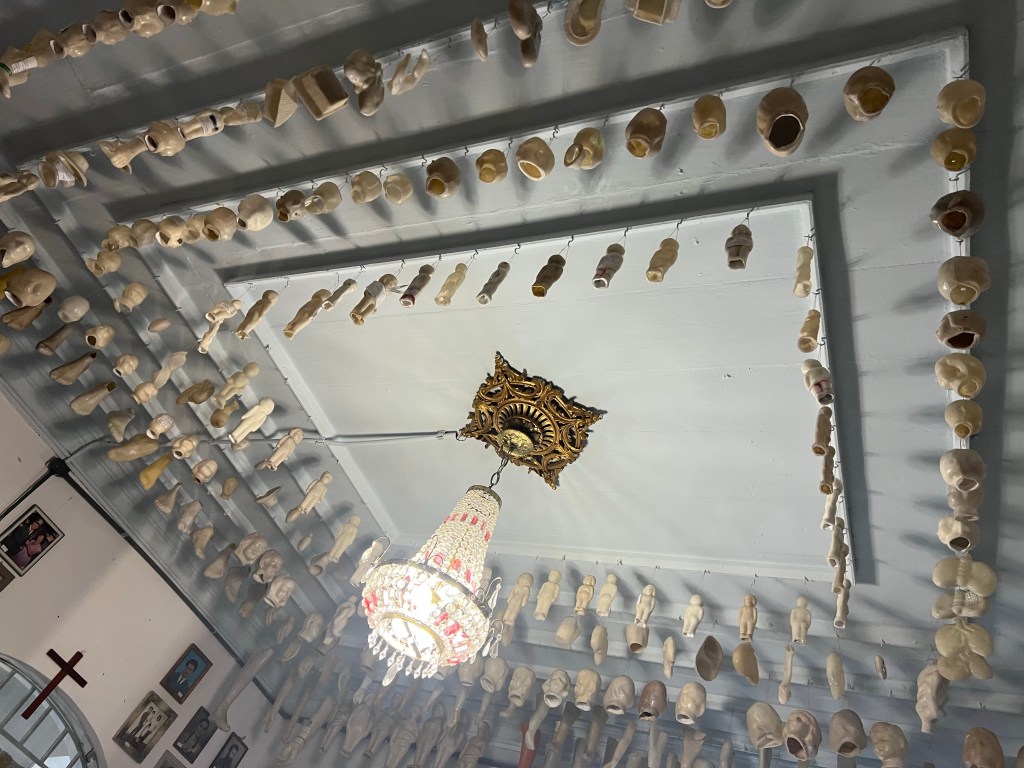
Later in the afternoon, we visited the Bonfim Basilica, which sits on the top of a hill at the other end of town. Built in the mid eighteenth century, it houses the statue of Good Jesus of Bonfim, brought by Portuguese naval captain, Theodózio Rodrigues, as thanks for having survived a storm on the high seas. Pilgrims from all around the world come to visit the church which also houses a ‘museum of miracles’ – plastic and wax body parts left by people seeking divine intervention in the healing of a loved one. The interior is less ornate than this mornings’ church again with a stunning ceiling.
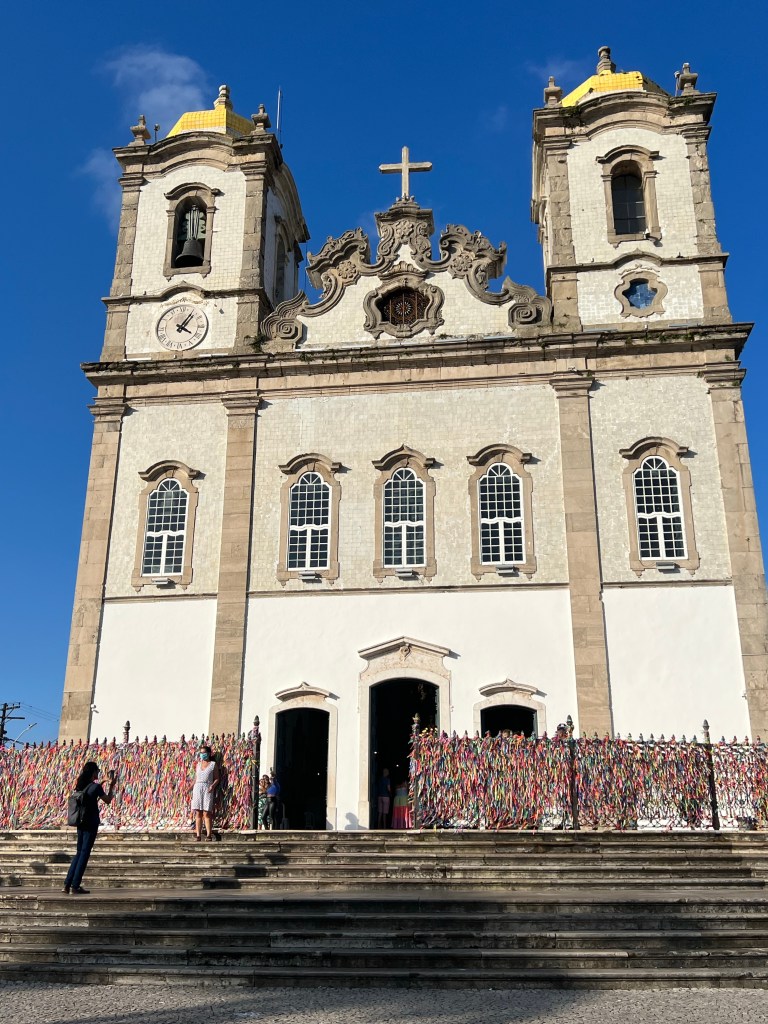
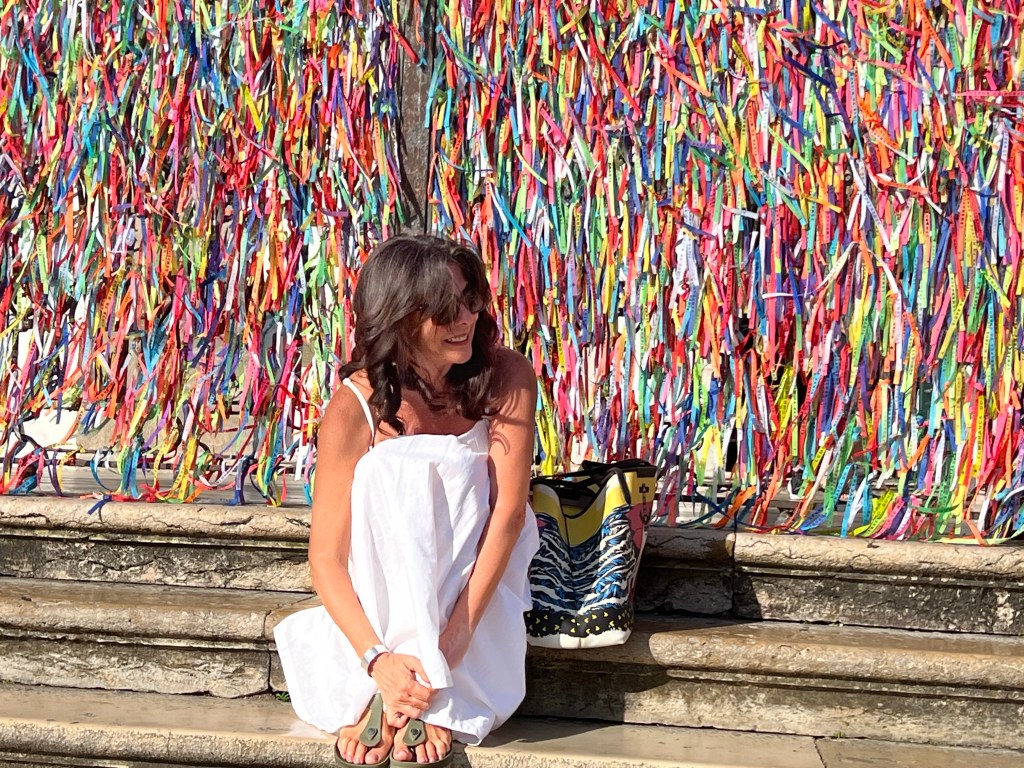
Outside the church there are hundreds of wish-ribbons tied to the fence all blowing in the breeze and looking very wonderful. The church hosts a major festival every year to celebrate the Festa do Bonfim on the second Thursday after Epiphany in January which combines elements of both Catholicism and Candomblé.
Many in Salvador practice a religion called Candomblé – a mix of Portuguese Catholicism and African paganism and can be traced back to the African slave trade. Around 4.5 million African slaves came to Brazil, many to Bahia, the center of Brazil’s sugar trade and their descendants make up more than 80% of today’s population.
Candomblé believe in protector gods (known as Orixás) of, for example, fire, wind and water but could also be of animals, colours, a day of the week or a certain food group! Ceremonies take place to these gods on sacred ground, called terreiros, throughout Salvador and it is possible to witness them singing, chanting, hypnotic drumming in their attempt to get on the right side of the protector gods and incite them to possess them. I will just have to come back!
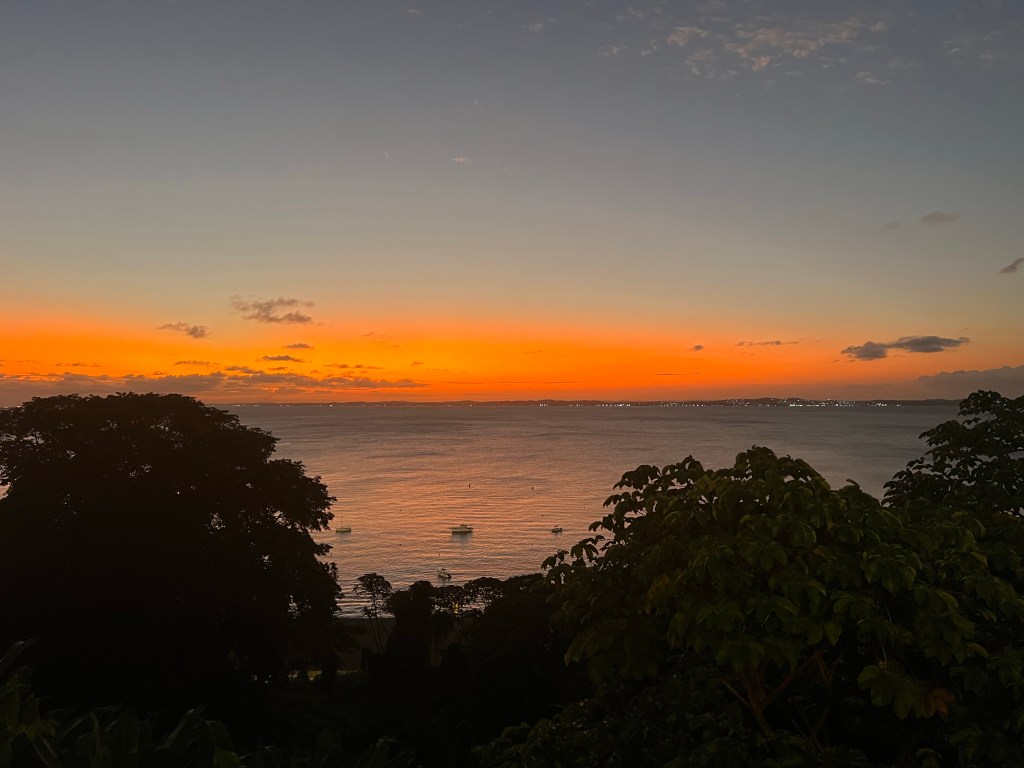
We finished our day in a lovely bar just above the yacht club overlooking the bay and a with the help of a few caipirinhas we watched the sun go down.
 EC-Rider Travels
Leave a comment