
We have had the best day! We started by visiting a Samba School – which I assumed would be like visiting The Royal Ballet School, but in fact it was visit to a ‘carnival factory”. The Cidade do Samba where the major Samba Schools have a space to design and build their floats, work on costumes and prepare their instruments for the great Rio Carnival in February.
It was a complete tourist attraction, but fascinating. We all know, Carnival is big in Brazil and particularly in Rio, but I had no idea, how big or how culturally important it is. It is big, big business and employs many, many people, year round. It is also hugely competitive between the ‘Samba Schools’. A Samba School is more a club than a school and there are over 100 in Rio who compete to move up the league table and thus their position in the parade. We visited the home of the 2022 champions, Grande Rio School, who won for the fist time this year.
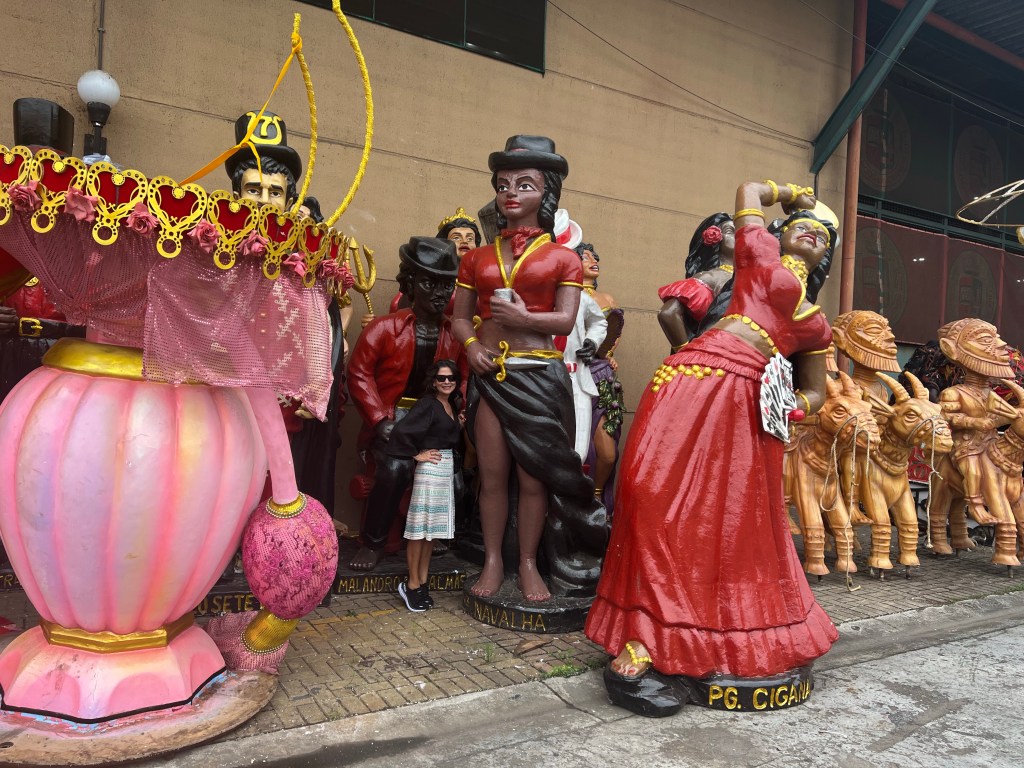
The rules are very strict and each Samba School’s floats and dancers are judged across several categories in accordance with the rules. Each school has to produce a minimum of five and maximum of six floats and involve between 3,000-4,000 performers. Carnival takes place in February, just before Lent, with the premier league of schools (top twelve) parading in the Sambodromo. The ‘performance’ has to be 80 minutes long and spread over the 700m of the Sambodromo. During this time the panel of judges mark the schools’ floats, costumes, songs, dancers and interpretation of the theme and choose the next champion. It is usually very close and huge kudos for the winning school.
Each school’s parade is divided into sections called ‘alas’ or wings, with each wing consisting of 100 or more dancers wearing the same costume. Each wing choreographs its own dance that they practice for months prior to the Carnival. In addition, there are a number of important roles which are keenly fought for: to be the first couple, the Porta Bandeira and Mestre Sala, carrying the school’s flag. Or to be one of the drummers providing the beat for the samba dancers which involves huge discipline and many, many hours of rehearsal. Analida’s nephew is one. The drummers are lead by the Queen of the Drummers, who introduces them to the crowd. Then there are the Passistas, or samba dancers, who dance the entire length of the samba strip for the full 80 minutes. This group of dancers (up to 50) are chosen through an annual competition. It is a great honor to represent your Samba School. In addition there is a group of whirling (older) ladies in white called the Baianas who represents the African roots of the Samba. They are not judged (but mandatory) and places are offered, as a thank you, to women who have worked over the years to prepare their Samba School for Carnival.
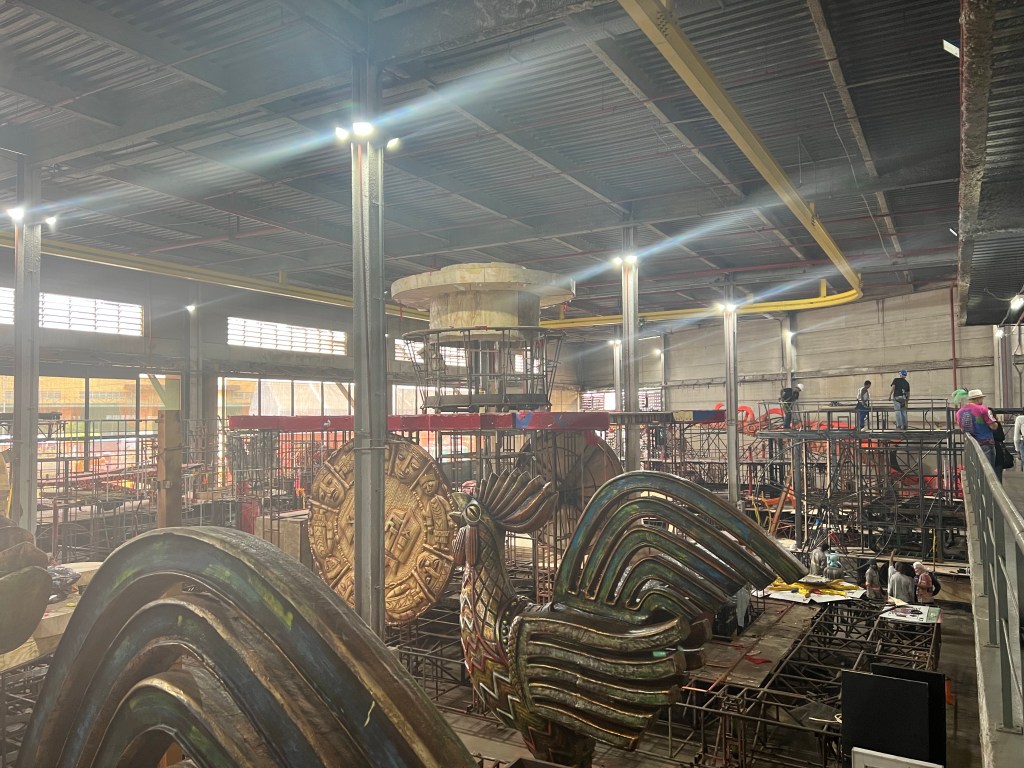
It is a year round programme, starting as soon as the last parade is over; creating the theme, writing the music, designing and building the float and 3/4000 costumes and training the paraders (who have to commit to twice weekly rehearsals from October-February.) The floats are huge, usually over 90ft long and have become increasingly elaborate over the years. There were over three hundred people working on the Grande Rio floats. Sadly they were only in early stages of production, so we did not see much. Though, if they had been further down the line, we may not have seen anything, as although a school’s theme is made public, the designs are a carefully guarded secret.
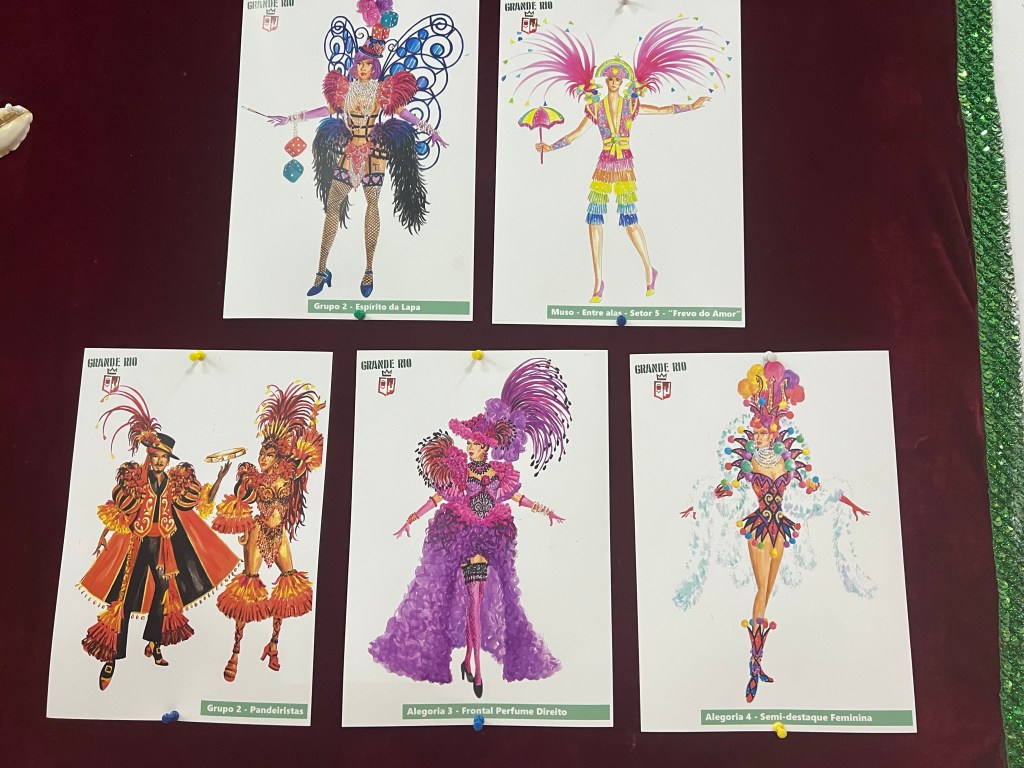
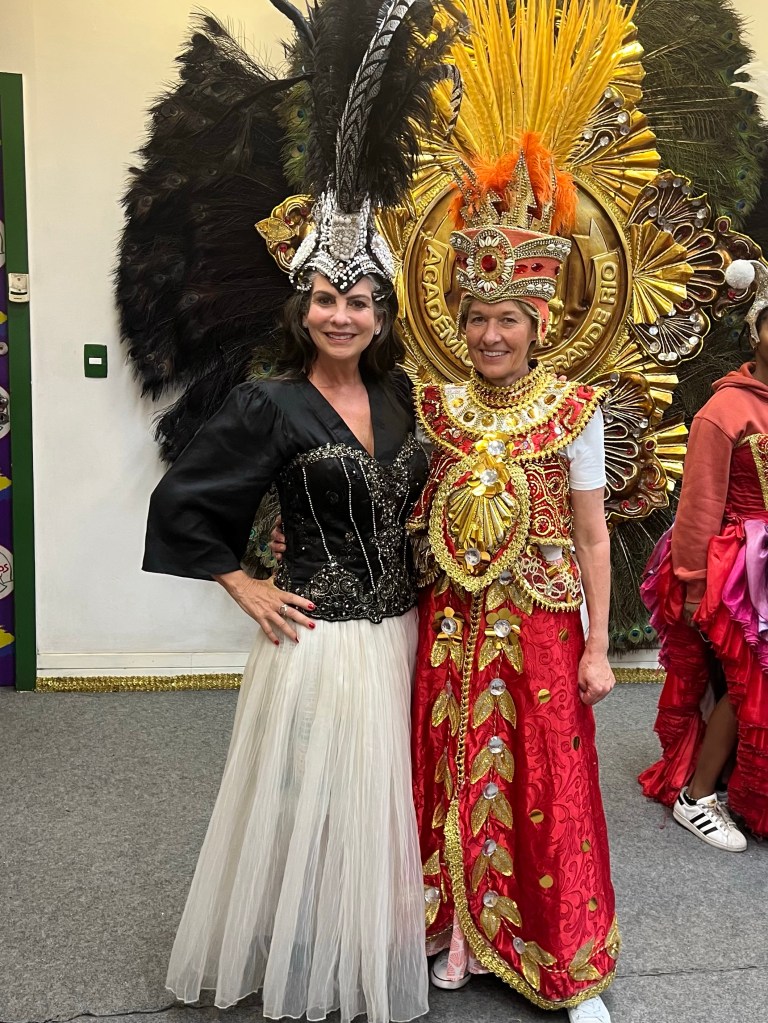
We were then taken to the fourth floor where the costumes were made and invited to put on the carnival costumes – hilarious! and very heavy. We were then given a Samba lesson, even funnier – Analida has it on record and threatening to send it to RBS!
On our way back we passed the most amazing wall of graffiti, the largest graffiti mural in the world (560ft), created by artist Eduardo Kobra for the 2016 Olympics. It is of five faces representing humanity’s common ancestors: the indigenous people of America, Asia, Europe, Africa and Oceania.
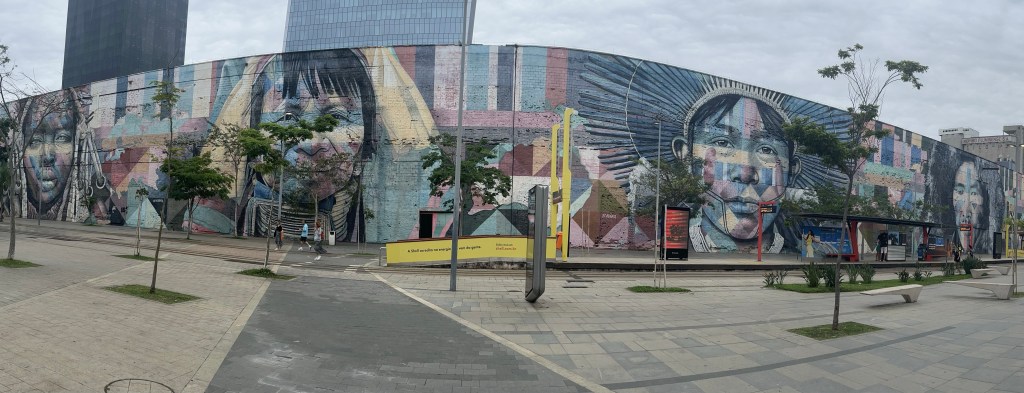
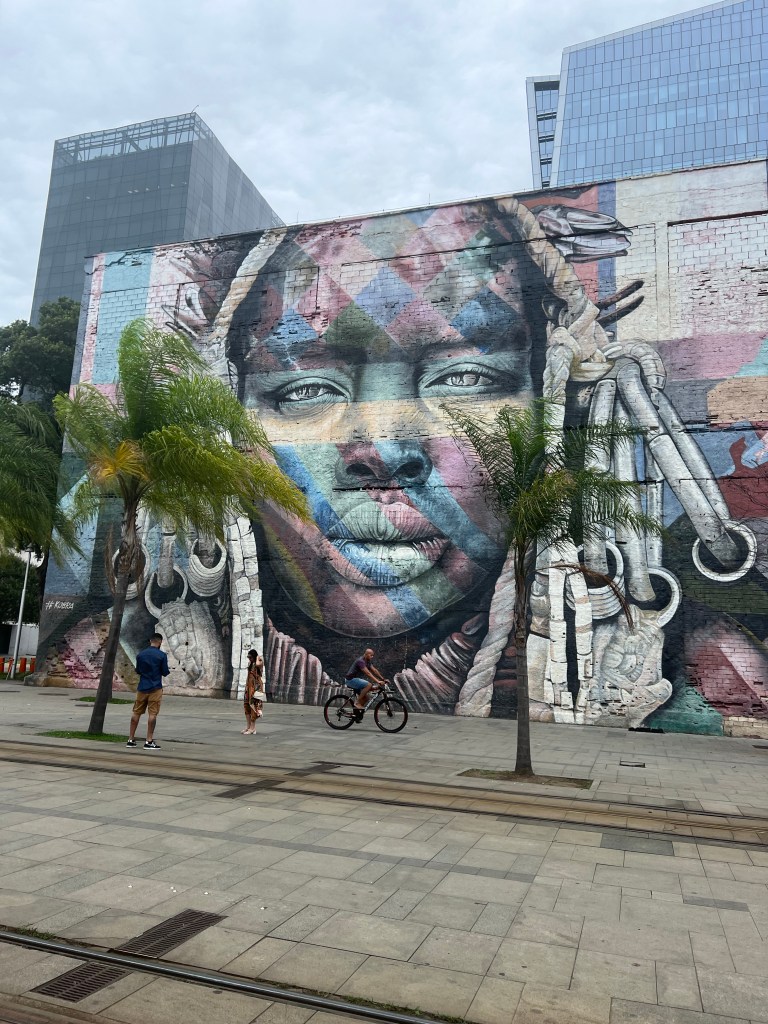
We then went to meet one of my former RBS students for lunch. Of course we never had favourites, but Edivaldo was one of them! I so remember him arriving at The Royal Ballet School, not speaking a word of English but just the most adorable smile, which of course he still has. He has been dancing with Birmingham Royal Ballet for the last eight years, but is taking a break to decide what he wants to do next. It was so lovely to see him and he greeted me like his long lost ‘nanny’ or was it ‘granny’!
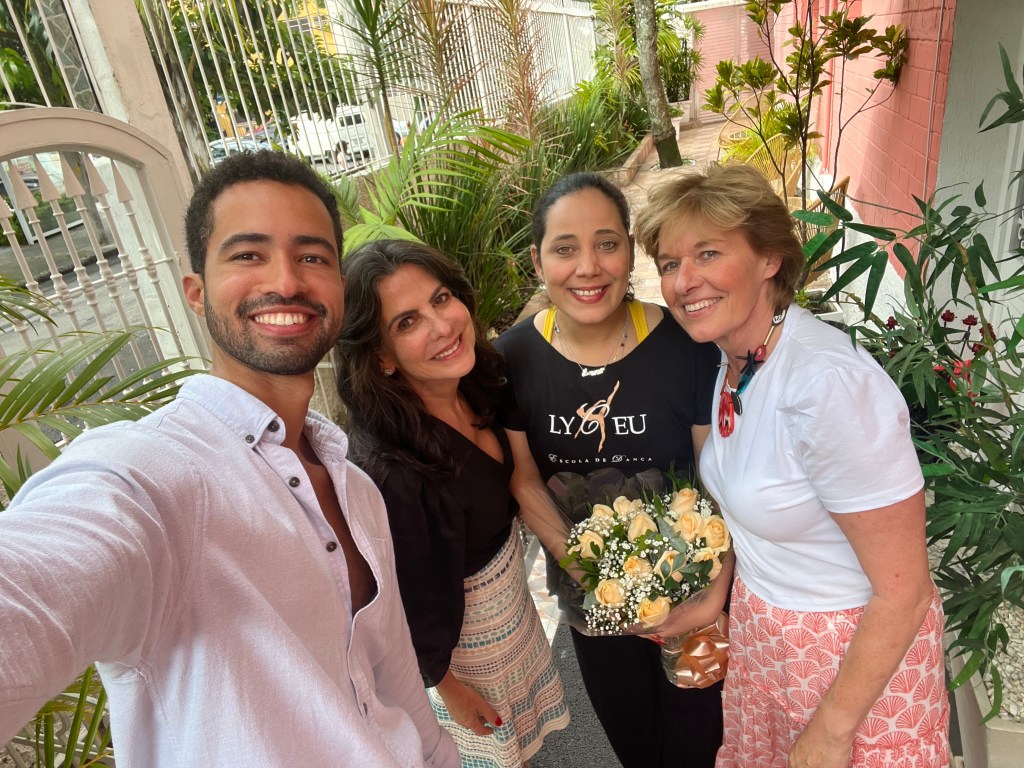
We all went together to watch a ballet class in a little school where Lorena taught. Lorena was Davi Ramos’s teacher and was the subject of one of my best RBS moments. Davi was brought up by his grandmother, who was not going to be coming to his graduation, so without telling him, generous Analida brought Lorena over to London. I will never forget taking her round to Davi’s halls and him seeing her on the doorstep for the first time in three years. A lot of tears. She told me that Davi (now dancing with Dutch National Ballet) had just danced the Prince in The Sleeping Beauty – a few more tears. His lovely girlfriend Isabella, who mum and I briefly met in Amsterdam, was also there taking class – oh so lovely.
 EC-Rider Travels
Leave a comment