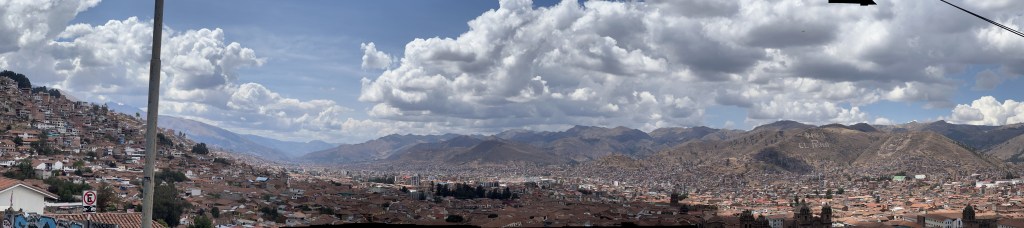
Today Miguel gave us a tour of Cusco, the heart if the Inca dynasty. Cusco is another UNESCO site and sits at an altitude of 3,300m. It has a population of half a million but is growing fast, spreading up the neighbouring mountains. Property in ‘down-town’ Cusco apparently rivals London prices!
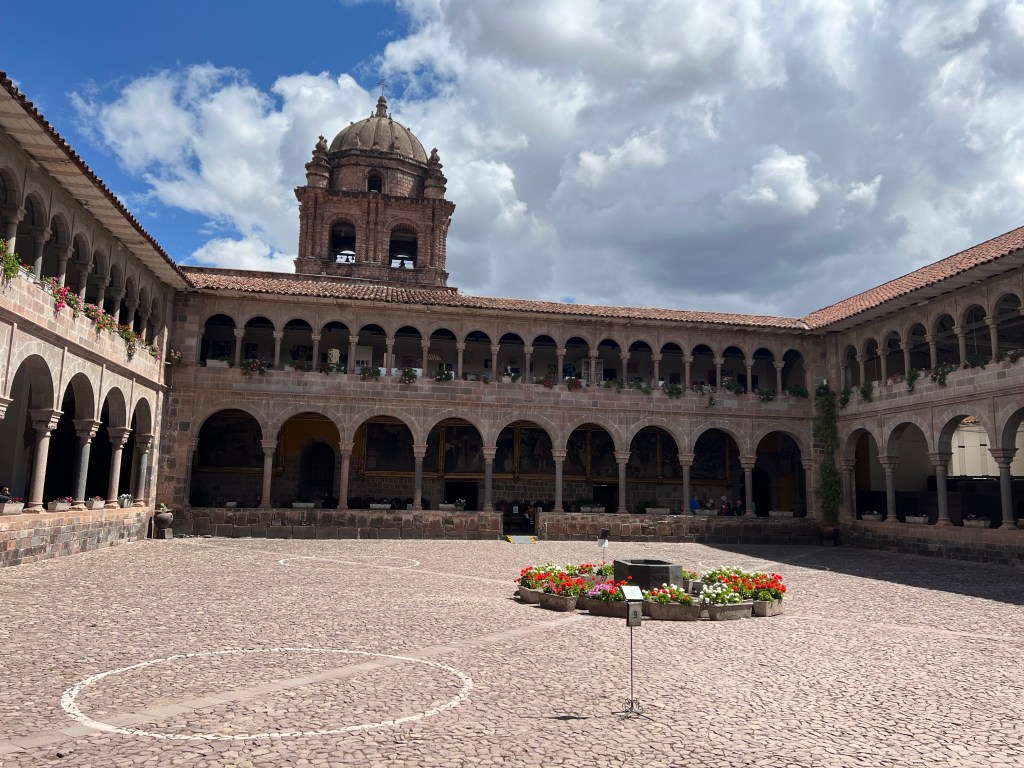
We first visited the 17th century Santo Domingo Convent, still lived in by 23 Dominican monks, the first religious order to arrive in South America. This convent was built on the foundations of the one of the most important Inca temples – the Qorikancha Temple of the Sun. Qorikancha, meaning ‘golden enclosure’ was originally covered with gold plate. This was unfortunately removed by the Spanish, some of it in fact ending up in the UK after Francis Drake intercepted some of the Spanish ships, however most (over 60%) ended up in the Caribbean Sea, due to piracy.
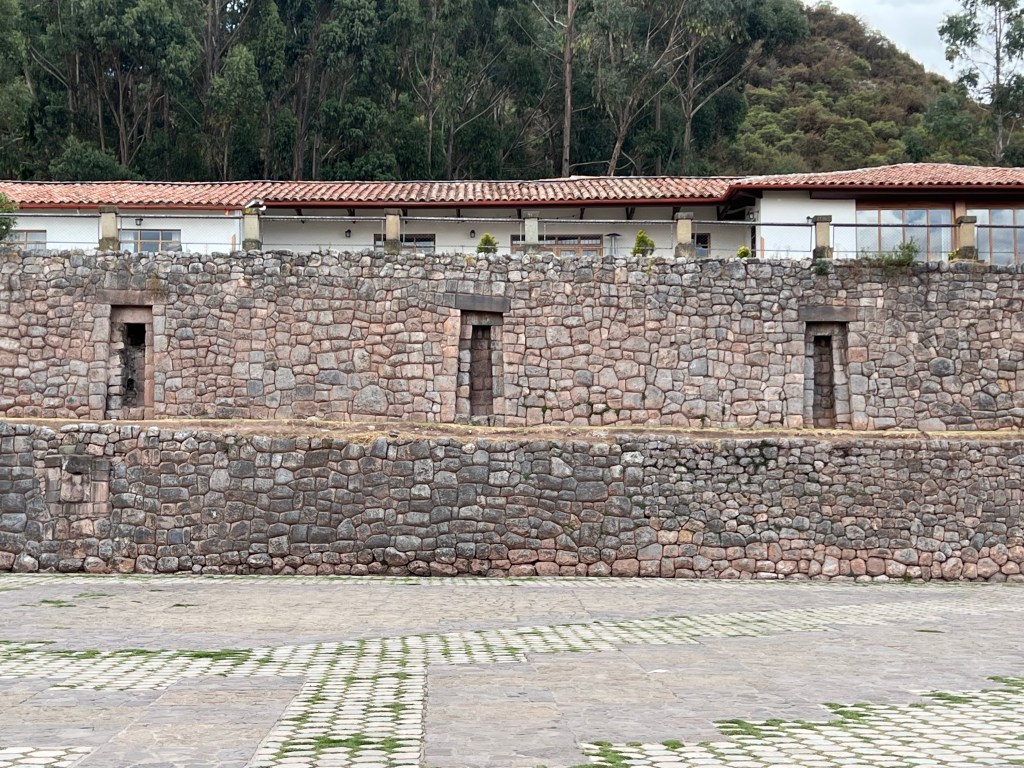
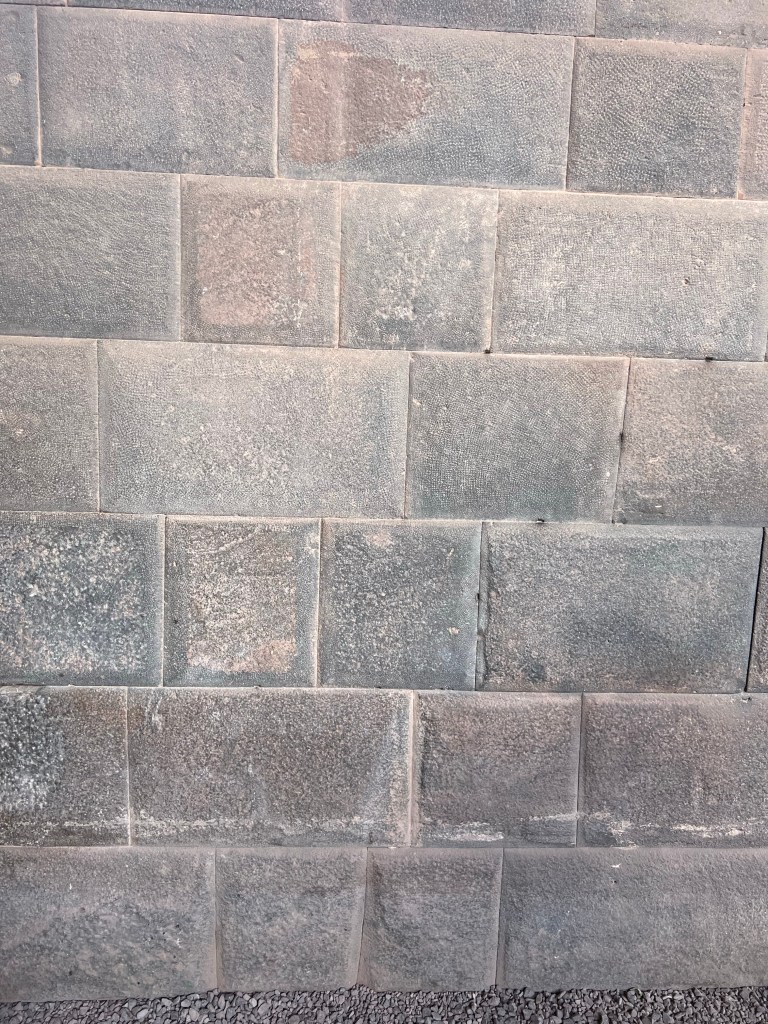
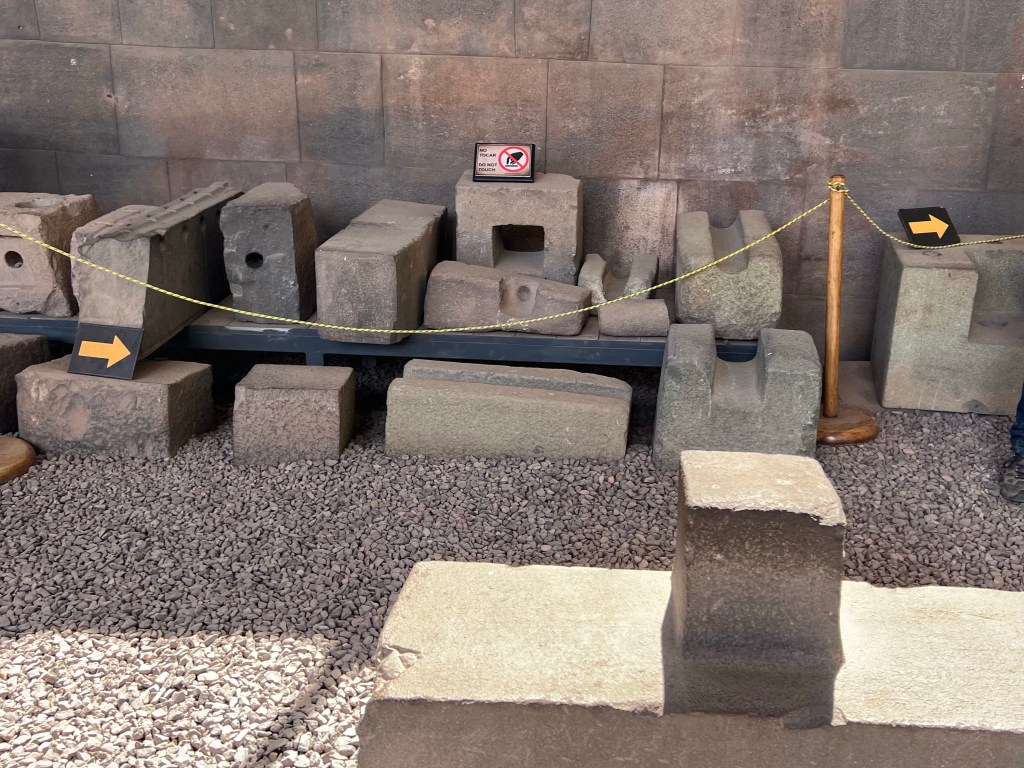
Despite being plastered and painted over, many of the Inca foundations have been unearthed revealing several chambers and showing the extraordinary skill and longevity of the Inca building techniques. Being such an important temple, the brick-work is of the highest quality, huge blocks of andesite – from the Andes, similar and almost as hard as granite – cut into rectangular blocks. These neatly fit together, built at a slight angle (3-5 degrees) with no mortar and smoothed to a surface where you cannot feel the joints. We saw some interesting examples of their interlocking lego-like pin and cup system. It would have all been covered in gold-leaf, so when the sun poured in, shined like the sun.
There were originally many areas/rooms dedicated to the different Inca Gods, but sadly only three remain, the rest destroyed to build the convent. It is believed that the three that remain were dedicated to the Rainbow god, the god of Thunder & Lightening and the God of the stars. Still standing proud 500 years later, despite numerous earthquakes which destroyed numerous later buildings. Many of the buildings in the historic centre are built on Inca foundations. Around the door-way of the Temple of Stars are a number of small holes which would have had precious stones mimicking the night sky (removed by the Spanish). The window is positioned to perfectly view the Pleiades (Seven Sisters) from which they could forecast the weather for the following year. If the stars shone brightly it would be good year, if they were difficult to see they prepared for the worst.
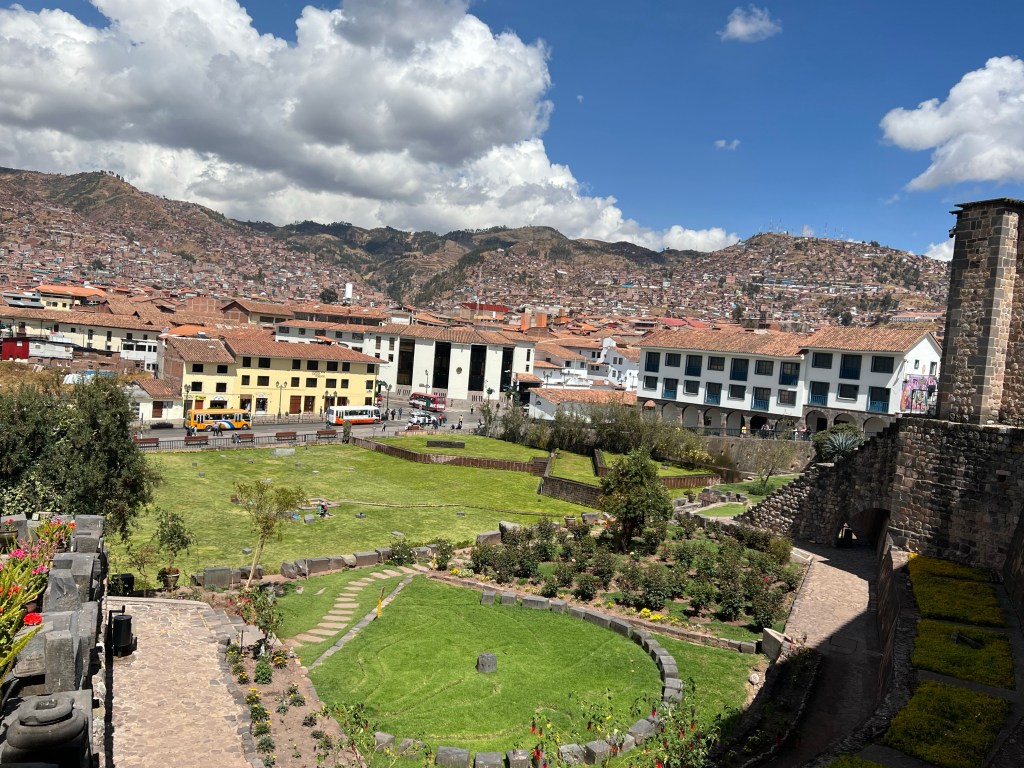
When the last Inca king, Atahualpa, was captured by Pizsaro, he bargained his freedom by promising he would fill one of the chambers with gold and twice again with silver. Within three months he delivered. This gold returned to Europe and apparently provided enough to start the minting of coins. We saw the garden which has been restored back to how they believe the Incas would have laid it out.
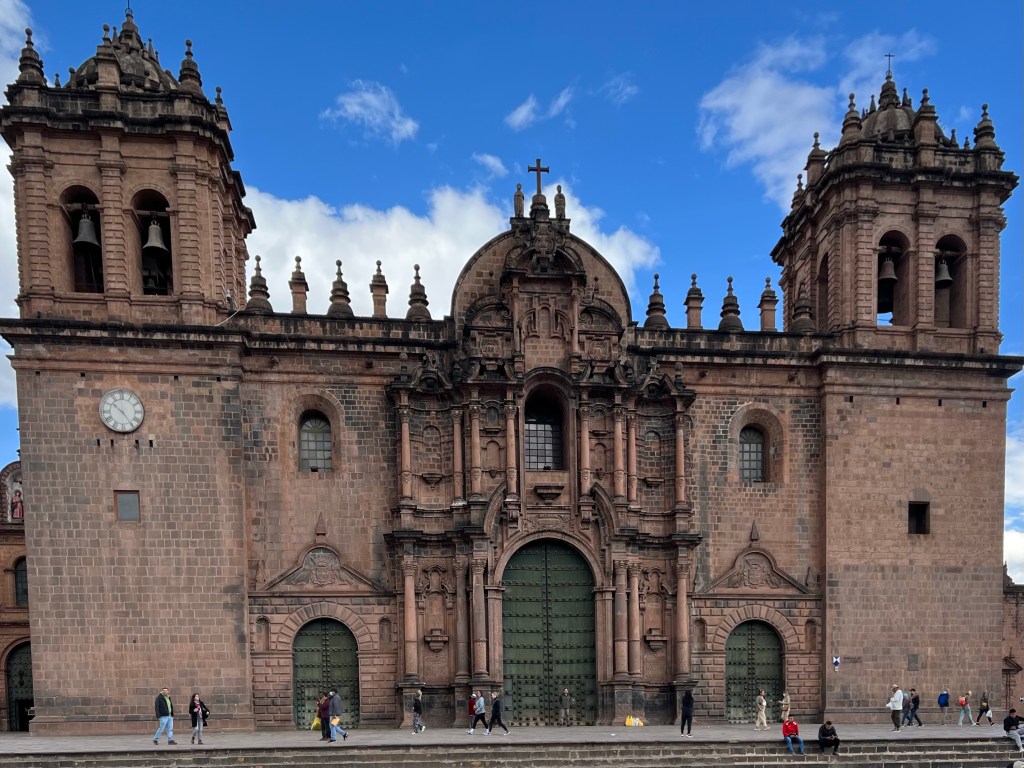
We then went to visit the Cathedral, which is in fact three interconnected churches, each one more ornate than the last. It took 200 years to build with a number of different architects and thus several styles. The first, the Church of Triumph, was built by the Spaniards soon after they arrived in 1536 celebrating the triumph of Catholicism over the local faith. Above the alter is the first cross, the Andean people saw. To relate more to the local people, the images of Christ wore a skirt or ‘wara’ and sometimes depicted with dark skin.
There is a crypt where, for a considerable fee, the wealthy could be buried and have all their sins and indiscretions pardoned. This is how the Catholic Church made much of its money and apparently where the phrase ‘filthy/stinking rich’ came from!
The central church is the Church of the Virgin of the Ascension where services happen every day from 6-9am. This is the most ornate with an alter of solid silver weighing 1,200kg. There is also a silver carriage, used every year on Corpus Christie, which contains 350kg of silver. There are alters to all the different saints, the most popular of which is St Anthony, who blesses marriages and every day messages are left by people in search of love, with details of the perfect partner they are seeking. Sort of Match.com!
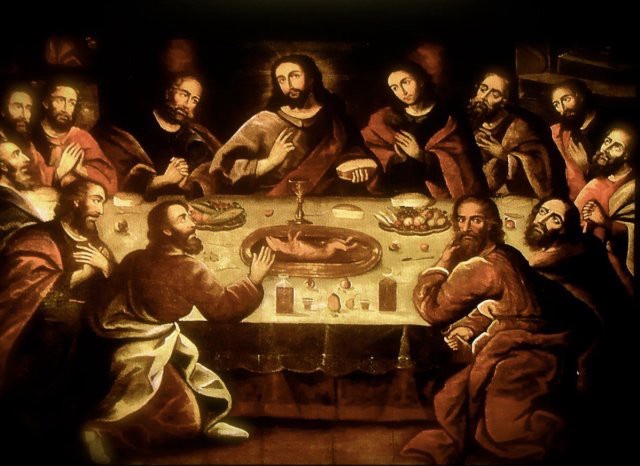
All the figures/statues of saints, Christ etc are dressed in the most obscenely shiny and sparkly clothes, one of Joseph wearing the symbol of the local football team! The choir is stunning all carved in cedar wood. It still has the original organ, which needs two people to play it, one to pump the air, the other to play. There is a huge painting of The Last Supper, by Marcos Zapata (1754) again trying to be more relatable to the Peruvian people, the centre of the feast is guinea-pig surrounded by lots of local foods. It also shows, the crucifixion, the nativity and the washing of the feet.
The third church is the Church of the Holy Family and above the alter there are figures of Christ with Mary and Joseph and his maternal grandparents St Anne and St Joachim (who knew?) reflecting the family orientated society of Peru. The footprint of the three churches is in the shape of a Latin cross.
Next we went to the Santa Catalina monastery where 12 nuns remain in a silent order. In Inca times the site was occupied by a compound called the Aqllawasi meaning ‘House of chosen maidens’. The Aqllas were women of noble families, chosen for their beauty and high lineage, they entered the Aqllawasi at about 16 and remained for the rest of their lives. They were forbidden contact with men and obliged to remain virgins until they died. The Aqllas were seen to be wedded to the Sun and other Gods venerated in Cusco. They had two sacred activities, producing fine textiles for the Inca court and preparing ceremonial beverages!
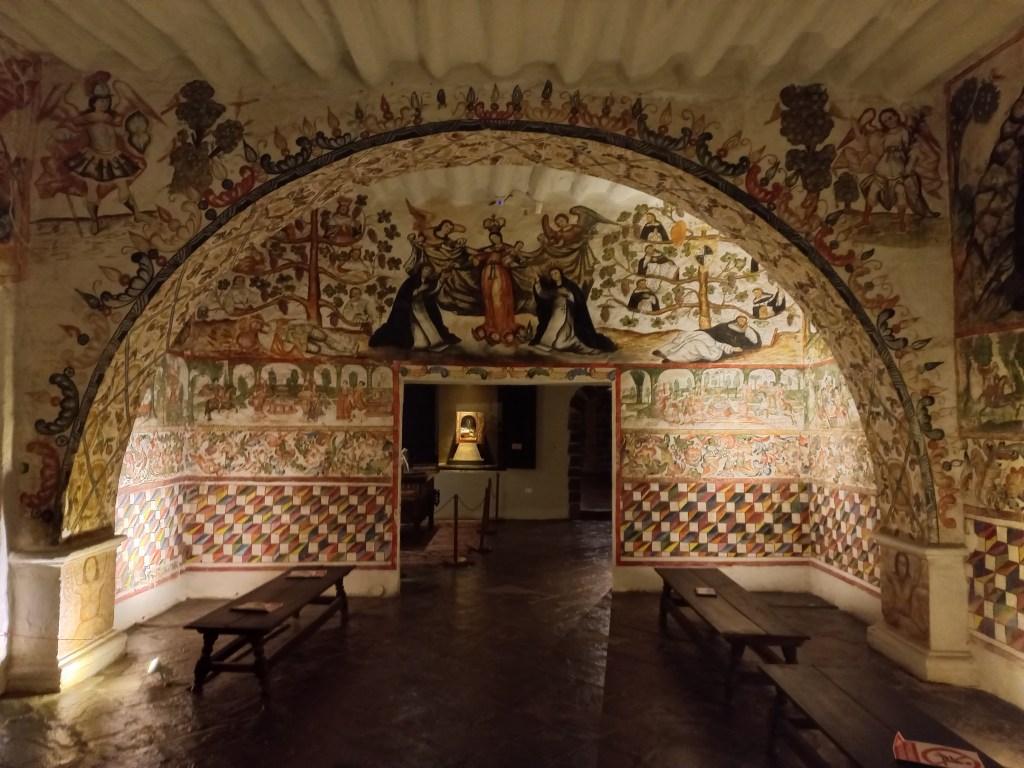
The nuns lived an extraordinarily simple/hard life, with tiny quarters in a dormitory, never seeing anyone from the outside world. Even confession was said through a wall with the priest outside. When they died, they did this alone too, no family was allowed to visit. A large donation was made when a girl entered the monastery and once they did, they could never leave. In their communal dining area are many particularly gruesome paintings of Christ suffering on the cross, to remind them of the ultimate price he paid. They practiced self-flagellation to purify their sins using leather whips and other torturous tools. They often had to do this in front of the other nuns.
All gold in Peru is 18-22 carat. Silver is also purer with 95% content rather than 92.5% of sterling silver which means it tarnishes less. Silver itself does not tarnish it is due to the addition of copper (which makes it stronger). More recently cobalt has started to be used as the additive which does not tarnish.
Another funny fact, is the cure for arthritis is apparently a hairless dog! As mentioned before, medicine is nearly all natural (I have never seen such a healthy looking nation) and the way they treat arthritis is to lie a hairless dog on the painful areas and the heat of the dog will cure the pain! Watch out Beanz!
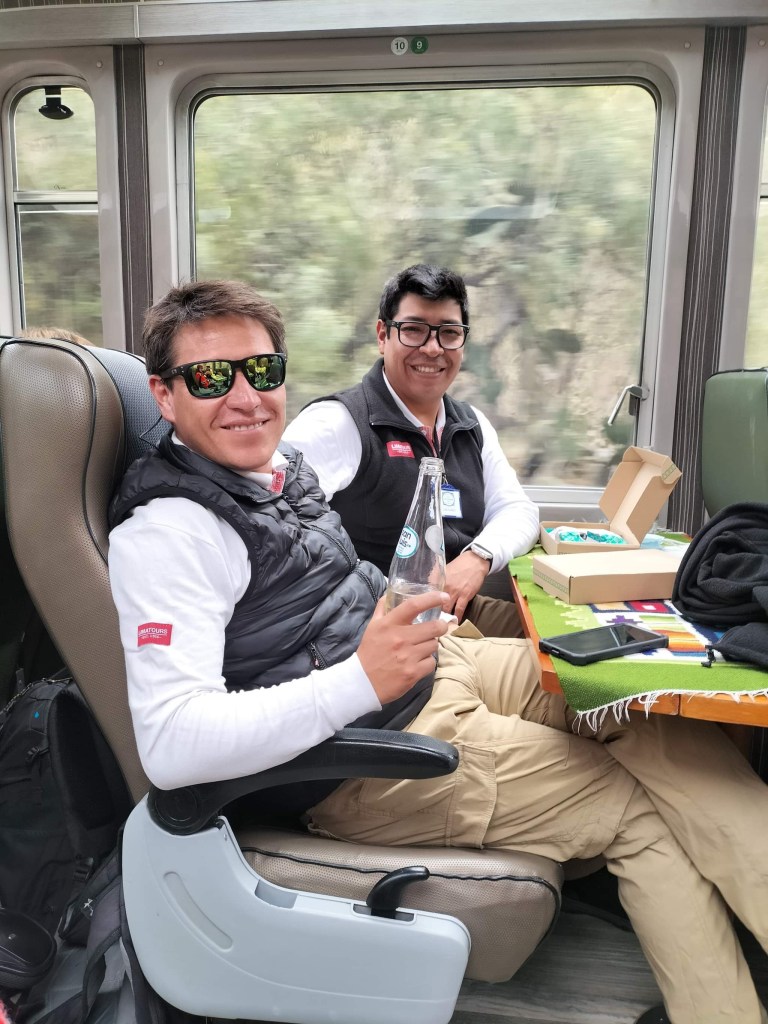
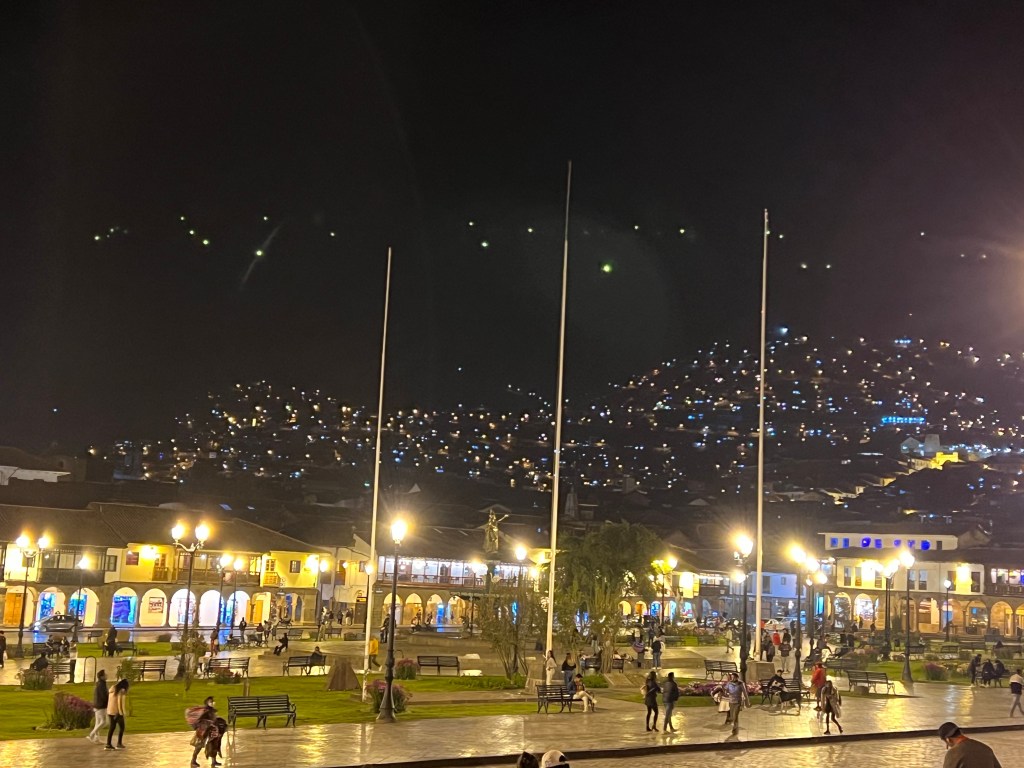
We said a sad farewell to Miguel, he really has been an outstanding guide and also to our ‘nanny’ Lewis as they left us to our own devices for the rest of our stay. During the afternoon, I visited the Machu Picchu Museum, which was interesting though slightly contradictory to some of what Miguel had told us! As I was very leaving a day before everyone else, they all kindly met at 6.30 to say goodbye and then Peter, Carol, Sue, Steve, Karen, David and I went for a final Pisco Sour and delicious dinner in the Main Square of Cusco. I really was quite sad to say goodbye to them all.
 EC-Rider Travels
Leave a comment