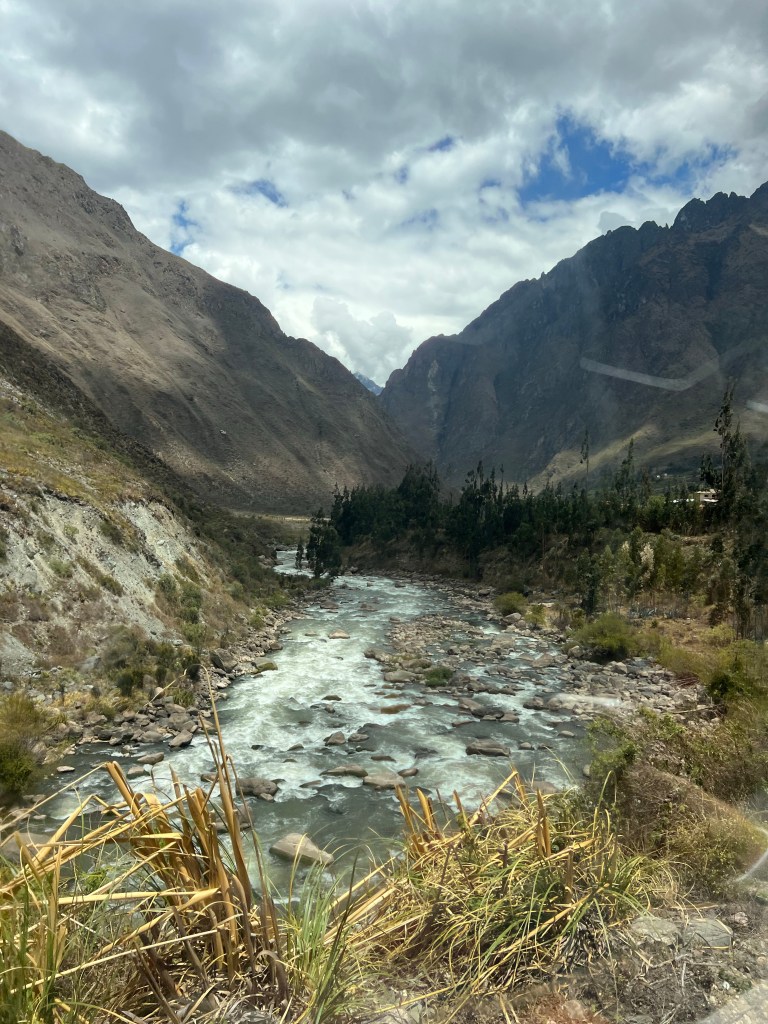
We packed a small bag and headed off to Ollanta to take the Vistadome train to Machu Picchu. Another spectacular journey through the Sacred Valley on a very comfortable train, just for tourists, with huge windows and a glass roof so you could see the mountains, as we went rather slowly by. Along the way we were informed about what we were passing until we reached the town of Machu Picchu Pueblo – only accessible by train from Cusco or on foot. We then got on a bus and wound our way up 400m to visit the greatest of the Inca sites.
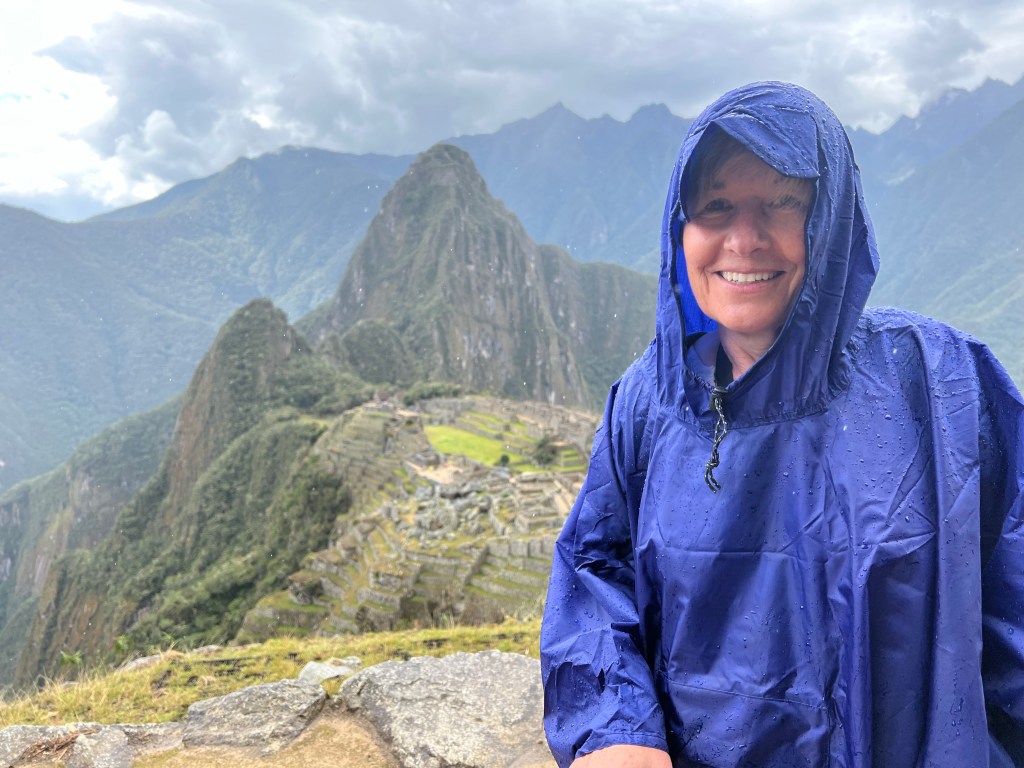
I have to confess, I was a little apprehensive about today, having heard so much about Machu Picchu, recognised as one of the ‘new’ wonders of the world’, fearing it might not live up to expectation. I was also concerend that it would be totally overrun by other tourists and we would struggle to see it. On this, we were pleasantly surprised – the effects of COVID are still felt here and there were very few other people. The weather however, was not on side and it poured with rain on our ascent, but cleared a little as the afternoon went on.
I was not disappointed, it is indeed pretty ‘awesome’ and once again Miguel filled us with the most fascinating facts and anecdotes. I feel I have information overload, but hope I can get down a little of what he told us.
The American, Hiram Bingham, is credited with the re-discovery of Machu Picchu in 1911. He was not an archaeologist but a professor in South American history. He was on a mission to find the last Inca city, Vilcabamba, when he was persuaded by a local farmer to visit a site en route. It was almost totally hidden by vegetation, and Bingham dismissed it, writing in his diary ‘nothing interesting today’ and continued on his quest to find Vilcabamba. He did however take photographs and when shown to archaeologists back at Yale, they realised there was more than met the eye. With the help of the National Geographic Society, Bingham returned to uncover this lost city of the Incas.
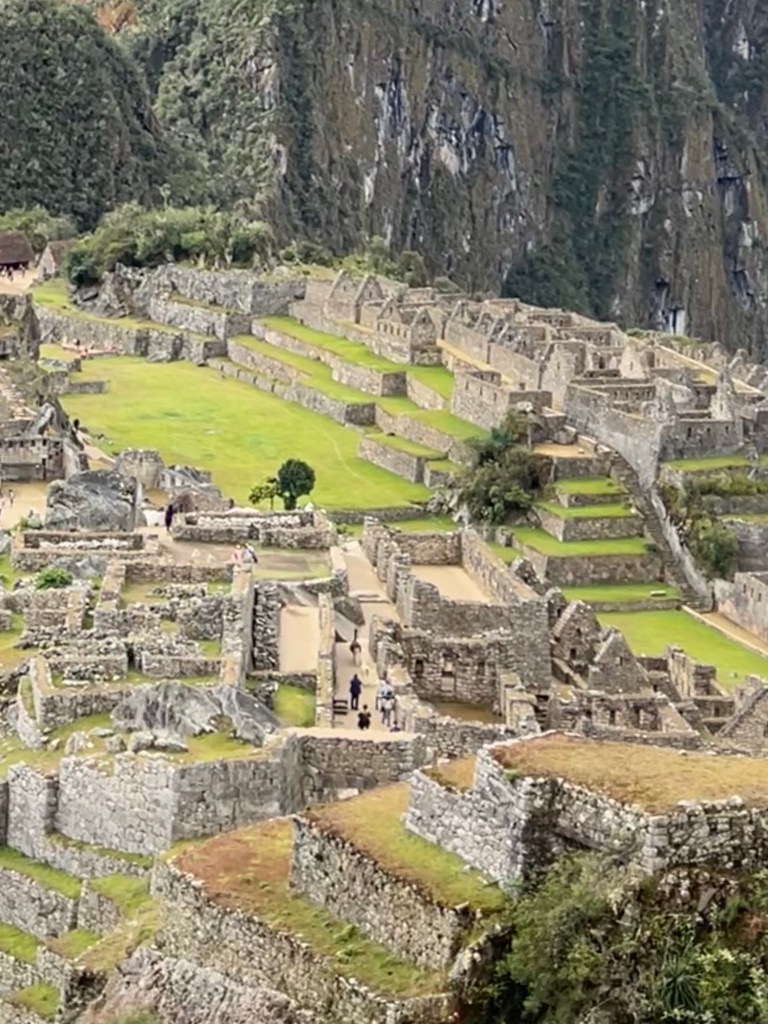
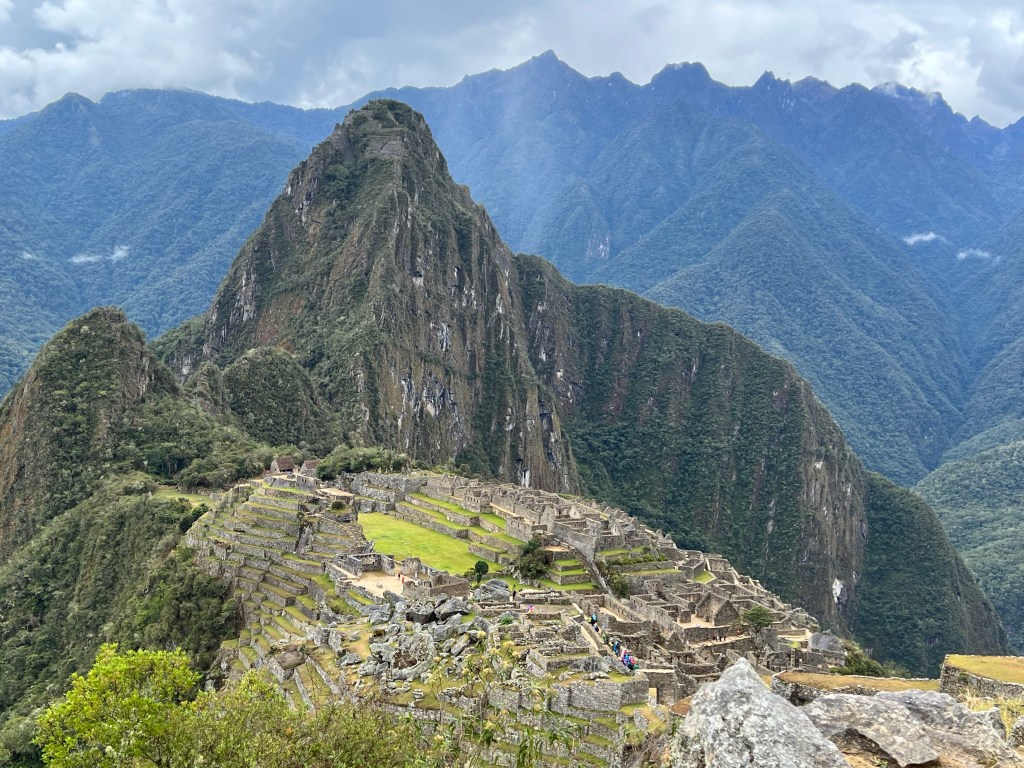
Saddled between two mountains, Machu Picchu sits at an altitude of 2,380m, against a dramatic backdrop of cloud forrest covered mountains. To the south is Machu Picchu mountain (Old Peak) and towering above it to the north is Huayna Picchu (Young Peak). The Incas always look for balance – similar to the the Chinese Yin and Yang.
No one seems to know the original name of the city; when Bingham asked the farmer, he thought he was asking the name of the mountain and told Bingham it was Machu Picchu. Some believe it was called Patallaqta, meaning ‘city in the clouds’ and others, Condorpampa as the site is in the shape of a the sacred condor. The other debate is why it was built, perhaps as a religious centre, a town for nobility (the bones found, indicated people were of a high cast) or maybe it was to simply to show off power. I don’t suppose we will never know.
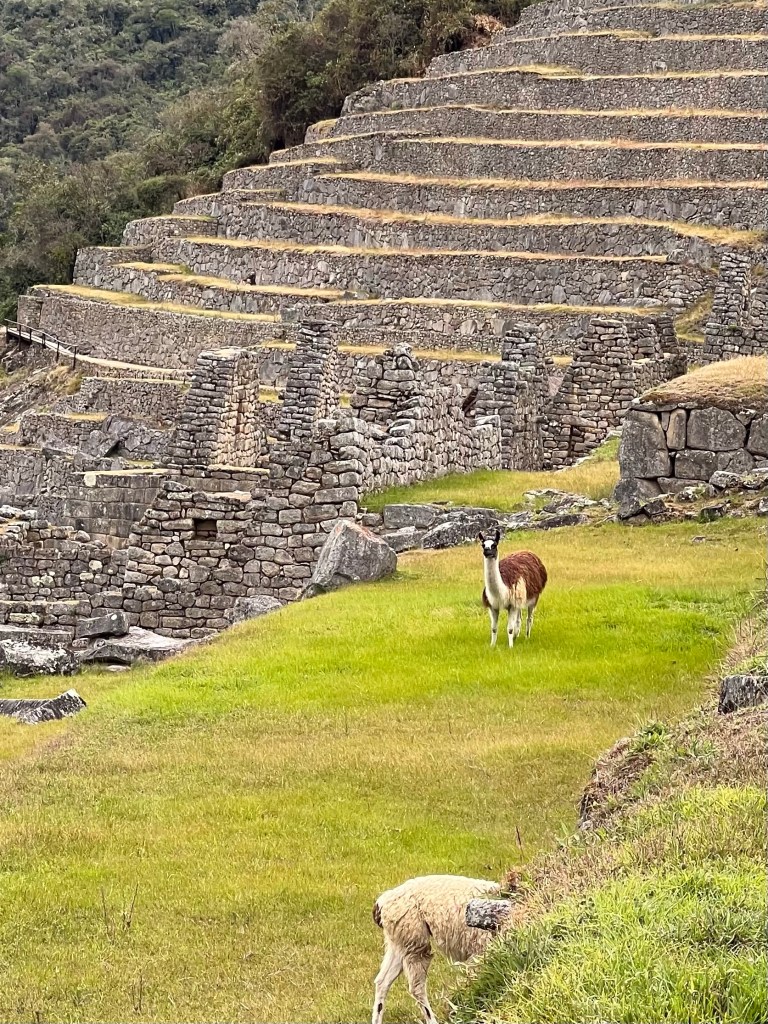
Pachacuti, the ninth Inca King, is known to have built Machu Picchu though probably never saw it as it took 50-60 years to build and the life expectancy at the time was only 50 years. The Incas chose to build Machu Picchu on this site as it had water and several granite quarries, it was also high enough not to get flooded. The average rainfall is 77 inches a year but in freak years this can double or triple (last in 2010) which washed away the railway line and several communities).
There are over 200 perfectly chiselled, unmortared granite buildings constructed in terraces and connected by stairways carved into the rock. The most important building is the Sun Temple from which they could determine the time of year through a carefully positioned sundial (at 13 degrees). This would cast no shadow during the two equinox and also two windows, one aligned to the sunrise on the Summer solstice and the other for the Winter solstice. The Sun Temple was built with the finest stonework, fusing huge blocks without the use of mortar, it also had the first of sixteen fountains on the site.
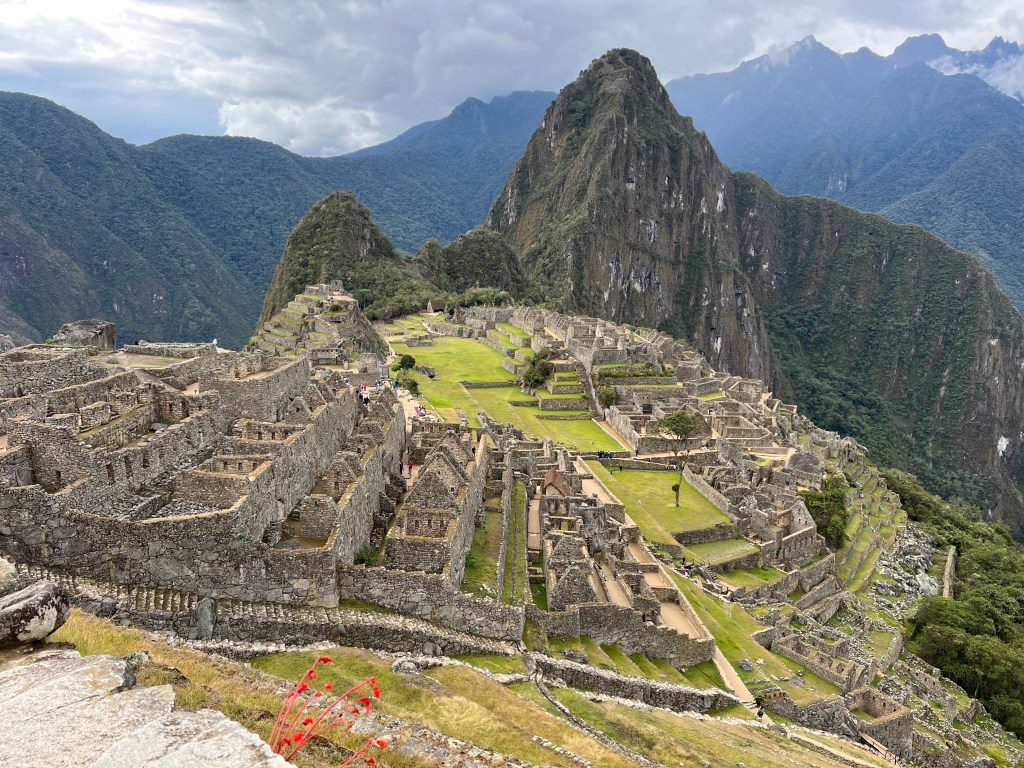
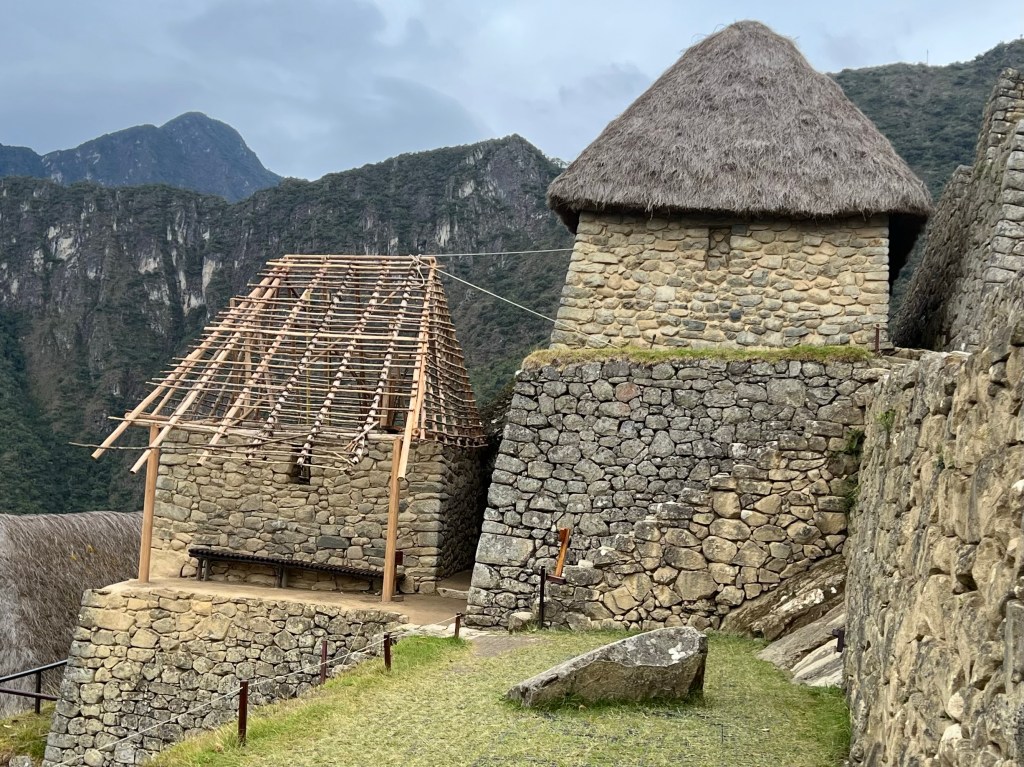
Living, was again communal, you did not have your own house, everything was shared and there were buildings where you slept, buildings where you ate, buildings where you worked, all together. Buildings only had small high windows for ventilation and no doors – just heavy alpaca curtains. Body warmth was therefore important. There are no signs of any bathrooms and it is thought they had chamber pots and used the human waste, mixed with ash, as fertiliser! They brewed beer and went to work with food, beer and coca leaves – amazing anything got done! The buildings had bamboo rather than straw roofs to protect against rotting in the humidity. Ropes were made out of cactus. They had a guardhouse and sentinel who watched for friend or foe coming up any of the surrounding trails, giving warnings using a sea-shell and a form of morse code. There is a large ceremonial stone near the guardhouse where the dead were laid out, hoping condors would eat the carcass and take their soul to the next life.
Bingham claimed the only treasure he found at Machu Picchu was a gold bracelet, when in fact he had plundered the site and taken all the treasures back to the US. These were returned in 2011 and are now in a museum in Cusco. Bingham planted a flame tree, where he found the gold bracelet, which still stands as one of the few trees on the site.
We headed up the Inca Trail leading in the direction of the Sun Gate, the Sacred Valley and (after ten days) Cusco, but sadly we did not have time to complete this!
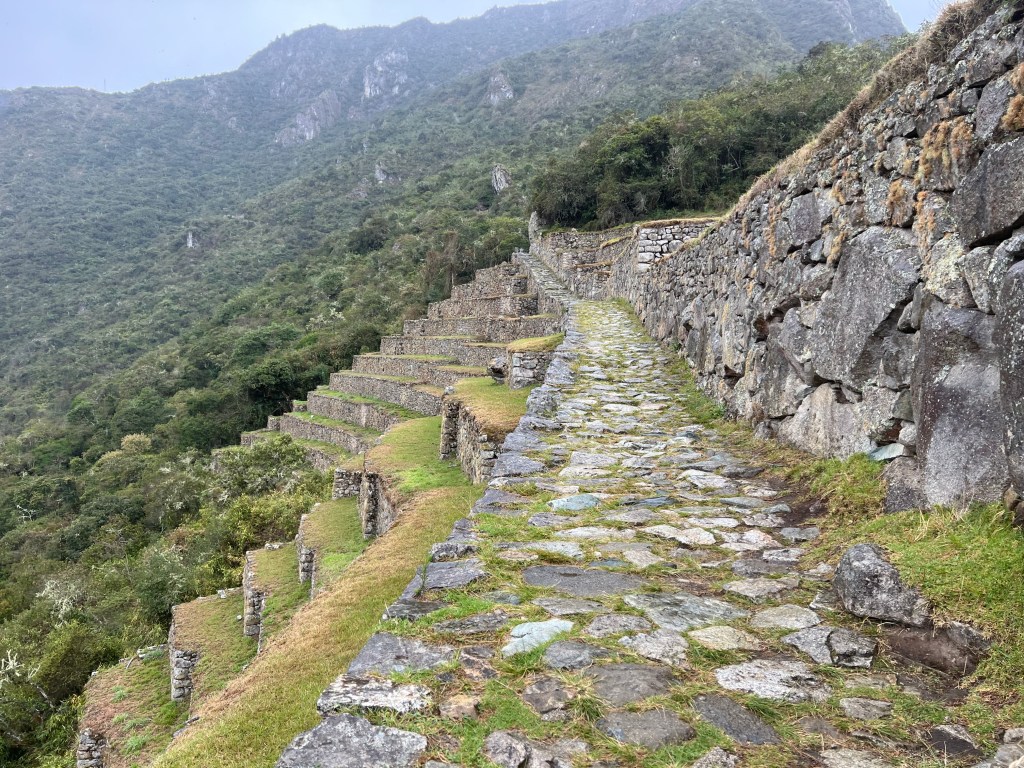
When the Spanish came in 1536, Machu Picchu was abandoned either because they ran out of food or perhaps because they joined Manco Inca when he past on his way to Vilcabamba. Rather than scorching their city, they tried to flood it.
Miguel pointed out the coca plant which is readily available here and the source of cocaine, illegal in most other places! In 1886 John Pemberton added this to his soft drink …. Coca Cola and sales soared as people became addicted to coke! In 1902 the US Government demanded he changed the recipe and he added sugar and caffeine instead. The Incas were able to perform cranial lobotomy using the coca plant as it also contains anaesthetic.
Sorry – you now also have information overload and I fear some of this is not 100% correct and certainly not the spellings – but hopefully you get the gist of this extraordinary place.
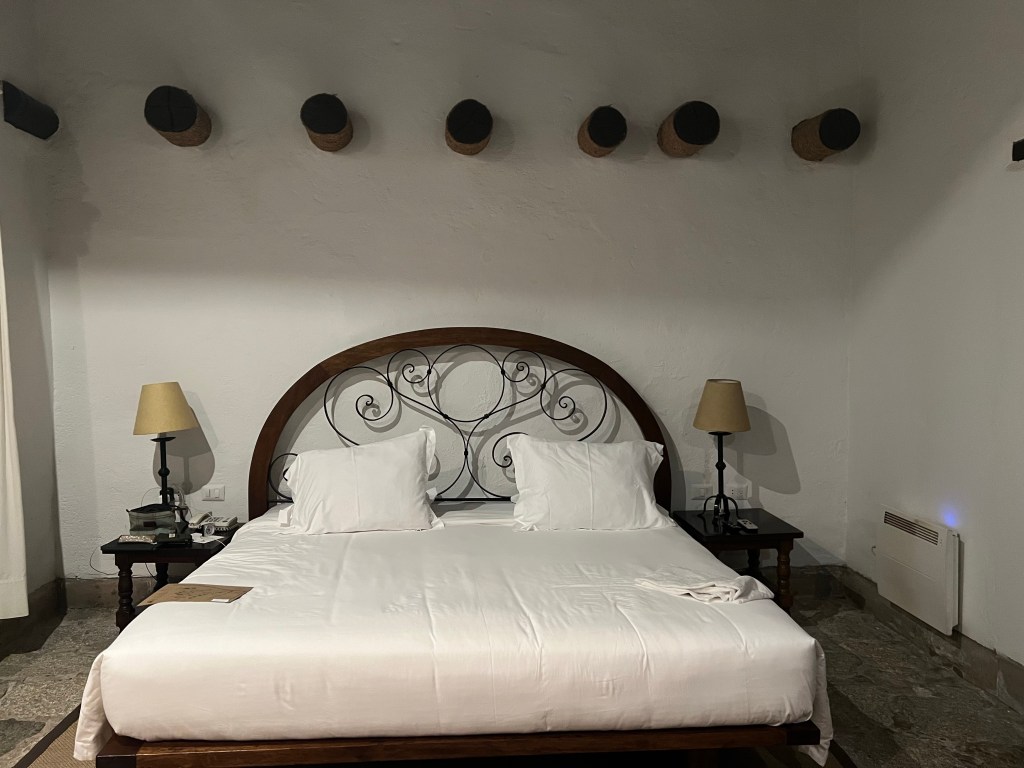
We returned by bus to our very nice hotel, Inkaterra – with lovely individual cottages – in the rainforest. This time, with four walls and a roaring fire as it is quite chilly here. Delicious dinner in their restaurant and pretty exhausted to bed.
 EC-Rider Travels
Leave a comment