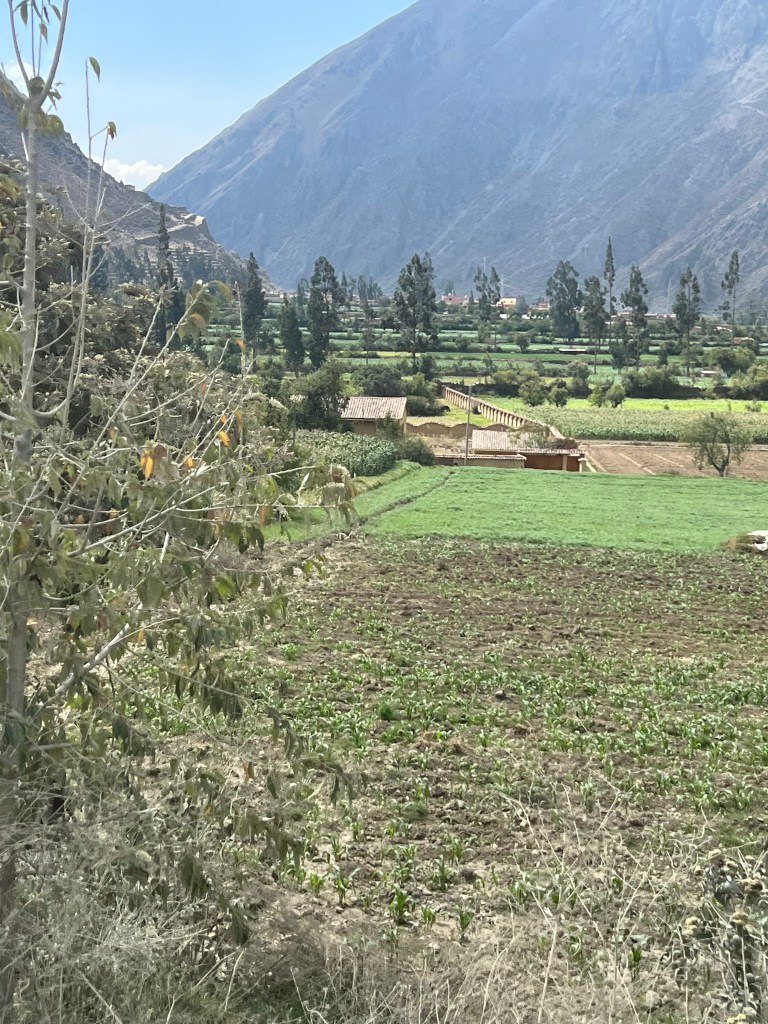
The Sacred Valley is not, as I imagined, an eerie burial ground of Inca kings, but simply named after the river which runs through it. It is incredibly beautiful, surrounded by the dramatic Urubamba range of the Andean mountains. Today we visited the Ollantaytambo Fortress. On the way Miguel explained a little about the life of the Andean people and also about the communities who still live high up in the Andes and continue to live as Incas, with no roads, travelling by llama, living off the land and eating coca leaves. Until the 1960s much of the land in the valley belonged to just a few families (presumably of Spanish descent), however in 1968 a Land Reform was introduced and the families had to give away 90% of their land to their workers. There are now many small holdings with families supporting each other in working the land. It is more fertile and flatter here and possible to make a living, growing corn, strawberries and of course potatoes.
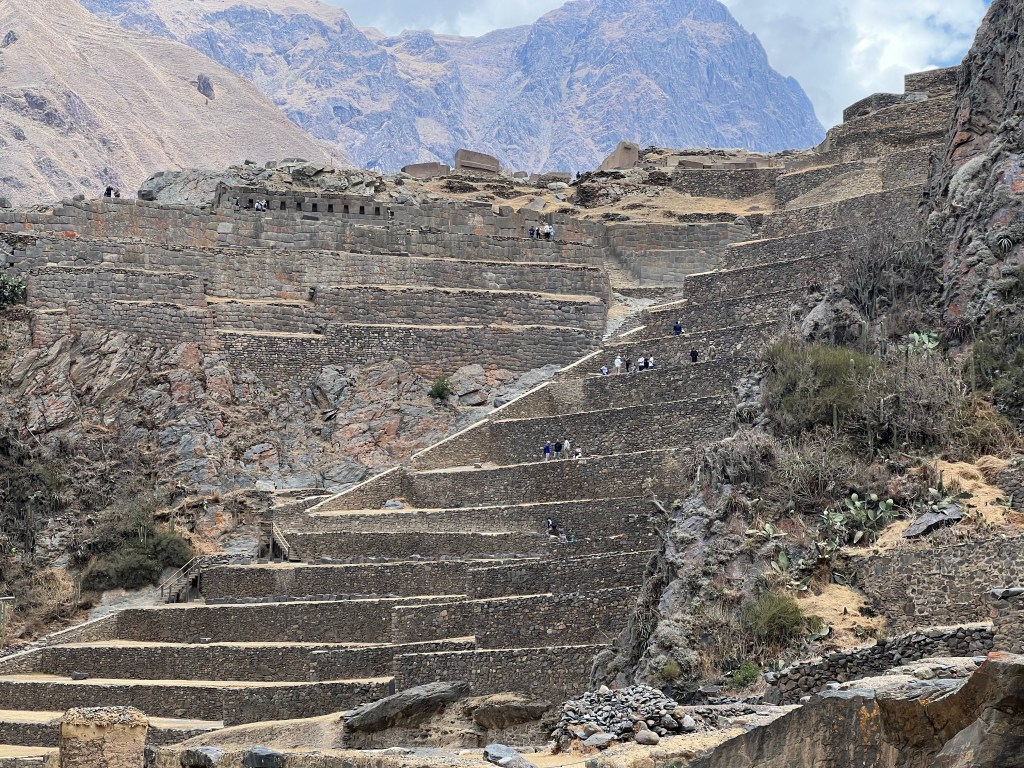
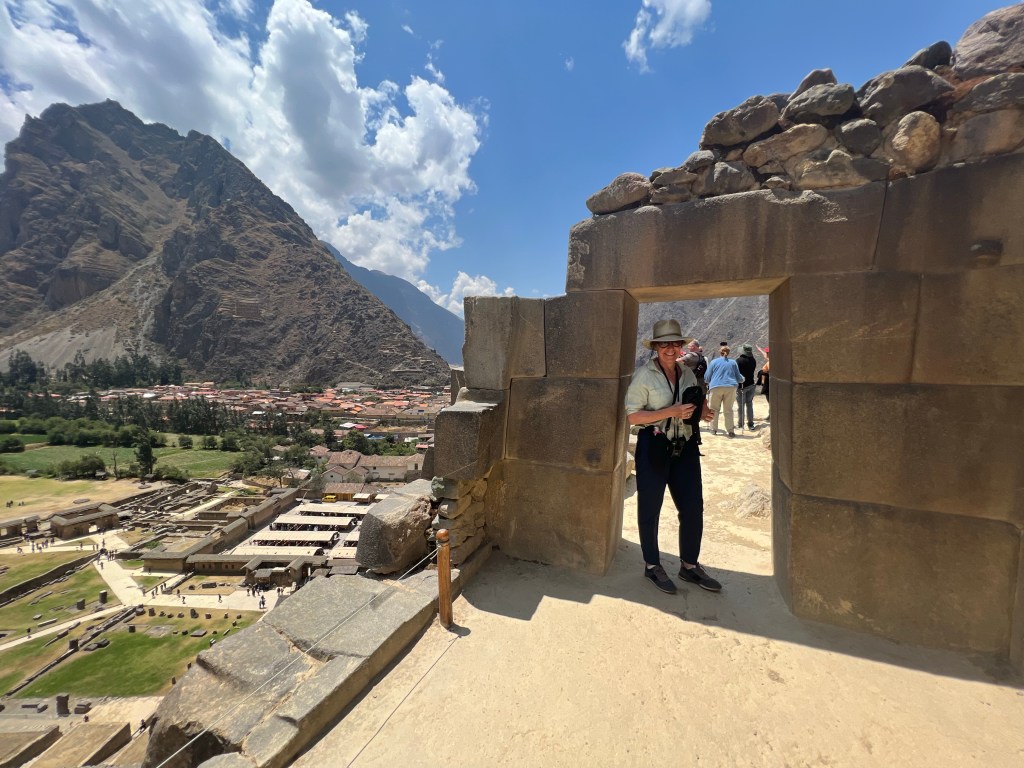
Ollantaytambo Fortress is the most amazingly preserved Inca town and fortress which 500 years ago was an important religious, military and agricultural centre guarding the valley from possible invasion. We climbed 200 steps to the temple (amazing achievement for Karen and Sue) which perches high up the mountain so it is nearer to their Gods, safe from flooding and easier to defend. It is positioned in front of another mountain from which they could tell the season as the sun moved around it illuminating the temple at the summer and winter solstice and the equinox. The Inca king was thought to be semi-divine and wearing gold, would stand in front of the temple during the solstice and be illuminated – his people thinking he was the son of the sun.
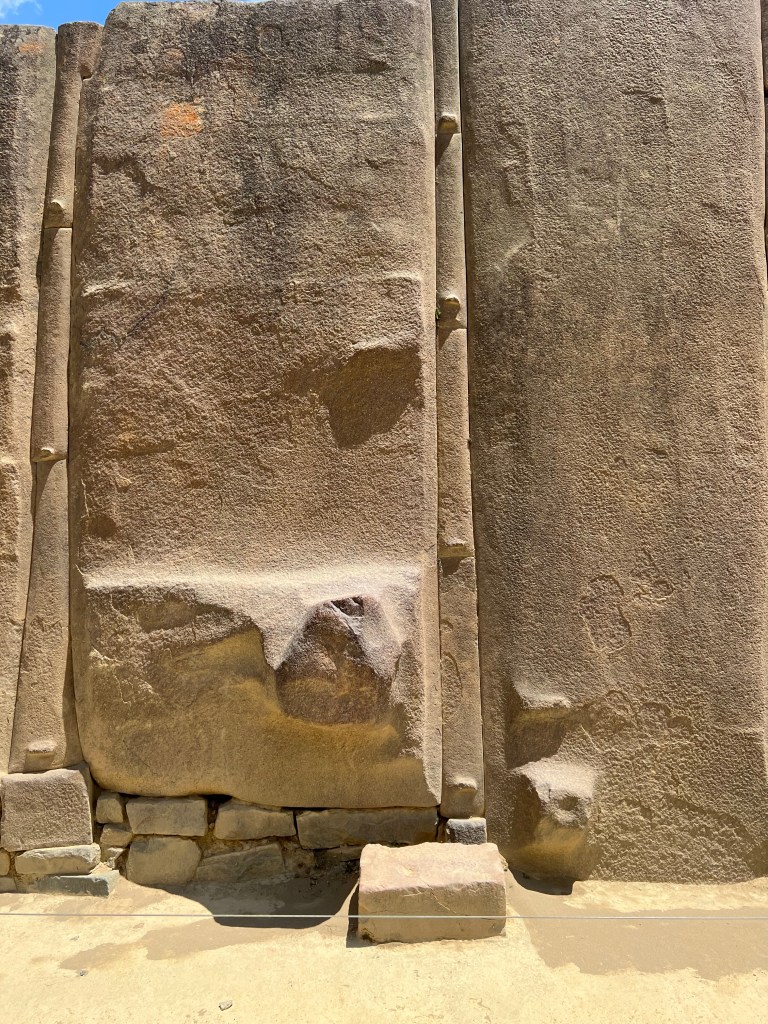
The immaculate terraces and buildings lower down were created with mortar between the rocks but the more important buildings and temple are made of carved stone fitting snugly next to each other, sometimes using a Lego-like pin and cup system to slot into one another and increase stability. They are built on a layer of smaller rocks at a slight angle to increase stability against earthquakes, with some of the larger stones having skinny stones between them to allow for expansion. It is all granite coming from a quarry 4.5 miles away, on the other side of the valley. Some of the stones in the temple weighed up to 60 tons and in the absence of horse or oxen, were dragged by man-power.
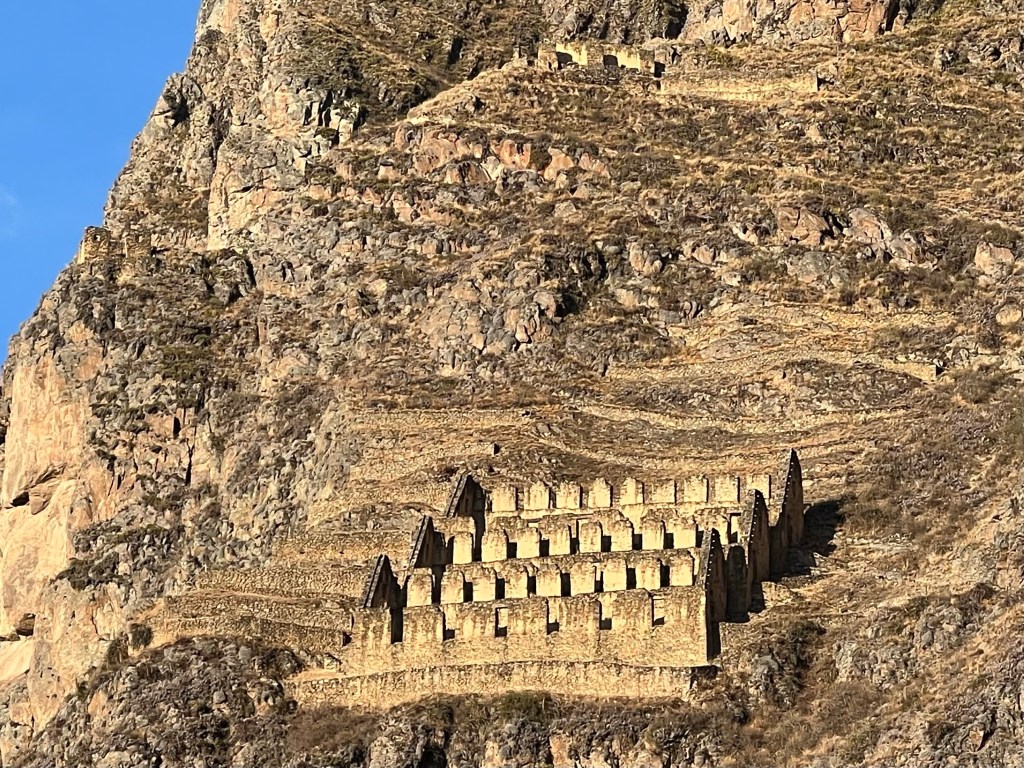
They also built huge, sophisticated storage silos again carefully positioned high on the side of the hill which received the coldest air – dropping below zero in June, July and August. They freeze dried their food (potatoes, corn) during this time and salted their meat (guinea pig, alpaca, llama) from a nearby salt mine, storing huge quantities for leaner times.
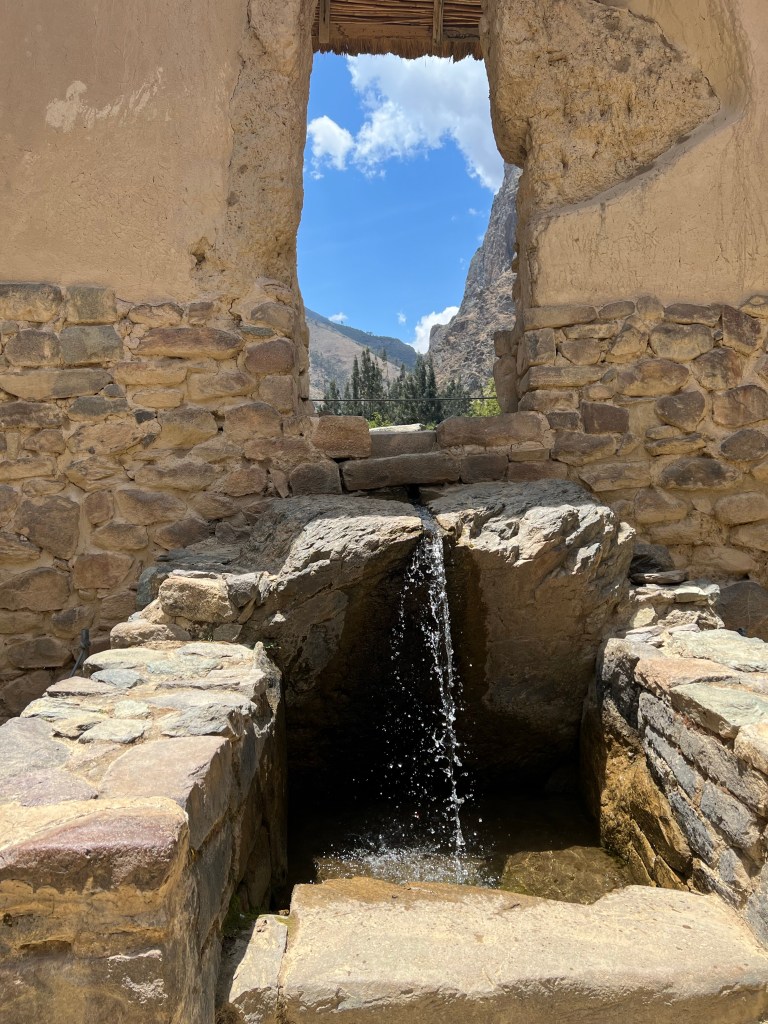
Below the temple in the village are a number of fountains used to cleanse the soul before going up to the temple. The most important, the Temple of Fertility, is also illuminated by the sun during the summer and winter solstice and they believed water drunk from the fountain would increase fertility. The Ollantaytambo fortress was built in 50-60 years but never completed and when the Spanish came the Inca king demanded they scorched the temple so the Spanish could not use it.
Inca is in fact only the name of the leader, the people were simply Andean or Quechua communities led by their Inca king. There were only 13 or 14 Inca Kings and they were allowed to be polygamous so they could have many sons and choose the best suited to succeed them. At its height, the Inca empire stretched to western Ecuador, Bolivia, northwest Argentina, much of Chile and up to southern Colombia. People wanted to join them as they had a good way of life; democratic and based on mutual support and cooperation. They had no currency; taxes were paid by working and everyone supported one another in building houses and working their land. The Inca trails, so far excavated, cover 42,000k and it is believed there could be up to 75,000k (that is almost twice around the world!) and the Incas achieved all this in just 94 years.
When the Spanish invaded in 1532 (only 168 of them) under the command of conquistador Francisco Pizzaro, the Incas were at a low ebb, their last leader had died suddenly of smallpox, introduced by Christopher Columbus about forty years before. The Inca King’s two brothers then fought for leadership causing unrest amongst the people, many of them also suffering from smallpox. The Incas liked to learn from other communities and before attacking would use diplomatic techniques to see if a compromise could be reached, however if the assailant was not willing they would attack and were brutal. When the Spanish invaded, the Incas initially requested a meeting to see if an agreement / trade off could be found. They were particularly keen to get the Spanish horses, steel and also their barbers, as they noticed the Spanish soldiers always left the barbers rejuvenated and thought they had some magic power! (Which of course they do!). There were to be no weapons, but the Spanish thought it was an ambush and came with weapons and killed the Inca king. 1572 saw the end of the Inca era. 😔
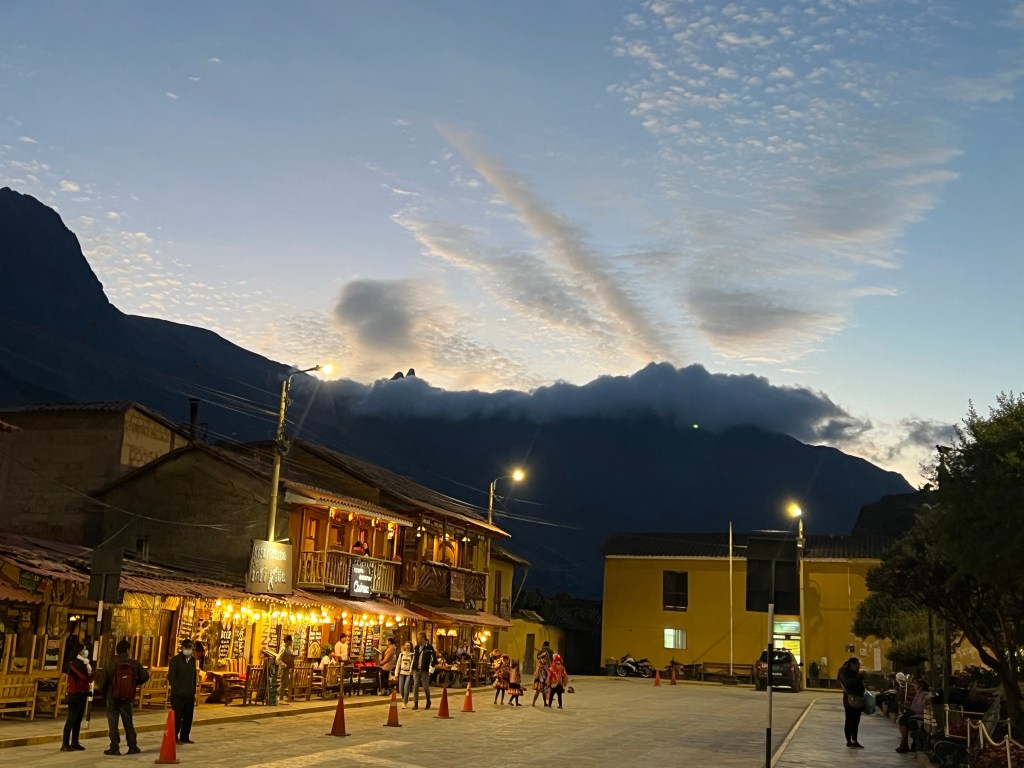
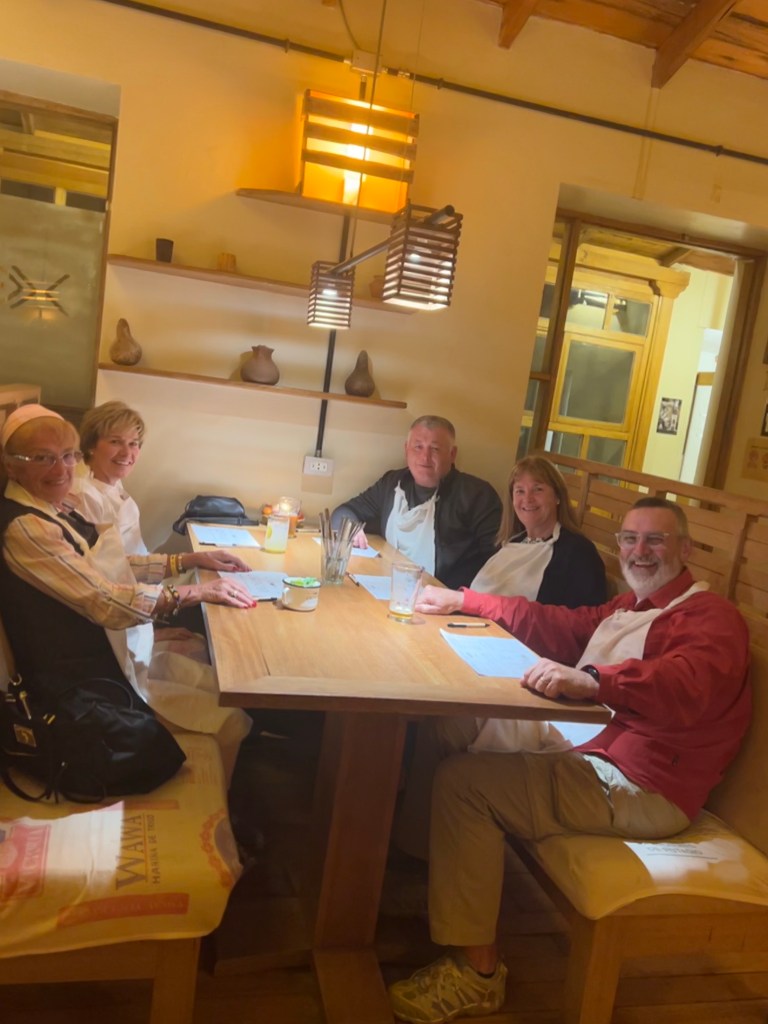
We returned to Ollantaytambo in the evening for a look round, a few pisco sours and a delicious dinner in one of the local restaurants Chuncho.
 EC-Rider Travels
Leave a comment