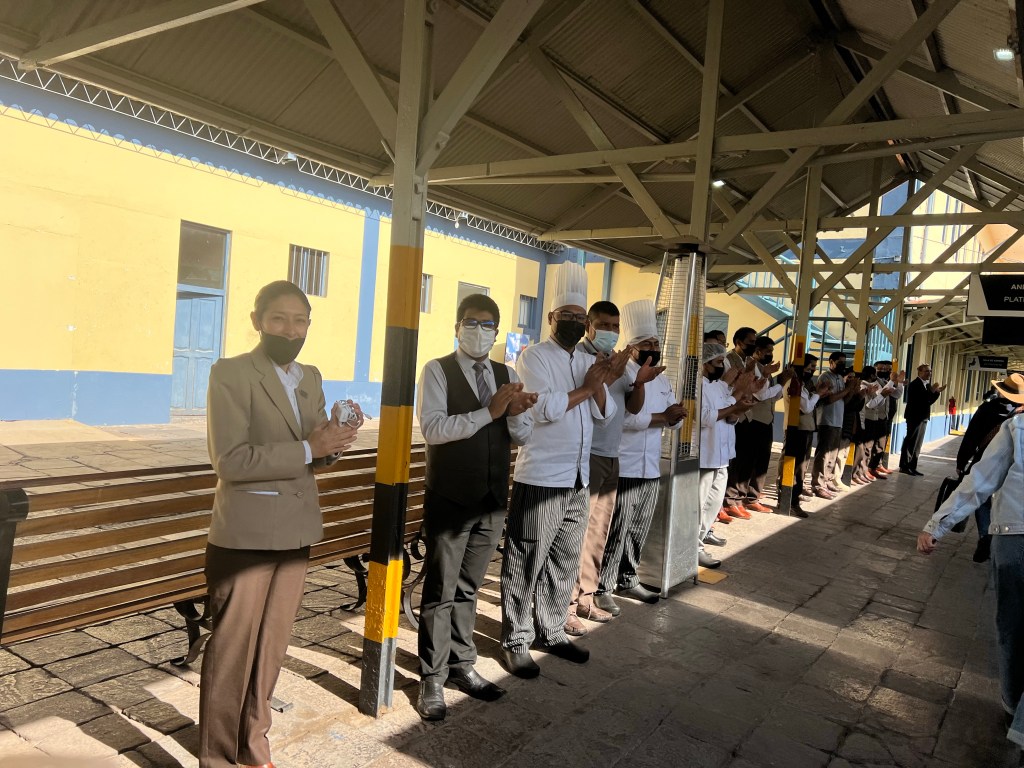
We all got up pretty bleary eyed this morning, as in order for the train to catch up on the time it had lost, it did not stop at midnight as planned for us to sleep. Although our cabins were more then comfortable, with lovely beds and the most beautiful linen, the track is not and I think must have quite a number of gaps or perhaps boulders which we had to negotiate along the way making it very, very ‘jerky’. Still we had a delicious breakfast, the food really has been on a different level to anything else we have had, not that I ever want to eat again! We disembarked in Cusco and met Miguel our guide. Best of the lot, he is Lewis’s best friend from School, speaks fluent English and very funny.
Cusco was once capital of the Inca Empire and is a fast growing city of half a million. This is largely down to the mining with Peru being the world’s 2nd biggest exporter of copper and silver and 3rd for gold. This accounts for 45% of their GDP. Tourism is also on the increase and they are about to build a second airport to accommodate international flights – a mixed blessing I feel.
Farming is the other big industry and this is much more sophisticated than anywhere we have seen until now, with much flatter, and more fertile looking land even with the occasional piece of farm machinery. Again, potatoes (3,000 varieties), corn (54 varieties) and quinoa being the main crops. Knowing our sentiments about guinea-pigs, alpacas and llamas, Miguel explained that for a long time these were the only domesticated animals they had and source of protein. They also had no horses, donkeys or oxen to help with the farming until these were introduced by the Spanish in 1532. Until that time, everything was done by hand, as indeed it still is in much of the Peru.
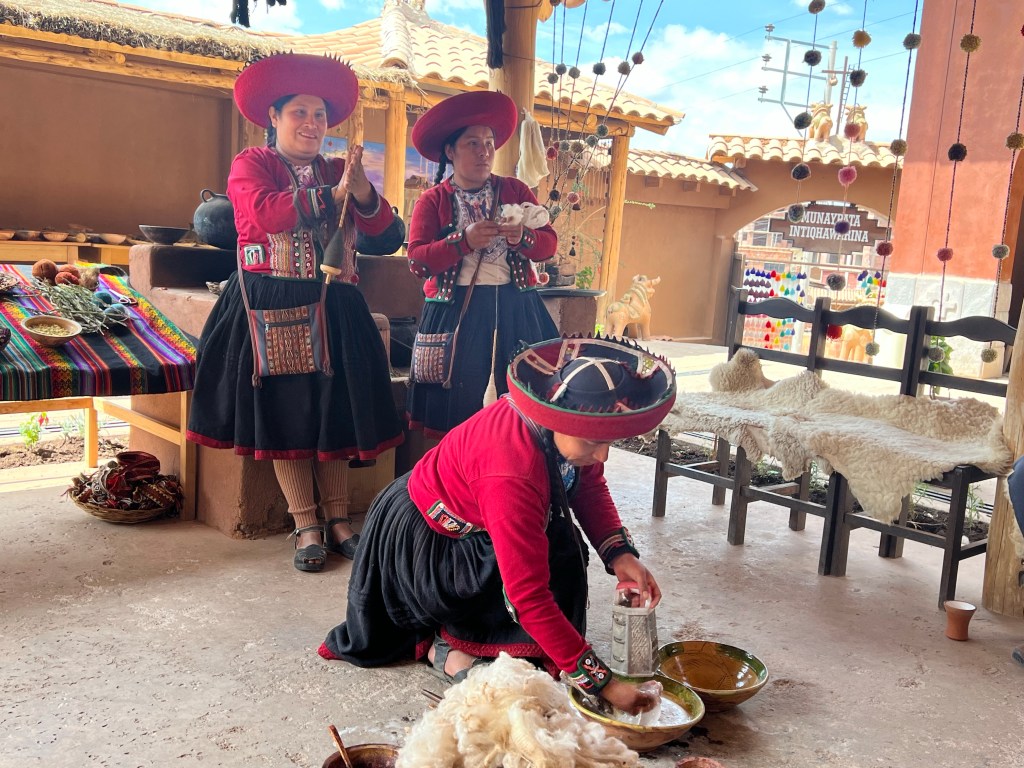
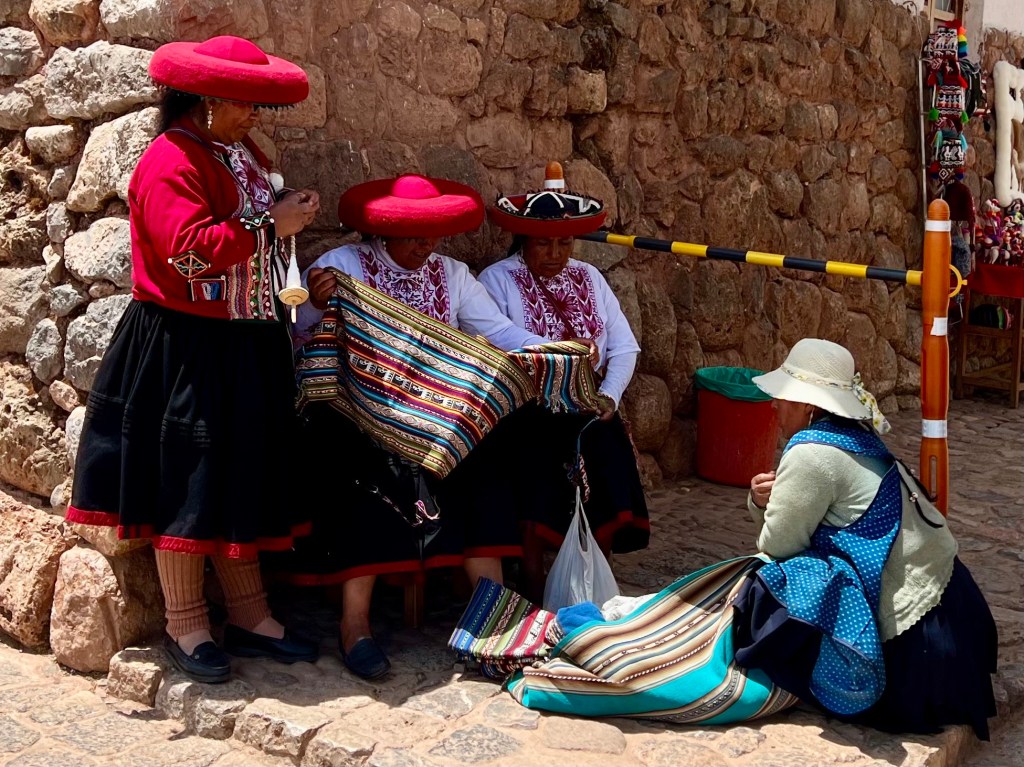
We are to return to explore Cusco in a few days so we drove to a town about half an hour north-west of Cusco called Chinchero where we were treated to a lesson in how to spin and dye alpaca wool. Again extraordinary how creative they are, everything, still done completely naturally. Even the wool is cleaned using a root called sasha which is grated into the hot water to form a foamy lather. All the dyes come from plants, vegetables and of course our friend the cochinilla. They use lime juice and salt to change the tone and fix the colour with children’s urine!
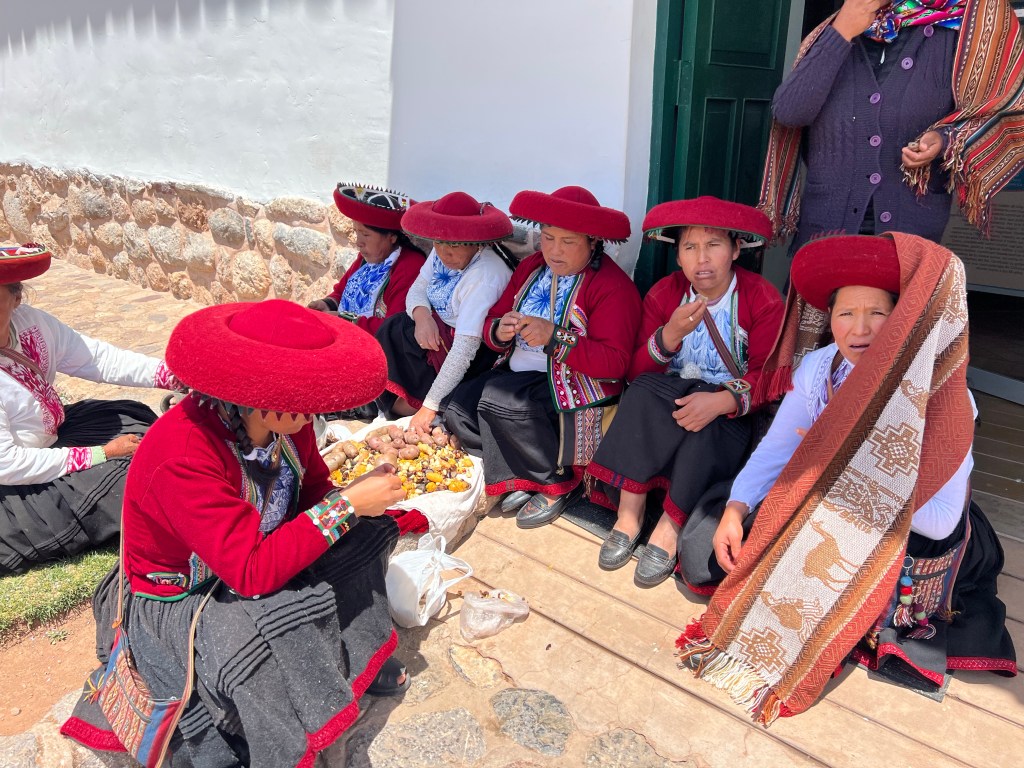
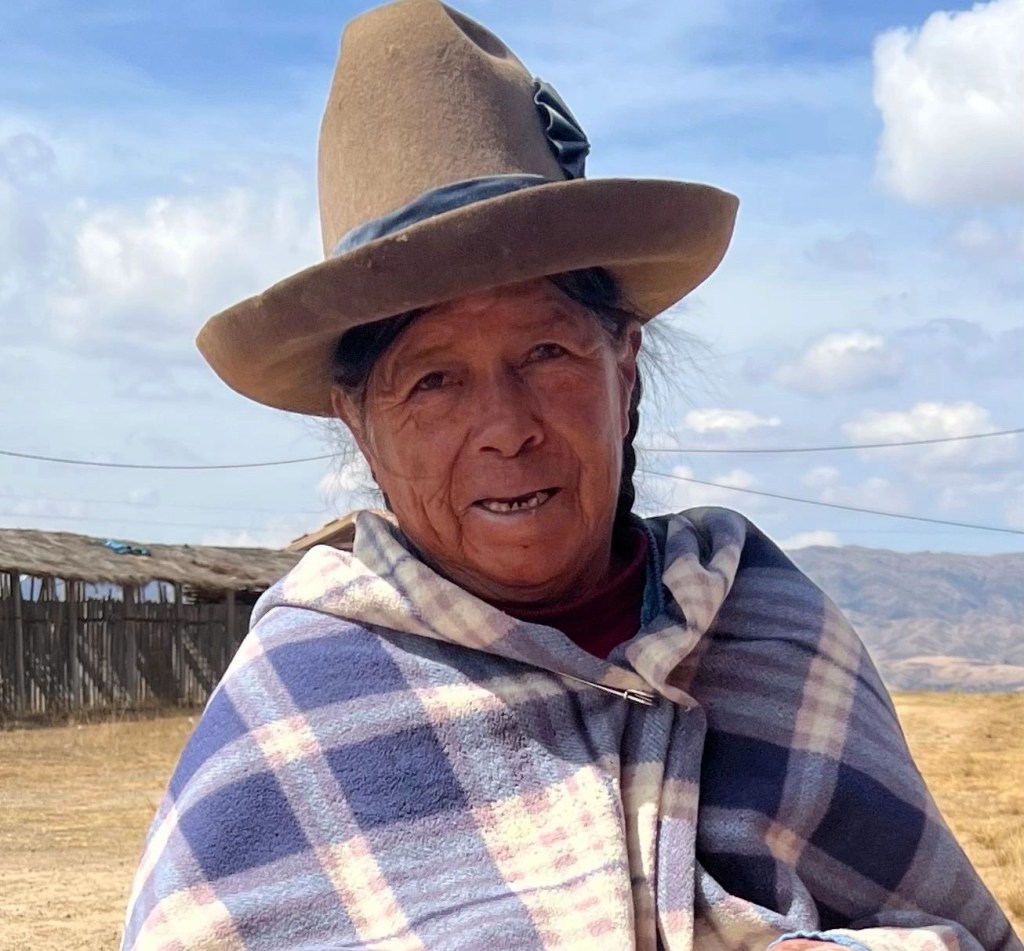
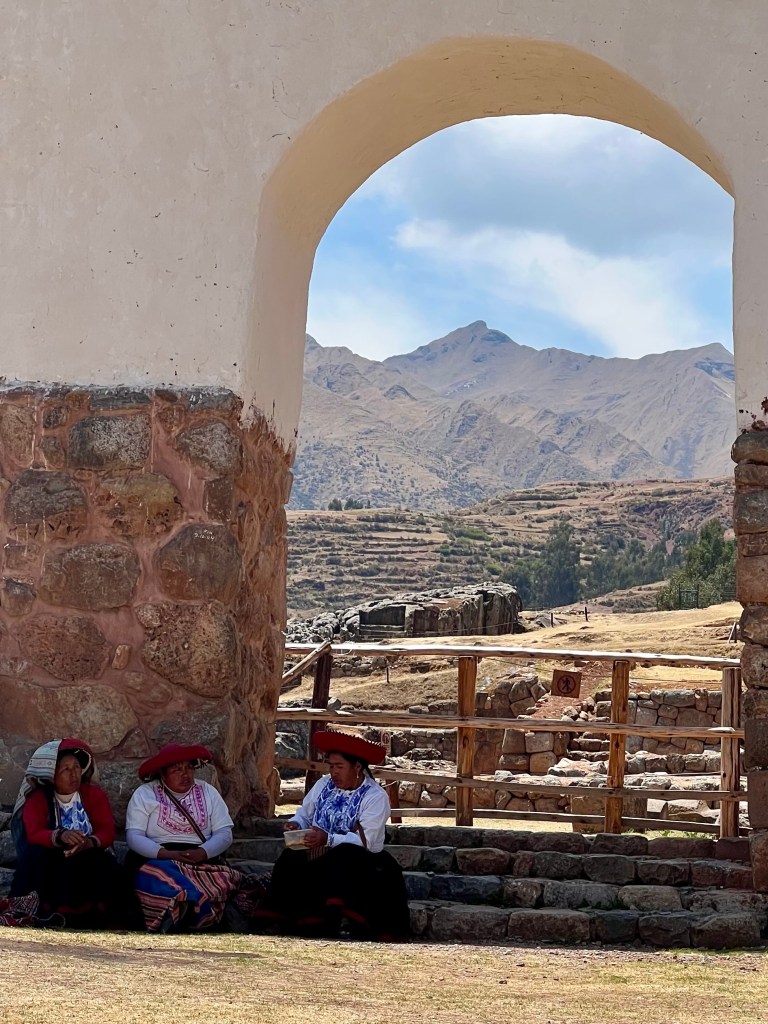
Women still wear traditional dress with different hats according to the community they come from. Everything is carried on their back in a woven blanket called a lliq’lla – be it their child, potatoes, or their handicrafts they are keen to sell us.
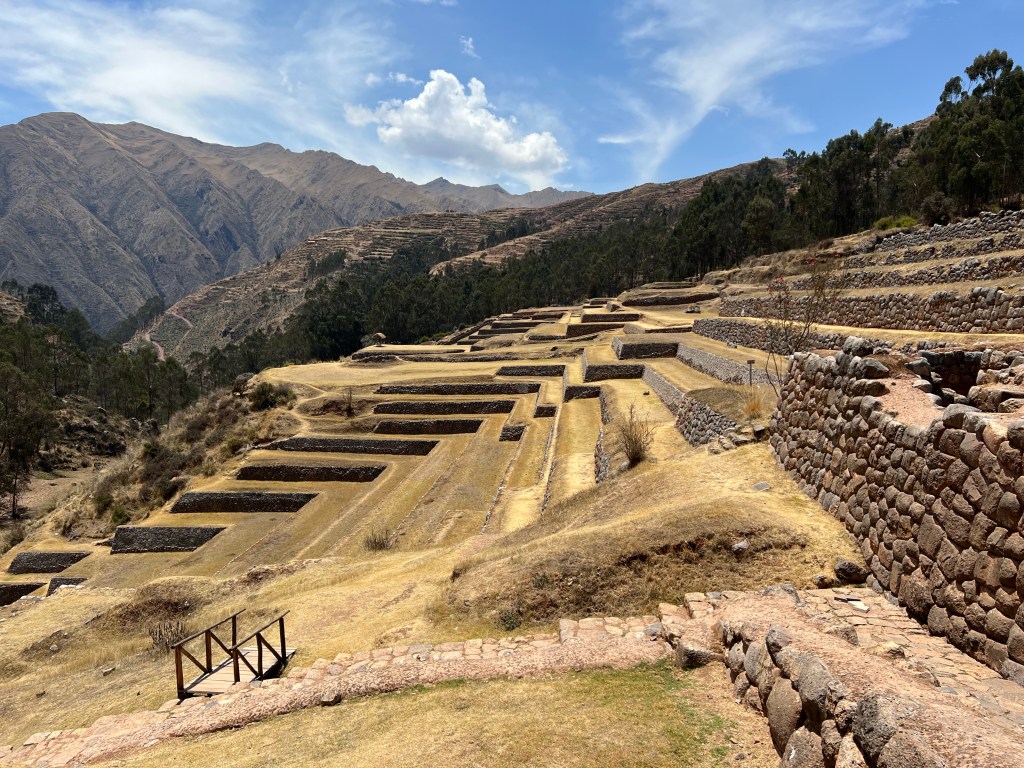
We then went to visit an Inca site and saw the terraces they built 500 years ago still standing – many in perfect condition. They are quite phenomenal and even where the Spanish built on top of them the foundations are still looking as good as new!
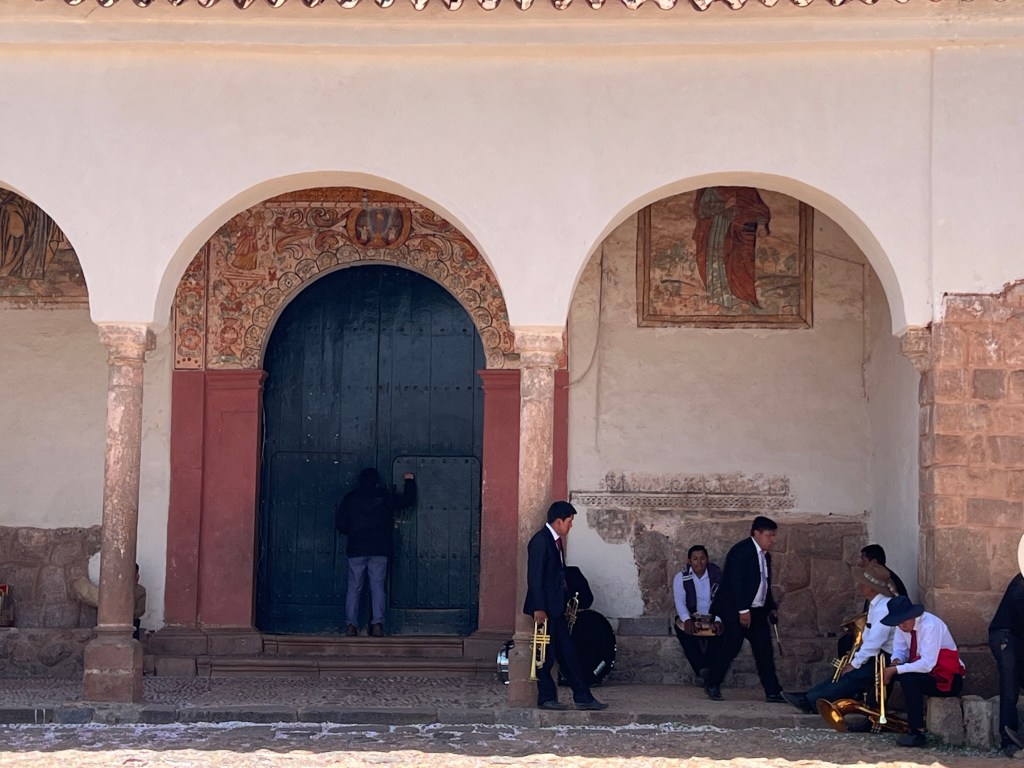
There was also a lovely colonial church with frescos around the porch. It is estimated there were up to 20m Incas living in Peru and down to Chile worshiping their Andean Gods. The Spanish of course introduced Catholicism, and over 80% of the Andean people are devout catholics, however there is still a nod to both and most houses have a pair of bulls on their roofs (those that have roofs!) to protect them.
We are staying in another Casa Andina hotel in the Sacred Valley, again I am at the furthest most point but with a nice view …. more tomorrow.
 EC-Rider Travels
Leave a comment