
Today has been a truly extraordinary day and I loved every minute. We left early morning with our new guide Roy, sooo sweet, but not as handsome as Marcelo and were driven to the harbour where we joined a boat to go out to see the floating islands. Again something I had heard much about but could not really imagine and once again defied belief.
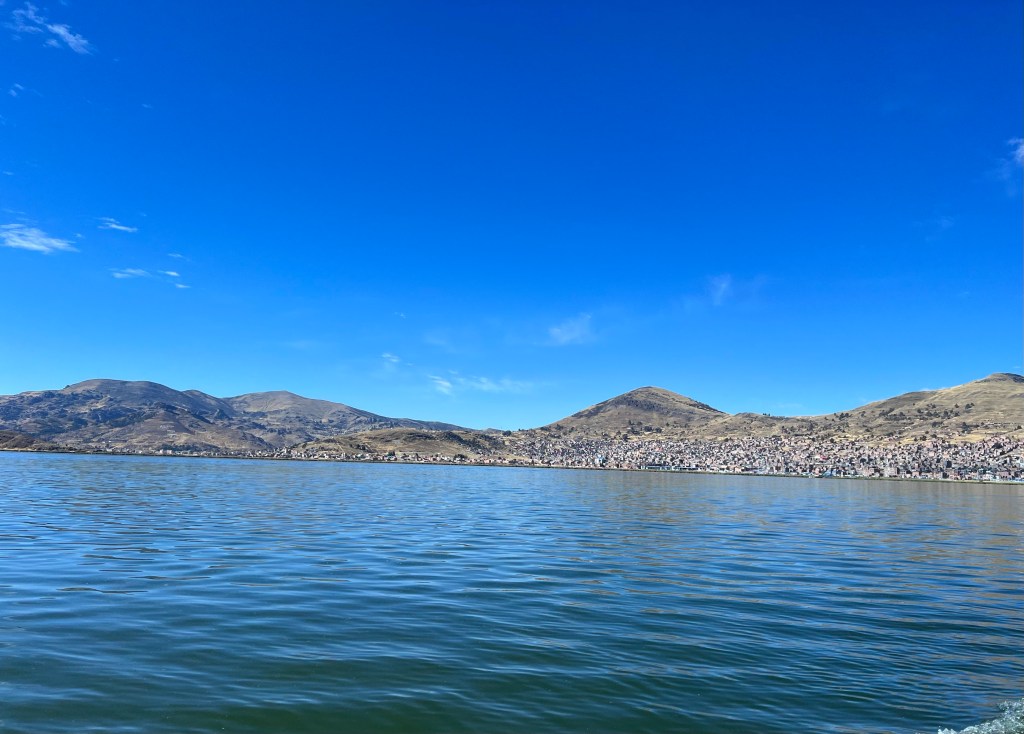
Lake Titicaca is the highest navigable lake in the world, at 3,800m. It is 118 x 50 miles and 280m deep at its deepest point. It borders both Bolivia and Peru and is owned by them both (60% Peru and 40% Bolivia). Titicaca means Grey Cat (Grey Puma) and the belief is that the lake is the origin of everything. It is a fresh water lake, fed by water from the glaciers with many rivers leading into the lake and just one out. It is tidal and never freezes with an average temperature of 8 degrees. It has an abundance of small fish, the only larger fish being trout which were introduced by the Canadians. There is a plethora of birds, particularly in the reeded areas. There is of course a monster, which in this case is a giant frog of 21” named by Jacque Cousteau as the monster of Lake Titicaca. Weirdly this frog is not an amphibian as it can breath through its skin. Until recently it was used to treat all kinds of ailments – put into a liquidiser and administered as a drink – think Kermit the Frog! Fortunately this practice is now forbidden.
Puno, the local town, was once buzzing with commercial activities, however these have moved to nearby Juliaca (considered to be the ugliest city in Peru – and that is saying something!) leaving Puno to rely on tourism. It is also a big university town, the university campus like the stadium, also being from a different world to the rest of the city. There is a central square with a 17th century cathedral and like all Peruvian towns Puno is built like a chequer board, though really only boasts one street of any note. The locals speak a dialect called Aymara.
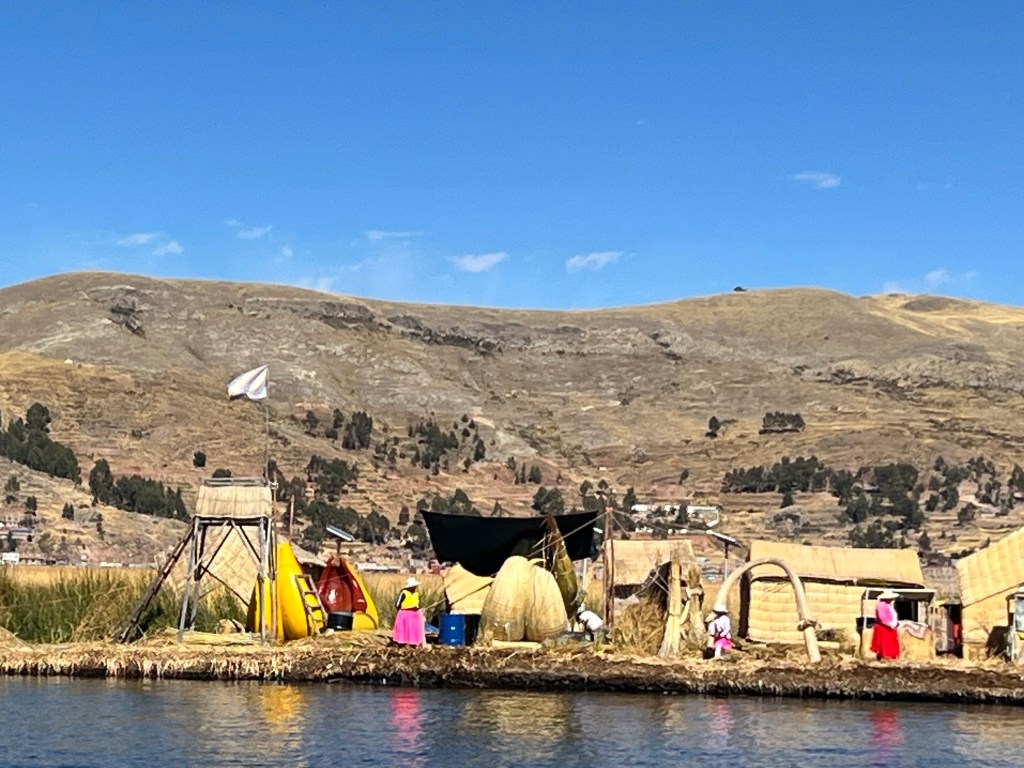
We headed out on the boat through the reeds to the floating islands which are not far from the mainland and built either side of a river running through the reeds. These islands are inhabited by the indigenous Uros people who escaped from the mainland during a time of unrest. The islands are made of totora reeds which grow abundantly in the shallower areas of the lake. They use these to build their homes, their boats and the floating islands themselves.
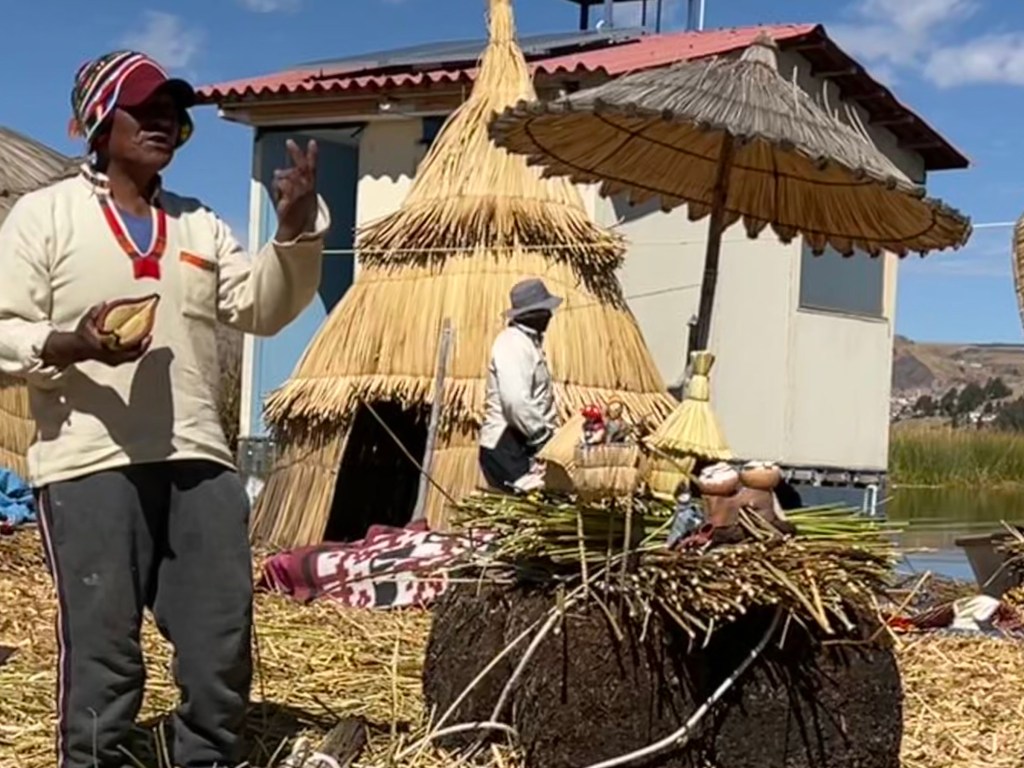
Having landed on one of the islands, we received a lesson, with many visual aids, on how to build our own floating island. There are currently 120 islands, and they tend to last about 30 years before they eventually sink or disintegrate. Each island is inhabited by families or a group of friends, and if there is a fall-out they simply leave and build another island. The base of the island is made of the roots of the reeds, cut into squares and roped together, secured and then covered by reeds which dry like straw. This top layer has to be supplemented every three weeks with a new layer of reeds as the layers below decompose. Their houses, also built of reeds, are raised with a wooden frame to keep them dry and so they can be moved when the time comes.
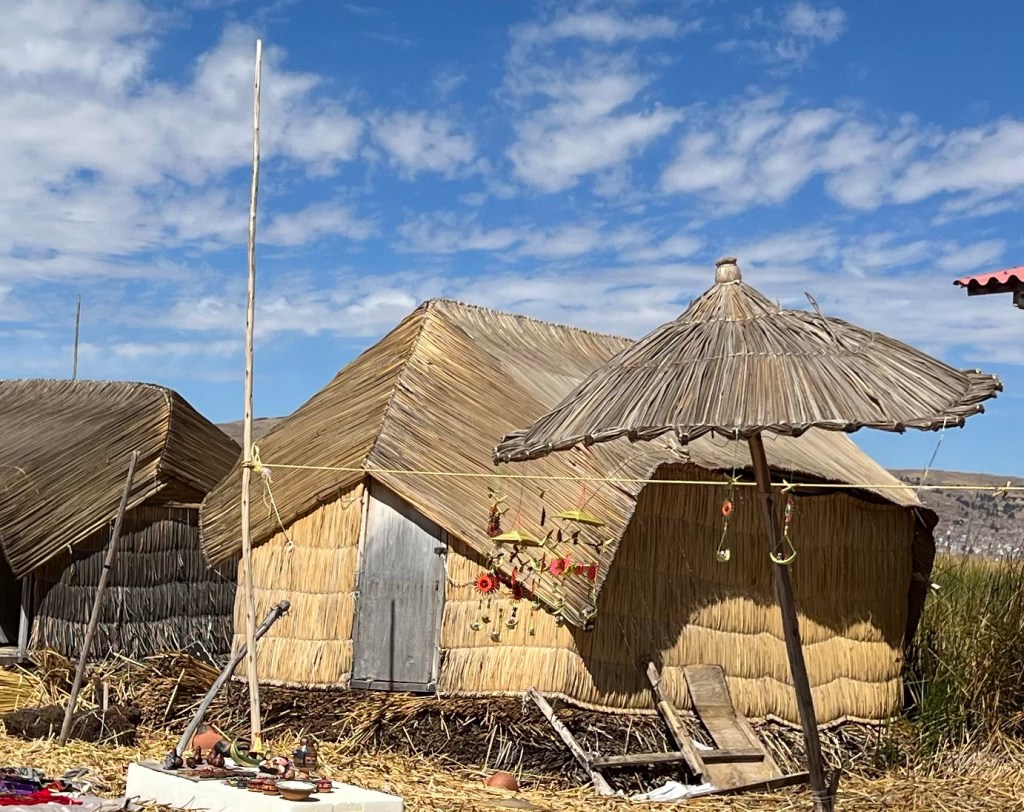
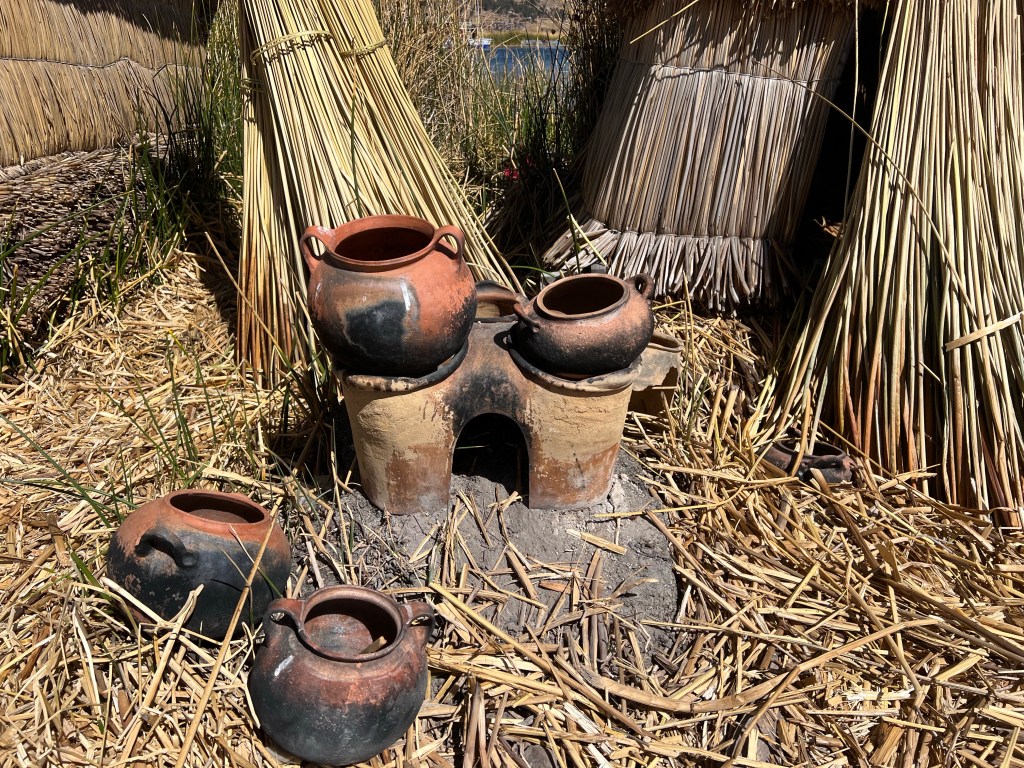
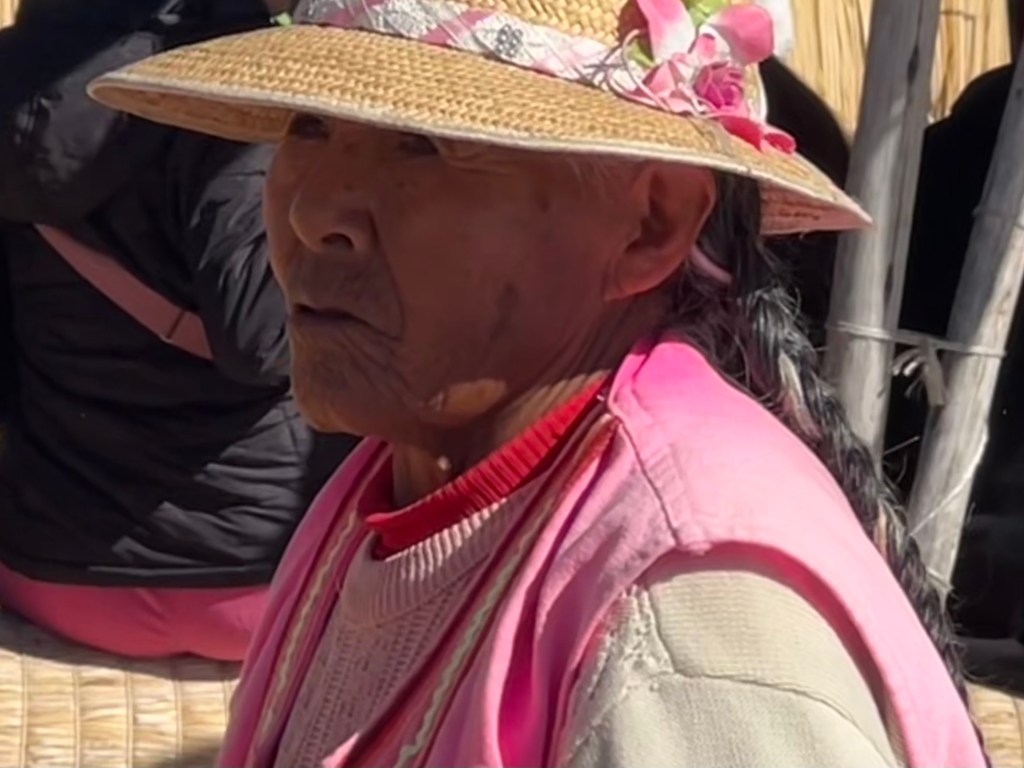
The islanders used to be self-sufficient, bartering between one another (and those on the mainland) living off the fish they caught, eggs they collected, birds which they would salt and the hearts of the reeds. They now depend on the tourist trade and rotate the islands the tourists visit and pool much of the income they receive. Following our lesson on how to build an island we were taken by the islanders to see their homes. It is simple, simple living; one room, with a bed on the floor and maybe a chair or two and a cooking area outside. No sign of any bathroom, I think this must have been behind. In 2010 a sewage system was introduced, up until then it had gone straight into the lake. Their handicrafts are exquisite and of course you had to buy something – luckily it is Sue’s 60th birthday today so she got lucky with the most enchanting mobile my friend had made. There is a floating school for 6-12 years, they then have to go to the mainland for their secondary education. There is no hospital or medical care, just a couple of midwives, otherwise they are treated naturally, babies are born at home with the mothers standing.
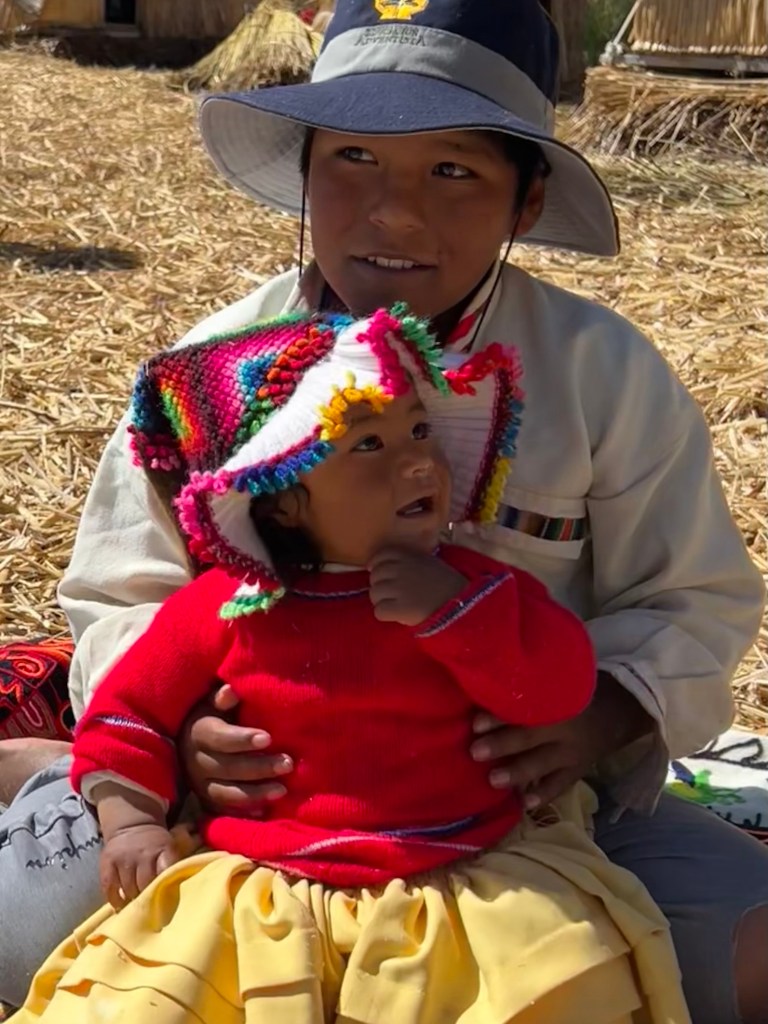
It is all very democratic with a new leader of the island elected every year. However, a combination of the young not wishing to return to the islands after their education in Puno and the commercial opportunities offered by tourism, many of the islands are starting to build small hotels and I fear, islands like the one we visited, will not last for much longer.
As we left the island we were treated to three lovely songs sung by our hosts including ‘Row, Row, Row the Boat’. We were then rowed to another island in one of their beautiful reed boats. Unfortunately the wind was going in the wrong direction and we found ourselves back where we started so a little motorboat had to push us! On the next island there was coffee and more retail opportunities before we boarded our boat and travelled for about an hour and a half towards the centre of the lake, to Taquile Island
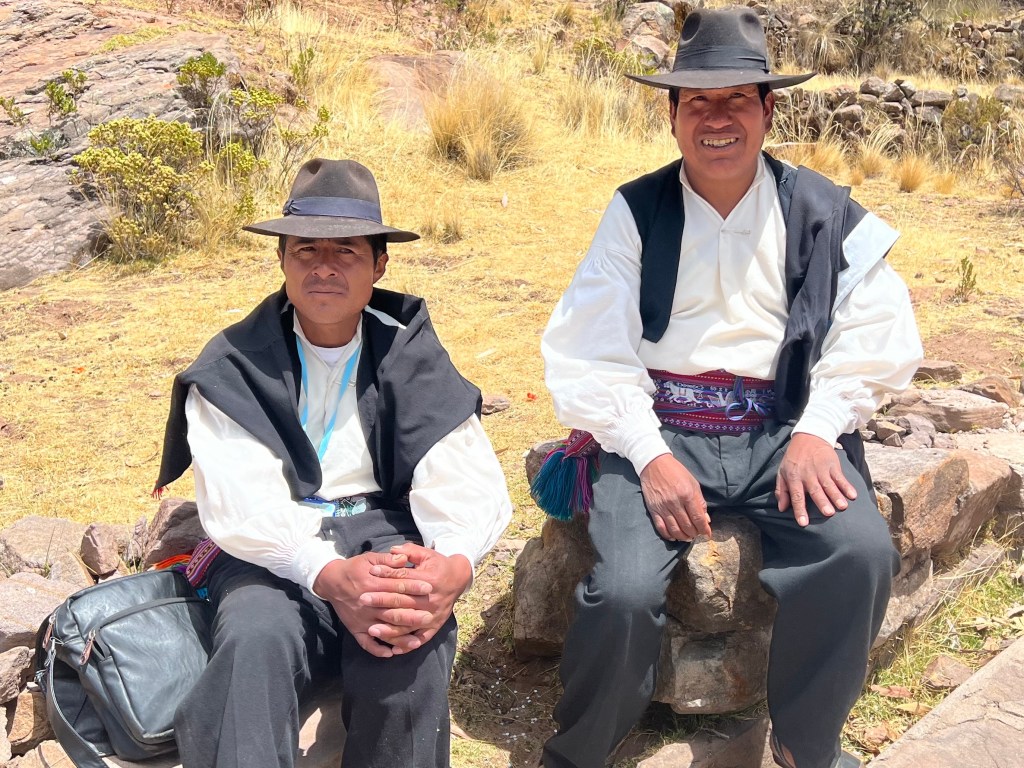
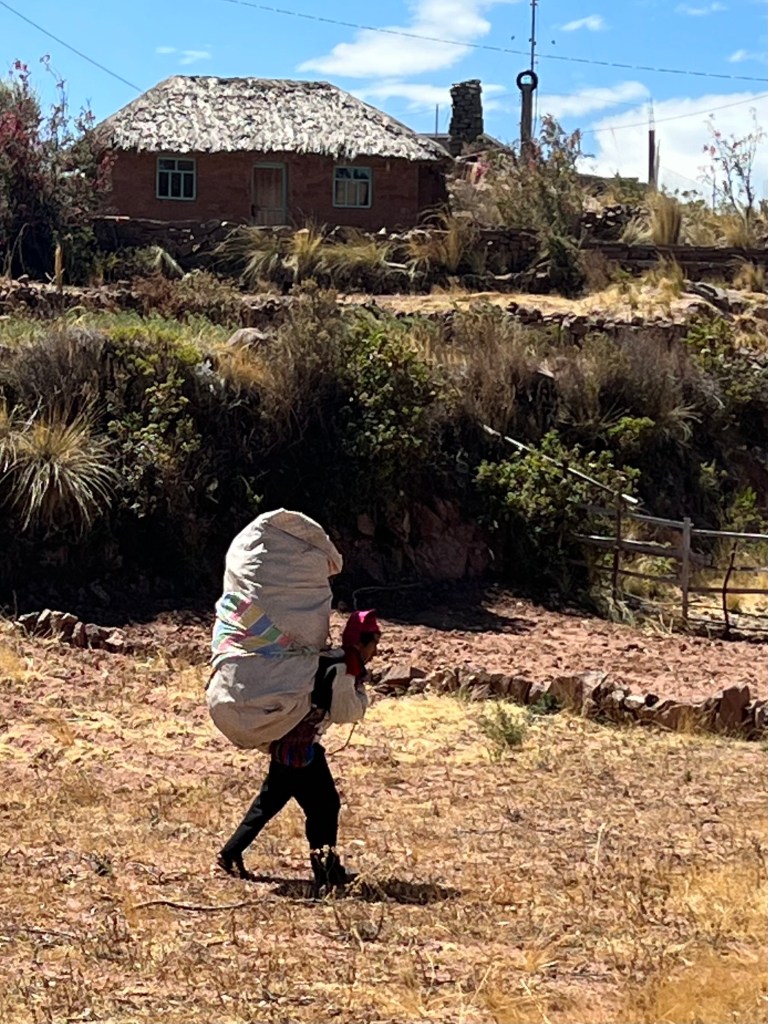
This island is about 3 x 1mile and is inhabited by Quechua speaking communities (approx 2,500). It has the highest sandy beaches in the world and is covered in Inca and pre-Inca terraces some still in use. The southern side, facing Bolivia, has been opened to tourists and the locals proudly present their beautiful wares and traditions. Including a dancing display which we were invited to join. I was only quite good! With a boom in the tourist trade a few years ago they built 40 restaurants on the island, which are now largely redundant, so again they rotate which restaurants the tourists go to and pool the cash.
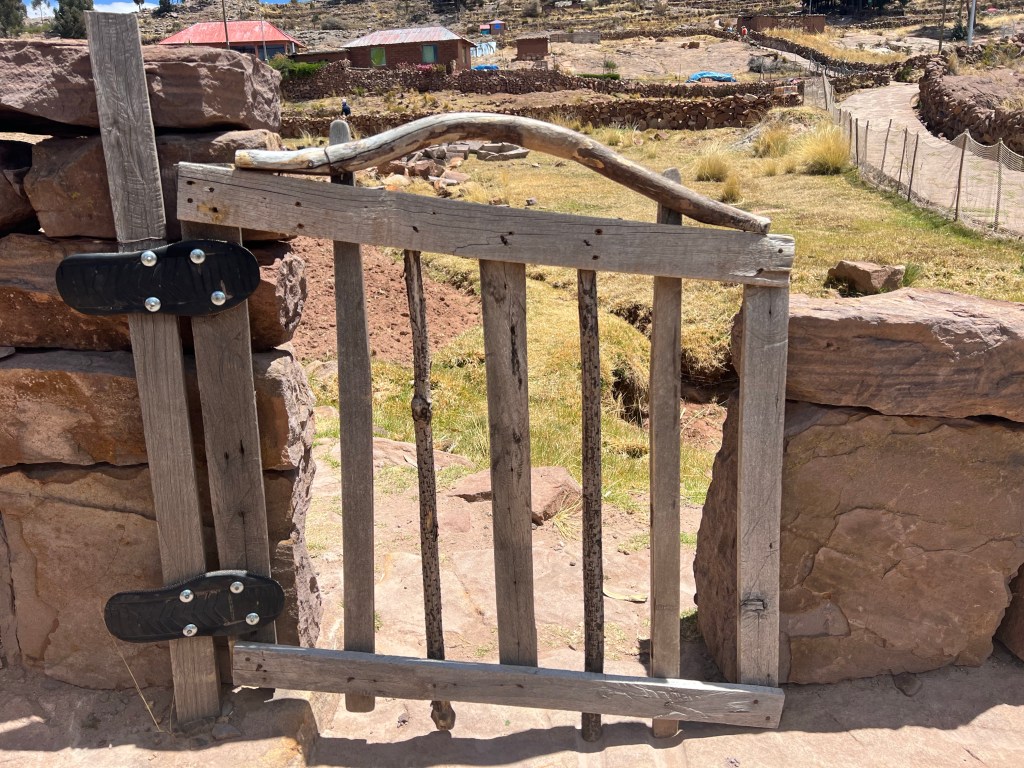
The islanders originally came to Taquile from Spain in search of gold, however there was none, so the men took up knitting instead while the women wove. They produce the most beautiful things and their is huge competition between the men as to who can knit the fastest and do the most intricate pattern. Their dress is quite Spanish in style with white shirts, waist-coats and cummerbunds with intricate work full of symbolism. Hats are very important and a status symbol – for example a completely patterned hat, means a complete man, ie married and a half patterned hat, means, an incomplete man who is single. A hat with a cover over the ears means they are a leader and have to be married.
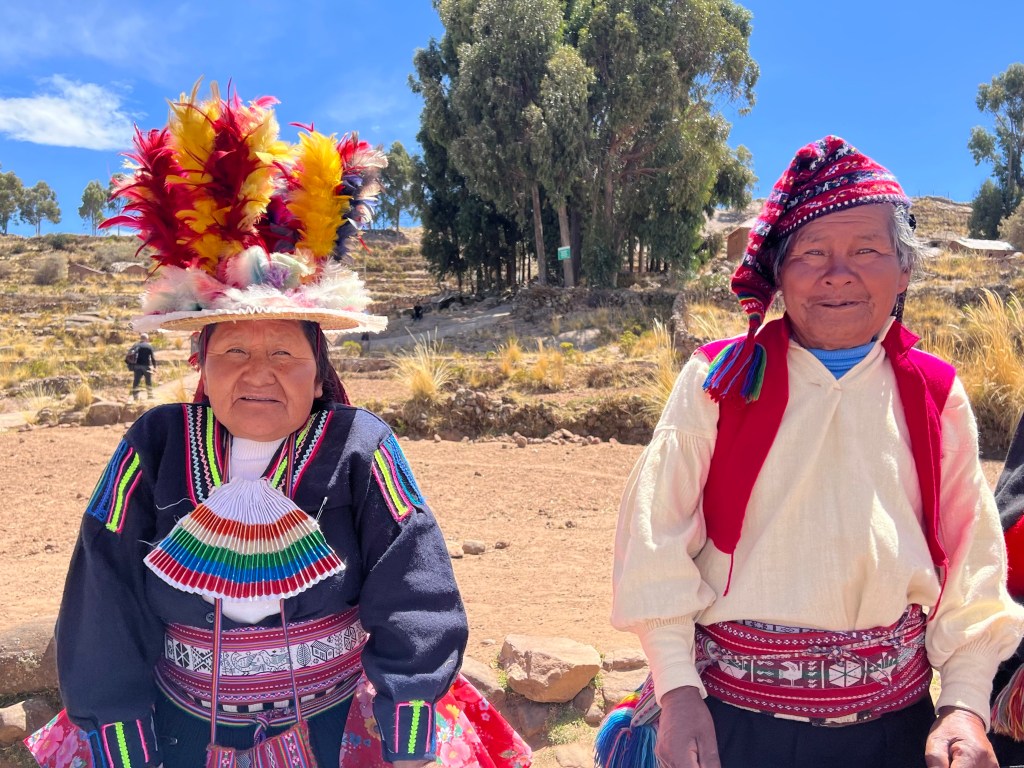
The men’s cummerbunds are in two halves and made by their wives. The outer layer embroidered with the story of their life and beneath this they have a second more sturdy belt which is a symbol of love. When she marries, the wife is required to make a sacrifice to her husband by cutting off her hair – long hair being a sign of beauty (shucks!). She then weaves her husband’s belt around her hair to make it thick and strong to support the heavy loads he will be carrying on his back. The women all wear scarfs over their heads. Ones with small pom-poms coupled with a red top and black skirt if she is married, and a scarf with large pom-poms and lighter coloured clothes if she is unmarried. When the married woman’s hair grows again she will cut it off and make hair extensions for her husband’s ceremonial hat for festivals and important meetings. – again a symbol of status and they cannot participate in a meeting if they are not wearing this hat.
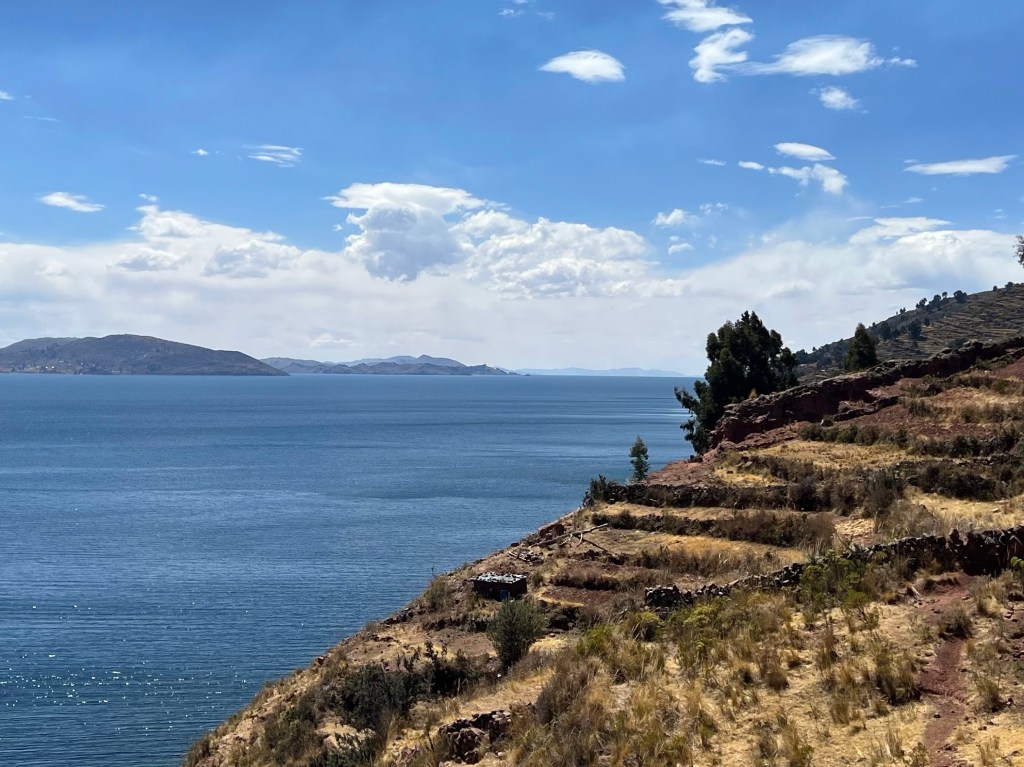
Just extraordinary and in fact Taquile is currently a UNESCO World Heritage Site for their traditions but their is concern that these are slowly dying out and the potential introduction of electricity to the island could end many of them
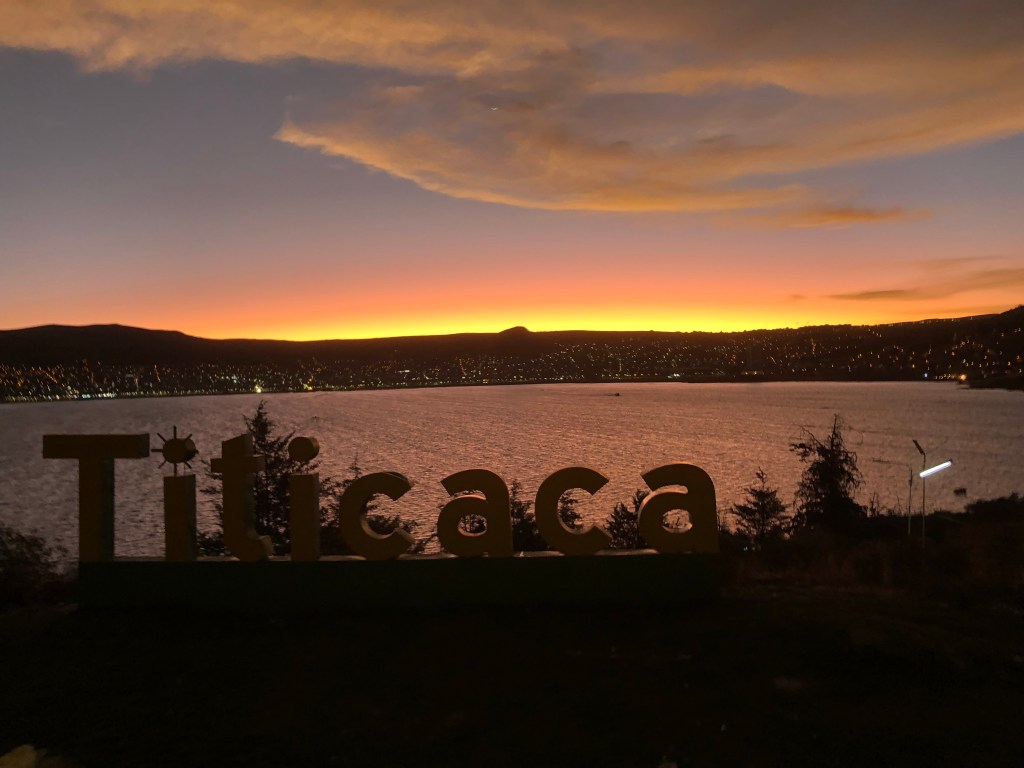
It was Sue’s 60th birthday today and she wanted to have her birthday supper in the hotel so we stayed there for the evening and watched the most stunning sunset. I also spotted an Andean fox wandering past the hotel just before I headed up to bed.
 EC-Rider Travels
Leave a comment