Arequipa, the colonial-era capital of Peru, was founded in 1540 and is surrounded by three volcanos Chachani, Pichu Pichu and El Misti which is still active.
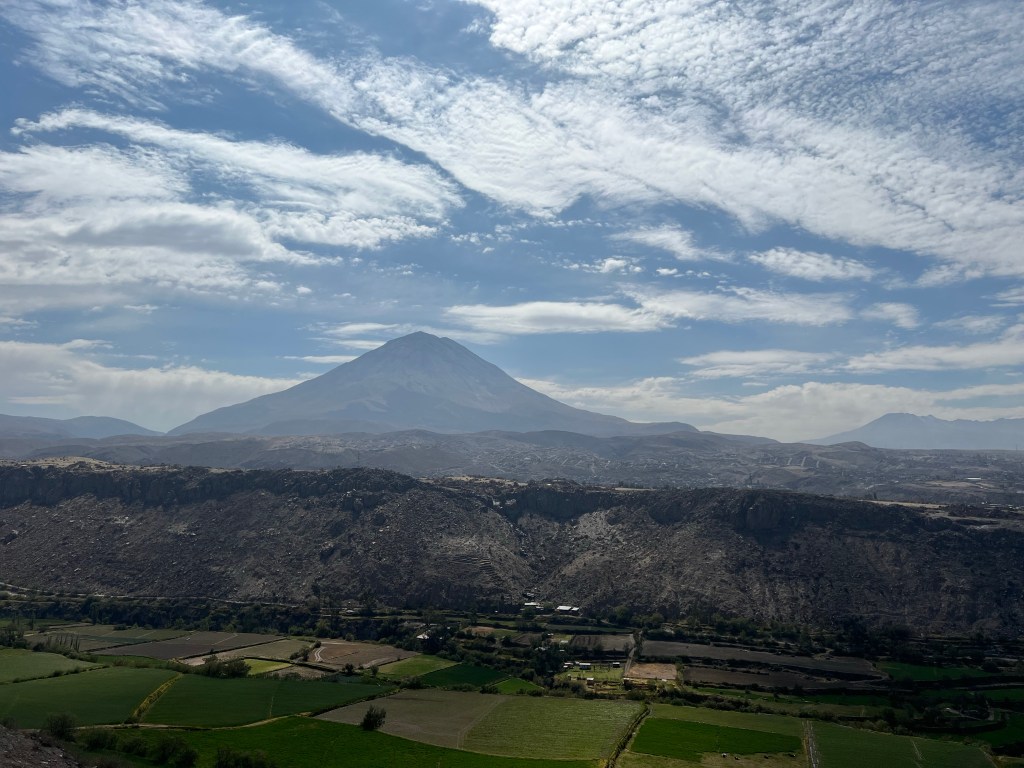
We spent the day with our excellent guide, Marcelo, who first took us to a spot where we could clearly see El Misti (5,825m), and also some of the farming in the valley below. Farmers here are also struggling, they grow potatoes of course, many varieties, onions, garlic and other vegetables. They also have small herds of cows which are tethered and milked by hand – in the field. Although the soil is fertile they are paid pittance for their produce – 2sol (50p) for a kilo of potatoes and just 1sol for a litre of milk. They too have resorted to alternative farming. During Covid, farmers put up tarpaulins and rented them to families for parties and festivals and this has continued, proving more lucrative than their farming.
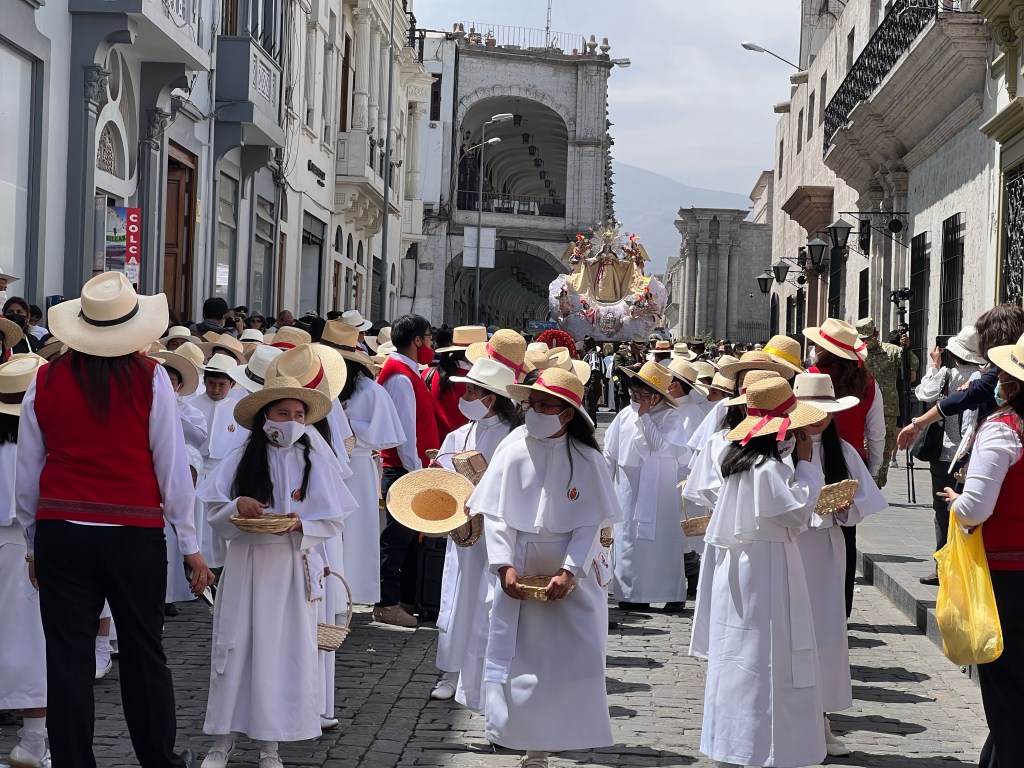
There seem to be festivals and parades almost every day and they can find any excuse for a party. Today is the Feast of the Virgin of Las Mercedes de Paita who is the patron saint of the Armed Forces so there was great excitement in the main square with many soldiers, sailors and airmen, all looking incredibly smart, following a float led by hundreds of singing children. Tomorrow is the feast of the tourist! And on Monday a minors convention takes place in Arequipa for which there is much preparation going on.
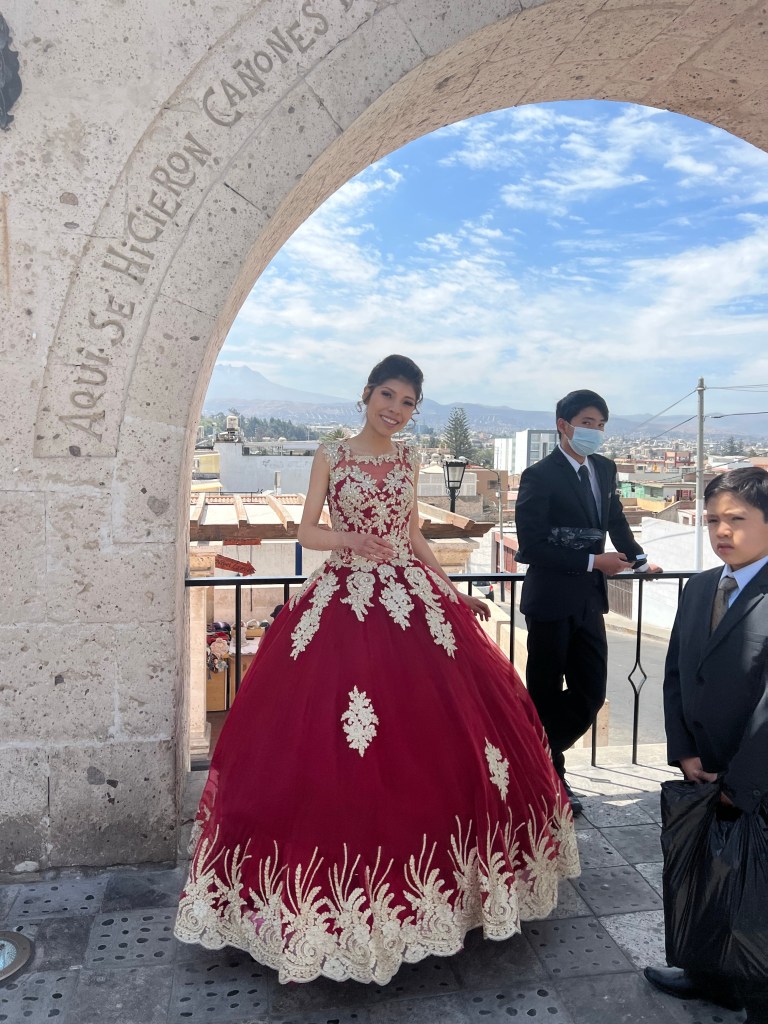
We saw a number of young girls all dressed up in the most amazing dresses for Quinceanero which is a celebration for girls of 15 years as they enter womanhood. Another excuse for a party and a new frock!
We then went to the most unusual monastery of Santa Catalina. Interestingly a monastery in Peru is a closed order and a convent, is for monks and nuns going out to teach in the community – both can be for men or women, though not together. The Monastery of Santa Catalina however was a little different. It was started by a wealthy widow and fast became a community for wealthy widows or women who wished to escape their husbands, who paid a hefty dowry to enter. They would come with their servants and sometimes their daughters and have individual ‘cells’ – more like apartments – and although they could not leave (and only have one bath a year), they seemed to live it up, breaking all the rules and have a pretty good time.
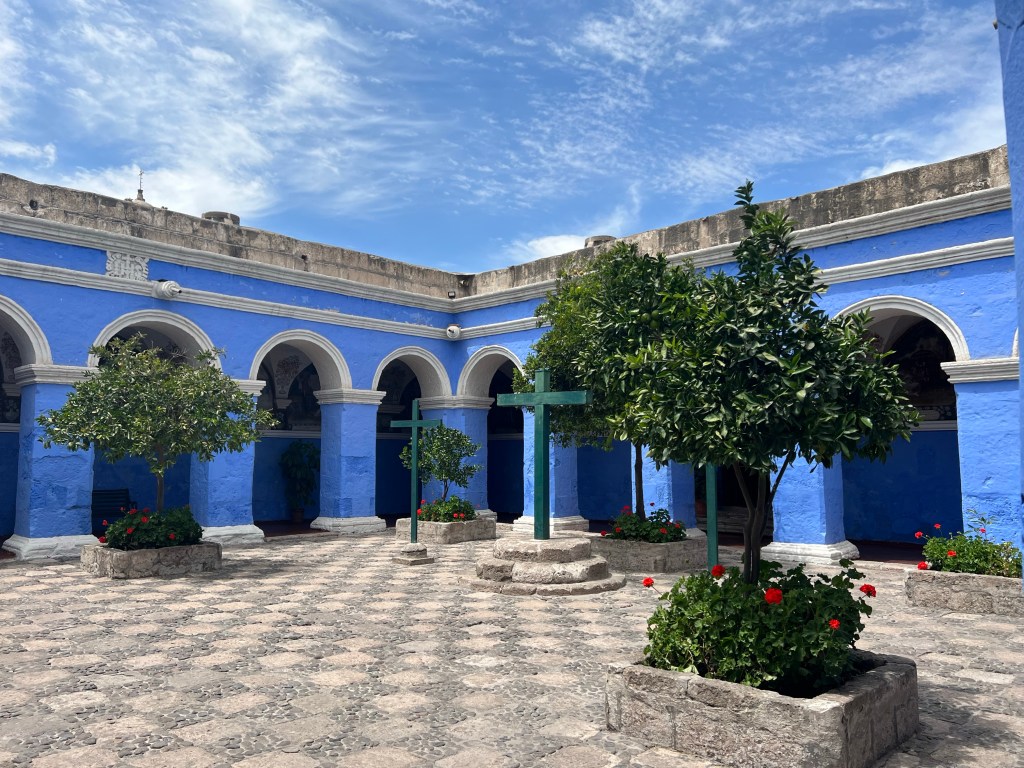
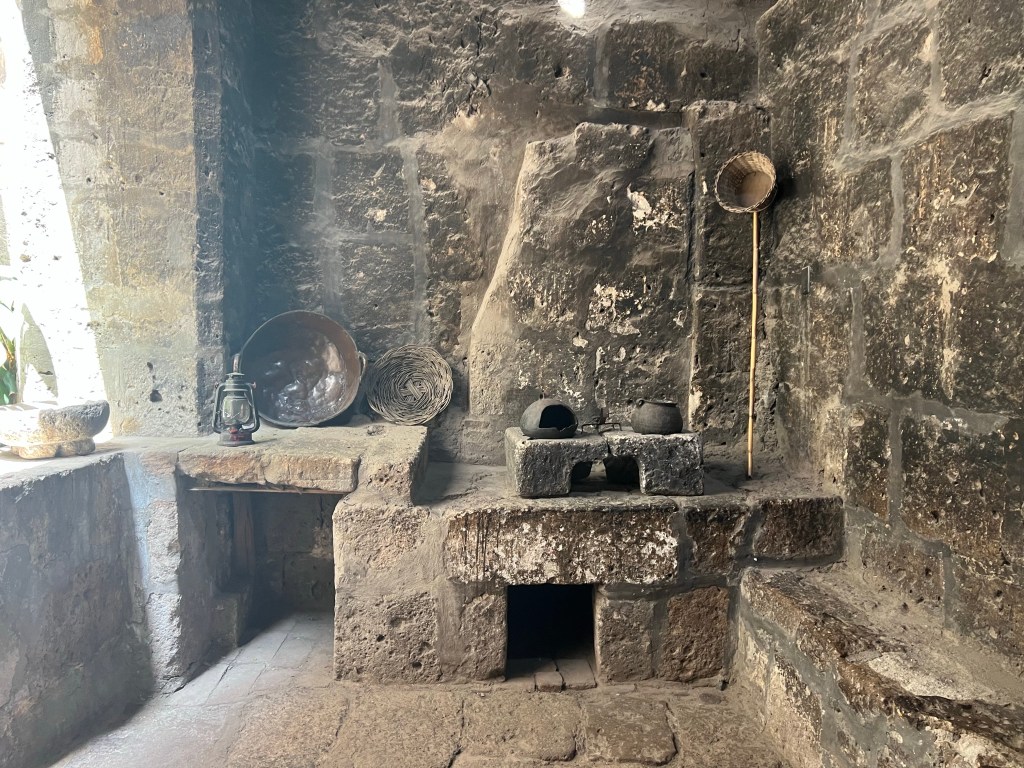
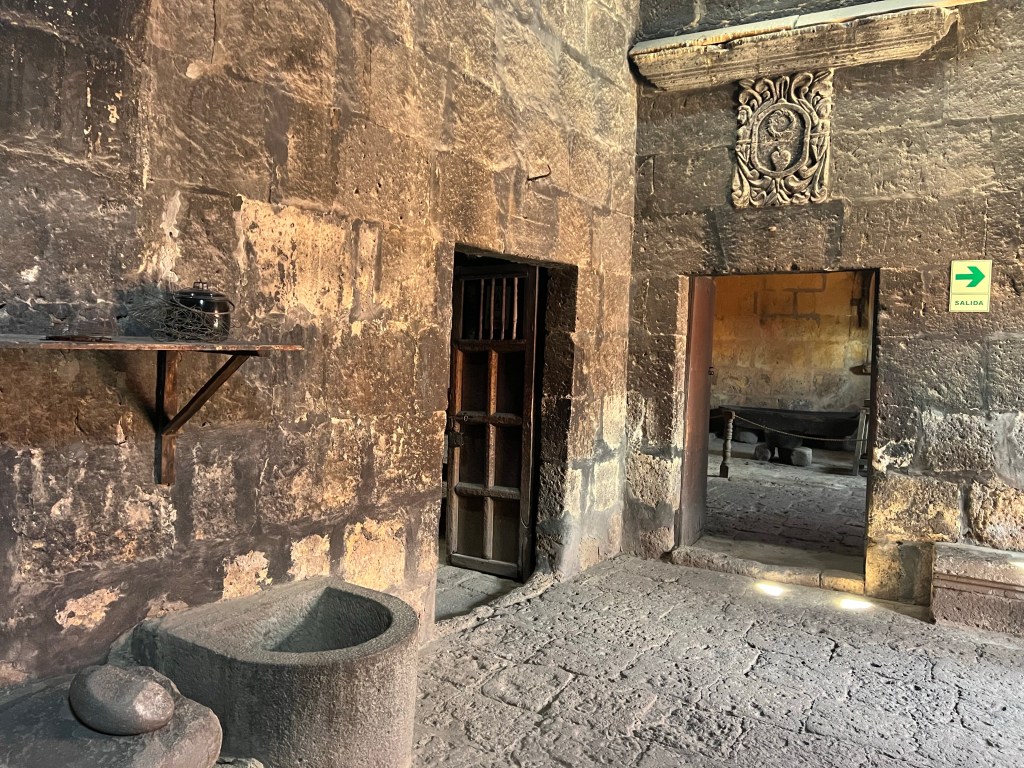
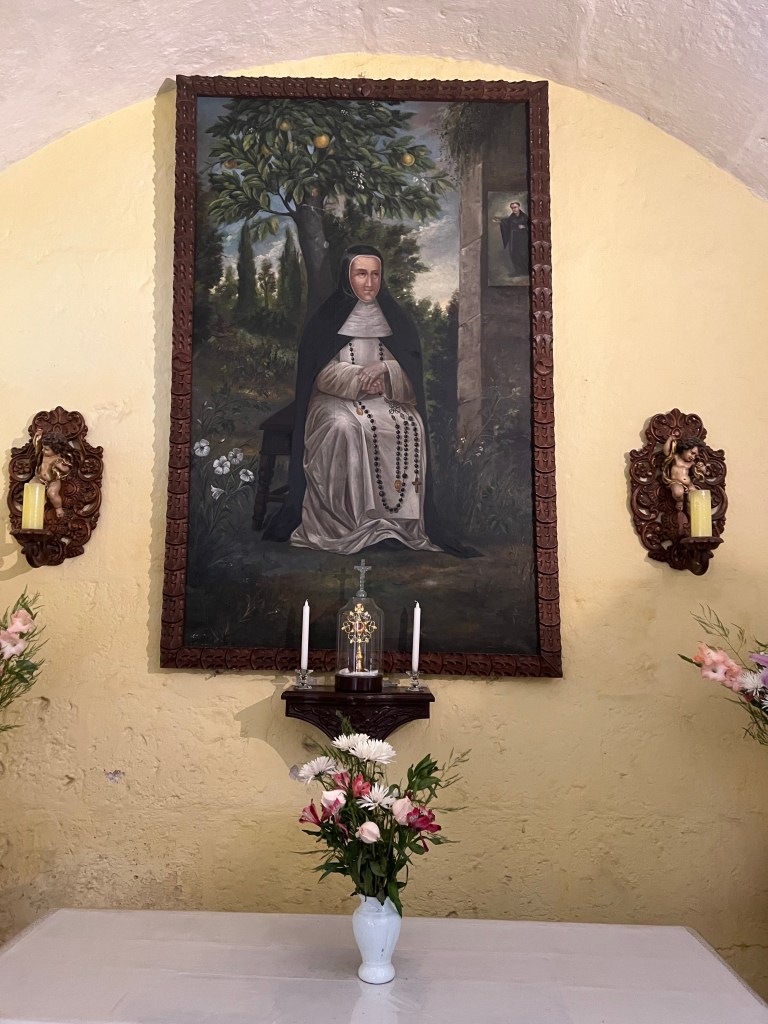
There was an exception, Sister Ana Monteagudo a 17th century nun who came to the monastery as a child with her mother and decided to stay. She was very devout and tried to reform things in the monastery. The other ‘nuns’ despised her and tried to kill her three times which she miraculously avoided. When she died she was found floating above her bed and the soil found in her grave has had miraculous effects. Recently saving a girl with terminal cancer. She was beatified by Pope John-Paul II in 1985 and may possibly be made a saint. In 1879 the Pope insisted that Santa Catalina became a proper monastery, and though now mainly a tourist attraction and venue – there are about 20 nuns who continue to live there as a community.
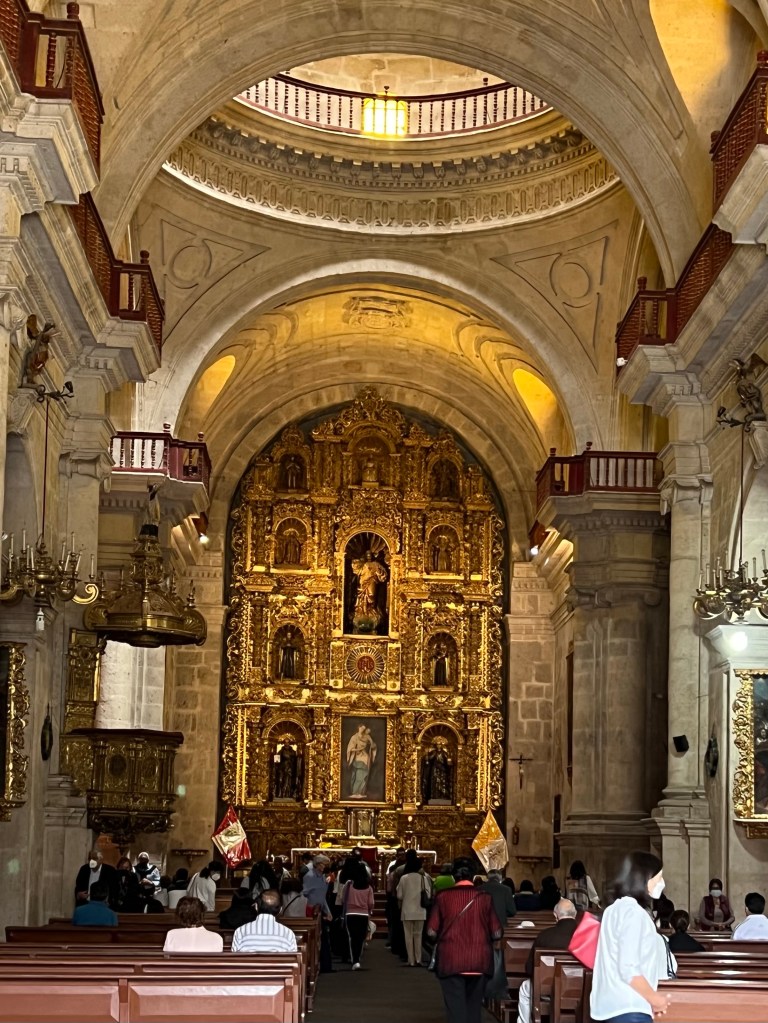
We also visited the Jesuit convent which is attached to a lovely 17th century Baroque church, La Compania which has the most stunning sacristy painted by the indigenous people.
We then went to the Juanita Mummy Museum (also known as the Ice Maiden). Juanita was discovered in 1995 at the top of Mount Ampato buried under the snow and was perfectly preserved including her skin and hair. She was 12-14 years old when she died and had had the great honour of being sacrificed to the the Inca gods about 500 years ago. This was a pretty regular occurrence at the time, to appease angry gods and would involve preparing daughters of senior families for about a year with a special diet of food and drugs.
Talking of diet, we then had the most enormous traditional Peruvian lunch of stuffed peppers followed by grilled chicken and very good ice cream. How Peruvians are not the size of houses I cannot imagine, the portions are enough to feed a whole family!
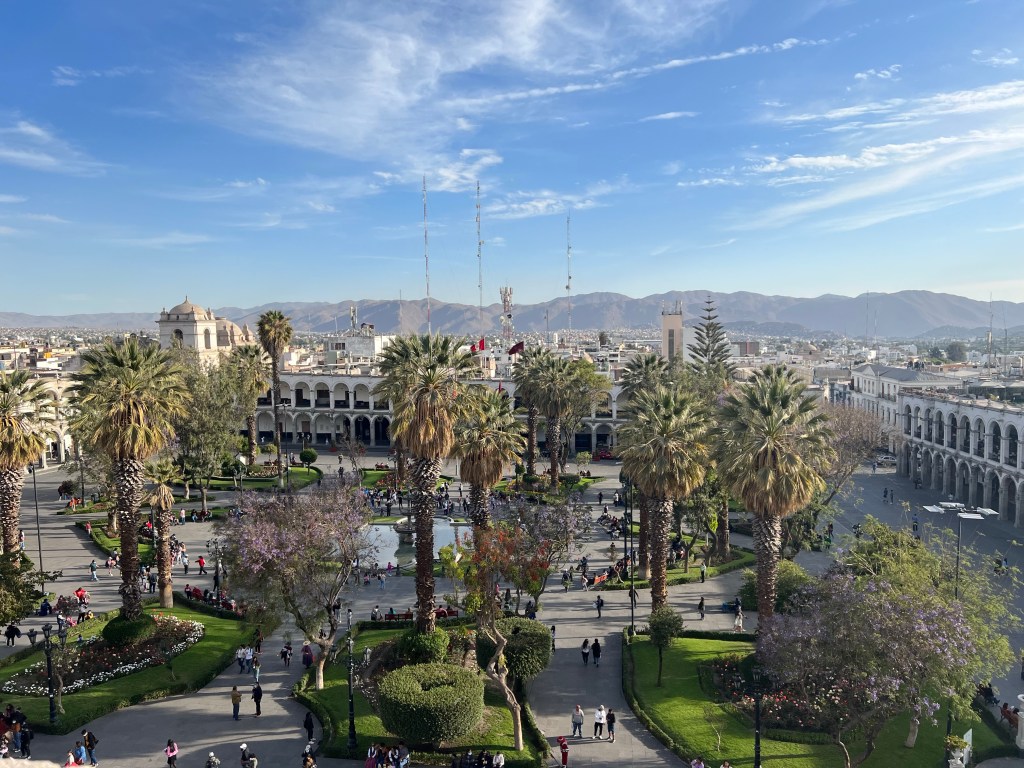
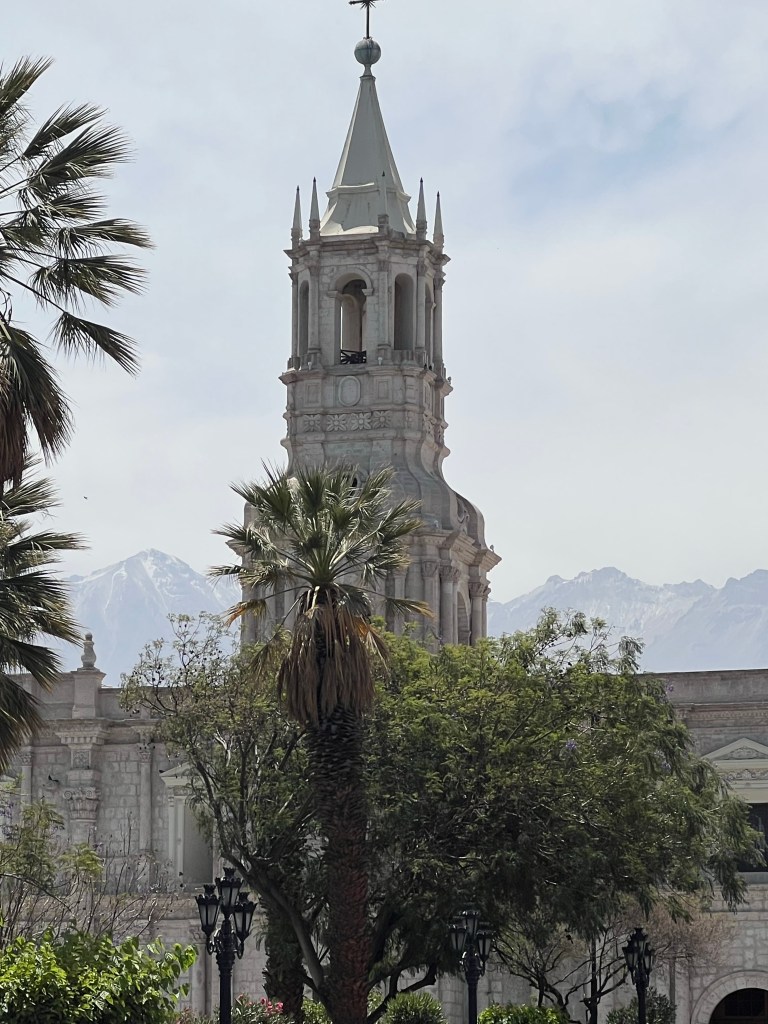
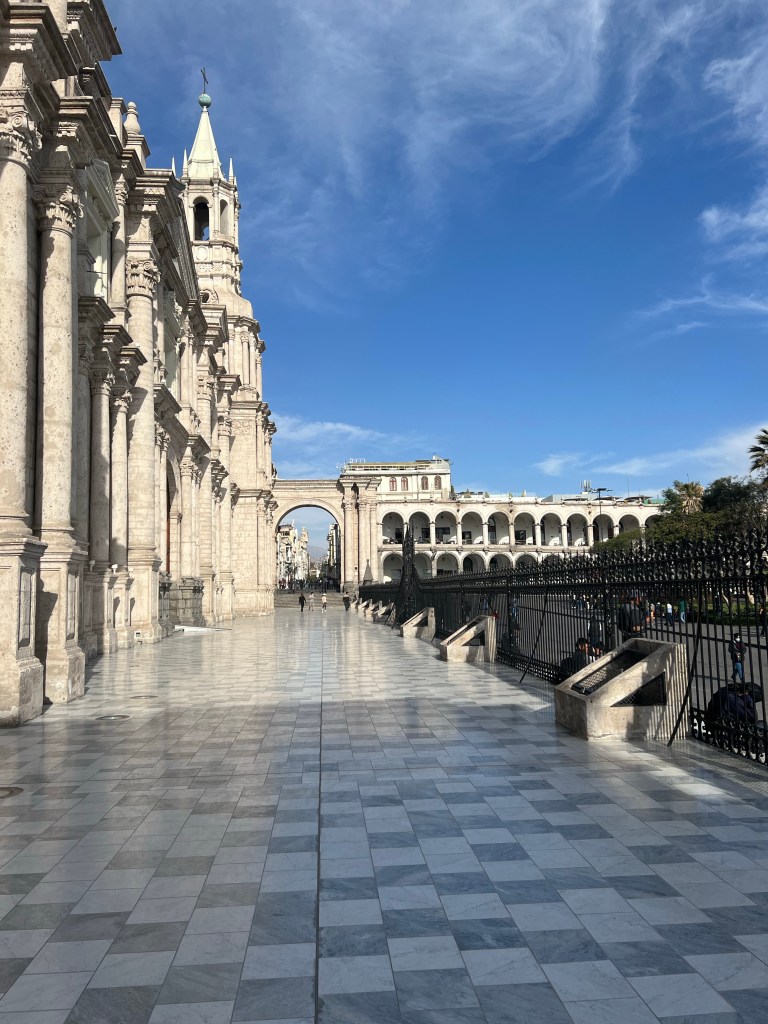
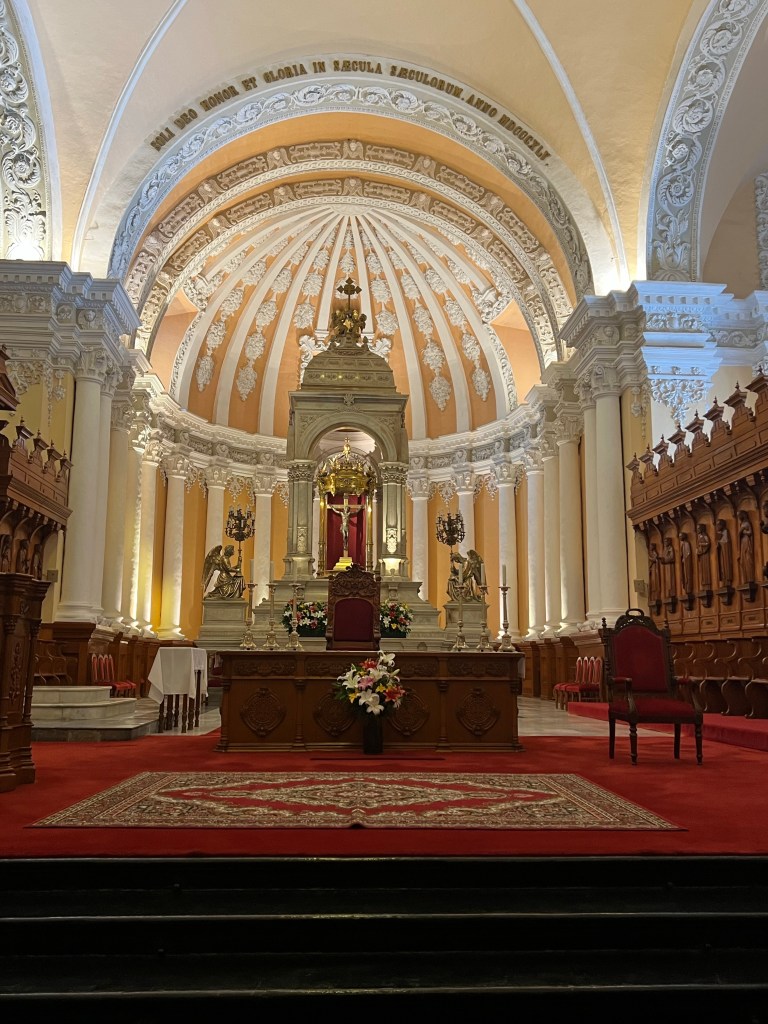
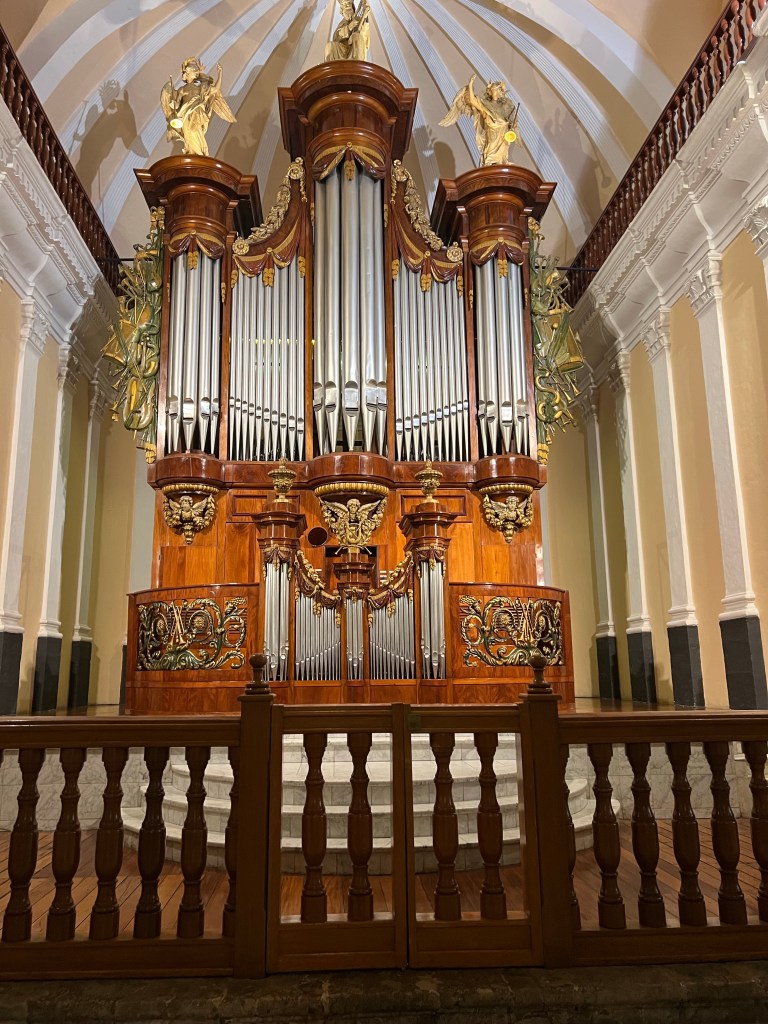
The others then returned to the hotel but I decided to stay ‘down-town’ as I wished to visit the cathedral in the central square. This was built between 1620-50 and is made of the local volcanic stone which is relatively soft and easy to carve. It has two major towers, one of which fell down in the 2001 earthquake crushing the magnificent Belgian organ below. Both have been restored to their former glory. I was taken on an excellent tour of the cathedral and museum by a young Peruvian girl, Gabriella, who gave the tour in fluent French and English.
In the evening, Steve, Sue, Carol, Peter and I had a jolly time at one of the restaurants in town we had been recommended – delicious but again so much too much. Two double passion fruit pisco sours later we somehow made it home.
 EC-Rider Travels
Leave a comment