
This morning I met Lewis our tour leader and my group of 10 companions for the next two weeks. All from the UK, two Indian couples from Harrow, David and Karen from Newcastle (I think), Karen, poor thing suffers with MS, Peter and Carol from Co Durham (not married, just friends) and hysterical Sue and Steve from St Helens. Sue also has MS but oh so brave.
We headed off with Marabella for our tour of Lima. To me this capital city has few redeeming features. That sounds so damning but it is the greyest city I have ever seen. The reason, I learnt, is it never rains in Lima, and for eight months of the year, a damp grey mist hangs over the city, creating humidity (up to 95% June-August) but never enough to clean any of the buildings or indeed the trees or plants. Everything is covered in a thick layer of dust. It is huge and sprawling with 11 million people. There are frequent earthquakes so most buildings are only one or two storeys and the majority only half built. Despite only 20% driving a car, the roads are gridlocked, with few traffic lights and what appears to be no protocol re right of way – he who dares wins! The other 80% commute by bus – most apparently for 2-3 hours.
We are staying in Miraflores, which is considered to be one of the most up-market of the 43 districts of the city. Each district has its own mayor, town hall and sets it own taxes which supports the local areas, the rich ones therefore get richer and the poor, poorer. Some areas are no more than shantytowns. As mentioned before, local elections are coming up, with fifteen different parties and posters everywhere. Everyone over 18 has to vote, or they pay a fine.
The average salary is $4-500 per month, most children therefore live with their parents until they marry and then usually build on top of their parents house. Both parents have to work and grandparents bring up the children. Education is free and children go to school from three all looking immaculate.
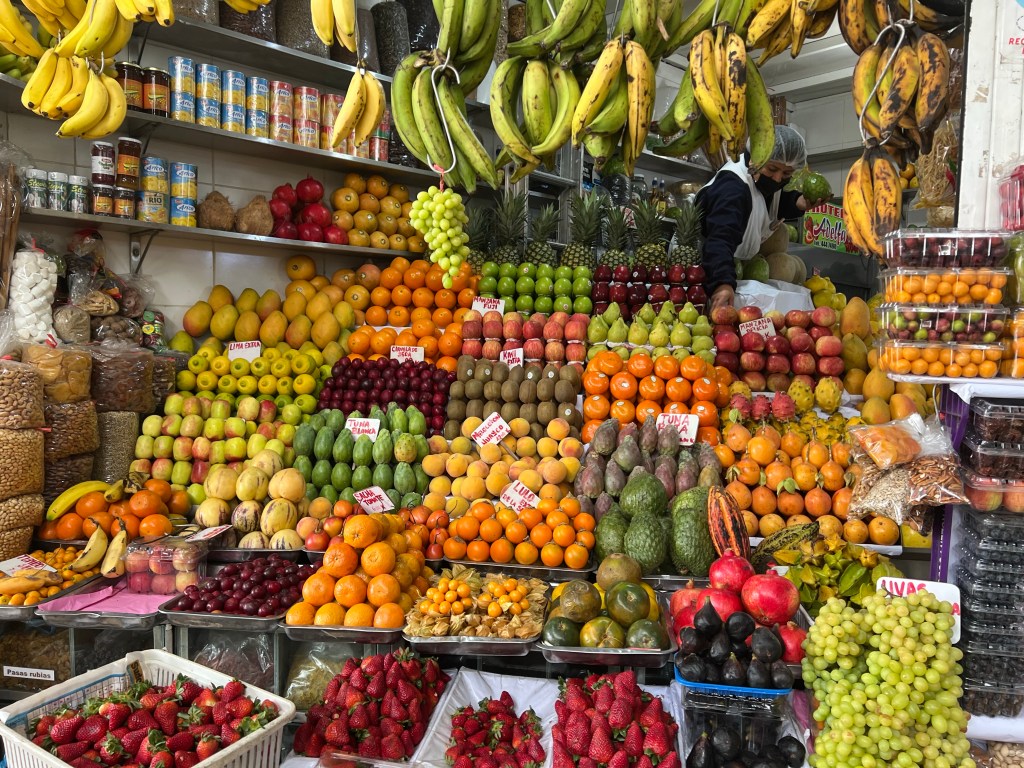
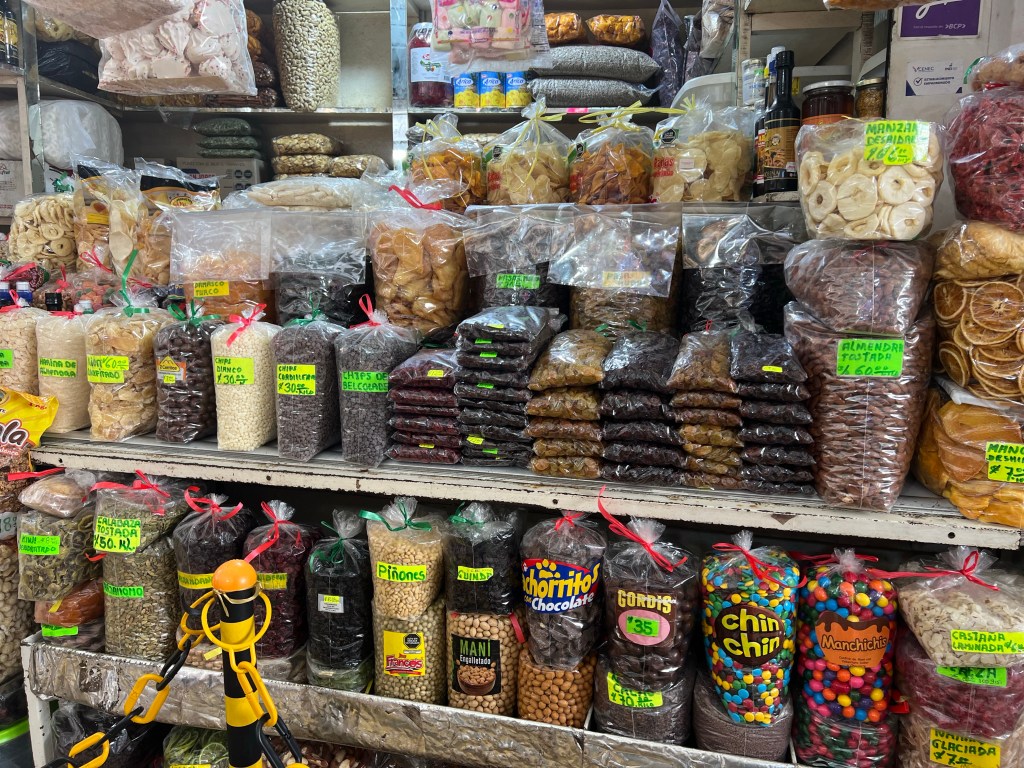
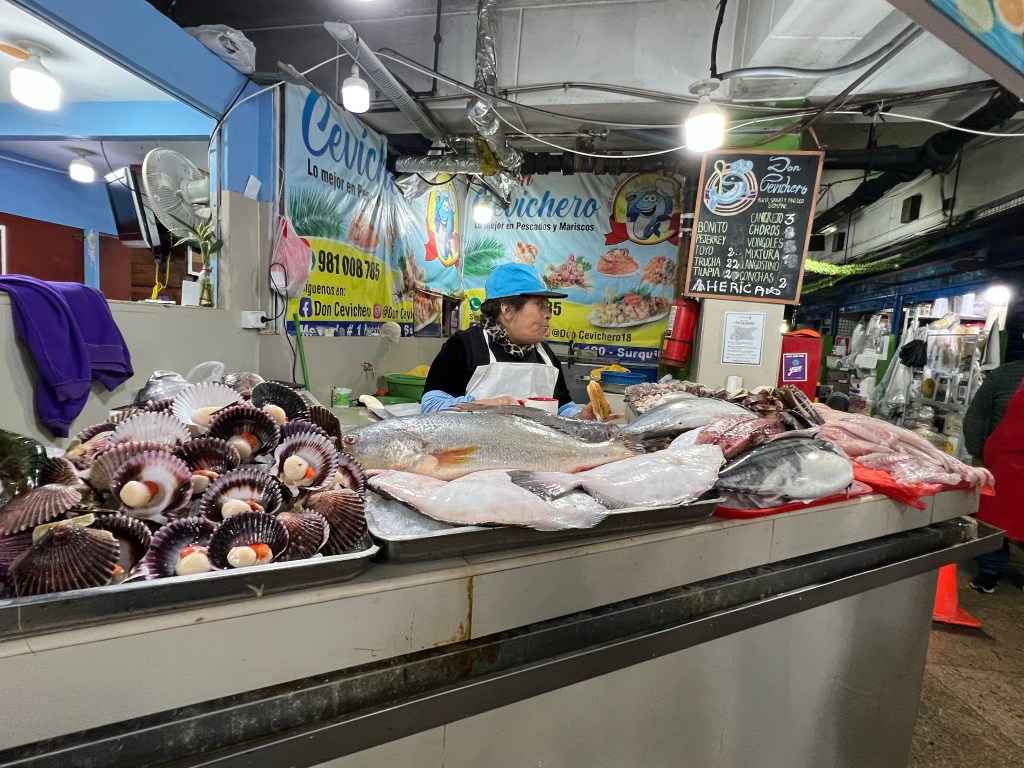
Our first stop was the local market, which was fun to see. An amazing variety of fruit and vegetables and SO many raisins! Chicken is the main meat in Lima, but beef and pork is popular and they eat everything – heart, feet, stomach, head – all proudly displayed. Amazing fish and sea-food, Lima being on the very cold Pacific ocean No wonder they all look so healthy. They are real foodies and proud of their numerous cuisines. These have grown up through the many different nationalities who have arrived in the country. The Spanish bringing Afro-Caribbean slaves, and when they were liberated, the Chinese and then Japanese were brought in to work. So as Maribella explained there is great fusion in the food and also within the people due to much ‘intercourse’!
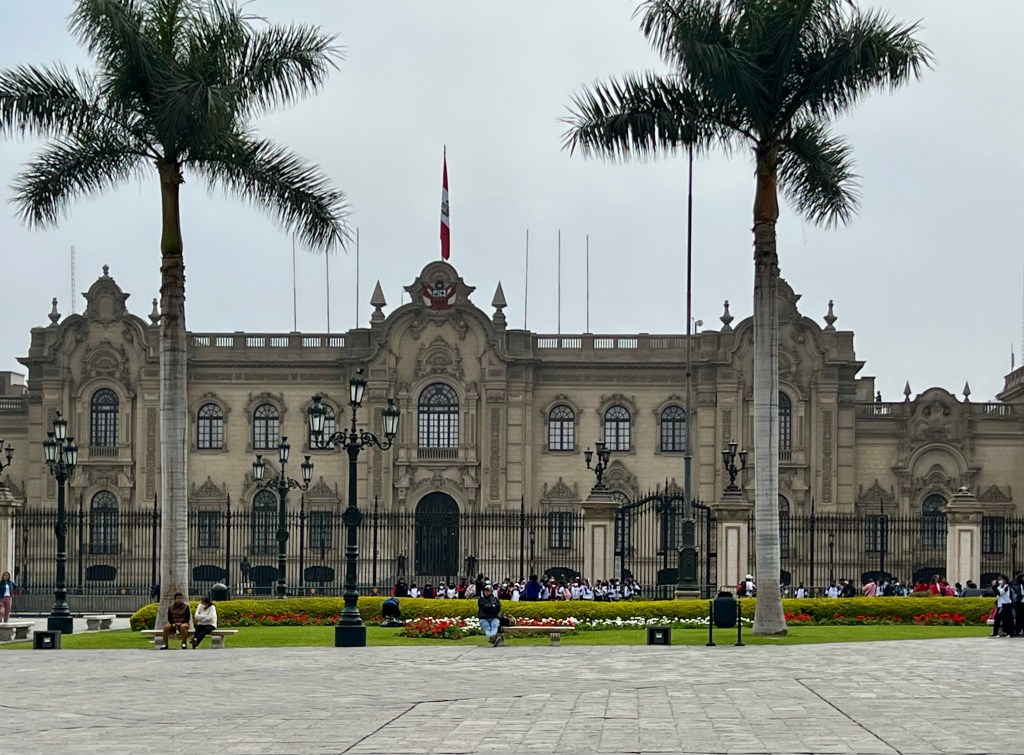
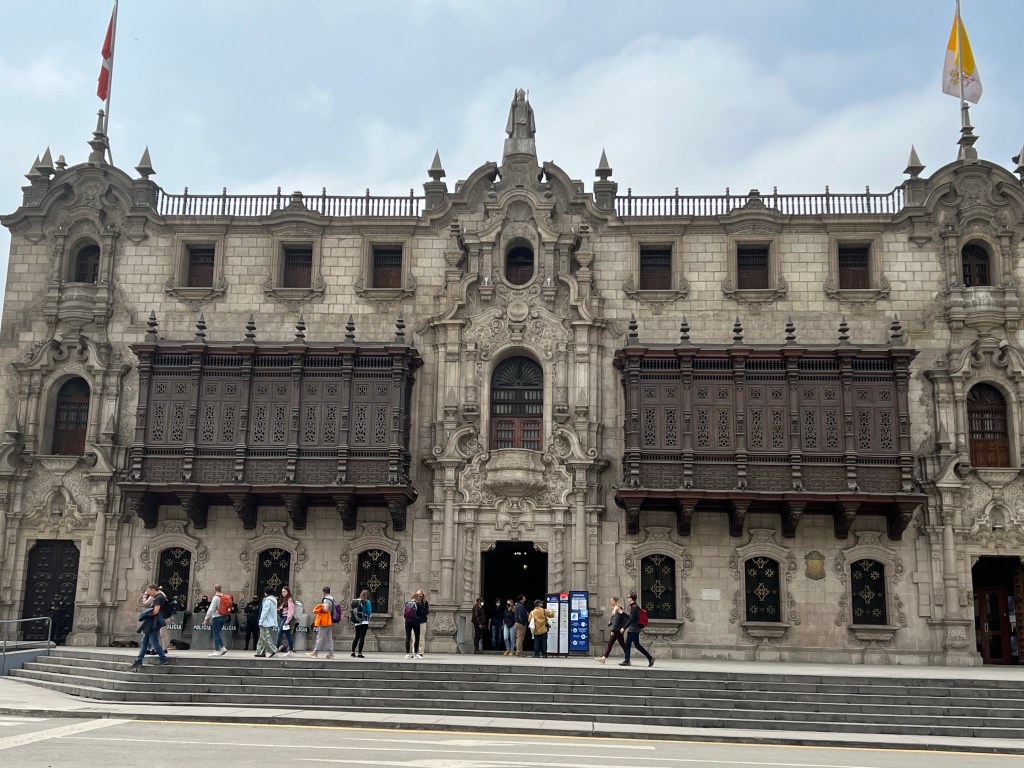
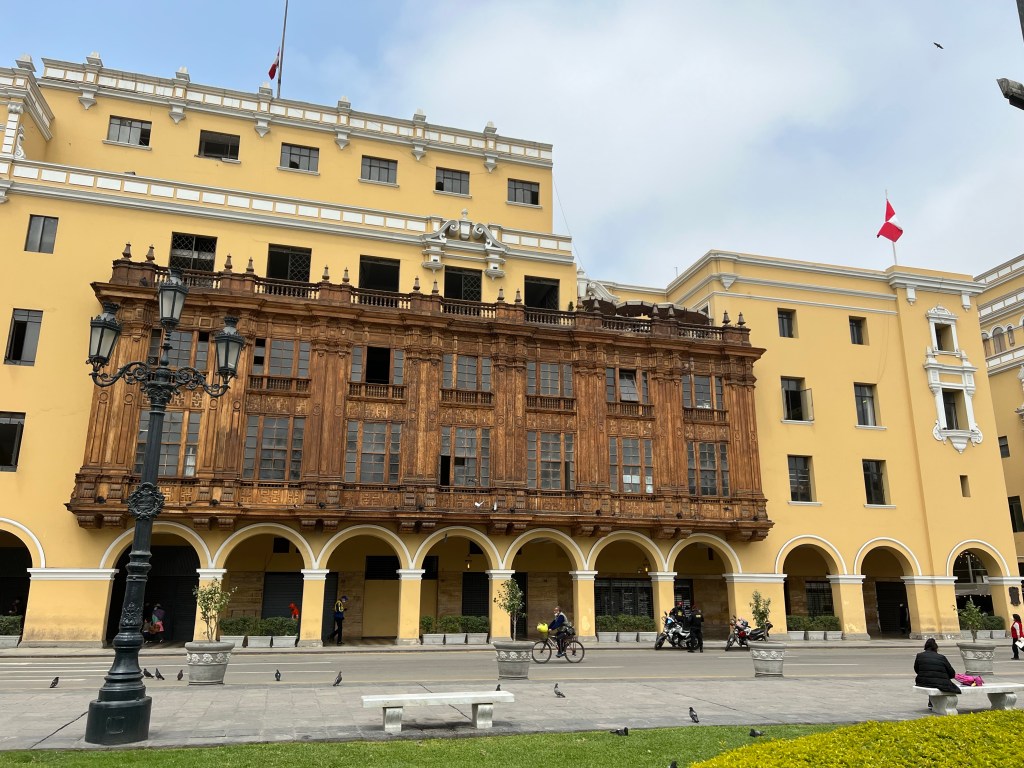
We headed north east towards the city-centre through a number of different districts none of which were particularly attractive until we reached the historic centre. Here a number of lovely buildings make up this UNESCO world heritage site. Many of them were given to the city by other nations – Italy, France etc to celebrate the centenary of Peru’s independence from Spain in 1821. The central square, founded on an old Inca site by Francisco Pizarro in the 16 century, has been destroyed by earthquakes and rebuilt many times. The current buildings are from the 1920s/30/40s and include the Government Palace, the Archbishops Palace and the Municipal Palace. They have the most amazing carved wooden balconies which Lima is famous for, but sadly covered in dust. The current president is unpopular and corrupt so the square is heavily guarded from the many demonstrations which happen on a daily basis. There are currently five former presidents in prison!
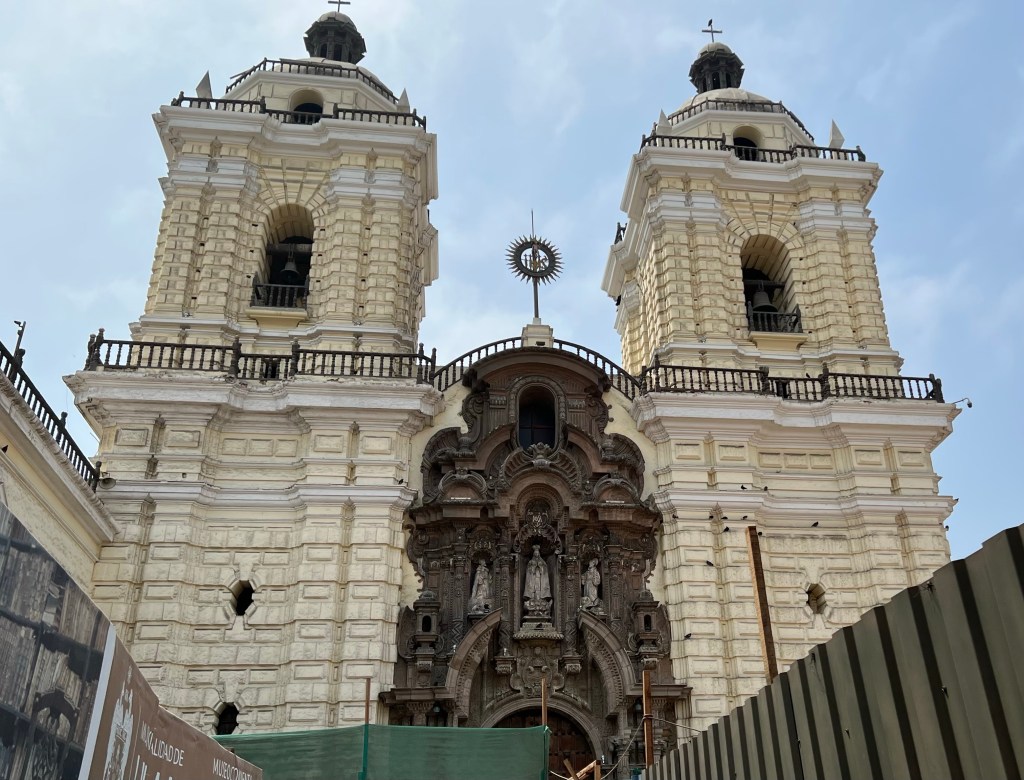
We visited the 17th century San Francisco monastery nearby, which had a lovely cloister though we seemed to spend most of the time under it, in the catacombs with the bones of former Peruvian nobility, who paid for the privilege and Franciscan monks! We saw their wonderful library full of dusty old books including beautifully calligraphed music books. These were in the hugest font, so all the monks could read it from a central revolving lectern rotated by one of the monks. We had a brief view of the interior of the church which was very ornate and full of gold stolen from the Incas.
We were then treated to a ‘snack’ – a traditional dish called ‘causa’ which is layers of cold mashed potato (made from one of their 3,000 varieties) with avocado and chicken salad in between – delicious and all washed down with a pisco sour (at 11am!).Certainly lightened the mood. Did you know potatoes originally came from Peru and were exported all over the world by the Spanish.
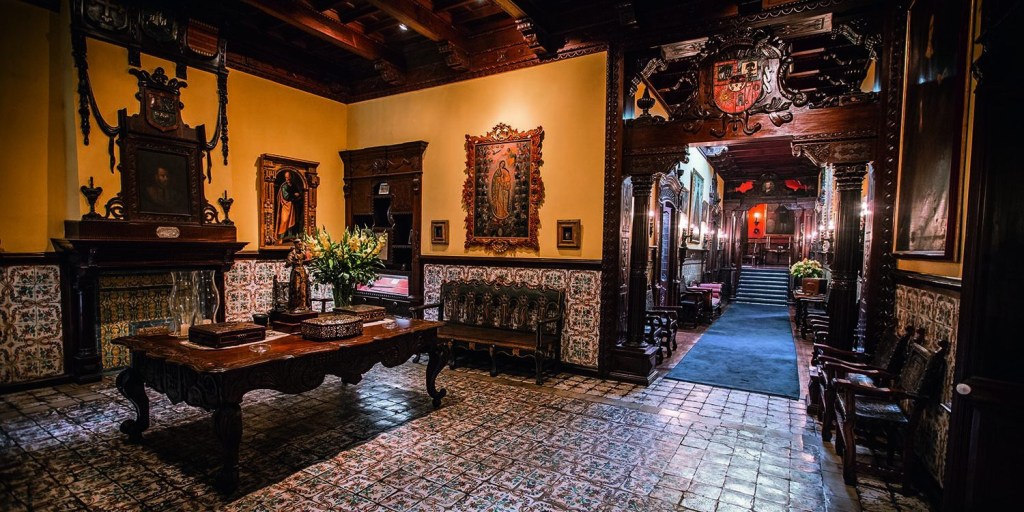
We then visited Casa Solar de Aliaga, a ‘colonial mansion’ that has been occupied for 16 generations by the Aliaga family. The land being gifted to the first Aliaga who was one of Pizzaro’s commanders when he took Lima from the Incas. Built around a central fountain, and a huge tree, it has a Moroccan feel and was full of lovely tiles and heavy carved wooden furniture.
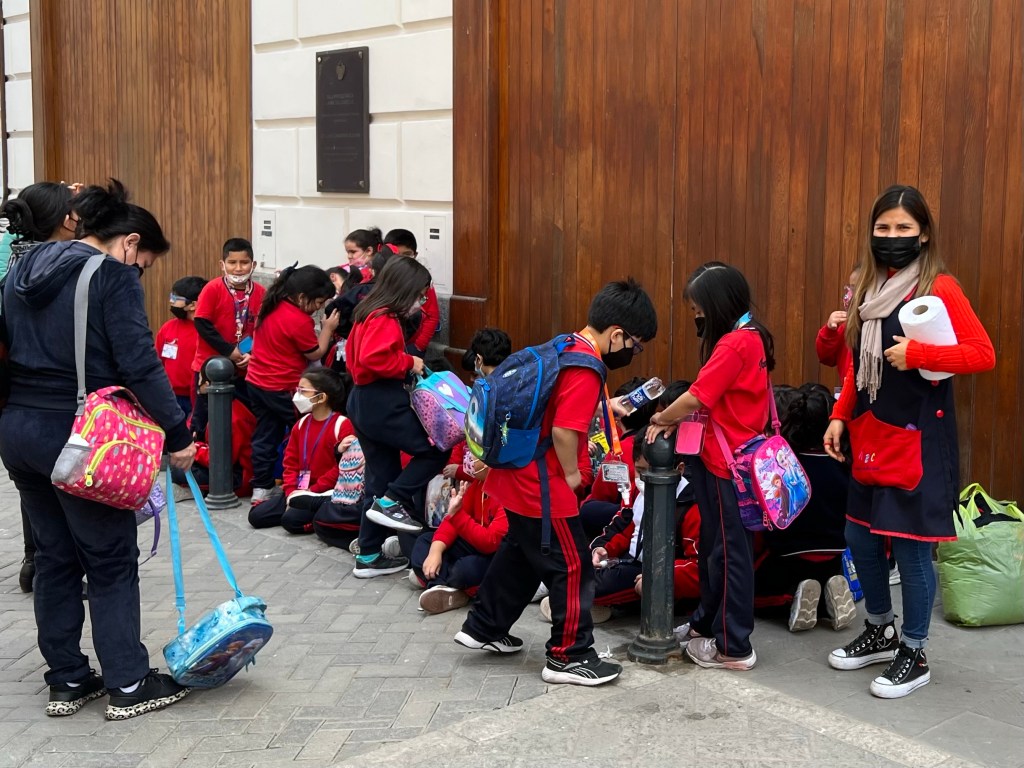
There are school children everywhere as visits to museums are compulsory – love that….
Our afternoon was ‘at leisure’ and Steve, Sue and I went to Kennedy Park which is full of hundreds of cats (they love cats)… I then dragged them to a small art gallery which I had spotted earlier. We met Fidel the artist who spoke perfect English. An extraordinary exhibition about death (I think) but incredible pencil drawings which I thought were photographs.

We then had an early supper and I went to pick up my washing which I had bravely left at the laundrette that morning and did my ironing!
 EC-Rider Travels
Leave a comment